


Key Takeaways
What You’ll Learn
- Instacart is an on-demand grocery delivery platform that connects users with nearby stores in real time.
- Users can order groceries online with fast delivery or scheduled time slots for convenience.
- Personal shoppers and delivery partners handle order picking and doorstep delivery.
- Digital payments and subscriptions simplify repeat purchases and improve user retention.
- Local store partnerships are key to scaling across cities and regions.
Stats That Matter
- Instacart serves millions of active users across North America.
- Online grocery delivery is expected to grow rapidly, becoming a multi-billion dollar market globally.
- Same-day delivery and convenience are driving higher customer adoption.
- Subscription models like Instacart+ boost recurring revenue streams.
- On-demand grocery platforms are becoming a daily necessity for urban users.
Real Insights
- Convenience drives growth when groceries can be ordered in minutes.
- Successful platforms balance customers, shoppers, and store partners efficiently.
- Real-time tracking and substitutions improve user trust and satisfaction.
- Local inventory and partnerships matter more than just app features.
- Long-term success comes from reliability, speed, and consistent delivery experience.
There was a time when grocery shopping meant long queues, crumpled lists, and missed items. In 2026, it’s all about convenience, speed, and precision. People now expect their groceries to arrive at their doorsteps before they can even finish their morning coffee.Instacart clone Script paved the way, but they’re not the endgame. They’re just the beginning
If you’ve ever thought about building your own grocery delivery app, a platform like Instacart is your shortcut to success. Whether you’re looking to serve a hyperlocal area, offer premium personal shopper services, or launch a category-specific marketplace—clone Script let you skip the painful part of development and go straight to growth. The trick lies in picking the right one for your goals, customizing it smartly, and staying close to what your market really needs
At Miracuves, we’ve seen solo founders and grocery chains launch white-labeled delivery platforms faster than it takes to stock a warehouse. It’s not about reinventing the wheel—it’s about rolling it in your direction with precision and scalability
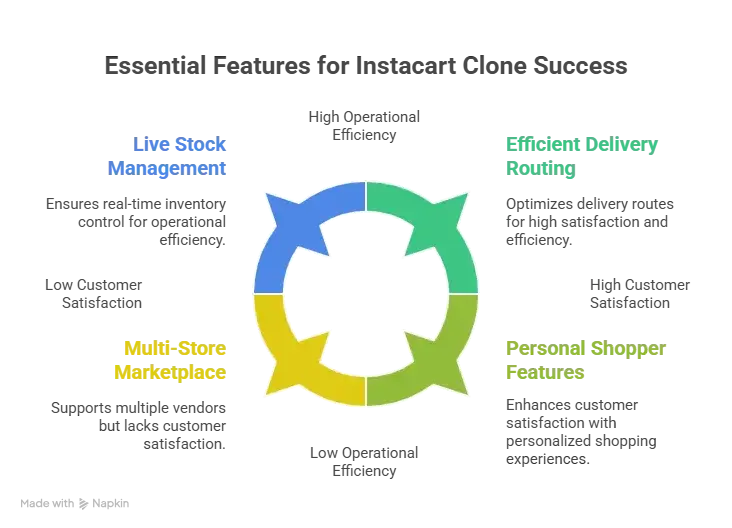
What Your Instacart Clone Must Absolutely Deliver
1. Multi-Store Marketplace
You’re not just building a grocery app—you’re building a network of stores. Your clone script should support multiple vendors, unique inventories, per-store pricing, and delivery rules. It should allow customers to shop from different stores in a single order or split orders seamlessly
2. Personal Shopper Features
One of Instacart’s biggest strengths is offering shoppers who handpick items in-store. Your clone script should include features like item substitutions, real-time shopper messaging, photo confirmations, and shopping progress updates. These features build trust and reduce refund issues
3. Live Stock Management
Your vendors need real-time control over what’s in stock and what’s not. Make sure your script supports dynamic inventory sync, item toggling, and category-based updates. Advanced Script also support barcode scanning and in-store POS syncing
4. Smart Cart & Recommendations
Your app should help customers get what they need quickly. That means shopping lists, recently bought items, “frequently bought together” suggestions, and auto-fill based on preferences. Time is money—and groceries shouldn’t take either
5. Efficient Delivery Routing
Delivering groceries is more complex than delivering food. Routes matter. Your script should optimize delivery based on item type, perishability, traffic, and drop zones. Features like batch deliveries, route heatmaps, and cold-chain support add serious value
Read More : Launch Your Online Grocery Delivery Platform Like Instacart
Modern Features You Can’t Afford to Skip in 2026
- Scheduled Delivery Slots: Let users pick a delivery window that suits their day
- Repeat Orders: One-click cart rebuild for weekly shoppers
- Driver Role Flexibility: Allow stores to use their own staff or external fleets
- In-App Tipping: For personal shoppers or delivery partners
- Pickup Option: Give users the choice to shop online and collect in person
- Grocery Subscription Plans: Offer weekly/bi-weekly curated deliveries for loyal customers
- Order Weight Calculator: Helps drivers and stores manage capacity
Global Cost Factors & Pricing Breakdown
instacart-Style on-demand grocery Marketplace Development — Market Price
PHP/Laravel is often the most practical choice for launching an Instacart clone quickly and affordably. Node.js/Python fits better when real-time workflows and heavier data movement become more important, while Go microservices are better suited for enterprise-scale Instacart-like platforms with higher concurrency and more complex infrastructure needs.
Miracuves Instacart-Like App Solution Cost and Tech Stack
Miracuves Pricing an Instacart-Like Grocery Delivery App developed in PHP/Laravel with Flutter Apps for $2,499 USD (One-Time Price) in just 6 days
Get a fully developed, deployment-ready platform modeled after Instacart. Built on a rock-solid PHP/Laravel foundation, this complete package includes everything you need to launch and scale:
Core Workflows: Grocery ordering, real-time delivery management, and multi-store marketplace operations.
Built-in Finance: In-app wallet logic, pricing operations, and payout setups.
Management Hub: Comprehensive store/vendor management and a centralized admin backend.
Launch-Ready: Fully prepped for your custom branding, configuration, and immediate market entry.
Why is it so affordable?
Most complex grocery delivery platforms force you into expensive architectures like Node.js or Go. Building from scratch with those frameworks requires highly specialized, expensive engineering teams, which drives the cost into the tens or hundreds of thousands of dollars.
We took a smarter, more practical approach:
You Aren’t Paying for Ground-Up Development: Our multi-vendor grocery engine is already developed, battle-tested, and ready to deploy. You skip the inflated costs and months of waiting associated with building from scratch.
The Power of PHP / Laravel: We built this on one of the most reliable, globally adopted frameworks in the world. Not only does this keep our upfront costs down, but it also protects your future budget. PHP has a massive global talent pool, making it incredibly easy and cost-effective for you to find developers for future scaling or customizations. You get an enterprise-capable, heavy-duty foundation without the inflated Silicon Valley price tag.
Note: This cost is for the solution, re-branding, deployment and source code only.
Read More : Instacart vs UberEats Business Model Comparison
Who Should Launch an Instacart Clone?
1. Independent Grocery Chains: Compete with big players by offering personalized service and building brand loyalty through your own app—not someone else’s
2. Local Entrepreneurs: Own the delivery game in your city or district. By partnering with local stores and kirana owners, you can offer value that national apps can’t match
3. Organic & Specialty Stores: Launch a grocery app that only caters to organic produce, gourmet snacks, or keto supplies. Niche platforms can drive deeper engagement and better margins
4. Supermarket Brands: If you run or manage a retail chain, an Instacart clone lets you cut out commissions, control the delivery experience, and offer better deals to your customers
5. Aggregators & Community Builders: Apartment complexes, co-living communities, or student housing can benefit from hyper-targeted grocery delivery solutions. Group ordering, subscription deliveries, or preferred vendor tie-ups can make the model thrive
Read More : Top Features of Instacart App for Grocery Delivery Businesses: A Complete Guide
What Makes 2026 Instacart Clone Script Smarter?
- Inventory AI: Suggests reorder points for stores based on shopping patterns
- Fridge-to-App Scanning: Let customers scan barcodes at home to refill items
- Delivery Slot Intelligence: Optimizes available time slots based on zone activity
- Eco-Friendly Add-ons: Plastic-free delivery options and carbon impact badges
- Nutrition Tagging: Show macros, allergens, and dietary tags next to every product
- Multi-Language UX: Localize everything from item names to checkout flows for better regional adoption
- Weather-Integrated Routing: Adjust delivery time windows based on local forecasts
These are no longer “nice to haves”—they’re becoming the norm in competitive delivery markets
Final Thoughts
Instacart showed the world that grocery delivery wasn’t just a pandemic-era luxury—it’s a permanent habit. If you’re planning to launch your own grocery platform, an Instacart clone script is the smartest way to get to market faster, without compromising on customer experience or scalability. With the right mix of features and local insight, you can create something far more relevant than the big names ever could
At Miracuves, we help innovators launch high-performance app clones that are fast, scalable, and monetization-ready. Ready to turn your idea into reality? Let’s build together
FAQs
Can I launch an Instacart clone in one city and expand later?
Yes. The best clone Script come with zone management, allowing you to scale city by city with separate settings, delivery rules, and vendor onboarding
How do I manage multiple stores in the app?
Each vendor gets a login, product dashboard, and inventory control. You can control visibility, commission, and product availability per vendor from the admin panel
Do these Script support cold-chain or perishable delivery?
Yes. Some advanced Script include packaging instructions, storage type flags, and delivery partner alerts for time-sensitive items
Can I include a personal shopper feature?
Absolutely. Most high-end Script support shopper dashboards with pick lists, customer notes, and live chat for real-time replacements
What payment methods are supported?
Top Script support multiple gateways including Stripe, Razorpay, PayPal, cash on delivery, UPI, and in-app wallets
Can I run promotions or offer discounts?
Yes. Admins and vendors can launch coupons, loyalty points, referral codes, and seasonal campaigns right from the dashboard
Related Article
Miracuves is an independent software development company. We are not affiliated with, connected to, sponsored by, or endorsed by any company or product named in this article.
Terms such as “X Clone” are used descriptively. It is how the software industry refers to building a platform with functionality comparable to a known service, and how clients search for it.
The entire design and codebase of our products is built by our own team. Our products contain no code, design, graphics, or content originating from any third-party website or applications.
All third-party names and marks referenced in this article are the property of their respective owners, referenced solely to identify the services discussed.