


Key Takeaways
What You’ll Learn
- Grubhub clone scripts allow startups to launch a complete food delivery platform without building everything from scratch.
- The system includes multiple panels — customer app, restaurant dashboard, delivery app, and admin control — all synced in real time.
- Modern clone solutions now include advanced features like AI recommendations, smart dispatching, and dynamic pricing.
- Different pricing models exist — SaaS (monthly), self-hosted (one-time), and enterprise builds based on customization.
- The biggest advantage is speed — you can launch faster and start generating revenue without long development cycles.
Real Insights
- Clone scripts are not just shortcuts — they are structured business systems designed to replicate proven delivery models.
- Choosing the right pricing model matters because SaaS is fast to start, while self-hosted and enterprise options give more control.
- Advanced features like AI recommendations and dynamic pricing are becoming standard in competitive markets.
- Most founders start with a ready-made solution and scale into custom development only after validation.
- The real opportunity lies in localizing the platform — adapting pricing, restaurants, and delivery logic to your specific market.
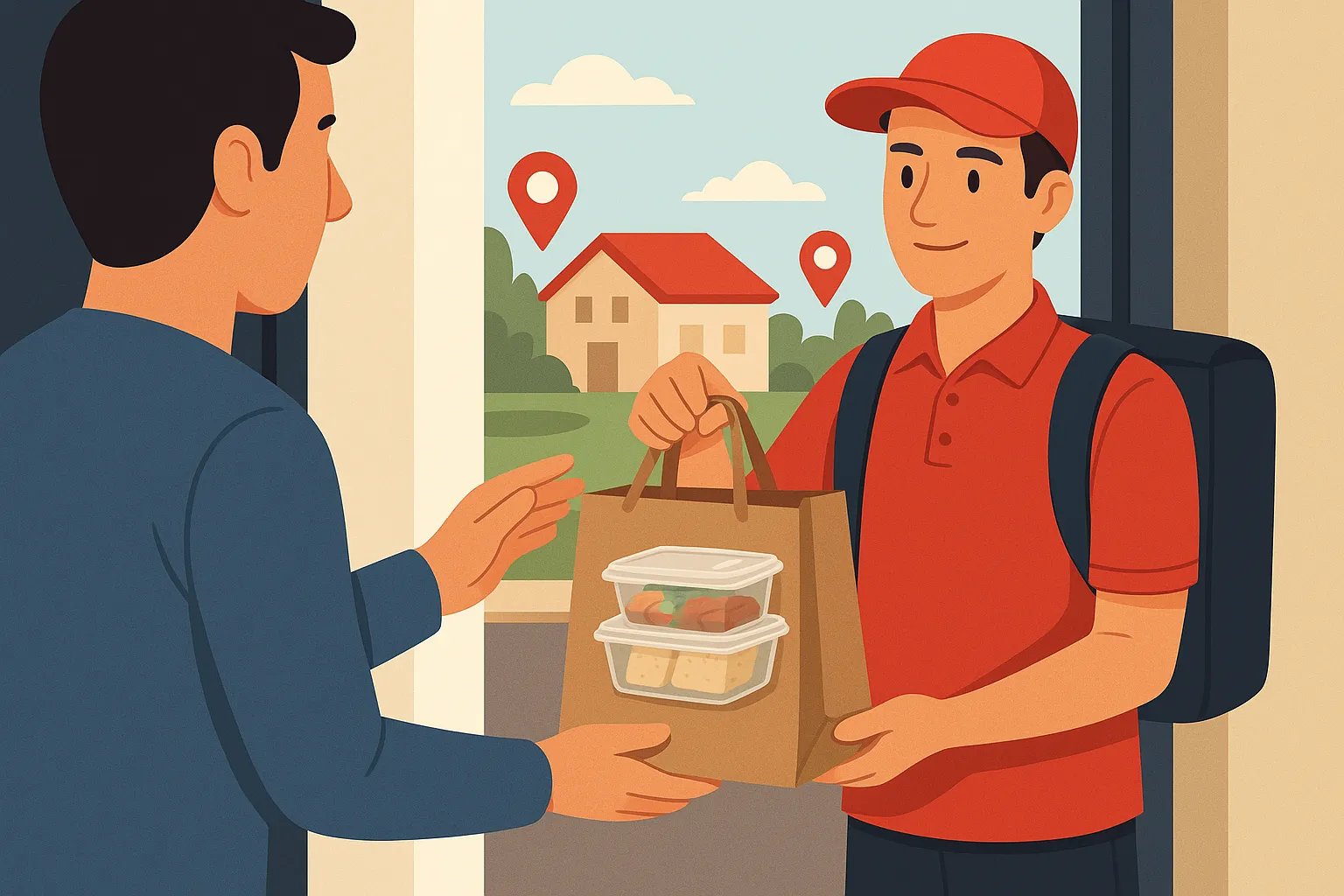
Once considered a convenience, on-demand food delivery has become a part of daily life for millions. People are no longer just ordering food on weekends or during rainy days. From breakfast to late-night snacks, consumers now expect their favorite dishes at their doorsteps with just a few taps.
In the U.S. and other major markets, Grubhub helped shape this behavior. But as the food delivery space continues to expand, there’s a growing demand for regional platforms that cater to local preferences, restaurant partnerships, and pricing dynamics. Entrepreneurs are now exploring how to build their own Grubhub-style platforms that reflect their city’s unique culinary culture.
Enter Grubhub clone script—ready-to-launch software solutions that enable founders to replicate the operational logic of top food delivery platforms without starting from scratch. In 2026, these clones are more sophisticated, more customizable, and more scalable than ever.
Why Grubhub’s Model Still Holds Strong in 2026
Grubhub has always prioritized restaurant aggregation, fast logistics, and customer convenience. But it’s not the only one anymore. Local and niche platforms are emerging to serve specific geographies or food types. There’s a clear opportunity to replicate the Grubhub experience while adding your own twist—whether that means better delivery economics, curated vendor lists, or direct-to-customer branding.
In fact, more restaurants are open to joining platforms that offer favorable commission structures, faster payouts, and local marketing support. A Grubhub-style clone, when done right, provides a backbone for such partnerships
Read More : What is Grubhub App and How Does It Work?
Core Features to Expect in a Grubhub Clone Script
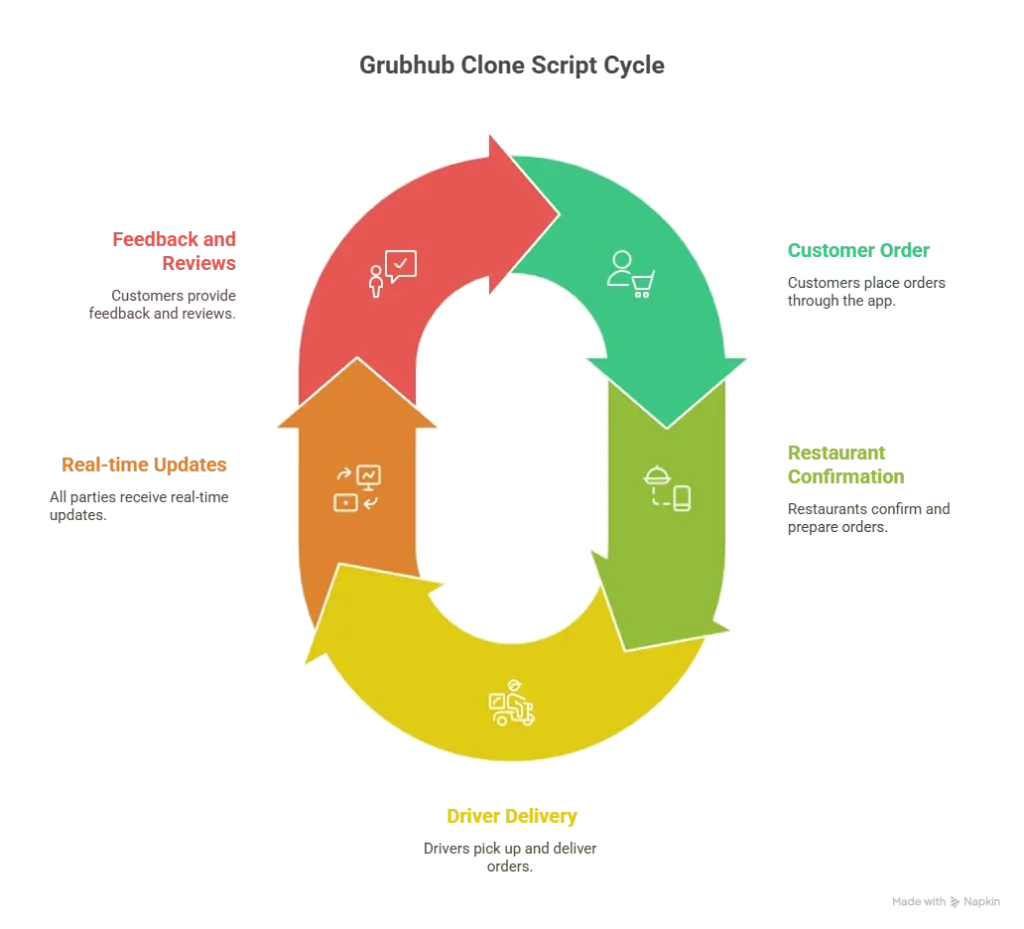
Grubhub clone script must support a three-sided platform: customers, restaurants, and delivery drivers. Here’s what a fully functional version includes:
Customer-Facing Features
- Restaurant discovery based on cuisine, rating, and distance
- Real-time order tracking with live updates
- Scheduled and ASAP ordering options
- Cart customization with item instructions
- Coupon engine, wallet, and loyalty programs
- Reviews and star rating system
Restaurant Vendor Panel
- Menu and inventory control
- Order notification and preparation timer
- Payout reports and commission visibility
- Profile and hours of operation settings
- Accept/reject orders based on availability
- Promotions, banners, and sponsored listings
Delivery Driver Module
- Job acceptance and route mapping
- GPS tracking and order updates
- Earnings calculator and tipping system
- Proof of delivery (signature, image, OTP)
- Offline/online status toggling
- Delivery performance dashboard
All modules must sync in real-time to ensure a seamless customer experience and operational transparency.
Read More : Creating Your Own Grubhub Clone: Key Features and Development Steps
Advanced Features for 2026 Platforms
To stay competitive in the modern food delivery market, clone scripts in 2026 are offering advanced capabilities:
- AI-based dish recommendations
- Smart delivery dispatching using heatmaps
- Dynamic delivery fees based on time, weather, or demand
- In-app chat support with automated replies
- Multiple payment integrations including BNPL (Buy Now, Pay Later)
- White-labeled restaurant apps within the main platform
These advanced features help you stand out in a crowded market and provide deeper engagement for both customers and vendors.
Global Cost Factors & Pricing Breakdown
These values reflect global development cost estimates for a Grubhub-like food delivery platform.
Miracuves Grubhub-Like App Solution Cost and Tech Stack
Miracuves Pricing for a R Grubhub-Like Food Delivery Platform developed in PHP/Laravel with Flutter Apps for $2,199 USD (One-Time Price) in just 6 days
Get a fully developed, deployment-ready platform modeled after Grubhub. Built on a reliable PHP/Laravel backend with Flutter mobile apps, this complete solution helps you launch and scale a food delivery business quickly and efficiently.
- Core Workflows: Restaurant listings, menu browsing, cart system, order placement, real-time order tracking, and delivery management.
- Built-in Operations: Pricing logic, delivery fee management, commission setup, order handling, and payment processing.
- Management Hub: Centralized admin panel to manage customers, restaurants, delivery partners, orders, transactions, and overall platform operations.
- Launch-Ready: Fully prepared for your branding, configuration, and immediate go-to-market execution.
Why is it so affordable?
Most modern food delivery platforms are built using complex architectures like Node.js or microservices. While powerful, these approaches require larger engineering teams, longer timelines, and significantly higher development costs.
We took a smarter and more practical approach:
- You Aren’t Paying for Ground-Up Development: Our food delivery engine is already developed, tested, and ready to deploy. You skip months of development time and avoid the high costs of building from scratch.
- The Power of PHP / Laravel: Built on one of the most trusted and widely used frameworks globally, this solution keeps upfront costs low while ensuring long-term flexibility. With a large developer ecosystem, it becomes easier and more cost-effective to maintain, scale, and customize your platform.
- Built for Practical Growth: You get a strong, market-ready food delivery platform with essential features like restaurant onboarding, order workflows, and delivery tracking—without the complexity and expense of enterprise-level builds.
You get a scalable, production-ready platform without paying inflated development costs.
Note: This cost is for the solution, re-branding, deployment, and source code only.
Who Can Benefit from a Grubhub Clone?
This model is highly versatile and suits a variety of business strategies:
- Local entrepreneurs wanting to launch a food delivery service in underserved cities
- Restaurant chains looking to bypass expensive aggregators
- Franchise networks building their own closed-loop ecosystem
- Event-based catering services offering scheduled group orders
- Campus food delivery startups for universities or co-living spaces
Each use case can leverage the Grubhub-style model with minor modifications to fit the local context.
Read More : Reasons startup choose our Grubhub clone over custom development
Revenue Models for Grubhub Clone Platforms
You don’t need to rely solely on delivery fees. Here are multiple monetization streams used by successful food delivery apps:
- Restaurant commissions on each order
- Customer delivery charges based on distance or time
- Surge pricing during peak hours
- Subscription models for free delivery (e.g., monthly plans)
- Ad placements within the app (top listings, banner slots)
- Tipping and premium delivery options
- POS or loyalty integrations as paid services for restaurants
With the right monetization strategy, even platforms operating in smaller markets can become highly profitable.
Read More : Grubhub Marketing Secrets for Startups
Conclusion
Grubhub set the foundation for modern food delivery. But in 2026, the opportunity lies in creating localized, scalable, and efficient food delivery platforms that reflect the unique needs of your region or customer base. A well-designed Grubhub clone script allows you to do just that—without spending years in development or burning a fortune in trial-and-error.
If you’re looking to build a food delivery platform that works seamlessly across vendors, drivers, and hungry customers, this is the right time to get started.
At Miracuves, we help innovators launch high-performance app clones that are fast, scalable, and monetization-ready. Ready to turn your idea into reality? Let’s build together.
FAQs
What is a Grubhub clone script?
It’s a pre-developed food delivery software solution modeled after Grubhub, built to support restaurants, customers, and delivery partners on one platform.
Is the script suitable for single-city or multi-city operations?
Yes, modern scripts support both. You can start in one city and scale gradually using zone management tools.
Can I customize the look and feel?
Definitely. Most clone providers offer UI/UX customization options or white-label branding.
How are delivery drivers managed?
The system includes a driver dashboard with routing, earnings, and performance tracking. You can also integrate with third-party delivery services.
Can I launch without building an app?
Web-based solutions are available, but for full functionality and user convenience, mobile apps are recommended.
What kind of support is needed post-launch?
Support needs include technical updates, payment integration management, customer support, and periodic server maintenance.
Related Articles
- Best Swiggy Clone Scripts in 2025: Features & Pricing Compared
- Best UberEats Clone Scripts in 2025: Features & Pricing Compared
- Best Goldbelly Clone Scripts in 2025: Features & Pricing Compared
- Online Food Delivery Platform Development: Hidden Costs You Should Know
- How to Start a Regional Food Delivery Platform Busine