


Key Takeaways
What You’ll Learn
- A white-label Pinduoduo app must be built with security-first architecture, not just fast deployment.
- Data privacy, payment protection, and API security are core risk areas.
- Compliance matters for legal safety, customer trust, and platform stability.
- Audits, encryption, and strong authentication are essential for secure operations.
- The right provider reduces long-term business risk through better security standards.
Stats That Matter
- The article highlights user data, payment data, and backend security as major protection areas.
- ISO 27001, SOC 2 Type II, GDPR, PCI DSS, SSL/TLS, and 2FA or OAuth are treated as key security standards.
- More than 60% of mobile apps have at least one critical vulnerability, showing why secure architecture matters.
- API attacks account for over 40% of data breaches, making API protection a major requirement.
- Quarterly security audits with continuous monitoring are recommended for ongoing protection.
Real Insights
- Cheap white-label solutions often hide security weaknesses behind low pricing.
- No security documentation or certifications is a major warning sign.
- Outdated tech stacks and poor code quality increase platform vulnerability.
- Security should continue after launch through updates, audits, and monitoring.
- The safest platforms are built with proactive security, not reactive fixes.
You’ve probably heard the horror stories—data breaches exposing millions of users, payment leaks, and apps getting banned due to non-compliance.
When it comes to a white-label Pinduoduo app, these concerns become even more real. You’re not just building an eCommerce platform—you’re handling sensitive user data, payments, and trust at scale.
In 2026, app security is no longer optional. Regulations are stricter, cyberattacks are more advanced, and users expect complete data protection.
This guide gives you an honest look at how safe a white-label Pinduoduo app really is. More importantly, it shows you how to build and maintain a secure platform without compromising growth.
Understanding White-Label Pinduoduo App Security Landscape
What “White-Label Security” Actually Means
White-label security refers to how securely a pre-built app solution is developed, customized, and deployed for your business.
In a white-label Pinduoduo app, the core system is reused across multiple businesses. This makes security architecture, code quality, and infrastructure design extremely critical.
If the base is secure, your app starts strong. If not, risks multiply across every deployment.
Common Security Myths vs Reality
| Myth | Reality |
|---|---|
| White-label apps are less secure | Secure providers follow strict enterprise-grade standards |
| Custom apps are always safer | Poorly built custom apps can be more vulnerable |
| Security is a one-time setup | Security requires continuous monitoring and updates |
| Small apps aren’t targeted | 43% of cyberattacks target small businesses |
Why People Worry About White-Label Apps
There are valid concerns behind the skepticism:
- Shared codebases may introduce common vulnerabilities
- Limited visibility into backend architecture
- Dependence on third-party providers for updates
- Fear of hidden security gaps
These concerns are real—but manageable with the right provider and practices.
Current Threat Landscape for Pinduoduo-Type Platforms
Social commerce apps like Pinduoduo face unique risks:
- High transaction volumes attract payment fraud
- Group buying features increase API exposure
- User-generated content creates moderation challenges
- Referral systems can be exploited for abuse
Attackers often target:
- Payment gateways
- User authentication systems
- APIs handling product and order data
- Mobile app vulnerabilities
Security Standards in 2026
Modern app security is no longer basic encryption and firewalls.
In 2026, secure white-label apps must include:
- Zero Trust Architecture
- AI-based threat detection
- Real-time fraud monitoring
- Privacy-by-design frameworks
- Automated compliance tracking
Security is now proactive, not reactive.
Real-World Statistics on App Security Incidents
- Over 60% of mobile apps have at least one critical vulnerability
- eCommerce platforms face 2.5x more cyberattacks than other industries
- Payment-related breaches increased by 30% in the last two years
- API attacks now account for over 40% of data breaches
These numbers highlight one thing clearly—security is the backbone of any successful white-label Pinduoduo app.
Key Security Risks & How to Identify Them
Data Protection & Privacy Risks
User Personal Information
White-label Pinduoduo apps collect names, phone numbers, addresses, and behavioral data.
If this data is not encrypted or properly stored, it becomes an easy target for attackers.
Payment Data Security
Handling payments means dealing with sensitive financial data.
Weak encryption or improper PCI DSS compliance can lead to serious financial fraud and legal consequences.
Location Tracking Concerns
Many social commerce apps use location data for recommendations and logistics.
If mismanaged, this can expose users to privacy violations and regulatory penalties.
GDPR/CCPA Compliance
Failing to meet global data protection laws can result in heavy fines.
Non-compliance also damages user trust, which is harder to recover than money.
Technical Vulnerabilities
Code Quality Issues
Poorly written or reused code can contain hidden vulnerabilities.
These issues often go unnoticed until exploited.
Server Security Gaps
Unsecured servers or misconfigured cloud settings are one of the most common breach points.
Attackers actively scan for these weaknesses.
API Vulnerabilities
Pinduoduo-type apps rely heavily on APIs for real-time data exchange.
If APIs are not secured, attackers can access or manipulate critical data.
Third-Party Integrations
Payment gateways, analytics tools, and plugins can introduce external risks.
One weak integration can compromise the entire system.
Business Risks
Legal Liability
Data breaches can lead to lawsuits and regulatory action.
Businesses are legally responsible for protecting user data.
Reputation Damage
A single security incident can destroy customer trust.
Recovery can take years, if at all.
Financial Losses
Security breaches result in direct losses, fines, and operational downtime.
Indirect losses often exceed the direct damage.
Regulatory Penalties
Non-compliance with laws like GDPR or PCI DSS can result in massive penalties.
These fines can severely impact business sustainability.
Risk Assessment Checklist
Use this checklist to evaluate your white-label Pinduoduo app:
- Is all user data encrypted at rest and in transit?
- Are payment systems PCI DSS compliant?
- Have APIs been tested for vulnerabilities?
- Is there a regular security audit process?
- Are third-party integrations verified and secure?
- Is there a clear data privacy policy in place?
- Are access controls and authentication mechanisms strong?
- Is there a backup and disaster recovery system?
If you answer “no” to any of these, your app may be at risk.
Read More : Best Pinduoduo Clone Scripts 2025 for Social Shopping & Group-Buying Marketplaces
Security Standards Your White-Label Pinduoduo App Must Meet
Essential Certifications
To ensure your white-label Pinduoduo app is secure and compliant, these certifications are non-negotiable:
- ISO 27001 Compliance
Ensures a structured information security management system is in place. - SOC 2 Type II
Validates how well user data is handled over time, especially for cloud-based systems. - GDPR Compliance
Mandatory if you serve users in Europe. Focuses on data privacy and user rights. - HIPAA (If Applicable)
Required only if your app handles health-related data. - PCI DSS for Payments
Critical for securing payment transactions and preventing financial fraud.
Technical Requirements
A secure white-label Pinduoduo app must include:
- End-to-End Encryption
Protects data during transmission between users and servers. - Secure Authentication (2FA/OAuth)
Adds an extra layer of protection beyond passwords. - Regular Security Audits
Helps identify vulnerabilities before attackers do. - Penetration Testing
Simulates real-world attacks to test system strength. - SSL Certificates
Ensures secure communication between browser and server. - Secure API Design
Prevents unauthorized data access and abuse.
Security Standards Comparison Table
| Security Standard | Purpose | Required For | Risk If Missing |
|---|---|---|---|
| ISO 27001 | Information security management | All apps | Poor data protection practices |
| SOC 2 Type II | Data handling & storage validation | SaaS & cloud apps | Loss of user trust |
| GDPR | User data privacy (EU users) | Global apps | Heavy legal penalties |
| PCI DSS | Payment security | eCommerce apps | Payment fraud, fines |
| SSL/TLS | Secure data transmission | All apps | Data interception risks |
| 2FA/OAuth | User authentication | All apps | Account takeovers |
Meeting these standards is not just about compliance. It directly impacts user trust, app stability, and long-term scalability.
A serious white-label provider will already have these built into their solution—not offer them as add-ons.
Red Flags: How to Spot Unsafe White-Label Providers
Warning Signs
Choosing the wrong provider can expose your entire Pinduoduo app to serious risks. Watch out for these red flags:
- No Security Documentation
If a provider cannot explain their security practices, it’s a major concern. - Cheap Pricing Without Explanation
Unusually low pricing often means compromised quality, including security. - No Compliance Certifications
Lack of ISO, SOC 2, or PCI DSS indicates weak security standards. - Outdated Technology Stack
Old frameworks are easier to exploit and harder to secure. - Poor Code Quality
Messy or unoptimized code increases vulnerability risks. - No Security Updates Policy
Apps require continuous updates to stay protected. - Lack of Data Backup Systems
No backup means permanent data loss during incidents. - No Insurance Coverage
Serious providers carry cyber insurance to cover risks.
Evaluation Checklist
Before selecting a white-label Pinduoduo app provider, follow this checklist:
Questions to Ask Providers
- How do you handle data encryption and storage?
- What security certifications do you have?
- How often do you perform security audits?
- Do you provide regular updates and patches?
Documents to Request
- Security compliance certificates
- Data protection policies
- Penetration testing reports
- Incident response plans
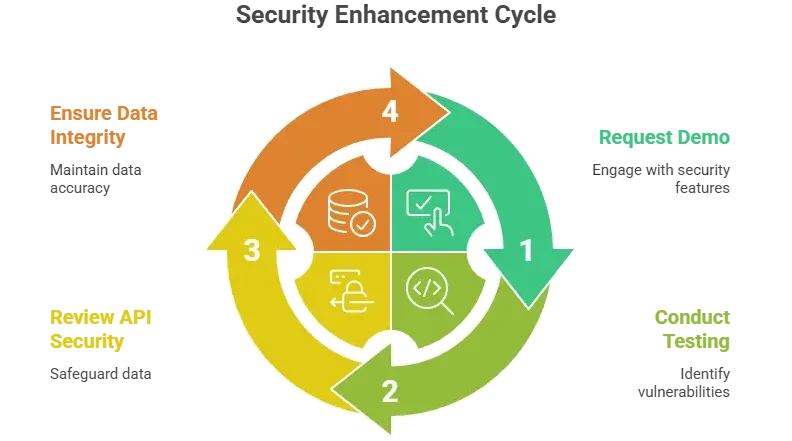
Due Diligence Steps
- Check past client reviews and case studies
- Evaluate their track record with security incidents
- Verify their infrastructure and hosting environment
- Assess their long-term support capabilities
A secure provider is transparent, certified, and proactive—not reactive.
Choosing wisely at this stage can prevent costly mistakes later.
Best Practices for Secure White-Label Pinduoduo App Implementation
Pre-Launch Security
Before launching your white-label Pinduoduo app, strong security foundations must be in place.
Security Audit Process
Conduct a full security audit to identify vulnerabilities in code, infrastructure, and integrations.
Code Review Requirements
Ensure clean, secure, and optimized code. Avoid unnecessary dependencies.
Infrastructure Hardening
Secure servers, configure firewalls, and restrict unauthorized access.
Compliance Verification
Confirm that your app meets GDPR, PCI DSS, and other relevant regulations.
Staff Training Programs
Train your team on data handling, phishing risks, and security protocols.
Post-Launch Monitoring
Security does not stop after launch. Continuous monitoring is critical.
Continuous Security Monitoring
Use real-time tools to detect suspicious activities and threats.
Regular Updates and Patches
Fix vulnerabilities quickly through frequent updates.
Incident Response Planning
Have a clear plan to respond to breaches or attacks.
User Data Management
Control access, monitor usage, and ensure safe data storage.
Backup and Recovery Systems
Maintain regular backups to prevent data loss during failures or attacks.
Security Implementation Timeline
| Phase | Key Actions | Timeline |
|---|---|---|
| Planning | Risk assessment, compliance checks | Week 1–2 |
| Development | Secure coding, API protection | Week 3–6 |
| Testing | Security audits, penetration testing | Week 7–8 |
| Launch | Final compliance verification | Week 9 |
| Post-Launch | Monitoring, updates, incident handling | Ongoing |
A structured approach ensures your white-label Pinduoduo app remains secure from day one and continues to stay protected as it scales.
Legal & Compliance Considerations
Regulatory Requirements
Running a white-label Pinduoduo app means dealing with multiple legal frameworks depending on your target market.
Data Protection Laws by Region
You must align your app with the regions you operate in.
Industry-Specific Regulations
If your app includes payments or financial services, additional compliance is required:
- PCI DSS for payment processing
- KYC/AML regulations for financial transactions
User Consent Management
Users must clearly agree to how their data is collected and used.
This includes:
- Cookie consent
- Data usage permissions
- Marketing opt-ins
Privacy Policy Requirements
A clear and updated privacy policy is mandatory.
It should explain:
- What data is collected
- How it is used
- How users can request deletion
Terms of Service Essentials
Your terms must define:
- User responsibilities
- Platform rules
- Dispute handling
Liability Protection
Insurance Requirements
Cyber insurance helps protect against financial losses due to breaches.
It often covers:
- Data breach costs
- Legal fees
- Business interruption
Legal Disclaimers
Clear disclaimers reduce legal exposure in case of misuse or system issues.
User Agreements
Well-defined agreements protect your business from liability.
They must be easy to understand and legally valid.
Incident Reporting Protocols
You must report breaches within defined timelines:
- GDPR: within 72 hours
- Other regions vary
Regulatory Compliance Monitoring
Compliance is not one-time.
You need ongoing monitoring to stay updated with changing laws in 2026.
Compliance Checklist by Region
| Region | Key Law | Requirement | Risk if Ignored |
|---|---|---|---|
| Europe | GDPR | Data protection & consent | Heavy fines (up to 4% revenue) |
| USA | CCPA | Data transparency | Legal action, penalties |
| China | PIPL | Data localization & control | App restrictions, bans |
| Global | PCI DSS | Payment security | Financial fraud, penalties |
Ignoring compliance is not just risky—it can shut down your business completely.
A secure white-label Pinduoduo app must be legally strong as well as technically secure.
Read more : – Business Model of Pinduoduo : Complete Strategy Breakdown 2026
Why Miracuves White-Label Pinduoduo App is Your Safest Choice
Miracuves Security Advantages
When security is your priority, choosing the right technology partner makes all the difference. Miracuves builds white-label Pinduoduo apps with a security-first approach from day one.
- Enterprise-Grade Security Architecture
Built using modern frameworks with strong protection layers across frontend, backend, and infrastructure. - Regular Security Audits and Certifications
Continuous audits ensure your app stays compliant with evolving security standards in 2026. - GDPR/CCPA Compliant by Default
Data protection is built into the system, not added later. - 24/7 Security Monitoring
Real-time monitoring helps detect and prevent threats before they cause damage. - Encrypted Data Transmission
All user and transaction data is protected using advanced encryption protocols. - Secure Payment Processing
Integrated PCI DSS-compliant payment systems reduce fraud risks. - Regular Security Updates
Frequent patches and updates keep your app protected from new vulnerabilities. - Insurance Coverage Included
Added protection layer to safeguard your business against unexpected incidents.
Miracuves doesn’t just deliver an app. It delivers a secure, scalable, and compliant platform designed for long-term success.
Final Thought
A white-label Pinduoduo app can be secure—but only if built and managed correctly. Security is not about avoiding risk completely. It’s about controlling it with the right standards, tools, and partners. Talk to our team and see why businesses trust Miracuves for safe, compliant platforms.
Choose a provider that prioritizes security from the start, not as an afterthought.
FAQs
1. How secure is white-label vs custom development?
White-label apps can be equally secure if built by a trusted provider. In many cases, they are more secure due to tested frameworks and regular updates.
2. What happens if there’s a security breach?
You must follow an incident response plan, notify users, and report to authorities within required timelines.
3. Who is responsible for security updates?
Usually, the white-label provider handles core updates, while you manage operational security practices.
4. How is user data protected in white-label apps?
Through encryption, secure servers, access controls, and compliance with laws like GDPR and CCPA.
5. What compliance certifications should I look for?
ISO 27001, SOC 2 Type II, GDPR, and PCI DSS are essential.
6. Can white-label apps meet enterprise security standards?
Yes, if built with proper architecture, certifications, and monitoring systems.
7. How often should security audits be conducted?
At least quarterly, with continuous monitoring in place.
8. What’s included in Miracuves security package?
End-to-end encryption, compliance-ready systems, regular audits, monitoring, and secure payment integration.
9. How to handle security in different countries?
Follow region-specific laws like GDPR (EU), CCPA (USA), and PIPL (China), and adapt policies accordingly.
10. What insurance is needed for app security?
Cyber liability insurance is recommended to cover breaches, legal costs, and financial losses.
Related Articles