


Best HeyGen Clone Script 2026 : Build Your Own AI Avatar Video Platform
Last Updated on May 8, 2026 by Anusha Neerukattu Key Takeaways What You’ll Learn A…


No product name matched, so we are showing the categories that cover this topic.
Food Delivery/Grocery Delivery/Pharmacy Delivery/Parcel Delivery/Alcohol Delivery
Social Networks/Communication/File Sharing/AI & Automation/Website Builder
Every sector carries its own regulations, workflows and integration realities. We build to those, not around them.
No product name matched, so we are showing the categories that cover this topic.
Food Delivery/Grocery Delivery/Pharmacy Delivery/Parcel Delivery/Alcohol Delivery
Social Networks/Communication/File Sharing/AI & Automation/Website Builder
Every sector carries its own regulations, workflows and integration realities. We build to those, not around them.
A launch-ready AI video platform where a script becomes an avatar-presented video, then a translated version, then an export, then a measured result – all inside one workspace with roles, billing and an audit trail.
Most AI video tools are a generation endpoint with a UI on top. This is the operating layer around it: workspaces, script versioning, template libraries, queue-backed rendering, an 18-tab admin command center and API metering, so a team can actually run production rather than make one-off clips.
Go Live in 6 Days with Avatar VideoAuto-TranslateWorkspace-ScopedAPI-MeteredOperator-GovernedWhite-Label
⚡ Platform at a Glance
Draft a script with version history, assign an avatar and voice, then generate through a queue-backed pipeline with real status tracking rather than a spinner.
Localization is its own pipeline entity with its own status and worker - not a re-render. Language, voice and subtitle options are set per translation job.
Every project, asset, template, webhook and subscription hangs off a workspace. That is what makes multi-brand and multi-client operation possible without separate installs.
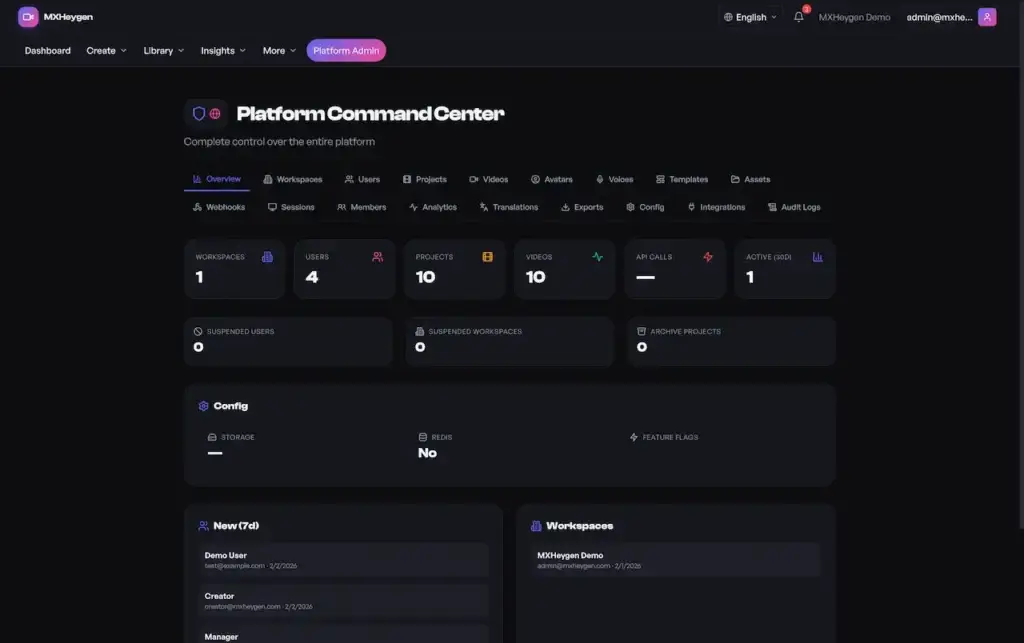
A dedicated platform-admin surface covering workspaces, users, projects, videos, assets, sessions, config, integrations and audit logs across the whole deployment.
Workspace subscriptions, plan-gated generation and export limits, API keys with per-endpoint usage metering, and Stripe-compatible billing flows.
156 translation keys per locale across English, Spanish, French, German, Hindi, Arabic, Chinese and Portuguese, switchable without a page reload.
🚀 Ready to launch your own AI video production platform?



Live in Action
Don’t just take our word for it – open the Miracuves HeyGen Clone yourself. Four live logins covering every role the platform defines: the person watching, the person producing, the person governing the workspace, and the person running the whole deployment. Sign in as each and the interface changes to match what that role is actually allowed to do.
USER ACCESS
The read-oriented surface - workspace visibility, finished videos, shared projects and notifications, without the controls a viewer has no business seeing.
CREATOR WORKSPACE
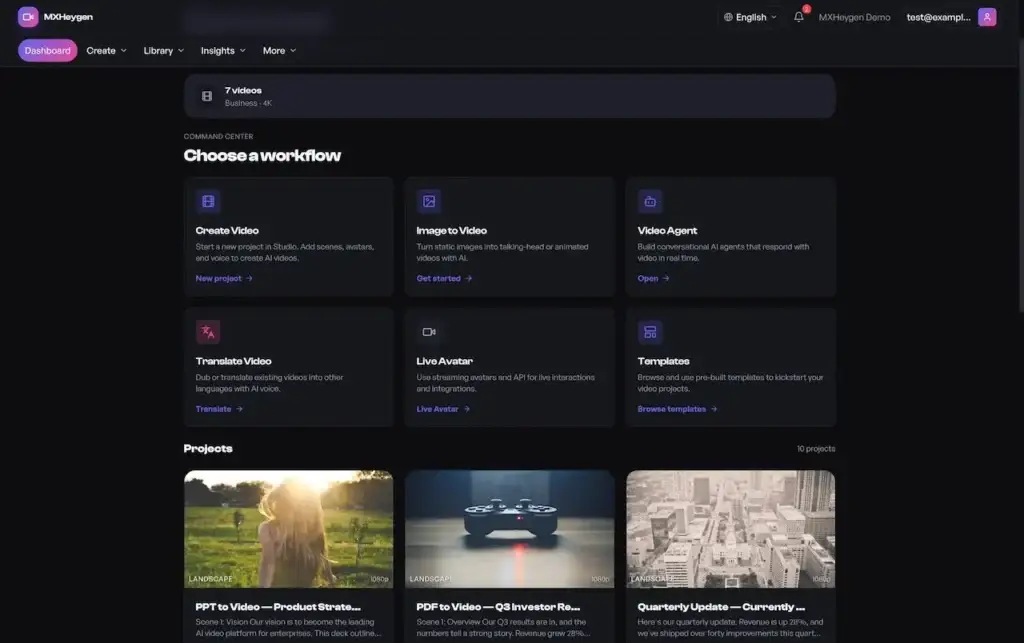
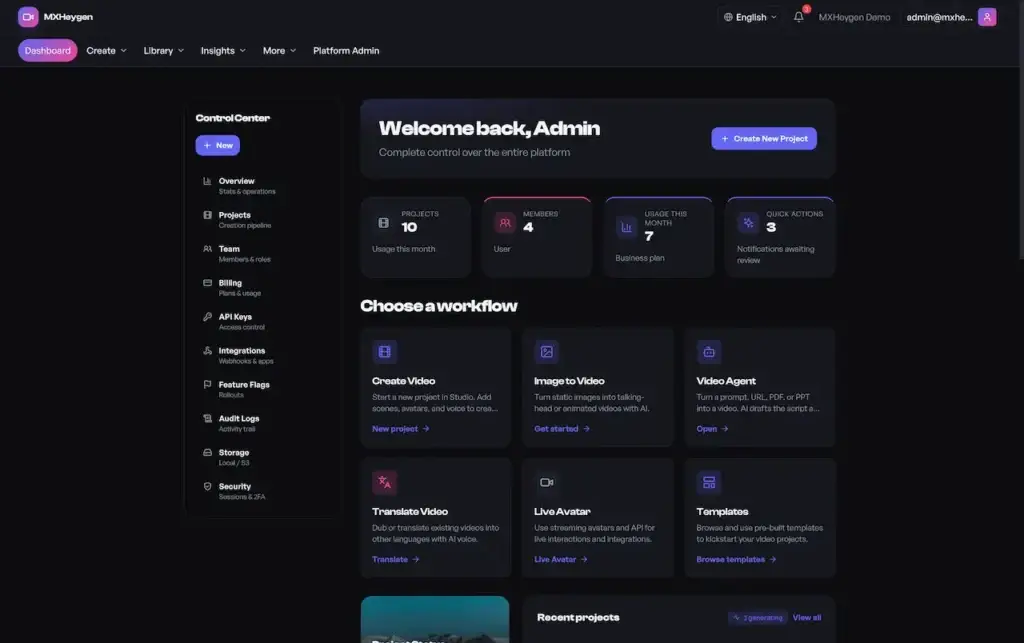
The daily production surface - draft a script with version history, pick an avatar and voice, apply a template, generate, then watch the pipeline move through pending, processing and completed.
MANAGER CONSOLE
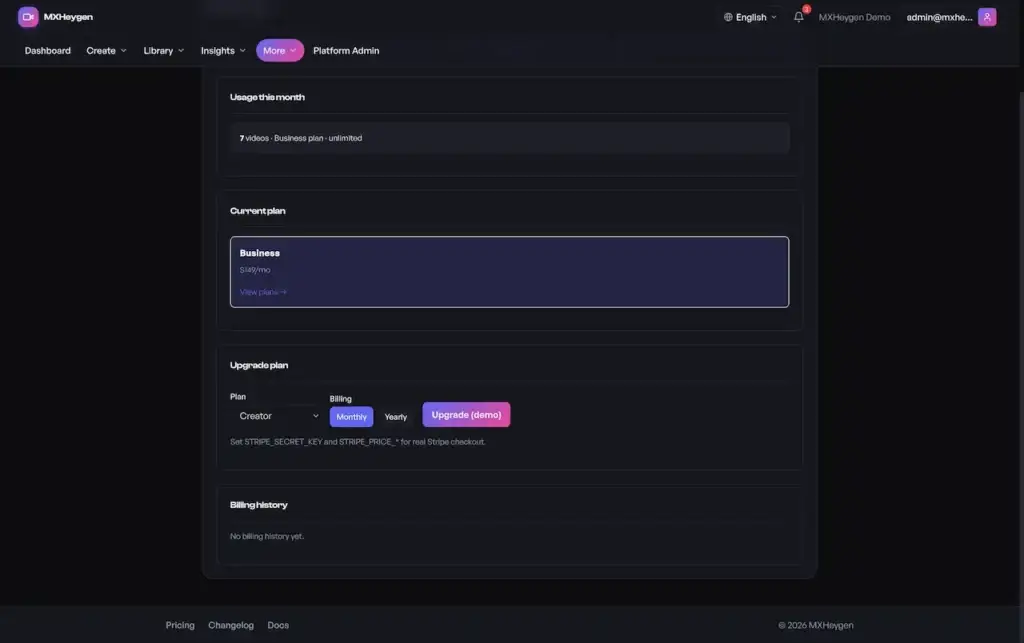
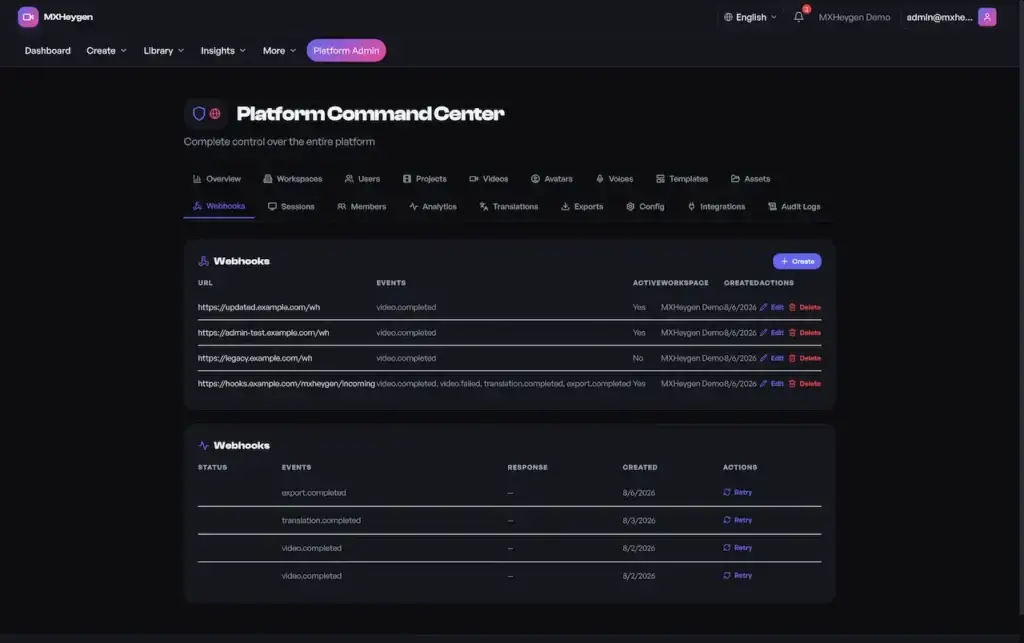
The workspace governance surface - invite members and set roles, review plan and usage, issue metered API keys, configure webhooks with delivery history, and read the workspace audit log.
ADMIN COMMAND CENTER
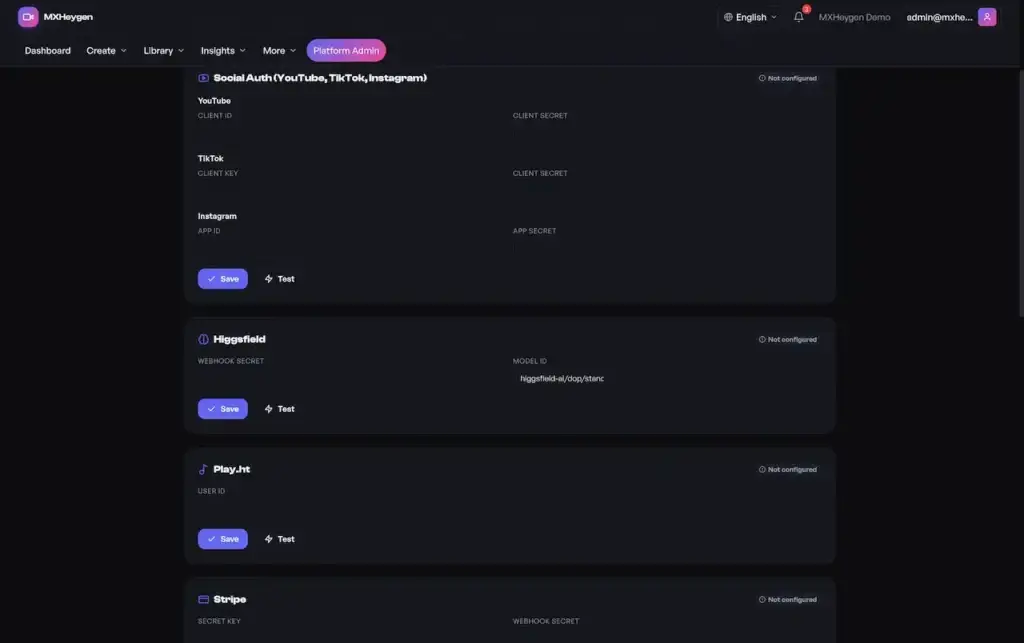
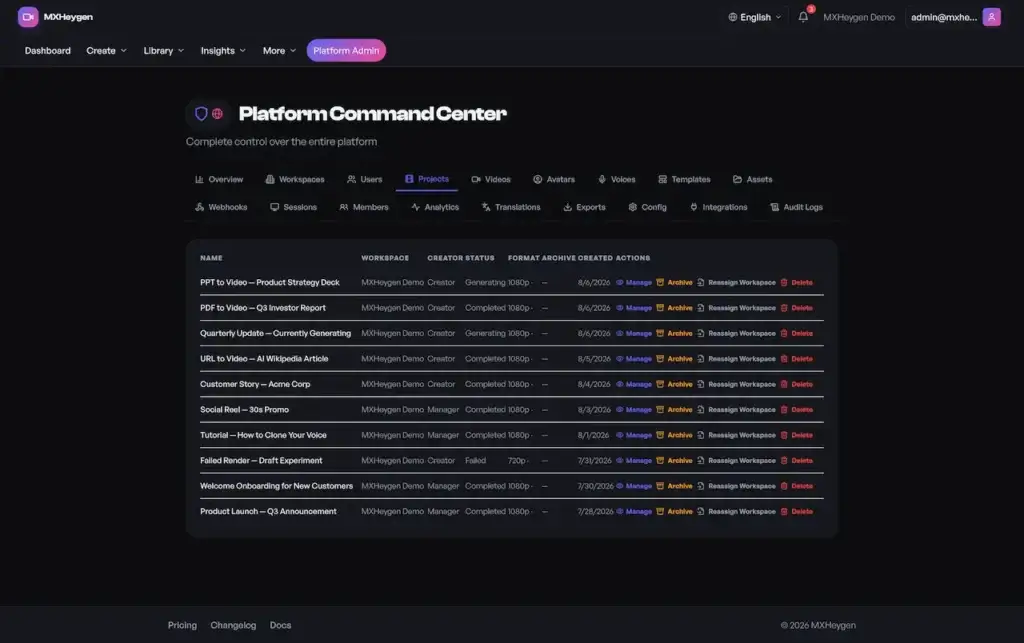
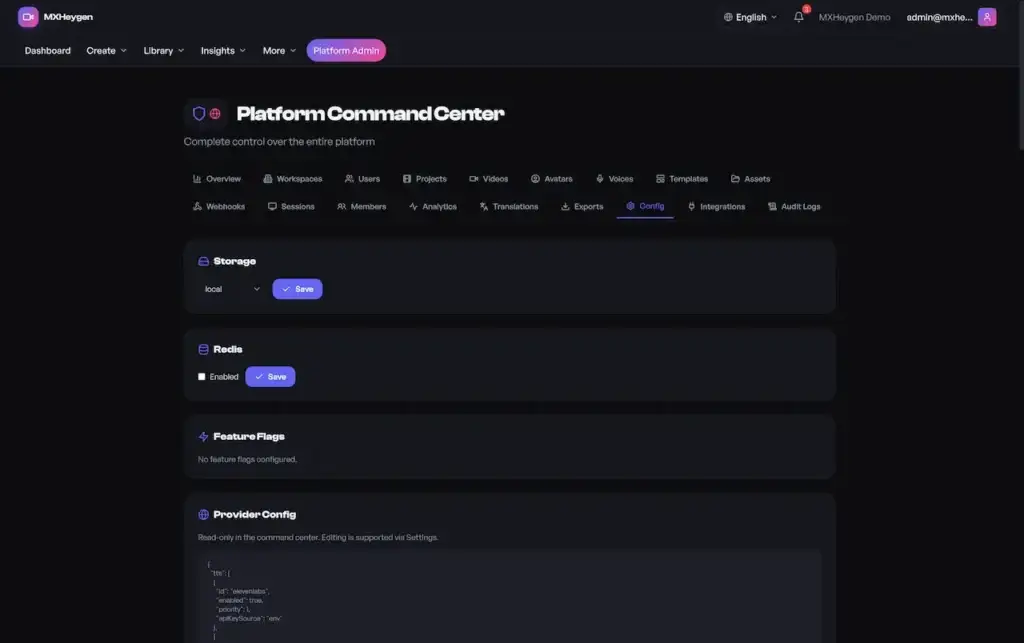
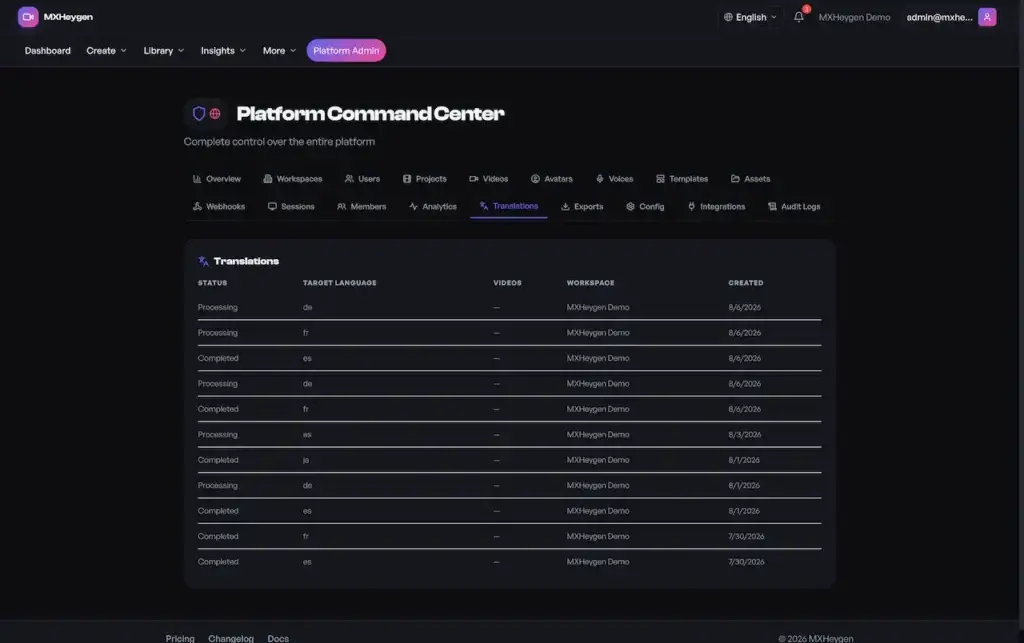
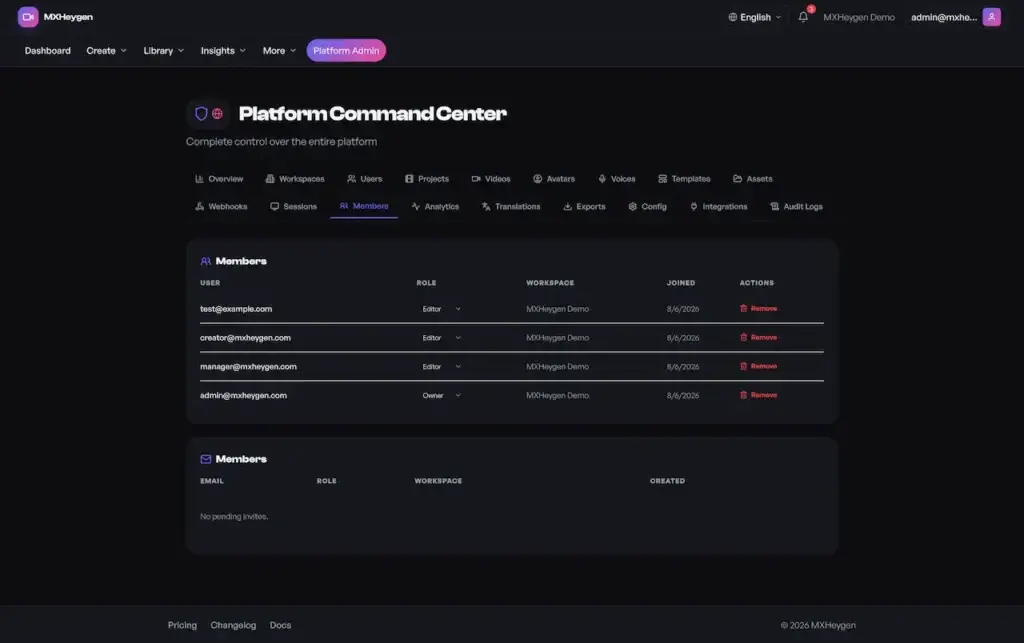
The operator surface - every workspace, user, project and video on the deployment, plus asset CRUD, session revocation, integration config with Save and Test buttons, and platform-wide audit logs.
Watch It Work
Want a guided tour? Book a 30-minute call and we will map your workflow – avatar and voice strategy, language coverage, plan structure, provider choice and go-live sequencing.
Every Screen Mapped
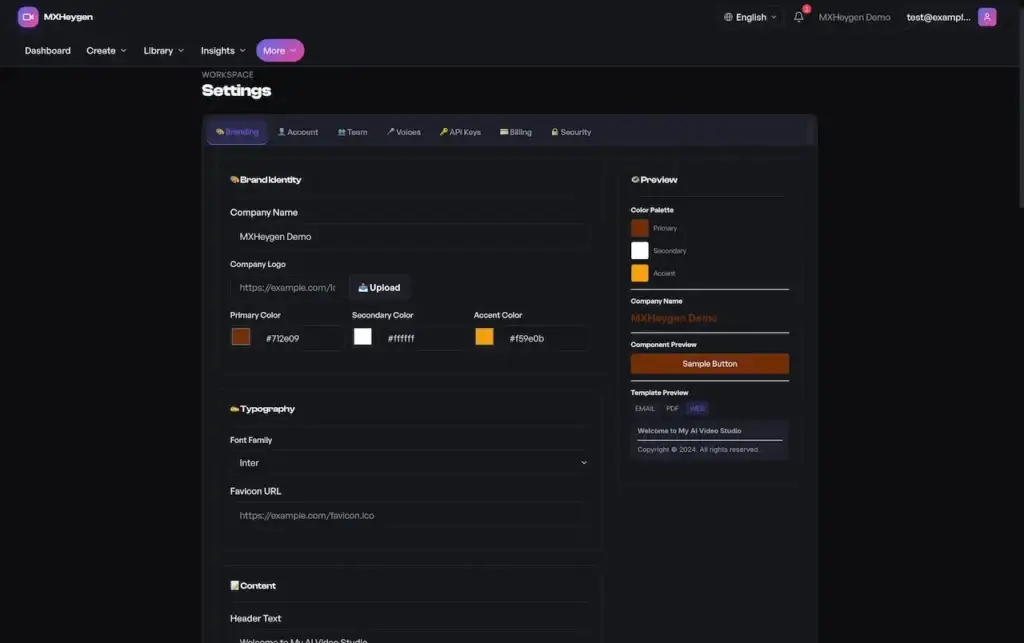
Four roles, four different jobs. Users view and consume. Creators write and generate. Managers govern the team, the plan, the API keys and the webhooks. Platform admins run the whole deployment. Walk each before you commit.
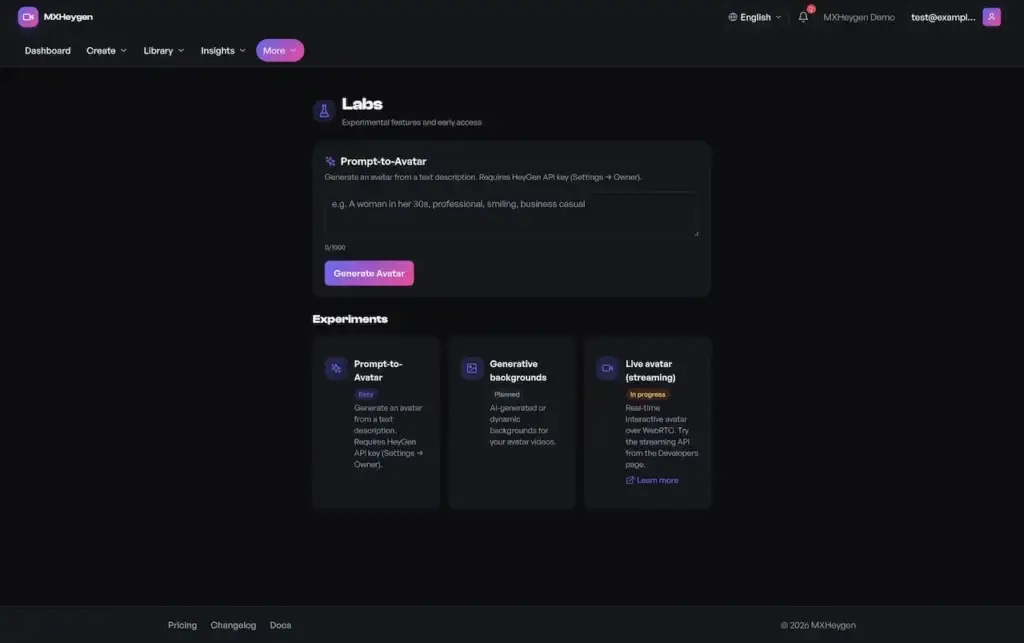
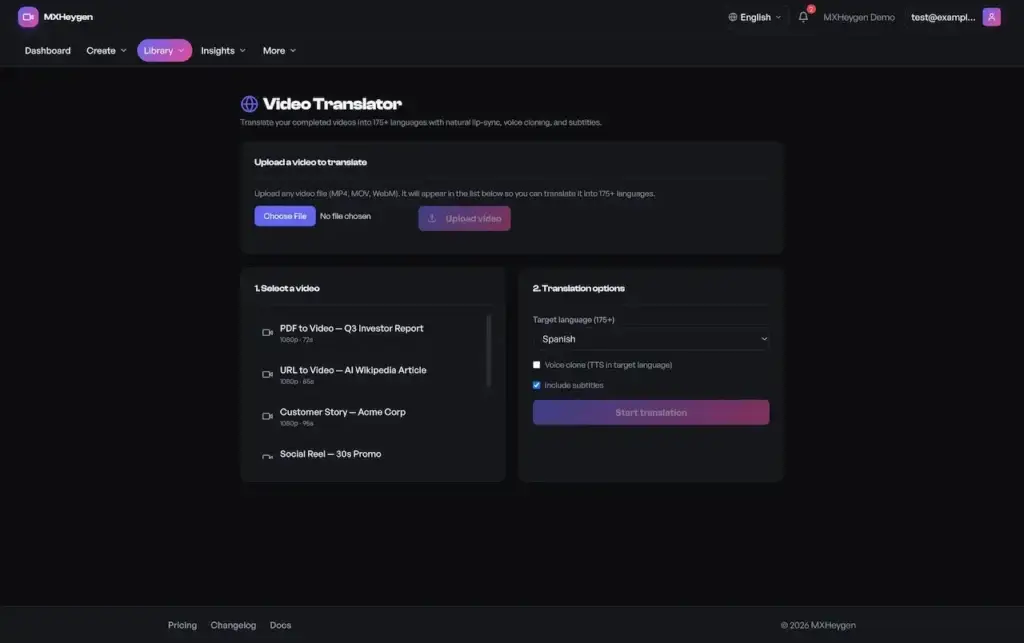
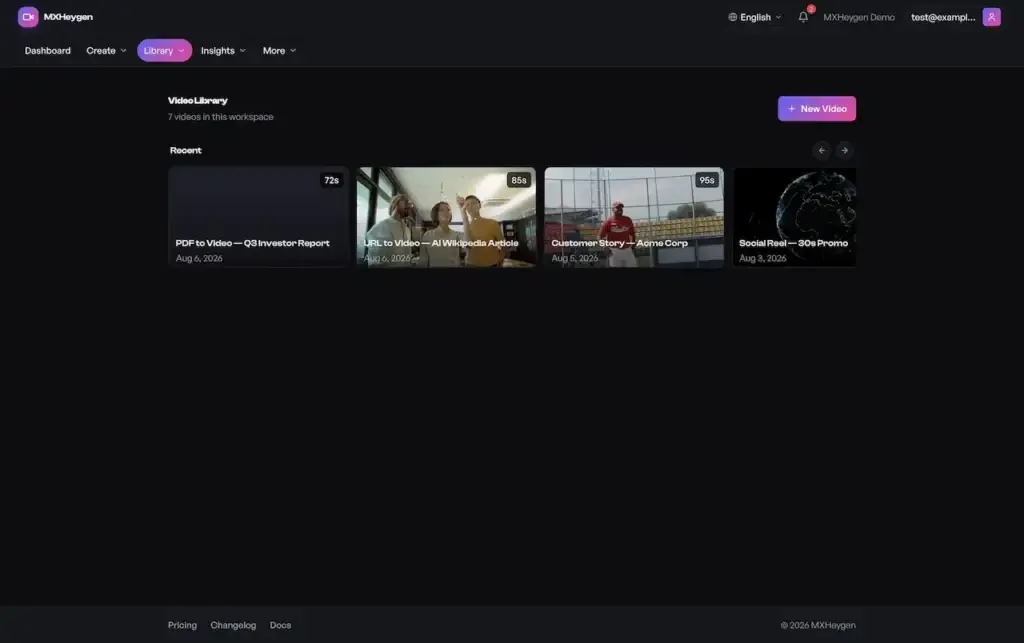
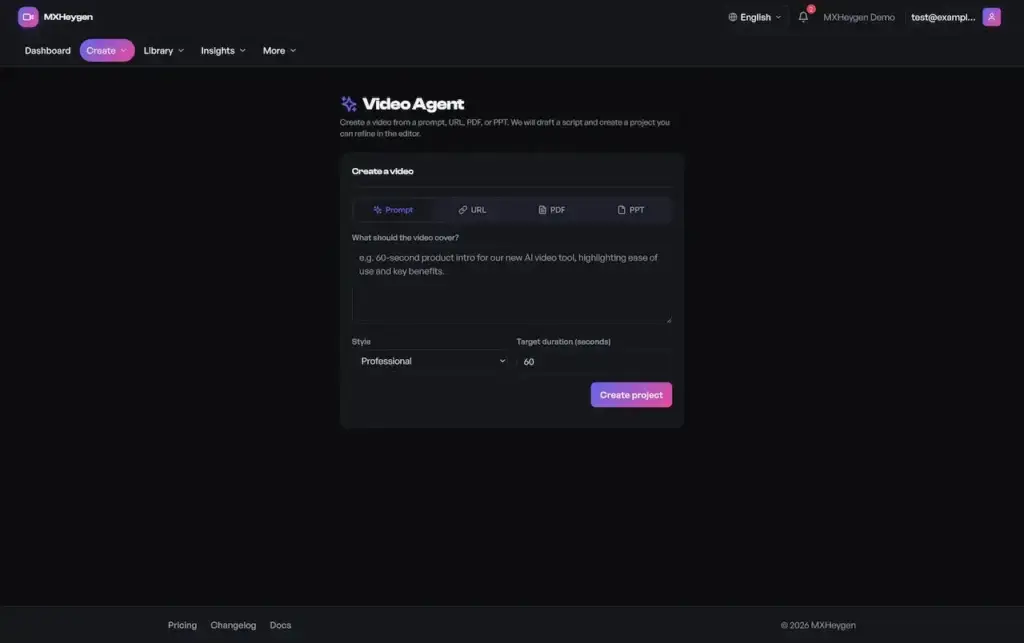
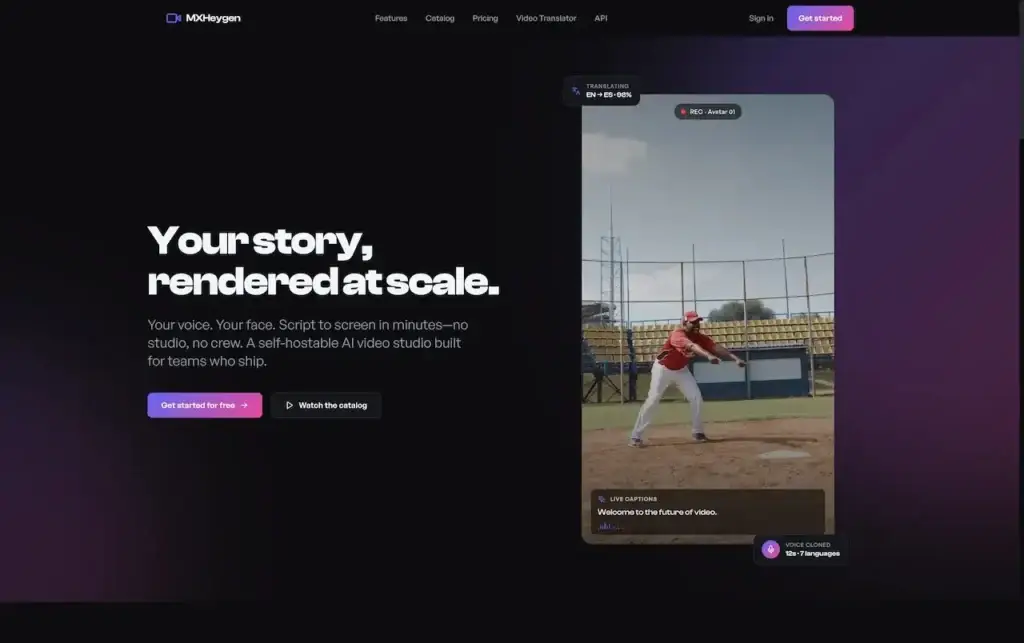
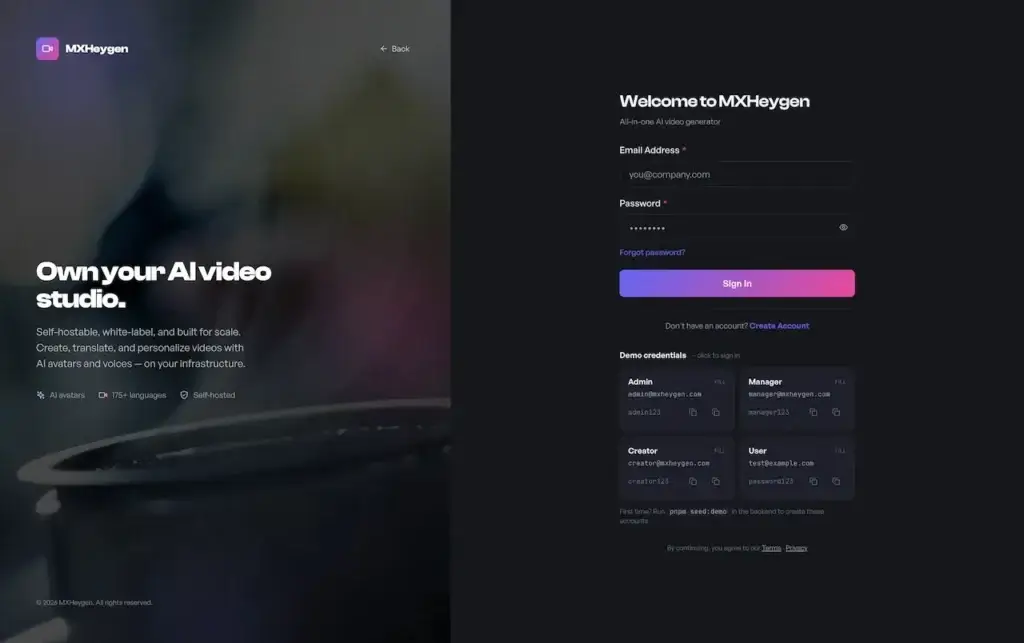
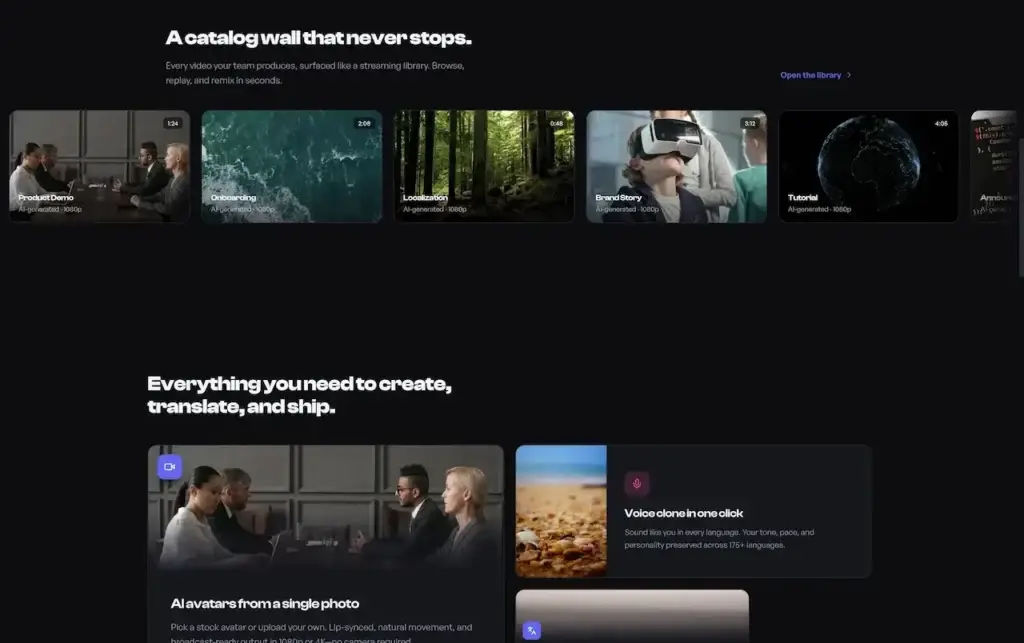
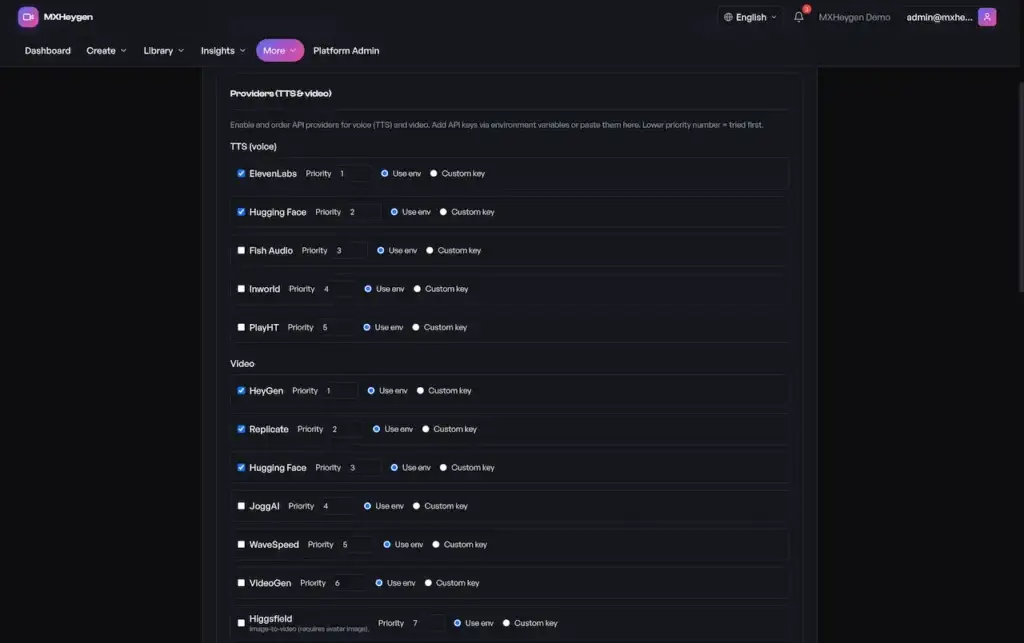
Want a guided walkthrough of any specific flow?
Client Voices
Feedback from operators running AI video production commercially – marketing organisations, agencies and training teams. Client identities withheld under NDA.
Proof in Production
How an enterprise marketing organisation consolidated fragmented video tooling onto the Miracuves HeyGen Clone. Client identity withheld under NDA.
the client - Regional
Short Video Platform
A white-label AI video platform deployed on the Miracuves HeyGen Clone, running multilingual campaign production across a distributed marketing organisation.
"Fast, scalable, and built for real users - Miracuves gave us a strong market entry."
The Basics
A HeyGen Clone App is a ready-made AI video production platform. A user writes a script, assigns an avatar and a synthetic voice, and the platform renders a presenter-style video. Around that core sit the things that turn generation into an operation: workspaces so teams and clients stay separated, script version history, reusable templates and asset libraries, a translation pipeline for other languages, export presets, analytics, subscription billing and an administrative console for whoever runs the deployment.

A React web application, a versioned REST API with GraphQL alongside it, and webhooks for event-driven automation.
Brand identity, colours, typography, copy, legal links, player styling and custom CSS, with white-label enablement controls.
Workspace roles, owner-only config, an 18-tab platform admin console and audit logging are in the product already.
Built for Web, API & Automation
You own the source, run it on your own infrastructure, and set your own plans, limits and commercial terms.

In plain terms: it is the fastest route to operating an AI video platform under your own brand, with the production workflow, the billing model and the governance layer already built.
Everything Included
The platform covers the full path from a blank script to a measured, distributed video, plus the commercial and operational layer around it. Readiness is stated per capability in the same language the technical documentation uses – Included, Supported, or Configuration required.
Write, revise and roll back. Every version is an immutable snapshot rather than an overwrite.
Rendering runs on workers with explicit state, so long jobs never block a request or vanish silently.
Localization is a first-class workflow stage with its own status, not a second render of the same job.
Format and resolution presets, an export queue with history, and plan-gated entitlements.
Searchable catalogues plus voice cloning with upload validation.
Reusable public and workspace templates with scene-level composition.
Workspace media with folders, tags, bulk operations and validated uploads.
Workspace KPIs, per-video detail, geo and device dimensions, CSV and JSON export.
Invitations, owner/editor/viewer scopes and a full invite lifecycle.
Metered programmatic access and event automation with delivery history and retries.
Workspace subscriptions with generation and export limits enforced server-side.
Eight locales, 156 keys each, switchable at runtime without a reload.
Note for buyers: Every capability above is white-label and operator-configurable through feature flags and provider settings. Generation, voice and translation quality depend on the AI providers you connect – those need your own accounts, and the documentation marks them Integration required. So do we.
How Operators Earn
The commercial model is in the schema, not bolted on. Subscriptions live at workspace level, plan limits are enforced server-side at the point of generation and export, and API usage is metered per endpoint per day – which is what makes a developer tier possible rather than aspirational.
One active subscription per workspace with plan, status and billing cycle persisted as the source of truth.
Video generation limits are checked before a job is queued, so overage is prevented rather than invoiced after the fact.
Resolution and format access differ by plan, enforced at the export service rather than hidden in the interface.
Keys are workspace-scoped and usage is recorded per endpoint per day, giving you a metered developer tier.
Member invitations and role assignment make per-seat or per-workspace pricing straightforward to operate.
Branding controls and white-label enablement let agencies and resellers deploy under their own name.
Important: The platform models plans, entitlements and usage, and integrates a Stripe-compatible flow. It still needs your own Stripe account and webhook wiring to move money. The documentation states that plainly and so do we.
Run It Without a Dev Team
This is the part that separates a platform from a generation demo. A dedicated platform-admin route, guarded by its own middleware, gives whoever runs the deployment control over every workspace, user, project and video on it – across 18 tabs.
Suspend, change owner, change plan or delete any workspace, with usage and billing visible per account.
Suspend, delete, promote to admin, reset a password, or impersonate a user for support.
Archive, restore, delete or reassign projects between workspaces without touching the database.
Avatars, voices, templates, assets and webhooks are all manageable platform-wide, with scene-by-scene template preview.
List active sessions and revoke one or all for any user across the deployment.
Nine sections configurable at runtime with Save and Test buttons - no redeploy to change a provider.
Storage mode, Redis toggle, feature flags, provider config, email, LLM model and billing plans.
Send a platform-wide notification to every user from one screen.
Cross-workspace analytics with a period selector, plus translation and export oversight.
Platform-wide trail of security-sensitive actions with actor, action and resource recorded.
Access control: Every command center route is guarded by dedicated platform-admin middleware that checks the super-admin flag and returns 403 otherwise. Suspension is enforced at the auth layer – a suspended user, or any user inside a suspended workspace, is blocked from every authenticated endpoint.
Transparent Pricing
Building an AI video production platform with Miracuves typically starts from around $3,399 for a launch-ready white-label HeyGen Clone and increases based on provider selection, language coverage, export and rendering scope, integration count, branding depth and infrastructure complexity.
Not sure which option
is right for you?
Talk to us - we'll understand your goals, timeline, and budget, and point you to exactly what you need. No upselling, just honest advice.
The Full Package
You receive the complete platform and its documentation set, not a stripped demo build.
The complete React and TypeScript production workspace, deployable to your own domain.
The Express service carrying versioned REST, GraphQL and the Swagger docs surface.
The full PostgreSQL model via Drizzle, with migration history and workspace tenancy throughout.
Four queue domains with Redis-backed and inline modes for generation, translation, export and webhooks.
The 18-tab platform-admin console with its own authorization middleware.
Identity, colours, typography, copy, legal links and player styling applied throughout.
Docker builds, CI/CD definitions, cloud setup and health-check verification.
60 days of guidance, 6 months of priority fixes and a year of updates.
Scope note: There is no native mobile application. The product is a responsive web platform, stated as such in four separate technical documents. Native mobile is available as custom development if your roadmap needs it – we would rather say so now than let you discover it later.
Know Your Buyer
This suits anyone who needs video produced repeatedly rather than occasionally – and who needs to govern who produced it, in what language, under which brand, and at what cost.
Launch a branded short-video platform where creators can publish, grow, engage, and monetize their content.
Turn your media audience into an owned short-video community instead of depending only on third-party platforms.
Create a dedicated platform where influencers, artists, educators, coaches, and niche creators can connect with their followers.
Use short-form video to convert product discovery into engagement, trust, and sales.
Launch a short-video app focused on a specific country, language, culture, city, or community.
Deploy HeyGen-style short-video platforms for clients using one proven product base with customization flexibility.
If your video output is measured in campaigns per month rather than projects per year, the workflow and governance layers here are the difference between a tool and an operation.
Where It Fits
The same codebase serves quite different operators depending on which layer leads. A marketing team leans on templates and analytics; an agency leans on workspace separation and white-label branding; a platform team leans on API keys and webhooks. Each is configuration rather than a fork.
Marketing Campaign Production
Produce recurring campaign video in volume, with reusable templates, brand-locked assets and analytics that tie output back to performance.
Agency Multi-Client Operations
Run client work inside separate workspaces on one deployment, each white-labelled, each with its own plan, usage and billing visibility.
Enterprise Learning & Development
Deliver multilingual training and enablement content, where the translation pipeline replaces a separate localization vendor and the audit trail satisfies compliance.
Product Education & Onboarding
Build product explainers and onboarding video that stay current, with script version history making updates a revision rather than a reshoot.
API-Embedded Video Automation
Embed video generation into another product through API keys, metered usage and webhook callbacks for asynchronous orchestration.
White-Label Platform Licensing
License the platform under your own brand to your own customers, with feature flags and provider config controlling what each deployment can do.
One platform, many configurations. Every use case above runs on the same schema and the same role model. What changes is the plan structure, the provider mix, the language coverage and the branding – not a fork you then maintain separately.
Market Timing
AI video generation stopped being the hard part. Models are commoditising and getting cheaper every quarter. What has not been solved is everything around generation – who is allowed to make what, in which languages, under whose brand, against which budget, with what audit trail. That is the durable product, and it is what most tools in this category still lack.
Per-seat AI video subscriptions scale cost with headcount. Self-hosting turns that into infrastructure you control and can resell.
One script becomes eight markets. Because translation is a first-class pipeline stage rather than a re-render, that multiplication is operational rather than manual.
Workspaces, roles, suspension, audit logs and an admin command center are what procurement asks about after the demo impresses them.
Model quality and pricing move constantly. Runtime-configurable providers mean a change is a settings edit, not a migration.
Metered API keys turn the platform into infrastructure other products build on, which is a materially different business from selling seats.
The same build works as a commercial product with plan gating, or as an internal platform with workspace separation by team.
It is also why buyers switch. Teams rarely leave a video tool because the output got worse; they leave because they outgrew a product that never had workspaces, roles or reporting.
Under the Hood
A monorepo with four packages – frontend, backend, shared types and utilities – so contracts stay honest between the web app and the API. The stack is deliberately conventional, which matters more than novelty when your team has to own it.
React · TypeScript · Vite
Node.js · Express · TypeScript · Zod
PostgreSQL · Drizzle ORM
Bull · Redis · inline fallback
JWT · TOTP 2FA · Helmet · rate limiting
Docker · CI/CD · health checks
Note for tech buyers: Nothing here is exotic – React, Express, PostgreSQL, Redis. Adding a provider, a language or a route family follows a documented pattern, and the security handbook spells out the extension steps. Your engineers can own this without learning a proprietary framework first.
End to End
It looks like one button from the outside. Underneath, a script moves through generation, localization, export and measurement as separate stages with separate state – which is what makes retries, progress tracking and failure diagnosis possible at all.

A user signs up, a workspace is created, and they become its owner. Everything downstream hangs off that tenancy boundary.

Projects hold creative intent; scripts hold the words. Every revision is snapshotted rather than overwritten, so editorial history survives.

Generation is queued rather than synchronous, because rendering takes longer than any sensible request timeout.

Translation is its own entity with its own worker, so a localized version has independent status and does not disturb the source.

Output packaging is a governed stage - what you can export depends on the plan you are on.

Analytics close the loop, which is what turns a production tool into something a marketing lead will defend in a budget review.
Visual Flow Diagram
Script -> Generate -> Translate -> Export -> Distribute -> Measure
How It's Built
Nearly every business table carries a workspace reference. That single decision is what makes multi-client and multi-brand operation possible without separate installs.
Videos, generations, translations and exports are separate entities rather than status flags on one row - so a failed translation never obscures a successful render.
Four domains with Redis-backed distribution and an inline fallback, so heavy media work never runs on the request path.
Integration settings live in a database table with environment-variable fallback, so providers change without a redeploy.
Audit logs record actor, action and resource. Webhook deliveries record status, retries and response codes.
Generation and export limits are checked in the service layer, so client tampering cannot reach them.
Performance Targets
Scale in an AI video platform is not concurrent page loads. It is render minutes, queue depth, media storage and how gracefully the system behaves when a provider slows down mid-campaign.
Generation, translation and export all take far longer than a request should live. Running them on dedicated workers means a slow provider produces a longer queue rather than a wall of timeouts, and a failed job is retryable rather than lost.
Redis-backed mode distributes those workers across instances. Inline mode keeps a constrained deployment functional, which is useful for staging and small installs but is not the production configuration.
Because tenancy runs through the schema, workload attributes cleanly to an account. Usage metrics, API usage counters and analytics are all workspace-scoped, so capacity planning and commercial reporting read from the same partition.
Media assets are a first-class table with local and S3-style storage modes selectable by the operator. Generation and export outputs are mapped into durable metadata rather than left as loose files, which is what makes retention and cleanup tractable later.
Adding a route family follows a documented pattern: schema and validation contract, auth mode, service-layer logic, audit hooks, then an optional queue handoff for anything heavy. Feature flags support gradual rollout.
That matters because the parts most likely to change – providers, languages, plan structure – are configuration rather than code.
Heavy media work runs on dedicated workers, never on the request path.
Redis-backed mode spreads generation, translation and export across instances.
Inline queue mode keeps a constrained deployment operable when Redis is unavailable.
Usage, API counters and analytics all attribute cleanly to an account.
Local or S3-style storage selectable at runtime through admin settings.
Dedicated liveness and readiness endpoints with dependency checks for deploy verification.
Health and readiness endpoints with dependency checks ship as standard, alongside structured request and error logging and optional exception telemetry. That is enough to verify a deploy and diagnose a failure.
What the documentation recommends adding before high volume is queue-lag monitoring and alerting on three specific signals: authentication anomalies, webhook delivery failures and worker error rates. Those are the three that tell you something is wrong before a customer does.
Honest scaling note: Redis-backed queue mode is documented as required for production, not optional. Monitoring and alerting need connecting before high-scale launch, and the docs recommend database indexes aligned to your highest-cardinality filters. None of that is shipped pre-tuned for your workload, and we would rather tell you now.
Built to Be Audited
The platform ships with both a VAPT and compliance posture document and a separate line-by-line security audit against an OWASP-derived checklist – two documents that do not always agree, which is itself useful. What both confirm: JWT verification with the algorithm allowlist pinned to HS256, TOTP two-factor, session persistence with revoke-one and revoke-all, global and auth-specific rate limiting, Zod schema validation across route families, parameterized queries through Drizzle, SSRF protection on webhook URLs blocking localhost and private ranges, Stripe webhook signature verification, upload validation on extension and MIME with filename sanitisation and path-traversal checks, Helmet security headers, and audit logging of actor, action and resource.
Security Practices Aligned with Industry Standards
Short-video platforms need strong protection across user accounts, creator profiles, video uploads, admin controls, monetization activity, and live interactions. The Miracuves HeyGen Clone follows security-first development practices with protected admin access, secure APIs, role-based permissions, and audit-friendly logging for important platform actions.
GDPR-Ready Data Handling
User privacy is critical for any creator-led short-video platform. The Miracuves HeyGen Clone supports privacy-aware data handling, user account controls, consent-friendly workflows, and structured data management for profiles, videos, comments, reports, creator activity, and platform usage.
Secure APIs, Sessions & Token Handling
User accounts, creator profiles, admin access, media uploads, wallet actions, and monetization flows are protected through secure API communication and authenticated session handling.
Secure Authentication & Role-Based Access
Platform access is controlled across users, creators, moderators, admins, and business teams. Admin roles can be restricted based on content review, payment control, analytics access, campaign management, or platform settings.
DDoS, Abuse & Bot Protection
Short-video platforms face spam, fake accounts, scraping, bot activity, and abuse attempts. Rate limits, protected admin routes, abuse monitoring, and CDN-level protection help reduce platform misuse.
Content Safety, Moderation & Audit Controls
Reported videos, comments, profiles, live sessions, and creator activities can be reviewed through admin workflows. Moderation actions, warnings, strikes, bans, and sensitive changes can be logged for platform accountability.
Verification restricts the algorithm allowlist to HS256, and production refuses a JWT secret under 32 characters.
TOTP enable, verify and disable, plus session listing with revoke-one and revoke-all.
A suspended user, or any user inside a suspended workspace, is blocked from every authenticated endpoint.
Zod schemas at the route boundary and Drizzle parameterized queries throughout.
Webhook URLs are validated against localhost, private IP ranges and cloud metadata endpoints before any fetch.
Extension whitelist, MIME check, filename sanitisation, path-traversal resolution check and per-type size limits.
What is configuration required before production: Strict CORS and CSP policy, an ENCRYPTION_KEY for provider-secret encryption at rest, managed secret storage, Redis-backed queue mode, and monitoring with alerting. Three further items are documented as recommended rather than shipped: API keys are stored raw rather than hashed, frontend tokens sit in browser storage rather than secure cookies, and resource-level authorization is applied unevenly across route families with centralized policy middleware named as the fix. Magic-byte upload validation is claimed in two documents and marked “not implemented” in the audit – we go with the audit.
Go Further
Out of the box the platform is complete and demonstrable. The modules below are what operators most often add – usually because they are entering a stricter market, integrating deeper, or passing a security review that asks for more than a baseline.
There is no mobile app today - the product is responsive web. Native iOS and Android builds are available as custom development.
Social auth connectors are included and runtime-configurable. SAML or OIDC for enterprise identity providers is additive work.
Strict origin allowlisting, a tightened content security policy and a secure-cookie token model in place of browser storage.
Provisioning the encryption key and hashing API keys at rest, showing plaintext only once at creation.
Log sink, queue-lag monitoring, and alerting on auth anomalies, webhook failures and worker error rates.
Centralized workspace-resource guard middleware with regression tests for cross-tenant access attempts.
Retention windows, purge schedules and PII classification across analytics, audit and event payloads.
Redis queue scale-out, index tuning against your highest-cardinality filters, and capacity instrumentation.
The HeyGen Clone is one platform in a broader AI and video suite. If your roadmap extends beyond avatar-presented video, these connect naturally.

Conversational AI platform with threaded chat, model routing, prompt libraries and usage-based billing.

Personalized video marketplace where fans request paid shoutouts from creators and talent.

Course platform with video lessons, instructor tooling, quizzes and enrolment management.

Video-sharing platform with channels, uploads, streaming, discovery and monetization.
The Commercial Case
An AI video platform has an unusually clean cost structure: your marginal cost is provider render minutes, and your revenue is subscriptions plus metered API usage. The margin lives in the gap, and plan gating is what protects it. The arithmetic below is illustrative, not a forecast.
Your variable cost is render minutes. Plan-enforced generation limits keep that predictable rather than open-ended.
Subscriptions give a forecastable base; metered API usage gives an upside that scales with someone else’s product.
Workspaces, roles, audit logs and the command center are what move deal size from hundreds to thousands per month.
Eight-language output from one script is the clearest ROI story a buyer in this category will hear.
A well-run HeyGen-style platform can become:
Example Revenue Scenarios
These are business patterns, not promises. Actual outcomes depend on your provider costs, plan design, language coverage and go-to-market. What the platform gives you is the control surface to run any of these models.
Scenario A – Focused Team Product
~$12K-$24K / month platform revenue potential
Two hundred workspaces averaging $60/month on mixed plans is around $12,000/month recurring, before API tier revenue. Provider render cost is the main variable, which is exactly why generation limits are enforced per plan.
Best suited to a focused vertical – one industry, one language set, one clear workflow – where depth beats breadth.
Scenario B – Multi-Market Platform
~$120K-$240K / month platform revenue potential
Two thousand workspaces at the same blended rate is roughly $120,000/month recurring, with the API tier and higher-plan export entitlements adding on top.
At this size the constraint moves to render throughput and provider cost management rather than acquisition.
Scenario C – Enterprise & White-Label
~$150K-$400K / month platform revenue potential
Fifty enterprise or white-label accounts at $3,000-$8,000/month is $150,000-$400,000/month. Deal size here is driven by governance, language coverage and deployment control rather than feature count.
This is where the admin command center and audit trail stop being nice-to-have and become the reason you win the deal.
Why Miracuves
There are many ways to get an AI video platform: wrap a generation API, hire freelancers, commission an agency, or own a documented product.
Workspaces, roles, script versioning, plan gating, API metering and an 18-tab admin console. A generation wrapper leaves every one of those to you.
Translation is its own entity, worker and status - not a second render. That is the difference between supporting eight markets and claiming to.
Workspace suspension, user impersonation for support, session revocation, runtime integration config and platform-wide audit logs.
The complete React, Express, PostgreSQL and worker codebase is yours to modify and deploy. No per-seat fee, no vendor who can reprice you.
PRD, feature catalogue, ERD, schema interpretation, API collection, technical dossier, security handbook, VAPT posture and a separate line-by-line security audit.
Included, Supported and Configuration required are stated per capability - including that API keys are unhashed, tokens sit in browser storage and there is no native mobile app. Nothing surprises you after purchase.
| Criteria | Miracuves HeyGen Clone | Generic Clone Script | Custom Dev Agency |
|---|---|---|---|
| Time to Launch | 6 days (Production) | Unknown / DIY | 6-9+ months |
| Source-Code Ownership | ✔ Full | Often limited / encrypted | Usually yes |
| Feature Depth (HeyGen-like) | High (generation, localization & export) | Basic (script & feed only) | Depends on budget |
| Security & Compliance | Strong (ISO mindset, GDPR-ready) | Minimal | Varies widely |
| Scalability & Performance | Cloud & CDN-optimised | Rarely considered | Depends on architecture |
| Monetization Options | Multiple (ads, gifts, subs) | Limited / needs custom work | Custom (more time & cost) |
| Admin & Analytics | Full-fledged dashboard | Very basic or missing | Custom build (extra cost) |
| Cost vs Speed vs Quality | Balanced | Cheap but risky | High cost, slow |
| Ongoing Support & Updates | Available with clear plans | Usually none | Depends on contract |
Wrapping a generation API gets you a demo in a fortnight. What it does not get you is workspaces, roles, billing, localization as a pipeline stage, or anything a procurement team will sign off. Here is where we differ.
Industries
The HeyGen Clone suits any organization producing video repeatedly under a brand. Marketing teams run campaign production with templates and analytics tying output to performance. Agencies partition client work into separate workspaces, each white-labelled with its own plan and billing visibility. Enterprise learning and development groups deliver multilingual training where the translation pipeline replaces a localization vendor and the audit trail satisfies compliance. Product teams keep explainers and onboarding current through script version history rather than reshoots. Media and publishing operations scale presenter-style content without studio time. Software platforms embed generation through metered API keys and webhook callbacks. Professional services firms produce client-facing updates at volume. And white-label operators license the whole platform under their own brand to their own customers.
Miracuves’ HeyGen Clone is built as a governance-first AI video platform adaptable to any production model – monetized where your business requires it, and white-labelled entirely under your brand.
Changelog
| Version | Date | What's New |
|---|---|---|
| v2026.1 | Aug 2026 | Initial release - AI video platform with avatar generation, translation pipeline, exports, analytics and an 18-tab admin console. |
Blog & Resources
Guides and analysis on AI video operations – avatar and voice strategy, localization workflows, provider selection, plan design and white-label platform development.
Best HeyGen Clone Script 2026 : Build Your Own AI Avatar Video Platform
Last Updated on May 8, 2026 by Anusha Neerukattu Key Takeaways What You’ll Learn A…
HeyGen Revenue Model: How HeyGen Makes Money in 2026
Last Updated on May 5, 2026 by Rutuja Gaikwad HeyGen, a leading AI video generation…

What Is HeyGen and How Does It Work?
Last Updated on August 7, 2026 by Ashish Khan Key Takeaways What You’ll Learn HeyGen…

FAQ
Everything you need to know about the Miracuves HeyGen Clone.
A ready-made AI video production platform. A user writes a script, assigns an avatar and synthetic voice, and the platform renders a presenter-style video, then translates it, exports it and reports on it. Around that sit workspaces, roles, template and asset libraries, subscription billing, API metering and an 18-tab administrative console. It ships white-label with full source-code ownership.
Yes. You launch under your own brand, terms and content policy. The product replicates common AI-video patterns rather than any protected asset. What does need care is the avatars and voices you offer: likeness and voice rights belong to whoever they depict, so use provider-licensed stock avatars or obtain explicit consent for custom ones. The platform gives you the verification and audit tooling; the consent process is yours.
From $3,399 for a launch-ready white-label build. The figure moves with provider selection, language coverage, rendering and export scope, integration count, branding depth and infrastructure.
Six days of work on our side – the platform is built, so our job is rebranding and deploying it. What extends the calendar is what we need from you: brand assets, hosting access, AI provider accounts, and a Stripe account if you are billing at launch. Provider approval is usually the long pole, so start it early.
Provider configuration is runtime-editable through the admin console rather than hard-coded, across nine integration sections including generation, voice and model providers. You bring your own accounts and keys; we wire them in. That indirection is deliberate – model pricing and quality in this category change faster than any release cycle.
No. The product is a responsive web platform – four separate technical documents state that no native mobile package exists. Native iOS and Android are available as custom development if your roadmap needs them, but we would rather be direct about what ships than let you find out later.
Translation is a distinct pipeline entity with its own worker and status, not a re-render of the original job. You select target language, voice and subtitle options; the job queues; status moves through pending, processing and completed independently of the source video. That separation is what lets one script produce eight market variants without any of them blocking the others.
Server-side, in the service layer, before a job is accepted. Generation limits are checked prior to queueing and export entitlements gate resolution and format access. Because enforcement sits below the API rather than in the interface, client-side tampering cannot reach it.
Eighteen tabs covering platform-wide stats; workspace suspend, owner change, plan change and delete; user suspend, delete, admin promotion, password reset and impersonation; project archive and reassignment; full CRUD over videos, avatars, voices, templates, assets and webhooks; session revocation; member roles; analytics, translations and exports; runtime config; nine integration sections with Save and Test buttons; and platform-wide audit logs.
The interface ships in eight languages – English, Spanish, French, German, Hindi, Arabic, Chinese and Portuguese – with 156 translation keys each and runtime switching without a reload. That is the UI. Video output language depends on the voices and translation providers you connect, which is a separate configuration.
A production-grade JWT secret, an ENCRYPTION_KEY for provider-secret encryption, a strict CORS origin allowlist and tightened CSP, Redis-backed queue mode, your AI provider accounts, and monitoring with alerting. If you are billing, a Stripe account with webhook wiring. Every one of these is named in the documentation as configuration required rather than shipped.
It ships with a VAPT and compliance posture document plus a separate line-by-line security audit against an OWASP-derived checklist. Genuine strengths: HS256-pinned JWT verification, TOTP two-factor, session revocation, rate limiting, Zod validation, Drizzle parameterized queries, SSRF protection on webhook URLs, Stripe signature verification and audit logging. Equally documented: API keys are stored unhashed, frontend tokens sit in browser storage rather than secure cookies, and resource-level authorization is uneven across route families with centralized policy middleware named as the fix. A reviewer will want both halves, and you get both.
Let's turn your idea into
a live platform.
Get a free consultation, a clear timeline, and honest answers. We'd rather earn your trust than rush a sale.
Build Your Branded App - Clone or Custom

Envision. Decide. Deploy.
With Perfection in Just 6 Days
90+ readymade clone apps deployed in 6 days. Schedule a Live Walkthrough Now.
Custom development from 15 days. Free consultation