



Key Takeaways
What You’ll Learn
- Booking.com is an online travel marketplace for hotels, homes, flights, and travel services.
- The platform connects travelers with hotels, hosts, and property providers globally.
- Users can compare prices, reviews, locations, and amenities before booking.
- The app supports reservations, payments, cancellations, and travel management in one place.
- It simplifies trip planning through a centralized booking experience.
Stats That Matter
- Booking.com provides access to millions of hotels, homes, apartments, and resorts worldwide.
- The platform supports bookings in multiple languages and currencies globally.
- Users can filter properties using price, ratings, facilities, and location preferences.
- Property providers manage listings, pricing, and availability through partner dashboards.
- The system handles reservations, confirmations, reviews, and payment processing digitally.
Real Insights
- The platform works by aggregating travel inventory from hotels and hosts into one searchable marketplace.
- Travelers can search, compare, reserve, and manage bookings directly through the app.
- Hotels and property owners pay commission fees for successful bookings.
- Reviews and ratings help users make more informed booking decisions.
- Its success depends on combining convenience, trust, and large-scale travel inventory.
Imagine you’re planning a trip to Amsterdam, Paris, or Tokyo. You open multiple websites trying to compare hotels, apartments, prices, reviews, and locations. Each site shows different information, and it quickly becomes confusing to find the best option.
That’s where Booking.com makes things easier.
Booking.com brings millions of accommodations from around the world onto one platform. Travelers can search hotels, apartments, resorts, hostels, and vacation rentals, compare prices and reviews, and book instantly without needing to visit multiple travel websites.
How Booking.com Started and Why It Matters
Booking.com was founded in the Netherlands in 1996 as a small online travel startup focused on making hotel reservations easier through the internet. Over time, the platform expanded globally and became part of Booking Holdings, one of the largest online travel companies in the world.
Today, Booking.com connects travelers with millions of properties across hundreds of countries. It has become one of the most widely used travel booking platforms for accommodations, helping people find places to stay quickly and confidently.
What You’ll Learn in This Guide
By the end of this guide, you’ll understand what Booking.com is, how the platform works for travelers and property owners, how its business model generates revenue, the features that make it successful, the technology behind the platform, and how entrepreneurs can build similar travel marketplace platforms.
What Is Booking.com? The Simple Explanation
What Is Booking.com ?
Booking.com is a global online travel marketplace where users can search, compare, and book accommodations such as hotels, apartments, resorts, hostels, and vacation rentals. It connects travelers with property owners and hospitality businesses, allowing people to find places to stay anywhere in the world through one centralized platform.
The Core Problem Booking.com Solves
Before online travel platforms existed, travelers had to contact hotels individually, rely on travel agencies, or search multiple websites to find available rooms. This process was time-consuming and often lacked price transparency.
Booking.com simplified this by bringing millions of accommodations onto one platform. Travelers can instantly compare prices, read verified reviews, check amenities, and confirm reservations without contacting each property individually.
In simple terms, Booking.com makes global accommodation booking fast and convenient.
Who Uses Booking.com?
Booking.com serves several types of users:
• Travelers booking hotels or vacation rentals
• Business travelers arranging work trips
• Families planning vacations
• Digital nomads searching for short-term stays
• Property owners and hotel managers listing accommodations
Because it supports many types of stays, the platform serves both leisure and professional travel needs.
Booking.com’s Market Position
Booking.com is one of the largest online travel agencies (OTAs) in the world. The platform lists millions of properties globally and operates in hundreds of countries and territories.
It competes with other travel platforms such as Expedia, Airbnb, and Agoda, but remains one of the most widely recognized accommodation booking platforms.
Why Did Booking.com Become So Successful?
Booking.com’s success comes from several factors:
• Massive global property inventory
• Easy-to-use search and booking interface
• Strong partnerships with hotels and hosts
• Trusted user review system
• Availability in many languages and currencies
As more travelers used the platform, more property owners joined to gain visibility — creating a powerful network effect.
What Makes Booking.com Different from Traditional Travel Booking?
Traditional travel booking often involved travel agents or direct hotel reservations.
Booking.com changed this by creating a self-service digital marketplace where travelers can search, compare, and book accommodations instantly. The platform acts as an intermediary that connects guests with properties while simplifying the reservation process.
How Does Booking.com Work? Step-by-Step Breakdown
Booking.com works as a global travel marketplace that connects travelers with hotels, vacation rentals, and other accommodation providers. The platform simplifies the booking process by letting users compare options, read reviews, and reserve rooms instantly.
How Booking.com Works for Travelers
Account Setup
• Visit the Booking.com website or download the mobile app
• Search accommodations without creating an account
• Create an optional account to save bookings, manage trips, and access loyalty benefits
An account also allows users to track reservations and receive travel updates.
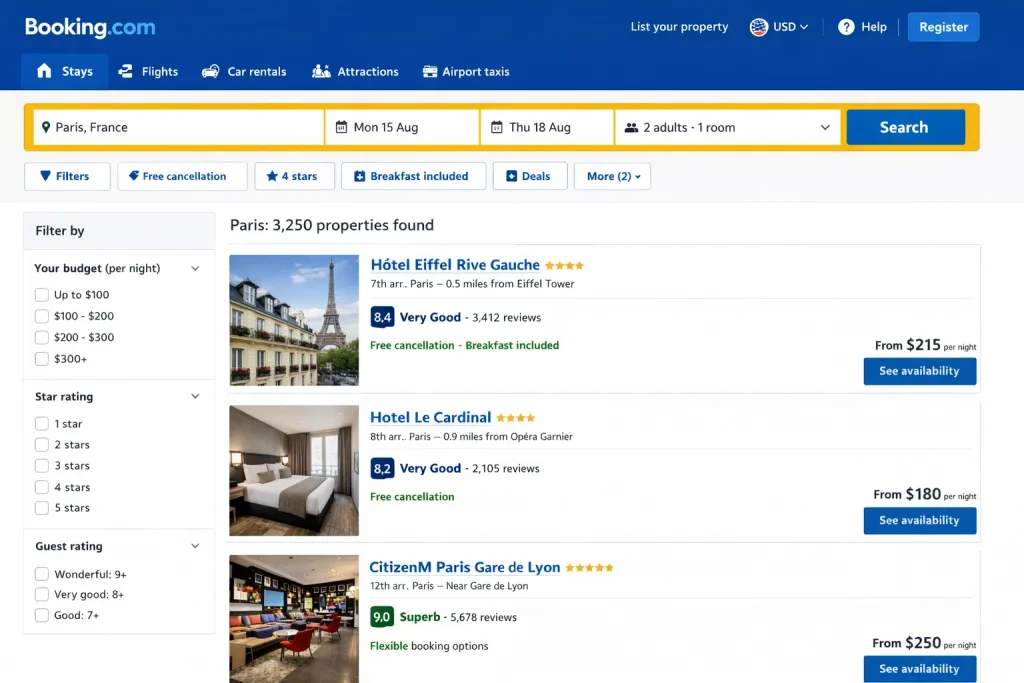
Searching for Accommodations
• Enter destination, travel dates, and number of guests
• Browse hotels, apartments, resorts, hostels, or vacation rentals
• Use filters such as price range, star rating, amenities, property type, and guest reviews
Travelers can also filter by:
• Free cancellation options
• Breakfast included
• Family-friendly stays
• Highly rated properties
• Sustainable travel options
Each listing shows property photos, room details, pricing, guest reviews, and available amenities.
Comparing Properties
Users can compare multiple properties before making a decision.
Each listing typically includes:
• Property photos and descriptions
• Location maps
• Guest ratings and reviews
• Price breakdown and taxes
• Cancellation policies
This helps travelers choose accommodations that match their budget and preferences.
Booking a Stay
• Select the preferred property and room type
• Review price, policies, and payment options
• Confirm reservation details
Depending on the property, payment may be processed immediately through the platform or paid directly at the hotel during check-in.
Managing Reservations
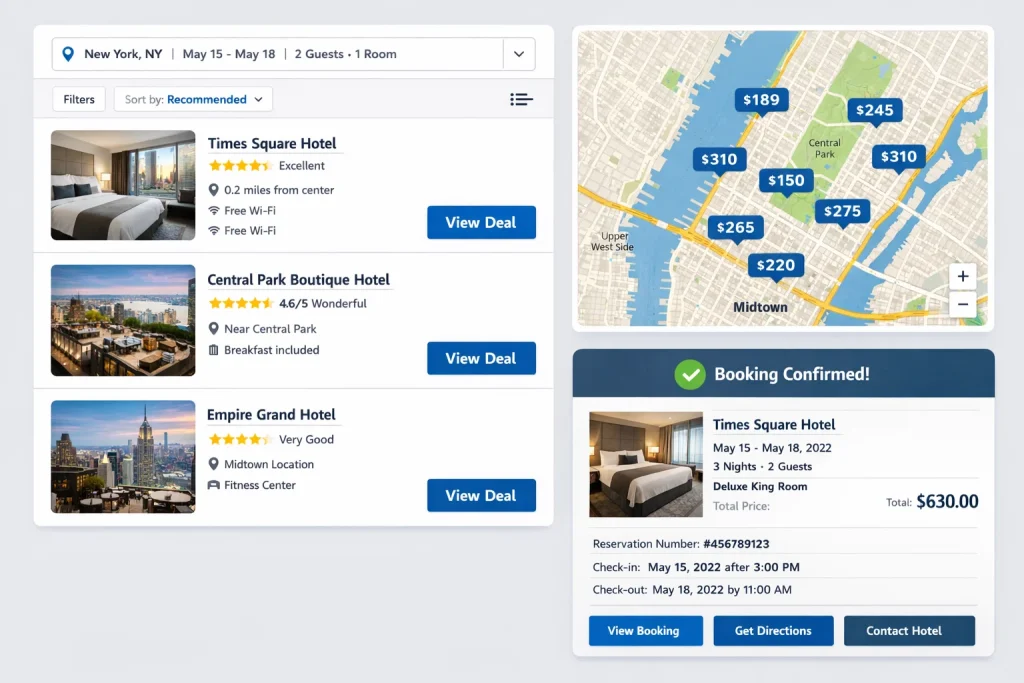
• Users receive booking confirmation instantly
• Reservations can be managed through the app or website
• Some bookings allow free cancellation or date changes
Travelers can also access customer support if issues arise.
How Booking.com Works for Property Owners
Property Registration
• Hotels, guesthouses, and property owners register their accommodations on Booking.com
• Hosts provide property details, photos, pricing, and availability
• The platform verifies the listing before publishing it
Once approved, the property becomes visible to travelers worldwide.
Managing Listings
Property owners can manage their listings through a dashboard that allows them to:
• Update prices and availability
• Upload photos and descriptions
• Respond to guest reviews
• Manage bookings and cancellations
This dashboard helps hosts manage reservations efficiently.
Receiving Bookings
When a traveler makes a reservation:
• The booking request is sent to the property
• Availability is automatically updated
• Hosts receive guest details and reservation information
Payments are processed depending on the property’s payment configuration.
Technical Overview Explained Simply
Booking.com operates as a large online marketplace built on powerful data systems and global infrastructure.
Core platform components include:
• Accommodation listing database
• Search and recommendation algorithms
• Booking and reservation management systems
• Payment processing tools
• Mobile and web applications for users
Properties upload their listings into the platform’s database, and travelers search those listings using filters and location tools.
When a user confirms a reservation, the system connects the traveler with the property and records the booking instantly.
In simple terms, Booking.com acts as a global travel marketplace that helps travelers find and reserve accommodations quickly while helping property owners reach a worldwide audience.
Booking.com’s Business Model Explained
Booking.com operates as an online travel marketplace that connects travelers with accommodation providers worldwide. Instead of owning hotels or properties, the platform generates revenue by facilitating bookings and providing marketing exposure for hospitality businesses.
How Booking.com Makes Money
• Commission fees from property bookings
• Advertising and visibility upgrades for properties
• Partner programs with travel providers
• Cross-selling travel services such as flights, car rentals, and experiences
The core revenue stream comes from commissions charged to hotels and property owners for each completed booking.
Commission-Based Revenue
Booking.com typically charges accommodation providers a commission for every reservation made through the platform. The commission rate varies depending on the country, property type, and promotional participation.
When a guest books a room:
• The reservation is confirmed through the platform
• The guest stays at the property
• Booking.com collects a commission from the property owner
Why It Matters: This model allows Booking.com to scale globally without owning physical properties.
Technical Innovation: Automated reservation tracking systems ensure accurate commission calculations for millions of bookings.
Visibility and Marketing Programs
Hotels and property owners can increase their visibility by joining promotional programs that improve their ranking in search results.
Examples include:
• Preferred partner programs
• Sponsored listing placements
• Seasonal promotional campaigns
Why It Matters: Properties gain more visibility and attract more bookings.
Technical Innovation: Algorithmic ranking systems determine search visibility based on performance and promotional participation.
Advertising and Promotion Tools
Booking.com offers marketing tools that help properties promote special offers or highlight specific accommodations.
These may include:
• Featured listings
• Limited-time discounts
• Mobile-only deals
Why It Matters: These tools help properties compete in crowded travel markets.
Technical Innovation: Dynamic pricing and promotion engines analyze demand trends to optimize visibility.
Cross-Selling Travel Services
Beyond accommodation bookings, Booking.com also offers additional travel services.
These include:
• Flight reservations
• Airport transfers
• Car rentals
• Travel experiences and attractions
Why It Matters: Expanding services increases revenue per traveler and creates a complete travel ecosystem.
Technical Innovation: Integrated travel APIs connect multiple travel providers into a unified booking platform.
Market Size and Global Reach
The global travel industry represents one of the largest economic sectors. Millions of people book hotels, vacation rentals, and travel services every day.
Online travel agencies like Booking.com benefit from:
• Growing international travel demand
• Increased online booking behavior
• Mobile travel planning
• Global tourism expansion
Because travelers prefer comparing multiple accommodations online, platforms like Booking.com have become essential tools for travel planning.
Revenue Model Breakdown
| Revenue Stream | How It Works | Why It Matters |
|---|---|---|
| Booking Commissions | Percentage charged on completed reservations | Core revenue driver |
| Promotional Programs | Paid visibility upgrades for properties | Boosts listing exposure |
| Advertising Tools | Sponsored placements and special promotions | Helps properties attract bookings |
| Travel Services | Flights, rentals, and transfers | Expands travel ecosystem |
Booking.com’s business model focuses on connecting global travelers with accommodations while generating revenue through transaction-based commissions and promotional services.
Key Features That Make Booking.com Successful
Booking.com’s success comes from a combination of powerful search tools, massive property inventory, and features that simplify travel planning. These features help travelers find accommodations quickly while helping property owners reach a global audience.
Advanced Search Filters
Booking.com allows users to filter accommodations by price, property type, guest ratings, amenities, location, and cancellation policies.
Why It Matters: Travelers can quickly narrow down thousands of listings to find options that match their preferences and budget.
Technical Innovation: Intelligent filtering algorithms and large-scale search indexing systems process millions of listings efficiently.
Global Accommodation Inventory
The platform hosts millions of properties worldwide including hotels, apartments, hostels, resorts, and vacation rentals.
Why It Matters: Travelers can explore a wide range of options in almost any destination.
Technical Innovation: Massive property databases supported by scalable cloud infrastructure.
Verified Guest Reviews
Booking.com allows only guests who completed a stay to leave reviews. These reviews include ratings for cleanliness, location, comfort, and service.
Why It Matters: Travelers can trust feedback from real guests when making booking decisions.
Technical Innovation: Verified booking data integration ensures reviews come from actual completed reservations.
Flexible Cancellation Options
Many listings offer free cancellation or flexible change policies.
Why It Matters: Travelers can book accommodations with confidence even if their travel plans change.
Technical Innovation: Reservation management systems automatically handle cancellations and policy rules.
Map-Based Property Discovery
Users can view accommodations on interactive maps that show nearby attractions, transportation, and neighborhoods.
Why It Matters: Location is one of the most important factors when choosing accommodation.
Technical Innovation: Geolocation mapping APIs combined with property database indexing.
Price Comparison and Deal Alerts
Booking.com highlights discounted prices, seasonal offers, and limited-time deals.
Why It Matters: Travelers can find competitive pricing and special offers easily.
Technical Innovation: Dynamic pricing systems analyze travel demand and promotional campaigns.
Genius Loyalty Program
Frequent users can join the Genius loyalty program, which offers discounts and perks on eligible properties.
Why It Matters: Encourages repeat bookings and customer loyalty.
Technical Innovation: Customer behavior analytics systems track user activity and reward engagement.
Mobile App Experience
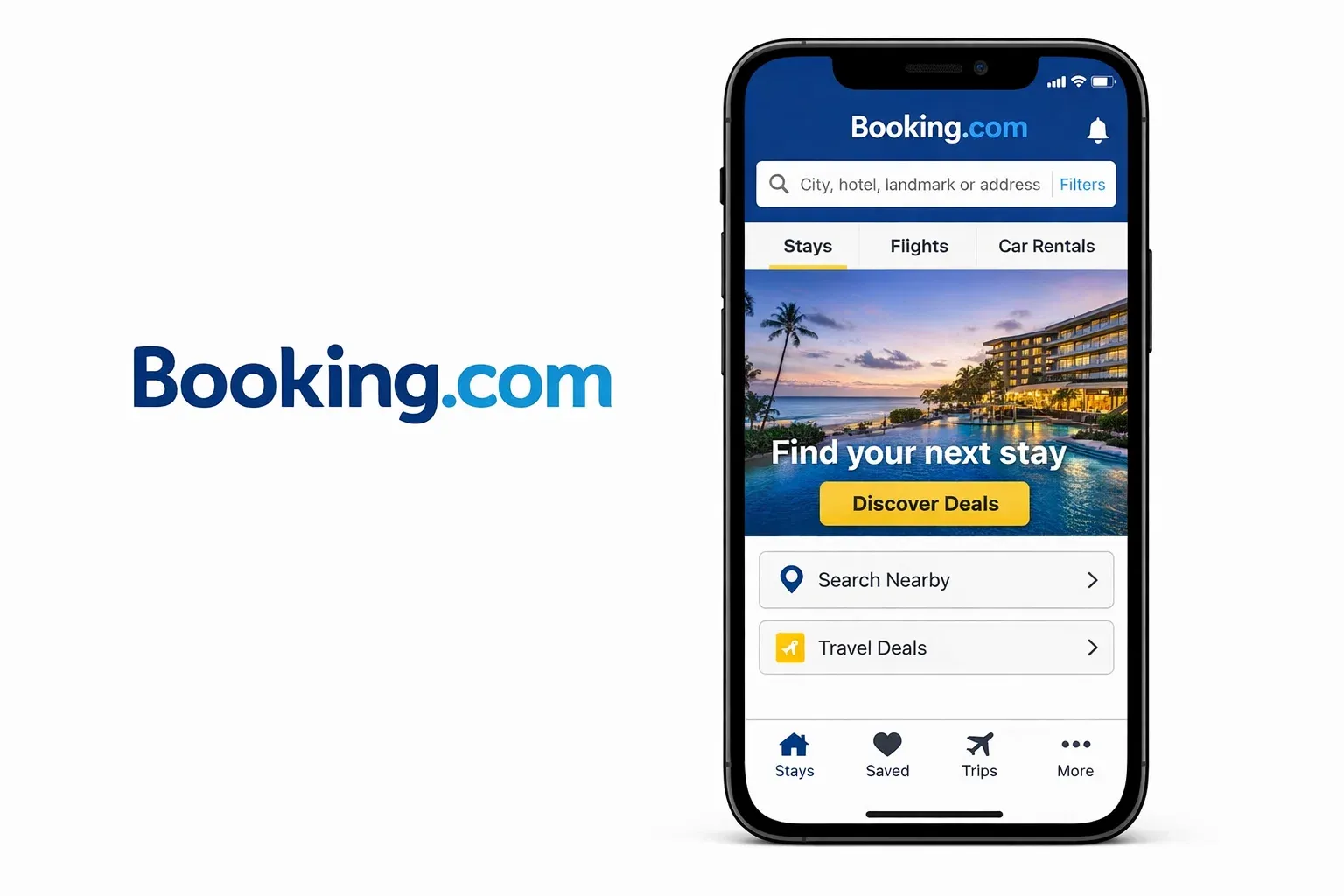
The Booking.com mobile app allows travelers to search accommodations, manage bookings, and receive notifications on the go.
Why It Matters: Many travelers plan and manage trips directly from smartphones.
Technical Innovation: Mobile-first design with synchronized cloud accounts across devices.
Multilingual and Multi-Currency Support
The platform supports dozens of languages and multiple currencies for international travelers.
Why It Matters: Users from different countries can book accommodations easily without currency confusion.
Technical Innovation: Internationalization systems handle localization, language translation, and currency conversion.
Instant Booking Confirmation
Most bookings are confirmed instantly without needing manual approval from the property.
Why It Matters: Travelers receive immediate confirmation and can plan trips faster.
Technical Innovation: Automated reservation systems connect property availability databases with real-time booking engines.
What Sets Booking.com Apart
The biggest strength of Booking.com is its global scale. With millions of properties, verified reviews, flexible booking options, and strong partnerships with hotels and hosts, the platform has become one of the most trusted travel booking services worldwide.
The Technology Behind Booking.com
Booking.com operates one of the largest travel marketplaces in the world. To handle millions of daily searches, reservations, and property updates, the platform relies on powerful infrastructure, data systems, and advanced algorithms.
Tech Stack Overview Simplified
Booking.com runs on a large-scale cloud and server infrastructure that connects travelers, property listings, and reservation systems across the globe.
The platform includes:
• Web applications used on desktop browsers
• Mobile apps for iOS and Android devices
• Backend systems managing bookings and user accounts
• Databases storing millions of property listings and reviews
• Global cloud infrastructure to ensure fast performance
These systems work together to deliver instant search results and reliable booking confirmations.
Massive Property Data Management
Booking.com stores information for millions of accommodations worldwide. Each listing contains details such as:
• Property location and address
• Room types and availability
• Pricing and seasonal rates
• Amenities and services
• Guest reviews and ratings
Why It Matters: Travelers can easily access a huge amount of property information in one place.
Technical Innovation: Distributed database systems and optimized indexing allow the platform to process millions of listing queries quickly.
Search and Recommendation Algorithms
When a user searches for accommodation, the platform must analyze thousands of properties and return relevant results instantly.
Search ranking may consider factors such as:
• Price
• Location relevance
• Guest ratings
• Availability
• Property popularity
Why It Matters: Users find the most suitable accommodations faster.
Technical Innovation: Machine learning algorithms analyze search behavior and booking patterns to improve recommendations.
Real-Time Booking and Availability
Booking.com must ensure that the rooms shown to travelers are actually available at the time of booking.
The platform synchronizes availability data with hotel systems to prevent overbooking.
Why It Matters: Accurate availability builds trust and avoids booking errors.
Technical Innovation: Real-time inventory synchronization and reservation APIs connect hotels with the booking platform.
Mobile and Web Platform Integration
Travelers often search for accommodations across multiple devices. Booking.com keeps user activity synchronized between web and mobile apps.
Features include:
• Saved searches and properties
• Booking history
• Travel itineraries
• Notifications for deals and updates
Why It Matters: Users can start planning on one device and finish booking on another.
Technical Innovation: Cloud-based user account systems that sync data across platforms.
Data Analytics and Personalization
Booking.com processes huge amounts of travel data, including user searches, bookings, reviews, and travel trends.
This data helps generate insights such as:
• Personalized property recommendations
• Dynamic pricing suggestions
• Travel demand trends
• Popular destinations
Why It Matters: Personalized experiences increase booking success and user satisfaction.
Technical Innovation: Big data analytics and machine learning models analyze global travel behavior.
Scalability and Global Infrastructure
Millions of travelers search and book accommodations every day. To handle this scale, Booking.com uses:
• Load-balanced server clusters
• Content delivery networks for fast page loading
• Cloud-based infrastructure for global access
• Automatic scaling during peak travel seasons
Why It Matters: The platform remains fast and stable even during massive traffic spikes.
API Integrations
Booking.com integrates with many external systems to deliver a full travel experience.
Examples include:
• Hotel property management systems
• Payment gateways
• Mapping and geolocation services
• Flight and car rental providers
• Translation and localization services
Why It Matters: These integrations allow the platform to operate as a comprehensive travel marketplace.
Why This Technology Matters for Business
The technology behind Booking.com allows it to operate at global scale while delivering reliable bookings and personalized travel recommendations.
By combining powerful databases, smart algorithms, and scalable infrastructure, the platform can connect millions of travelers with accommodation providers in real time.
Booking.com’s Impact & Market Opportunity
Booking.com has significantly transformed how people plan and book travel accommodations. By creating a centralized digital platform for accommodation discovery, it made global travel planning faster, more transparent, and more accessible for millions of travelers.
How Booking.com Disrupted the Travel Industry
Before online travel platforms became common, travelers often relied on travel agencies, phone reservations, or direct hotel bookings. Comparing prices or availability across multiple hotels required significant time and effort.
Booking.com changed this by enabling travelers to search, compare, and book accommodations instantly online. The platform introduced several major improvements to the travel experience:
• Centralized global accommodation listings
• Instant online booking without travel agents
• Transparent pricing and availability
• Verified guest reviews
• Direct communication between guests and properties
These changes allowed travelers to take control of the booking process while helping hotels reach a worldwide audience.
Market Size and Growth Opportunity
The global travel and tourism industry is one of the largest sectors in the world economy. Millions of people book hotels, apartments, and vacation rentals every day for business trips, vacations, and long-term stays.
Online travel agencies like Booking.com benefit from:
• Increasing international tourism
• Growth in online travel planning
• Mobile-first travel bookings
• Expansion of short-term rental properties
• Rising demand for flexible travel options
As more travelers rely on digital tools for planning trips, online travel platforms continue to expand their influence.
User Demographics and Behavior
Booking.com attracts a wide range of travelers including:
• Leisure travelers planning vacations
• Business travelers arranging work trips
• Families booking holiday accommodations
• Digital nomads searching for long-term stays
• International travelers exploring new destinations
Most travelers visit the platform multiple times before making a booking to compare prices, check reviews, and evaluate location options.
Global Presence
Booking.com operates globally and lists properties in hundreds of countries and territories. Its platform supports many languages and currencies, making it accessible to travelers worldwide.
Users can search accommodations in:
• Major tourist cities
• Business travel hubs
• Remote vacation destinations
• Coastal resorts and countryside stays
This global coverage helps travelers plan trips almost anywhere in the world.
Future Trends in Online Travel Platforms
The future of travel booking platforms will likely include:
• AI-powered travel recommendations
• Smart pricing optimization
• Enhanced virtual hotel tours
• Integrated travel planning tools
• Personalized trip management dashboards
Technology will continue to simplify the travel booking experience while helping travelers make more informed decisions.
Opportunities for Entrepreneurs
The success of Booking.com demonstrates the potential of digital travel marketplaces. Entrepreneurs can explore opportunities such as:
• Regional hotel booking platforms
• Vacation rental marketplaces
• Niche travel accommodation platforms
• Travel experience marketplaces
• Property management and booking tools
By combining accommodation listings, user-friendly search tools, and booking systems, new travel platforms can serve specialized travel markets.
This massive success is why many entrepreneurs want to create similar platforms that connect travelers with accommodation providers through technology-driven marketplaces.
Building Your Own Booking.com-Like Platform
After understanding how Booking.com works, many entrepreneurs wonder whether they can build a similar travel marketplace. The answer is yes. Platforms that connect travelers with accommodation providers continue to attract strong demand because travel planning increasingly happens online.
Why Businesses Want a Booking.com Clone
Travel booking platforms combine large user demand with scalable marketplace economics. Every trip requires accommodation, which creates continuous demand for booking platforms.
Businesses are interested in this model because it offers:
• Global user reach
• Recurring commission-based revenue
• High booking volume potential
• Scalable digital marketplace infrastructure
• Opportunities to expand into flights, rentals, and travel experiences
Instead of owning hotels, a travel marketplace focuses on connecting travelers with property owners and earning a commission from each booking.
Key Considerations Before Development
Before launching a Booking.com-style platform, businesses should carefully evaluate:
• Target market or geographic focus
• Property partner onboarding strategy
• Payment and commission structure
• Regulatory requirements for travel platforms
• Customer support infrastructure
• Marketing strategy to attract both travelers and property owners
A successful travel marketplace must balance both sides of the platform — guests and accommodation providers.
Miracuves Booking.com-Like Hotel & Travel Booking Platform Solution Cost and Tech Stack
Miracuves Pricing for a Booking.com-Like Travel & Hotel Booking Platform developed using Node.js / React.js Architecture is available on request. Contact Miracuves for custom pricing based on platform features, scalability requirements, integrations, and deployment scope. Estimated delivery timeline: 30 to 90 Days.
Build a powerful hotel booking and travel marketplace platform designed for startups, travel agencies, hospitality businesses, tourism companies, and enterprise travel operations.
Core Workflows: Hotel listings management, room booking systems, travel search filters, reservation management, guest and host workflows, cancellation handling, review systems, and travel itinerary operations.
Built-in Travel Operations: Real-time availability synchronization, dynamic pricing systems, payment processing, booking analytics, commission management, transaction tracking, customer communication systems, and reservation reporting tools.
Management Hub: Admin dashboards, hotel partner management, booking controls, analytics reporting, customer support systems, audit logs, dispute management, and centralized travel operations management.
Enterprise-Ready: Fully customizable architecture prepared for secure scaling, global booking operations, multi-property management, enterprise hospitality workflows, API-heavy travel ecosystems, and long-term platform growth.
Why does a Booking.com-Like Platform require Node.js / React.js architecture?
Travel booking platforms process massive volumes of search requests, booking operations, real-time availability updates, and payment workflows across global hospitality ecosystems. These platforms require scalable infrastructure, secure transaction handling, and highly responsive interfaces for travelers, hotel partners, and administrators.
We recommend a modern JavaScript-based architecture for this type of platform because:
Built for Real-Time Operations: Node.js enables scalable backend operations for live booking systems, hotel inventory synchronization, pricing updates, payment processing, and concurrent travel transactions.
Advanced Dashboard Experience: React.js supports highly interactive interfaces for hotel search experiences, booking dashboards, reservation management, analytics reporting, and seamless customer interactions.
Enterprise Scalability: This architecture is well-suited for handling large travel inventories, global user traffic, multi-provider hospitality ecosystems, and growing travel marketplaces.
Flexible Integration Layer: Easily integrates with hotel management systems, payment gateways, CRM tools, mapping APIs, analytics platforms, communication systems, and third-party travel providers.
You get a scalable, enterprise-grade travel booking platform designed for long-term operational growth.
Note: Final pricing depends on platform modules, booking engine complexity, third-party integrations, deployment infrastructure, payment systems, and custom workflow development.
Essential Features to Include
A competitive accommodation booking platform should include:
• Advanced accommodation search and filters
• Map-based property discovery
• Property listings with images and amenities
• Booking and reservation management system
• Secure payment processing
• User reviews and rating system
• Host dashboards for property management
• Admin dashboard for platform management
Advanced features can include:
• AI-based travel recommendations
• Price comparison tools
• Loyalty and rewards programs
• Virtual hotel tours
• Integrated travel services like flights and car rentals
Conclusion
Booking.com shows how a well-designed digital marketplace can transform an entire industry. By bringing millions of accommodations onto a single platform and making it easy for travelers to search, compare, and book stays, it simplified global travel planning for people everywhere.
For entrepreneurs, the key lesson is the power of marketplace platforms. When a business successfully connects two groups — travelers and accommodation providers — it creates a scalable ecosystem where both sides benefit. As online travel continues to grow, platforms that simplify booking and improve user experience will continue to shape the future of the travel industry.
FAQs :-
What is Booking.com?
How does Booking.com make money?
Is Booking.com available worldwide?
Do travelers pay extra to use Booking.com?
No. Travelers can search and book accommodations on Booking.com for free. The platform earns commissions from accommodation providers rather than charging users directly.