




Key Takeaways
What You’ll Learn
- VRBO is a vacation rental marketplace that connects property owners with travelers.
- The platform allows users to book homes, villas, apartments, cabins, and vacation stays online.
- VRBO earns revenue through booking fees, service charges, and host subscription models.
- Secure payments, verified listings, and reviews help improve trust between hosts and guests.
- Vacation rental platforms rely heavily on user experience, property quality, and booking convenience.
Stats That Matter
- VRBO operates as part of Expedia Group’s global travel and vacation rental ecosystem.
- Vacation rental demand continues growing as travelers prefer flexible and private accommodations.
- Mobile bookings and digital travel platforms are driving rapid growth in short-term rentals.
- Verified reviews and host ratings strongly influence booking decisions on rental platforms.
- Travel marketplaces increasingly use AI and personalization to improve booking recommendations.
Real Insights
- Vacation rental platforms succeed when they balance trust, convenience, and property quality.
- Clear property listings, transparent pricing, and smooth booking flows improve customer retention.
- Host verification and secure payment systems reduce fraud and booking disputes.
- Travel apps with strong mobile experiences often achieve higher booking engagement.
- Long-term growth depends on scalable infrastructure, customer support, and reliable user experiences.
Imagine you’re planning a family vacation to Florida or a weekend getaway in the mountains. Hotels feel crowded and expensive, and you’d prefer a full home where everyone can relax, cook meals, and enjoy privacy.
That’s where Vrbo comes in.
Vrbo helps travelers find entire vacation homes instead of traditional hotel rooms. Whether it’s a beach house, mountain cabin, or city apartment, travelers can book private homes for short-term stays directly through the platform.
How Vrbo Started and Why It Matters
Vrbo, which stands for Vacation Rentals by Owner, was founded in the United States in 1995. The platform was created to help homeowners rent out their vacation properties directly to travelers looking for more space and comfort than hotels could offer.
Over time, Vrbo grew into one of the largest vacation rental marketplaces in the world and eventually became part of Expedia Group, one of the biggest travel companies globally.
Today, Vrbo connects millions of travelers with vacation homes across thousands of destinations. It has become a popular choice for families, groups, and travelers who prefer private accommodations.
What You’ll Learn in This Guide
By the end of this guide, you’ll understand what Vrbo is, how the platform works for travelers and property owners, how its business model generates revenue, the features that make it successful, the technology behind the platform, and how entrepreneurs can build a similar vacation rental marketplace.
What Is Vrbo? The Simple Explanation
What Is Vrbo ?
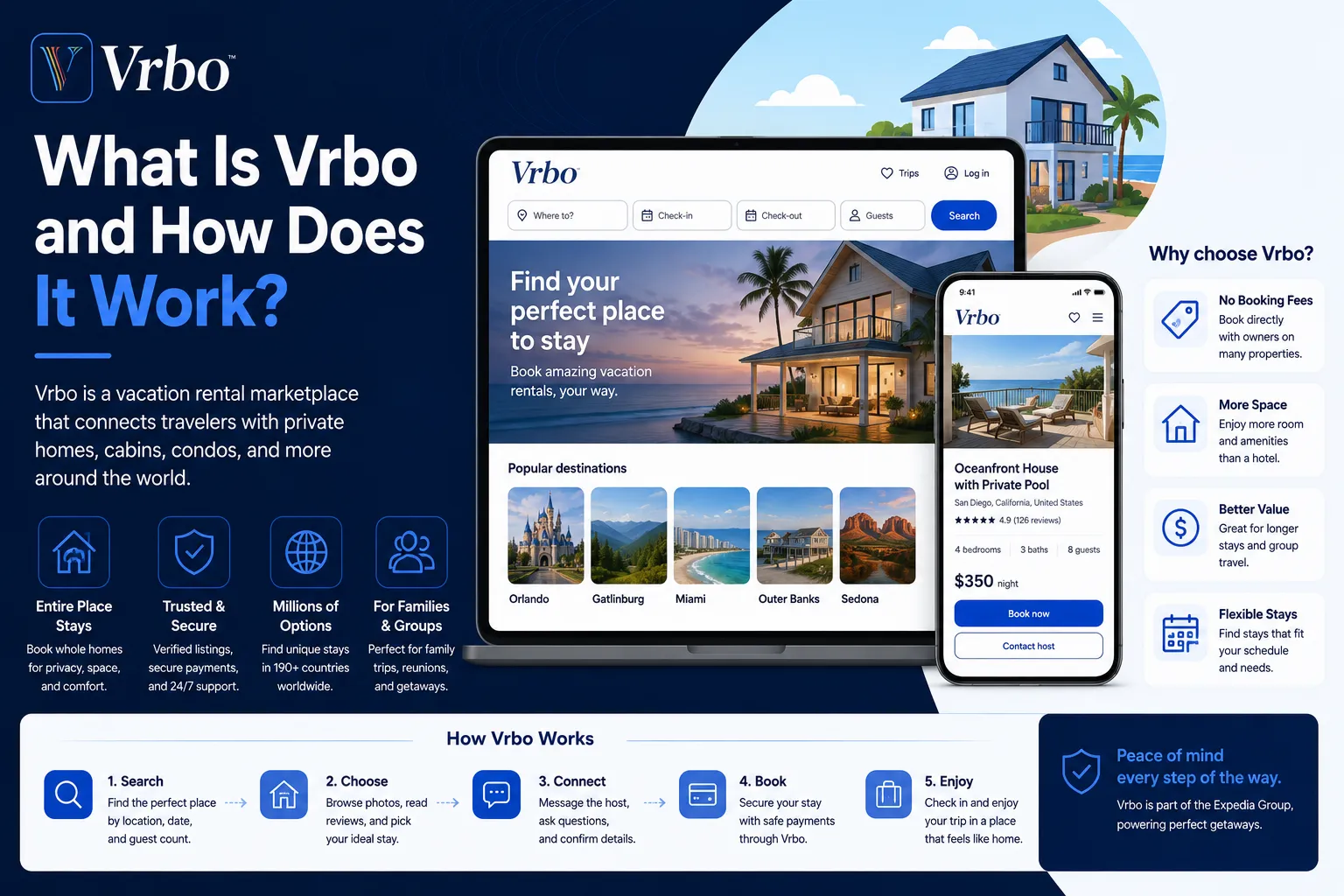
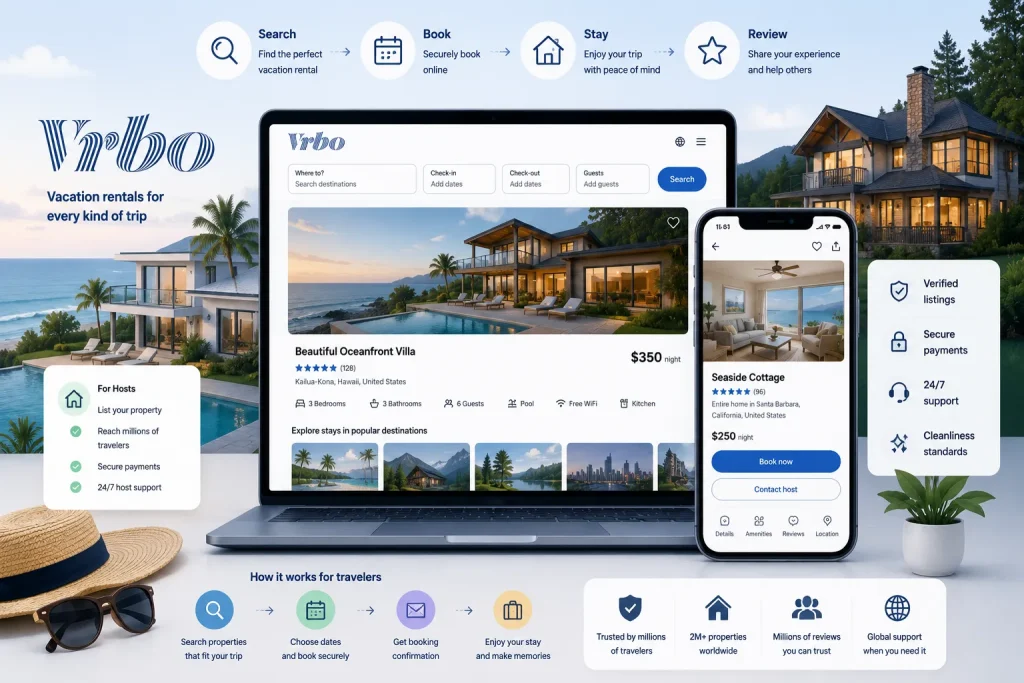
Vrbo is an online vacation rental marketplace where travelers can book entire homes such as beach houses, cabins, condos, and apartments for short-term stays. Instead of booking individual hotel rooms, Vrbo connects travelers directly with property owners who rent out their homes for vacations, group trips, and family getaways.
The Core Problem Vrbo Solves
Traditional hotels often lack space, privacy, and flexibility for families or groups traveling together. Booking multiple hotel rooms can become expensive and inconvenient.
Vrbo solves this by offering entire-home rentals, allowing travelers to stay in fully furnished houses with amenities like kitchens, multiple bedrooms, living spaces, and outdoor areas.
In simple terms, Vrbo makes it easier for travelers to find spacious private accommodations for vacations.
Who Uses Vrbo?
Vrbo serves several types of users:
• Families planning vacation trips
• Groups traveling together for events or holidays
• Couples looking for private getaway homes
• Travelers wanting more space than hotels offer
• Property owners renting out vacation homes
Because Vrbo focuses on entire property rentals, it is especially popular for group travel and longer stays.
Vrbo’s Market Position
Vrbo is one of the largest vacation rental platforms in the world. It competes with platforms like Airbnb and Booking.com in the short-term rental market.
However, Vrbo differentiates itself by focusing primarily on entire homes instead of shared accommodations, which attracts families and larger travel groups.
Why Did Vrbo Become Successful?
Vrbo grew rapidly because it addressed a major gap in the travel market — private vacation homes. Its success is driven by:
• Growing demand for vacation rentals
• Families seeking larger accommodations
• Property owners wanting to monetize second homes
• Global travel growth
• Strong integration with Expedia Group’s travel ecosystem
As more homeowners listed vacation properties, the platform attracted more travelers looking for unique stays.
What Makes Vrbo Different from Traditional Hotel Booking?
Traditional travel booking focuses mainly on hotels and resorts.
Vrbo changed this by creating a platform dedicated to private vacation homes. Travelers can book entire houses, enjoy full privacy, and experience destinations like locals instead of hotel guests.
How Does Vrbo Work? Step-by-Step Breakdown
Vrbo works as a vacation rental marketplace that connects travelers with homeowners who want to rent out their properties for short-term stays. The platform simplifies the process of finding, booking, and managing vacation rentals.
How Vrbo Works for Travelers
Account Setup
• Visit the Vrbo website or download the mobile app
• Browse properties without creating an account
• Create an optional account to manage bookings and save favorite listings
Having an account allows travelers to track reservations and receive travel updates.
Searching for Vacation Rentals
• Enter destination, travel dates, and number of guests
• Browse available vacation homes in the selected area
• Use filters such as price range, property type, amenities, and guest ratings
Travelers can also filter by:
• Beachfront or waterfront homes
• Pet-friendly properties
• Homes with pools or hot tubs
• Family-friendly properties
• Highly rated vacation rentals
Each property page includes photos, amenities, house rules, pricing details, and guest reviews.
Comparing Properties
Users can compare multiple vacation homes before making a booking decision.
Property pages typically include:
• High-quality photos of the property
• Detailed descriptions of rooms and amenities
• Location maps
• Pricing breakdowns and cleaning fees
• Reviews from previous guests
This helps travelers select a home that fits their budget and travel needs.
Booking a Vacation Home
• Select the desired property and available dates
• Review pricing, house rules, and cancellation policy
• Submit booking request or confirm instant booking
Depending on the host settings, the reservation may be confirmed instantly or approved by the property owner.
Managing Reservations
• Travelers receive instant booking confirmations
• Trip details can be managed through the app or website
• Communication with the property owner happens through the platform
This ensures both travelers and hosts have clear communication before arrival.
How Vrbo Works for Property Owners
Property Registration
• Homeowners create a Vrbo host account
• Upload property details, photos, and descriptions
• Set nightly pricing, availability calendar, and house rules
Once approved, the property becomes visible to travelers searching for vacation rentals.
Managing Listings
Hosts manage their properties using a host dashboard where they can:
• Update pricing and availability
• Respond to traveler inquiries
• Manage booking requests
• View guest reviews
This dashboard allows owners to manage their rental business efficiently.
Receiving Bookings
When a traveler books a property:
• The booking request is sent to the host
• Availability updates automatically
• Hosts receive guest information and reservation details
Payments are processed through the platform or directly depending on the host’s payment configuration.
Technical Overview Explained Simply
Vrbo operates as a large online marketplace for vacation rentals supported by scalable technology systems.
Core platform components include:
• Property listing databases
• Search and recommendation algorithms
• Booking and reservation systems
• Payment processing tools
• Web and mobile applications
Hosts upload their property listings into the system, and travelers search those listings using filters and location-based tools.
When a traveler confirms a booking, the system connects the guest with the host and records the reservation instantly.
In simple terms, Vrbo acts as a digital marketplace that helps travelers find and book private vacation homes while helping homeowners earn income from their properties.
Vrbo’s Business Model Explained
Vrbo operates as a vacation rental marketplace that connects travelers with homeowners. Instead of owning properties itself, the platform generates revenue by facilitating bookings and providing marketing exposure for property owners.
How Vrbo Makes Money
• Commission fees from bookings
• Host subscription plans
• Service fees charged to travelers
• Advertising and promotional listing upgrades
The majority of Vrbo’s revenue comes from fees associated with completed vacation rental bookings.
Commission-Based Booking Fees
Vrbo charges hosts a commission for reservations made through the platform. When a traveler books a property, Vrbo collects a percentage of the total booking value.
The process works like this:
• Traveler books a vacation rental through the platform
• Payment is processed through Vrbo’s system
• Vrbo deducts its commission from the transaction
Why It Matters: The platform scales easily because it earns more revenue as booking volume increases.
Technical Innovation: Automated booking and payment systems calculate commissions instantly for each reservation.
Host Subscription Plans
Vrbo also offers subscription plans that allow property owners to list their homes for an annual fee instead of paying per-booking commissions.
Hosts pay a yearly listing fee to advertise their property on the platform and receive unlimited bookings without additional commission charges.
Why It Matters: Hosts with high booking volume may prefer predictable subscription costs.
Technical Innovation: Host dashboards and listing management systems allow property owners to control pricing, availability, and bookings.
Traveler Service Fees
Travelers may pay service fees when making reservations. These fees help support the platform’s customer service, payment processing, and security systems.
Why It Matters: These fees help maintain platform operations and provide traveler protection programs.
Technical Innovation: Secure payment gateways and automated transaction management systems handle service fee calculations.
Advertising and Promotional Listings
Vrbo allows property owners to boost their listings with promotional tools that increase visibility in search results.
Examples include:
• Featured property placements
• Promotional campaigns
• Discount offers
Why It Matters: Better visibility can lead to more bookings for property owners.
Technical Innovation: Search ranking algorithms determine listing placement based on relevance and promotional participation.
Market Size and Industry Growth
The vacation rental market has grown rapidly as travelers increasingly prefer private accommodations over traditional hotels.
Platforms like Vrbo benefit from:
• Growth of short-term rental markets
• Increasing family and group travel
• Expansion of remote work and digital nomad lifestyles
• Rising demand for unique travel experiences
Vacation rental platforms have become a major part of the global travel ecosystem.
Revenue Model Breakdown
| Revenue Stream | How It Works | Why It Matters |
|---|---|---|
| Booking Commissions | Percentage charged on reservations | Primary revenue source |
| Host Subscription Plans | Annual listing fee for property owners | Predictable host revenue model |
| Traveler Service Fees | Fees added to bookings | Supports platform operations |
| Promotional Listings | Paid visibility for properties | Helps hosts increase bookings |
Vrbo’s business model focuses on connecting travelers with vacation homeowners while generating revenue through booking-related fees and promotional services.
Key Features That Make Vrbo Successful
Vrbo has become one of the leading vacation rental platforms because it focuses on private home rentals and provides tools that make booking simple for travelers while helping property owners manage rentals efficiently.
Entire Home Rentals Focus
Vrbo primarily lists entire homes rather than shared rooms.
Why It Matters: Families and groups prefer privacy, space, and full-property access when traveling.
Technical Innovation: Listing classification systems ensure properties meet entire-home rental standards.
Advanced Property Search Filters
Travelers can search vacation homes using filters such as location, price, property type, amenities, and guest ratings.
Why It Matters: Users can quickly narrow down thousands of vacation homes to find the best match.
Technical Innovation: Large-scale search indexing and filtering algorithms process millions of property listings.
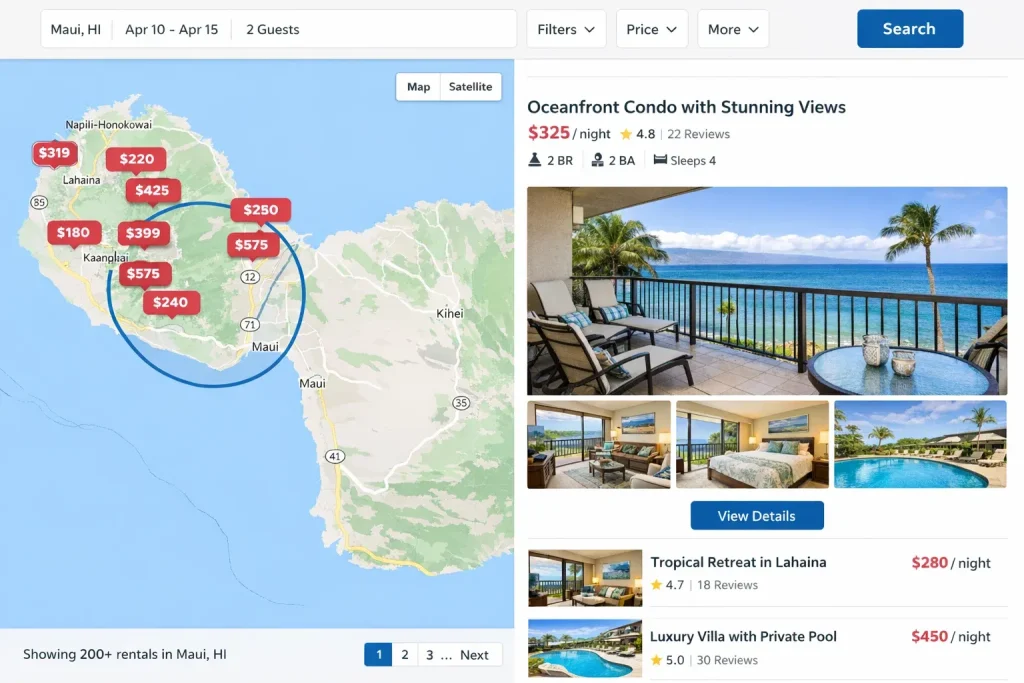
Interactive Map-Based Search
Users can explore vacation rentals directly through map-based browsing.
Why It Matters: Travelers can choose properties based on proximity to beaches, attractions, or city centers.
Technical Innovation: Geolocation APIs combined with property database indexing.
Verified Guest Reviews
Guests who complete stays can leave reviews about the property and host.
Why It Matters: Reviews help travelers make informed decisions and build trust in the platform.
Technical Innovation: Verified booking systems ensure only confirmed guests can submit reviews.
Secure Online Booking System
Vrbo allows travelers to confirm reservations and process payments directly through the platform.
Why It Matters: Secure booking systems protect both travelers and property owners.
Technical Innovation: Integrated payment gateways with fraud detection and transaction security.
Host Management Dashboard
Property owners have access to dashboards that help manage listings and reservations.
Why It Matters: Hosts can easily update availability, pricing, and booking policies.
Technical Innovation: Cloud-based dashboards that synchronize bookings and calendars in real time.
Property Photo Galleries and Detailed Listings
Each property listing includes photos, descriptions, amenities, and house rules.
Why It Matters: Travelers can evaluate properties thoroughly before booking.
Technical Innovation: Media optimization systems ensure images and videos load quickly across devices.
Flexible Booking Options
Many listings allow flexible cancellation policies and instant booking features.
Why It Matters: Travelers feel more confident booking accommodations with flexible policies.
Technical Innovation: Reservation management systems automatically handle cancellation policies.
Mobile App Experience
Vrbo’s mobile app allows travelers to search, book, and manage vacation rentals easily from their smartphones.
Why It Matters: Travelers often plan trips while on the move.
Technical Innovation: Mobile-first design with synchronized cloud accounts across devices.
Integration with Expedia Travel Ecosystem
Vrbo is part of the Expedia Group, which allows integration with other travel services.
Why It Matters: Travelers can access a broader travel ecosystem including flights, car rentals, and travel planning tools.
Technical Innovation: API integrations with Expedia Group’s travel infrastructure.
What Sets Vrbo Apart
Vrbo differentiates itself by focusing strongly on entire vacation homes rather than shared spaces. This makes it particularly appealing for families, large groups, and travelers who prefer private accommodations.
The Technology Behind Vrbo
Vrbo operates as a large-scale digital marketplace that connects travelers with vacation homeowners around the world. Behind the simple search and booking interface is a sophisticated technology infrastructure designed to handle millions of listings, searches, and reservations every day.
Tech Stack Overview Simplified
Vrbo runs on a combination of web platforms, mobile applications, backend services, and cloud infrastructure that support global travel bookings.
The system includes:
• Web platforms for desktop users
• Mobile apps for iOS and Android devices
• Backend servers managing bookings and property data
• Databases storing property listings and user activity
• Cloud infrastructure supporting scalability and performance
These components ensure travelers can search and book properties quickly while hosts manage listings efficiently.
Property Listing Data Management
Vrbo stores large amounts of information about vacation rental properties worldwide.
Each listing typically includes:
• Property location and address
• Photos and media galleries
• Nightly pricing and seasonal rates
• Amenities and house rules
• Availability calendars
• Guest reviews and ratings
Why It Matters: Travelers can access detailed property information before making booking decisions.
Technical Innovation: Distributed databases and optimized indexing allow the platform to manage millions of property listings efficiently.
Search and Recommendation Algorithms
When travelers search for vacation homes, Vrbo analyzes thousands of properties and returns the most relevant results.
Search results may consider:
• Location relevance
• Pricing
• Property ratings
• Availability for selected dates
• Popularity among travelers
Why It Matters: Travelers find suitable vacation homes faster without scrolling through endless listings.
Technical Innovation: Machine learning algorithms analyze search behavior and booking trends to improve recommendation accuracy.
Real-Time Availability and Booking Systems
Vrbo must ensure that the homes shown to travelers are actually available when they try to book them.
Availability data is synchronized with host calendars so that:
• Booked dates are automatically blocked
• Pricing updates appear quickly
• Reservations are confirmed in real time
Why It Matters: Accurate availability prevents double bookings and improves user trust.
Technical Innovation: Real-time calendar synchronization and booking APIs.
Mobile and Web Platform Synchronization
Travelers often switch between devices when planning trips. Vrbo keeps user activity synchronized across web and mobile platforms.
Users can access:
• Saved properties
• Booking history
• Trip itineraries
• Messaging with hosts
Why It Matters: Travelers can start planning on one device and complete bookings on another.
Technical Innovation: Cloud-based account systems that synchronize data across devices.
Data Analytics and Personalization
Vrbo collects large amounts of travel data from searches, bookings, and user preferences.
This data helps generate insights such as:
• Personalized property recommendations
• Popular travel destinations
• Seasonal travel demand trends
• Pricing suggestions for hosts
Why It Matters: Personalized experiences increase booking success and user satisfaction.
Technical Innovation: Big-data analytics platforms and machine learning models.
Scalability and Global Infrastructure
Vacation rental platforms experience heavy traffic during peak travel seasons. Vrbo relies on scalable infrastructure to handle large user demand.
The platform uses:
• Load-balanced server clusters
• Cloud hosting systems
• Content delivery networks for images and media
• Automatic scaling during high traffic periods
Why It Matters: The platform remains fast and reliable even during high booking seasons.
API Integrations
Vrbo integrates with multiple services that support the travel ecosystem.
Examples include:
• Payment processing platforms
• Mapping and geolocation services
• Property management systems used by hosts
• Expedia Group travel services
• Messaging and communication tools
Why It Matters: These integrations allow Vrbo to function as a complete vacation rental marketplace.
Why This Technology Matters for Business
The technology behind Vrbo allows it to manage millions of property listings while connecting travelers and homeowners in real time. By combining scalable infrastructure, intelligent search systems, and integrated booking tools, the platform delivers a seamless travel booking experience.
Vrbo’s Impact & Market Opportunity
Vrbo has played a major role in shaping the global vacation rental industry. By enabling homeowners to rent out entire properties and giving travelers access to unique stays, the platform helped transform how people plan and experience vacations.
How Vrbo Disrupted the Travel Accommodation Market
Before vacation rental platforms gained popularity, travelers primarily relied on hotels and resorts. While hotels offered convenience, they often lacked space and privacy for families or larger groups.
Vrbo introduced a new model by allowing homeowners to rent out full properties directly to travelers. This created an alternative to traditional hotels and expanded accommodation options in destinations around the world.
The platform introduced several major changes to the travel industry:
• Increased availability of private vacation homes
• More flexible accommodation options for families and groups
• New income opportunities for property owners
• Digital platforms connecting travelers directly with hosts
These innovations helped create the modern short-term rental market.
Market Size and Growth Potential
The vacation rental industry has experienced rapid growth as travelers increasingly look for alternatives to hotels.
This growth is driven by several factors:
• Rising demand for private travel accommodations
• Growth of family and group travel
• Expansion of remote work and longer stays
• Increased interest in unique and local travel experiences
• Global tourism growth
Platforms like Vrbo benefit from this trend because they make it easy for travelers to discover and book vacation homes anywhere in the world.
User Demographics and Behavior
Vrbo attracts a variety of travelers, particularly those looking for larger accommodations or longer stays.
Typical users include:
• Families traveling with children
• Groups of friends on vacation
• Couples seeking private retreats
• Travelers booking holiday homes
• Remote workers and digital nomads
Many users prefer vacation homes because they provide kitchens, living spaces, and multiple bedrooms that are not usually available in traditional hotels.
Global Presence
Vrbo lists vacation rentals in thousands of destinations across the world. Properties range from beach houses and mountain cabins to city apartments and countryside villas.
Travelers can find rentals in:
• Popular tourist cities
• Coastal and island destinations
• Ski resorts and mountain towns
• Rural countryside locations
• Family-friendly vacation communities
This wide geographic coverage makes Vrbo a key platform for vacation accommodation discovery.
Future Trends in Vacation Rental Platforms
The vacation rental market continues evolving as travel technology advances.
Some trends shaping the future include:
• AI-powered travel recommendations
• Smart pricing tools for hosts
• Virtual property tours
• Integrated travel planning services
• Increased demand for long-term and remote work stays
These trends will likely continue expanding the vacation rental ecosystem.
Opportunities for Entrepreneurs
The success of Vrbo demonstrates the potential of vacation rental marketplaces. Entrepreneurs can explore opportunities such as:
• Regional vacation rental platforms
• Luxury vacation home marketplaces
• Niche travel accommodation platforms
• Property management and booking software
• Digital marketplaces for unique stays
By combining property listings, booking systems, and host management tools, new platforms can capture niche segments of the travel accommodation market.
This massive success is why many entrepreneurs want to create similar platforms that connect travelers with property owners through technology-driven vacation rental marketplaces.
Building Your Own Vrbo-Like Platform
After understanding how Vrbo operates, many entrepreneurs consider launching a similar vacation rental marketplace. The demand for private vacation homes and short-term rentals continues to grow, creating strong opportunities for businesses entering this space.
Why Businesses Want a Vrbo Clone
Vacation rental platforms combine strong travel demand with scalable marketplace economics. Every traveler needs accommodation, and vacation homes provide a unique alternative to traditional hotels.
Businesses are attracted to this model because it offers:
• Global reach for travelers and property owners
• Commission-based recurring revenue
• High booking frequency during travel seasons
• Opportunities to expand into full travel ecosystems
• Scalable digital marketplace infrastructure
Instead of owning properties, the platform focuses on connecting travelers with hosts and earning revenue from bookings.
Key Considerations Before Development
Before building a vacation rental platform like Vrbo, businesses should consider several factors:
• Target market or geographic focus
• Property host onboarding strategy
• Payment processing and commission structure
• Local regulations for short-term rentals
• Customer support and dispute resolution systems
• Marketing strategy to attract both travelers and hosts
Successful marketplaces grow by balancing both sides of the ecosystem — guests and property owners.
Miracuves Vrbo-Like Vacation Rental Platform Solution Cost and Tech Stack
Miracuves Pricing for a Vrbo-Like Vacation Rental Platform developed using Node.js / React.js Architecture is available on request. Contact Miracuves for custom pricing based on platform features, scalability requirements, integrations, and deployment scope. Estimated delivery timeline: 30 to 90 Days.
Build a powerful vacation rental and property booking platform designed for startups, travel companies, property owners, hospitality businesses, and enterprise rental operations.
Core Workflows: Vacation rental listings, property booking management, guest reservations, host management, calendar synchronization, payment processing, review systems, and travel accommodation workflows.
Built-in Travel Operations: Dynamic pricing systems, booking management, payout handling, cancellation workflows, transaction tracking, occupancy analytics, customer communication systems, and reservation management tools.
Management Hub: Admin dashboards, host management systems, property analytics, booking controls, reporting dashboards, dispute management, audit logs, and centralized rental operations management.
Enterprise-Ready: Fully customizable architecture prepared for secure scaling, multi-property management, global booking operations, payment infrastructure expansion, enterprise hospitality workflows, and long-term platform growth.
Why does a Vrbo-Like Platform require Node.js / React.js architecture?
Vacation rental platforms process high volumes of bookings, real-time availability updates, payment operations, and multi-user interactions between guests, hosts, and administrators. These platforms require scalable infrastructure, secure transaction handling, and highly responsive interfaces across web and mobile ecosystems.
We recommend a modern JavaScript-based architecture for this type of platform because:
Built for Real-Time Operations: Node.js enables scalable backend operations for live booking systems, calendar synchronization, pricing updates, payment processing, and concurrent guest-host interactions.
Advanced Dashboard Experience: React.js supports highly interactive interfaces for property browsing, booking workflows, host dashboards, reservation management, analytics reporting, and seamless customer experiences.
Enterprise Scalability: This architecture is well-suited for handling large property inventories, global booking ecosystems, multi-user operations, and rapidly growing travel platforms.
Flexible Integration Layer: Easily integrates with payment gateways, property management systems, mapping APIs, CRM tools, analytics platforms, communication systems, and travel service providers.
You get a scalable, enterprise-grade vacation rental marketplace platform designed for long-term operational growth.
Note: Final pricing depends on platform modules, booking engine complexity, third-party integrations, deployment infrastructure, payment systems, and custom workflow development.
Essential Features to Include
A strong vacation rental marketplace should include:
• Advanced property search and filtering tools
• Map-based property discovery
• Detailed property listings with photos and amenities
• Secure booking and reservation management systems
• User review and rating systems
• Host dashboards for listing and booking management
• Secure payment processing systems
• Admin panel for platform management
Advanced features may include:
• AI-powered property recommendations
• Dynamic pricing tools for hosts
• Virtual property tours
• Loyalty and rewards programs
• Integration with other travel services
Conclusion
Vrbo highlights how digital marketplaces can transform the way people travel. By giving travelers access to entire vacation homes and enabling property owners to monetize their properties, the platform created a new category within the global accommodation industry.
For entrepreneurs, the key takeaway is the power of platform-based business models. When a platform successfully connects two groups — travelers and property owners — it builds a scalable ecosystem that grows as both sides join. As the demand for private vacation rentals continues to rise, technology-driven marketplaces like Vrbo will continue shaping the future of travel.
FAQs :-
What is Vrbo?
How does Vrbo make money?
Vrbo earns revenue through booking commissions, host subscription plans, and service fees charged during reservations. These fees are collected whenever a traveler books a vacation rental through the platform.