
Key Takeaways
What You’ll Learn
- Wayfair-style ecommerce apps must prioritize secure payments, account protection, and scalable infrastructure.
- Furniture marketplace apps handle sensitive customer, vendor, and transaction data at large scale.
- Secure APIs, encrypted transactions, and strong authentication systems reduce cybersecurity risks.
- Cloud scalability and traffic management are critical for handling large ecommerce events and seasonal demand.
- Regular security audits and compliance practices help maintain customer trust and operational stability.
Stats That Matter
- Wayfair manages millions of products from thousands of suppliers across its ecommerce ecosystem.
- Large ecommerce platforms face thousands of cyberattack attempts daily, including phishing, card skimming, and DDoS attacks.
- Cloud-based ecommerce infrastructure helps platforms scale securely during major shopping events.
- Modern furniture ecommerce platforms increasingly use AI-driven recommendations and analytics to improve user engagement.
- Secure integrations and real-time inventory synchronization are essential for marketplace reliability and fraud prevention.
Real Insights
- Customer trust is one of the biggest competitive advantages for ecommerce platforms.
- Furniture marketplace apps require strong backend systems because of large catalogs and logistics complexity.
- Security-first development helps reduce fraud, account abuse, and payment-related risks.
- Microservice and cloud-based architectures improve scalability but require advanced security monitoring.
- Long-term ecommerce growth depends on balancing user experience, infrastructure scalability, and cybersecurity reliability.
You’ve probably heard about data breaches, leaked customer information, and hacked ecommerce platforms. For businesses launching a white-label Wayfair-style furniture marketplace app, security is a real concern.
In 2026, ecommerce platforms handle large amounts of customer data, payment details, and vendor information. Even a small vulnerability can put users and your brand at risk.
This guide explains the main security risks, compliance requirements, and best practices for launching a safe marketplace. With Miracuves, businesses can build a secure white-label Wayfair app with strong security architecture and compliance-ready infrastructure.Security Implementation Timeline
Understanding White-Label Wayfair App Security Landscape
Developing a furniture marketplace app similar to Wayfair means handling sensitive customer data, payment transactions, and supplier integrations. Security is not optional anymore. In 2026, ecommerce platforms are among the top targets for cyberattacks because they process millions of transactions daily.
Understanding how security works in a white-label Wayfair app helps businesses avoid costly mistakes before launch.
What White-Label Security Actually Means
A white-label Wayfair app is a ready-made ecommerce platform that businesses customize with their own branding, products, and marketplace features.
Security responsibility is shared between:
- Platform provider – builds the core architecture and security framework
- Business owner – manages operations, vendor access, and compliance
A well-built white-label solution includes:
- Secure backend architecture
- Encrypted payment systems
- User authentication protocols
- Regular security updates
If these elements are missing, the platform becomes vulnerable.
Common Security Myths vs Reality
| Myth | Reality |
|---|---|
| White-label apps are less secure than custom apps | Security depends on architecture, not development model |
| Small marketplaces are not targeted by hackers | 43% of cyberattacks target small and mid-sized businesses |
| Basic SSL encryption is enough | Modern apps require multi-layer security systems |
| Security can be added later | Security must be built during development |
Many breaches happen because businesses assume basic protection is enough.
Why People Worry About White-Label Apps
There are three main concerns businesses usually have.
1. Shared Codebase Risks
Some providers reuse poorly maintained code across multiple projects. If the code has vulnerabilities, every platform built on it becomes exposed.
2. Data Privacy Concerns
Marketplace apps collect sensitive information including:
- Customer addresses
- Phone numbers
- Payment details
- Vendor financial information
Without proper encryption and compliance, this data becomes a major risk.
3. Third-Party Integration Risks
A Wayfair-style platform often integrates:
- Payment gateways
- Shipping APIs
- Vendor management systems
- Inventory tools
Every integration adds another possible security entry point.
Current Threat Landscape for Marketplace Apps
Marketplace platforms like Wayfair-style apps face several common cyber threats.
Most frequent attacks include:
- Payment fraud
- API exploitation
- Credential stuffing attacks
- Distributed Denial of Service (DDoS) attacks
- Malware injection through vendors
Ecommerce marketplaces are especially vulnerable because they support multiple sellers and high transaction volumes.
Security Standards in 2026
In 2026, secure ecommerce platforms must follow modern security frameworks.
Key standards include:
- Zero-trust security architecture
- End-to-end encrypted transactions
- Secure API gateway protection
- Real-time fraud detection systems
- Multi-factor authentication
These standards are now expected for enterprise-grade marketplace platforms.
Recent Statistics on App Security Incidents
Recent cybersecurity reports highlight how serious the issue has become.
| Security Statistic (2025–2026 Reports) | Data |
|---|---|
| Global ecommerce cyberattacks increased | 30% year-over-year |
| Data breaches caused by web application vulnerabilities | 43% |
| Small and mid-sized ecommerce platforms targeted | 43% |
| Average cost of a data breach | $4.45 million |
| API-related attacks on ecommerce platforms | Increased by 300% |
These numbers show why security planning must happen before launching a white-label Wayfair app.
A secure platform requires the right architecture, compliance framework, and continuous monitoring.
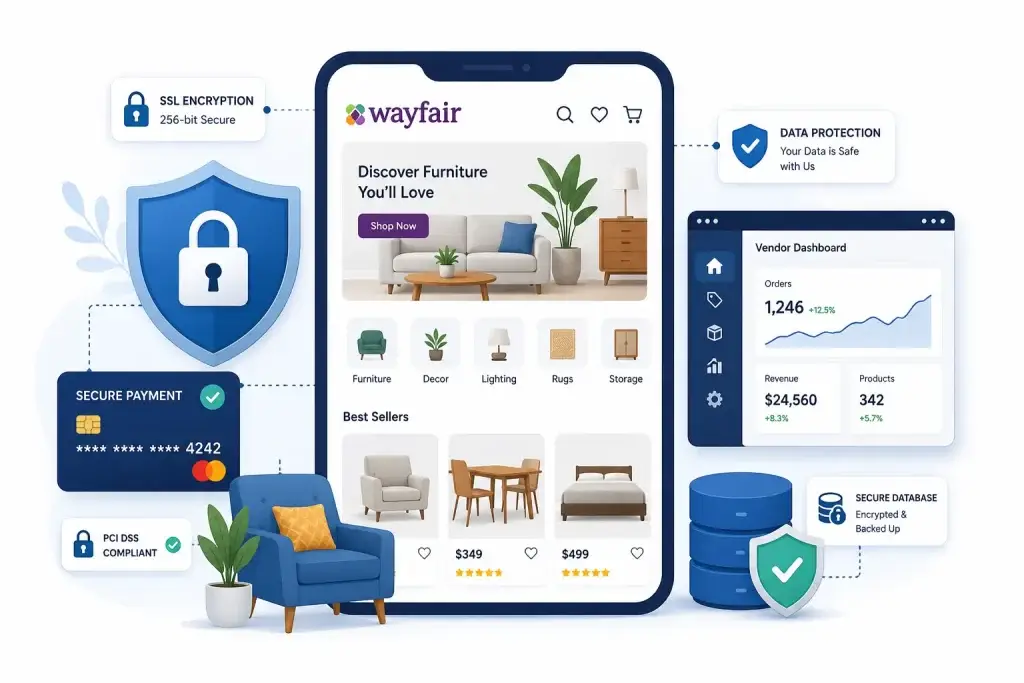
Key Security Risks & How to Identify Them
Running a white-label Wayfair app means managing a marketplace where customers, vendors, and payments interact continuously. This creates several layers of security risk that businesses must understand before launching.
Ignoring these risks can lead to data breaches, financial loss, and legal penalties.
Below are the most critical areas where security issues usually occur.
Data Protection and Privacy Risks
Marketplace apps store large volumes of user information. If this data is not properly protected, it becomes a prime target for cybercriminals.
User Personal Information
A Wayfair-style marketplace typically collects:
- Full names
- Email addresses
- Phone numbers
- Shipping addresses
- Purchase history
If databases are not encrypted or access control is weak, attackers can steal this information easily.
Data protection frameworks such as GDPR and CCPA require strict security protocols to protect user identities.
Payment Data Security
Payment information is the most sensitive data handled by ecommerce platforms.
Risks include:
- Credit card data exposure
- Payment gateway manipulation
- Transaction interception attacks
Without PCI DSS compliant payment systems, businesses face financial fraud and regulatory penalties.
Secure platforms use:
- Tokenized payments
- Encrypted payment gateways
- Fraud detection systems
Location Tracking Concerns
Marketplace apps often track delivery locations and shipping addresses.
If location data is exposed, it can reveal:
- Customer residence patterns
- Vendor warehouse locations
- Delivery logistics data
Strong access control and encrypted storage are required to prevent misuse.
GDPR and CCPA Compliance
In 2026, businesses operating globally must follow strict privacy regulations.
Important requirements include:
- Clear user consent mechanisms
- Right-to-delete user data
- Transparent privacy policies
- Secure storage of personal information
Failure to comply can result in multi-million dollar fines.
Technical Vulnerabilities
Technical flaws in the platform itself are one of the biggest causes of security breaches.
Code Quality Issues
Poor coding practices can introduce vulnerabilities such as:
- SQL injection attacks
- Cross-site scripting (XSS)
- Broken authentication systems
Secure platforms follow secure coding standards and regular code audits.
Server Security Gaps
If hosting infrastructure is poorly configured, attackers may gain access to backend systems.
Common server vulnerabilities include:
- Weak firewall configuration
- Unpatched operating systems
- Insecure cloud storage
Secure platforms implement hardened cloud infrastructure and monitoring systems.
API Vulnerabilities
Marketplace apps rely heavily on APIs for:
- Vendor dashboards
- Inventory updates
- Payment processing
- Shipping integration
If APIs are not secured properly, attackers can exploit them to access backend data.
Secure API design includes:
- Authentication tokens
- Rate limiting
- Encryption protocols
Third-Party Integration Risks
A Wayfair-style platform integrates multiple external services.
Examples include:
- Payment gateways
- Logistics providers
- analytics tools
- inventory systems
Each integration introduces a potential attack surface.
Secure platforms perform third-party risk assessments before integration.
Business Risks
Security breaches do not only affect technology. They impact the entire business.
Legal Liability
If customer data is exposed, businesses may face:
- Regulatory investigations
- Class-action lawsuits
- compliance violations
Reputation Damage
Trust is critical in ecommerce. A single breach can cause:
- Customer churn
- Vendor distrust
- negative media coverage
Financial Losses
The average ecommerce breach now costs millions in recovery and legal expenses.
Regulatory Penalties
Failure to meet compliance requirements can result in heavy fines.
Examples include:
| Regulation | Possible Penalty |
|---|---|
| GDPR | Up to 4% of global annual revenue |
| CCPA | Up to $7,500 per violation |
| PCI DSS | Large penalties and payment processing restrictions |
Risk Assessment Checklist
Before launching a white-label Wayfair app, businesses should verify the following.
- Is user data encrypted in storage and transit
- Are payment systems PCI DSS compliant
- Does the platform support multi-factor authentication
- Are APIs protected with authentication tokens
- Are regular security audits conducted
- Is there a clear incident response plan
- Are third-party integrations security tested
- Is cloud infrastructure properly secured
A secure marketplace platform must address all these risk areas before going live.
Security Standards Your White-Label Wayfair App Must Meet
Security standards define whether a marketplace platform is enterprise-grade or vulnerable. In 2026, ecommerce platforms are expected to meet strict global security frameworks to protect users, payments, and business data.
If a white-label Wayfair app does not follow these standards, it should be considered high risk.
Essential Certifications
Security certifications show that a platform follows internationally recognized protection frameworks.
ISO 27001 Compliance
ISO 27001 is one of the most respected information security management standards in the world.
It ensures that the platform follows structured processes for:
- Risk management
- Data protection policies
- Security monitoring
- Incident management
Organizations with ISO 27001 certification demonstrate that security is embedded into their infrastructure.
SOC 2 Type II
SOC 2 Type II focuses on data security, system integrity, and operational reliability.
It evaluates how a platform manages:
- Customer data protection
- Internal security controls
- Monitoring procedures
- Access management
Marketplace platforms handling vendor and customer data must comply with SOC 2 to maintain trust.
GDPR Compliance
The General Data Protection Regulation (GDPR) governs how businesses handle personal data of users in the European Union.
Key GDPR requirements include:
- Explicit user consent
- Right to access personal data
- Right to delete personal data
- Data breach reporting within 72 hours
Any global marketplace must ensure GDPR compliance to avoid heavy penalties.
HIPAA Compliance (If Applicable)
HIPAA primarily applies to healthcare data. However, some ecommerce platforms dealing with health-related furniture products or medical equipment may need HIPAA compliance.
HIPAA ensures secure storage and transfer of sensitive health-related data.
PCI DSS Compliance for Payments
PCI DSS is mandatory for any platform processing credit card payments.
This standard ensures:
- Secure card data storage
- Encrypted payment transactions
- Secure payment gateway integration
- Fraud prevention mechanisms
Without PCI DSS compliance, payment providers may refuse to support the platform.
Technical Security Requirements
Beyond certifications, a white-label Wayfair app must implement modern technical protections.
End-to-End Encryption
All data transmitted between users, servers, and vendors must be encrypted.
This prevents attackers from intercepting:
- Login credentials
- Payment information
- personal user data
Modern platforms use AES-256 encryption and secure HTTPS protocols.
Secure Authentication Systems
Strong authentication protects user accounts from unauthorized access.
Secure platforms implement:
- Two-factor authentication (2FA)
- OAuth-based login systems
- Password hashing and salting
- Account activity monitoring
These features help prevent credential stuffing attacks, which are common in ecommerce platforms.
Regular Security Audits
Security audits help detect vulnerabilities before attackers find them.
Recommended audit practices include:
- Quarterly vulnerability assessments
- Code security reviews
- Infrastructure testing
Audits ensure that security protections stay up to date with evolving threats.
Penetration Testing
Penetration testing simulates real cyberattacks to identify weaknesses.
Professional security teams attempt to exploit the platform to find:
- System vulnerabilities
- authentication flaws
- API weaknesses
Fixing these issues before launch significantly reduces security risks.
SSL Certificates
Secure Socket Layer (SSL) certificates protect communication between the app and users.
This ensures:
- encrypted browsing sessions
- secure login processes
- safe transaction processing
Users also trust platforms that display secure HTTPS connections.
Secure API Design
APIs are the backbone of marketplace apps.
Secure APIs must include:
- authentication tokens
- request validation
- rate limiting
- encrypted data exchange
These measures protect backend systems from unauthorized access.
Security Standards Comparison Table
| Security Standard | Purpose | Required For |
|---|---|---|
| ISO 27001 | Information security management | Enterprise platforms |
| SOC 2 Type II | Operational and data security | SaaS and marketplace apps |
| GDPR | Personal data protection | Businesses serving EU users |
| PCI DSS | Secure payment processing | All ecommerce platforms |
| HIPAA | Healthcare data protection | Medical-related platforms |
Following these standards ensures that a white-label Wayfair app meets modern enterprise security expectations in 2026.
Red Flags: How to Spot Unsafe White-Label Providers
Choosing the wrong provider is one of the biggest security mistakes businesses make when launching a white-label Wayfair app. Many vendors promise fast delivery and low prices, but fail to provide the security infrastructure required for a marketplace platform.
Recognizing warning signs early can prevent serious security issues later.
Warning Signs
Below are the most common red flags that indicate a white-label provider may not be secure.
No Security Documentation
A reliable development company always provides clear documentation about:
- Security architecture
- Data protection measures
- Compliance certifications
- Infrastructure security
If a provider cannot explain their security framework, the platform may not follow proper protection standards.
Cheap Pricing Without Explanation
Extremely low development costs often indicate:
- Reused outdated code
- Poor infrastructure security
- Lack of security testing
- No compliance implementation
Building a secure ecommerce marketplace requires serious investment in architecture, testing, and compliance.
No Compliance Certifications
Providers who lack certifications such as:
- ISO 27001
- SOC 2
- PCI DSS
may not follow internationally recognized security practices.
Compliance certifications are a strong indicator of mature security processes.
Outdated Technology Stack
Technology stacks that are outdated or poorly maintained create vulnerabilities.
Examples include:
- Unsupported programming frameworks
- Old database systems
- Deprecated API libraries
Modern platforms must use actively maintained technologies to remain secure.
Poor Code Quality
Low-quality code increases the risk of vulnerabilities such as:
- SQL injection
- Cross-site scripting attacks
- Broken authentication systems
Professional providers conduct secure code reviews before deployment.
No Security Updates Policy
Cyber threats evolve constantly. If a provider does not offer regular security updates and patches, the platform will become vulnerable over time.
A reliable provider should have:
- Scheduled security updates
- vulnerability monitoring
- patch management systems
Lack of Data Backup Systems
Secure platforms always include automated backup and recovery systems.
Without backups, businesses risk losing:
- Customer data
- Vendor records
- transaction history
Regular backups ensure quick recovery in case of cyber incidents.
No Insurance Coverage
Professional technology providers often maintain cybersecurity insurance to cover potential damages.
A lack of insurance may indicate limited preparedness for major security incidents.
Evaluation Checklist
Before selecting a white-label Wayfair app provider, businesses should perform a structured evaluation.
Questions to Ask Providers
- What security certifications does your platform hold
- How often do you conduct security audits
- What encryption standards do you use
- How do you protect payment transactions
- What incident response procedures are in place
Documents to Request
Request the following documentation before signing an agreement:
- Security architecture documentation
- compliance certifications
- penetration testing reports
- infrastructure security details
- data protection policies
These documents confirm whether the provider follows proper security practices.
Testing Procedures
Businesses should also request access to testing environments.
Key tests include:
- vulnerability scanning
- penetration testing
- load testing for infrastructure security
- authentication system testing
These procedures help identify risks before the platform launches.
Due Diligence Steps
Before finalizing a provider, complete these checks:
- Review previous marketplace projects
- Verify security certifications
- analyze technology stack
- confirm compliance readiness
- evaluate support and maintenance policies
Performing thorough due diligence ensures that your white-label Wayfair app launches with a strong security foundation.
Best Practices for Secure White-Label Wayfair App Implementation
Security should be implemented before launch and continuously maintained after deployment. Many marketplace platforms fail because they focus only on development speed and ignore long-term protection.
A secure white-label Wayfair app requires structured security processes across development, infrastructure, and operations.
Pre-Launch Security Preparation
Before the platform goes live, businesses must ensure the entire system has been thoroughly tested and secured.
Security Audit Process
A full security audit identifies vulnerabilities in:
- application code
- backend systems
- infrastructure configuration
- database protection
Professional audits include automated vulnerability scans and manual security reviews.
Security audits should be completed before launch and periodically afterward.
Code Review Requirements
Secure coding standards reduce the risk of technical vulnerabilities.
Code reviews should check for:
- SQL injection risks
- cross-site scripting vulnerabilities
- authentication flaws
- improper data handling
High-quality platforms follow secure development lifecycle practices where security checks occur throughout development.
Infrastructure Hardening
Cloud infrastructure must be properly configured to prevent unauthorized access.
Key infrastructure protections include:
- firewall configuration
- restricted server access
- secure cloud storage policies
- network traffic monitoring
Most modern marketplace apps rely on secure cloud environments such as AWS, Google Cloud, or Azure.
Compliance Verification
Before launching, the platform should be verified for regulatory compliance.
Important compliance checks include:
- GDPR data protection requirements
- PCI DSS payment security standards
- privacy policy implementation
- secure user consent management
Compliance verification helps businesses avoid legal penalties and operational risks.
Staff Security Training
Human error is one of the most common causes of security incidents.
Staff members responsible for platform management should receive training on:
- password security practices
- phishing awareness
- access control procedures
- incident response protocols
Trained teams help maintain long-term operational security.
Post-Launch Security Monitoring
After launch, continuous monitoring is necessary to protect the platform from evolving threats.
Continuous Security Monitoring
Real-time monitoring tools help detect suspicious activity such as:
- unusual login attempts
- abnormal traffic patterns
- unauthorized API requests
- suspicious payment transactions
Monitoring systems allow businesses to detect threats early and respond quickly.
Regular Updates and Patches
Software updates address newly discovered vulnerabilities.
Secure platforms follow a structured patch management schedule to ensure systems remain protected.
Updates may include:
- framework updates
- database security patches
- API security improvements
- infrastructure upgrades
Ignoring updates can leave the platform exposed to known vulnerabilities.
Incident Response Planning
Even with strong security, incidents can still occur.
An incident response plan should include:
- breach detection procedures
- internal reporting protocols
- containment strategies
- customer notification processes
Fast response reduces the impact of potential breaches.
User Data Management
User data must be handled carefully throughout the platform lifecycle.
Secure practices include:
- encrypted data storage
- restricted database access
- regular data audits
- anonymization of sensitive records
These practices ensure compliance with global privacy regulations.
Backup and Recovery Systems
Backup systems ensure business continuity if the platform experiences a cyberattack or system failure.
Reliable backup systems include:
- automated daily backups
- encrypted storage
- geographically distributed backup locations
Recovery systems allow businesses to restore operations quickly without losing important data.
Following these best practices ensures that a white-label Wayfair app remains secure from launch through long-term operation.
Legal & Compliance Considerations
Operating a white-label Wayfair app means managing customer data, payment systems, and vendor operations across multiple regions. Because of this, businesses must comply with strict legal and regulatory frameworks.
Ignoring legal compliance can lead to financial penalties, operational restrictions, and reputational damage.
Regulatory Requirements
Different countries enforce different data protection and ecommerce regulations. Businesses must understand which laws apply to their platform based on where users are located.
Data Protection Laws by Region
The most important privacy regulations affecting marketplace platforms include:
| Region | Regulation | Key Requirement |
|---|---|---|
| European Union | GDPR | User consent, data access rights, breach reporting |
| United States | CCPA / CPRA | Consumer data rights and privacy transparency |
| United Kingdom | UK GDPR | Similar protections to EU GDPR |
| India | Digital Personal Data Protection Act | Data processing transparency |
| Canada | PIPEDA | Secure handling of personal information |
These laws require businesses to protect customer identity, purchase history, and personal information.
Industry-Specific Regulations
Some marketplace apps must follow additional rules depending on the products sold.
Examples include:
- Consumer protection laws
- ecommerce marketplace regulations
- product safety compliance
- tax reporting requirements
Furniture marketplaces may also need to ensure product safety disclosures and seller verification.
User Consent Management
Modern privacy laws require platforms to obtain clear user consent before collecting or processing personal data.
A compliant white-label Wayfair app should include:
- cookie consent banners
- data usage disclosures
- opt-in mechanisms for marketing communication
Users must also have the option to withdraw consent easily.
Privacy Policy Requirements
A transparent privacy policy is legally required for ecommerce platforms.
It should explain:
- what data is collected
- how the data is used
- how long the data is stored
- who has access to the data
Clear policies improve user trust and legal protection.
Terms of Service Essentials
Terms of service define how users and vendors interact with the platform.
Important elements include:
- user responsibilities
- vendor obligations
- payment terms
- dispute resolution procedures
- account termination rules
These terms help prevent legal disputes.
Liability Protection
Businesses operating a marketplace must protect themselves from legal risks associated with platform operations.
Insurance Requirements
Many companies purchase cybersecurity insurance to protect against losses caused by data breaches or cyberattacks.
Typical coverage includes:
- breach response costs
- legal defense expenses
- customer compensation
- regulatory penalties
Cyber insurance has become common for ecommerce platforms in 2026.
Legal Disclaimers
Platforms should include legal disclaimers to clarify responsibility for third-party sellers.
Common disclaimers include:
- product accuracy responsibility
- vendor accountability for listings
- limitation of platform liability
This protects marketplace owners from certain legal claims.
User Agreements
User agreements help regulate how customers interact with the platform.
They typically cover:
- account usage policies
- prohibited activities
- payment rules
- dispute resolution processes
Clear agreements reduce legal ambiguity.
Incident Reporting Protocols
Privacy regulations require companies to report certain security incidents within a specific time frame.
For example:
- GDPR requires breach notification within 72 hours
- many regions require customer notification after a breach
Having a documented incident reporting system ensures compliance.
Regulatory Compliance Monitoring
Compliance is not a one-time process. Businesses must monitor regulatory updates regularly.
Compliance monitoring includes:
- policy updates
- security audits
- legal reviews
- privacy impact assessments
This ensures the platform remains compliant as regulations evolve.
Compliance Checklist by Region
| Compliance Area | Requirement |
|---|---|
| Data Protection | GDPR, CCPA, regional privacy laws |
| Payment Security | PCI DSS compliance |
| User Agreements | Terms of service and privacy policy |
| Data Breach Reporting | Incident notification systems |
| Seller Regulations | Vendor verification and marketplace policies |
Following these legal and compliance practices ensures that a white-label Wayfair app operates safely and legally across different regions.
Why Miracuves White-Label Wayfair App is Your Safest Choice
Security is one of the biggest concerns when launching a marketplace platform. Miracuves focuses on building security-first white-label ecommerce apps that protect businesses, vendors, and customers from modern cyber threats.
With hundreds of successful marketplace deployments, Miracuves prioritizes enterprise-grade security architecture and regulatory compliance.
Enterprise-Grade Security Architecture
Miracuves builds marketplace platforms using secure, scalable infrastructure.
Key architecture protections include:
- secure cloud infrastructure
- encrypted data storage
- secure API communication
- protected vendor dashboards
- firewall-protected servers
This layered architecture reduces the risk of unauthorized system access.
Regular Security Audits and Certifications
Security audits are conducted regularly to identify vulnerabilities before attackers can exploit them.
Miracuves security process includes:
- vulnerability assessments
- penetration testing
- code security reviews
- infrastructure security analysis
These audits help maintain consistent protection against evolving cyber threats.
GDPR and CCPA Compliance by Default
Modern ecommerce platforms must follow global privacy laws.
Miracuves solutions are designed with privacy-by-design architecture, ensuring:
- secure user data storage
- transparent consent systems
- data access controls
- compliance-ready privacy policies
This helps businesses operate safely in international markets.
24/7 Security Monitoring
Continuous monitoring helps detect unusual activity in real time.
Monitoring systems track:
- suspicious login attempts
- abnormal traffic patterns
- unauthorized API access
- unusual transaction behavior
Real-time alerts allow quick response to potential security threats.
Encrypted Data Transmission
All data moving through the platform is protected with strong encryption protocols.
This protects sensitive information such as:
- login credentials
- customer addresses
- vendor data
- payment details
Encryption prevents attackers from intercepting data during transmission.
Secure Payment Processing
Miracuves marketplace apps support PCI DSS compliant payment integrations.
Secure payment features include:
- encrypted payment gateways
- fraud detection systems
- tokenized payment processing
- secure checkout workflows
These features protect customers from payment fraud.
Regular Security Updates
Cybersecurity threats evolve constantly. Miracuves maintains regular updates to keep the platform secure.
Security maintenance includes:
- framework updates
- vulnerability patches
- API security upgrades
- infrastructure improvements
Consistent updates help prevent newly discovered vulnerabilities.
Insurance Coverage and Risk Protection
Enterprise projects often require risk management support.
Miracuves works with secure infrastructure partners and follows strict security frameworks that support enterprise risk protection requirements.
Why Businesses Trust Miracuves
Miracuves has helped companies launch secure marketplace platforms across multiple industries.
Key strengths include:
- 9k+ completed development projects
- enterprise-grade infrastructure design
- compliance-ready platform architecture
- secure payment and vendor systems
- scalable marketplace frameworks
Businesses choose Miracuves because security is built into the platform from day one.
Conclusion
Developing a white-label Wayfair app can be a powerful opportunity in the growing ecommerce marketplace industry. However, success depends heavily on security, compliance, and platform reliability.
In 2026, customers expect platforms to protect their data, transactions, and privacy. Businesses that prioritize strong security standards gain user trust, regulatory protection, and long-term stability.
Choosing the right technology partner makes a significant difference. so let’s talk to our team to get secure architecture, regular audits, and compliance-ready systems ensure your marketplace grows without exposing your business to unnecessary risks.
Miracuves focuses on building secure, scalable, and compliance-ready marketplace platforms, helping businesses launch confidently in a competitive ecommerce environment.
FAQs
1. How secure is a white-label Wayfair app compared to custom development?
2. What happens if there is a security breach?
3. Who is responsible for security updates?
4. How is user data protected in white-label apps?
5. What compliance certifications should I look for?
6. Can white-label apps meet enterprise security standards?
7. How often should security audits be conducted?
8. What is included in the Miracuves security package?
9. How should security be handled in different countries?
10. What insurance is needed for app security?
Related Articles
Miracuves is an independent software development company. We are not affiliated with, connected to, sponsored by, or endorsed by any company or product named in this article.
Terms such as “X Clone” are used descriptively. It is how the software industry refers to building a platform with functionality comparable to a known service, and how clients search for it.
The entire design and codebase of our products is built by our own team. Our products contain no code, design, graphics, or content originating from any third-party website or applications.
All third-party names and marks referenced in this article are the property of their respective owners, referenced solely to identify the services discussed.