
Pinduoduo Clone Features: Complete Marketplace Breakdown
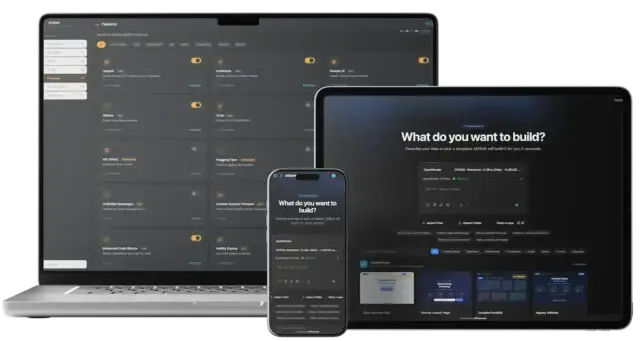
Group buying modelled as a real domain rather than a discount flag, alongside flash sales, live commerce and demand aggregation, with a gamified rewards loop on top. Three surfaces from one React codebase: a shopper app, a ten-section merchant portal and a twelve-section admin console.
Request a Live Demo →See PricingFeature Set by Role
Three surfaces, one React bundle, wrapped for Android with Capacitor. There is no second codebase to maintain and no separate mobile team to staff.
Shopper
The four mechanics that actually convert in social commerce, plus the loop that brings buyers back between purchases.
- Group buying with threshold pricing and a live participant counter
- Flash sales and live commerce
- Demand aggregation across buyers
- Daily check-in, an eight-segment spin wheel and a points ladder
- Redeemable coupon catalogue
- Seven currencies with live conversion, six languages including right-to-left
Merchant
Ten sections of self-service, which is what lets seller count grow without your team growing alongside it.
- Catalogue and inventory management
- Group-buy campaign creation with step tiers
- Live stream scheduling and flash sale setup
- Coupon issuance at merchant level
- Fulfilment and order management
- Sales and campaign analytics
Admin
Twelve sections covering moderation, commerce and platform-wide oversight.
- Four-state merchant moderation workflow
- Catalogue oversight across every seller
- Campaign controls and platform-issued coupons
- Demand triage across aggregated requests
- Plan and subscription management
- Platform-wide analytics
Group buying is three dedicated tables, not a boolean on a product row: threshold pricing, step tiers, a participant ledger and order provenance. That is what makes the counter trustworthy as people join, and what lets you answer which order came from which campaign months later.
Pinduoduo vs Miracuves Clone vs Building From Scratch
Where the readymade platform matches the original's mechanics, and what the same capability costs you in months if you build it yourself.
| Capability | Original Pinduoduo | Miracuves Clone | Custom Build from Scratch |
|---|---|---|---|
| Group buying | Core mechanic | Three tables: thresholds, step tiers, participant ledger | Usually a discount flag at MVP |
| Flash sales | Mature | Scheduled per merchant | Phase two |
| Live commerce | Central to the model | Merchant-scheduled streams | Rarely attempted early |
| Demand aggregation | Supported | Aggregated requests with admin triage | Not usually modelled |
| Merchant self-service | Full portal | Ten sections including analytics | Operator does it by hand for a year |
| Gamified retention | Extensive | Check-in, spin wheel, points ladder, coupons | Deferred indefinitely |
| Cross-border | Multi-market | 7 currencies, 6 languages, RTL configured | One market, retrofitted later |
| Mobile | Native apps | Android via Capacitor from the same bundle | Separate project and team |
| Time to live | n/a | 6 days | Most of a year, six figures |
Pricing is deliberately not on this page. The full cost breakdown lives on the development cost page.
The Technology Behind the Features
React 18 and TypeScript 5 built with Vite 5, on PostgreSQL 15 through Supabase, with Capacitor 8 producing the Android build from the same bundle that serves the web. Data isolation between merchants is enforced at the database layer through row-level security policies rather than in application code, which is the difference between a marketplace where a seller cannot see another seller's orders and one where they merely should not. All three surfaces - shopper, merchant and admin - ship from a single codebase, so a fix lands everywhere at once.
How It Works, End to End
Group buying looks like a discount and works like a coordination problem. Here is the path from signup to a fulfilled order and a shopper who comes back.
Onboarding and provisioning
A signup creates the authentication user, then provisions the profile, the wallet with its sign-up credit and the gamification row - each gated by row-level security so no client can provision for another user.
Discovery and catalogue
Shoppers arrive on a home surface built for time-to-engagement, with categories, trending products, active campaigns and live streams loaded in parallel rather than in sequence.
Coordination and threshold
Joining a group buy writes a participant row that the database itself guards against duplication, and the counter climbs live for everyone watching the same campaign.
Cart and checkout
A cart holding items from several merchants splits into one order per merchant at checkout, so fulfilment stays clean even when a basket spans the marketplace.
Fulfilment and provenance
Merchants move orders through a six-state lifecycle and attach tracking, while the order keeps its link back to the campaign that produced it.
Retention and monetization
The rewards hub brings buyers back between purchases, while the operator earns through commission, merchant subscriptions and platform-issued promotions.
Every Feature Earns Its Place
A feature list tells you what exists. This tells you what each one is worth to a marketplace operator, and what it costs you not to have it.
| Capability | What it actually does | Why it matters commercially |
|---|---|---|
| Group buy with live threshold | Participant rows the database guards against duplication, counters climbing live | Turns each buyer into a recruiter. This is the acquisition mechanic, not a pricing gimmick |
| Database-guarded participation | Duplicate joins rejected at the database rather than in the app | A double-counted threshold is a discount you honour and did not earn. The guard has to be below the client |
| Multi-merchant cart split | One basket becomes one order per merchant at checkout | Fulfilment, settlement and disputes all stay per-merchant, which is what keeps a marketplace operable |
| Campaign provenance on orders | Every order keeps its link back to the campaign that produced it | Tells you which campaigns actually convert rather than which ones got clicks |
| Six-state order lifecycle | Merchants move orders through defined states with tracking attached | Support answers "where is it" from the record instead of asking the merchant |
| Wallet with sign-up credit | Provisioned at signup, gated by row-level security | Stored balance removes a checkout decision, and the credit gives a first purchase a reason to happen today |
| Rewards hub and gamification | Brings buyers back between purchases | Repeat rate is the whole economics of discount marketplaces, where first-order margin is thin by design |
| Live commerce surfaces | Live streams alongside categories and campaigns on the home surface | Compresses discovery and purchase into one session, which is where group buying converts best |
| Parallel home loading | Categories, trending, campaigns and live loaded together, not in sequence | Time-to-engagement is the metric that decides bounce on a discount marketplace |
What Is Not Included in the Base Package
The commerce model, the schema and the flows are complete. The modules below need either a third-party account or a scoped provisioning step, and we would rather name them now.
- Payment gatewayThe wallet, ledger and order models are complete. Connecting Stripe, Alipay, WeChat Pay, Razorpay or PayPal for real money movement is an integration with your own merchant credentials.
- Production video infrastructureThe live commerce schema models commerce state rather than video delivery. Mux, Agora, AWS IVS or a self-hosted cluster plugs in at the front end with no schema change.
- Production searchSearch runs on pattern matching today, which is right for a launch catalogue. Full-text indexing or a dedicated engine like Algolia, Meilisearch or Typesense is the step once the catalogue grows.
- Image storage and resizingThe catalogue accepts image URLs today. A storage bucket with owner-scoped write policies and a resize pipeline is the module for merchant-uploaded media.
- Deferred table provisioningCart, wishlist, addresses, notifications, referrals, flash sales, demand and merchant plans ship with recommended schemas documented. Provisioning them is a scoped, well-defined step rather than design work.
- Logistics and fulfilmentOrder tracking is a field today. Connecting a rate, label and tracking provider turns fulfilment into an automated flow rather than a manual status update.
- iOS applicationAndroid ships with the base product. The same web bundle packages for iOS through the same native bridge, making an iOS build an additive step rather than a second codebase.
- Enterprise controlsMerchant KYC, an application-level audit log, content moderation tooling, multi-admin delegation, single sign-on and data residency for deployments where procurement sets the requirements.
See how Miracuves compares to agencies and freelancers
Cost, timeline, source-code ownership and merchant data isolation compared - plus the questions worth asking any provider before you sign.
Frequently Asked Questions
Is group buying a real feature or just a discount?
What can merchants do without contacting my team?
How is one merchant's data kept from another's?
Which markets can I serve from one deployment?
How does the group buy threshold actually work?
Is there a mobile app?
Explore the Pinduoduo Clone
Five pages on this product. You are on Features.
Features
What is included, by role.
See exactly what you are getting - before you commit
Join a group buy and watch the counter move, then sign in as a merchant and schedule a flash sale. All three surfaces, real credentials.
Miracuves is an independent software development company. We are not affiliated with, connected to, sponsored by, or endorsed by Pinduoduo.
“Pinduoduo Clone” is used descriptively. It is how the software industry refers to building a platform with functionality similar to Pinduoduo, and how clients search for it.
The entire design and codebase is built by our own team. The product contains no code, design, graphics, or content originating from the Pinduoduo website or applications.
Pinduoduo and all other third-party names and marks are the property of their respective owners, referenced here solely to describe the category of software offered.
