

Key Takeaways
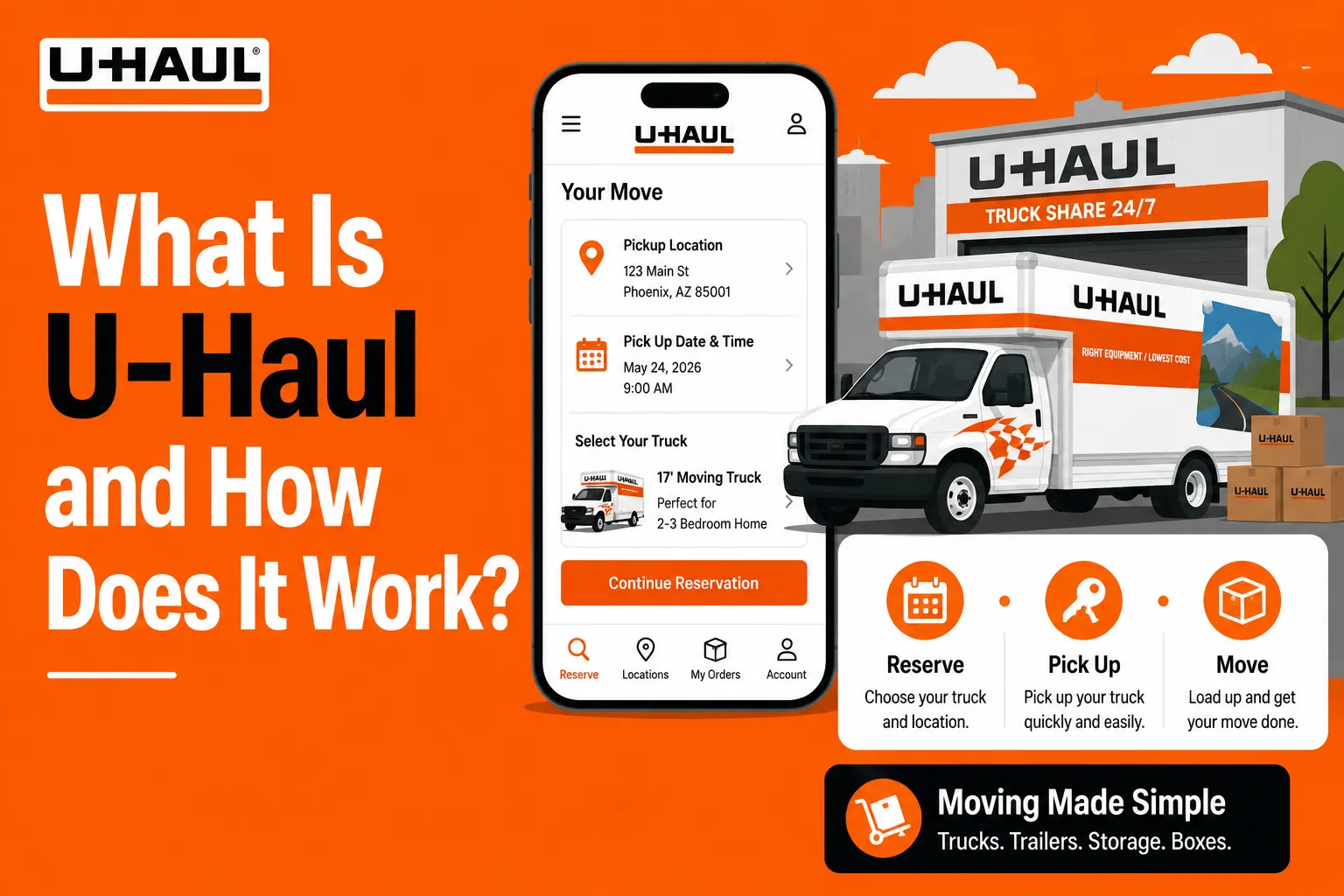
- U-Haul is a moving and rental platform that helps users book trucks, trailers, storage, and moving supplies.
- Customers can choose vehicle sizes, pickup locations, rental dates, and add-on services.
- One-way rentals, local rentals, self-service pickup, and storage options make the model flexible.
- Fleet availability, pricing, insurance, payments, and location management must work together.
- A U-Haul-style platform works best when booking, pickup, and return flows are simple.
Feature Signals
- Users need search, location selection, vehicle comparison, booking, payment, and trip history.
- The app needs rental duration, mileage rules, pickup instructions, returns, and damage reporting.
- Fleet teams need tools for truck availability, maintenance, cleaning, inspections, and location transfers.
- Admins need control over users, bookings, payments, deposits, insurance, refunds, and disputes.
- Notifications help customers track booking confirmations, pickup timing, return reminders, and payment updates.
Real Insights
- Moving rental platforms need strong inventory accuracy before scale.
- Weak pickup and return logic can create delays, disputes, and poor customer experience.
- Clear pricing helps customers understand rental time, mileage, add-ons, and penalties.
- Storage, supplies, and towing options increase platform value beyond truck rentals.
- Miracuves builds U-Haul-style rental platforms with booking, fleet, payment, and admin workflows.
Imagine you’re moving to a new apartment or shifting your business inventory across town. Hiring a full-service mover feels expensive, but driving multiple car trips isn’t practical either. You rent a truck for a day, load at your own pace, and return it once you’re done. That flexibility is exactly what U-Haul is built for.
U-Haul is a self-service moving and storage company that helps individuals and businesses move goods using rental trucks, vans, trailers, and portable storage solutions. Instead of providing labor-heavy moving services, U-Haul focuses on giving customers the tools and infrastructure to move on their own terms.
What makes U-Haul unique is its nationwide presence and do-it-yourself approach. With rental locations in cities, towns, and even small communities, it has become the default choice for one-way moves, local relocations, and short-term storage needs.
By the end of this guide, you’ll understand what U-Haul is, how it works step by step, how it makes money, its key services and features, and why many founders study U-Haul when building logistics, rental, or asset-sharing platforms—and how Miracuves can help build similar systems.
What Is U-Haul? The Simple Explanation
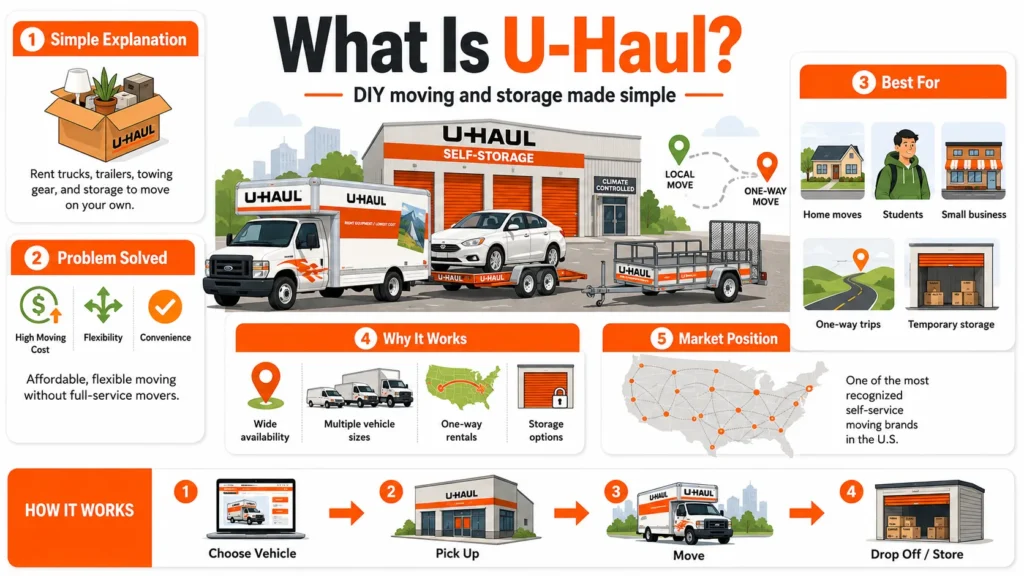
U-Haul is a do-it-yourself moving and storage company that provides rental trucks, vans, trailers, towing equipment, and storage solutions to help people move their belongings. In simple terms, U-Haul gives customers the vehicles and tools they need to move on their own—without hiring full-service movers.
The Core Problem U-Haul Solves
Moving is expensive, stressful, and often inflexible. Full-service movers can be costly, while borrowing vehicles or making multiple trips is inefficient. U-Haul solves this by offering affordable, flexible, short-term access to moving equipment, allowing customers to move at their own pace and budget.
Target Users and Use Cases
U-Haul is commonly used by:
• Individuals moving apartments or homes
• College students relocating between semesters
• Small businesses transporting inventory or equipment
• People making one-way or long-distance moves
• Customers needing temporary storage during transitions
Current Market Position
U-Haul is one of the most recognizable moving and storage brands in the United States, with a massive nationwide network of rental locations. Its ability to support both local and one-way moves at scale makes it a default choice for self-service moving.
Why It Became Successful
U-Haul became successful by focusing on availability, affordability, and flexibility. With widespread locations, multiple vehicle sizes, and one-way rental options, it made moving accessible even in small towns and rural areas—something few competitors could match.
How U-Haul Works — Step-by-Step Breakdown
For Customers (People Moving)
Account creation and booking
Customers create an account and choose what they need—truck, cargo van, trailer, or towing equipment. Bookings can be made online or via the app by selecting pickup location, date, and duration.
Choosing the right equipment
U-Haul offers multiple options so customers can match the vehicle to their move size:
- Cargo vans for small moves
- Box trucks in different sizes for apartments or houses
- Trailers and towing gear for personal vehicles
- Moving supplies like boxes, dollies, and pads
Clear size guidance helps customers avoid over- or under-renting.
Pickup and inspection
At pickup, customers check in, inspect the vehicle, and confirm mileage and fuel level. Many locations support self-service pickup to reduce wait times.
Loading and driving
Customers load their belongings and drive the vehicle themselves. Rentals can be local (round trip) or one-way to a different city or state.
Return and billing
At return, customers park the vehicle at the designated location, confirm mileage and fuel, and complete checkout. Final billing is calculated based on time, mileage, and any add-ons.
Example customer journey
Account → choose truck size → book location/date → pick up → load and drive → return → final billing.
For U-Haul (Operations Side)
Fleet distribution and logistics
U-Haul manages a massive fleet spread across thousands of locations. Vehicles are continuously repositioned to balance supply and demand, especially for one-way moves.
Partnered locations
Many pickup points are partner-run locations (local businesses), expanding reach without owning every storefront.
Technical Overview (Simplified)
U-Haul operates a logistics-heavy platform that includes:
- Reservation and availability systems
- Fleet tracking and relocation tools
- Pricing and mileage calculation engines
- Location management and partner systems
- Billing, payments, and customer support tools
All systems work together to support high-volume, nationwide self-service rentals.
U-Haul’s Business Model Explained
How U-Haul Makes Money
U-Haul operates a self-service rental and storage model. Instead of providing labor-heavy moving services, it monetizes access to vehicles, equipment, and space—letting customers do the move themselves.
Primary revenue streams include:
- Truck & van rentals: Time-based plus mileage-based pricing
- One-way move fees: Premium pricing for relocating vehicles between cities
- Trailer & towing rentals: Flat-rate or time-based charges
- Self-storage units: Monthly recurring revenue
- Moving supplies: Boxes, dollies, pads, hitches, and accessories
- Insurance & protection plans: Optional coverage add-ons
This mix creates both transactional and recurring revenue.
Pricing Structure
U-Haul pricing typically combines:
- Base rental fee (by vehicle size)
- Mileage charge (for trucks/vans)
- Time duration (days/hours)
- Add-ons (insurance, equipment, supplies)
Customers see estimates upfront, then final charges are calculated at return based on actual usage.
Fee Breakdown
- Vehicle rental fee
- Mileage charges (where applicable)
- Storage unit monthly fees
- Optional protection plans
- Add-ons and supplies
U-Haul does not take commissions; it earns directly from asset usage.
Market Size and Demand
Moving and storage demand is steady due to:
- Residential moves and relocations
- Student and seasonal moves
- Small business logistics needs
- Short-term storage during transitions
U-Haul benefits from being useful in both planned and urgent moves.
Profitability Insights
U-Haul improves margins through:
- High fleet utilization
- Nationwide repositioning of vehicles
- Partner-operated locations (lower fixed costs)
- Recurring storage revenue
- Cross-selling supplies and protection
Revenue Model Breakdown
| Revenue Stream | Description | Who Pays | Nature |
|---|---|---|---|
| Vehicle Rentals | Trucks, vans, trailers | Customers | Time & mileage |
| One-Way Moves | Cross-city relocations | Customers | Premium |
| Self-Storage | Units & containers | Customers | Subscription |
| Moving Supplies | Boxes & equipment | Customers | Retail |
| Protection Plans | Damage & liability cover | Customers | Add-on |
Key Features That Make U-Haul Successful
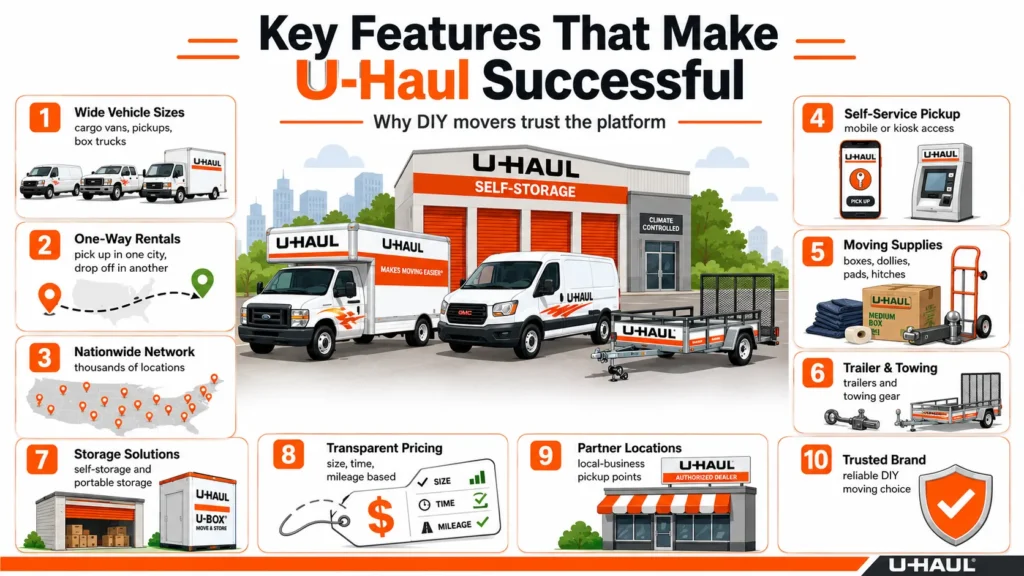
Wide range of vehicle sizes
U-Haul offers cargo vans, pickup trucks, and multiple box-truck sizes. This lets customers choose exactly what fits their move, from a few boxes to a full household.
One-way rentals
Customers can pick up a truck in one city and return it in another. This feature is especially valuable for long-distance moves and is a major differentiator from small local rental providers.
Massive nationwide network
U-Haul has thousands of pickup and drop-off locations, including company-owned centers and partner locations. This density makes availability reliable even in smaller towns.
Self-service pickup and return
Many locations support mobile or kiosk-based pickup, reducing wait times and making the process faster during busy moving seasons.
Integrated moving supplies
Boxes, packing materials, dollies, furniture pads, and hitches are available alongside rentals. This one-stop approach simplifies the moving process.
Trailer and towing options
Beyond trucks, U-Haul rents trailers and towing equipment so customers can move using their own vehicles.
Self-storage solutions
U-Haul offers traditional storage units and portable storage containers, helping customers during gaps between move-out and move-in dates.
Transparent usage-based pricing
Pricing is based on vehicle size, time, and mileage. Customers understand what they’re paying for and can control costs by planning efficiently.
Scalable partner-location model
By working with local businesses as pickup points, U-Haul expands reach without building full facilities everywhere.
Strong brand trust for DIY moving
Decades of reliability have made U-Haul the default choice for self-service moving, especially for budget-conscious users.
The Technology Behind U-Haul
Tech stack overview (simplified)
U-Haul runs a large-scale logistics and asset-rental technology stack built to manage vehicles, locations, storage units, partners, and millions of bookings. At a high level, the platform includes:
- Customer web and mobile apps for reservations and check-in
- Fleet management systems for trucks, vans, and trailers
- Location and partner management tools
- Pricing and mileage calculation engines
- Storage unit management systems
- Billing, payments, and protection plans
- Operations and customer support dashboards
Reservation and availability system
U-Haul’s core technology challenge is matching the right vehicle to the right location at the right time. The system must:
- Track real-time availability across thousands of locations
- Support advance reservations and walk-ins
- Handle seasonal demand spikes (month-end, summer moves)
- Manage one-way rentals that permanently move vehicles between cities
This system is the backbone of U-Haul’s reliability.
Fleet tracking and repositioning
Because customers often move trucks one way, U-Haul relies heavily on software to:
- Track vehicle location and status
- Forecast shortages and surpluses by region
- Reposition vehicles strategically
- Balance supply across cities and states
Without this logistics intelligence, nationwide one-way rentals would not work.
Self-service pickup technology
Many locations use self-service check-in, allowing customers to:
- Verify identity and reservation details
- Inspect vehicles digitally
- Upload photos and confirm condition
- Pick up vehicles without staff interaction
This reduces congestion during peak moving periods.
Pricing and mileage calculation
U-Haul’s billing system calculates charges based on:
- Vehicle type
- Rental duration
- Miles driven
- Add-ons like protection plans and equipment
Accurate mileage tracking and rule-based pricing are critical to prevent disputes and revenue leakage.
Storage management systems
For storage units and portable containers, U-Haul uses separate systems to manage:
- Unit availability and sizing
- Monthly billing and renewals
- Access control and security
- Customer transitions between moving and storage
This enables recurring revenue alongside rentals.
Partner location technology
Thousands of U-Haul locations are operated by partner businesses. Technology helps:
- Sync inventory across partner sites
- Standardize pickup and return workflows
- Monitor service quality and compliance
- Set revenue-sharing and reporting
This partner-first model scales reach with lower fixed costs.
Scalability and reliability
U-Haul systems are built to handle:
- Massive seasonal traffic spikes
- Nationwide geographic coverage
- High transaction volume during weekends and month-ends
Reliability is essential—moving is time-sensitive, and failures directly impact customers’ lives.
Why this technology matters for business
U-Haul’s technology transforms trucks, trailers, and storage into on-demand infrastructure. By coordinating logistics, pricing, and access through software, the company turns physical assets into a scalable, predictable business.
U-Haul’s Impact & Market Opportunity
Industry disruption caused
U-Haul changed moving by making it self-service, flexible, and widely accessible. Instead of relying on full-service movers with rigid schedules and high costs, customers gained control over timing, vehicle size, and budget. This shift made moving possible for millions who wanted affordability and independence.
U-Haul also normalized one-way moves at national scale, something that requires deep logistics coordination and few competitors can match.
Market size and growth drivers
The moving and storage market remains strong due to:
- High residential mobility (job changes, education, housing shifts)
- Growth of renting and frequent relocations
- Small business and gig-economy logistics needs
- Seasonal moves (students, families, military)
- Need for temporary storage during transitions
Because people move regardless of economic cycles, demand stays resilient.
User demographics and behavior
U-Haul serves a broad audience:
- Individuals and families moving homes
- College students and young adults
- Small businesses transporting goods
- DIY movers seeking cost control
A common behavior pattern is planned but time-sensitive usage—customers book in advance but expect reliable pickup and return.
Geographic presence
U-Haul’s strength lies in its nationwide footprint, covering:
- Major cities
- Suburbs
- Small towns and rural areas
This reach makes it usable for almost any move scenario, from local to cross-country.
Future projections
The future of U-Haul-style platforms points toward:
- More digital self-service and automation
- Smarter fleet optimization using data
- Expanded portable storage solutions
- Better integration between moving and storage
- Improved customer experience through apps and tracking
Opportunities for entrepreneurs
There are strong opportunities to build U-Haul-inspired platforms for:
- Regional truck and equipment rentals
- Niche logistics (construction, events, SMB transport)
- Portable storage and container logistics
- Asset-sharing marketplaces for commercial vehicles
- Last-mile and short-haul logistics solutions
This massive success is why many founders explore logistics and rental platforms—once asset availability and reliability are solved, demand naturally follows.
Building Your Own U-Haul-Like Platform
Why businesses want U-Haul-style rental and logistics platforms
U-Haul proves that asset access beats asset ownership for many customers. Entrepreneurs are drawn to this model because:
- Demand is steady and non-seasonal overall (people always move)
- Assets (trucks, trailers, containers) can be reused many times
- One-way logistics unlock higher-value use cases
- Storage adds recurring revenue alongside rentals
- Self-service keeps operating costs lower
Key considerations before development
If you plan to build a U-Haul-like platform, you need clarity on:
- Asset type (trucks, vans, trailers, containers, equipment)
- Local vs one-way rentals
- Fleet ownership vs partner-owned assets
- Pricing logic (time, mileage, distance, size)
- Peak-season demand handling
- Damage, insurance, and liability workflows
- Partner onboarding and revenue sharing
Miracuves U-Haul-Like Platform Solution Cost and Tech Stack
Miracuves Pricing for a U-Haul-Like Truck and Moving Rental Platform developed using JavaScript architecture is available on request. Final pricing depends on truck rental modules, fleet management workflows, moving equipment rentals, storage features, booking logic, payment systems, scalability requirements, and deployment scope. Estimated delivery timeline: 30 to 90 days.
Get a fully developed, custom moving and rental platform modeled around U-Haul-style truck rentals, trailer rentals, moving supplies, and location-based rental operations. Built on a modern JavaScript foundation, this solution can be customized for truck rental companies, moving service providers, logistics startups, fleet operators, storage businesses, and multi-location rental marketplaces.
- Core Workflows: Truck booking, trailer rental, van rental, moving equipment rental, pickup and drop-off scheduling, location-based availability, reservation management, customer verification, and booking status updates.
- Built-in Revenue Logic: Hourly or daily rental charges, mileage-based fees, moving equipment add-ons, insurance fees, late return charges, cancellation fees, storage rental plans, packing supply sales, and location-based pricing rules.
- Management Hub: Admin dashboard, fleet management, vehicle availability control, customer management, booking tracking, branch/location management, payment records, refund handling, damage reports, and rental analytics.
- Moving Rental-Ready Architecture: Prepared for multi-location operations, fleet scheduling, vehicle availability syncing, payment gateway setup, customer document verification, rental agreement workflows, moving equipment add-ons, and long-term platform growth.
Why Does a U-Haul-Like Platform Require JavaScript Architecture?
A U-Haul-like platform needs more than a simple vehicle booking system. It handles truck inventory, trailer availability, pickup locations, rental time slots, moving equipment add-ons, customer verification, payment logic, cancellation flows, damage records, storage options, and real-time availability updates. A modern JavaScript architecture helps manage these workflows smoothly across customers, admins, fleet teams, and branch operators.
We recommend JavaScript architecture for this type of platform because:
- Built for Booking and Availability Logic: JavaScript-based backend systems can manage vehicle availability, rental schedules, pickup/drop-off locations, reservation updates, equipment add-ons, and high-volume booking activity.
- Advanced Frontend Experience: React.js or other JavaScript frameworks can power smooth booking flows, vehicle search pages, pricing calculators, location filters, customer dashboards, rental agreement screens, and admin panels.
- Scalable Rental Operations: JavaScript architecture supports multiple branches, large vehicle fleets, trailer rentals, equipment inventory, customer records, payments, damage reports, and growing moving rental demand.
- Flexible Integration Layer: The platform can connect with map APIs, payment gateways, fleet tracking tools, document verification systems, SMS/email tools, CRM platforms, analytics tools, storage management systems, and customer support systems.
You get a scalable U-Haul-like moving rental platform designed for smooth bookings, fleet control, add-on revenue, customer convenience, and long-term business growth.
Note: Final pricing depends on selected rental modules, fleet workflows, location management needs, equipment rental logic, payment integrations, verification requirements, deployment infrastructure, and custom feature development.
Essential features to include
A strong U-Haul-style MVP should include:
- Customer booking and scheduling
- Vehicle or asset size selection guidance
- Pickup and return workflows
- One-way and round-trip logic
- Usage-based billing
- Partner/location dashboards
- Admin tools for fleet visibility
High-impact extensions later:
- Self-service check-in/out
- Portable storage management
- AI-based demand forecasting
- Dynamic pricing for peak periods
- Multi-city logistics optimization
Read More :- The Ultimate Guide to Starting a Car Rental Business
Conclusion
U-Haul shows how powerful a do-it-yourself, asset-based platform can be when availability and logistics are solved at scale. By giving people control over how and when they move, it turned a traditionally complex process into something accessible and predictable.
For entrepreneurs, U-Haul is a reminder that platforms don’t always need to provide labor to create value. When the right assets, pricing logic, and logistics technology come together, even heavy, physical industries can be transformed into scalable digital businesses.
FAQs :-
What is U-Haul used for?
U-Haul is used for do-it-yourself moving and storage, including renting trucks, vans, trailers, towing equipment, and storage units.
How does U-Haul make money?
U-Haul earns revenue from vehicle rentals, mileage charges, one-way move fees, self-storage rentals, moving supplies, and optional protection plans.
Does U-Haul provide movers?
No. U-Haul focuses on self-service moving. Customers rent the equipment and handle the move themselves.
Can I rent a U-Haul for a one-way move?
Yes. One-way rentals are one of U-Haul’s key offerings, allowing customers to pick up a vehicle in one city and return it in another.
How is U-Haul pricing calculated?
Pricing is based on vehicle size, rental duration, mileage driven, and add-ons such as insurance or equipment.
Does U-Haul offer storage services?
Yes. U-Haul provides self-storage units and portable storage containers, often used during move-in or move-out transitions.
Are U-Haul locations company-owned?
U-Haul operates through a mix of company-owned centers and partner-run locations, which helps it maintain nationwide coverage.
What makes U-Haul different from truck rental competitors?
U-Haul stands out due to its nationwide network, one-way rental capability, integrated storage options, and strong DIY focus.
Is U-Haul suitable for small businesses?
Yes. Many small businesses use U-Haul for local deliveries, inventory transport, and short-term logistics needs.
Can I build a platform like U-Haul?
Yes. With the right rental engine, fleet tracking, pricing logic, and partner management tools, a U-Haul-style platform can be built.
How can Miracuves help build a U-Haul-like platform?
Miracuves helps entrepreneurs launch U-Haul-style rental and logistics platforms in 30-90 days, offering reservation systems, fleet and asset management, pricing engines, partner dashboards, and scalable admin tools—fully customizable for your business model.
Related Articles :-
Miracuves is an independent software development company. We are not affiliated with, connected to, sponsored by, or endorsed by any company or product named in this article.
Terms such as “X Clone” are used descriptively. It is how the software industry refers to building a platform with functionality comparable to a known service, and how clients search for it.
The entire design and codebase of our products is built by our own team. Our products contain no code, design, graphics, or content originating from any third-party website or applications.
All third-party names and marks referenced in this article are the property of their respective owners, referenced solely to identify the services discussed.