


Farfetch Clone App - White-Label Luxury Multi-Brand Marketplace Platform
A launch-ready luxury marketplace covering the whole commercial model: master products with competing seller offers, boutique KYB onboarding, parent and child orders across multiple sellers, regional pricing and duties, commission rules by category and seller tier, and settlement with maker-checker approval before any payout releases.
Four surfaces from one platform. Customers browse a 58-node luxury taxonomy on web and a 42-route mobile app, boutiques and sellers run their own hub from onboarding through payout, and operators work a single command centre across 37 admin routes.
Go Live in 6 Days with Luxury-NativeMulti-SellerSettlement-GovernedRegion-AwareWhite-LabelAPI-Complete
⚡ Platform at a Glance
Parent and Child Orders
One basket can span many boutiques. The order service splits it into child orders per seller with independent fulfilment state machines, which is the engineering most marketplace templates never attempt.
Settlement With Maker-Checker
Accrual, payout request and scheduled release, with a second approver required before money moves. Payout errors are what destroy seller trust, so the control is built in rather than bolted on.
Luxury-Native Data Model
Authenticity status, condition and provenance are first-class fields, with a catalog QA queue behind them. Generic marketplace software has nowhere to put any of it.
29 Independent Services
Catalog, pricing, checkout, payments, OMS, inventory, shipping, settlement, risk, disputes and more deploy independently, and the whole monorepo is auditable for due diligence.
Seller Hub, Not a Listing Form
KYB onboarding, team RBAC, bulk feed import, growth campaigns, statements and payout requests. Most clones stop at a product upload screen.
Regional Pricing and Duties
Regions, locales, currency display and duty or tax handling at checkout, so a single deployment can trade across markets under one brand.
🚀 Ready to launch your own luxury marketplace?








Live in Action
Farfetch Clone Demo - Storefront, Boutique Portal, Seller Hub & Admin
Don’t just take our word for it. Open the Miracuves Farfetch Clone yourself. Every role has a working login and no setup is required. Add to a multi-seller basket, approve a boutique, run a settlement, resolve a dispute.
CUSTOMER STOREFRONT
Farfetch Clone - Customer Storefront
The shopping experience. A 58-node luxury taxonomy, product pages with competing seller offers, wishlists, loyalty tiers, regional pricing and multi-seller checkout.
-
Open the web app in your browser
-
Login with the demo credentials below
-
Explore: Catalog, PDP offers, Wishlist, Checkout
-
Try: customer@mxfarfetch.local | Customer@2026!
BOUTIQUE PORTAL
Boutique Onboarding & Catalog
The boutique partner surface. KYB onboarding with document upload, catalog and offer management against master products, and visibility of orders and statements.
-
Open the web app in your browser
-
Login with the demo credentials below
-
Explore: Onboarding, Offers, Orders, Statements
-
Try: boutique@mxfarfetch.local | Boutique@2026!
SELLER HUB
Inventory, Feeds, Growth & Payouts
The seller operations surface. Bulk feed import, inventory and stock reservations, shipping labels, growth campaigns, settlement statements and payout requests.
-
Open the web app in your browser
-
Login with the demo credentials below
-
Explore: Feeds, Inventory, Growth, Payouts
-
Try: seller@mxfarfetch.local | Seller@2026!
ADMIN COMMAND CENTRE
Catalog QA, Risk, Finance & Platform
Operator governance across 37 admin routes. Catalog QA, commission rules, risk and AML screening, disputes, finance with maker-checker payout release, regions and feature flags.
-
Open the admin console in your browser
-
Login with the demo credentials below
-
Explore: Catalog QA, Commissions, Risk, Finance
-
Try: admin@mxfarfetch.local | Admin@2026!
ANDROID APP
Farfetch Clone - Android App
A branded Android build of the 42-route Expo application, sharing the same API gateway as the web storefront.
-
Download the app to your Android device
-
Login with any role credential above
-
Explore: Browse, PDP, Bag, Orders, Profile
-
Try: customer@mxfarfetch.local | Customer@2026!
Watch It Work
Farfetch Clone Video Demo: Multi-Seller Checkout, Onboarding & Settlement
A walkthrough of the platform as an operator sees it, rather than a feature reel. It opens on a product page where several boutiques hold the same master product, so the offer a customer actually picks is visible before anything reaches the basket. That basket goes through checkout as one payment and splits into child orders, one per seller, and the same order is opened again in the admin console with its status history, its duty and tax lines, and the commission accrued against each boutique. Onboarding follows, from a KYB submission to an approved catalog and a first bulk feed import, then the settlement queue where a payout sits waiting on a second approver. It closes on the configuration surface where regions, currencies, commission rules and seller tiers are set. If a specific flow matters more than the tour, ask and we will open it live with data in it.
Every Screen Mapped
Farfetch Clone App Flows - Customer, Boutique, Seller & Operator Screens
The interface across the surfaces that matter: editorial and category browse over a 58-node luxury taxonomy, search with filters, the product page with its competing boutique offers, the multi-seller basket and a checkout that prices duty and currency by region, wishlists and loyalty tiers, the boutique onboarding and catalog screens, the seller workspace with feed import and payout requests, and the operator console with its moderation, commission and settlement queues.

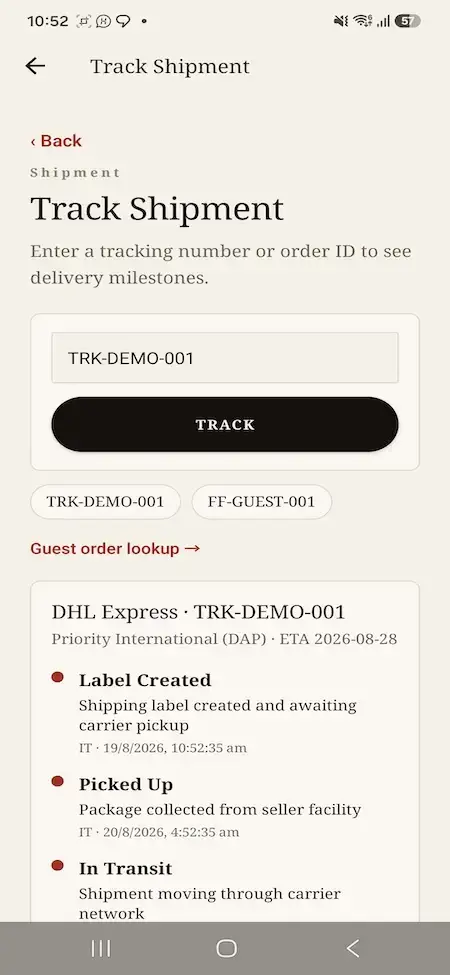
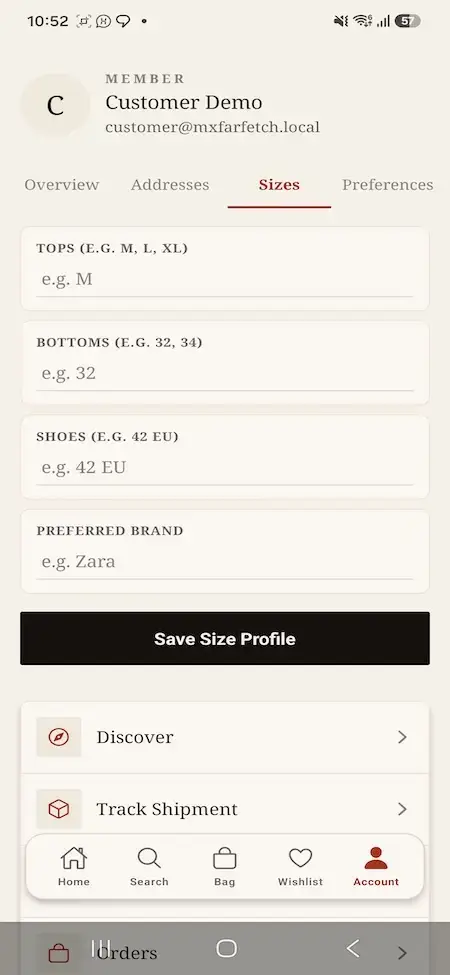
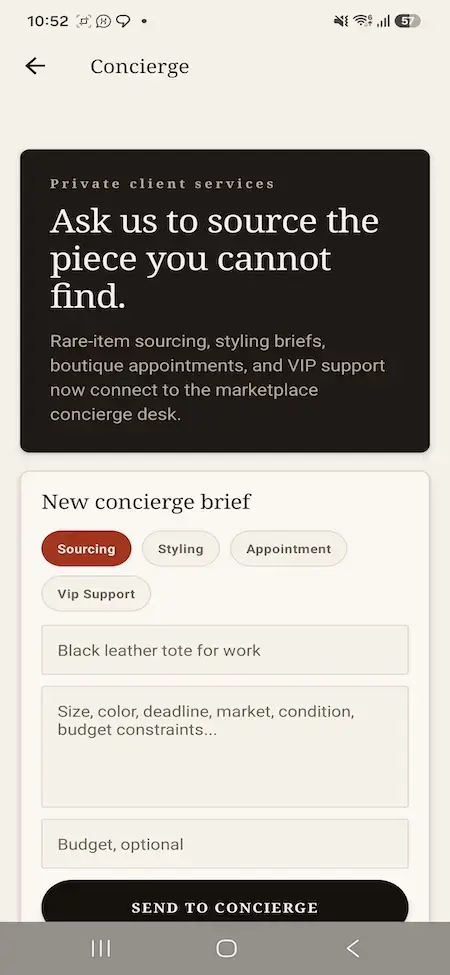
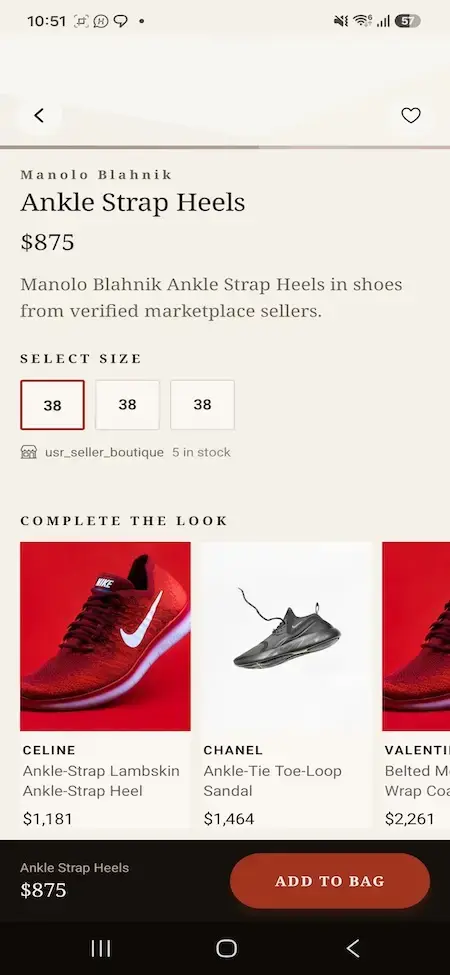

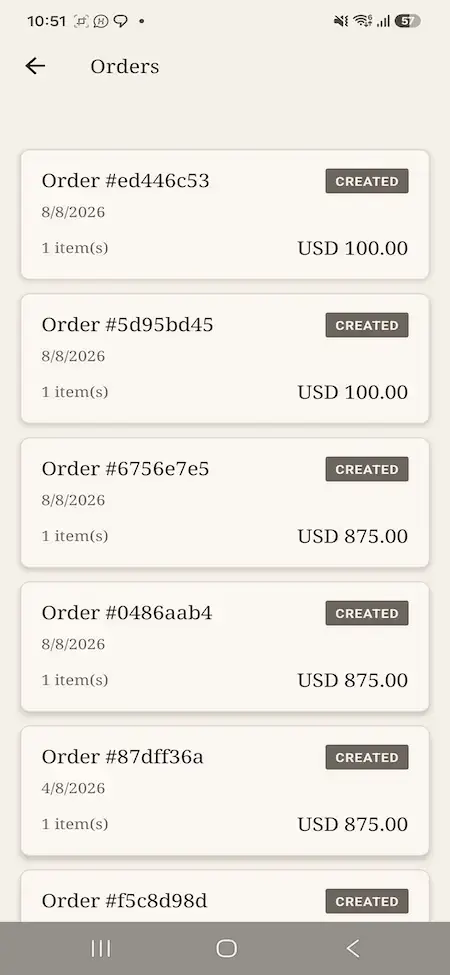
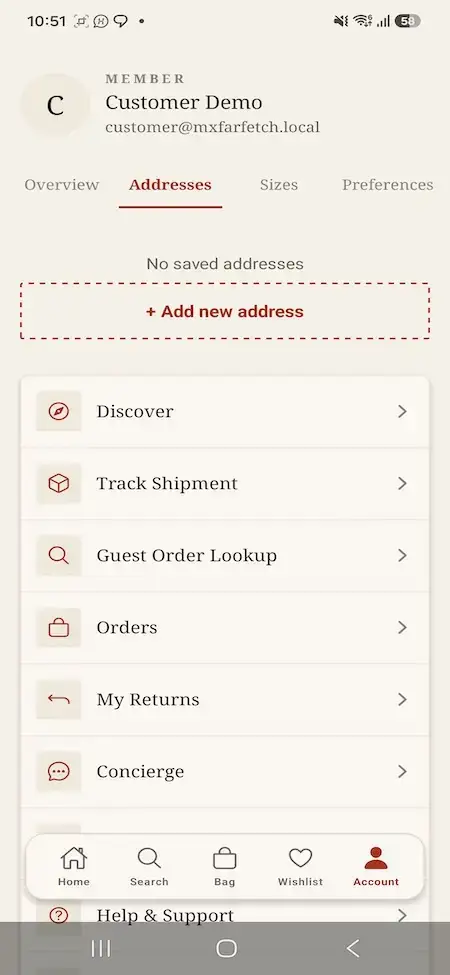
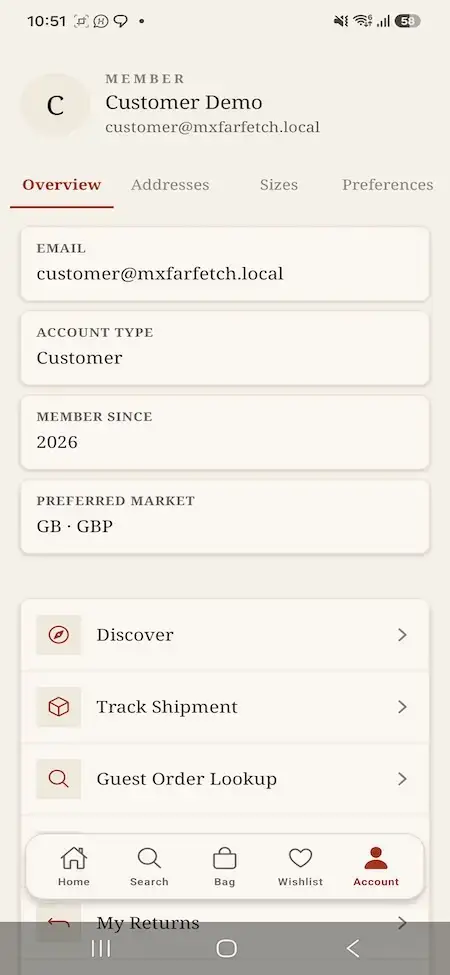
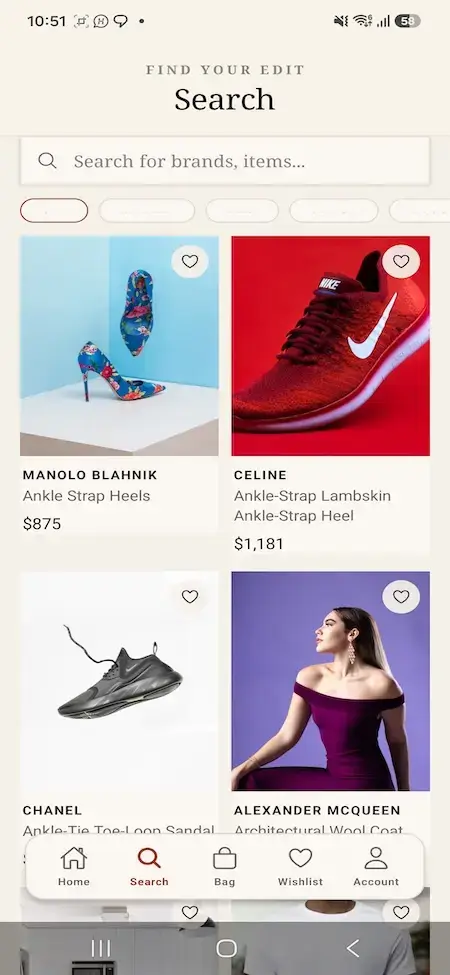

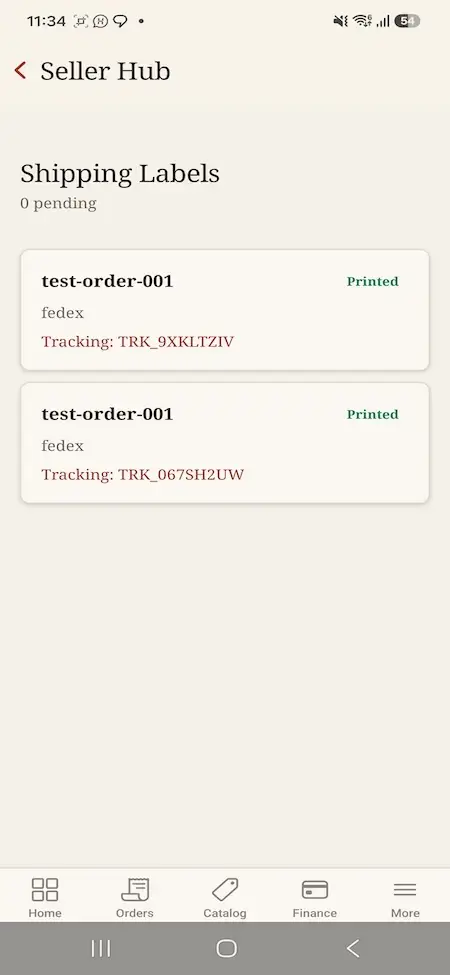
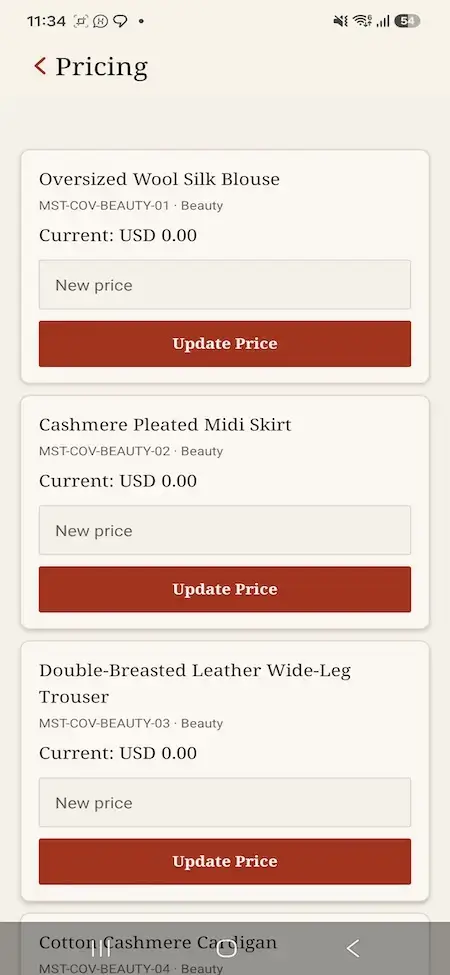
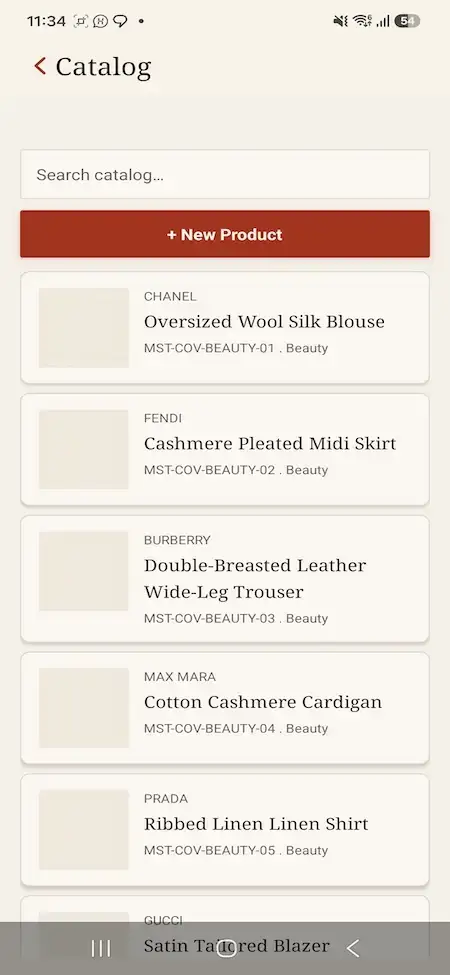
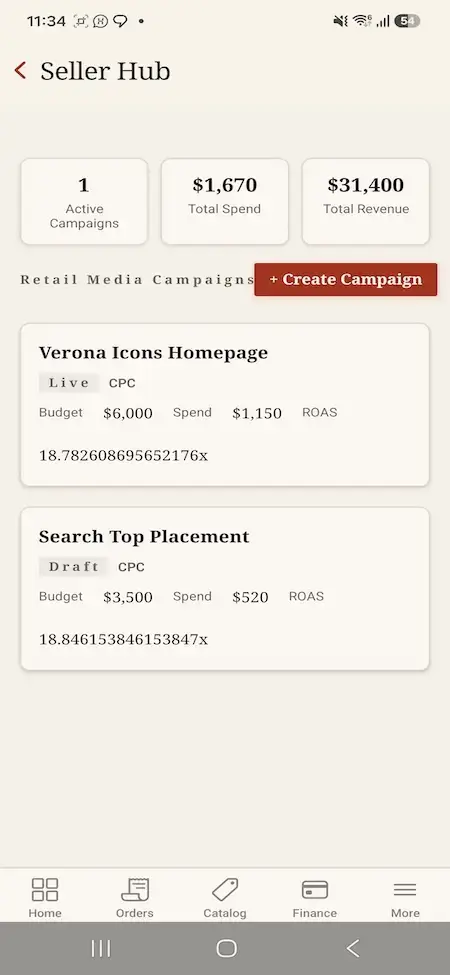
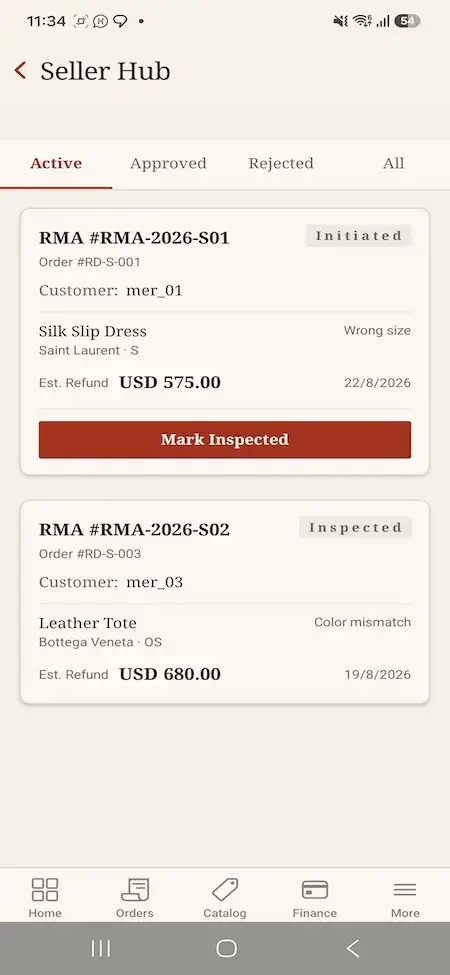
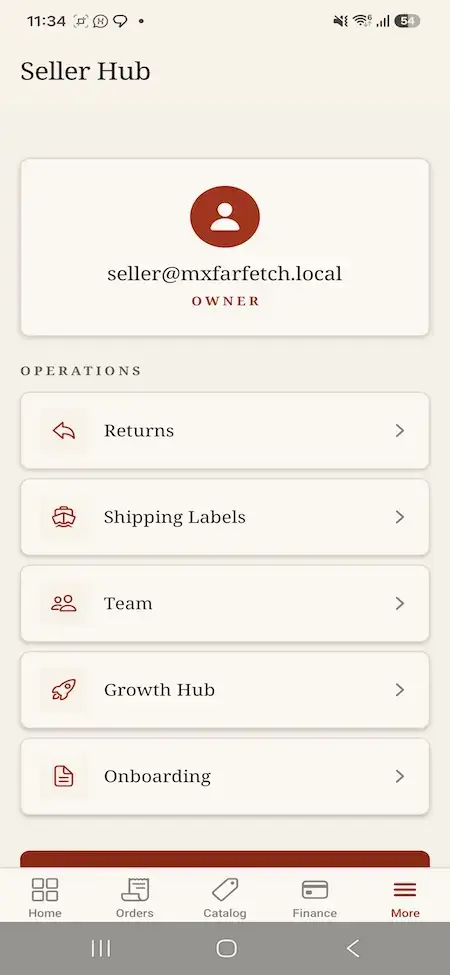
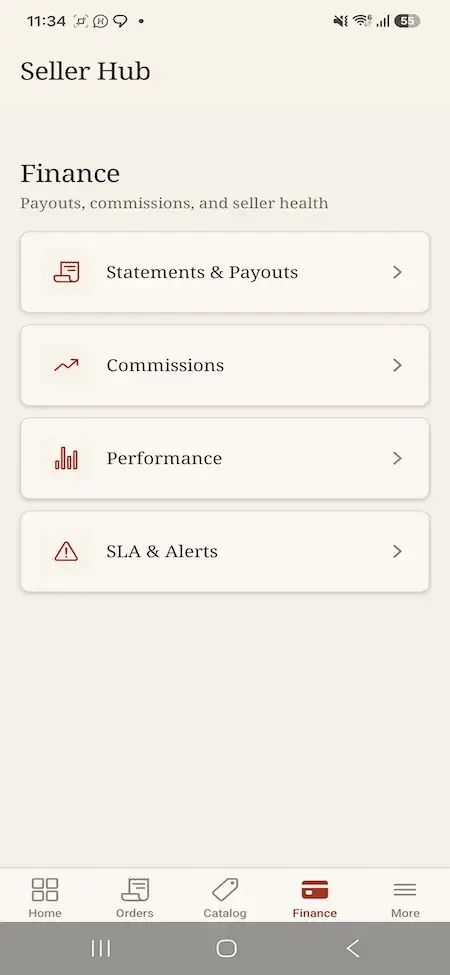
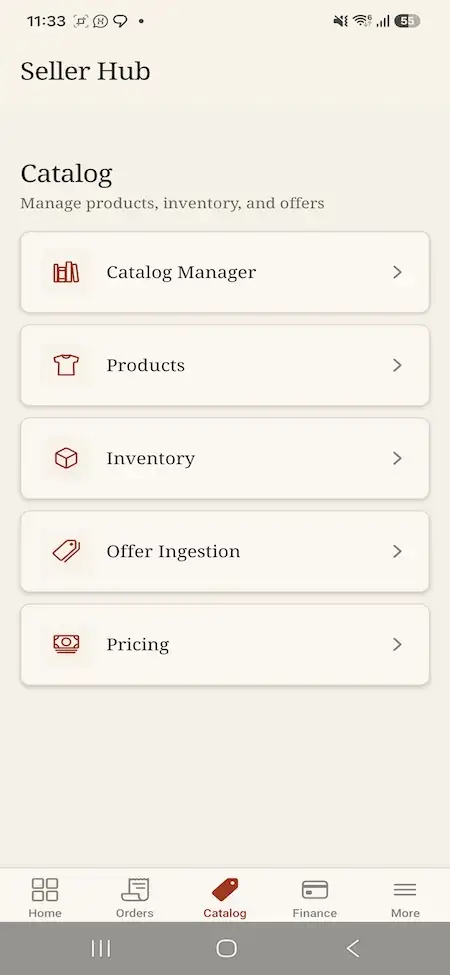
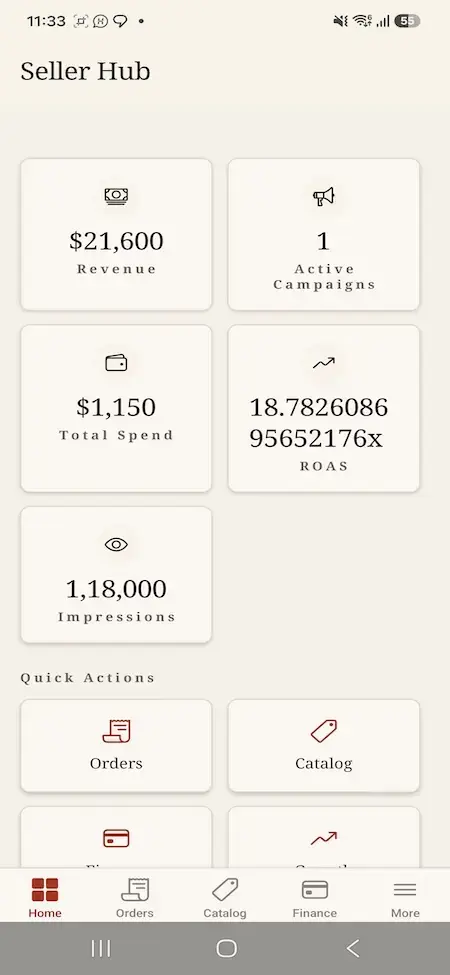
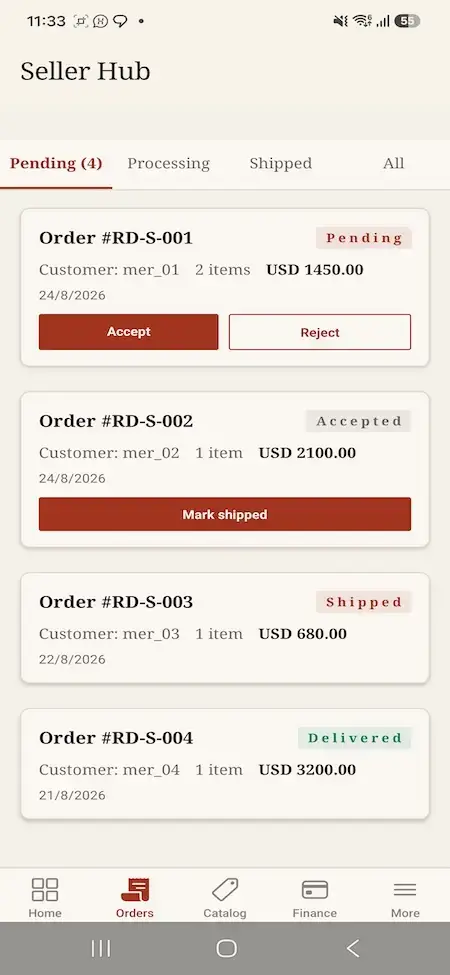
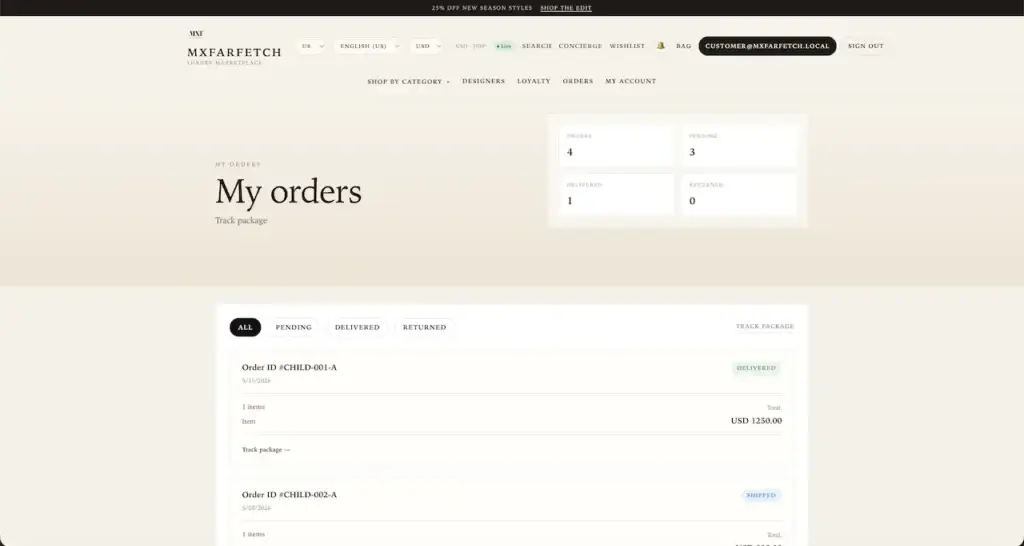
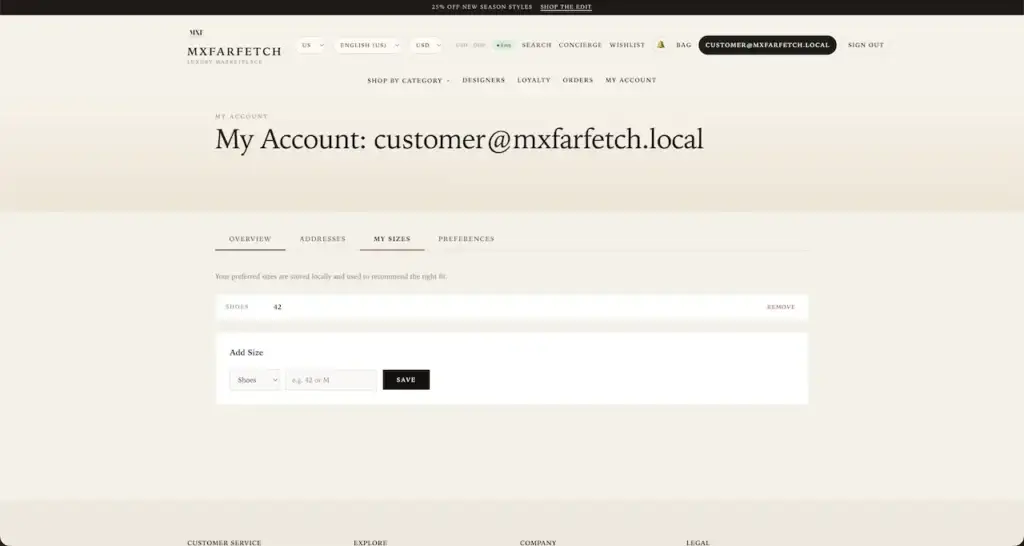
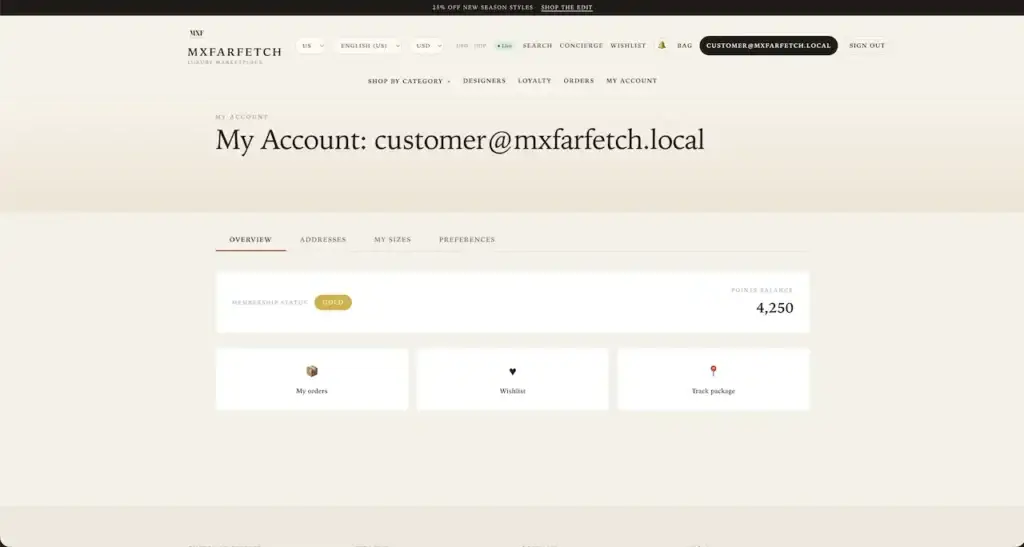
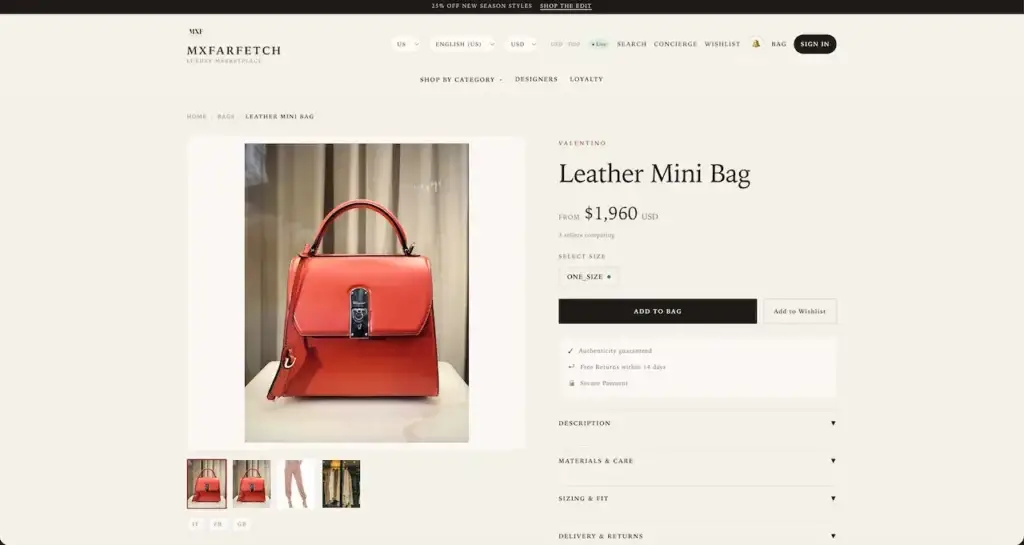
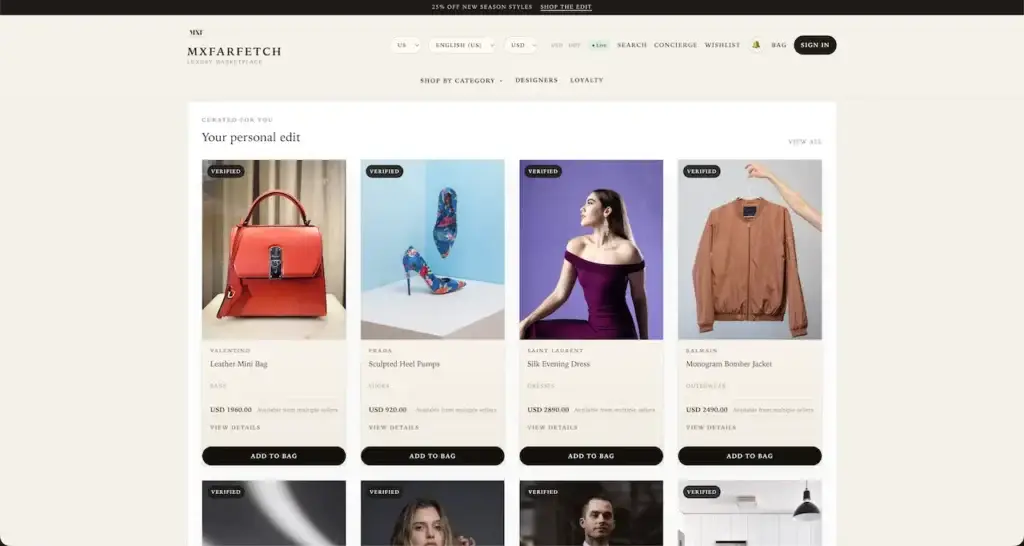
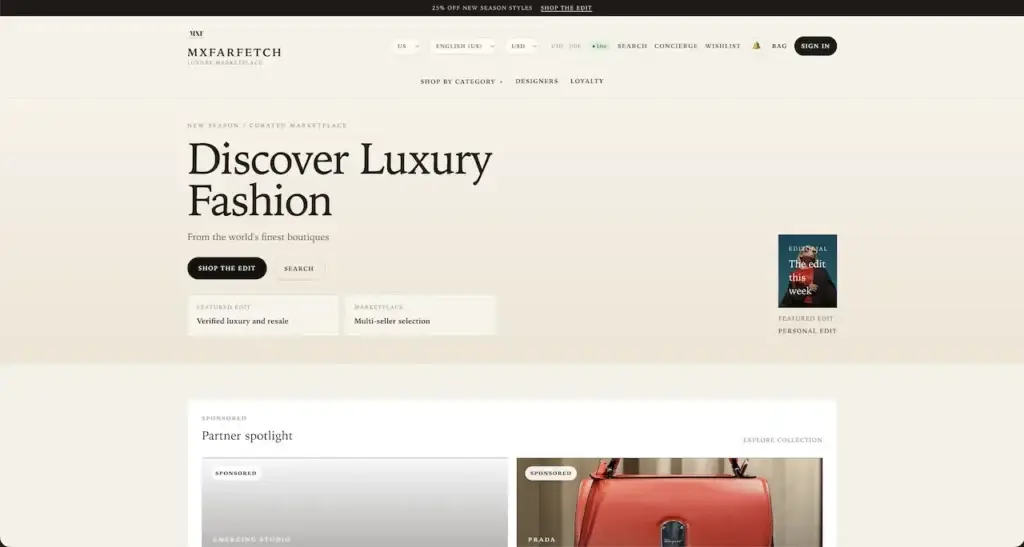
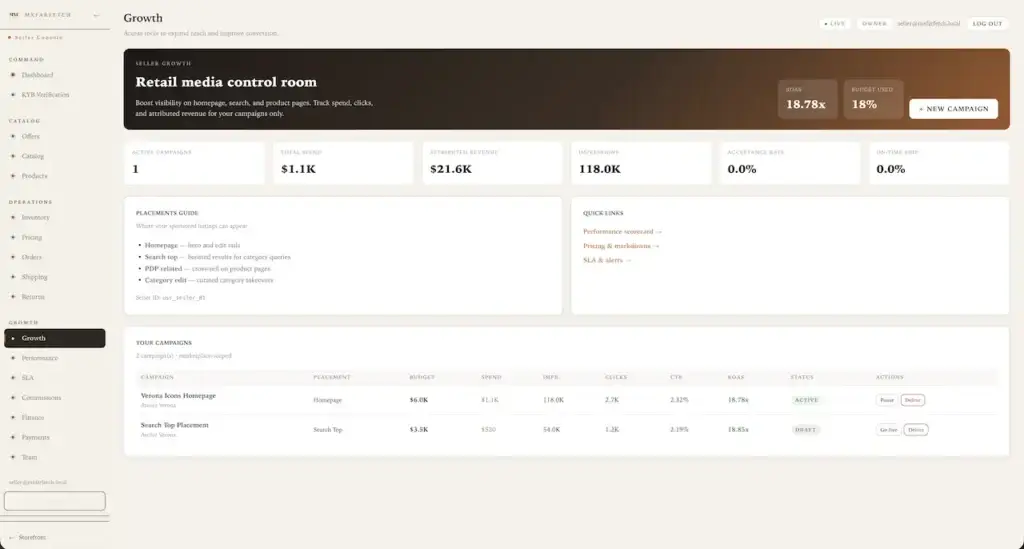
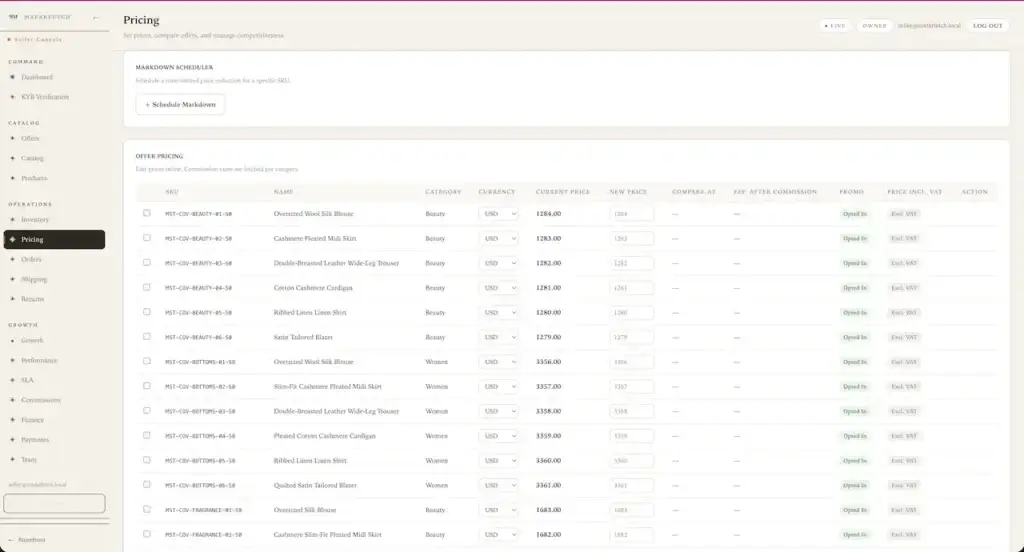
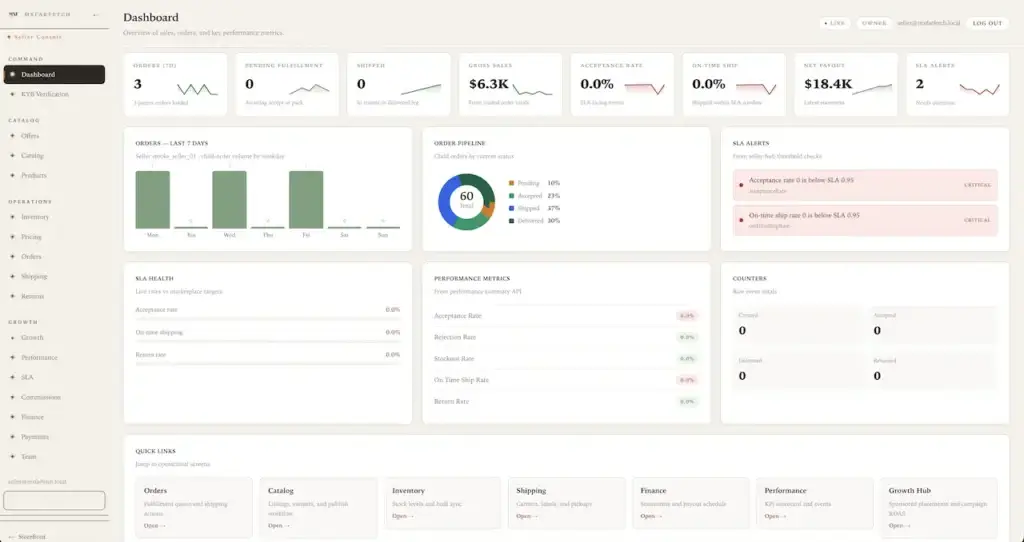
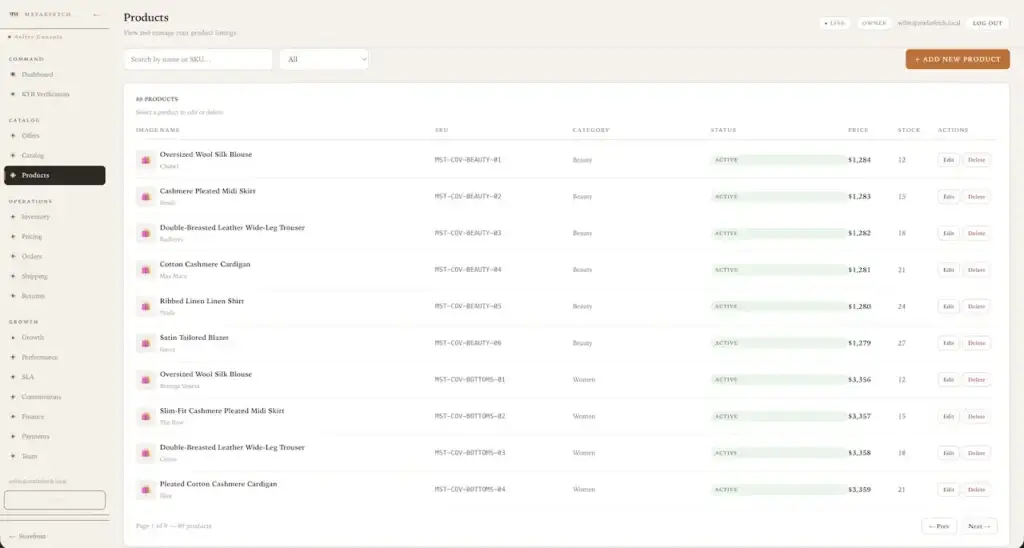
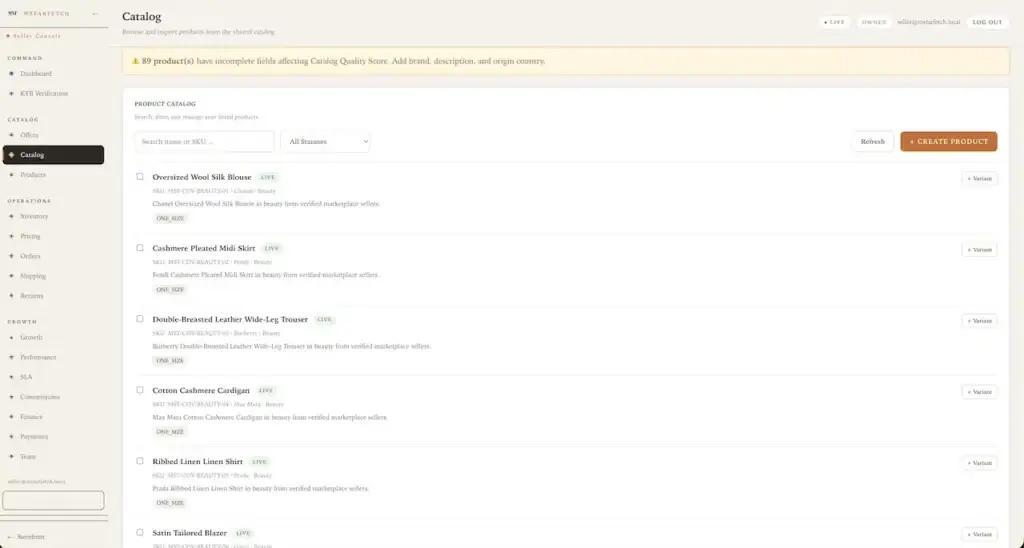
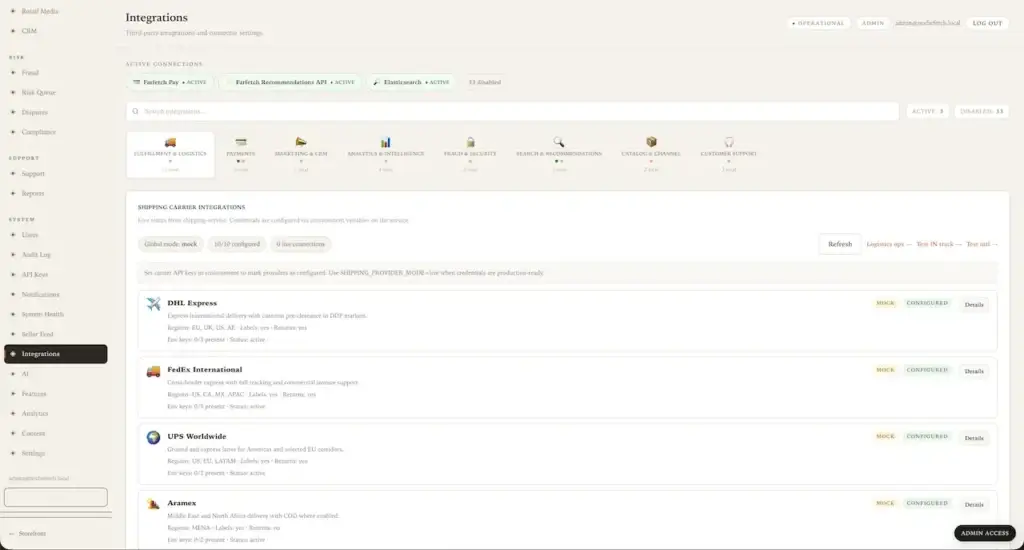
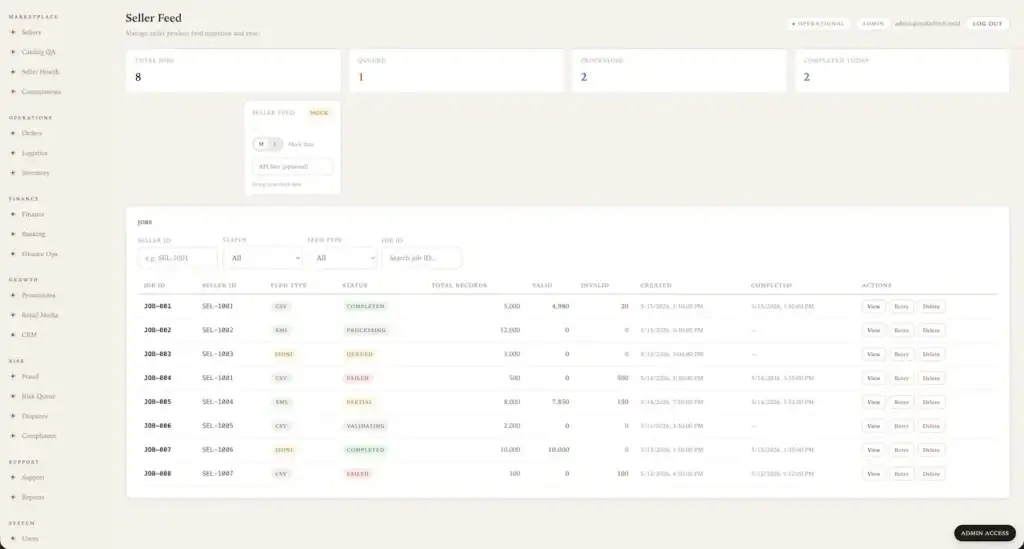
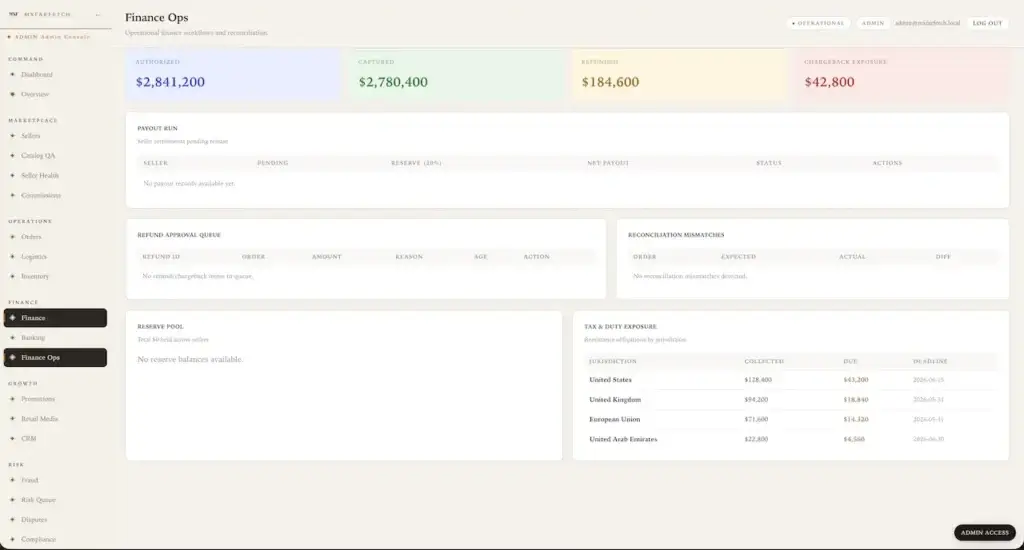
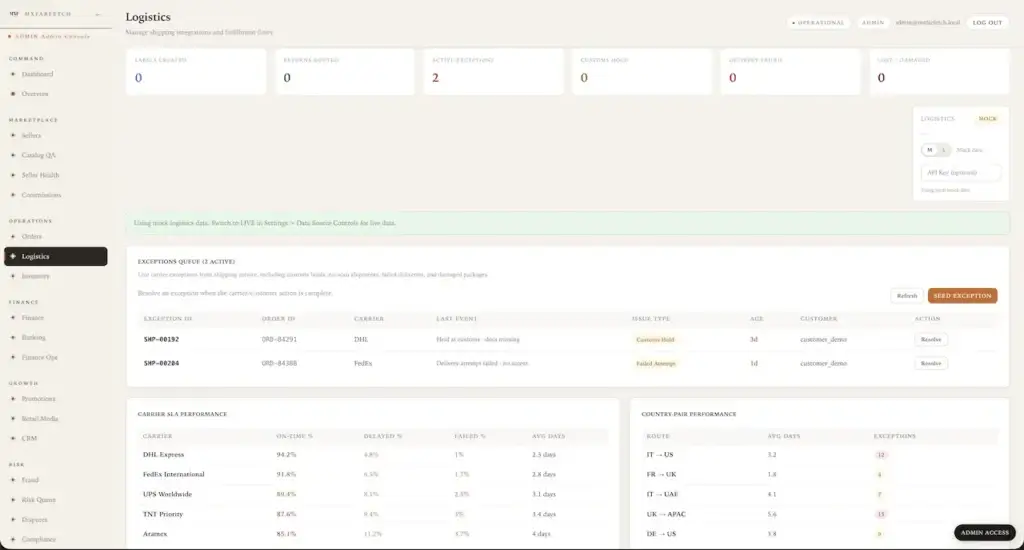
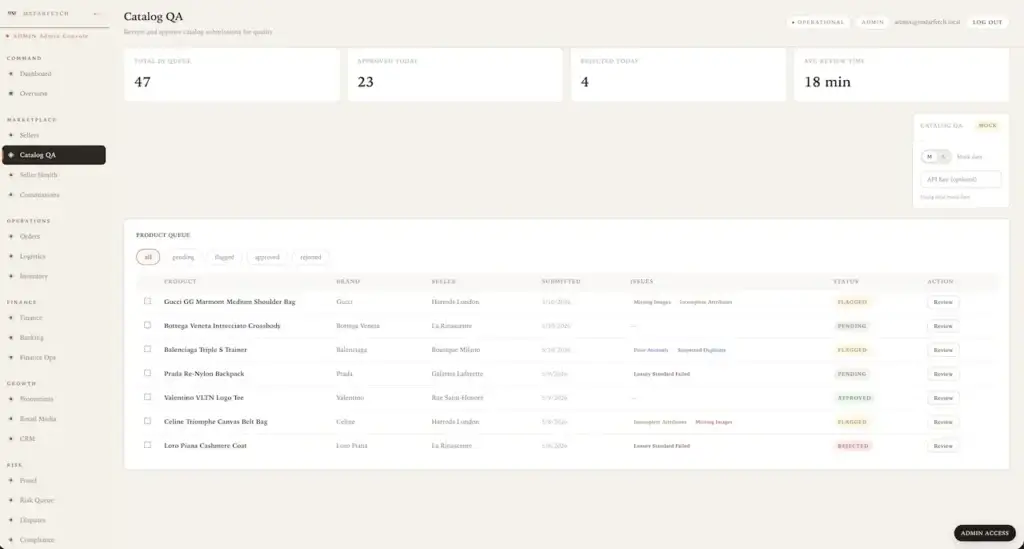
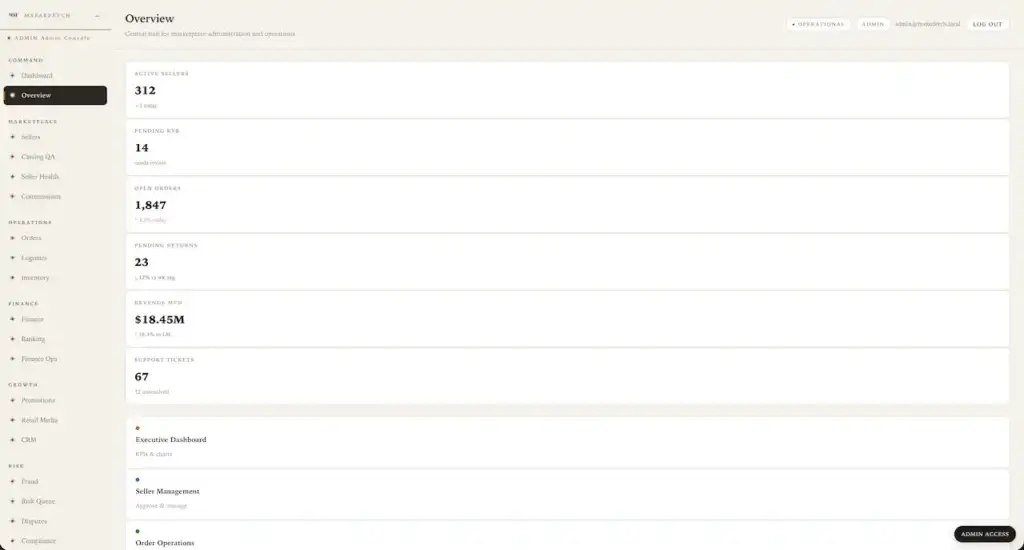
Follow a customer from a category rail through a multi-seller basket to a delivered child order, a boutique from KYB submission to an approved catalog, a seller from bulk feed import to a released payout, and an operator from a flagged listing to a resolved dispute. Web and mobile run the same four flows against the same API gateway, so a boutique that changes a price or a stock count sees it land on both without a second integration. Want a guided walkthrough of a specific flow? Book a call and we will open the surface you care about with live data in it.
Client Voices
Farfetch Clone Client Reviews - Real Platforms, Real Results
Feedback from retail groups and marketplace operators who launched with Miracuves. Client identities withheld under NDA.
Proof in Production
Farfetch Clone Case Study - Luxury Multi-Brand Marketplace Deployment
How an operator launched a regional luxury multi-brand marketplace on the Miracuves Farfetch Clone. Client identity withheld under NDA.
Confidential Deployment
Luxury Multi-Brand Marketplace
A regional luxury multi-brand marketplace launched on the Miracuves Farfetch Clone, with boutique onboarding, parent/child orders and maker-checker settlement live from day one.
- Onboarding hundreds of boutiques without a manual KYB backlog
- Splitting one basket across many sellers without breaking fulfilment
- Paying sellers accurately, with maker-checker approval on every release
- Launch a luxury multi-brand marketplace without building settlement from zero
- Give boutiques a real seller portal instead of a spreadsheet and an inbox
- Make commission and retail media revenue available at launch
- Parent/child order model across multiple sellers
- Commission, retail media & premium seller tiers
- Regional pricing, currency and locale controls
- Wishlists, loyalty tiers, concierge & recommendations
- 29 independently deployable Node.js services
"Settlement governance is what won the boutiques over. They can see exactly what they are owed and when it releases."
The Basics
What Is a Farfetch Clone App?
A Farfetch Clone is a ready-made luxury multi-brand marketplace. Boutiques and sellers list offers against shared master products, customers shop a curated taxonomy across all of them, and the platform handles the parts that make multi-seller luxury retail genuinely hard: order splitting, authenticity and catalog QA, regional pricing and duties, commission rules, and governed settlement.

Not a Storefront Theme
The value sits in the order model, the settlement ledger and the seller lifecycle. A theme gives you a product grid and leaves multi-seller economics as your problem.
Not a Rental Platform
You receive the full monorepo, the schema and the migrations. No per-seat fee, no vendor roadmap dependency, and standard PostgreSQL underneath.
Honest About Readiness
Every external provider needs your own account, search ships on PostgreSQL full-text with Algolia as an upgrade, and the documented authentication gaps are named on this page rather than discovered later.
Built for Web, Mobile & API
What Is a Farfetch Clone Script?
The difficulty in this category is never the storefront. It is one basket becoming four supplier orders with four fulfilment states, it is onboarding hundreds of boutiques without a KYB backlog, and it is paying every seller the right amount on schedule with an approval trail. Those are the parts already built here.
-
Master products with competing seller offers
-
Parent and child orders across multiple sellers
-
KYB onboarding with catalog QA and authenticity fields
-
Commission by category and seller tier
-
Settlement with maker-checker payout release

The build ships around 70 PostgreSQL tables, over 350 API paths across 29 independently deployable services, a 42-route Expo mobile application, 37 admin routes and a dedicated AI service for concierge and catalog-grounded search.
Everything Included
Farfetch Clone Features - Catalog, Multi-Seller Orders, Settlement & Retail Media
Every capability below is built and demonstrable in the live demo. Where a feature needs a third-party account or a deployment decision before it works in production, that is stated against the feature rather than implied away.
Master Products, Many Offers
One canonical product record with competing offers from different boutiques, each with its own price, condition and stock. This is the structure luxury resale and multi-brand retail actually need.
- Master products with competing offers from many sellers
- A 58-node luxury category tree with mega-menu browse
- Featured rails, trending and PDP recommendations
- Authenticity status, condition and provenance fields
Catalog QA & Authenticity
A review queue standing between a seller upload and a live listing, with authenticity status, condition and provenance as first-class fields rather than free-text notes.
- Catalog QA review queue before offers go live
- Bulk feed import over CSV and API with job monitoring
- Offer ingest with per-seller pricing and stock
- Category and attribute mapping for seller catalogs
Multi-Seller Basket
Persistent carts holding line items from several sellers at once, for both guest and authenticated shoppers, carried through to a single checkout.
- Persistent carts for guest and authenticated shoppers
- Multi-seller line items in a single basket
- Wishlists saved across sessions and devices
- Guest order lookup and tracking without an account
Checkout With Duties
Checkout intents combining promotions, address validation, duty and tax by region, shipping options and a fraud scoring hook before payment is authorized.
- Checkout intents with promo and address validation
- Duty and tax handling per region
- Shipping options quoted at checkout
- Fraud scoring hook before authorization
Parent & Child Orders
One customer order splits into a child order per seller, each running its own fulfilment state machine, so partial shipment and partial return behave correctly.
- Stripe, PayPal and Adyen gateway support
- Authorize, capture, refund and chargeback handling
- Regional payment policy per market
- Your own merchant accounts required to go live
Inventory & Shipping
Soft and hard stock reservations, bulk sync, low-stock alerts, carrier adapters for quotes and labels, return routing and live tracking.
- Parent order split into child orders per seller
- Independent fulfilment state machine per child order
- Returns with inspection hooks
- Buyer and seller dispute lifecycle with evidence
Commission & Settlement
Commission matrices by category and seller tier feeding accrual, payout requests and a scheduled release cron, with finance statements per seller.
- Stock levels with soft and hard reservations
- Bulk inventory sync and low-stock alerts
- Carrier adapters for quotes and labels
- Return routing and live shipment tracking
Maker-Checker Payouts
A second approver is required before a payout releases. Settlement accuracy is what retains sellers, so the control is structural rather than procedural.
- Commission rules by category and seller tier
- Settlement accrual and payout requests
- Scheduled release cron with finance statements
- Maker-checker approval before any payout releases
Seller Hub & Feeds
KYB onboarding with documents, team RBAC, bulk CSV and API feed import with job monitoring, and self-service growth campaigns.
- KYB seller onboarding with document upload
- Seller team accounts with role-based access
- Seller growth campaigns and self-service ads
- Operator retail media with sponsored placements
Retail Media, Both Sides
Operator-run ad campaigns and sponsored placements alongside seller self-service growth campaigns, so the same inventory monetizes twice.
- Loyalty tiers and points with CRM campaigns
- Customer segments and lifecycle triggers
- VIP lists and journey orchestration
- Concierge flow for high-touch sourcing
Risk, Disputes & Support
Fraud scoring, AML and sanctions screening, privacy requests, a buyer and seller dispute lifecycle with evidence, and a support desk with SLA timers.
- Fraud scoring, AML screening and sanctions checks
- Privacy request handling
- Support desk with agent macros and SLA timers
- Dispute resolution with evidence trail
Regional Commerce Controls
Regions, locales, currency display and translation tables, so one deployment trades across markets under a single brand and policy set.
- Regions, locales and currency display controls
- Platform settings, feature flags and integration registry
- Executive dashboard with GMV and seller metrics
- Operational reports and category sales exports
Note for buyers: The platform ships complete as software. Stripe, PayPal, Adyen, SendGrid, Twilio, Firebase, Algolia, Auth0, Loqate, Google Places and OpenRouter all require your own accounts and credentials. Search runs on PostgreSQL full-text search out of the box, with Algolia as a configured upgrade. Multi-factor authentication, refresh tokens, token revocation and upload virus scanning are documented as not implemented and are completed as pre-launch hardening.
How Operators Earn
Farfetch Clone Revenue Models - Commission, Retail Media, Tiers & Services
A luxury marketplace earns from several places at once, and this platform models each separately so an operator can tune one lever without disturbing the others.
Marketplace Commission
Commission rules by category and seller tier, applied automatically at settlement rather than reconciled afterwards. The primary revenue engine and the one that scales with GMV.
Retail Media, Operator Side
Ad campaigns and sponsored placements sold by the operator across the storefront, monetizing attention that organic merchandising would give away.
Retail Media, Seller Side
Self-service growth campaigns bought by sellers from their own hub, which turns seller competition for visibility into platform revenue.
Premium Seller Tiers
Tiered commission structures where sellers pay for a lower take rate, converting a discount into a subscription-like commitment.
Promotional Cost Share
A checkout promo engine with configurable cost sharing between operator and seller, so campaigns run without the platform absorbing every discount.
Loyalty & Concierge
Tier benefits lifting repeat purchase value, plus concierge sourcing fees for high-touch requests. Revenue that shows up as frequency and basket size.
The two that move the numbers most are commission and retail media. One scales with gross merchandise value, the other with seller competition for visibility.
Run It Without a Dev Team
Farfetch Clone Admin Console - Catalog QA, Risk, Finance & Platform Controls
Thirty-seven admin routes give operators one pane across catalog, commerce, risk, finance and platform policy, which is the surface most marketplace builds leave siloed across separate tools.
Admin Console Sections
Executive Dashboard
GMV, orders, seller counts and trend metrics aggregated for the operator, the surface a commercial lead opens first each morning.
Catalog QA
The review queue between seller upload and live listing, covering authenticity status, condition, imagery and category mapping.
Commission Rules
Category and seller-tier matrices driving what the platform takes on every transaction, editable without touching code.
Seller Lifecycle
KYB onboarding review, document verification, team accounts and seller state through to suspension where required.
Finance & Payouts
Settlement statements, payout release with maker-checker approval, and ledger views for reconciliation.
Risk & Compliance
Fraud scoring, AML screening, sanctions matching and privacy request handling in one operational queue.
Disputes & Support
Buyer and seller dispute resolution with evidence, alongside the support desk with macros and SLA timers.
Retail Media
Ad campaign management and sponsored placement inventory for the operator side of the retail media business.
Regions & Policy
Region records, locale settings, currency display, payment policy and duty handling per market.
- Platform settings with regions and locales
- Feature flags and integration registry
- Currency display and translation tables
- Commission matrices by category and tier
Analytics & Exports
Operational reports, advanced analytics and category sales exports for finance and merchandising teams.
- Fraud scoring and AML screening queues
- Sanctions checks and privacy request handling
- Dispute lifecycle with evidence and resolution
- Support tickets with agent macros and SLA timers
Need deeper governance? Multi-factor authentication, refresh token rotation, admin step-up authentication, signed download URLs and upload virus scanning are documented as not implemented in the current build. Enterprise single sign-on is available through Auth0 with your own tenant. Tell us the requirement and we will scope it.
Transparent Pricing
How Much Does It Cost to Build a Luxury Marketplace Like Farfetch in 2026?
Building a luxury multi-brand marketplace with Miracuves typically starts from around $3,399 for a launch-ready white-label Farfetch Clone and increases based on seller count, regional footprint, payment and search integrations, mobile scope and infrastructure complexity.
Not sure which option
is right for you?
Talk to us - we'll understand your goals, timeline, and budget, and point you to exactly what you need. No upselling, just honest advice.
The Full Package
What's Included - Farfetch Clone Source Code, Apps & Deployment
You receive a complete, deployable platform: the application source, the schema behind it, and the documentation a technical buyer will ask for. Everything transfers with full ownership, with no runtime licence, no per-seat fee and no dependency on our roadmap.
Full Monorepo
Twenty-nine independently deployable Node.js services plus the Next.js storefront and admin in TypeScript, auditable end to end for technical due diligence.
- Complete monorepo with 29 Node.js services
- Next.js and TypeScript storefront and admin
- API gateway handling routing, auth and rate limits
- Yours to modify, extend and redeploy freely
Schema & Migrations
Around 70 PostgreSQL tables with the Prisma schema, migration set and seed workflow, including the order, commission and settlement structures.
- Around 70 PostgreSQL tables with Prisma schema
- Migration set and seed workflow
- Parent and child order state machines
- Settlement and commission ledger structures
Customer Storefront
A 58-node luxury taxonomy, product pages with competing offers, wishlists, loyalty tiers, concierge, recommendations and guest order lookup.
- Customer storefront with 58-node taxonomy
- Product pages with competing seller offers
- Wishlists, loyalty, concierge and recommendations
- Guest order lookup and shipment tracking
Mobile Application
A 42-route Expo build covering browse, product, bag, orders and profile, plus seller tabs, sharing the same API gateway as the web storefront.
- 42-route Expo mobile application
- Browse, product, bag, orders and profile flows
- Seller tabs for mobile seller operations
- Shares the same API gateway as web
Seller Hub
KYB onboarding with documents, team role-based access, bulk feed import with job monitoring, growth campaigns, statements and payout requests.
- Seller hub with KYB onboarding and team RBAC
- Bulk feed import over CSV and API
- Growth campaigns and self-service ads
- Statements and payout requests
Admin Command Centre
Thirty-seven routes spanning catalog QA, commissions, seller lifecycle, risk and AML, disputes, finance with maker-checker, regions and feature flags.
- 37 admin routes across catalog, risk and finance
- Catalog QA, commissions and seller lifecycle
- Maker-checker payout release
- Regions, feature flags and integration registry
Integration Adapters
Stripe, PayPal and Adyen for payments, SendGrid, Twilio and Firebase for messaging, Algolia for search and OpenRouter for the AI service.
- Adapters for Stripe, PayPal and Adyen
- SendGrid, Twilio and Firebase notification paths
- Algolia search sync and OpenRouter AI service
- Your own provider accounts required to go live
Technical Documentation
Entity-relationship document, deep schema interpretation, the full API collection, developer and security handbook, VAPT posture, PRD and technical dossier.
- ERD and deep schema interpretation
- Full API collection across 29 services
- Developer and security handbook
- VAPT and compliance posture, PRD and dossier
Want to see it running first? Open the demo with any of the four role logins above, or book a walkthrough and we will take you through a multi-seller checkout, a boutique approval and a maker-checker settlement release against your own commercial model.
Explore Every Angle of the Farfetch Clone
Four deeper guides covering features, cost, choosing a builder, and how a luxury multi-brand marketplace earns once the boutiques are onboard.
Features
What each role can actually do, from a 58-node luxury taxonomy and competing boutique offers on one product page, through to a basket that splits into child orders across sellers, on 29 services and 70 tables.
See the full breakdown →Development Cost
The fixed $3,399 set against freelancer, agency and custom quotes, with six working days to deployment, all 29 services transferred, and nothing taken from your commission.
See exact pricing →Development Company
Agency, freelancer and Miracuves compared on what a luxury marketplace has to get right: source code ownership, settlement governance, and the gaps a provider should name before you sign.
Compare options →Business Model
Six revenue lines on one settlement ledger: commission by category and seller tier, retail media, premium seller plans, and maker-checker approval before any payout releases.
See the playbook →Know Your Buyer
Who Is Our Farfetch Clone App Built For?
The platform suits operators running multi-seller retail where brand control, authenticity and accurate seller payment matter more than raw catalog volume.
Luxury Retail Groups
Designer Aggregators
Resale & Pre-Owned Platforms
Regional Luxury Houses
PE and Investor-Backed Ventures
Systems Integrators
If your business depends on curated supply, boutique or designer relationships, and a customer experience that has to feel premium end to end, a Farfetch-style platform becomes a long-term owned asset rather than a storefront rented from a generic marketplace.
Where It Fits
Farfetch Clone Use Cases - Luxury Retail, Resale, Designer & Regional
The same platform serves quite different operators depending on which part of the model leads. A retail group leans on brand control and settlement, an aggregator on onboarding and QA, a resale platform on authenticity. Each is configuration rather than a fork.
Curated Multi-Brand Marketplaces
Run a curated multi-brand marketplace where boutiques compete on the same master products, with catalog QA protecting how the brand is presented and settlement protecting how partners are paid.
Designer & Boutique Aggregation
Aggregate hundreds of designers and independent boutiques, with KYB onboarding, document verification, bulk feed import and risk screening carrying the volume that manual onboarding cannot.
Authenticated Resale Platforms
Operate an authenticated resale platform where condition, provenance and authenticity status sit in the data model, and the QA queue stands between a listing and the storefront.
Regional Luxury Expansion
Expand a regional luxury house into marketplace trading, using region records, locale settings, currency display and duty handling to sell across markets from one deployment.
Investor-Led Ventures
Support an investor-led marketplace launch or acquisition, where readable source across 29 auditable services answers diligence questions a black-box platform cannot.
Systems Integrator Delivery
Deliver a client marketplace as an integrator, extending over 350 documented API paths and modular services rather than starting from an empty repository.
One platform, many configurations. Every use case above runs on the same schema and the same four role surfaces. What changes is the commission structure, the regional policy, the QA standard and the settlement cadence, not a fork you then maintain separately.
Market Timing
Why Launch a Luxury Marketplace in 2026?
Luxury retail has moved to multi-brand marketplaces, and the operators winning are the ones whose boutique partners stay because settlement is accurate and whose customers stay because the experience feels curated rather than generic.
Supply Is the Constraint
Customers follow inventory. Onboarding depth and payout accuracy decide whether boutiques join and stay, which makes the seller experience the growth engine rather than the marketing budget.
Settlement Errors Cost Supply
A seller paid late or wrongly does not complain, they delist. Maker-checker release and per-seller statements protect the relationship the whole marketplace depends on.
Authenticity Is Non-Negotiable
Luxury buyers need provenance and condition to be structured data with a review queue behind it, not a free-text field a seller fills in however they like.
Multi-Seller Baskets Are Hard
One order becoming several supplier orders with independent fulfilment is the engineering most platforms defer, then retrofit painfully once volume arrives.
Retail Media Is the Margin
Commission alone is thin at luxury volumes. Operator and seller-side ad inventory monetizes the same traffic twice without discounting the product.
Buy-Versus-Build Is Settled
A from-scratch equivalent spans catalog, orders, payments, settlement, risk and mobile across multiple years. A white-label deployment is live on your server in under six days.
Platform by the Numbers
Building this layer from scratch is what consumes the years. Multi-seller order splitting, KYB onboarding, commission matrices, governed settlement and regional duty handling are each unglamorous, mandatory and slow to get right.
Under the Hood
Farfetch Clone Tech Stack - Next.js, Node.js Microservices, PostgreSQL & Algolia
Under the hood, a luxury marketplace needs a catalog that models competing offers, an order system that splits cleanly across sellers, and a settlement ledger an auditor can follow. Here is what sits behind it.
Storefront & Admin
Next.js · React · TypeScript
- Customer storefront with a 58-node category tree
- Operator console across 37 admin routes
- Seller hub surfaces from the same application layer
- Server rendering for catalog and product pages
Service Architecture
Node.js · Express · 29 Services
- API gateway for routing, JWT auth and rate limits
- Independently deployable services per domain
- Over 350 documented API paths
- Whole monorepo auditable for technical diligence
Marketplace Data Model
PostgreSQL · Prisma · ~70 Tables
- Master products with competing seller offers
- Parent and child orders with per-seller state
- Commission matrices by category and seller tier
- Settlement accrual, payout and ledger structures
Search & Discovery
PostgreSQL FTS · Algolia · Redis
- Full-text search built in with no external account
- Algolia sync for autocomplete and faceting as an upgrade
- Recommendation service for rails and PDP suggestions
- Redis for caching and hot-path performance
Payments & Risk
Stripe · PayPal · Adyen
- Authorize, capture, refund and chargeback flows
- Regional payment policy selecting the gateway
- Fraud scoring hook before authorization
- AML and sanctions screening in the risk service
Mobile & AI
Expo · React Native · OpenRouter
- A 42-route mobile application including seller tabs
- Shares the API gateway with the web storefront
- AI service for concierge and catalog-grounded search
- LLM access through your own OpenRouter key
Note for Tech Buyers: every external provider runs on your own account, including Stripe, PayPal, Adyen, SendGrid, Twilio, Firebase, Algolia, Auth0, Loqate, Google Places and OpenRouter. Search works out of the box on PostgreSQL full-text search, and Algolia is a configured upgrade rather than a live default. The documentation also records that multi-factor authentication, refresh tokens, token revocation, silent renew, admin step-up authentication, signed download URLs and upload virus scanning are not implemented in the current build; we complete those as named pre-launch hardening. Every layer above is mainstream and widely hired for, with no proprietary framework and a schema portable to any PostgreSQL instance.
End to End
How the Farfetch Clone Works - Browse, Basket, Split, Fulfil & Settle
A luxury marketplace looks like a shop from the outside and runs on a tightly sequenced catalog, order-splitting, fulfilment and settlement pipeline underneath. Here is the path from a boutique application to a released payout.
Marketplace Journey - From Catalog to Settled Payout

Boutique Onboarding & KYB
Nobody sells before they are verified. Boutiques apply, submit documents, and progress through a review workflow before a single offer reaches the storefront.
- KYB application with document upload
- Verification review and approval workflow
- Seller team accounts with role-based access
- Commission tier assigned on activation

Catalog, Offers & QA
Sellers list against shared master products rather than creating duplicates, and a QA queue stands between an upload and a live listing.
- Offers attached to canonical master products
- Authenticity status, condition and provenance captured
- Bulk feed import over CSV and API with job monitoring
- Catalog QA review before the offer goes live

Discovery & Basket
Customers browse a 58-node taxonomy with rails and recommendations, and can hold items from several boutiques in one basket.
- Category tree, featured rails and trending
- Product pages showing competing seller offers
- Persistent cart for guest and authenticated shoppers
- Wishlists saved across sessions and devices

Checkout & Payment
Checkout assembles promotions, address validation, duty and shipping before authorization, and a fraud hook runs before any money moves.
- Checkout intent with promo and address validation
- Duty and tax calculated by region
- Fraud scoring before gateway authorization
- Stripe, PayPal or Adyen per regional policy

Order Split & Fulfilment
The parent order divides into a child order per seller, each with its own fulfilment state, so partial shipment and partial return behave correctly.
- Parent order split into per-seller child orders
- Independent fulfilment state machine per child
- Carrier quotes, labels and live tracking
- Returns with inspection hooks and dispute path

Settlement & Payout
After delivery the commercial tail runs: commission applied, settlement accrued, and a payout released only after a second approver signs it off.
- Commission applied by category and seller tier
- Settlement accrual and seller statements
- Payout request with scheduled release cron
- Maker-checker approval before funds release
Visual Flow Diagram
Onboard → List → Browse → Split Order → Fulfil → Settle
How It's Built
Farfetch Clone Platform Architecture & Backend Flow
Gateway In Front of Everything
A single API gateway handles edge routing, JWT authentication, rate limiting and payment webhook ingress, so cross-cutting concerns live in one place rather than in 29 copies.
Service Per Domain
Catalog, pricing, checkout, payments, orders, inventory, shipping, settlement, risk and support each deploy independently, which is what lets teams work in parallel without collisions.
Offers Against Master Products
The catalog separates the canonical product from each seller offer, which is the structural decision that makes competing prices, conditions and stock possible at all.
State Machines on Orders
Parent and child orders each carry explicit fulfilment state, so a partially shipped, partially returned multi-seller order remains queryable rather than inferred.
Settlement as a Ledger
Accrual, payout request and release are separate recorded stages with maker-checker approval, so seller balances reconcile rather than being recalculated on demand.
Regional Policy Objects
Region records carry currency, locale, payment policy and duty rules, so trading in a new market is configuration rather than a code branch.
Performance Targets
Built to Scale - Independent Services, Indexed Catalog & Growth Headroom
The architecture is deliberately conventional at the edges and specialized where marketplace economics demand it: stateless services behind a gateway, a relational catalog with indexed access paths, and a settlement ledger designed to be audited rather than recomputed.
Catalog Reads at Marketplace Volume
Browse and search dominate read traffic, so the catalog is modelled for offer comparison and cached rather than denormalized early.
The read path rests on:
- Master products with offers joined per seller
- A 58-node category tree backing faceted browse
- PostgreSQL full-text search with Algolia as an upgrade
- Redis caching on hot catalog and rail queries
Order Splitting Without Ambiguity
A multi-seller basket becoming several supplier orders is where marketplace builds usually accumulate their worst bugs.
The order model provides:
- A parent order retained for the customer view
- Child orders carrying independent fulfilment state
- Partial shipment and partial return handled natively
- Returns inspection hooks feeding the dispute path
Settlement That Reconciles
Seller trust rests on payout accuracy, so settlement is recorded in stages rather than derived at payout time.
The financial model keeps:
- Commission applied from category and tier matrices
- Accrual separated from payout request and release
- Maker-checker approval recorded against each release
- Per-seller statements and ledger views for reconciliation
Independent Deployment
Twenty-nine services mean a change to shipping does not require redeploying checkout, which is what keeps release velocity from degrading as the platform grows.
The deployment model supports:
- Per-service deployment behind the API gateway
- Domain boundaries that match team boundaries
- Horizontal scaling of the busiest services only
- A monorepo that stays readable for diligence
Stateless Services
Horizontal growth is an instance-count decision per service, because request handling holds no local state and authentication travels in the token.
Indexed Catalog Paths
Offer lookups, category traversal and facet queries are indexed for the browse patterns luxury retail actually produces.
Search Upgrade Path
PostgreSQL full-text search covers launch, and Algolia sync is a configured upgrade when catalog size and query volume justify it.
Reconcilable Ledgers
Settlement records reconcile against commission rules and order lines, making a seller payment query rather than an investigation.
Independent Releases
A change to one domain redeploys one service, so release risk stays proportional to the change rather than to the platform.
Documented Scaling Path
Scale the busy services, move search to Algolia, add read replicas for analytics, each an incremental step rather than a rewrite.
Built for Customization & Long-Term Growth
Every operator needs something specific to their category or their market. The stack is conventional so extending it is ordinary work.
Adding a service means a new domain behind the same gateway with the same auth and rate limiting; adding a market means a region record with its own currency, payment policy and duty rules. Next.js, Node.js, TypeScript, PostgreSQL and Prisma are all widely hired for.
Note for founders and operators: You can launch lean and scale the same deployment. What changes as volume grows is which services get more instances, whether Algolia replaces PostgreSQL search, and read replicas for analytics, not the architecture underneath.
Built to Be Audited
Farfetch Clone Security - Risk-Screened, Governed & Candidly Documented
Security posture is documented in a dedicated VAPT file, and what stands out is the candour: across the documentation set there are 503 items marked configuration required, 276 marked integration required and 12 marked not implemented, each named rather than glossed.
Authentication Hardening
Upload Safety
Privacy Requests
Payment Security
Operational Screening
Deployment Hardening
Gateway-Level Auth
JWT issuance and validation with rate limiting applied at the API gateway, so every one of the 29 services sits behind the same enforcement rather than implementing its own.
Role Separation
Customer, boutique, seller and operator scopes with seller team role-based access, so a boutique account cannot reach another seller resources.
Fraud & AML Screening
A fraud scoring hook before payment authorization, plus AML and sanctions screening in the risk service, which regulated luxury trade generally requires.
Maker-Checker on Money
Payout release requires a second approver. Financial controls are structural rather than procedural, which is what an audit actually tests.
Enterprise SSO Available
Auth0 integration provides enterprise single sign-on with JWKS validation, using your own tenant and credentials.
Named Gaps, Not Hidden
No MFA, no refresh tokens, no token revocation, no silent renew, no admin step-up, no signed download URLs and no upload virus scanning. All documented, all pre-launch work.
The controls that are built are real: JWT authentication at the gateway with rate limiting, role-based access across customer, boutique, seller and operator, fraud scoring before payment authorization, AML and sanctions screening, and maker-checker approval on payout release. The gaps are equally real and listed below, and we complete them as pre-launch hardening rather than leaving them for you to discover.
Go Further
Farfetch Clone Add-Ons - Auth Hardening, Search, iOS & Enterprise
Out of the box the platform is complete and demonstrable. The modules below are what operators most often add, either because they need a third-party account, or because their scale, security review or procurement process demands it.
Authentication Hardening
Multi-factor with TOTP or WebAuthn, refresh token rotation, token revocation, silent renew and admin step-up. All documented as not implemented today and completed as pre-launch work.
Algolia Search
Search ships on PostgreSQL full-text, which is right for a launch catalog. Algolia sync for autocomplete and faceting is wired and needs your account and index configuration.
iOS Application
A branded Android build of the 42-route Expo app is available. Because it is Expo and React Native, an iOS build is an additive step rather than a rewrite.
Upload Security
Virus scanning, content disarm and signed download URLs are not implemented. These are the usual additions once seller document and imagery volume grows.
Enterprise Single Sign-On
Auth0 integration is built for enterprise SSO with JWKS validation. Connecting your identity provider and tenant is the configuration step.
AI Concierge & Search
The AI service supports catalog-grounded concierge, search assistance and rail titling through OpenRouter, using your own key and chosen model.
Analytics Warehouse
Operational reports and category exports ship in the analytics service. Streaming into a warehouse for BI is the step once merchandising teams need it.
Regional Carriers & Rails
Carrier adapters and regional payment policy are built. Adding a market-specific carrier or payment rail plugs into the same adapter interface.
Building in Marketplace Commerce? We Have the Whole Market Covered.
The Farfetch Clone is one platform in a complete commerce suite. If your roadmap extends beyond luxury multi-brand retail, these connect naturally.
Myntra Clone
Fashion and lifestyle marketplace with brand catalogs, size systems and returns-heavy retail flows.

Etsy Clone
Curated multi-seller marketplace for independent makers, with shop storefronts and made-to-order flows.

Amazon Clone
General retail marketplace with vast catalogs, fulfilment logistics and subscription commerce.

Noon Clone
Regional marketplace with local payment rails, market-specific logistics and multi-country operations.
The Commercial Case
Marketability, Revenue Potential & Business Prospects
Luxury marketplace economics are unusually favourable on the revenue side and unusually demanding on the operations side. Average order values run high enough that a percentage commission is meaningful, but the model only holds if supply stays, and supply stays where payouts are accurate.
Six Revenue Levers
Commission, operator retail media, seller retail media, premium tiers, promotional cost share and concierge services, each tunable independently.
High Average Order Value
Luxury basket sizes make a percentage commission material per transaction, which is a fundamentally different unit economic to volume retail.
Supply Is the Moat
Exclusive or curated boutique relationships are hard to replicate, and settlement accuracy is what keeps them from moving elsewhere.
Exit Optionality
The monorepo and schema are yours on standard PostgreSQL. Twenty-nine auditable services are an asset in diligence rather than a black box to explain.
Most operators launch with a curated set of boutiques rather than open registration, because catalog QA and onboarding review are what protect the brand early. Commission is collectible from the first order. Retail media usually activates once traffic justifies advertiser interest from sellers, and premium tiers follow once there is enough competition for placement to make a lower take rate worth buying. All of it is in the schema already, so switching each on is configuration rather than development.
Defensibility comes from supply and from data, not from features. Boutiques that have onboarded, mapped their catalog and built a payout history do not casually move, and the transaction data those relationships generate is what makes merchandising and recommendation improve over time. The platform contribution is making onboarding fast enough to build that supply, settlement accurate enough to keep it, and the whole record yours rather than a third party who can change terms.
Example Revenue Scenarios
The commercial argument for owning the platform is that in marketplace commerce the asset is the supply relationship and the transaction data. Both live in whoever operates the infrastructure, which is exactly why building on someone else marketplace has a ceiling.
Curated Launch
Boutique Partners
Commission carries revenue while retail media stays dormant.
A focused launch where catalog QA and onboarding depth matter more than scale, and the platform replaces spreadsheets and email with a real seller portal.
Regional Marketplace
Boutique Partners
Commission plus seller-side retail media, with tiers emerging.
A market-scale operation where settlement automation and self-service onboarding let partner count grow without the operations team growing alongside it.
Multi-Market Platform
Boutique Partners
Retail media rivals commission, tiers and services compound.
A multi-region platform where regional pricing, duty handling and premium seller tiers turn one deployment into several national businesses.
Why Miracuves
Miracuves vs Other Farfetch Clone Developers
There are many ways to get a marketplace: generic scripts, freelancers, agencies, or owning the infrastructure.
Why Founders Choose Miracuves
Multi-Seller Orders Solved
Parent and child orders with independent fulfilment state. Generic marketplace scripts treat one order as one shipment and break the moment a basket spans two sellers.
Settlement Governance Built In
Commission matrices, accrual, payout requests and maker-checker release. Most clones hand you a balance figure and leave the controls to you.
Luxury-Native Fields
Authenticity status, condition and provenance with a catalog QA queue behind them, rather than a generic product table with notes bolted on.
Full Source Ownership
The complete monorepo across 29 services in TypeScript on PostgreSQL is yours to modify and deploy. No per-seat fee, no provider who can change terms.
Auditable for Diligence
ERD, schema interpretation, the full API collection, developer and security handbook and VAPT posture, enough for an investor review rather than a demo.
Honest Readiness Language
Configuration required, integration required and not implemented are stated per capability, including the authentication gaps. Nothing surprises you after purchase.
Compare & Discover Why Clients Choose Us as
#1 Ready-Made Clone Solution Partner
| Criteria | Miracuves Farfetch Clone | Generic Clone Script | Custom Dev Agency |
|---|---|---|---|
| Time to Launch | 6 days (Production) | Unknown / DIY | 6-9+ months |
| Source-Code Ownership | ✔ Full | Often limited / encrypted | Usually yes |
| Feature Depth (Farfetch-like) | High (catalog, settlement & retail media) | Basic (listing & feed only) | Depends on budget |
| Security & Compliance | Strong (ISO mindset, GDPR-ready) | Minimal | Varies widely |
| Scalability & Performance | Cloud & CDN-optimized | Rarely considered | Depends on architecture |
| Monetization Options | Multiple (ads, gifts, subs) | Limited / needs custom work | Custom (more time & cost) |
| Admin & Analytics | Full-fledged dashboard | Very basic or missing | Custom build (extra cost) |
| Cost vs Speed vs Quality | Balanced | Cheap but risky | High cost, slow |
| Ongoing Support & Updates | Available with clear plans | Usually none | Depends on contract |
Not every route to a luxury marketplace survives its first hundred boutiques. Here is where we differ.
Industries
Industries We Serve
The Farfetch Clone suits any operator running curated multi-seller retail. Luxury retail groups use the full stack from boutique onboarding through governed settlement. Designer aggregators lean on KYB depth, catalog QA and risk screening. Authenticated resale platforms use condition and provenance as structured data. Regional fashion houses expand into marketplace trading with regional pricing and duty handling. Department stores digitize concession models. Watch and jewellery specialists rely on authenticity workflows. Art and collectibles platforms use the same provenance spine. Furniture and design marketplaces apply it to high-value considered purchases. Beauty and fragrance operators use it for brand-controlled multi-seller retail.
- 👜 Luxury Fashion
- 👗 Designer Aggregation
- ♻️ Authenticated Resale
- ⌚ Watches & Jewellery
- 🏬 Department Stores
- 🌍 Regional Expansion
- 🎨 Art & Collectibles
- 🛋️ Furniture & Design
- 💄 Beauty & Fragrance
- 👟 Sneakers & Streetwear
- 🧵 Artisan & Craft
- 🚀 Agencies & Builders
Miracuves’ Farfetch Clone is built as a settlement-first marketplace platform adaptable to any curated multi-seller business, multi-region where your footprint requires it, and white-labelled entirely under your brand.
Changelog
Farfetch Clone Release Log - Version History & Updates
| Version | Date | What's New |
|---|---|---|
| v2026.1 | Aug 2026 | Initial release. Multi-seller luxury marketplace across 29 services: competing offers, order splitting, maker-checker settlement and retail media. |
Blog & Resources
Farfetch Clone App - Latest Insights & Guides
Stay updated with the latest trends, guides and case studies on marketplace commerce, luxury retail technology and multi-seller operations.
How Safe is a White-Label Farfetch App? Security Guide 2026
Last Updated on May 14, 2026 by Anmol Singh Key Takeaways A white-label Farfetch app…

Business Model of Farfetch : Complete Strategy Breakdown 2025
Last Updated on July 2, 2026 by sakshi What makes the Business Model of Farfetch…

Farfetch Revenue Model: How Farfetch Makes Money in 2026
Last Updated on April 28, 2026 by vaideki Farfetch generated approximately $2.3 billion in revenue…

Best Farfetch Clone Scripts 2025 - Launch a Scalable Fashion Marketplace
Last Updated on March 10, 2026 by Anmol Singh From a small London startup to…

What is Farfetch and How Does It Work?
Last Updated on April 28, 2026 by Anmol Singh Imagine browsing exclusive collections from Gucci,…

FAQ
Farfetch Clone FAQ - Pricing, Sellers, Settlement & Deployment
Everything you need to know about the Miracuves Farfetch Clone.
A ready-made luxury multi-brand marketplace. Boutiques and sellers list competing offers against shared master products, customers shop a 58-node curated taxonomy across all of them, and the platform handles multi-seller basket splitting, catalog QA and authenticity, regional pricing and duties, commission by category and tier, and settlement with maker-checker payout release.
Yes. You launch under your own branding, seller agreements and commercial terms. The product replicates common marketplace patterns rather than any protected asset, and you set your own policies for commission, authenticity standards, returns and settlement.
The Miracuves Farfetch Clone starts from $3,399 for a launch-ready white-label deployment. Final scope varies with seller count, regional footprint, payment and search integrations, mobile scope and infrastructure.
Six days from our side. The platform is ready-made, so our work is rebranding it and deploying to your server, and that is done in under six days. What extends the calendar is anything we need from you: brand assets, hosting access, your category taxonomy and commission model, and merchant accounts for the payment gateways.
The cart holds line items from multiple sellers at once. At checkout the platform creates a parent order for the customer view, then splits it into a child order per seller, each with its own fulfilment state machine. That means one seller can ship while another is still preparing, and a partial return affects only the child order it belongs to.
Commission is applied from matrices set by category and seller tier. Settlement accrues against each order, sellers see statements in their hub and raise payout requests, and a scheduled release cron processes them. Crucially, release requires a second approver through maker-checker, so no single person can move money alone.
Sellers apply through KYB onboarding with document upload, and operators review and approve in the admin console. Once active, sellers create team accounts with role-based access and import catalogs in bulk over CSV or API with job monitoring, rather than listing products one at a time.
Search works out of the box on PostgreSQL full-text search, which is appropriate for a launch catalog. Algolia sync for autocomplete and faceting is wired and ready, but it needs your own Algolia account and index configuration. We state this plainly because it is the kind of thing that surprises buyers otherwise.
Yes. A 42-route Expo application covering browse, product, bag, orders and profile, plus seller tabs, sharing the same API gateway as the web storefront. A branded Android build is available, and because it is Expo and React Native an iOS build is an additive step rather than a rewrite.
The documentation is candid about this. Multi-factor authentication, refresh tokens, token revocation, silent renew and admin step-up authentication are not implemented, and neither is upload virus scanning, content disarm or signed download URLs. What is built includes gateway JWT auth with rate limiting, role separation, fraud scoring before payment authorization, AML and sanctions screening, and maker-checker on payouts. We complete the named gaps as pre-launch hardening during deployment.
Yes. You receive the complete monorepo across 29 Node.js services, the Next.js and TypeScript storefront and admin, the Expo mobile application, the Prisma schema of around 70 PostgreSQL tables with its migrations and seed workflow, and all integration adapters, with full ownership to modify and extend.
Yes. Region records carry currency display, locale, translation tables, payment policy and duty rules, and the regional pricing service applies them at browse and checkout. Adding a market is configuration rather than a code branch, though local payment rails and carriers may need their own adapter and account.
Let's turn your idea into
a live platform.
Get a free consultation, a clear timeline, and honest answers. We'd rather earn your trust than rush a sale.
