Key Takeaways
- Subscription-Based Platform Monetization Strategy should combine subscriptions, PPV content, tips, live access, creator earnings, and platform revenue systems to build a sustainable ecosystem.
- Multiple revenue streams help creators reduce dependency on one income source while giving users flexible ways to pay for value.
- Subscription models create predictable recurring revenue, while PPV, tips, and live experiences add additional transaction opportunities.
- Payment workflows, payouts, content access rules, analytics, moderation, and admin controls are essential parts of a scalable monetization system.
- A successful platform balances creator income opportunities, subscriber value, secure transactions, and sustainable platform revenue growth.
Monetization Signals
- Subscription tiers, recurring billing, renewal tracking, subscriber management, and analytics help creators build consistent income.
- PPV monetization allows users to purchase premium videos, exclusive posts, special announcements, and limited-access experiences.
- Tip systems require wallet tracking, transaction history, payout management, fraud monitoring, and refund workflows.
- Live monetization requires real-time streaming, chat systems, moderation, user permissions, payment verification, and premium access controls.
- Admin dashboards should manage commissions, transactions, creator approvals, payouts, refunds, content safety, and platform reporting.
Real Insights
- A monetization strategy should be defined before development because revenue models directly influence architecture, payments, creator tools, and admin requirements.
- Relying on only subscriptions may limit earning potential, while combining memberships, premium purchases, tips, and live access creates more flexibility.
- Creators stay more engaged when they have multiple ways to earn and access to analytics that help improve their content strategy.
- Strong access controls, payment tracking, payout workflows, and moderation systems protect both revenue and user trust.
- The strongest monetization flow is: define revenue model → support multiple earning options → simplify subscriber payments → manage creator payouts → track analytics → maintain platform safety → optimize revenue streams as the community grows.
Building a subscription-based platform is not only about allowing users to create accounts and upload content.
The real challenge is creating a monetization ecosystem where:
- creators have multiple income opportunities
- users find enough value to continue paying
- the platform earns sustainable revenue
- transactions remain secure and manageable
Founders planning this type of ecosystem should also understand the broader requirements involved in creator platform development, including monetization workflows, admin controls, and scalable user management.
For founders planning a creator-focused platform, choosing the right monetization mix early affects everything from product architecture to payment workflows and admin operations.
A successful platform does not simply connect creators and audiences. It creates an economic system where engagement can naturally convert into revenue.
Understanding the Four Core Monetization Models for Subscription Platforms
A strong creator platform usually combines multiple revenue streams instead of relying on a single payment method.
The four most common monetization layers are:
| Monetization Model | How It Works | Business Value |
|---|---|---|
| Subscriptions | Users pay recurring monthly or yearly fees | Predictable recurring revenue |
| PPV Content | Users unlock individual premium content | Additional transaction revenue |
| Tips | Fans directly support creators | Strengthens creator engagement |
| Live Access | Users pay for premium live interactions | Creates high-value experiences |
Each model serves a different user motivation.
Some users want continuous access. Others prefer paying only for specific experiences. Some want personal interaction with creators.
The platform’s job is to support all these behaviors without creating unnecessary friction.
1. Subscription Revenue: Creating Predictable Platform Income
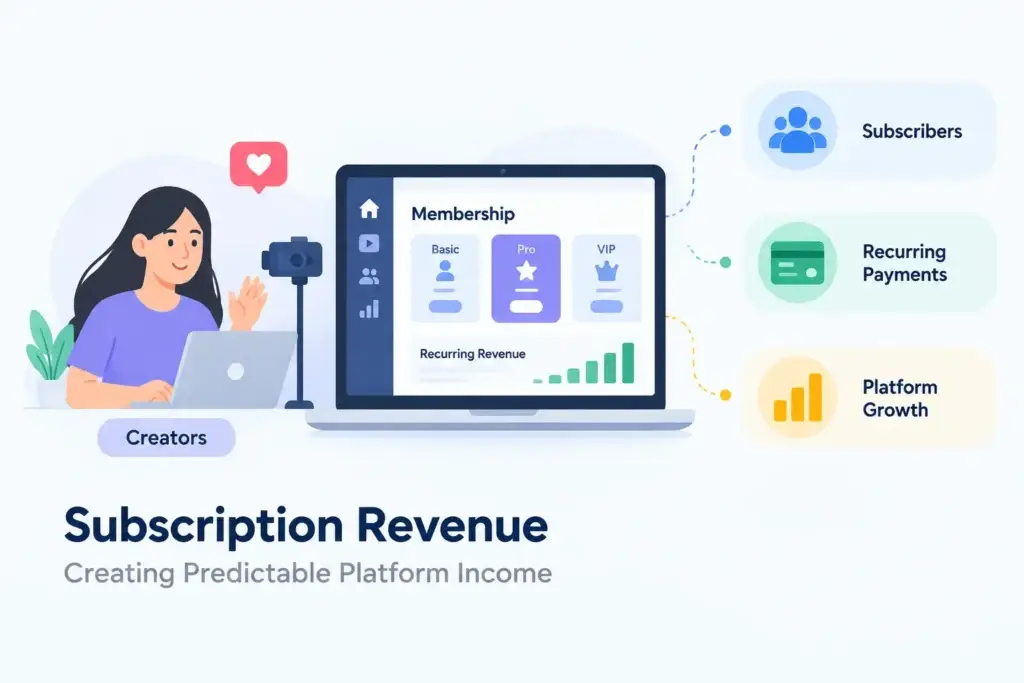
Subscriptions are often the foundation of creator monetization platforms because they provide recurring revenue.
Instead of depending only on one-time purchases, creators can build a consistent income stream through memberships.
Before selecting features, founders should define their subscription platform business model to understand revenue streams, creator payouts, platform commissions, and long-term growth opportunities.
A subscription system typically includes:
- creator membership tiers
- monthly/yearly billing
- subscriber management
- renewal tracking
- payment history
- creator analytics
Why Subscription Models Work
For creators:
- predictable earnings
- stronger audience relationships
- easier content planning
For users:
- continuous access
- exclusive content
- community belonging
For platform owners:
- recurring transaction volume
- better revenue forecasting
- stronger retention opportunities
However, subscriptions alone may limit earning potential.
Different users have different buying preferences. Some users may not want a monthly commitment but are willing to purchase specific premium experiences.
This is where PPV monetization becomes valuable.
2. PPV Content: Turning Premium Experiences Into Revenue
Pay-per-view (PPV) allows users to unlock specific content without requiring a full subscription.
Premium content strategies work best when combined with the right creator platform features that control content access, payments, subscriptions, and user engagement.
This model is useful because it creates flexibility.
Examples include:
- premium videos
- exclusive posts
- special announcements
- limited-access content
- digital experiences
A subscription user and a non-subscriber can both become paying customers through different paths.
Subscription vs PPV Model
| Factor | Subscription | PPV |
|---|---|---|
| Payment Style | Recurring payments | One-time purchase |
| Revenue Predictability | Higher predictability through recurring memberships | Variable based on individual content purchases |
| User Commitment | Higher commitment from regular subscribers | Lower commitment with flexible purchases |
| Best For | Regular followers and long-term communities | Premium content and exclusive experiences |
| Creator Strategy | Building long-term audience relationships | Monetizing special moments and premium content |
A balanced platform allows creators to decide which content belongs behind subscriptions and which content should generate additional purchases.
3. Tips and Fan Support: Building Direct Creator Relationships
Tips introduce a more personal monetization layer.
Unlike subscriptions or PPV, tips are usually driven by emotional connection.
A fan may tip because:
- they appreciate content
- they want to support a creator
- they enjoyed a live session
- they want recognition
A tip system requires more than a payment button.
A scalable implementation should consider:
- transaction tracking
- creator wallet balance
- payout management
- fraud monitoring
- payment history
- refund workflows
For founders, tips can increase creator retention because creators see direct financial appreciation from their audience.
4. Live Access Monetization: Creating Premium Engagement
Live interaction creates a different level of user engagement.
Users are not only consuming content; they are participating in an experience.
Live monetization can include:
- paid live sessions
- exclusive events
- private interactions
- virtual experiences
- premium communities
The technology layer behind live access may involve:
- real-time streaming
- chat systems
- moderation tools
- user permissions
- payment verification
For creator platforms, live access often becomes one of the highest-value engagement opportunities because it creates scarcity and direct interaction.
The Product Architecture Behind a Successful Subscription-Based Platform
A monetization strategy is only as strong as the product foundation supporting it.
Many founders focus on payment options first, but successful creator platforms require multiple connected systems working together:
- user management
- creator onboarding
- content delivery
- payment processing
- subscription handling
- payout management
- analytics
- moderation
- admin controls
The platform should be designed around three major stakeholders:
- Fans / Subscribers
- Creators
- Platform Operators
Each group requires different workflows.
User-Side Experience: Reducing Friction Between Discovery and Payment
For users, monetization should feel natural rather than transactional.
A strong subscriber journey usually looks like:
Discover Creator → View Profile → Follow → Subscribe → Purchase Premium Content → Join Live Experience
Important user-side features include:
| Feature | Business Purpose |
|---|---|
| Creator profiles | Helps users discover personalities and content |
| Subscription options | Enables recurring payments |
| Premium content unlock | Supports PPV revenue |
| Digital wallet/payment history | Builds payment transparency |
| Notifications | Brings users back to new content |
| Messaging/community features | Improves engagement |
The goal is not simply increasing transactions.
The goal is increasing the lifetime value of each user.
Creator Dashboard: The Revenue Engine Behind the Platform
Creators are the supply side of the marketplace.
If creators cannot easily manage content, earnings, and audience relationships, platform growth becomes difficult.
Beyond dashboard analytics, founders should also focus on long-term creator relationships. Strategies around retaining creators and improving subscriber loyalty can directly influence platform activity and content quality.
A creator dashboard should provide:
Content Management
Creators should be able to:
- upload content
- categorize posts
- mark content as premium
- manage subscriber-only access
- schedule releases
Monetization Controls
Creators need visibility into:
- subscription earnings
- PPV sales
- tips received
- live session revenue
- payout history
Audience Analytics
Analytics help creators understand:
- subscriber growth
- engagement trends
- popular content
- revenue performance
This data encourages creators to improve their strategy while increasing platform activity.
Admin Dashboard: The Control Layer Founders Should Not Ignore
For subscription-based platforms, the admin dashboard is not just a management panel.
It is the operational command center.
A scalable admin system should support:
User Management
- account approvals
- user activity monitoring
- account restrictions
- verification workflows
Creator Management
- creator approval
- profile verification
- payout review
- content monitoring
Payment Management
- transaction tracking
- commission calculation
- refunds
- payout approvals
Content Safety
Creator platforms require strong trust and safety workflows.
Important controls include:
- content moderation
- abuse reporting
- copyright reporting workflows
- suspicious activity monitoring
- community guideline enforcement
For creator economy platforms, safety directly affects user retention, creator trust, and platform reputation. Security practices should include moderation workflows, reporting systems, permission controls, and careful handling of user data.
Founder Decision Signals: Choosing the Right Monetization Mix
Revenue Stability
Subscriptions create predictable recurring income, while PPV and tips add flexible revenue opportunities.
User Experience
Too many payment barriers can reduce conversions. Monetization should feel connected to user value.
Creator Retention
Multiple earning options help creators stay active because they are not dependent on one revenue source.
Platform Scalability
Payment workflows, moderation, analytics, and admin controls should support future growth.
Building a Sustainable Creator Revenue Model
A strong subscription platform usually combines multiple revenue sources.
A simplified revenue structure may look like this:
| Revenue Stream | Platform Opportunity |
|---|---|
| Subscription Fees | Platform commission from recurring memberships |
| PPV Transactions | Commission from premium content purchases |
| Tips | Percentage-based transaction revenue |
| Live Sessions | Revenue share from paid experiences |
| Creator Promotion | Featured placement opportunities |
| Premium Memberships | Additional user benefits |
The advantage of multiple revenue streams is risk reduction.
Building a profitable ecosystem requires more than adding payment options. A well-planned creator monetization platform strategy helps founders combine subscriptions, premium content, tips, and live experiences effectively.
If one revenue channel slows down, others can continue supporting platform growth.
Subscription Platform Monetization Mistakes Founders Should Avoid
Building the Frontend Before Defining Access Rules
A visually appealing interface will not protect revenue if the platform cannot properly manage who can access paid content, expired subscriptions, private interactions, or unlocked media.
Treating Payouts as a Manual Admin Task
Manual payout tracking may work for a small creator base, but it becomes difficult to manage as the platform grows. Earnings, commissions, refunds, and withdrawal status should be tracked through structured payment workflows.
Ignoring Moderation and Reporting Workflows
User-generated content platforms require moderation systems, abuse reporting, creator verification, and admin review controls to maintain trust, safety, and long-term scalability.
Choosing a Build Route Without Considering Launch Speed
If the business goal is market validation, spending months building common subscription and messaging modules from zero can delay feedback, revenue testing, and creator onboarding.
Choosing Between Custom Development and a Ready-Made Platform Foundation
Founders entering the creator economy often face an important decision:
Should they build every module from zero or start with a ready-made platform foundation?
A custom approach provides maximum flexibility but usually requires more planning around:
- architecture decisions
- development cycles
- testing
- payment workflows
- feature prioritization
Many founders evaluate whether they should build internally or work with a specialized creator platform development company that understands monetization workflows, backend requirements, and scalable product architecture.
A ready-made approach allows founders to begin with established product flows and customize according to their business model.
The right choice depends on:
| Decision Factor | Why It Matters |
|---|---|
| Launch speed | Faster validation can reduce market uncertainty |
| Custom requirements | Unique workflows may require additional development |
| Budget planning | Feature scope affects overall investment |
| Ownership needs | Source-code ownership provides long-term flexibility |
| Scalability goals | Architecture should support future expansion |
Miracuves helps founders create white-label, source-code-owned app solutions with monetization workflows, admin controls, and customization options for different business models.
Technical Considerations for Subscription Platforms
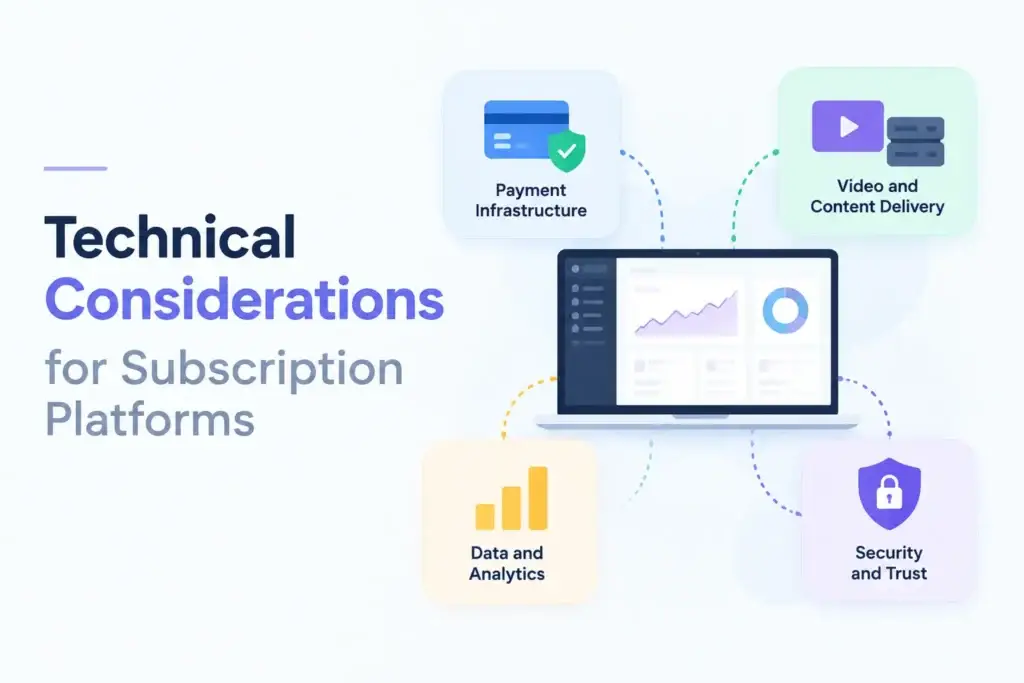
A scalable platform should consider:
Payment Infrastructure
Important components:
- secure payment gateway integration
- recurring billing management
- transaction history
- payout workflows
- refund handling
Video and Content Delivery
For content-heavy platforms, founders should consider:
- scalable storage
- optimized media delivery
- streaming infrastructure
- access control
Data and Analytics
Analytics help measure:
- subscriber growth
- churn patterns
- creator performance
- revenue trends
Security and Trust
Important layers include:
- encrypted data transfer
- secure authentication
- role-based access control
- activity logs
- moderation workflows
The exact implementation depends on the target market, integrations, and operating model.
Why Monetization Strategy Should Come Before Development Decisions
Many founders start by asking:
“What features should my app have?”
A stronger question is:
“How will every participant create and capture value?”
The answer influences:
- product architecture
- payment workflows
- creator tools
- admin requirements
- user experience
A platform with subscriptions, PPV, tips, and live access requires more than screens.
It requires an economic system.
Final Thoughts: Building a Platform Where Monetization and Engagement Grow Together
Miracuves helps founders build monetization-ready creator platforms with subscriptions, PPV, live access, payment workflows, and admin controls.
With white-label solutions and source-code ownership, businesses can launch faster while customizing the platform for their unique growth strategy.
The future of subscription-based platforms is not based on a single payment model.
Successful platforms combine:
- recurring memberships
- premium purchases
- direct fan support
- live experiences
- creator analytics
- operational control
The strongest monetization strategy is one where creators earn sustainably, users receive meaningful value, and founders have the infrastructure required to scale.
For businesses planning a creator economy platform, the focus should not only be building features. It should be building a complete ecosystem where engagement naturally creates business value.
Understanding the investment required before development begins helps founders plan better. Factors influencing creator platform development cost include customization, integrations, technology choices, and selected modules.
FAQs
What is the best monetization model for a subscription-based platform?
The best approach depends on the business model, but combining subscriptions with PPV, tips, and live access usually provides more flexibility than relying on a single revenue source.
How do creator platforms make money?
Creator platforms commonly generate revenue through commissions from subscriptions, premium content purchases, tips, live sessions, advertising, or premium user services.
Why should creator platforms support PPV content?
PPV allows creators to monetize premium experiences while giving users the option to purchase specific content without committing to recurring payments.
How does live streaming improve creator platform monetization?
Live streaming creates direct interaction opportunities through paid sessions, exclusive events, and premium experiences.
Should founders build a creator platform from scratch?
The decision depends on customization requirements, timeline, budget, and long-term goals. A ready-made foundation can help founders validate their business model faster while allowing customization.
Miracuves is an independent software development company. We are not affiliated with, connected to, sponsored by, or endorsed by any company or product named in this article.
Terms such as “X Clone” are used descriptively. It is how the software industry refers to building a platform with functionality comparable to a known service, and how clients search for it.
The entire design and codebase of our products is built by our own team. Our products contain no code, design, graphics, or content originating from any third-party website or applications.
All third-party names and marks referenced in this article are the property of their respective owners, referenced solely to identify the services discussed.