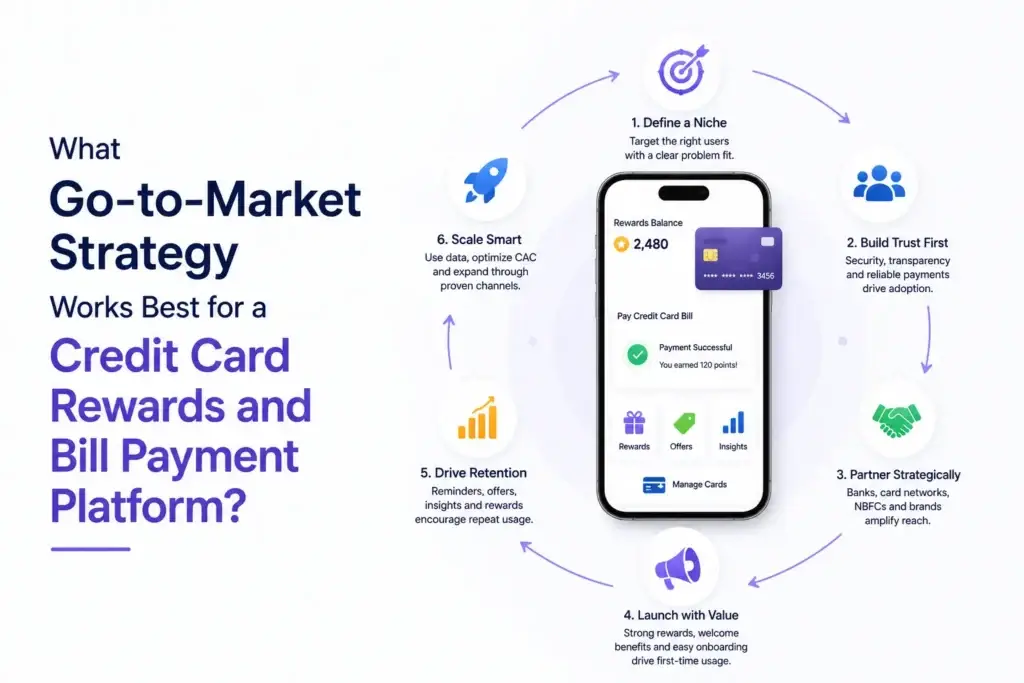
What Go-to-Market Strategy Works Best for a Credit Card Rewards and Bill Payment Platform?
Key Takeaways Credit card rewards platform go to market strategy works best when founders combine…

MirxAI
AI you own, from day one. Ready-made AI platforms live in 6 working days, or custom AI built by our engineers.
Explore MirxAINot sure where AI fits? Talk it through with an engineer, free.
Talk to an AI engineerFrom a first assistant to agents that run whole workflows. Full source code on every build.
Machine learning, computer vision and language models, on data pipelines built to last.
Production-ready AI products with apps, admin and full source code, branded as yours.
Where AI earns its keep in your market, with the platforms we have already built there.
Bring in AI engineers by the month, or hand us the whole build.
What we have learned shipping AI products, from our blog.
Prompt-to-app generation, credits and an admin console, with the full source code.
Explore the Bolt.new clone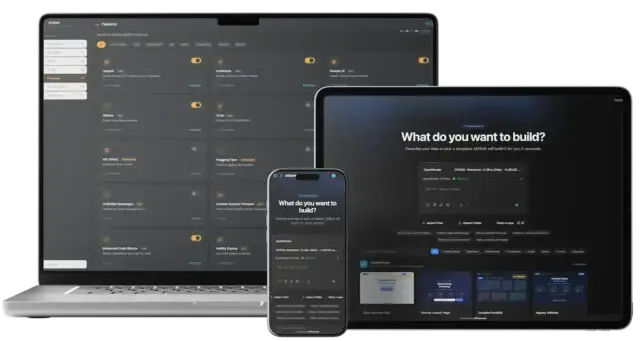
8 ready-made AI platforms24 AI and data services100% source code ownership6 working days to launch
One app, many services
Rides, food, delivery and payments in a single super app, with one wallet and one operations console.
All 6 in Super App →Move people, profitably
Driver and rider apps, dispatch, fare rules and payouts, tuned for city-scale operations.
All 5 in Ride Sharing →Everything to the door
Food, grocery, pharmacy, parcel and alcohol, with dispatch, live tracking and courier payouts.
All 35 in Delivery →The platform underneathWhite Label Food Delivery AppWhite Label Load Board Software
Book a professional in minutes
Home services, healthcare and freelance work, with scheduling, quotes and escrow.
All 13 in On Demand Services →The platform underneathWhite Label AI Astrology Platform
Supply, demand, and the listing in between
Rentals, ecommerce, travel and jobs, with search, inventory and governed payouts.
All 31 in Listings →The platform underneathWhite Label Marketplace SoftwareWhite Label Vacation Rental SoftwareWhite Label Yacht MarketplaceWhite Label Travel Portal
Where audiences gather
Social feeds, messaging, file sharing, AI assistants and website builders.
All 29 in Networks →The platform underneathWhite Label Live Streaming AppWhite Label Messaging AppWhite Label AI Video GeneratorWhite Label AI App Builder
Attention, monetized
Video on demand, short form, creator subscriptions and betting.
All 16 in Entertainment →The platform underneathWhite Label Video Streaming PlatformWhite Label Micro Drama AppWhite Label Short Video AppWhite Label Creator Monetization PlatformWhite Label Sports Betting Software
Money that moves
Neobanking, brokerage, investment and cross-border remittance, built for compliance.
All 11 in Finance Investment →The platform underneathWhite Label Trading PlatformWhite Label Real Estate Crowdfunding PlatformWhite Label Fractional Real Estate PlatformWhite Label Remittance Software
Exchanges, tokens and NFTs
Spot and P2P trading, launchpads and NFT marketplaces with custody and KYC.
All 13 in Blockchain →The platforms underneath
White Label Food Delivery AppWhite Label Load Board SoftwareWhite Label AI Astrology PlatformWhite Label Marketplace SoftwareWhite Label Vacation Rental SoftwareWhite Label Yacht MarketplaceWhite Label Travel PortalWhite Label Live Streaming AppWhite Label Messaging AppWhite Label AI Video GeneratorWhite Label AI App BuilderWhite Label Video Streaming PlatformWhite Label Micro Drama AppWhite Label Short Video AppWhite Label Creator Monetization PlatformWhite Label Sports Betting SoftwareWhite Label Trading PlatformWhite Label Real Estate Crowdfunding PlatformWhite Label Fractional Real Estate PlatformWhite Label Remittance Software161 launch-ready platforms across 10 categories, each shipping in 6 days with full source code.
Twenty-five sectors, each with its own page naming what we have already shipped into it and what we would build from zero.
A launch-ready consumer credit app covering the whole engagement loop: a card vault holding every issuer in one place, bill aggregation with autopay and reminders, credit score history with factor breakdown, a points economy with tiers and streaks, referral mechanics issued on signup, and premium subscription gating that switches on server-side.
Three surfaces from one platform. Members use a web app across 60 routes and a 295-screen mobile build with biometric login, and operators run a 24-section console over 148 consumer API routes and 297 backend services.
Go Live in 6 Days with Credit-NativeBureau-ReadyGamifiedBill-Pay FirstWhite-LabelAPI-Complete
⚡ Platform at a Glance
Revenue Streams
subscriptions, offer commission, referrals, payment share
Card Vault
every issuer in one place, no per-bank integration
Revenue Share
you own the source outright, with no per-seat fee
Rewards Engine
points, tiers and partner offers priced from the console
Users return every month because a bill is due, and leave holding points. That loop is what makes the offer marketplace and the paid tier worth anything.
Credit tracking, tiered access, curated partner offers and a points economy with real inventory - the reasons a premium tier actually sells, all in the build.
🚀 Ready to launch your own credit super-app?









Live in Action
Don’t just take our word for it. Open the Miracuves Cred Clone yourself. Both roles have a working login and no setup is required. Add a card, pay a bill, watch points accrue, then open the same activity in the operator console.
MEMBER WEB APP
The consumer surface. Card vault, upcoming bills with autopay, credit score with factor breakdown, budgets and goals, the points and tier ladder, offers and the reward catalog.
OPERATOR CONSOLE
Operator governance across 24 admin sections. KYC review queue, fraud and dispute handling, offer and reward catalogs, email templates, integration connection tests and system monitoring.
ANDROID APP
A branded Android build of the 295-screen Expo application, with biometric login and push notifications, running against the same API as the web app.
Watch It Work
A walkthrough of the platform as an operator sees it, rather than a feature reel. It opens on the member dashboard where several cards from different issuers sit together, so total exposure and the next due date are visible before anything else happens. A bill is fetched from the biller catalog and paid, autopay is set on it, and the points that accrue from that payment are followed into the tier ladder and the leaderboard. The same member is then opened in the operator console: the KYC application and its four steps, the transaction record, the reward redemption against inventory, and the audit trail behind it. It closes on the configuration surface where offers, reward catalogs, referral milestones and integration credentials are set. If a specific flow matters more than the tour, ask and we will open it live with data in it.
Every Screen Mapped
The interface across the surfaces that matter: the member dashboard with score, dues and tier, the card vault and statement views, bill fetch and autopay setup, the payment flow with idempotency, budgets and goals with contribution history, the score screen with factors and per-card utilization, the gamification hub with streaks and leaderboards, the reward catalog and redemption flow, and the operator console with its KYC, fraud and catalog queues.

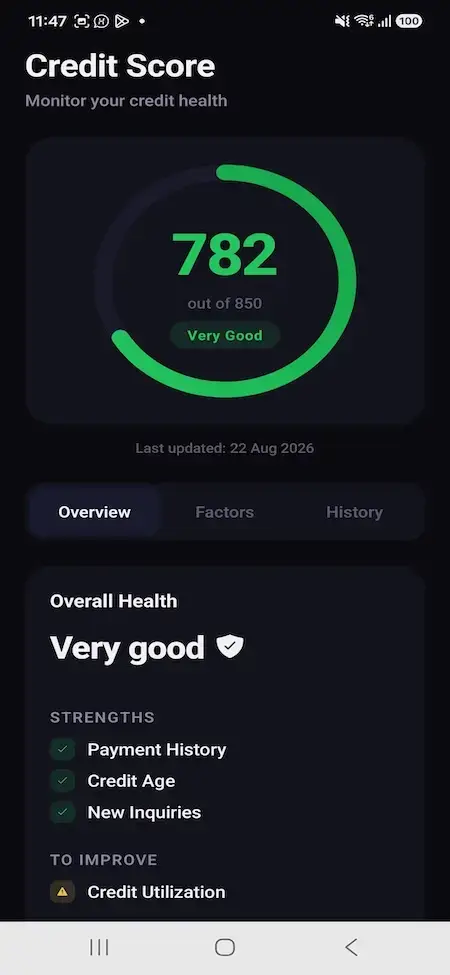
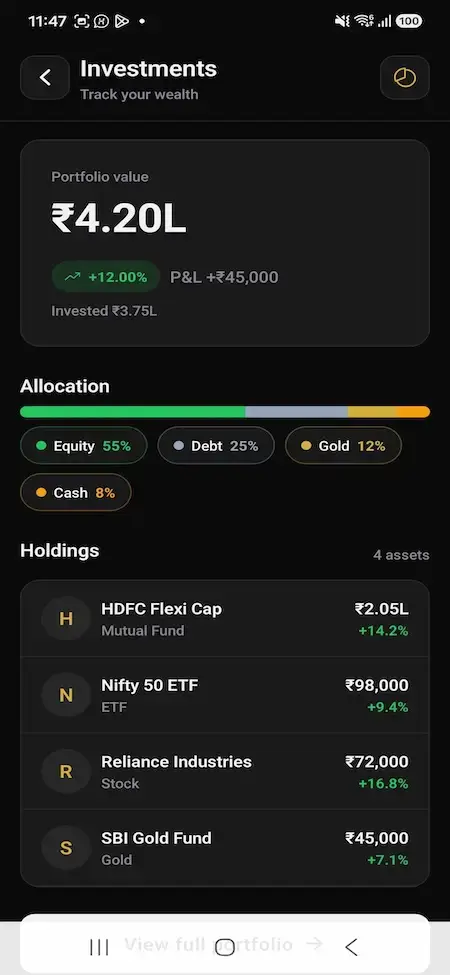
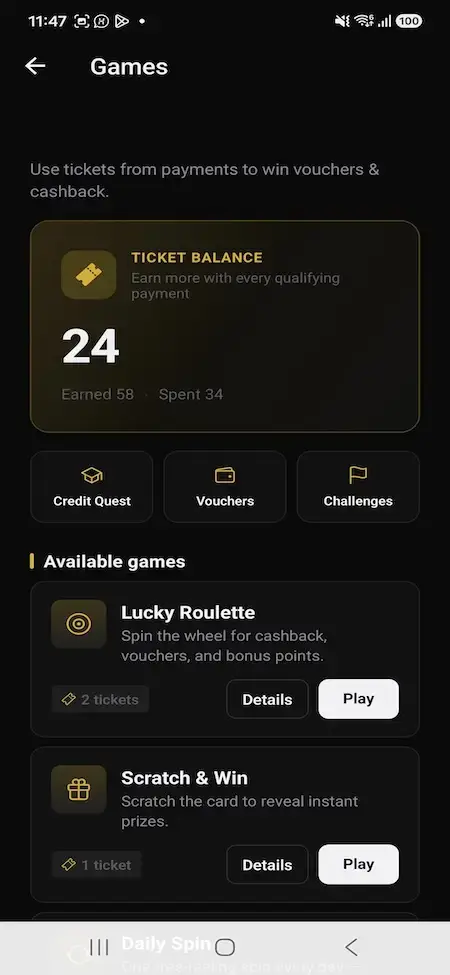
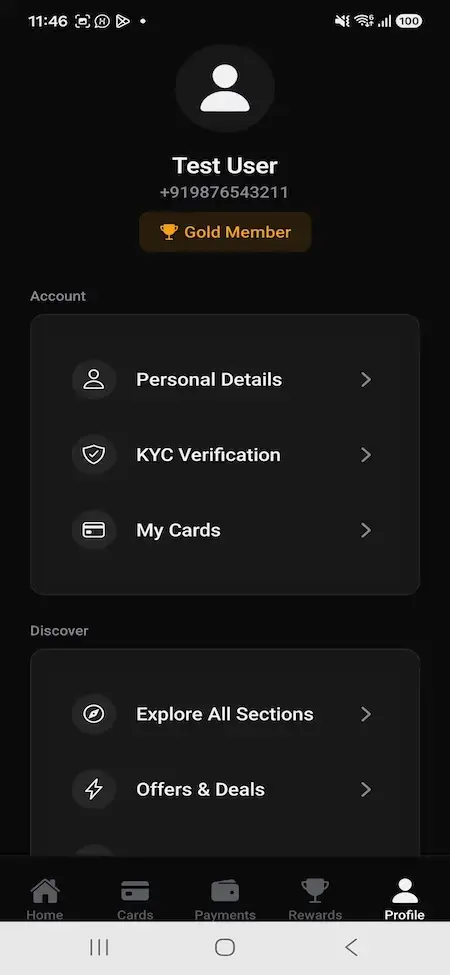
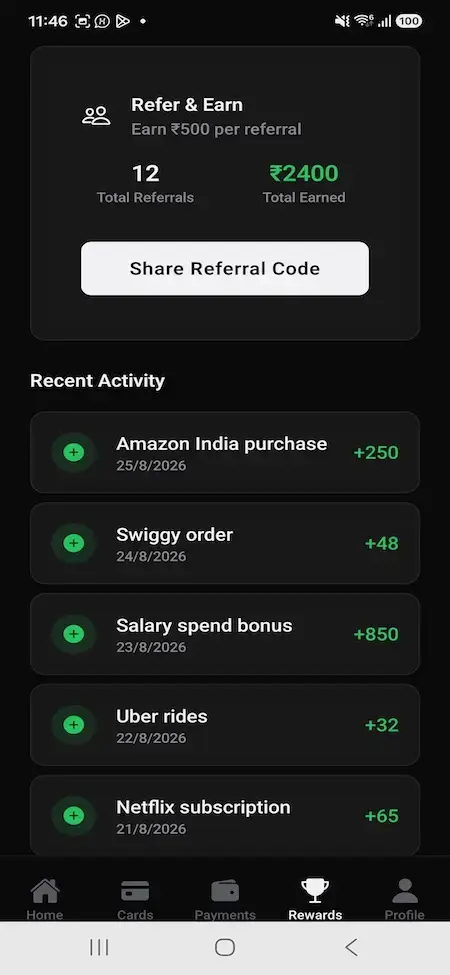

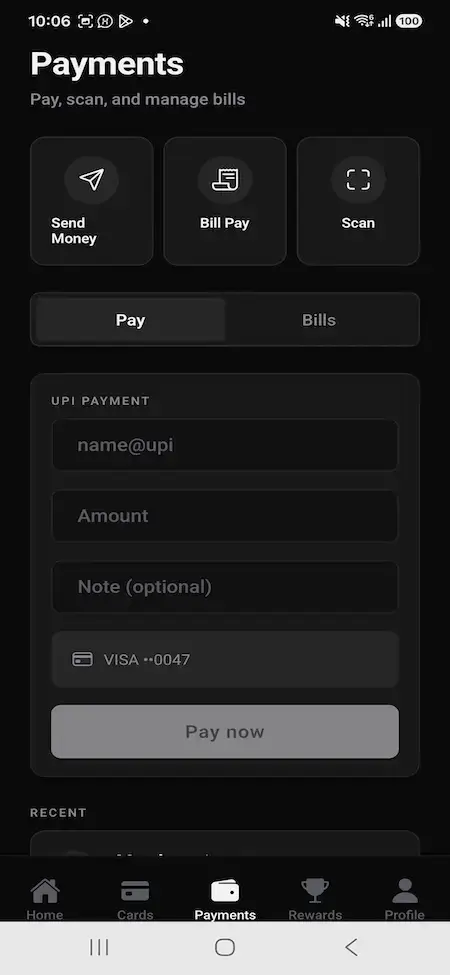
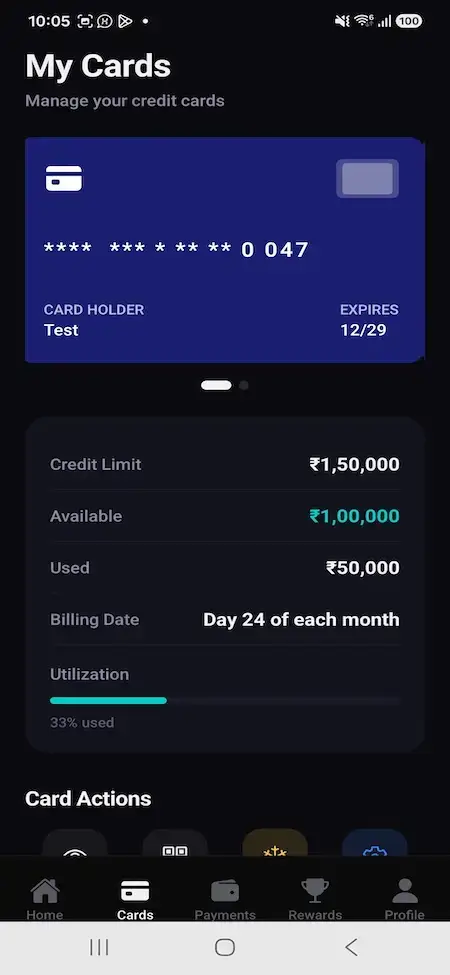
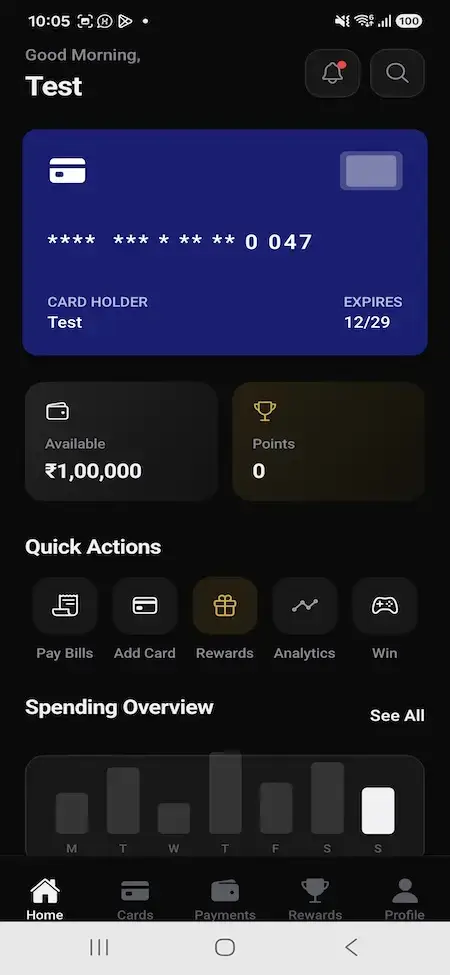
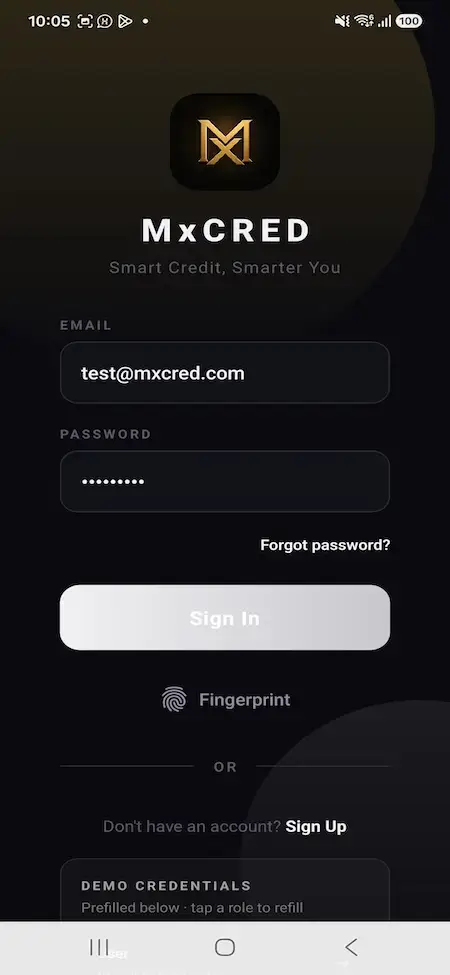

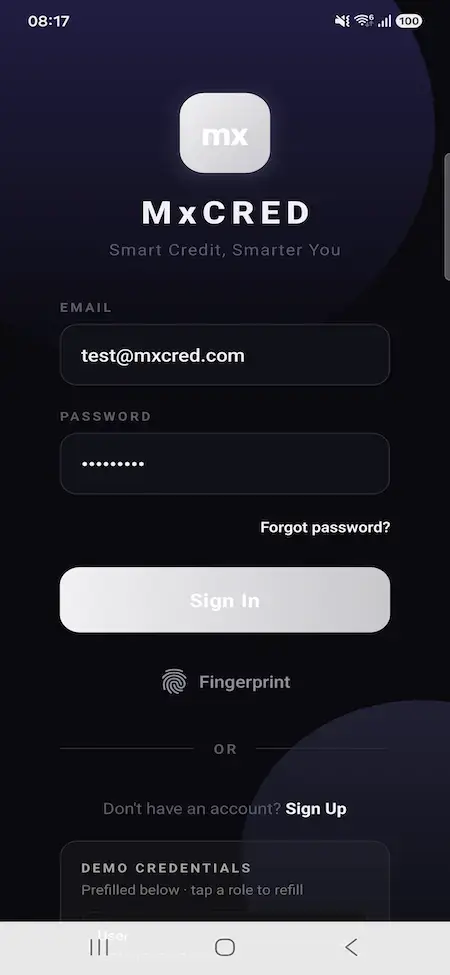
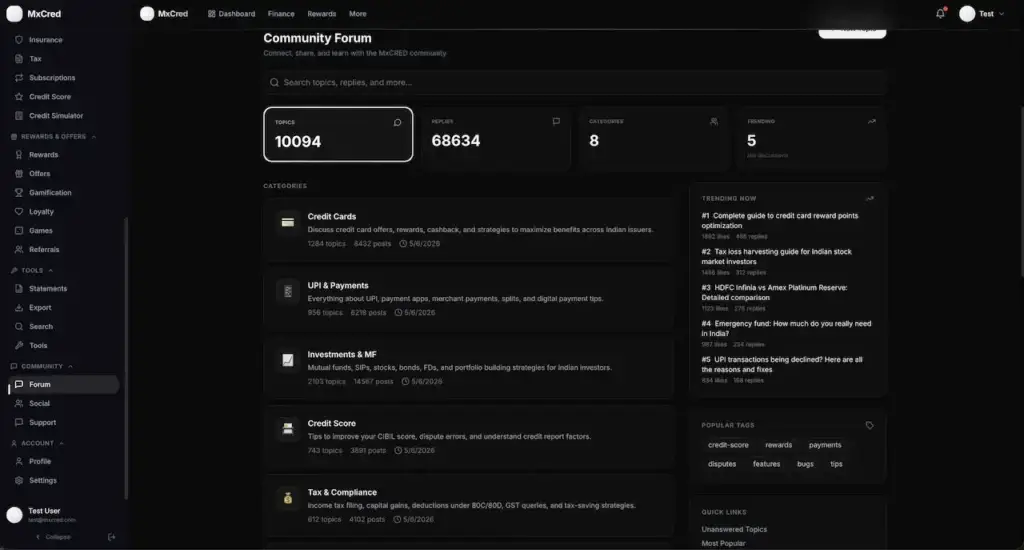
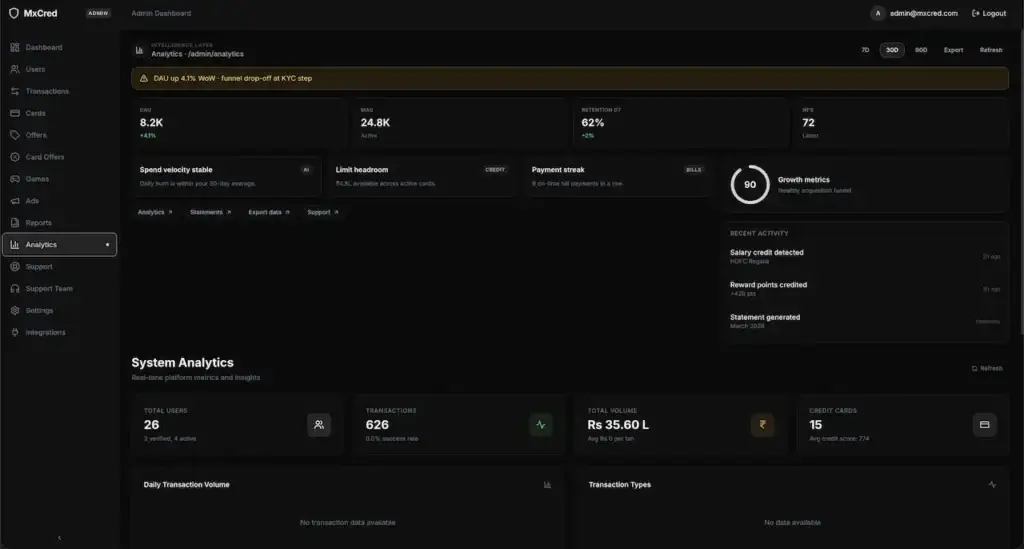
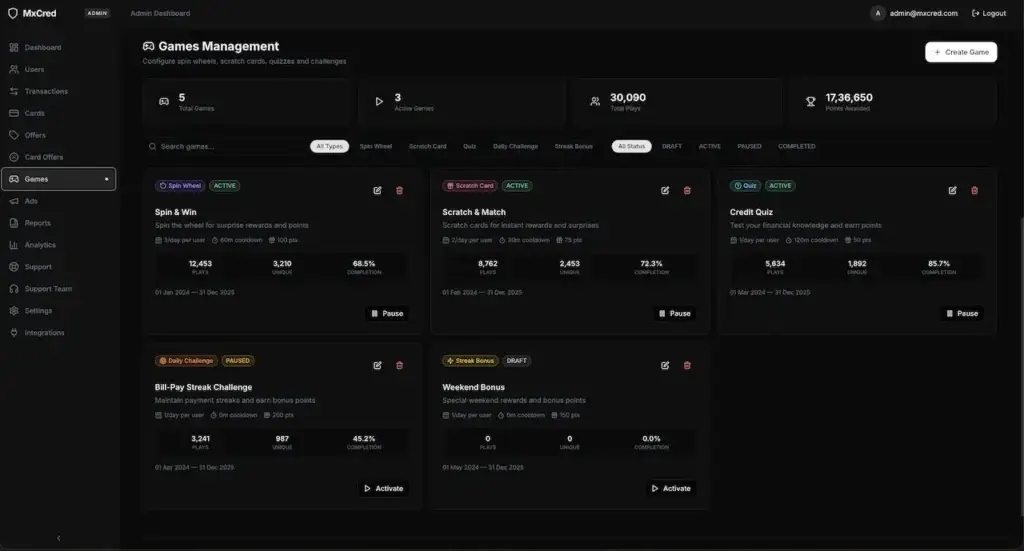
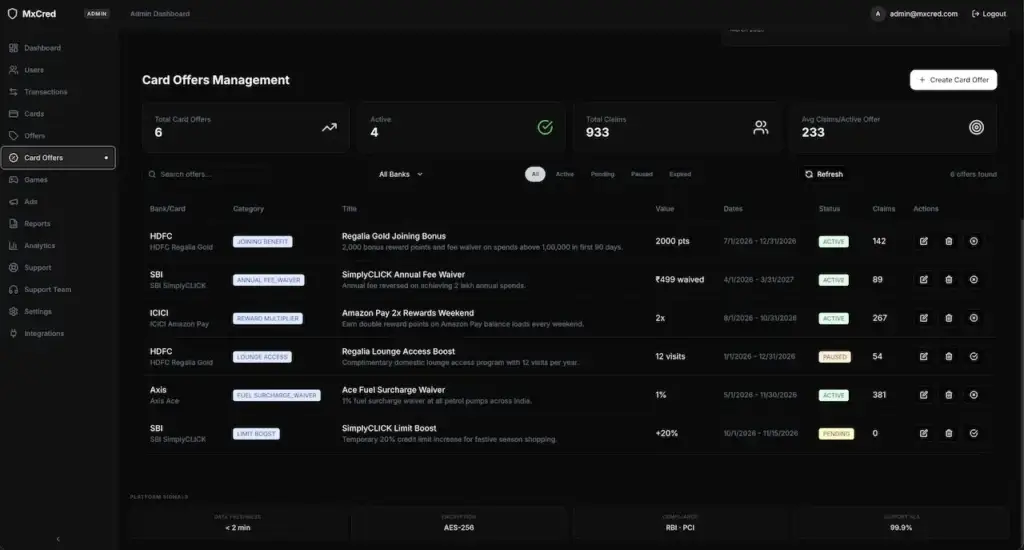
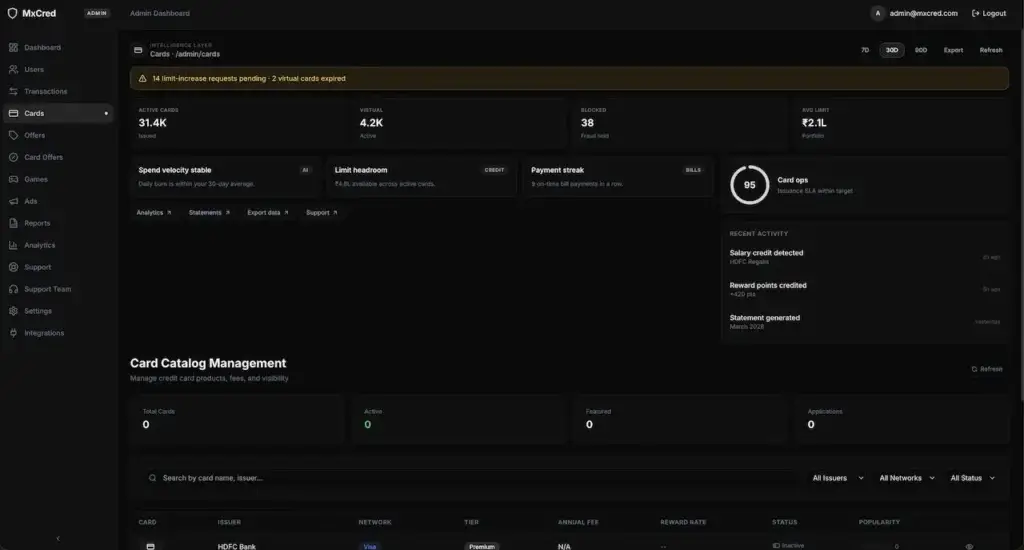
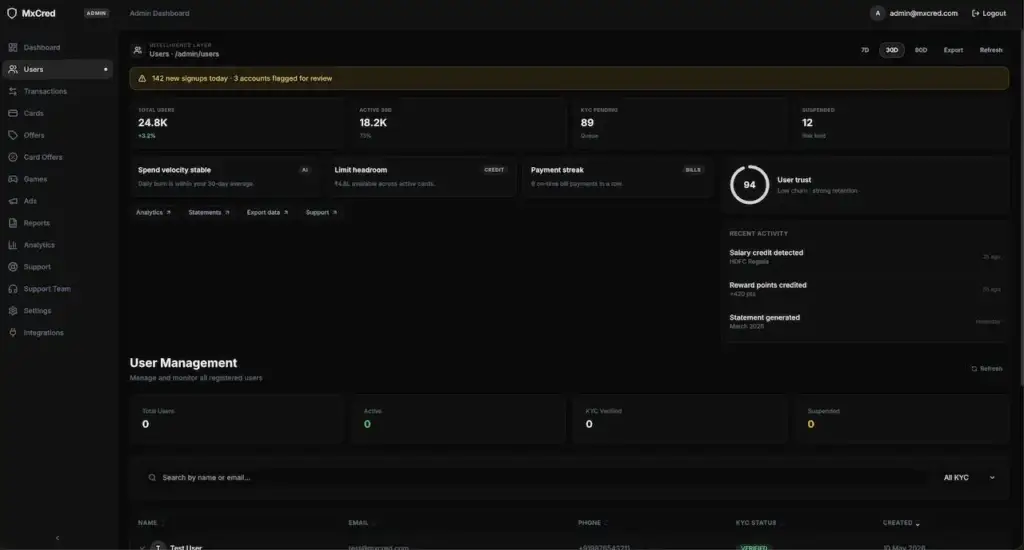
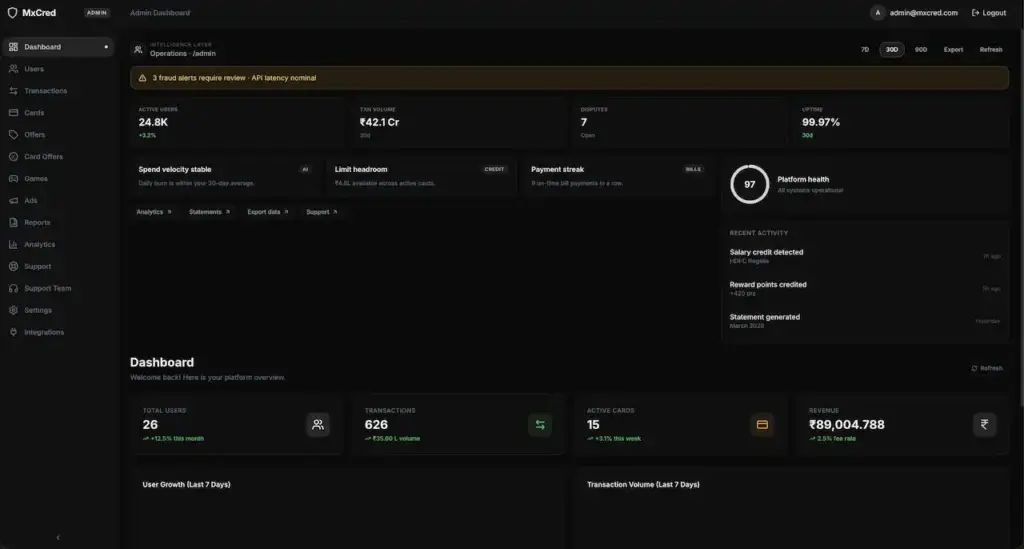
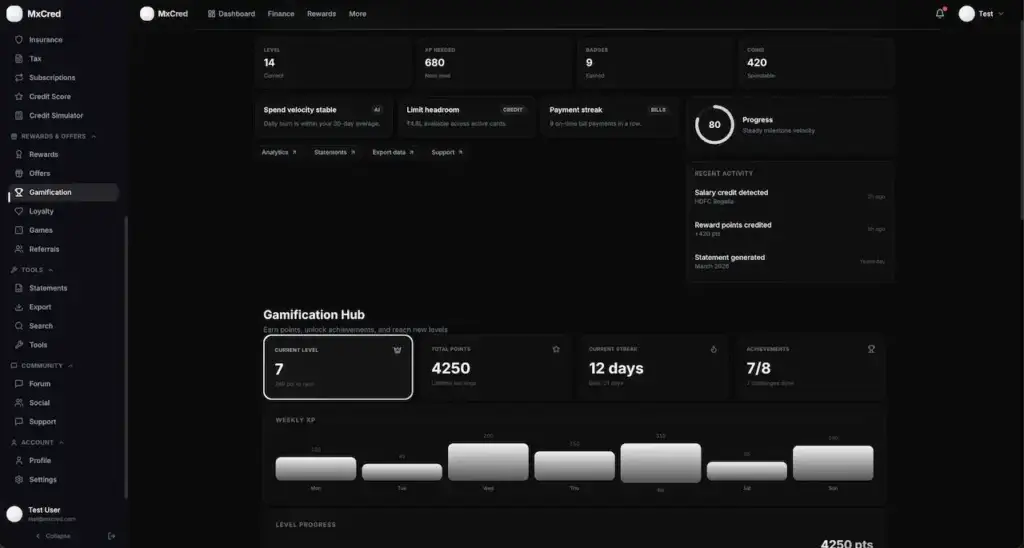
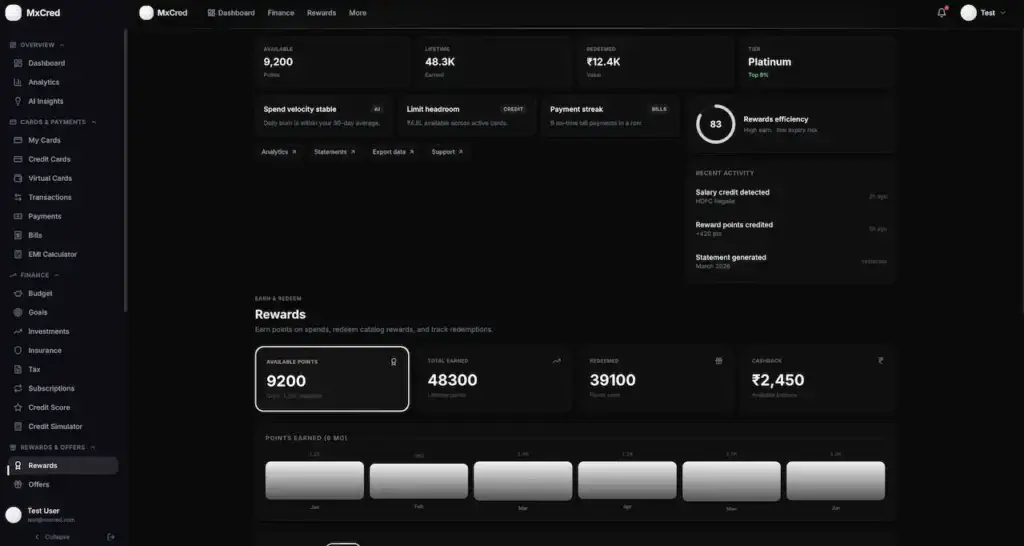
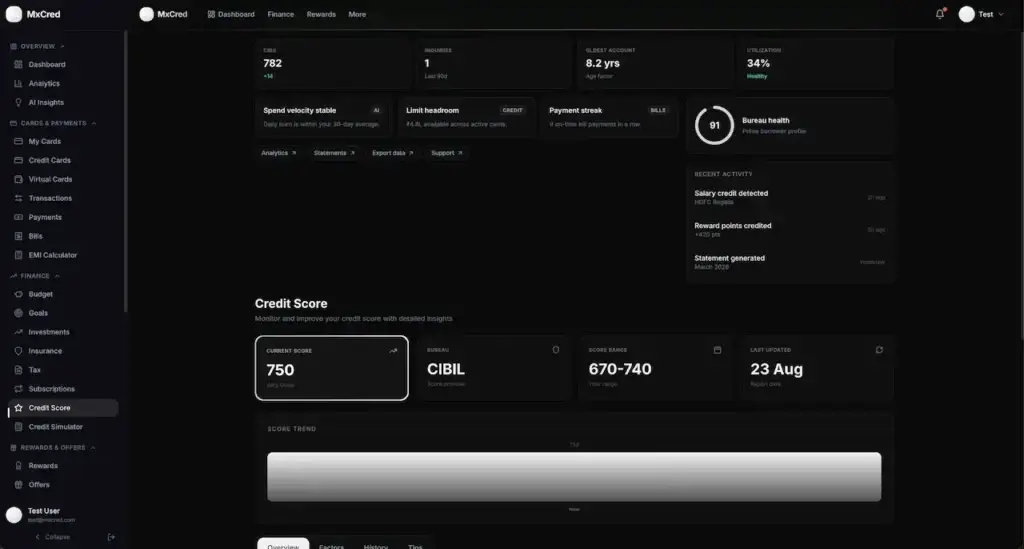
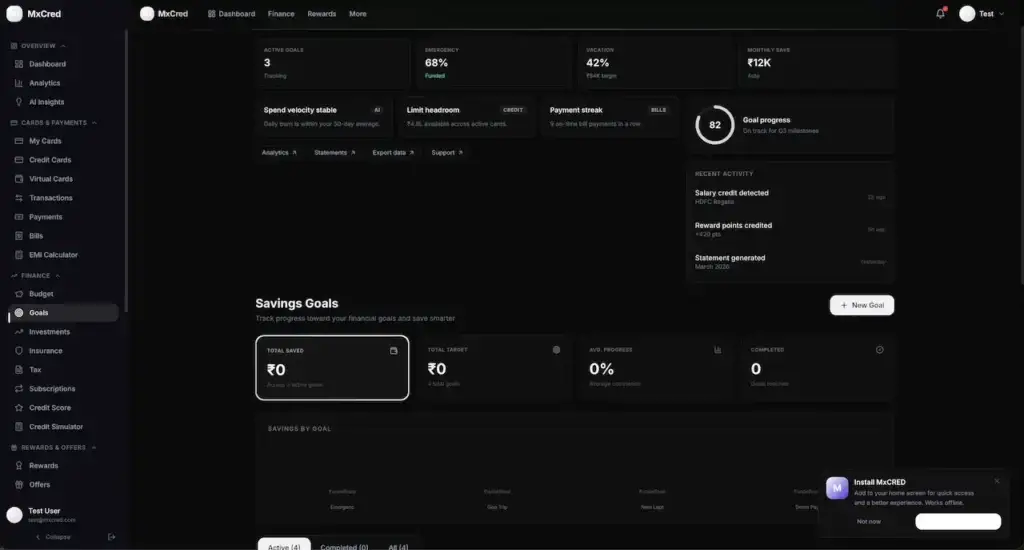
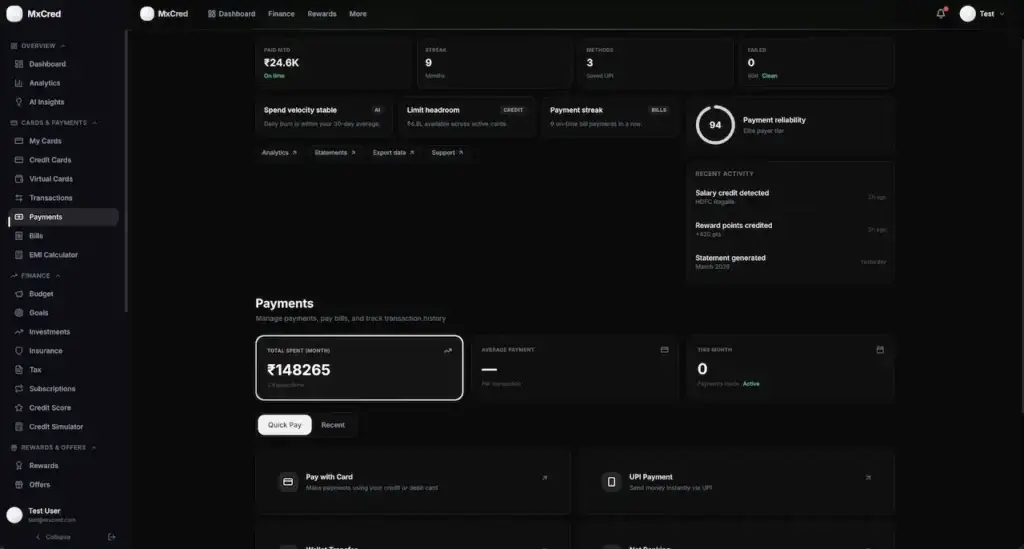
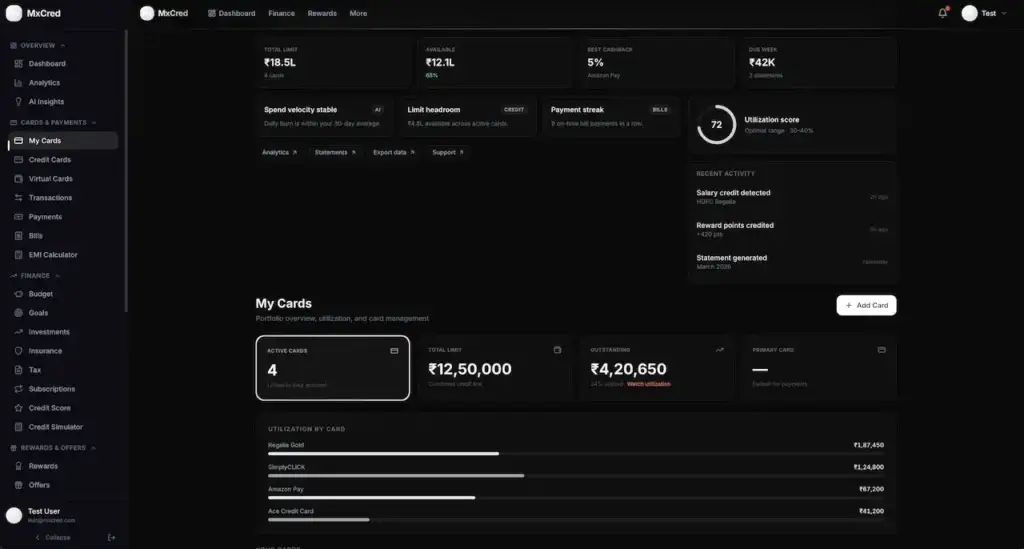
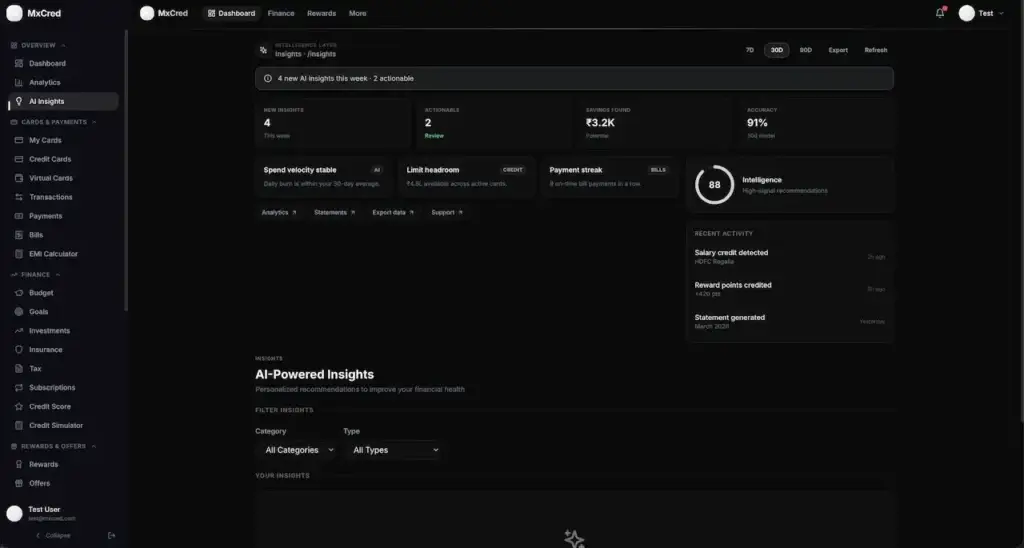
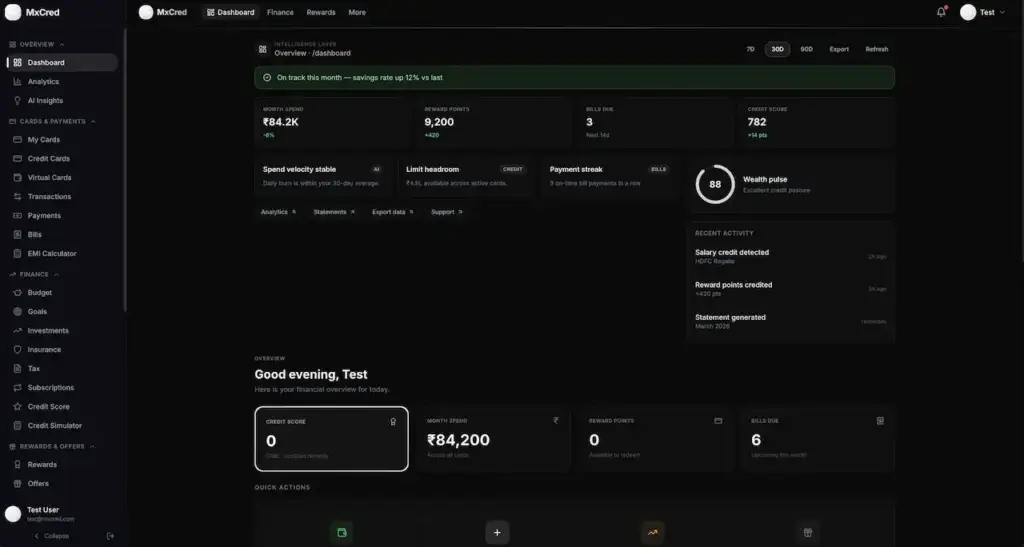
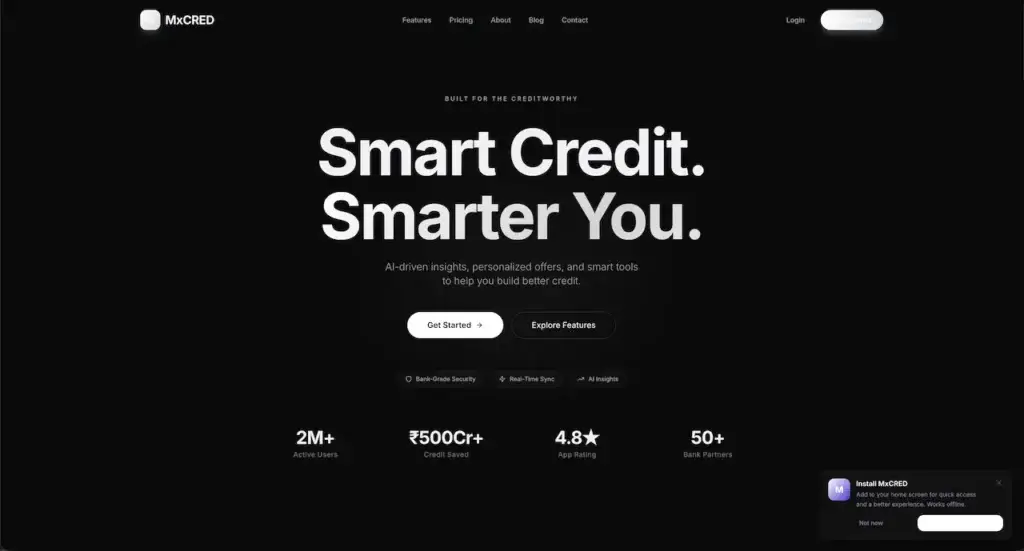
Follow a member from signup and OTP through a four-step KYC, a first card added, a bill paid on autopay, points earned into a tier, a referral credited and a reward redeemed against inventory. Web and mobile run the same flows against the same API, so a payment made on the phone shows in the browser without a second integration. Want a guided walkthrough of a specific flow? Book a call and we will open the surface you care about with live data in it.
Straight Answers
Miracuves has shipped payments, banking and wallet platforms, and those engagements are published in the portfolio with their own figures. There is no credit-management or bureau-score deployment among them yet, so rather than dress the platform in borrowed proof, the statements below are properties of the build, each demonstrable in the live demo above.
Illustrative Scenario
A modelled reference deployment showing how the Miracuves Cred Clone is configured for a consumer credit operator. This is not a client engagement and the figures are properties of the platform rather than results reported by a customer.
Regulated Sector
Consumer Credit and Rewards App
How this platform is configured for an operator whose members hold several cards across issuers, and where bill payment, credit intelligence and rewards all need to sit in one app rather than three.
This is a modelled reference deployment, not a client engagement. Every capability listed above ships in the base build and is demonstrable in the live demo. The figures are properties of the platform, not results reported by a customer.
The Basics
A Cred Clone is a ready-made personal credit and rewards super-app. Members add every card they hold, pay bills with autopay, watch a credit score with its factor breakdown, and earn points that move them up a tier ladder. The platform handles the parts that make this category genuinely hard: a points economy with real inventory, an engagement loop that survives past week three, and an operator console that runs the catalogs without a developer.

The value sits in the points ledger, the bill scheduler and the KYC pipeline. A template gives you charts and leaves the economy underneath as your problem.
You receive the full monorepo, the Prisma schema and the migrations. No per-seat fee, no vendor roadmap dependency, and standard PostgreSQL underneath.
The bureau connection needs your own Experian or Equifax account, CIBIL is a configurable label rather than a live feed, and the security items still outstanding are named on this page rather than discovered later.
Built for Web, Mobile & API
The difficulty here is never the dashboard. It is a reward balance that has to reconcile like a liability, a bill reminder that has to fire on the right day for the right member, and a score screen that has to explain itself rather than print a number. Those are the parts already built.

The build ships 35 Prisma models with 183 further API models, 148 consumer API routes alongside 114 Express route files and 297 services, a 295-screen Expo mobile application, 24 admin sections and 11 background jobs.
Everything Included
Every capability below is built and demonstrable in the live demo. Where a feature needs a third-party account or a deployment decision before it works in production, that is stated against the feature rather than implied away.
Every card a member holds in one place with limit, available credit, statement date, due date, issuer and network. The single view no issuer app can produce.
Utilization calculated per card with good, warning and critical states, plus the due date and minimum payment shown in the same card so the nudge has context.
A biller catalog with categories, one-shot bill fetch, upcoming and paid views, and a payment ledger carrying a reference number for audit.
Autopay rules per bill with a setup wizard, plus a daily reminder job that dispatches ahead of the due date across the channels the member allows.
Score history and rating band alongside a factor breakdown carrying impact, score against maximum and recommendations, rather than a number with no explanation.
Payment initiation accepts an idempotency key so a retried request cannot double-charge, with verification, history, scheduled payments and refunds behind it.
XP and levels feeding a bronze to diamond tier, with current and longest streak tracking and achievements carrying explicit progress targets.
Five categories covering points, savings, referrals, bills paid and streak, across daily, weekly, monthly and all-time periods with rank change deltas.
A catalog holding total and available inventory, decremented inside a database transaction at redemption, with an append-only ledger behind every claim.
A premium flag on the member and a premium-only flag on the offer, so the same query that lists offers applies the gate server-side without a separate table.
Every member gets a referral code by default at registration, with milestone rewards the operator tunes from the console rather than a code release.
Billers, rewards, offers and referral milestones are operator-controlled records with no member foreign key, so re-pricing never touches member data.
Note for buyers: The platform ships complete as software. Stripe, Razorpay, UPI, SendGrid, Twilio, Experian, Equifax, Intercom and Zendesk all require your own accounts and credentials. CIBIL is a configurable bureau label rather than a live integration. CAPTCHA on signup, enforced email verification, SMS two-factor exposed in the UI, IP allowlisting, anomaly detection wired to alerting and field-level encryption of personal data are documented as operator work and are completed as pre-launch hardening.
How Operators Earn
A credit super-app earns from several places at once, and this platform models each separately so an operator can tune one lever without disturbing the others.
Monthly and yearly plans with a premium flag checked server-side, gating advanced analytics, AI insights and exclusive offers. The recurring layer on top of everything else.
An operator-managed offer catalog with cashback, discount, points bonus and voucher types, where commission terms are yours to set with each partner.
Gating the best offers behind the subscription turns the offer catalog into a conversion driver rather than a cost, because the paywall sits where the value is visible.
Codes issued on signup with operator-configurable milestones, so acquisition cost falls as the member base does the recruiting.
Bill payment and card payment flows run through your own gateway accounts, so interchange and processing arrangements stay between you and the provider.
The whole platform deploys under a partner brand with their own integrations and catalogs, which is a licence and revenue share model rather than a product sale.
The two that move the numbers most are premium subscription and partner offers. One is recurring and predictable, the other scales with the traffic the engagement loop produces.
Run It Without a Dev Team
Twenty-four admin sections give operators one pane across members, compliance, finance, catalogs and platform policy, which is the surface most fintech builds defer and then never finish.
Search, view, edit, suspend and manage roles across the member base, with every operator action written to the audit log.
The four-step application with its documents, personal, address and employment records, reviewed and approved or rejected from one queue.
Fraud monitoring with rule management alongside customer dispute resolution, both feeding the same operational surface.
Transaction oversight, payment reconciliation and revenue views for the finance team rather than a developer with database access.
Create, schedule, activate and retire partner offers including premium gating, validity windows and minimum transaction rules.
Points cost, value, tiers, featured flags and inventory adjustment, with popularity ranking driving how the catalog presents.
Seven React Email templates covering welcome, OTP, payment confirmation, bill reminder, score update and reward earned, editable at runtime.
A registry of provider credentials with an explicit connection test, so an operator can prove a key works before members depend on it.
Prometheus metrics, error tracking and generated reports, with Grafana dashboards shipped in the deployment stack.
Article and page content management alongside forum content moderation, so community and marketing surfaces stay operator-controlled.
Need deeper governance? CAPTCHA on signup and login, enforced email verification, SMS two-factor exposed in the member UI, IP allowlisting on admin endpoints, anomaly detection wired to alerting and audit log shipping to immutable storage are documented as operator configuration rather than shipped defaults. Tell us the requirement and we will scope it.
Transparent Pricing
Building a personal credit and rewards super-app with Miracuves typically starts from around $6,999 for a launch-ready white-label Cred Clone and increases based on bureau integration, payment rails, notification providers, mobile scope and infrastructure complexity.
Not sure which option
is right for you?
Talk to us - we'll understand your goals, timeline, and budget, and point you to exactly what you need. No upselling, just honest advice.
The Full Package
You receive a complete, deployable platform: the application source, the schema behind it, and the documentation a technical buyer will ask for. Everything transfers with full ownership, with no runtime licence, no per-seat fee and no dependency on our roadmap.
A Next.js 14 App Router build across 60 routes in TypeScript, with Tailwind, Radix primitives, TanStack Query and a PWA service worker for offline read access.
148 consumer route handlers alongside an Express workspace of 114 route files and 297 services, with an OpenAPI specification and SDK generators in three languages.
35 Prisma models on PostgreSQL with the migration set and seed workflow, including the append-only payment, redemption and bill payment ledgers.
A 295-screen Expo SDK 54 build across 214 route files with biometric login, push notifications, camera document capture and full parity with the web app.
Twenty-four sections spanning members, KYC, fraud, disputes, finance, offers, rewards, emails, CMS, integrations, monitoring, analytics and support.
Eleven BullMQ jobs covering bill reminders, bureau score refresh, statement generation, subscription renewal, reward accrual, reports, cleanup and backup.
Stripe, Razorpay and UPI for payments, SendGrid and Twilio for messaging, Experian and Equifax for bureau data, Intercom and Zendesk for support.
Entity-relationship document, deep schema interpretation, the full API collection, developer and security handbook, VAPT posture, PRD and technical dossier.
Want to see it running first? Open the demo with either role login above, or book a walkthrough and we will take you through a card added, a bill paid on autopay, points accruing into a tier and the same activity in the operator console against your own commercial model.
Four deeper guides covering features, cost, choosing a builder, and how a credit super-app earns once the habit takes hold.
What each role can actually do, from a card vault holding every issuer with per-card utilization through to bills, score factors and the tier ladder, on 14 engines and 35 Prisma models.
See the full breakdown→The fixed $6,999 set against freelancer, agency and custom quotes, with six working days to deployment, all 14 engines included, and nothing taken from your revenue.
See exact pricing→Agency, freelancer and Miracuves compared on what a credit super-app has to get right: source code ownership, bureau readiness, and what we have not done yet named before you sign.
Compare options→Six revenue lines on one engagement loop: premium subscription, partner offers, premium gating, referrals, payment revenue share and white-label licensing.
See the playbook→Know Your Buyer
The platform suits operators whose members already hold credit and who need a reason to open one app rather than several.
If your business depends on frequency, on knowing what a member spends and owes across issuers, and on an engagement loop that survives past the first month, a CRED-style platform becomes a long-term owned asset rather than a feature bolted onto an existing app.
Where It Fits
The same platform serves quite different operators depending on which engine leads. A bank leans on the card vault and score, a loyalty company on the points economy, a lender on KYC and eligibility. Each is configuration rather than a fork.
Consumer Credit Management
Run a consumer credit app where members see every card together, understand their utilization, and never miss a due date because autopay and reminders remove the reason they would.
Bill Payment Platforms
Operate a bill payment platform where the biller catalog and autopay rules carry the frequency, and the points economy converts a chore into a habit worth returning for.
Loyalty & Rewards Products
Launch a loyalty and rewards product where XP, tiers, streaks and a catalog with real inventory sit on an append-only ledger rather than a balance recalculated on demand.
Lending-Adjacent Intelligence
Add credit intelligence beside an existing lending product, using the four-step KYC, the score factor breakdown and eligibility signals already modelled.
Regional White-Label Expansion
Expand into a new market under a white-label deployment, with per-member currency and language settings and integration credentials scoped per environment.
Systems Integrator Delivery
Deliver a client credit app as an integrator, extending a documented API across 148 consumer routes and 297 services rather than starting from an empty repository.
One platform, many configurations. Every use case above runs on the same schema and the same three role surfaces. What changes is the catalog, the tier thresholds, the offer mix and the integration set, not a fork you then maintain separately.
Market Timing
Consumers hold more cards than ever and see them in more places than ever, which is precisely the fragmentation a single vault resolves. The operators winning are the ones whose members open the app weekly because a bill is due, not monthly because a statement arrived.
Bill payment is the only reason a credit app gets opened weekly. Everything else in the product monetizes attention that the bill reminder created.
Personal finance apps lose members once novelty fades. Streaks, tiers and achievements exist because they are what carry a member past that point.
A number with no factor breakdown produces anxiety rather than action. Impact, recommendations and per-card utilization are what turn a score into engagement.
A rewards balance that cannot be reconciled becomes a finance problem at scale. Inventory accounting and an append-only ledger are structural, not cosmetic.
A responsive web wrapper loses to a native build with biometric login and push. Two hundred and ninety-five screens is what parity actually costs.
A from-scratch equivalent spans identity, cards, bills, payments, credit, gamification, rewards and mobile across multiple years. A white-label deployment is live on your server in under six days.
Building this layer from scratch is what consumes the years. A points economy that reconciles, a reminder scheduler that fires correctly per member, a four-step KYC pipeline with an operator queue behind it, and mobile parity across nearly three hundred screens are each unglamorous, mandatory and slow to get right.
Under the Hood
Under the hood, a credit super-app needs a schema that treats a member as one aggregate, a job system that fires reminders reliably, and ledgers an auditor can follow. Here is what sits behind it.
Next.js 14 · React 18 · TypeScript
Next.js Handlers · Express 4
PostgreSQL · Prisma · 35 Models
BullMQ · Redis · Socket.IO
Stripe · Razorpay · UPI
Expo 54 · Prometheus · Grafana
Note for Tech Buyers: every external provider runs on your own account, including Stripe, Razorpay, UPI, SendGrid, Twilio, Experian, Equifax, Intercom and Zendesk. CIBIL appears as a configurable bureau label rather than a live integration, so a bureau feed needs an Experian or Equifax agreement before it returns real data. The documentation also records that CAPTCHA on signup and login, enforced email verification, SMS two-factor exposed in the member UI, IP allowlisting on admin endpoints, anomaly detection wired to alerting, field-level encryption of personal data and audit log shipping to immutable storage are operator configuration rather than shipped defaults; we complete those as named pre-launch hardening. Every layer above is mainstream and widely hired for, with no proprietary framework and a schema portable to any PostgreSQL instance.
End to End
A credit super-app looks like a dashboard from the outside and runs on a tightly sequenced identity, aggregation, scheduling and ledger pipeline underneath. Here is the path from signup to a redeemed reward.

Registration creates the member and their satellites in one step, so preferences, settings, points and a referral code exist before the first screen loads.

Nobody reaches gated features before they are verified. The application progresses through four steps with an operator queue behind it.

Cards from every issuer are added to one vault, and utilization is calculated per card rather than as a single blended figure.

Bill payment is the frequency engine. Bills are fetched from the catalog, paid through the gateway, and autopay removes the reason to miss one.

Actions produce consequences. A paid bill accrues points, extends a streak and feeds the leaderboard, while the score refresh job updates the credit picture.

Redemption is a transaction, not a decrement. Inventory, ledger entry and points balance move together or not at all.
Visual Flow Diagram
Onboard → Verify → Add Cards → Pay Bills → Earn → Redeem
How It's Built
Every domain hangs off a single member record through one-to-one satellites and one-to-many children, which is what lets a contextual offer be produced without joining external systems.
Consumer flows run through Next.js route handlers while operator tooling, webhooks and aggregation run through the Express workspace, both over the same Prisma data layer.
Reminders, score refresh, statements, renewals, reports, cleanup and backup all run as BullMQ jobs, so nothing slow sits inside a request lifecycle.
Payments, transactions, bill payments and redemptions are never updated in place, which is what makes financial reconciliation defensible rather than reconstructed.
Redis fronts hot reads with explicit warming on startup and event-driven invalidation, rather than a cache that silently drifts from the database.
Each provider sits behind a typed client with an enable flag and encrypted credentials, so adding a bureau or a gateway never touches consumer code.
Performance Targets
The architecture is deliberately conventional at the edges and specialized where a credit app demands it: a stateless API tier, a relational model indexed for the queries a dashboard actually makes, and ledgers designed to be audited rather than recomputed.
The dashboard is the most requested surface in the product, so its reads are indexed and cached rather than assembled optimistically.
The read path rests on:
A bill reminder that arrives late is worse than none at all, so scheduling is a queue concern rather than a request concern.
The job model provides:
A rewards balance is a liability, so redemption moves inventory, ledger and balance inside one transaction.
The financial model keeps:
The API tier holds no local state, so capacity is an instance-count decision rather than an architectural one.
The deployment model supports:
Horizontal growth is an instance-count decision, because request handling holds no local state and authentication travels in the token.
Every dashboard read has an explicit index, including composite indexes on member and date for the time-series lists.
Retry with backoff, a dead-letter queue and queue depth as a metric, so a failed reminder is visible rather than silent.
Append-only financial records reconcile against the catalog and the member balance, making a query the answer rather than an investigation.
Socket.IO runs behind a Redis adapter, so live notifications and leaderboards work across more than one instance.
Add instances to the busy services, add read replicas for analytics, tune cache warming, each an incremental step rather than a rewrite.
Every operator needs something specific to their market or their member base. The stack is conventional so extending it is ordinary work.
Adding a feature means a Prisma model, a validated route, a web page and a mobile screen; adding a provider means a typed client behind an enable flag. Next.js, React, TypeScript, Express, PostgreSQL, Prisma and Redis are all widely hired for.
Note for founders and operators: You can launch lean and scale the same deployment. What changes as volume grows is which services get more instances, whether read replicas carry analytics, and how aggressively the cache is warmed, not the architecture underneath.
Built to Be Audited
Security posture is documented in a dedicated VAPT file, and what stands out is the candour: the controls that are built are described precisely, and the controls that are operator work are named rather than implied.
Signup Abuse Controls
Personal Data at Rest
Admin Surface Hardening
Audit Trail Durability
Bureau Data Handling
Deployment Hardening
Password with bcrypt, OTP by email and phone, two-factor, biometric on mobile with hardware-backed storage, plus API keys for developer access.
Server-side session records carrying both tokens, so a logout or an account deletion genuinely invalidates access rather than waiting for expiry.
Zod schemas on every API boundary rejecting unknown fields with field-level detail, alongside DOMPurify on forum, chat and profile content.
An idempotency key on payment initiation prevents a retried request from double-charging, which is the failure mode that costs trust fastest.
HMAC SHA-256 verification with a replay window and idempotency by event id, so a provider callback cannot be forged or replayed.
No CAPTCHA, email verification not enforced, SMS two-factor not exposed in the UI, no IP allowlisting, anomaly detection unwired, PII not field-encrypted. All documented, all pre-launch work.
The controls that are built are real: bcrypt password hashing, JWT with refresh token rotation and server-side revocable sessions, two-factor authentication, biometric login on mobile, Zod validation on every API boundary, DOMPurify sanitization on user content, helmet security headers, per-route rate limiting, HMAC verification on every inbound webhook, idempotency keys on payment initiation, and audit logging on operator actions. What is operator configuration is listed below, and we complete it as pre-launch hardening rather than leaving it for you to discover.
Go Further
Out of the box the platform is complete and demonstrable. The modules below are what operators most often add, either because they need a third-party account, or because their scale, security review or procurement process demands it.
Experian and Equifax adapters are built and the intelligence layer above them is complete. What is needed is your bureau agreement and credentials before real scores return.
CAPTCHA on signup and login, enforced email verification and SMS two-factor exposed in the member UI are documented as operator work and completed as pre-launch hardening.
A branded Android build of the 295-screen Expo app is available. Because it is Expo and React Native, an iOS build is an additive step rather than a rewrite.
Personal data is plain text at rest unless the managed database provides KMS encryption. Field-level encryption of identity data is operator implementation we scope on request.
Role handling is string-based so custom operator roles are configuration. Connecting an enterprise identity provider is the integration step for a regulated deployment.
Budget recommendations, anomaly detection, forecasting and insight narration are built as services, and run against your own model provider key.
Cohort, funnel, conversion and event tracking ship in the analytics layer. Streaming into a warehouse for BI is the step once the growth team needs it.
Stripe, Razorpay and UPI are built with a gateway router selecting between them. Adding a market-specific rail plugs into the same adapter interface.
The Cred Clone is one platform in a complete fintech suite. If your roadmap extends beyond credit management and rewards, these connect naturally.

Neobank platform with multi-currency accounts, transfers and card issuing for a full banking surface.

Cross-border money transfer with corridor pricing, compliance screening and settlement rails.
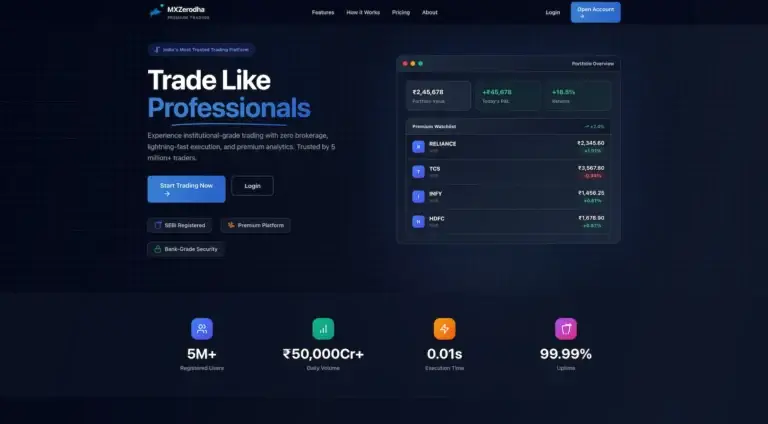
Investment and trading platform with portfolios, order management and market data.

Trading platform with account management, funding flows and risk controls.
The Commercial Case
Credit app economics are unusual because the engagement engine and the revenue engine are different things. Bill payment produces the frequency, and subscription plus partner offers convert it. Neither works without the other, which is why building only half of this is the common failure.
Premium subscription, partner offer commission, premium-only gating, referral economics, payment revenue share and white-label licensing, each tunable independently.
Bill payment is a weekly reason to open the app, which is what makes the offer catalog and the subscription worth anything at all.
Spending across issuers, bill history and score movement are visible nowhere else, and that unified picture is what personalization and cross-sell actually run on.
The monorepo and schema are yours on standard PostgreSQL. Thirty-five documented models are an asset in diligence rather than a black box to explain.
Most operators launch with the card vault and bill payment doing the work, because those produce the frequency everything else depends on. Premium subscription is collectible from the first month, and the offer catalog fills as partners see traffic worth advertising against. Referral milestones usually activate once there is enough of a member base for the loop to compound. All of it is in the schema already, so switching each on is configuration rather than development.
Defensibility comes from data and habit, not from features. A member who has added four cards, set up three autopay rules and built a hundred-day streak does not casually move, and the spending picture those actions generate is what makes offers and insights improve over time. The platform contribution is making onboarding fast enough to build that base, the engagement loop strong enough to keep it, and the whole record yours rather than a vendor who can change terms.
Example Revenue Scenarios
The commercial argument for owning the platform is that in consumer credit the asset is the member relationship and the spending data. Both live with whoever operates the infrastructure, which is exactly why renting a rewards vendor has a ceiling.
Focused Launch
Active Members
Subscription carries revenue while the offer catalog fills.
A launch where bill payment and the card vault do the work, and the points economy exists mainly to build the habit that later monetizes.
Growth Stage
Active Members
Subscription plus partner offers, with referrals cutting acquisition cost.
A scale operation where the referral engine and premium gating compound, and the offer catalog becomes a genuine commission line.
Platform Scale
Active Members
Offers rival subscription, and white-label licensing opens a second business.
A multi-market platform where the same deployment is licensed to partners, turning an operating product into a licensing business alongside it.
Why Miracuves
There are many ways to get a credit app: generic scripts, freelancers, agencies, or owning the infrastructure.
A 295-screen Expo build with biometric login and push, not a responsive web wrapper. Most scripts ship a web app and call the mobile question answered.
Inventory accounting and an append-only redemption ledger. Most clones hand you a balance integer and leave reconciliation as your finance team problem.
Twenty-four sections covering KYC, fraud, catalogs and integrations. Admin tooling is the part usually deferred and then never finished.
The complete monorepo across both API surfaces in TypeScript on PostgreSQL is yours to modify and deploy. No per-seat fee, no provider who can change terms.
ERD, schema interpretation, the full API collection, developer and security handbook and VAPT posture, enough for an investor review rather than a demo.
Bureau integration, CAPTCHA, email verification enforcement and PII encryption are stated as operator work on this page. Nothing surprises you after purchase.
| Criteria | Miracuves Cred Clone | Generic Clone Script | Custom Dev Agency |
|---|---|---|---|
| Time to Launch | 6 days (Production) | Unknown / DIY | 6-9+ months |
| Source-Code Ownership | ✔ Full | Often limited / encrypted | Usually yes |
| Feature Depth (CRED-like) | High (feed, live, monetization) | Basic (upload & feed only) | Depends on budget |
| Security & Compliance | Strong (ISO mindset, GDPR-ready) | Minimal | Varies widely |
| Scalability & Performance | Cloud & CDN-optimized | Rarely considered | Depends on architecture |
| Monetization Options | Multiple (ads, gifts, subs) | Limited / needs custom work | Custom (more time & cost) |
| Admin & Analytics | Full-fledged dashboard | Very basic or missing | Custom build (extra cost) |
| Cost vs Speed vs Quality | Balanced | Cheap but risky | High cost, slow |
| Ongoing Support & Updates | Available with clear plans | Usually none | Depends on contract |
Not every route to a credit super-app survives its first hundred thousand members. Here is where we differ.
Industries
The Cred Clone suits any operator whose members hold credit and pay bills. Digital banks use the full stack from card vault through premium subscription. NBFCs and lending fintechs lean on the four-step KYC and the score factor breakdown. Card issuers use the utilization nudges their core banking system cannot present. Loyalty operators use the points economy and redemption ledger. Bill payment platforms use the biller catalog and autopay scheduler. Telecom and utility groups white-label the bill surface for their own customers. Insurance distributors cross-sell against a known spending picture. Wealth platforms use the budgets and goals engines beside their own products. Systems integrators deliver client builds on a documented API.
Miracuves’ Cred Clone is built as an engagement-first credit platform adaptable to any consumer finance business, multi-region where your footprint requires it, and white-labelled entirely under your brand.
Changelog
| Version | Date | What's New |
|---|---|---|
| v2026.1 | Aug 2026 | Initial release. Credit super-app across 14 engines: card vault, bill autopay, credit intelligence, gamification, referrals and rewards. |
Blog & Resources
Stay updated with the latest trends, guides and case studies on consumer credit, bill payment, rewards economies and fintech engagement.
What Go-to-Market Strategy Works Best for a Credit Card Rewards and Bill Payment Platform?
Key Takeaways Credit card rewards platform go to market strategy works best when founders combine…
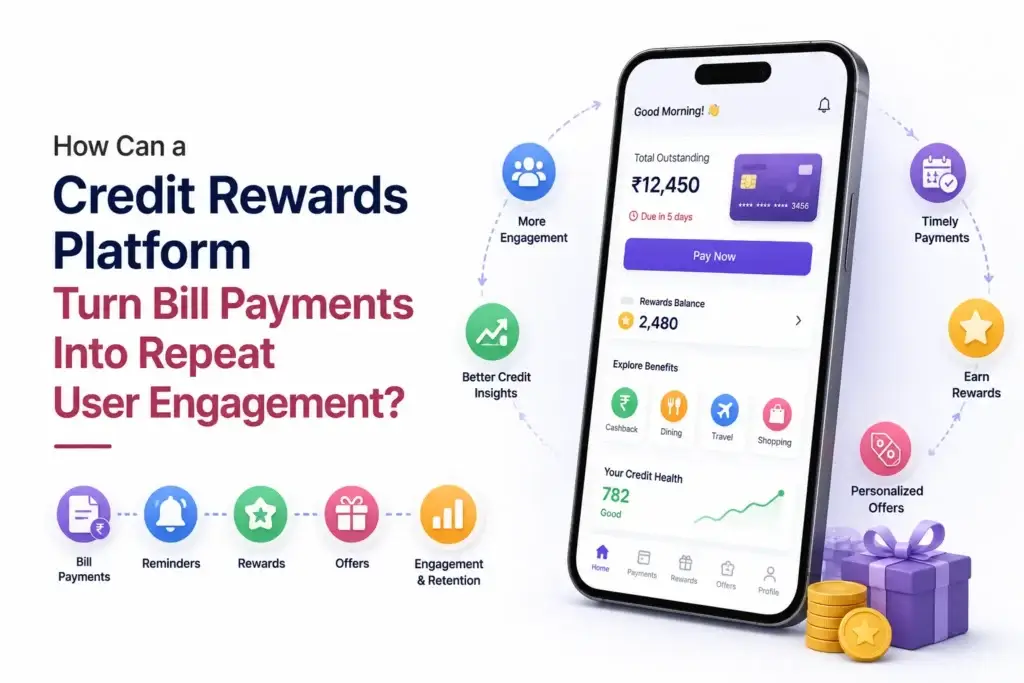
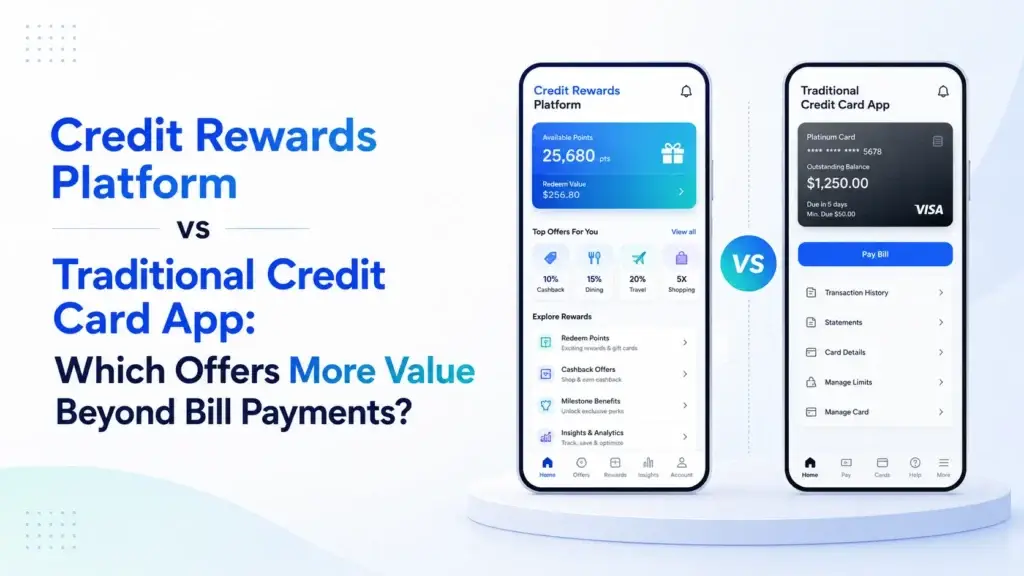
How Can a Credit Rewards Platform Turn Bill Payments Into Repeat User Engagement?
Key Takeaways Credit rewards platform user engagement grows when bill payments are connected with useful…
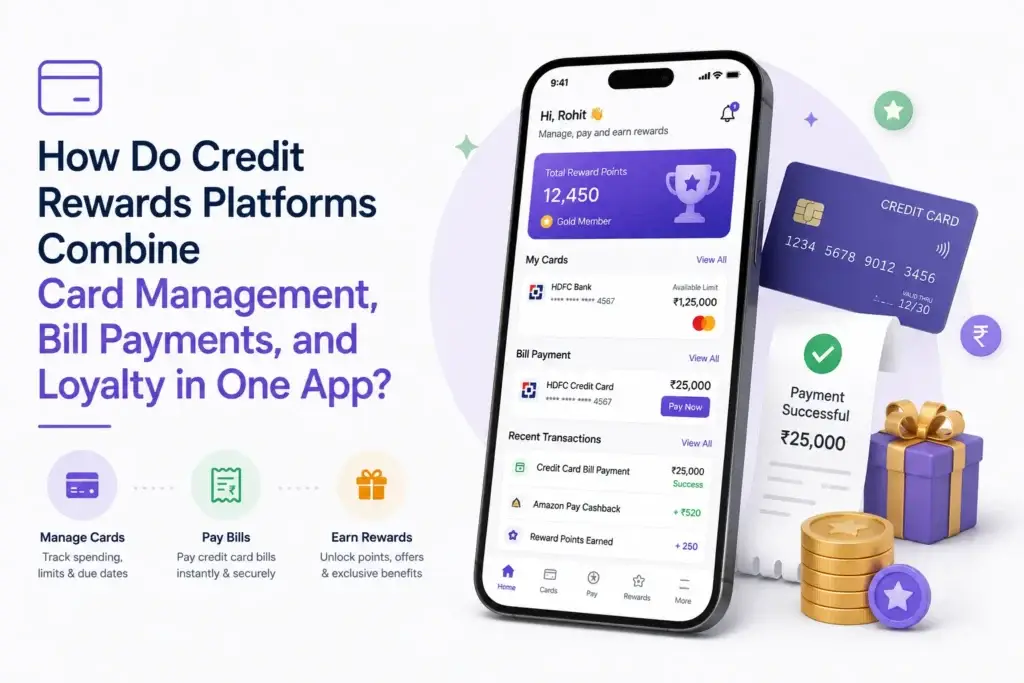
How Credit Rewards Platforms Combine Card Management, Bill Payments, and Loyalty in One App
Key Takeaways A credit rewards platform combines credit card management, bill payments, rewards, offers, transaction…
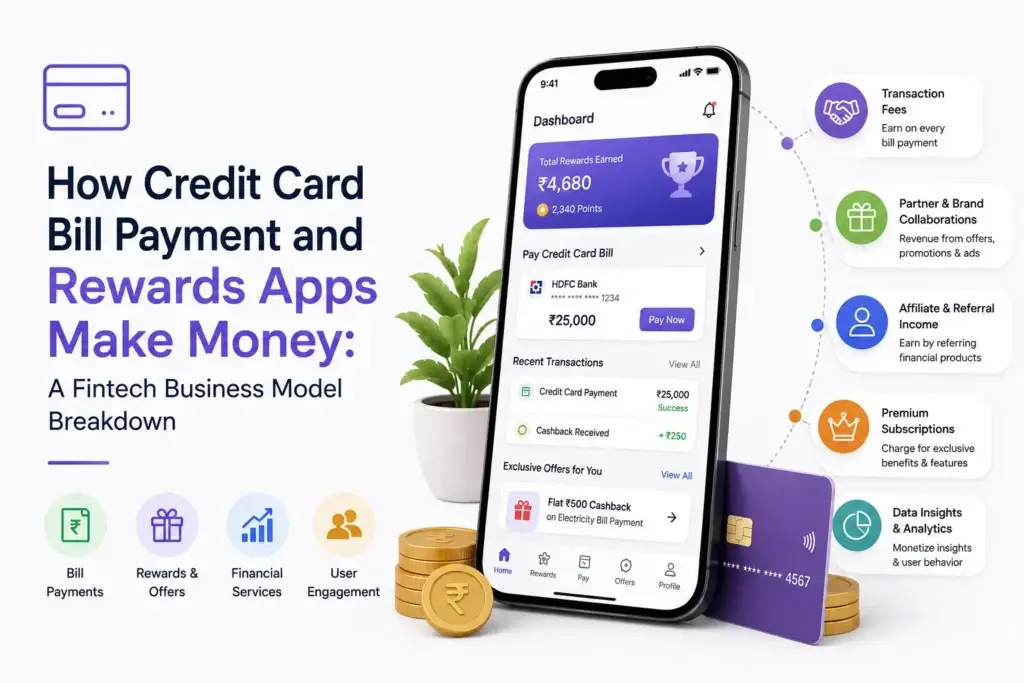
How Credit Card Bill Payment and Rewards Apps Make Money: A Fintech Business Model Breakdown
Last Updated on August 26, 2026 by Yash Narayan Key Takeaways A credit card bill…
Last Updated on August 26, 2026 by Ashish Khan For many users, a credit card…
FAQ
Everything you need to know about the Miracuves Cred Clone.
A ready-made personal credit and rewards super-app. Members add every card they hold to one vault, pay bills with autopay and reminders, track a credit score with its factor breakdown and per-card utilization, and earn points that move them through a bronze to diamond tier ladder. It ships with a 24-section operator console, a 295-screen mobile app and a documented API across both surfaces.
Yes. You launch under your own branding, member agreements and commercial terms. The product replicates common consumer fintech patterns rather than any protected asset, and you set your own policies for rewards, subscription pricing and offer partnerships. Bureau data handling is subject to your own agreement with the bureau and to local regulation.
The Miracuves Cred Clone starts from $6,999 for a launch-ready white-label deployment. Final scope varies with bureau integration, payment rails, notification providers, mobile scope and infrastructure.
Six days from our side. The platform is ready-made, so our work is rebranding it and deploying to your server, and that is done in under six days. What extends the calendar is anything we need from you: brand assets, hosting access, your reward and offer catalogs, and merchant accounts for the payment gateways and bureau.
The intelligence layer does: score history, rating bands, factor breakdown with impact and recommendations, per-card utilization and the alert feed are all built and demonstrable in the demo. What it needs to show real numbers is a bureau connection. Experian and Equifax adapters are built and require your own account. CIBIL appears in the product as a configurable bureau label rather than a live integration, and we state that plainly because it is exactly the kind of thing that surprises buyers otherwise.
Rewards carry total and available inventory on the catalog record, and a redemption runs inside a database transaction that decrements inventory, writes an append-only ledger entry and adjusts the member points balance together. Lifetime earned and spent totals are held per member. That means a points balance reconciles against the ledger rather than being a number recalculated on demand.
Yes. A 295-screen Expo SDK 54 application across 214 route files, with biometric login, hardware-backed secure token storage, push notifications and camera document capture for KYC. It has full parity with the web app on every consumer module. A branded Android build is available, and because it is Expo and React Native an iOS build is an additive step rather than a rewrite.
Bills come from an operator-managed biller catalog with categories. A one-shot fetch retrieves the bill, the member pays through the configured gateway, and the payment is written to a ledger with a reference number for audit. Autopay rules are set per bill through a setup wizard, and a daily reminder job dispatches ahead of the due date through whichever channels the member has enabled.
The documentation is candid about this. CAPTCHA on signup and login is not implemented, email verification is not enforced, SMS two-factor is not exposed in the member UI, IP allowlisting on admin endpoints and anomaly detection wired to alerting are configuration, and member personal data is plain text at rest unless your managed database supplies KMS encryption. What is built includes bcrypt hashing, JWT with refresh rotation and revocable sessions, two-factor, biometric, Zod validation everywhere, DOMPurify sanitization, helmet headers, per-route rate limiting, HMAC webhook verification, payment idempotency and operator audit logging. We complete the named gaps as pre-launch hardening.
Yes. You receive the complete monorepo: the Next.js 14 web application across 60 routes, 148 consumer API route handlers, the Express workspace with 114 route files and 297 services, the 295-screen Expo mobile application, the Prisma schema of 35 models with its migrations and seed workflow, all integration adapters, and the Kubernetes, Terraform and observability configuration, with full ownership to modify and extend.
Yes, with scope. Per-member currency and language settings are built, integration credentials are scoped per environment, and role handling is string-based so custom operator roles are configuration. What the PRD lists as out of scope for the initial release is multi-currency FX conversion, cross-border bureau pulls and business banking, so a genuinely multi-currency deployment needs that work scoped rather than assumed.
Crypto wallet trading, multi-currency FX, business banking and lending underwriting are documented as out of scope for the initial release, although the data model and integrations support several of them. Peer-to-peer transfers and group savings circles are present as architecture and mobile screens rather than first-class consumer features. Every third-party provider needs your own account. We would rather list this here than have it surface after purchase.
Let's turn your idea into
a live platform.
Get a free consultation, a clear timeline, and honest answers. We'd rather earn your trust than rush a sale.
The detail pages, the guides behind it, and where it fits.
Agency, freelancer and Miracuves compared on what a credit super-app has to get right: source code ownership, bureau readiness, and what we have not done yet named before you sign.
Compare options→How this kind of platform is structured and where its revenue comes from.
Read the guide→ ProductWhat each role can actually do, from a card vault holding every issuer with per-card utilization through to bills, score factors and the tier ladder, on 14 engines and 35 Prisma models.
See the full breakdown→ Talk to an expert →The user journey, the core mechanics and what sits behind them.
Read the guide→ ProductSix revenue lines on one engagement loop: premium subscription, partner offers, premium gating, referrals, payment revenue share and white-label licensing.
See the playbook→The fixed $6,999 set against freelancer, agency and custom quotes, with six working days to deployment, all 14 engines included, and nothing taken from your revenue.
See exact pricing→ GuideWhat a ready-made script includes and what it costs.
Read the guide→Miracuves is an independent software development company. We are not affiliated with, connected to, sponsored by, or endorsed by Cred.
“Cred Clone” is used descriptively. It is how the software industry refers to building a platform with functionality similar to Cred, and how clients search for it.
The entire design and codebase is built by our own team. The product contains no code, design, graphics, or content originating from the Cred website or applications.
Cred and all other third-party names and marks are the property of their respective owners, referenced here solely to describe the category of software offered.
Build Your Branded App - Clone or Custom

Envision. Decide. Deploy.
With Perfection in Just 6 Days
90+ readymade clone apps deployed in 6 days. Schedule a Live Walkthrough Now.
Custom development from 15 days. Free consultation
Optional. Paying in full works too.
25% off the published price of any ready-made solution ordered by 30 October 2026. The extras are included with every ready-made solution order. We submit to your own Google Play and Apple developer accounts and fix any technical rejection until the apps are approved. Rejections over store listing details (descriptions, screenshots, policy links and other metadata) are yours to update; review times are set by Apple and Google. The 6 working days start once your branding, hosting and accounts are ready. We reply in under 2 hours, Mon-Sat.