









Clubhouse Strategy: Hype, Hustle & Audio Growth
Last Updated on July 2, 2026 by sakshi Remember when getting into Clubhouse felt like…
No product name matched, so we are showing the categories that cover this topic.
Food Delivery/Grocery Delivery/Pharmacy Delivery/Parcel Delivery/Alcohol Delivery
Social Networks/Communication/File Sharing/AI & Automation/Website Builder
Twenty-five sectors, each with its own page naming what we have already shipped into it and what we would build from zero.
A launch-ready social entertainment platform covering the whole engagement loop: drop-in voice rooms with host, speaker and listener roles, Agora-backed live streaming with head-to-head PK battles, a social feed with stories, real-time messaging, a dual-currency gift economy that converts into withdrawable earnings, XP and mission gamification, an AI companion, and casual games played inside the room.
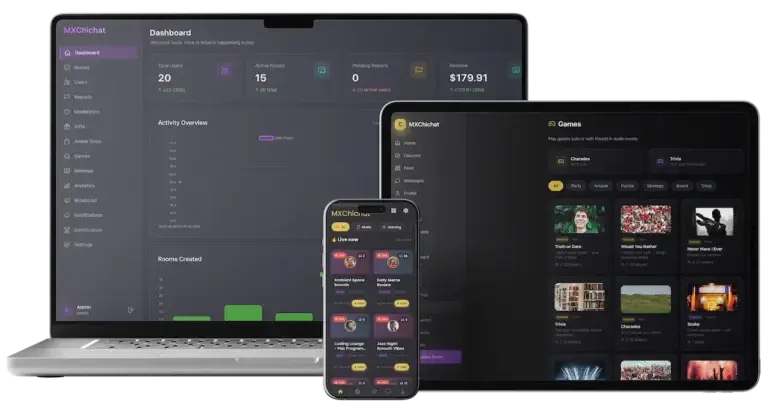
Three surfaces from one platform. Members use a 42-route web app and a 46-screen Flutter build, and operators run an 18-section console over roughly 190 API route patterns and 24 NestJS modules.
Go Live in 6 Days with Voice-FirstCreator-ReadyGamifiedGift EconomyWhite-LabelAPI-Complete
⚡ Platform at a Glance
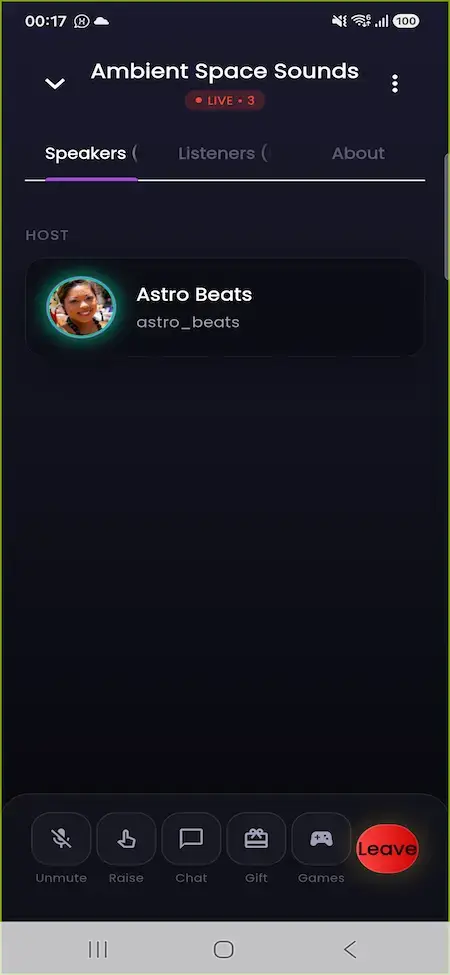
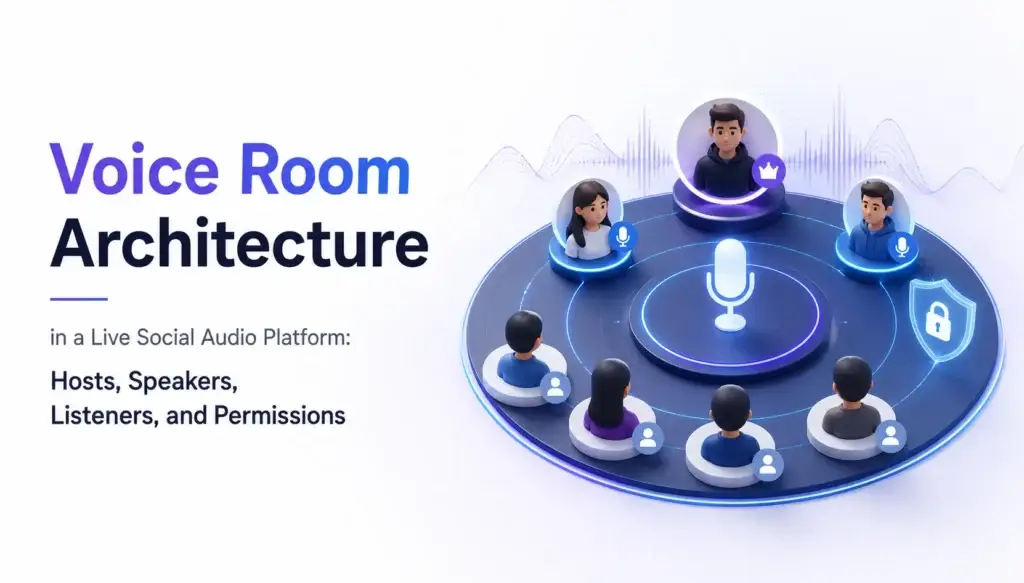
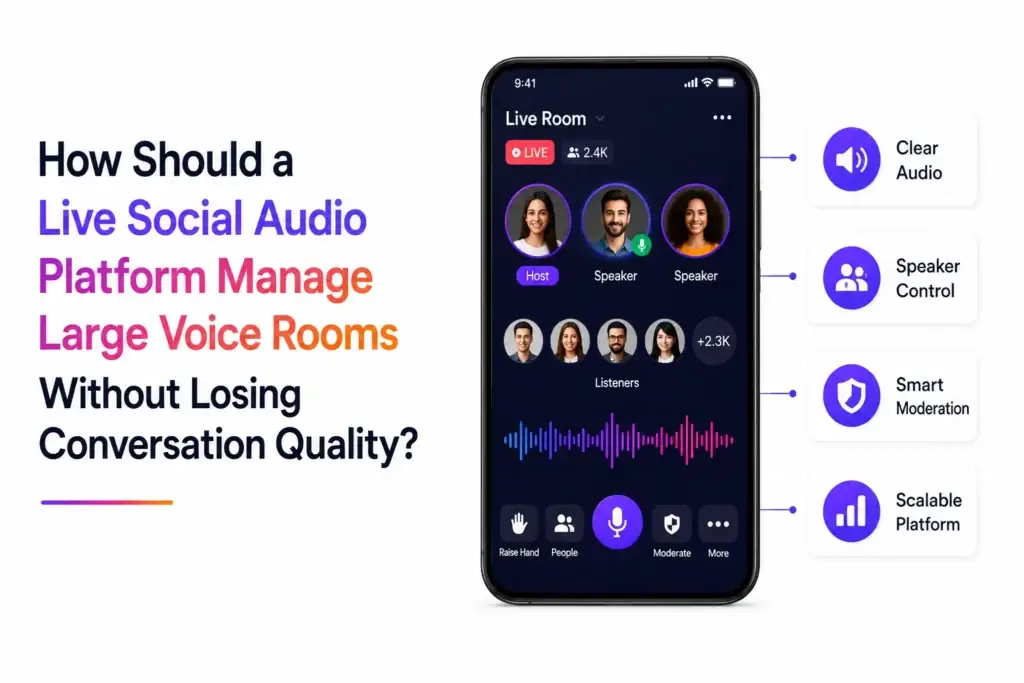
Drop-in audio rooms with a three-tier role system, hand-raise promotion, per-participant mute and live presence over Socket.IO. This is the surface that makes every other engine worth building.
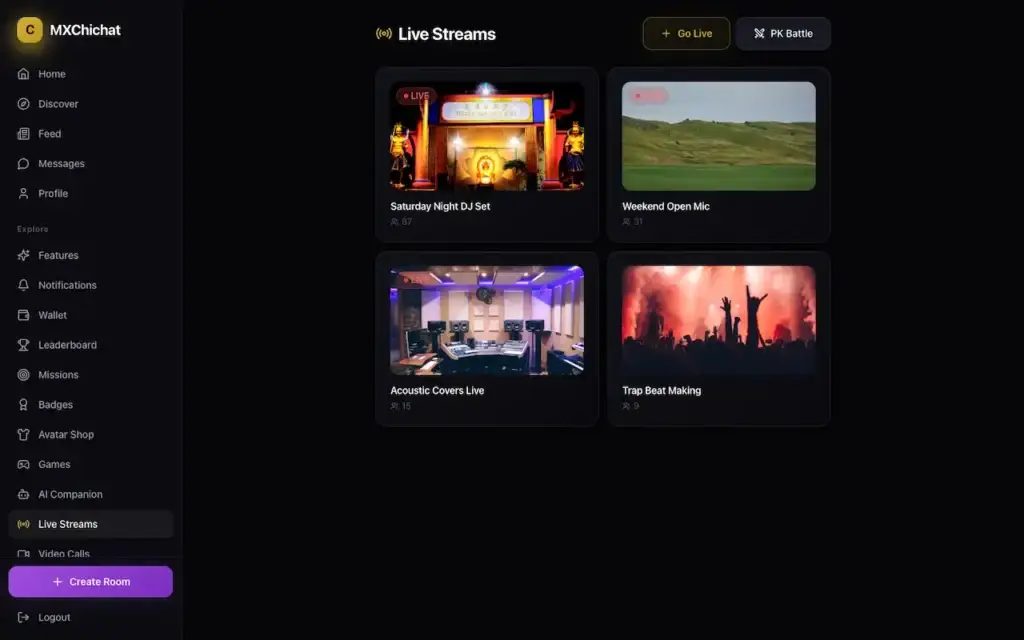
Agora RTC live video where any member can broadcast, plus PK battles that put two broadcasters head to head for viewer votes. Competition is what turns passive viewing into participation.
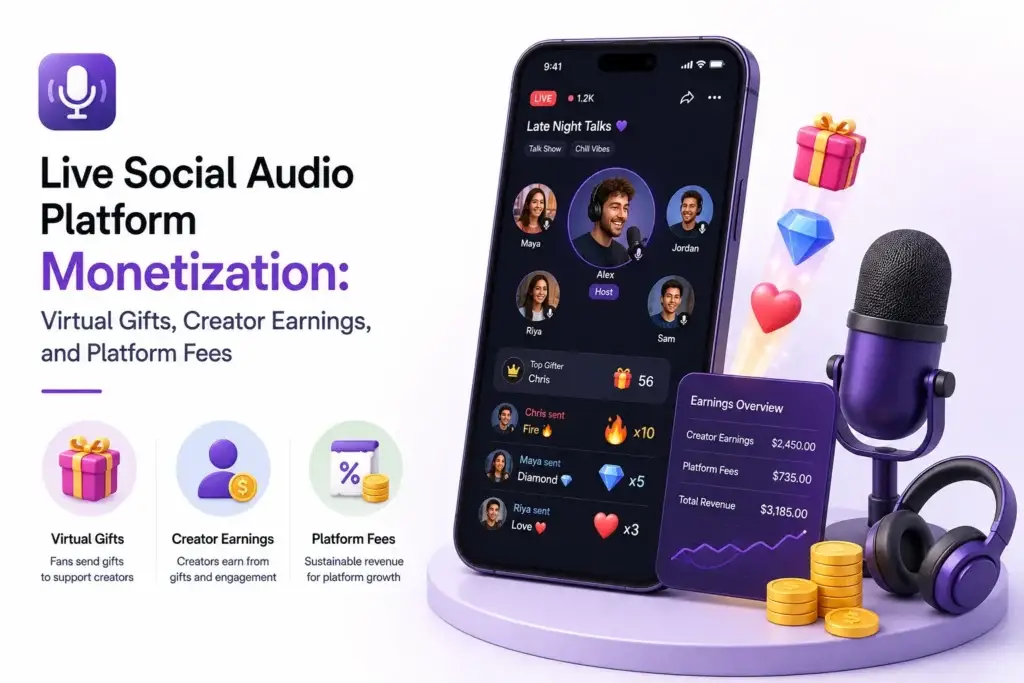
Ten gift tiers from a 1-coin heart to a 5,000-coin castle. Coins are bought, diamonds are earned, and diamonds withdraw for real money. That loop is the whole creator proposition.
XP across 47 level thresholds, daily and weekly missions, streak tracking, badges with rarity tiers and leaderboards by week, month and room. Bolted-on loyalty tools do not reach the actions that matter.
Trivia, charades and party games run as sessions inside an audio room, with participant readiness, scoring and state held server-side rather than in a client that can be closed.
Rooms, streaming, feed, messaging, social graph, profiles, economy, gamification, avatars, games, AI, video calls, notifications, moderation, admin, analytics, auth and settings ship together on 28 entities.
🚀 Ready to launch your own social audio and live streaming app?
Live in Action
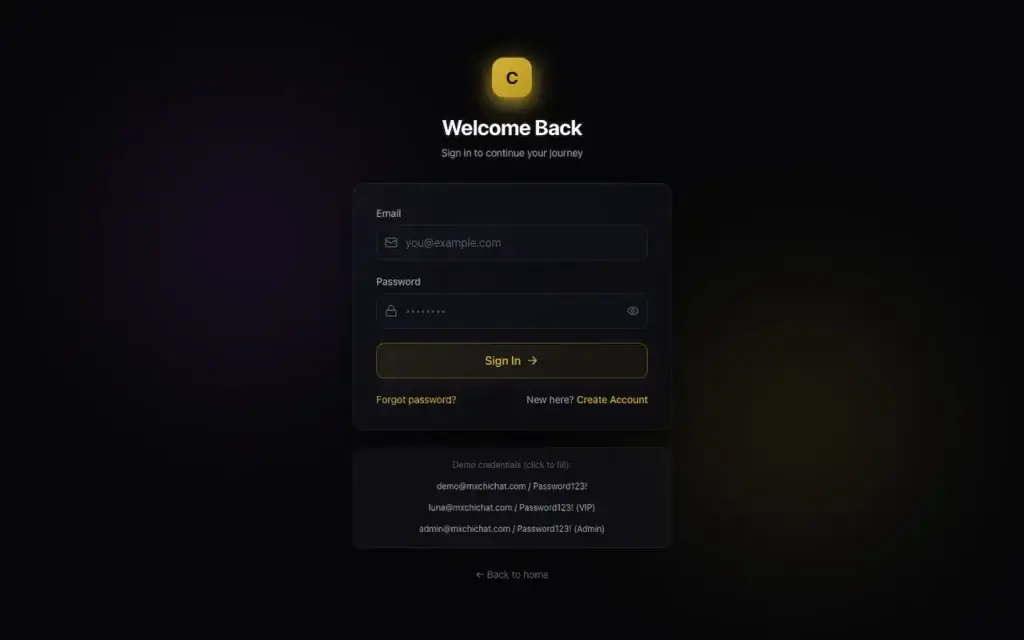
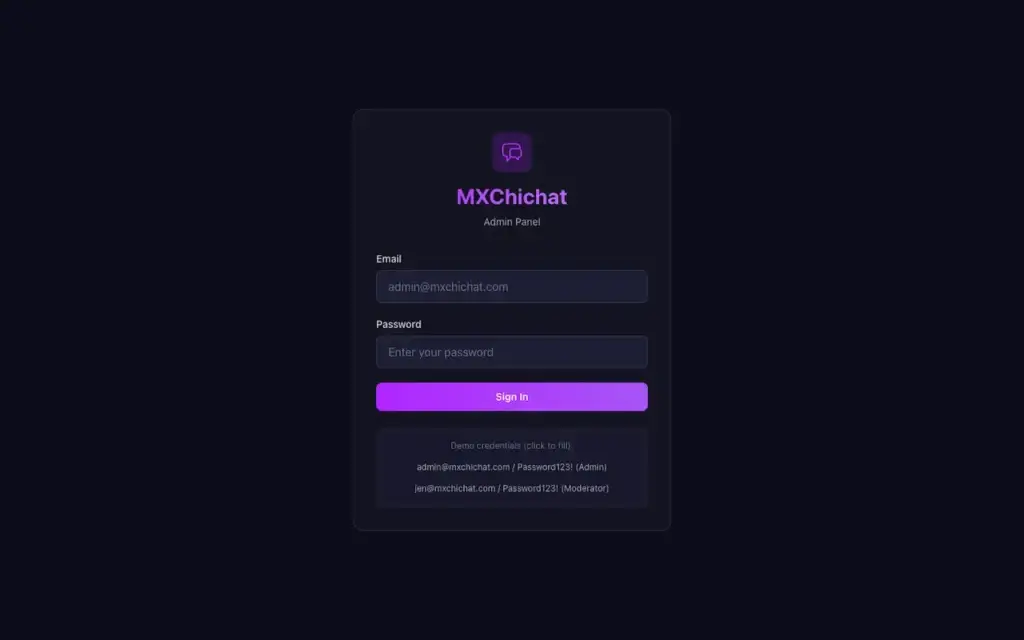
Don’t just take our word for it. Open the Miracuves ChillChat Clone yourself. Both roles have a working login and no setup is required. Join a room, send a gift, watch coins move, then open the same activity in the operator console.
MEMBER WEB APP
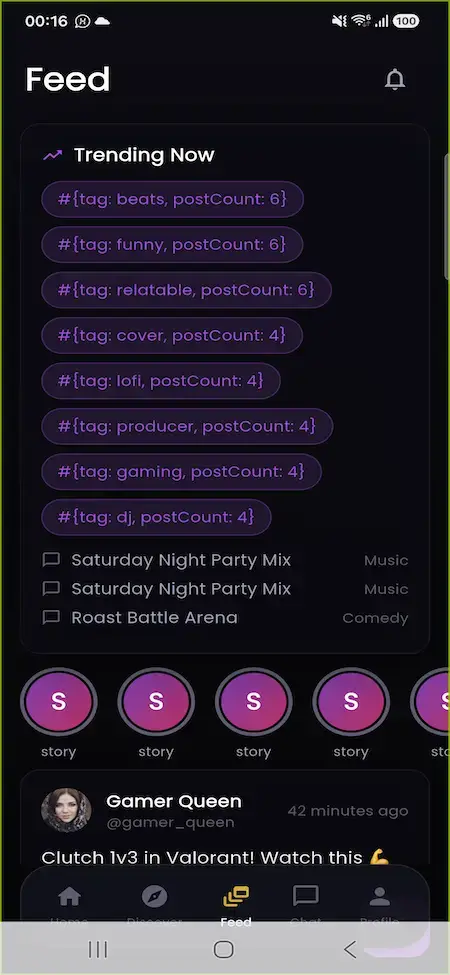
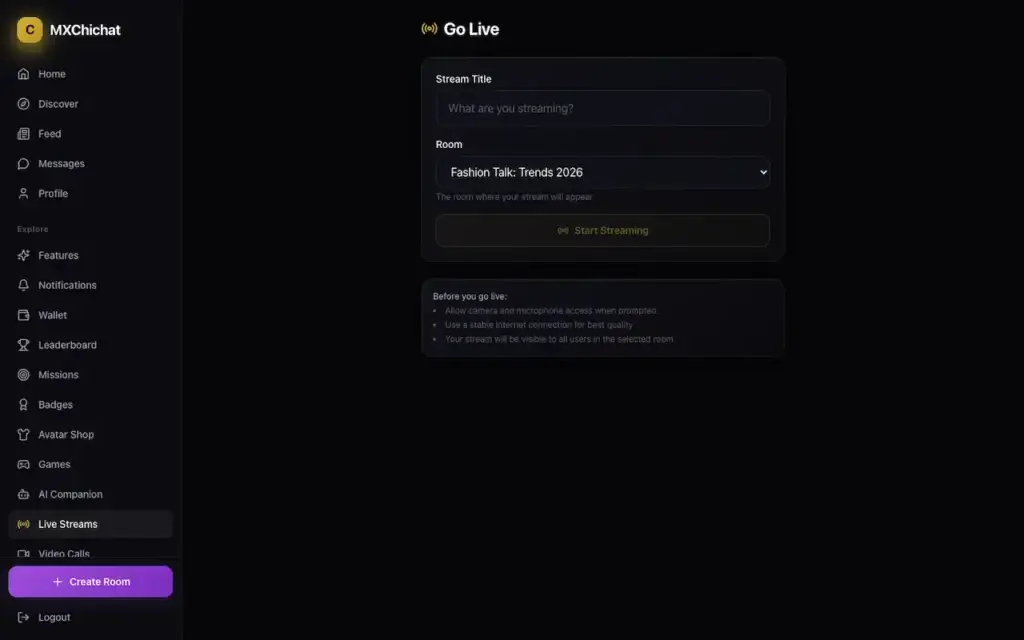
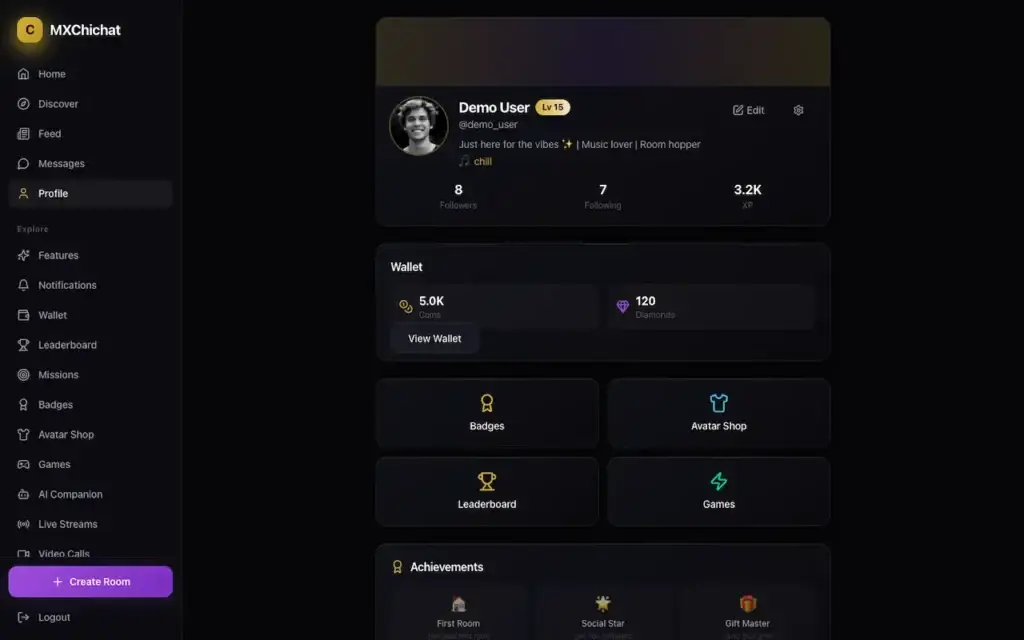
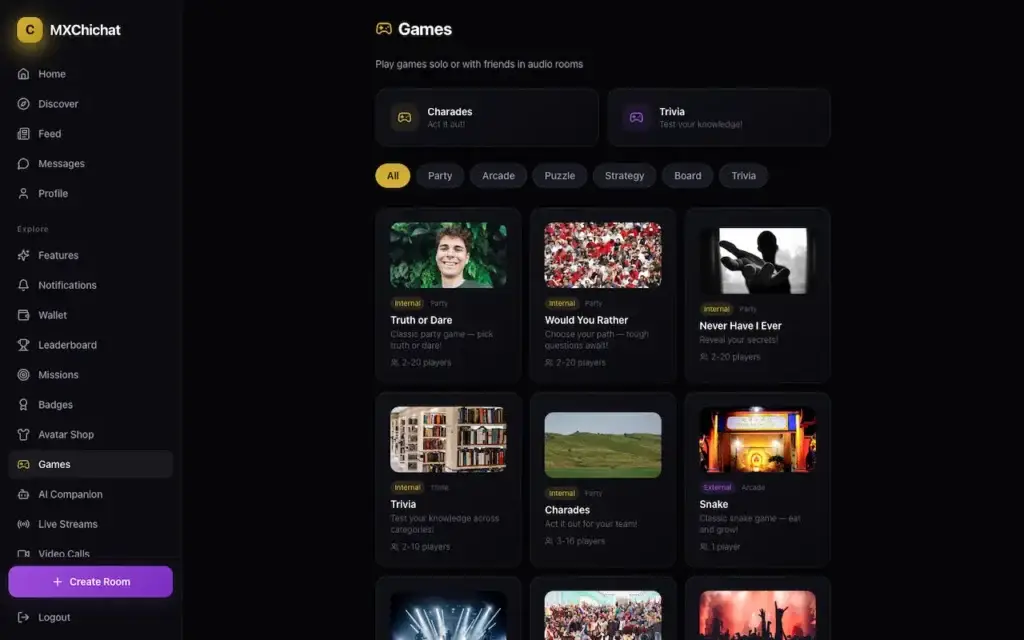
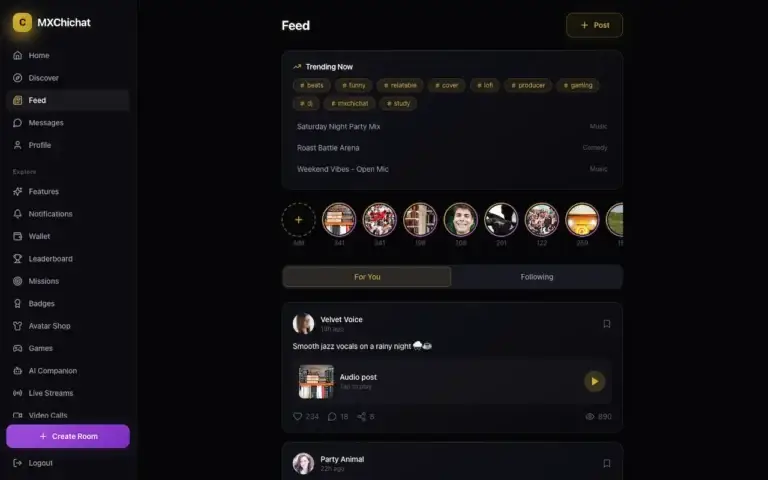
The consumer surface across 42 routes. Voice rooms, live streams, the social feed with stories, direct and group messaging, the wallet with coins and diamonds, missions and badges, the avatar shop and the AI companion.
ADMIN CONSOLE
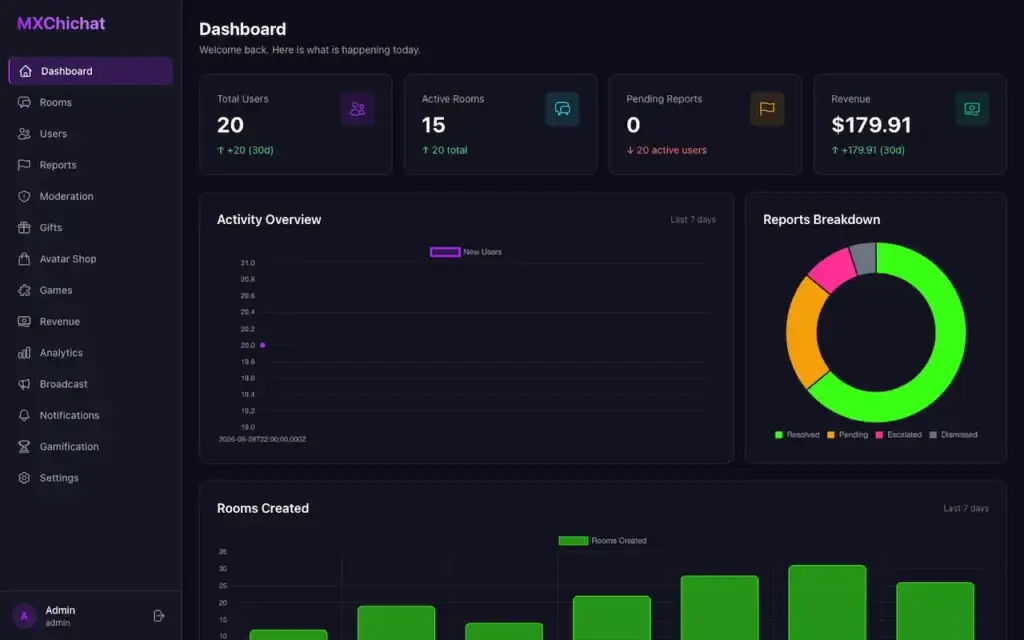
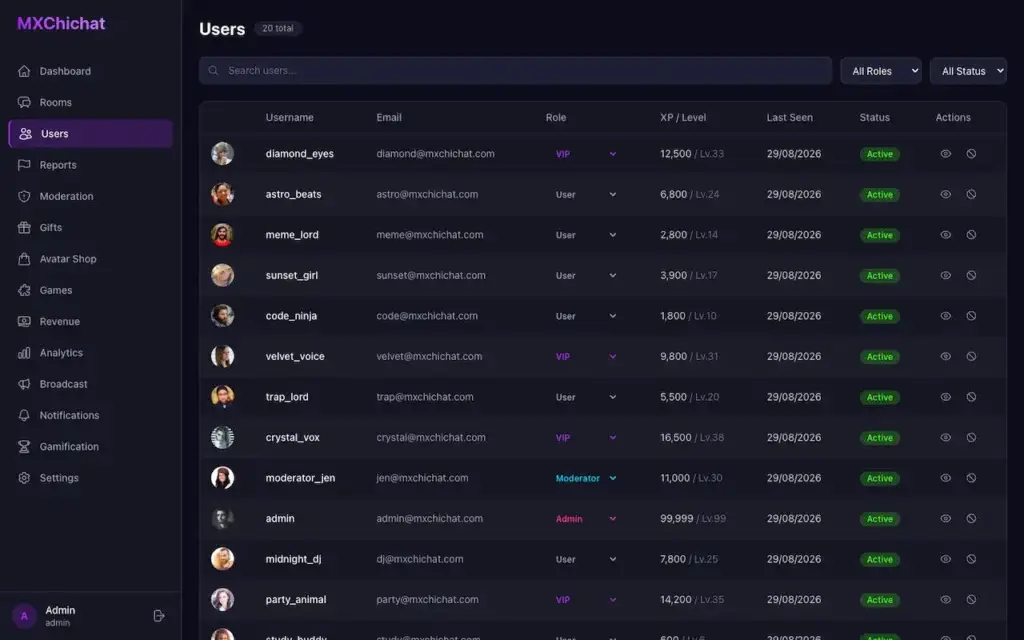
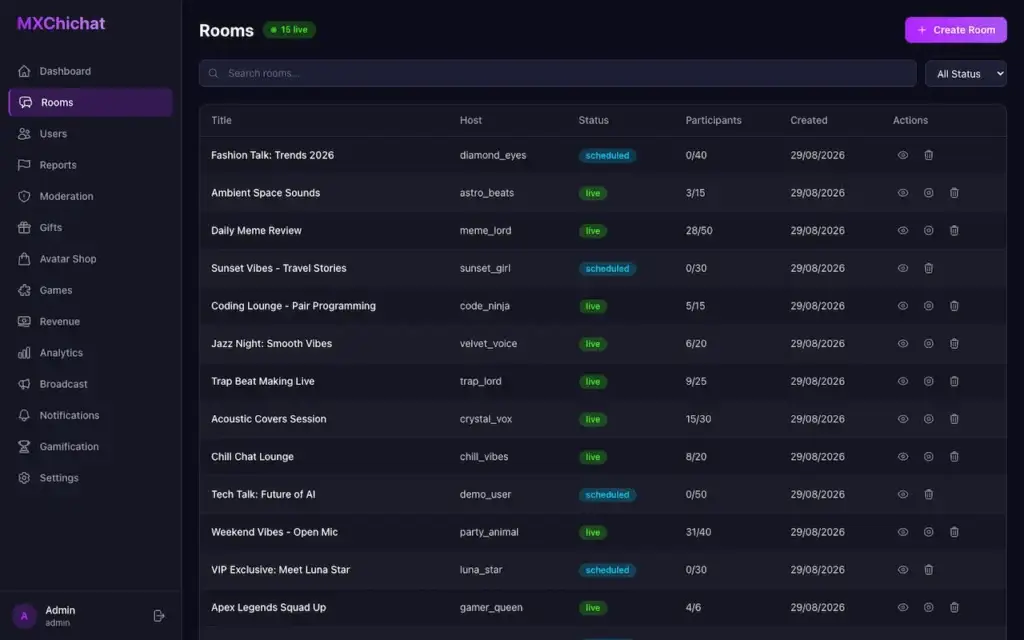
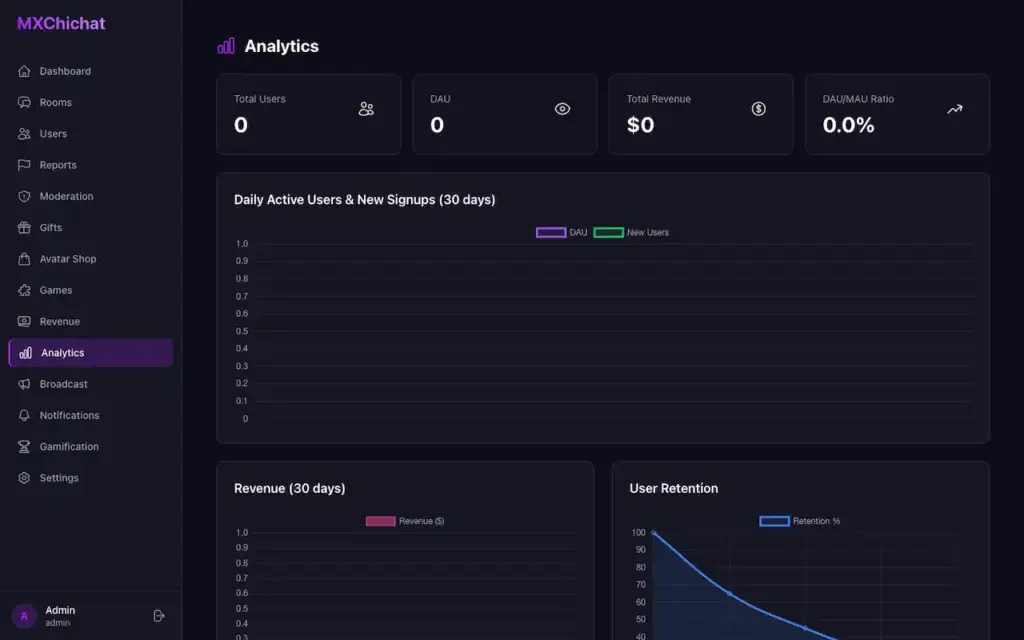
Operator governance across 18 admin sections. User and room management, the report and moderation queue, analytics with DAU and retention cohorts, revenue with platform fee control, avatar and game catalogs, and broadcast notifications.
ANDROID APP
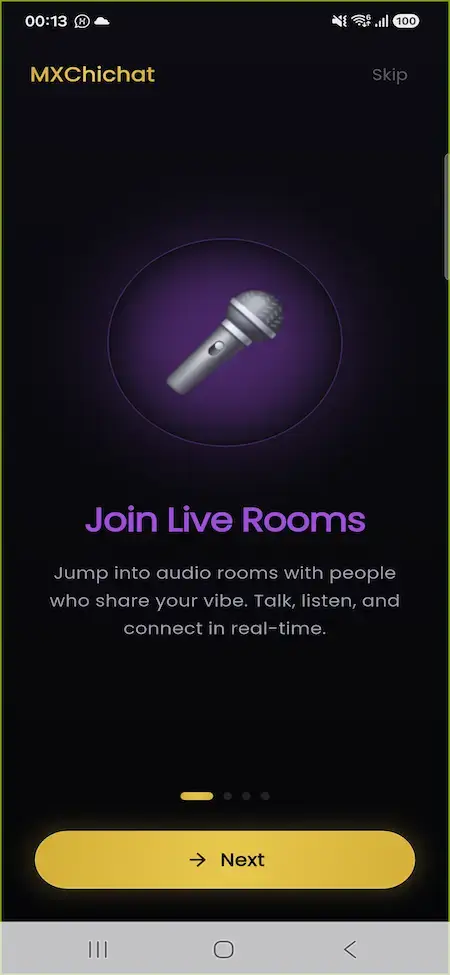
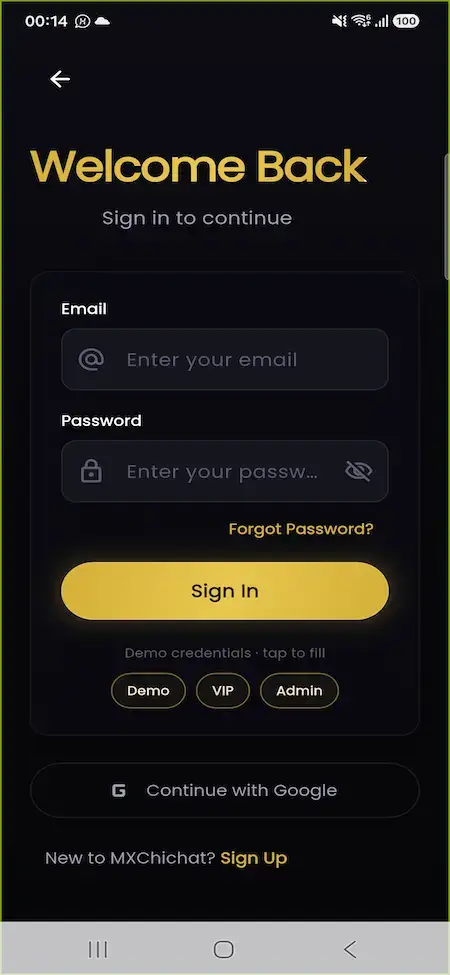
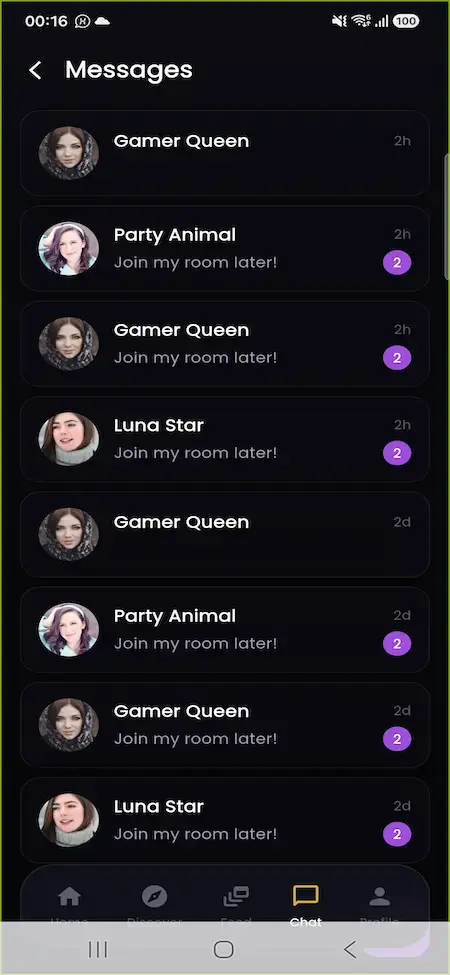
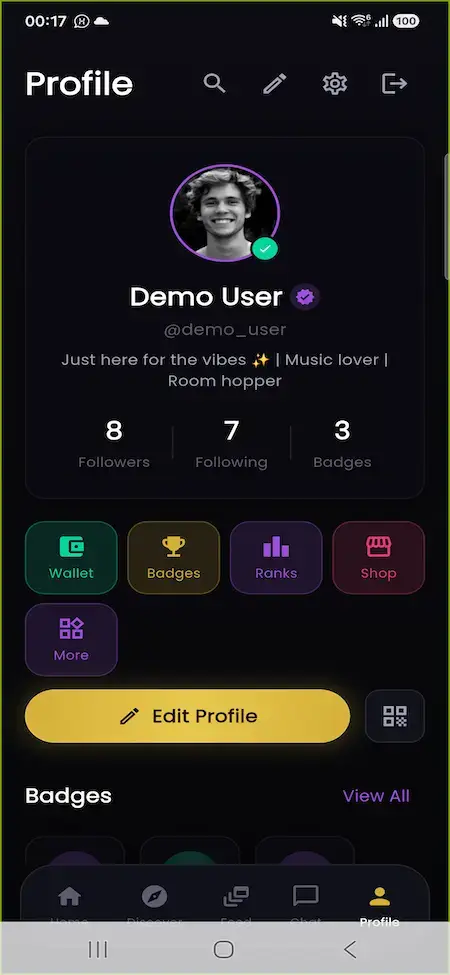
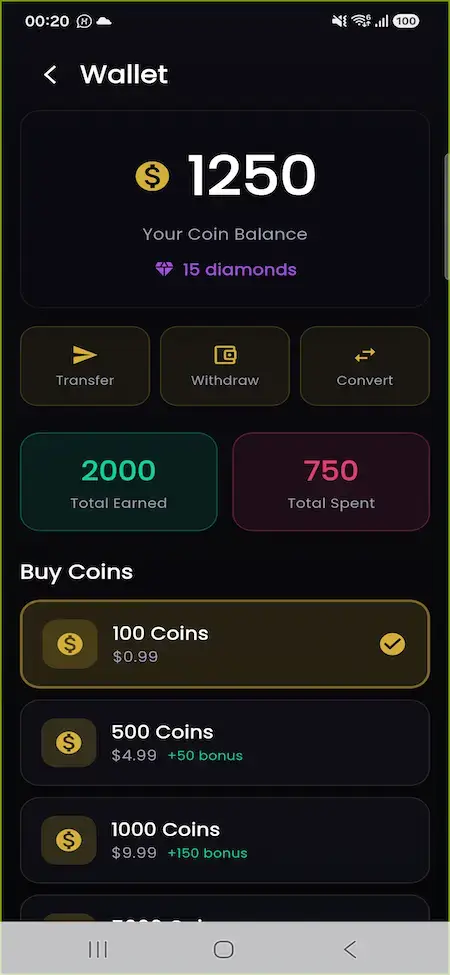
A branded Android build of the 46-screen Flutter application, with Firebase push notifications, running against the same API and socket layer as the web app.
Watch It Work
A walkthrough of the platform as an operator sees it, rather than a feature reel. It opens on the room list where live and scheduled rooms sit together, joins one as a listener, raises a hand and is promoted to speaker, and shows the presence and mute state moving in real time for everyone in the room. A gift is sent and the coin balance moves on one side while diamonds accrue on the other. A broadcaster goes live, a second challenges them to a PK battle, and viewer votes are followed as they land. The same member is then opened in the admin console: the report queue, the analytics view with DAU and retention, the revenue panel with the platform fee, and the avatar and game catalogs. It closes on platform settings where moderation rules, room defaults and notification policy are configured. If a specific flow matters more than the tour, ask and we will open it live with data in it.
Every Screen Mapped
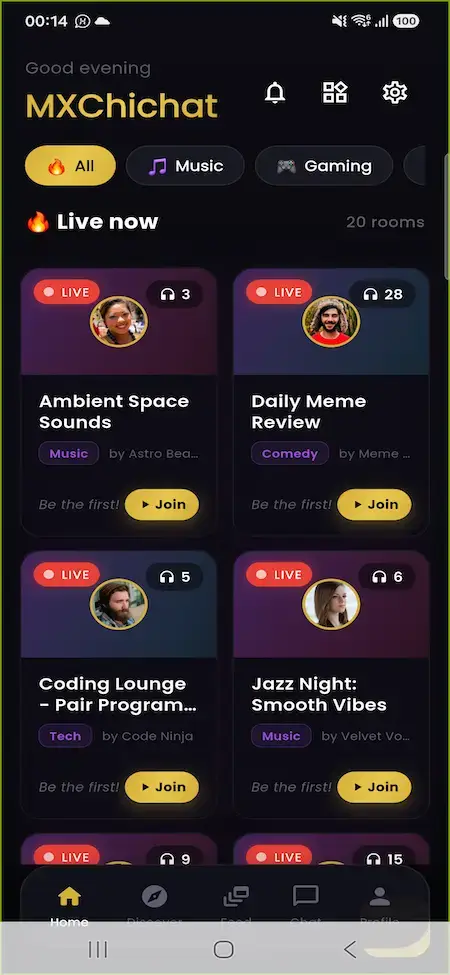
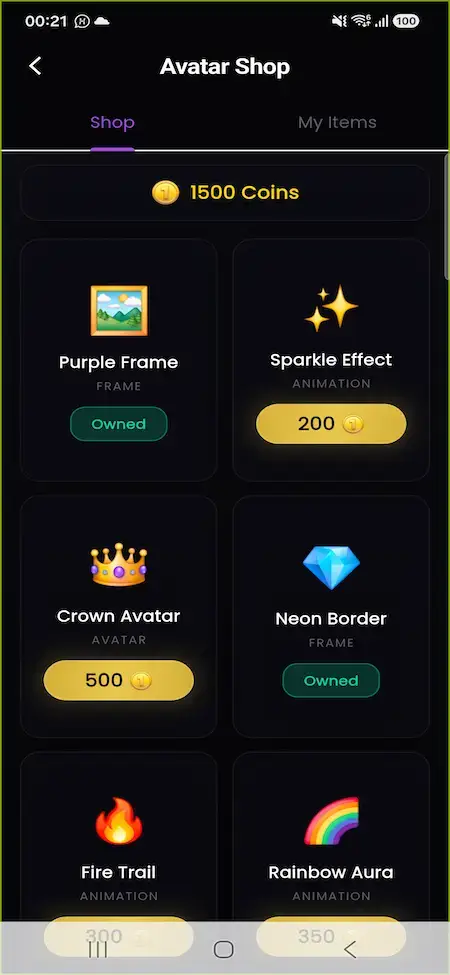
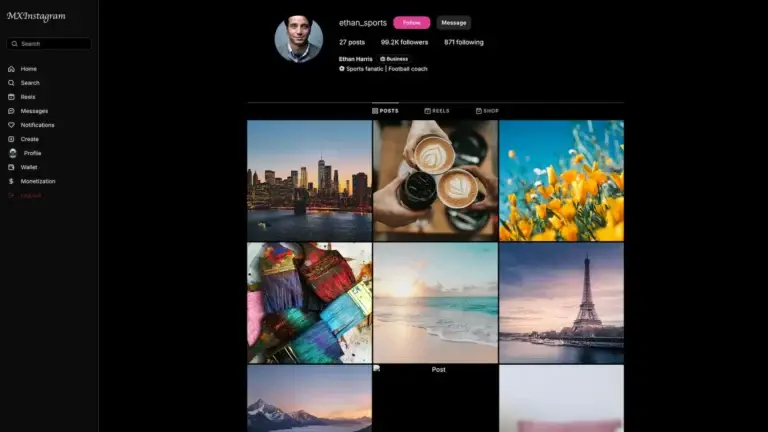
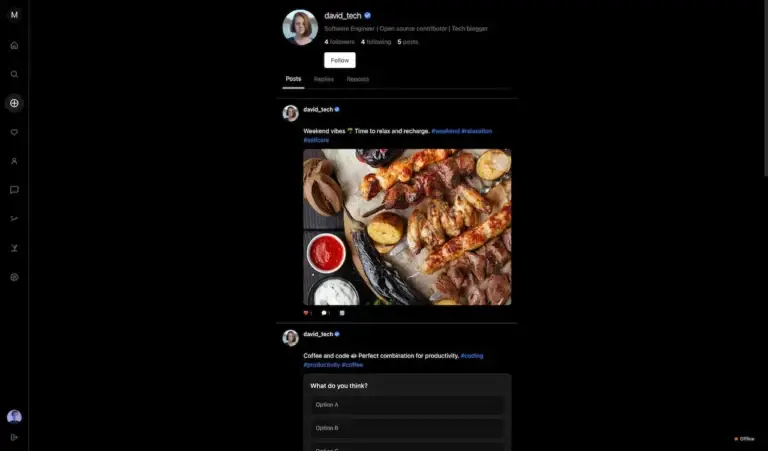
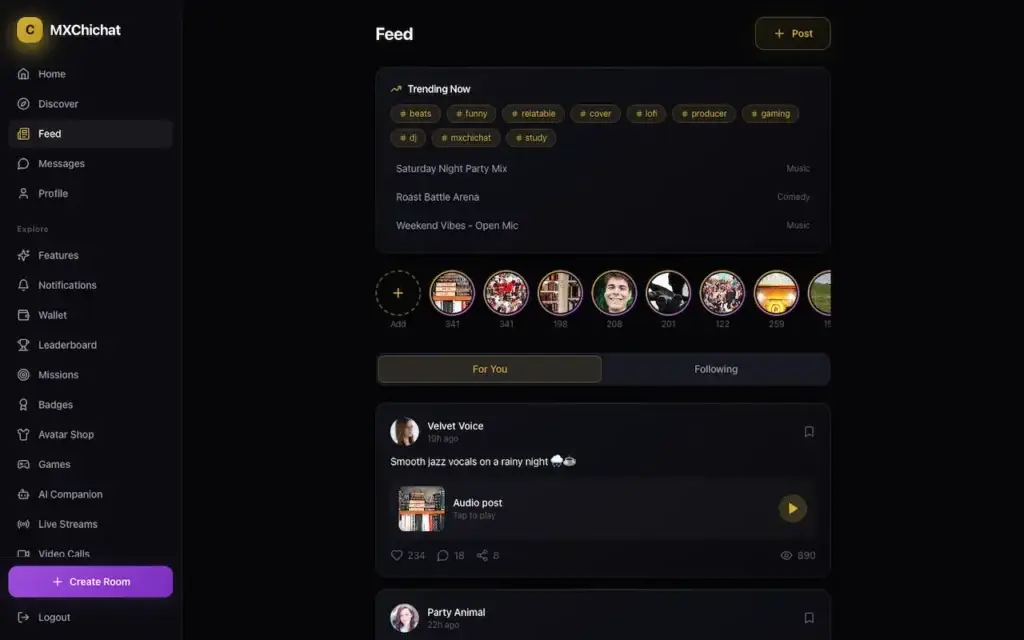
The interface across the surfaces that matter: room discovery and the in-room experience with speakers, listeners and chat, the broadcaster and viewer streaming views with PK battle overlays, the feed with stories and comment threads, conversations and group chats, the wallet with packages, transfers, conversion and withdrawal, the missions and badges hub, the avatar shop with rarity tiers, and the operator console with its user, report, analytics and catalog queues.


Follow a member from registration through joining a first room, raising a hand to speak, sending a gift, earning XP into a level, completing a daily mission, going live, and withdrawing diamonds once the minimum is met. Web and mobile run the same flows against the same API, so a gift sent on the phone shows in the browser without a second integration. Want a guided walkthrough of a specific flow? Book a call and we will open the surface you care about with live data in it.
Straight Answers
Miracuves has shipped social, streaming and creator-economy platforms, and those engagements are published in the portfolio with their own figures. There is no ChillChat-class social audio deployment among them yet, so rather than dress the platform in borrowed proof, the statements below are properties of the build, each demonstrable in the live demo above.
Illustrative Scenario
A modelled reference deployment showing how the Miracuves ChillChat Clone is configured for a social entertainment operator. This is not a client engagement and the figures are properties of the platform rather than results reported by a customer.
Creator Sector
Social Audio and Live Streaming App
How this platform is configured for an operator whose community already talks in voice rooms, and where streaming, gifting and gamification need to sit in one app rather than four.
This is a modelled reference deployment, not a client engagement. Every capability listed above ships in the base build and is demonstrable in the live demo. The figures are properties of the platform, not results reported by a customer.
The Basics
A ChillChat Clone is a ready-made social audio and live entertainment app. Members drop into voice rooms, go live on video, scroll a feed, message each other, and send gifts that turn into real earnings for the person receiving them. The platform handles the parts that make this category genuinely hard: real-time presence that stays correct as people join and leave, an economy where a gift balance reconciles, and an operator console that runs moderation without a developer.
The value sits in the presence layer, the gift ledger and the moderation pipeline. A template gives you a room list and leaves the real-time state underneath as your problem.
You receive the full monorepo, the TypeORM entities and the migration path. No per-seat fee, no vendor roadmap dependency, and standard PostgreSQL underneath.
Web, Flutter mobile and the admin console are all first-class and run against the same API, rather than a web app with a wrapper shipped as a mobile strategy.
Built for Web, Mobile & API
The difficulty here is never the room list. It is a socket layer that keeps every participant in agreement about who is speaking, a currency that has to survive a payment webhook arriving twice, and a moderation queue that has to be usable by someone who is not an engineer. Those are the parts already built.
The build ships 28 TypeORM entities across roughly 35 tables, about 190 unique API route patterns from 248 controller methods, 35 inbound and 36 outbound WebSocket events, a 42-route web app, a 46-screen Flutter application and an 18-section admin console.
Everything Included
Every capability below is built and demonstrable in the live demo. Where a feature needs a third-party account or a deployment decision before it works in production, that is stated against the feature rather than implied away.
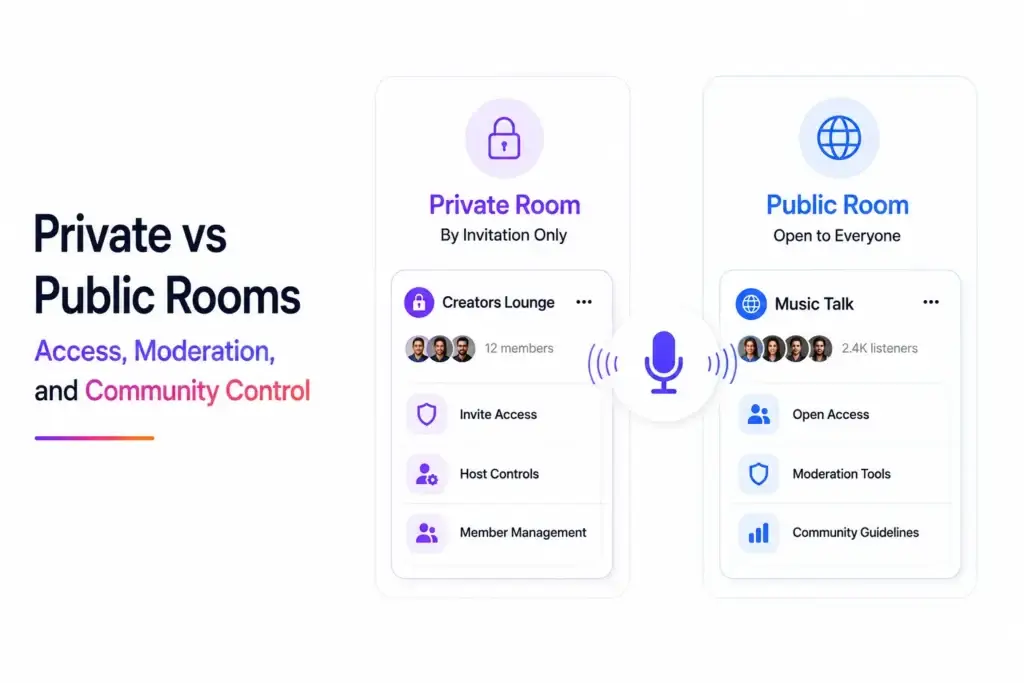
Live and scheduled rooms with host, speaker and listener roles, hand-raise promotion, per-participant mute, persisted chat and private rooms with server-enforced passwords.
Agora RTC broadcasting with real-time viewer counts, stream discovery, and PK battles where two broadcasters compete head to head for viewer votes.
Posts across four content types with For You and Following tabs, likes, comments, saves, shares, trending hashtags and 24-hour stories.
One-to-one and group conversations with real-time delivery, read receipts, unread counts and participant management.
Ten gift tiers, six coin packages, transfer, diamond conversion and withdrawal, with every balance change wrapped in a database transaction.
XP across 47 level thresholds, daily and weekly missions, streaks, achievements, badges with rarity tiers, and leaderboards by week, month and room.
Five cosmetic categories across four rarity tiers with inventory, equip and unequip, and operator CRUD over the catalog.
Six personas over five AI providers with persisted conversation history, matchmaking suggestions and real-time text moderation.
One-to-one, group and random-match video calling with a full call lifecycle, history and duration tracking, on the same Agora configuration.
In-app notifications across eight types with Firebase push, device token registration, unread counts and admin broadcast by segment.
Member reporting across three target types with a three-state operator queue, activity log, and resolve, dismiss or ban actions.
Event tracking across 12 event types and four sources, feeding DAU, retention cohorts, top rooms and revenue views in the console.
Want to see it running first? Open the demo with either role login above, or book a walkthrough and we will take you through a room joined, a hand raised, a gift sent, a mission completed and the same activity in the operator console against your own commercial model.
How Operators Earn
A social entertainment app earns from several places at once, and this platform models each separately so an operator can tune one lever without disturbing the others.
Six packages from $0.99 to $99.99 with escalating bonus tiers, sold through Stripe on web and RevenueCat-verified in-app purchase on mobile. The most direct revenue line in the product.
An admin-configurable percentage taken on creator earnings before payout, adjustable at runtime without a deployment. The lever that scales with gifting volume.
Coins convert to diamonds at 100 to 1 and reverse at a 10 percent fee, so the conversion path itself carries margin alongside the platform fee.
Cosmetic items across five categories and four rarity tiers, priced in coins. Pure-margin inventory with no fulfilment cost behind it.
A VIP role is modelled in the user enum and notification targeting already segments by it, so a paid tier is configuration rather than a rebuild.
The whole platform deploys under a partner brand with their own integrations and catalogs, which is a licence and revenue share model rather than a product sale.
The two that move the numbers most are coin sales and the platform fee on creator earnings. One is direct revenue, the other scales with the engagement the gift economy produces.
Run It Without a Dev Team
Eighteen admin sections give operators one pane across members, moderation, finance, catalogs and platform policy, which is the surface most social builds defer and then never finish.
Paginated search with role and status filters, a detail view showing XP, level, coins, diamonds and reports filed, and ban, unban, role change and password reset actions.
Paginated room list with status filter, a detail view with the live participant list refreshing automatically, and start, end, delete and remove-participant controls.
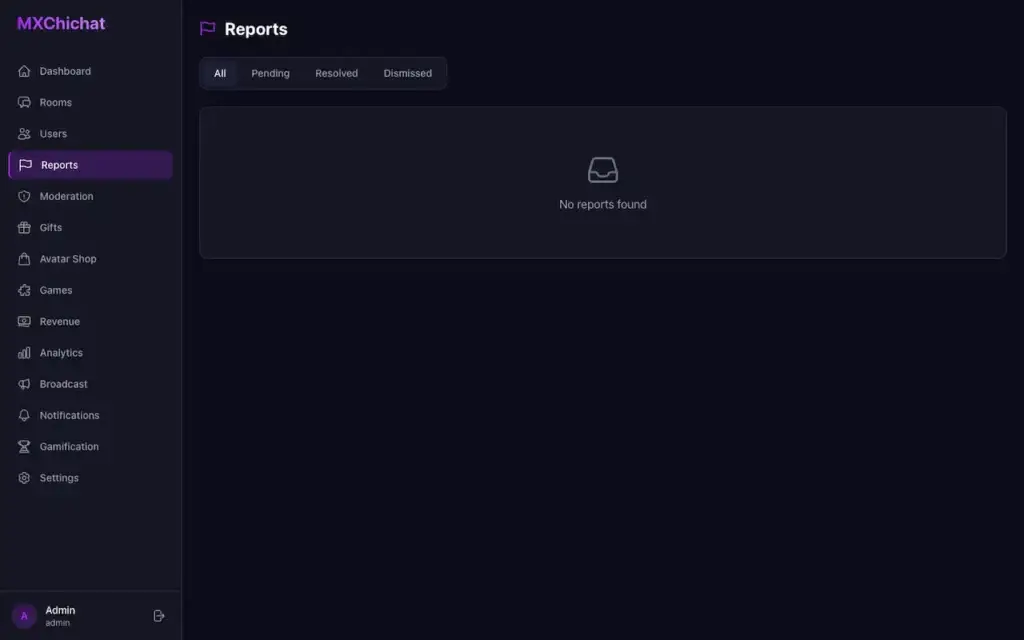
Reports across three target types and three statuses, with a detail view carrying the activity log and target user card, and resolve, dismiss or ban actions.
Thirty-day and realtime metrics covering DAU, new users, revenue and the DAU to MAU ratio, with retention cohorts and the top five rooms by participants.
ARPU, active subscriptions, gross revenue, platform fee percentage and creator payout, with a transaction list and CSV export.
Full CRUD over cosmetic items across five categories and four rarity tiers, including pricing in coins and featured flagging.
Add, edit and remove games with source type, minimum and maximum players, activation state and sort order.
Broadcast to all, active or VIP segments, direct notification to a specific member, and a recent notification log.
General identity and maintenance mode, room defaults, user policy, moderation rules with banned words and auto-ban thresholds, and notification toggles.
View achievements and missions, complete a mission on a member behalf, grant XP manually and award badges.
Need deeper governance? Immutable audit logging, distributed rate limiting backed by Redis across pods, IP allowlisting on admin endpoints and SSO against an enterprise identity provider are scoped as pre-launch hardening rather than shipped defaults. Tell us the requirement and we will scope it.
Transparent Pricing
Building a social audio, live streaming and gaming platform with Miracuves typically starts from around $3,399 for a launch-ready white-label ChillChat Clone and increases based on RTC minutes, payment rails, AI provider usage, mobile scope and infrastructure complexity.
Not sure which option
is right for you?
Talk to us - we'll understand your goals, timeline, and budget, and point you to exactly what you need. No upselling, just honest advice.
The Full Package
You receive a complete, deployable platform: the application source, the schema behind it, and the documentation a technical buyer will ask for. Everything transfers with full ownership, with no runtime licence, no per-seat fee and no dependency on our roadmap.
A Next.js 14 App Router build across 42 routes in TypeScript with Tailwind, wired to all three socket namespaces for rooms, streaming and AI.
24 feature modules exposing 248 controller methods across roughly 190 route patterns, with global validation, serialization and exception handling.
28 TypeORM entities across about 35 PostgreSQL tables with 30 or more hot-path indexes, JSONB metadata columns and unique constraints on the social graph.
A 46-screen Flutter build for iOS and Android sharing the same API and socket layer as the web app, with Firebase push notifications.
Eighteen sections spanning users, rooms, reports, analytics, revenue, avatar and game catalogs, notifications and platform settings.
Socket.IO across the rooms, streaming and AI namespaces with 35 inbound handlers, 36 outbound events and a Redis adapter for multi-instance broadcasting.
Docker images per service, Kubernetes manifests with horizontal pod autoscaling, GitHub Actions pipelines publishing to GHCR and Sentry monitoring.
Entity-relationship document, deep schema interpretation, the full API collection, developer and security handbook, VAPT posture, PRD and technical dossier.
Want to see it running first? Open the demo with either role login above, or book a walkthrough and we will take you through a room joined, a gift sent, a stream started and the same activity in the operator console against your own commercial model.
Four deeper guides covering features, cost, choosing a builder, and how a social audio platform earns once the community forms.
What each role can actually do, from voice rooms with speaker promotion through Agora streaming with PK battles, the gift economy and the mission system, on 18 feature areas and 28 entities.
See the full breakdown →The fixed $3,399 set against freelancer, agency and custom quotes, with six working days to deployment, all 18 feature areas included, and nothing taken from your revenue.
See exact pricing →Agency, freelancer and Miracuves compared on what a social audio platform has to get right: a real-time layer that survives multiple instances, moderation tooling, and full source ownership.
Compare options →Six revenue lines on one engagement loop: coin sales, the platform fee on creator earnings, conversion margin, the avatar shop, premium segments and white-label licensing.
See the playbook →Know Your Buyer
The platform suits operators whose audience already talks to each other and who need a reason for that conversation to happen inside one app rather than four.
If your business depends on session length, on creators earning enough to keep showing up, and on an engagement loop that survives past the first month, a ChillChat-style platform becomes a long-term owned asset rather than a feature bolted onto an existing product.
Where It Fits
The same platform serves quite different operators depending on which engine leads. A community product leans on rooms and moderation, a creator platform on gifting and payouts, a gaming network on sessions and leaderboards. Each is configuration rather than a fork.
Social Audio Networks
Run a social audio network where members drop into voice rooms by topic, raise a hand to speak, and stay because the room is genuinely live rather than a recorded feed.
Live Streaming Products
Operate a live streaming product where broadcasting is one click, viewer counts move in real time, and PK battles give the audience a reason to vote rather than watch.
Creator Economy Platforms
Launch a creator economy platform where gifts convert into withdrawable diamonds, the platform fee is yours to set, and payouts run on a ledger rather than a spreadsheet.
Social Gaming Communities
Build a social gaming community where trivia and party games run inside the room, and leaderboards by week, month and room keep the competition alive between sessions.
Regional White-Label Expansion
Expand into a new market under a white-label deployment, with the catalog, gift tiers and moderation policy configured per region rather than forked per region.
Systems Integrator Delivery
Deliver a client social platform as an integrator, extending a documented API across 24 NestJS modules rather than starting from an empty repository.
One platform, many configurations. Every use case above runs on the same schema and the same three surfaces. What changes is the gift catalog, the mission set, the moderation policy and the integration mix, not a fork you then maintain separately.
Market Timing
Communities are fragmented across one app for voice, another for streaming, a third for short video and a fourth for payouts. That context-switching tax is exactly what a single platform removes, and the operators winning are the ones whose members open the app because something is happening live, not because a notification arrived.
A room that is happening now produces a session length a feed cannot. Everything else in the product monetizes attention that the live moment created.
Social apps lose members once novelty fades. Missions, streaks, tiers and leaderboards exist because they are what carry a member past that point.
If gifts do not convert into withdrawable earnings, creators broadcast somewhere else and take the audience with them. The payout path is the retention strategy.
A social product without a working report queue becomes ungovernable at scale. Eighteen admin sections exist so that is somebody job rather than a developer ticket.
A responsive web wrapper loses to a native build with push notifications. Forty-six Flutter screens is what parity actually costs.
A from-scratch equivalent spans identity, rooms, RTC, feed, messaging, economy, gamification, AI and mobile across multiple years. A white-label deployment is live on your server in under six days.
Building this layer from scratch is what consumes the years. A presence system that stays correct as people join and leave, a gift ledger that survives a webhook arriving twice, a moderation queue usable by a non-engineer, and mobile parity across 46 screens are each unglamorous, mandatory and slow to get right.
Under the Hood
Under the hood, a social audio platform needs a real-time layer that stays consistent across instances, a schema indexed for the queries a feed actually makes, and an economy wrapped in transactions. Here is what sits behind it.
Next.js 14 · React · TypeScript
NestJS · TypeORM · TypeScript
PostgreSQL 16 · Redis 7
Socket.IO · Agora RTC 4.20
Flutter · iOS and Android
Docker · Kubernetes · GitHub Actions
Note for Tech Buyers: The stack is deliberately conventional. NestJS, PostgreSQL and Socket.IO are choices your own engineers will already know, which matters more than novelty when you take the codebase in-house. Agora is the only specialist dependency, and it sits behind server-side token generation rather than being wired through the client.
End to End
A social audio app looks like a room list from the outside and runs on a tightly sequenced identity, presence, transaction and payout pipeline underneath. Here is the path from signup to withdrawn earnings.
An account is created, verified and given a role before it can do anything else on the platform.
A member finds a room and joins it, and the platform makes a late arrival see exactly what everyone else sees.
Listening becomes taking part, with the host controlling who holds the floor and every state change broadcast live.
A gift is a financial event rather than an animation, and every balance move runs inside one transaction.
Activity turns into progress, and progress is what brings a member back tomorrow rather than once.
Earnings leave the platform through a path the operator controls and the finance team can reconcile.
Visual Flow Diagram
Register → Discover → Join Room → Speak → Gift → Earn → Withdraw
How It's Built
Every domain hangs off a single user record through one-to-one satellites and one-to-many children, which is what lets a leaderboard, a wallet and a room role be produced without joining external systems.
Twenty-four feature modules each carry their own controller, service, entities and DTOs, so adding a capability does not mean editing a shared god-file.
Rooms, streaming and AI are separated at the namespace level, which keeps a busy room from competing with stream events and makes per-namespace scaling possible.
The Socket.IO Redis adapter lets any pod broadcast to sockets held by another, which is the difference between one instance and horizontal scale.
Gifts, transfers, conversions and withdrawals all run inside TypeORM transactions, so a balance never lands halfway between two states.
A global ValidationPipe with whitelisting and forbidNonWhitelisted rejects unknown properties outright, rather than silently dropping them into a service.
Performance Targets
The architecture is deliberately conventional at the edges and specialized where a real-time social app demands it: a stateless API tier behind horizontal autoscaling, a relational model indexed for the queries a feed actually makes, and a socket layer that works the same on ten pods as on one.
Socket.IO runs across three namespaces with the Redis adapter handling cross-instance broadcasting, so a member connected to one pod receives events emitted by another. Presence, chat, gifts and game state all move through this layer rather than through polling.
The API tier is stateless and scales horizontally under Kubernetes HPA between three and ten pods on CPU and memory targets. PostgreSQL carries 30 or more indexes on the paths that actually get hit: feed reads, follow lookups, gift history and notification queries.
Web and admin each run two replicas behind the same ingress, with file storage on S3 or Cloudinary served through a CDN rather than from the application pods.
A social product without a working report queue becomes ungovernable long before it becomes large. Reporting runs across three target types into a three-state operator queue, with the activity log and target member visible in one view, and resolve, dismiss or ban available from the same screen.
No session state held in the process, so any pod can serve any request and horizontal autoscaling between three and ten pods is a configuration value rather than a rewrite.
The Socket.IO Redis adapter lets a pod broadcast to sockets held by another. Without it, real time silently breaks the moment you run more than one instance.
Thirty or more indexes sit on the paths that actually get hit at volume: feed reads, follow lookups, gift history and notification queries.
Gifts, transfers, conversions and withdrawals run inside database transactions, so a balance never lands halfway between two states under concurrency.
Uploads go to S3 or Cloudinary and serve through a CDN, keeping large media off the application pods and out of the request path.
Sentry error monitoring, health probes wired for Docker and Kubernetes, and analytics event tracking across 12 event types from four sources.
The backend is 24 self-contained NestJS modules, each with its own controller, service, entities and DTOs. Adding a capability means adding a module rather than editing a shared file that every other feature also depends on, which is what determines whether a platform is still extensible two years after launch.
Note for Founders and CTOs: You can start lean and still be ready for scale. The same codebase runs on a single node for a closed beta and on a ten-pod autoscaled cluster with Redis-backed socket broadcasting for a public launch. What changes is configuration, not architecture.
Built to Be Audited
A social platform holds identities, conversations and money, so the security posture is documented rather than asserted. The build ships with a developer and security handbook and a VAPT compliance document, both of which are candid about what is implemented and what is operator work.
Documented Posture
Pre-Launch Hardening
Your Own Provider Accounts
Passwords hashed with bcrypt at cost factor 12, JWT access tokens on a seven-day expiry, and refresh tokens persisted with rotation and revocation on logout.
A four-role model across user, VIP, moderator and admin, with a JWT guard on authenticated endpoints and a dedicated role guard on every admin route.
A global ValidationPipe with whitelist, transform and forbidNonWhitelisted, class-validator decorators on every DTO, and parameterized TypeORM queries throughout.
A serialization interceptor strips excluded fields before a response leaves the API, and user-generated socket content passes through a sanitizer.
One hundred requests per minute per IP globally, with tighter limits on registration, login, room chat, direct messages and video call initiation.
Helmet security headers, an explicit CORS origin allowlist, a 1 MB body limit, magic-byte upload validation and JWT verification on socket connection.
Note for Serious Operators: The security handbook maps every control to the file that implements it and marks each one implemented, partial or absent. That is deliberately harder reading than a marketing checklist, and it is the document your own security reviewer will ask for. We would rather hand it over before purchase than have it surface during a procurement review.
Go Further
Out of the box the platform is complete and demonstrable. The modules below are what operators most often add, either because they need a third-party account, or because their scale, security review or procurement process demands it.
Agora token generation and the join flow are built. What scales with your audience is the RTC minute plan and the region configuration, which we size against your projected concurrency.
Real-time text moderation is built against five AI providers. Extending it to cover image and audio uploads at scale is the step once user-generated media volume justifies it.
Operator actions are visible in the console today. Shipping an append-only audit trail to immutable storage for a compliance review is scoped as pre-launch hardening.
The role model is enum-based so custom operator roles are configuration. Connecting an enterprise identity provider is the integration step for a regulated deployment.
Event tracking across 12 event types and four sources ships in the analytics layer. Streaming into a warehouse for BI is the step once the growth team needs it.
Stripe and RevenueCat are built. Adding a market-specific rail plugs into the same payment abstraction rather than touching consumer code.
The interface is single-language today. Internationalization across web and mobile is a scoped module for operators launching in more than one market.
Firebase push and segment broadcast are built. Scheduled, segmented campaigns with A/B testing sit on top of the same notification layer.
The ChillChat Clone is one platform in a complete social and creator suite. If your roadmap extends beyond voice rooms and live streaming, these connect naturally.
Short video platform with an algorithmic feed, creator tools and engagement mechanics at scale.
Creator subscription platform with paywalled content, tipping and payout infrastructure.
Social feed platform with stories, direct messaging and a full social graph.
Text-first social network with conversation threading and a following graph.
The Commercial Case
Social audio economics are unusual because the engagement engine and the revenue engine are the same event. A gift is simultaneously the thing that makes a creator stay and the thing that produces revenue. That is rare, and it is why the gift ledger is the most important object in the schema.
Coin package sales, platform fee on earnings, conversion margin, avatar shop sales, premium segments and white-label licensing, each tunable independently.
A gift is both the retention event and the revenue event. That is a tighter loop than advertising, where attention has to be resold to a third party.
A creator with an audience and accumulated earnings does not move platforms easily. The payout ledger is what makes the relationship sticky.
The monorepo and schema are yours on standard PostgreSQL. Twenty-eight documented entities are an asset in diligence rather than a black box to explain.
Coin sales are the direct line and the platform fee on creator earnings is the line that scales. Everything else in the product exists to increase the number of gifting events per session.
Missions, streaks and leaderboards raise the number of sessions per member per week. Since revenue is a function of gifting events, and gifting events are a function of sessions, retention mechanics are directly monetizable rather than a soft metric.
The platform fee percentage, the gift and avatar catalogs, the game catalog, moderation rules with banned words and auto-ban thresholds, room defaults and notification policy, all from the admin console without a deployment.
Example Revenue Scenarios
The commercial argument for owning the platform is that in social entertainment the asset is the community and the creator relationship. Both live with whoever operates the infrastructure, which is exactly why renting a white-label chat vendor has a ceiling.
Focused Launch
Active Members
Coin sales carry revenue while the creator base forms.
A launch where voice rooms and streaming do the work, and the gift economy exists mainly to prove creators can earn.
Growth Stage
Active Members
Coin sales plus platform fee, with gamification cutting churn.
A scale operation where the mission and streak system compounds retention, and the platform fee on creator earnings becomes a genuine second line.
Platform Scale
Active Members
Platform fee rivals coin sales, and white-label licensing opens a second business.
A multi-market platform where the same deployment is licensed to partners, turning an operating product into a licensing business alongside it.
Why Miracuves
There are many ways to get a social audio app: generic scripts, freelancers, agencies, or owning the infrastructure.
A 46-screen Flutter build for iOS and Android sharing the same API and socket layer, not a responsive web wrapper shipped as a mobile strategy.
Three socket namespaces with a Redis adapter for cross-instance broadcasting. Most scripts ship a single-instance socket server and discover the ceiling in production.
Eighteen sections covering users, rooms, moderation, analytics, revenue and catalogs. Admin tooling is the part usually deferred and then never finished.
The complete monorepo across NestJS, Next.js and Flutter on PostgreSQL is yours to modify and deploy. No per-seat fee, no provider who can change terms.
ERD, schema interpretation, the full API collection, developer and security handbook and VAPT posture, enough for an investor review rather than a demo.
Docker images, Kubernetes manifests with autoscaling and GitHub Actions pipelines ship with the build, rather than being left as your infrastructure problem.
| Criteria | Miracuves ChillChat Clone | Generic Clone Script | Custom Dev Agency |
|---|---|---|---|
| Time to Launch | 6 days (Production) | Unknown / DIY | 6-9+ months |
| Source-Code Ownership | ✔ Full | Often limited / encrypted | Usually yes |
| Feature Depth (ChillChat-like) | High (feed, live, monetization) | Basic (upload & feed only) | Depends on budget |
| Security & Compliance | Strong (ISO mindset, GDPR-ready) | Minimal | Varies widely |
| Scalability & Performance | Cloud & CDN-optimized | Rarely considered | Depends on architecture |
| Monetization Options | Multiple (ads, gifts, subs) | Limited / needs custom work | Custom (more time & cost) |
| Admin & Analytics | Full-fledged dashboard | Very basic or missing | Custom build (extra cost) |
| Cost vs Speed vs Quality | Balanced | Cheap but risky | High cost, slow |
| Ongoing Support & Updates | Available with clear plans | Usually none | Depends on contract |
Not every route to a social audio platform survives its first hundred thousand members. Here is where we differ.
Industries
The ChillChat Clone suits any operator whose audience wants to talk to each other in real time. Social audio startups use the full stack from rooms through payout. Creator platforms lean on the gift economy and the platform fee. Streaming operators use the PK battle mechanic and viewer counts. Gaming communities use in-room sessions and leaderboards. Dating and companionship products use the video call modes and the AI companion. Education groups run scheduled rooms with speaker control. Media houses white-label the platform for a regional audience. Telecom operators bundle it as a value-added service. Fan communities use stories and the feed alongside live rooms. Systems integrators deliver client builds on a documented API.
Miracuves’ ChillChat Clone is built as an engagement-first social platform adaptable to any real-time community business, multi-region where your footprint requires it, and white-labelled entirely under your brand.
Changelog
| Version | Date | What's New |
|---|---|---|
| v2026.1 | Aug 2026 | Initial release. 18 feature areas: voice rooms, Agora live streaming with PK battles, social feed, messaging, gift economy and gamification. |
Blog & Resources
Stay updated with the latest trends, guides and case studies on social audio, live streaming, creator monetization and community engagement.
Clubhouse Strategy: Hype, Hustle & Audio Growth
Last Updated on July 2, 2026 by sakshi Remember when getting into Clubhouse felt like…
Best Clubhouse Clone Script in 2026: Features & Pricing Compared
Last Updated on August 14, 2026 by Ashish Khan Back in 2020, Clubhouse took the…
Reasons startup choose our clubhouse clone over custom development
Last Updated on June 12, 2026 by Anmol Singh Key Takeaways Clone solutions launch much…
What is Clubhouse App and How Does It Work?
Last Updated on June 16, 2026 by Anmol Singh Key Takeaways What You’ll Learn Clubhouse…
FAQ
Everything you need to know about the Miracuves ChillChat Clone.
A ready-made social audio, live streaming and gaming platform. Members drop into voice rooms with host, speaker and listener roles, go live on video with head-to-head PK battles, scroll a social feed with stories, message each other, and send gifts that convert into withdrawable earnings. It ships with an 18-section operator console, a 46-screen Flutter app and a documented API across 24 NestJS modules.
Yes. You launch under your own branding, member agreements and commercial terms. The product replicates common social entertainment patterns rather than any protected asset, and you set your own policies for gifting, payouts, moderation and pricing.
The Miracuves ChillChat Clone starts from $3,399 for a launch-ready white-label deployment. Final scope varies with RTC minute volume, payment rails, AI provider usage, mobile scope and infrastructure.
Six days from our side. The platform is ready-made, so our work is rebranding it and deploying to your server, and that is done in under six days. What extends the calendar is anything we need from you: brand assets, hosting access, your gift and avatar catalogs, and merchant accounts for the payment gateway and Agora.
Streaming runs on the Agora RTC SDK. Any member can go live with one action, tokens are generated server-side using your app certificate so credentials never reach the client, and viewer counts broadcast in real time as people join and leave. PK battles let two broadcasters compete head to head while viewers vote, with the vote tally updating live for everyone watching.
Members buy coins in six packages from $0.99 to $99.99 with escalating bonuses, through Stripe on web or RevenueCat-verified in-app purchase on mobile. Gifts run across ten tiers from a 1-coin heart to a 5,000-coin castle. Sending a gift moves coins from the sender and credits the recipient inside a database transaction. Recipients convert coins to diamonds at 100 to 1 and withdraw from 1,000 coins upward, with your platform fee applied before payout.
Yes. A 46-screen Flutter application for both iOS and Android, sharing the same API and socket layer as the web app, with Firebase push notifications and RevenueCat in-app purchase verification. It has parity with the web app on every consumer module.
The admin console covers 18 sections: user management with ban, role change and password reset; room oversight with force-end; the report and moderation queue; analytics with DAU, retention cohorts and top rooms; revenue with the platform fee percentage editable at runtime; avatar and game catalog CRUD; broadcast notifications by segment; and platform settings including moderation rules, banned words and auto-ban thresholds.
The API tier is stateless and runs under Kubernetes horizontal pod autoscaling between three and ten pods on CPU and memory targets, with web and admin on two replicas each. Socket.IO uses the Redis adapter so any pod can broadcast to sockets held by another, which is what makes multi-instance real time work at all. PostgreSQL carries 30 or more indexes on the hot paths, and file storage runs on S3 or Cloudinary behind a CDN.
Passwords hashed with bcrypt at cost factor 12, JWT access tokens with persisted refresh tokens that rotate and revoke, a four-role authorization model with a dedicated admin guard, a global validation pipe with whitelisting, a serialization interceptor stripping excluded fields, parameterized queries throughout, Helmet headers, an explicit CORS allowlist, a 1 MB body limit, magic-byte upload validation and JWT verification on socket connection. Rate limiting runs at 100 requests per minute per IP globally with tighter limits on auth, chat and calls. A developer and security handbook and a VAPT compliance document ship with the build.
Yes. You receive the complete monorepo: the Next.js 14 web application across 42 routes, the NestJS backend across 24 modules with 248 controller methods, the 46-screen Flutter mobile application, the 18-section admin console, the TypeORM schema of 28 entities, all integration adapters, and the Docker, Kubernetes and GitHub Actions configuration, with full ownership to modify and extend.
Agora for live audio and video, Stripe for web payments and RevenueCat for mobile in-app purchase, SendGrid for transactional email, Firebase for push notifications, S3 or Cloudinary for file storage, and an AI provider key if you enable the companion. Each runs on your own credentials, so the keys and the liability stay with you.
Let's turn your idea into
a live platform.
Get a free consultation, a clear timeline, and honest answers. We'd rather earn your trust than rush a sale.
Miracuves is an independent software development company. We are not affiliated with, connected to, sponsored by, or endorsed by ChillChat.
“ChillChat Clone” is used descriptively. It is how the software industry refers to building a platform with functionality similar to ChillChat, and how clients search for it.
The entire design and codebase is built by our own team. The product contains no code, design, graphics, or content originating from the ChillChat website or applications.
ChillChat and all other third-party names and marks are the property of their respective owners, referenced here solely to describe the category of software offered.
Build Your Branded App - Clone or Custom
Envision. Decide. Deploy.
With Perfection in Just 6 Days
90+ readymade clone apps deployed in 6 days. Schedule a Live Walkthrough Now.
Custom development from 15 days. Free consultation