
ChowNow Clone App - Commission-Free Restaurant Ordering Platform
Build your own ChowNow-style ordering platform with a ready-made, white-label solution by Miracuves. Restaurants get their own branded ordering site and apps, their own menus and their own customer list. You run the platform and decide how it earns: a monthly plan per restaurant, a percentage per order, or both side by side.
It arrives complete: ordering, a built-in till for counter and phone orders, 13 payment gateways, wallets, loyalty and rewards, coupons, scheduled and repeat orders, automatic payouts and full reporting. Rebrand it, sign your first restaurants, and start taking orders.
Go Live in 6 Days with Monthly PlansBranded OrderingPOS & Dine-InRewards & WalletMulti-OutletWhite-Label
⚡ Platform at a Glance
2
Ways to Charge
a per-order cut, a monthly plan, or both
503
Store App Files
29 modules the restaurant runs its shop on
0
Per-Order Cut
subscription-only mode is a settings row
1
Many Outlets
one account, per-outlet reporting, one brand
The Restaurant Keeps the Customer Record
Orders, addresses and repeat behaviour belong to the platform you own and the restaurant you signed, not to an aggregator that rents the relationship back to both of you.
A Monthly Fee Your Partners Can Forecast
A restaurant that knows its software costs the same in a busy month as a quiet one will sign a longer contract than one paying a percentage that grows with its own success.
🚀 Ready to launch commission-free ordering for your restaurants?






Live in Action
ChowNow Clone Demo - Ordering Site, Restaurant Panel, Console & Android
Every surface below is the shipped build running on live infrastructure. Open the ordering site as a diner, then sign in to the restaurant panel and watch the same order arrive on the other side. Nothing here is a mockup or a video of a mockup.
DINER EXPERIENCE
ChowNow Clone - Branded Ordering, Cart & Repeat Orders
What a restaurant customer sees. They land on an ordering site carrying the restaurant brand rather than a marketplace brand, build an order with sizes, extras and allergen notes, pay by card, wallet or cash, and choose to have it now or at a time that suits them. Regulars put a weekly order on autopilot.
-
Open the web storefront in your browser
-
Login with the customer credentials below
-
Explore: Cart, Checkout, Rewards, Repeat Orders
-
Try: user@demo.com | User_321
STORE PANEL
ChowNow Clone - Menus, Orders, Till & Statements
The side a restaurant owner actually lives in, and the one that decides whether they renew. They edit their own menu, set their own hours and holidays, accept and prepare orders, ring a counter sale through the built-in till, and see exactly what they are owed and when it lands. No phone call to you to change a price.
-
Open the store panel in your browser
-
Login with the store credentials below
-
Explore: Orders, Menu, POS, Statements
-
Try: restaurant@demo.com | Restaurant_$321
OPERATOR CONSOLE
ChowNow Clone - Plans, Billing, Onboarding & Payouts
Your side of the business. Build the monthly packages you sell, decide what each one unlocks, onboard a restaurant and put it on a plan, and watch recurring billing run itself. Commission stays available for the partners who prefer it, with per-restaurant overrides.
-
Open the admin console in your browser
-
Login with the operator credentials below
-
Explore: Plans, Billing, Onboarding, Payouts
-
Try: admin@demo.com | Admin_$321
ANDROID BUILDS
ChowNow Clone - Diner, Store & Delivery Apps
Three separate Android builds, each its own application with its own permissions and release path. The delivery build only matters if you run riders; restaurants that carry with their own staff, or offer collection only, never open it.
-
Download the build you want to try
-
Install on an Android device
-
Login with the credentials below
-
Try: delivery1@demo.com / +919876543201 | Delivery_$321
Watch It Work
ChowNow Clone Video Demo: Plans, Branded Ordering & the Restaurant Panel
A walkthrough of the parts a restaurant-first platform lives or dies on, rather than a feature reel. It starts in the console, building a monthly package, deciding what it unlocks and putting a restaurant onto it, with commission left available for the partners who would rather have it. Then it moves to that restaurant own ordering surface, carrying their name rather than a marketplace name, where a diner builds an order with sizes and extras, applies a reward and pays. The order lands in the restaurant panel and on its ticket printer, and a counter sale is rung through the built-in till alongside it so walk-in trade lands in the same books. Finally the same records are opened in the console to show the plan charge billing on its cycle, the payout statement that explains itself, and the customer record staying exactly where it belongs. If a particular part of that sequence matters more to you than the rest, book a call and we will open it with real data in it.
Every Screen Mapped
ChowNow Clone App Flows - Diner, Restaurant, Rider & Console
Every screen your diners, restaurants and riders will actually use. On the restaurant side, which is where the weight sits on this page: the order board, the menu editor with variations, add-ons and allergen notes, the till for counter and phone orders, opening hours and holidays, staff logins, and payout history showing what was charged and when it lands. On the diner side: a branded ordering surface, dish pages, a checkout handling delivery, collection or a scheduled slot, rewards, coupons and the wallet behind it. On the road, only if you run riders: assigned jobs, the delivery code and a running cash total.
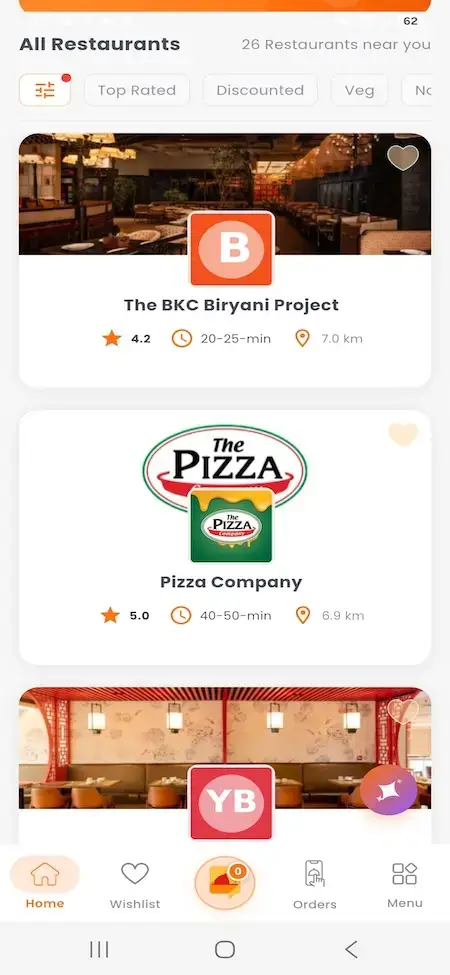
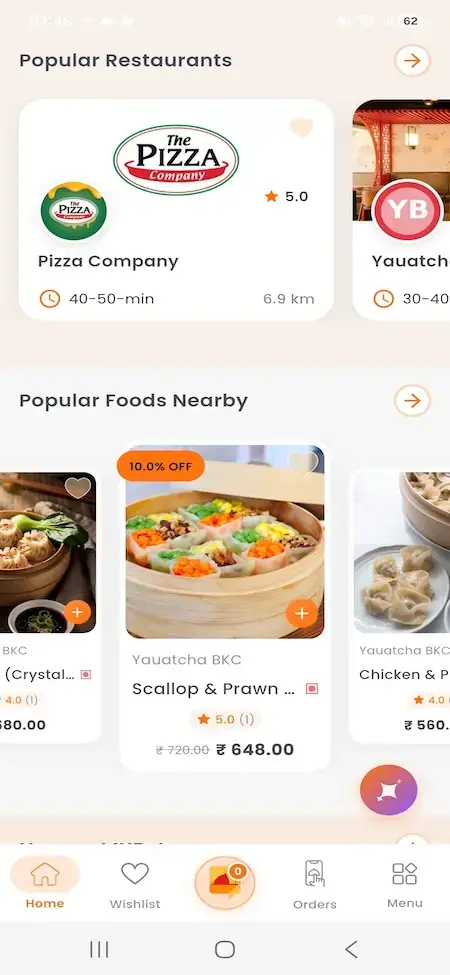
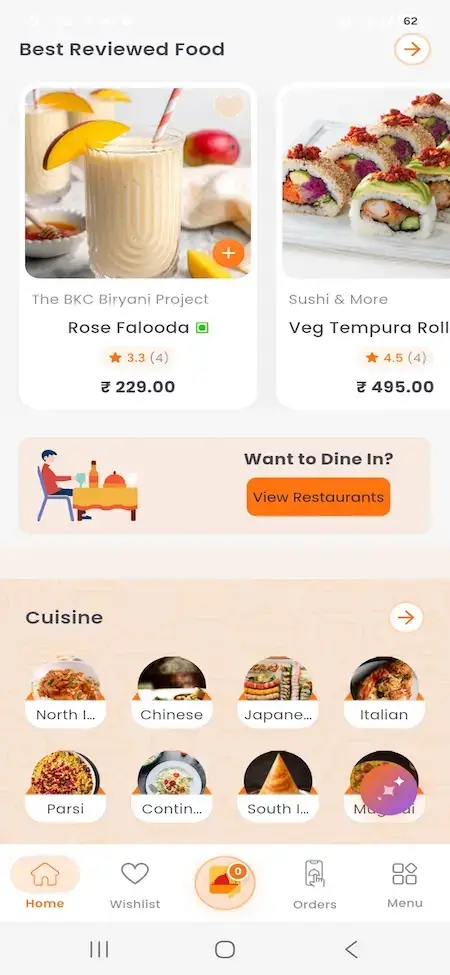
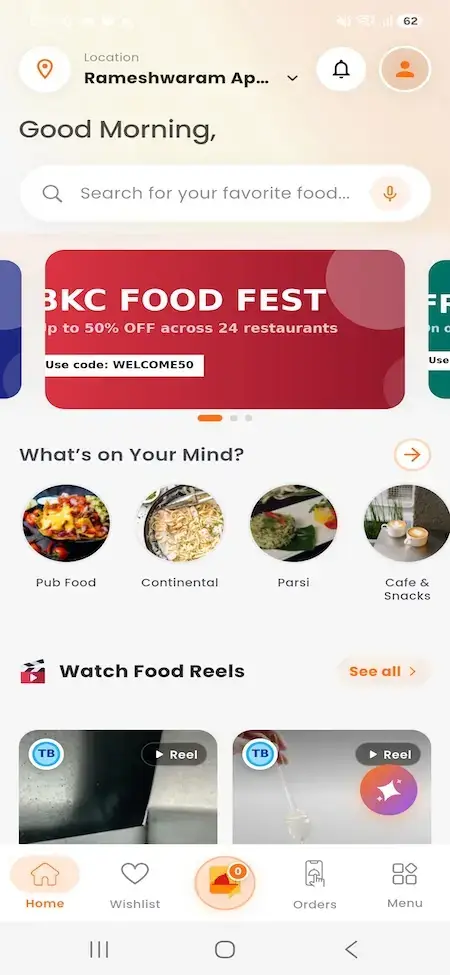
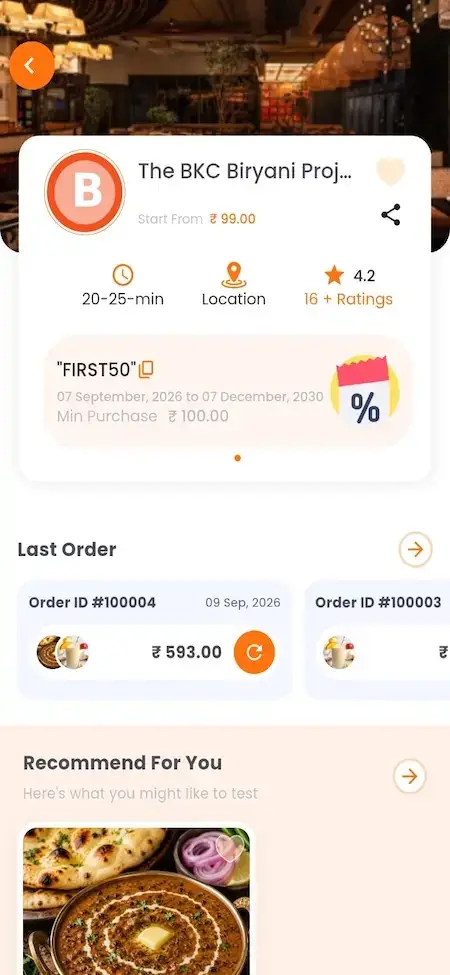
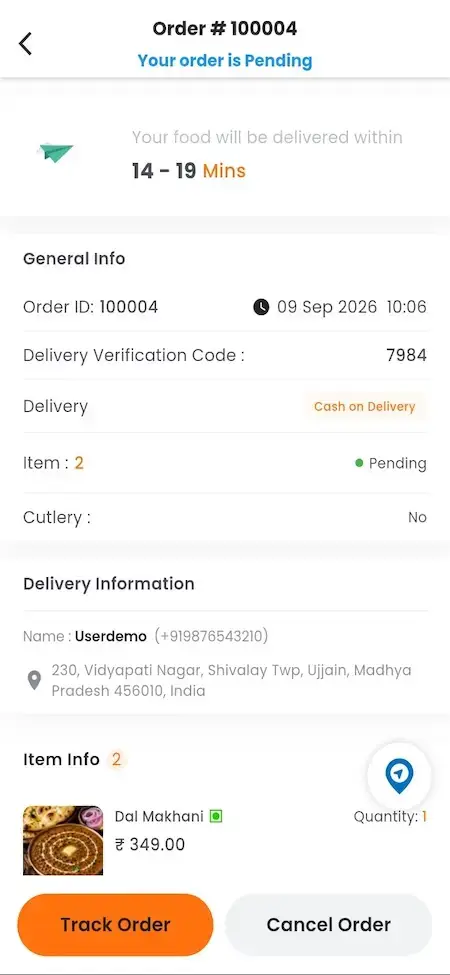
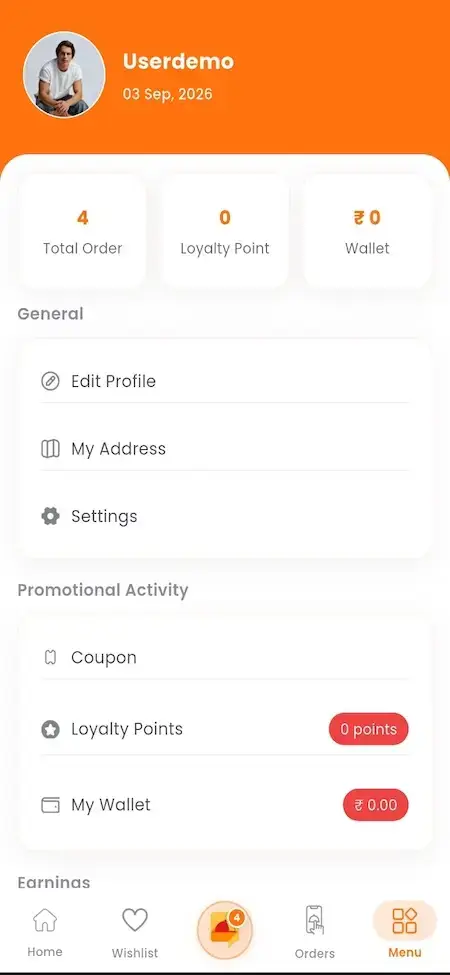
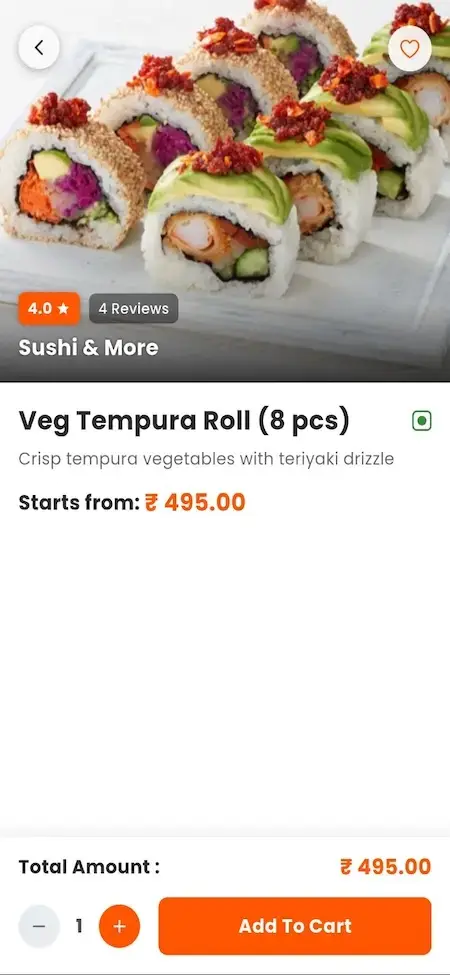
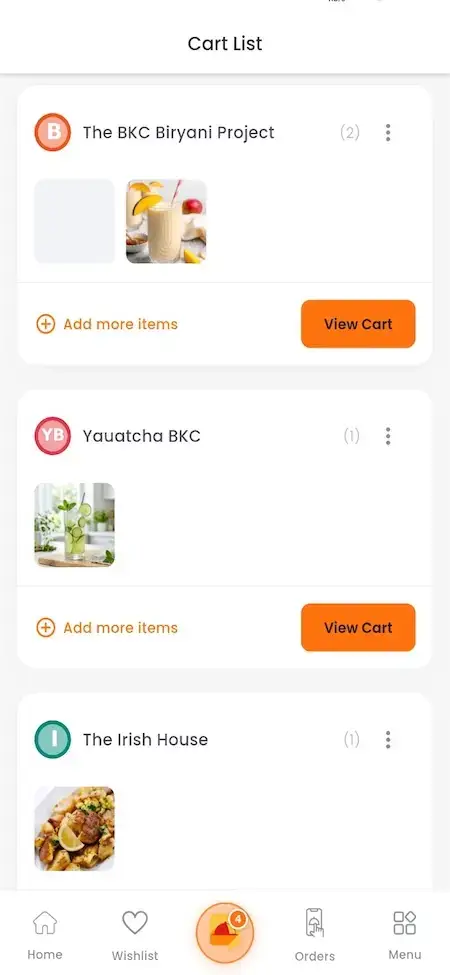
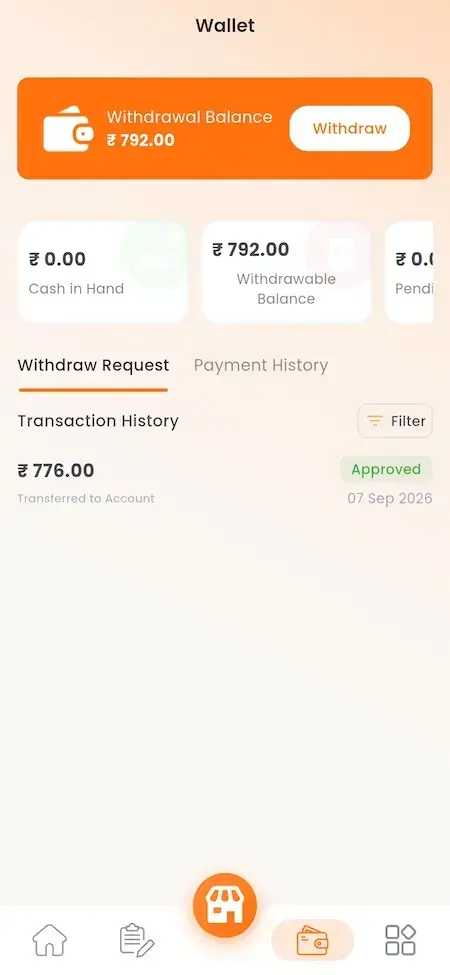
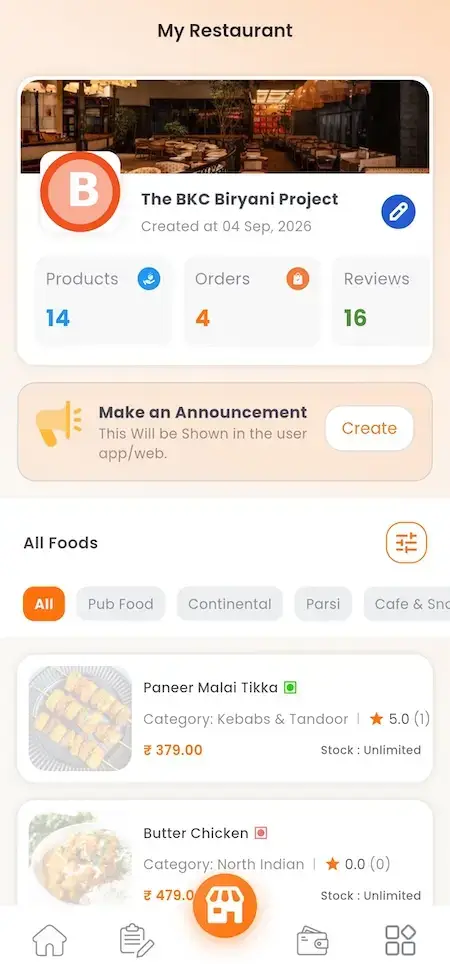
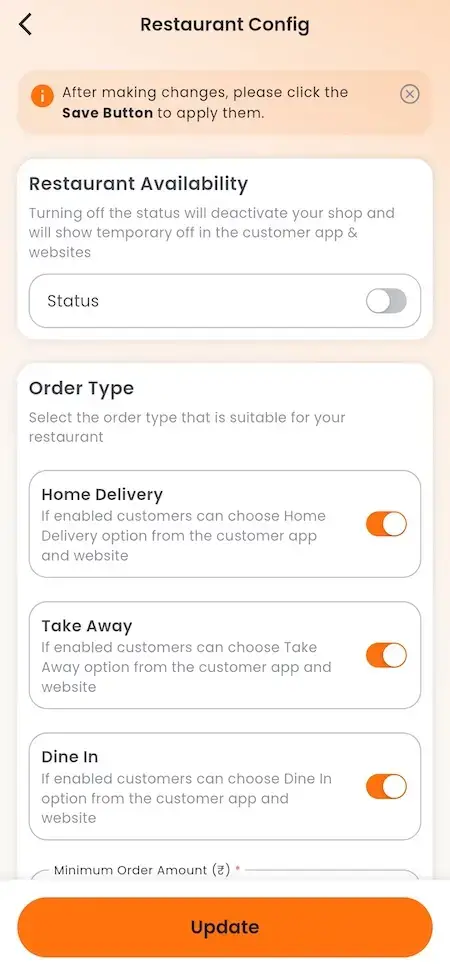
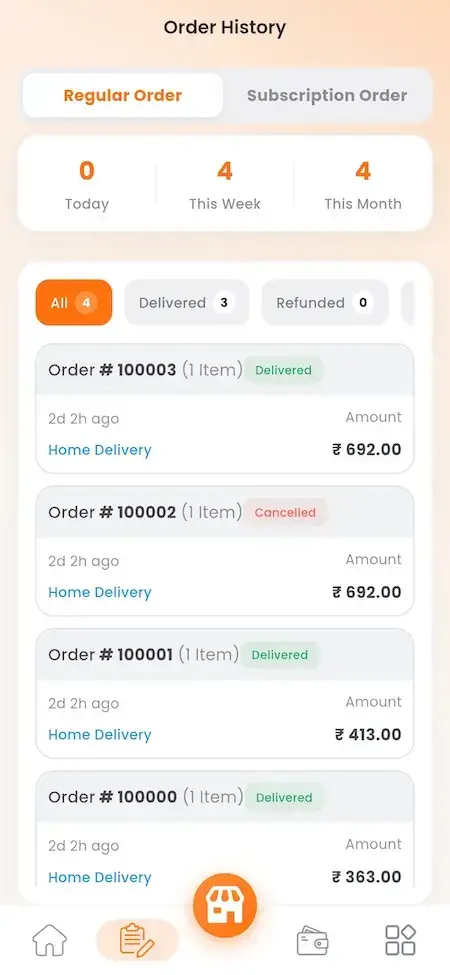
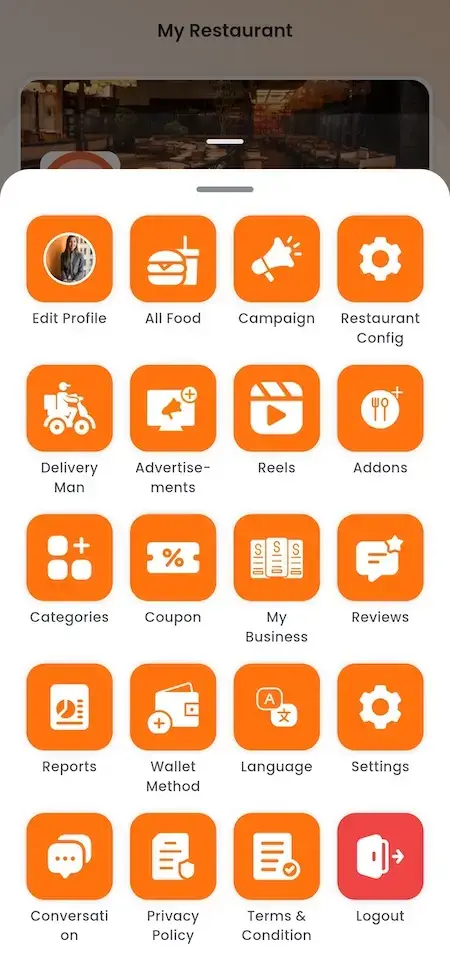
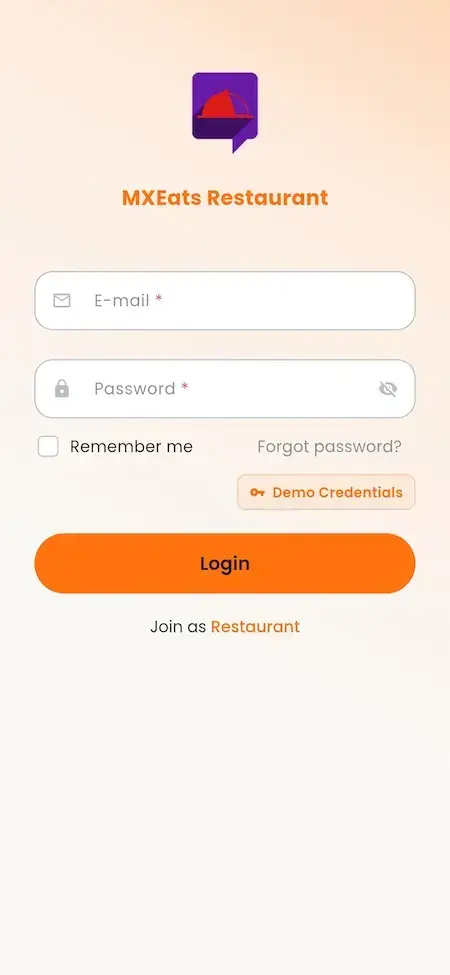
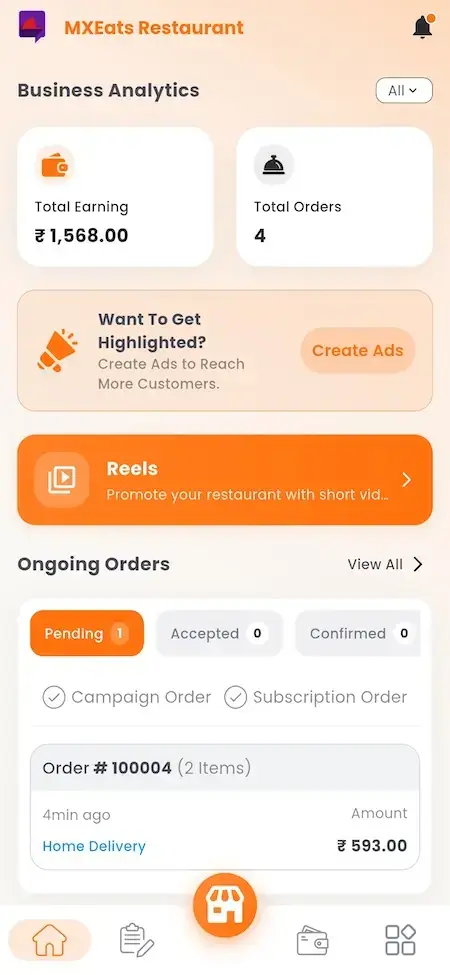
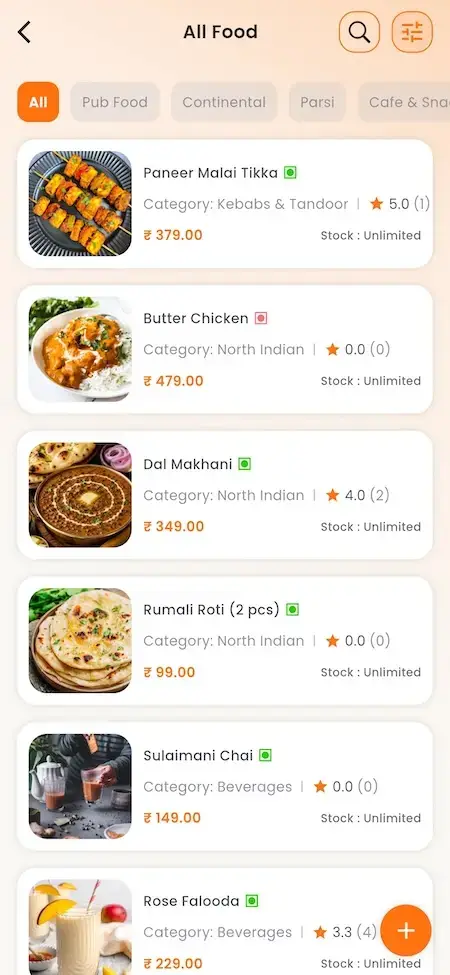
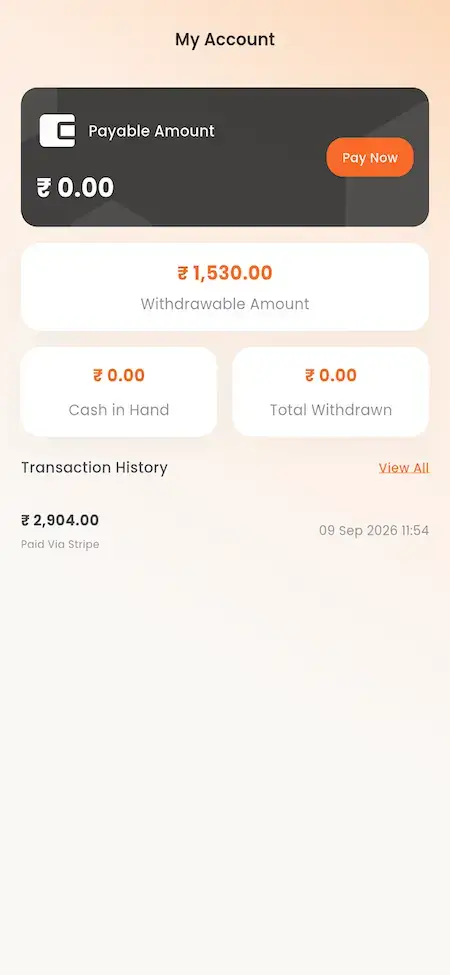
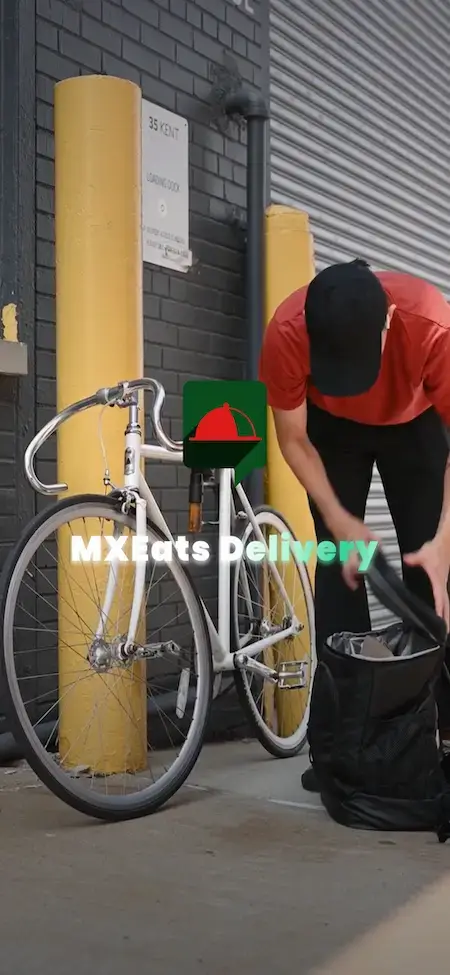
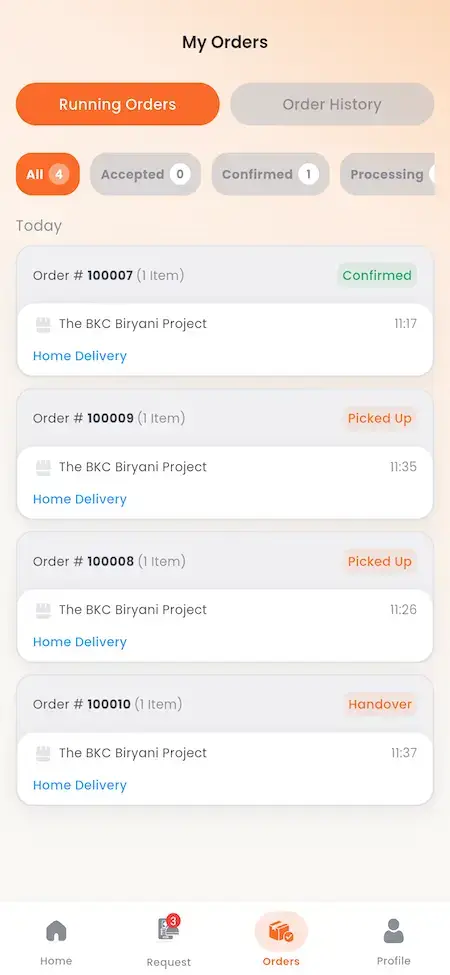
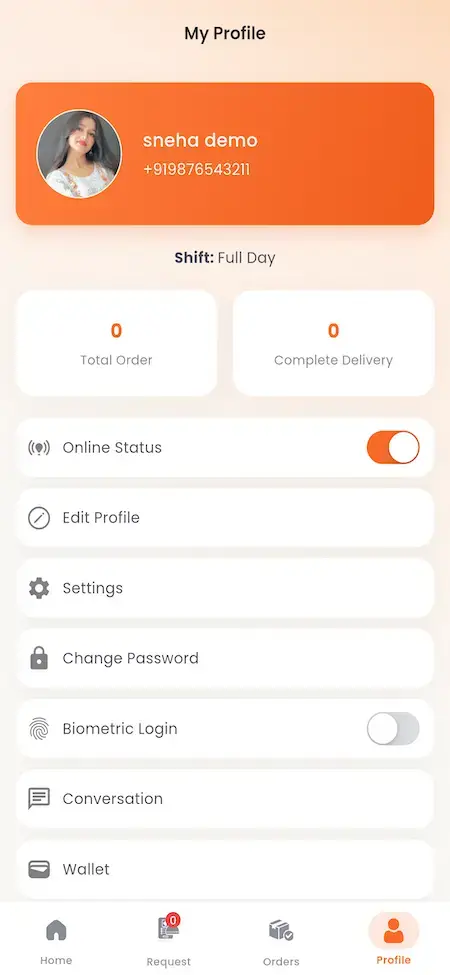
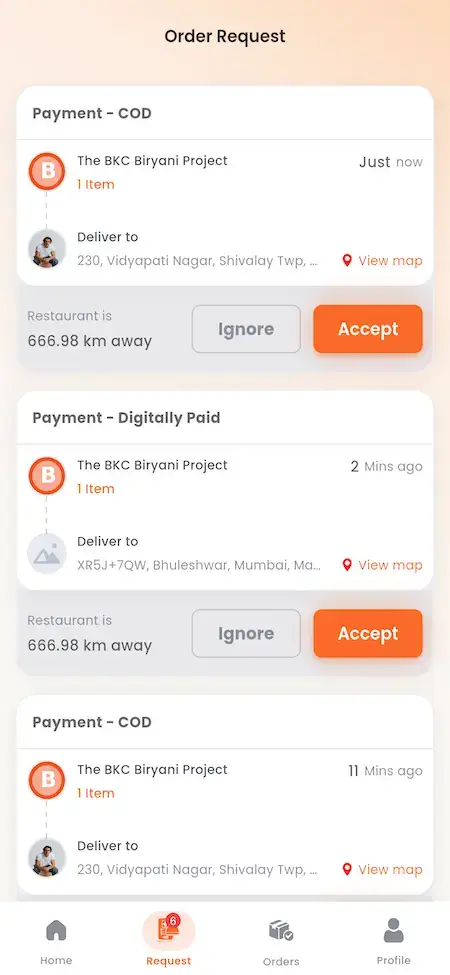
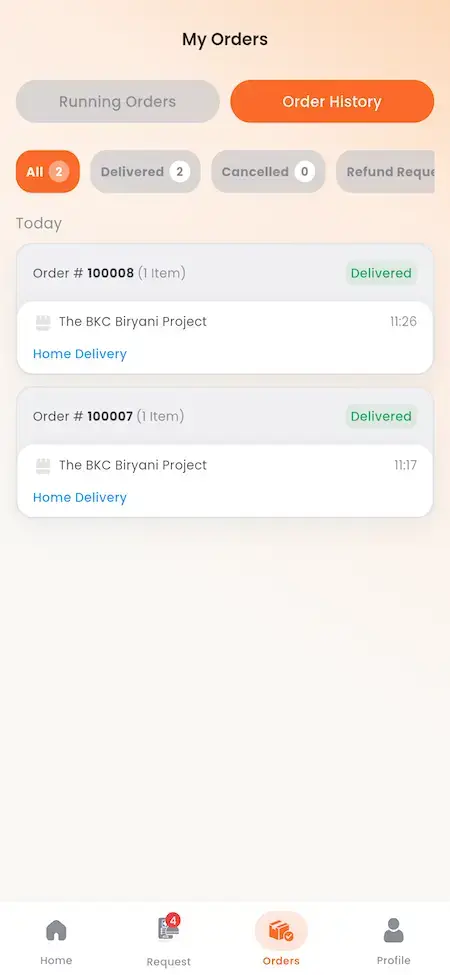
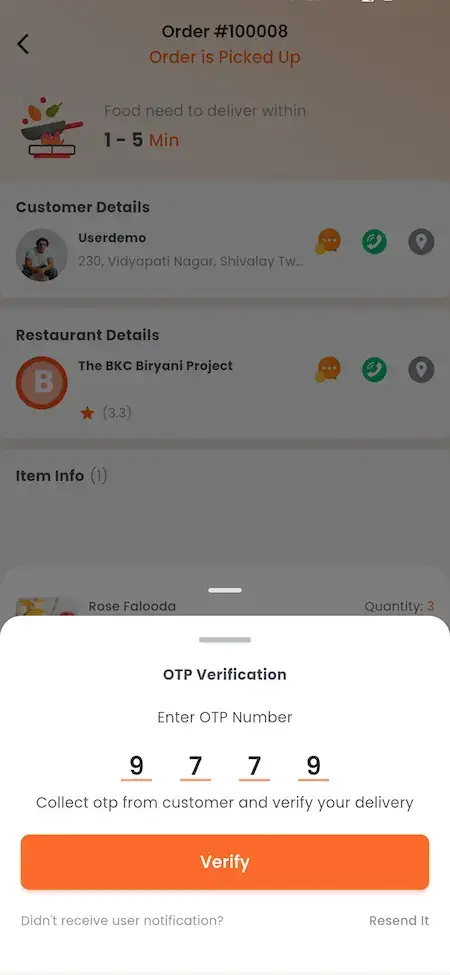
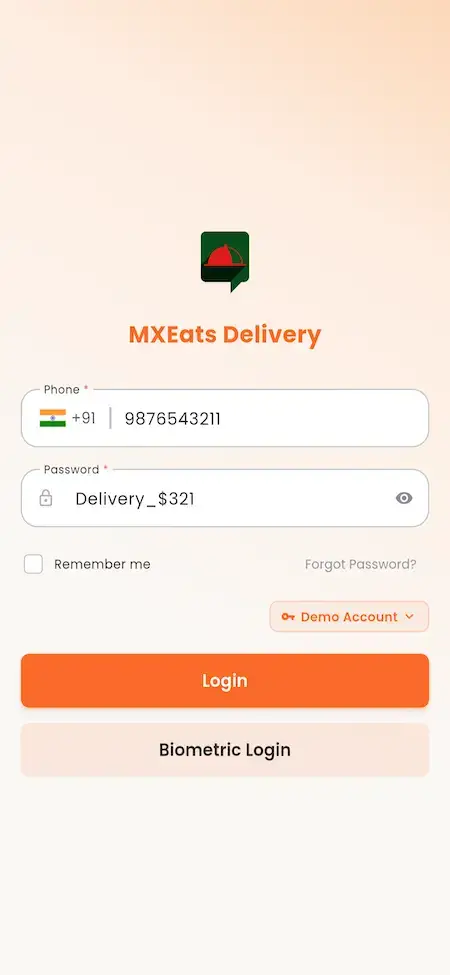
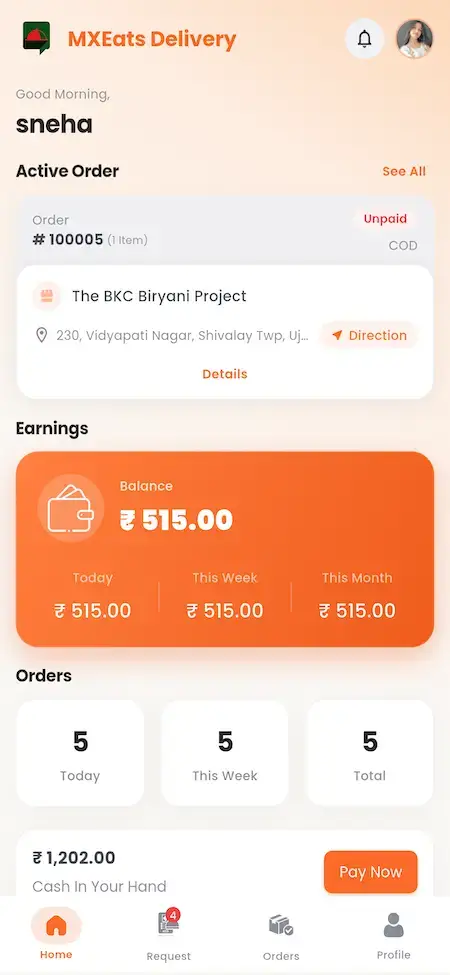
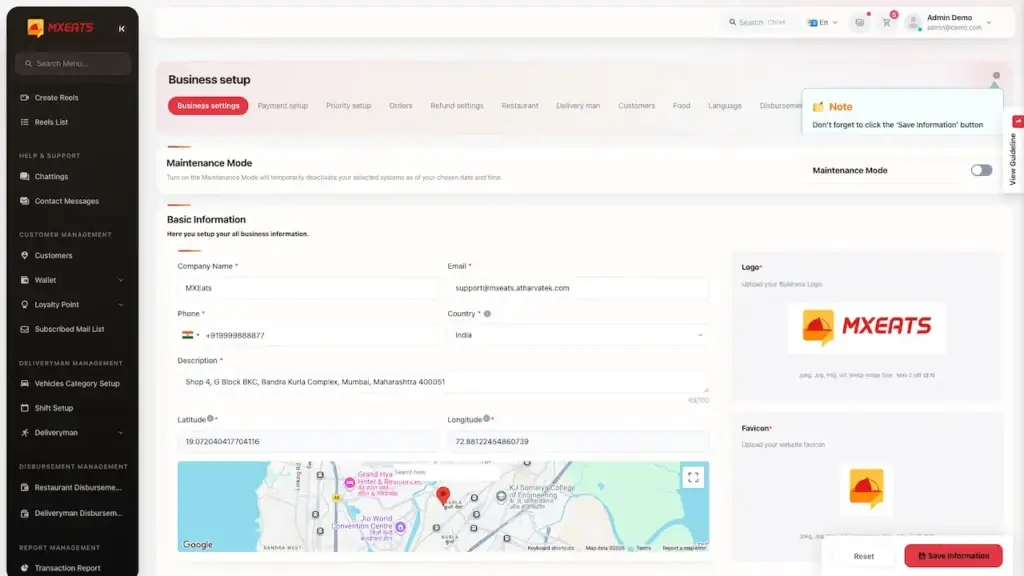
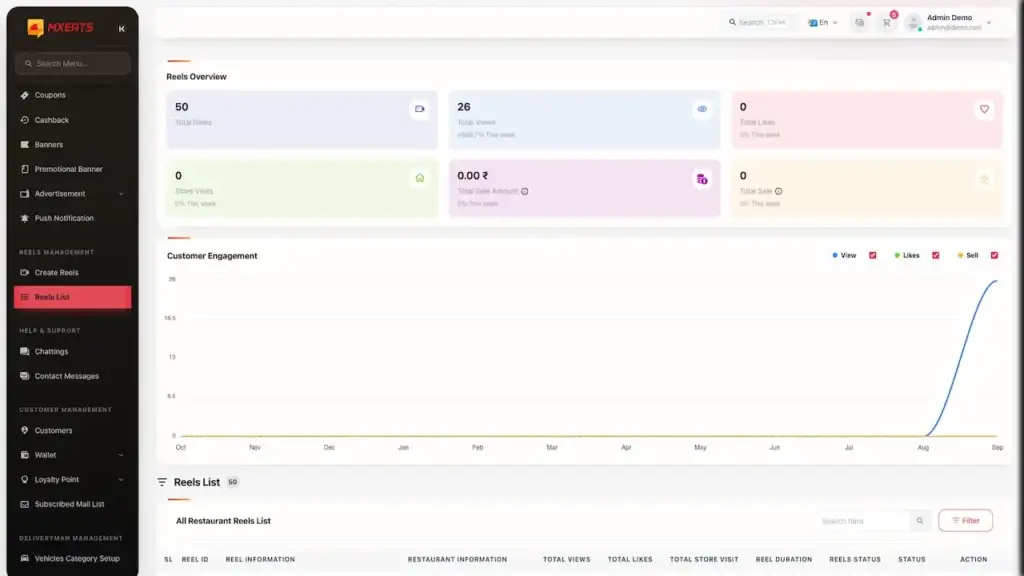
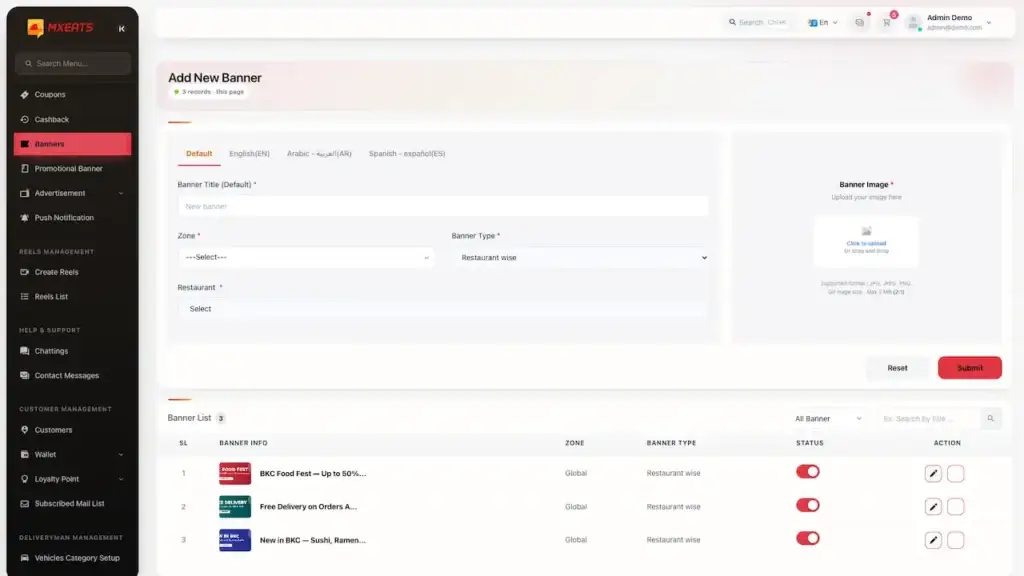
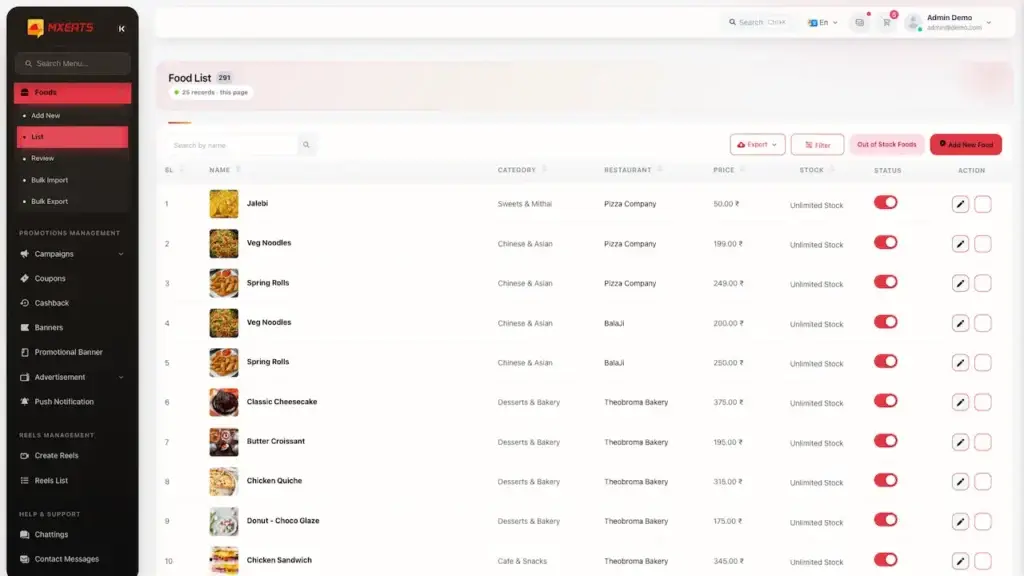
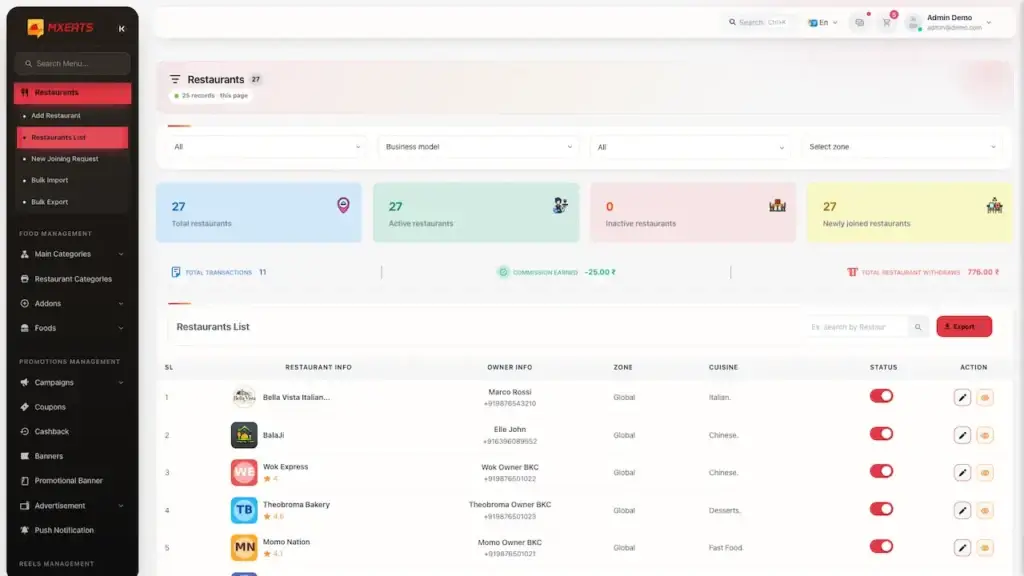
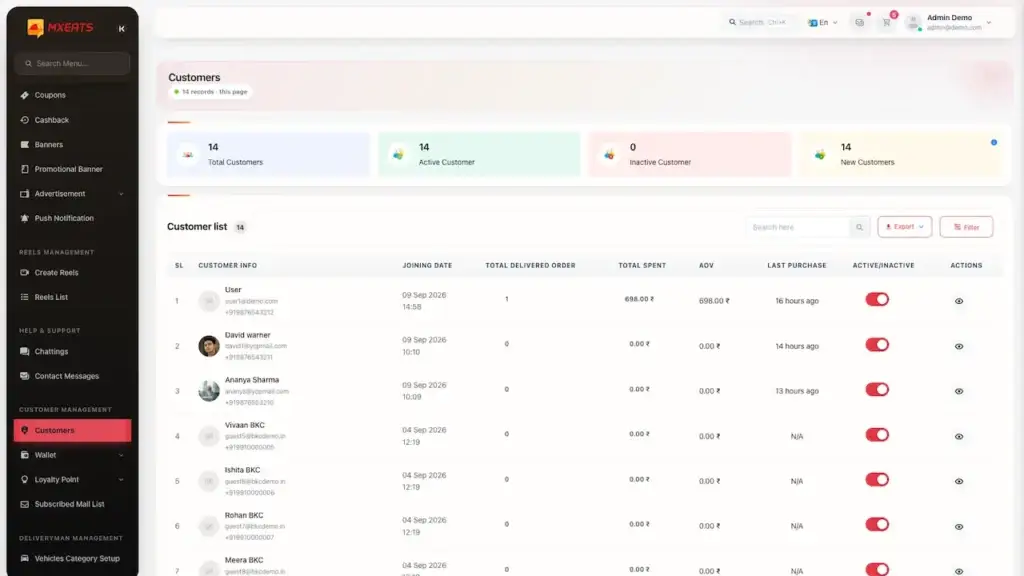
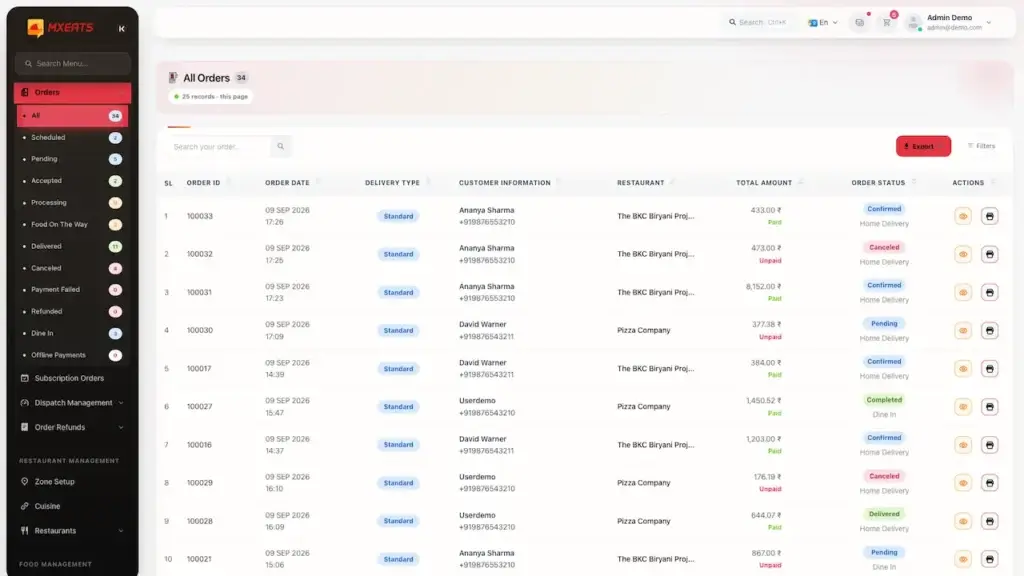
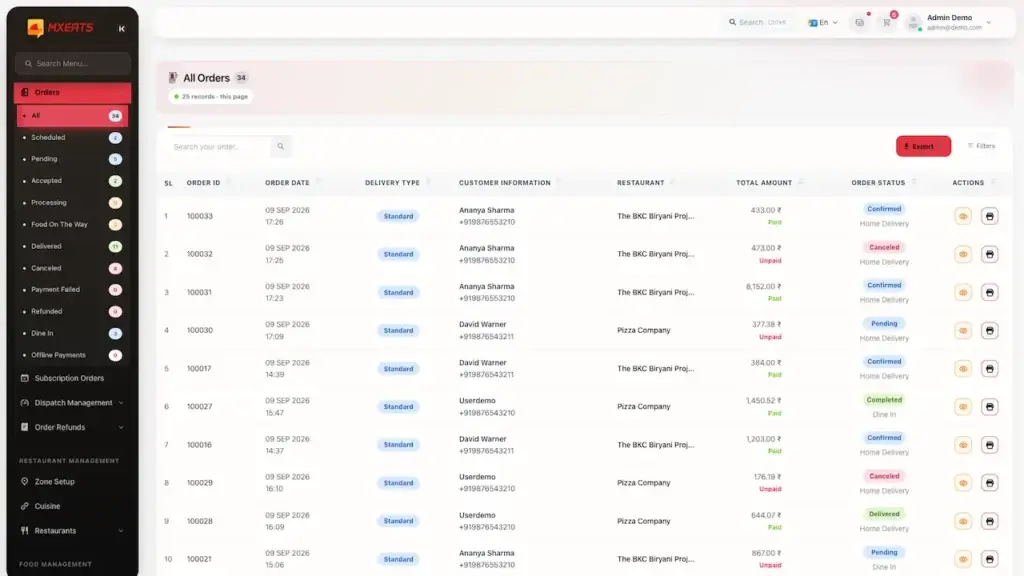
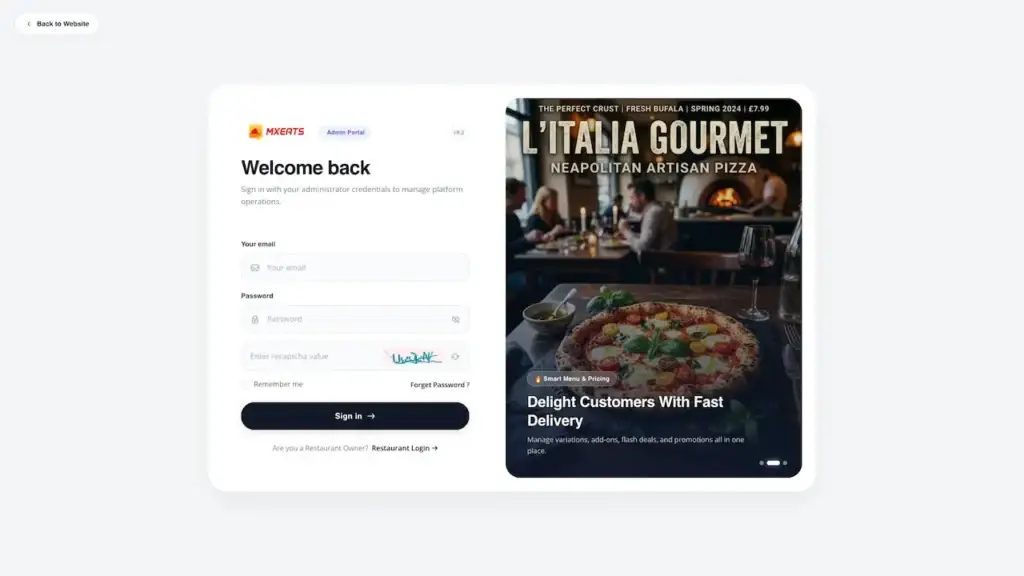
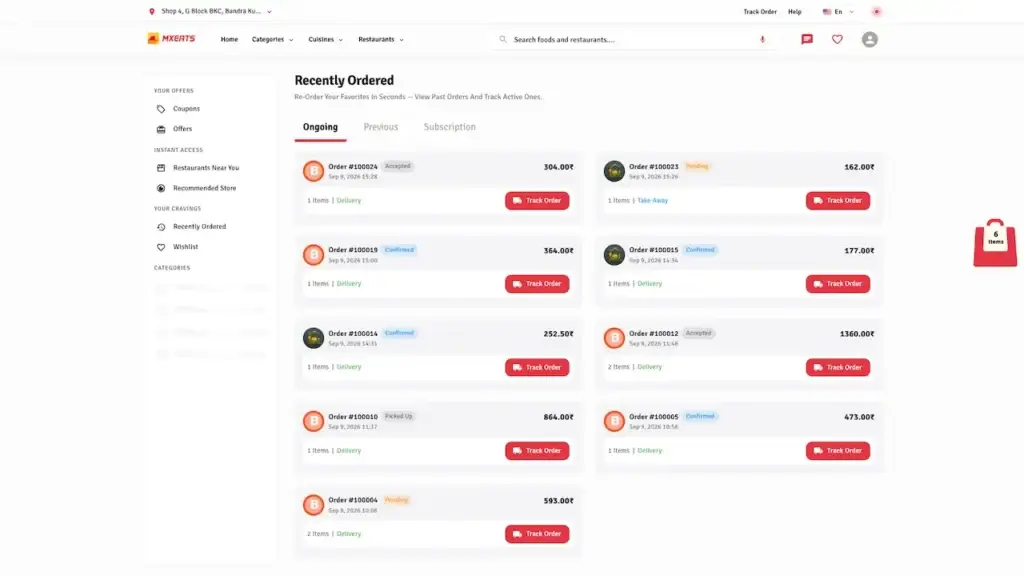
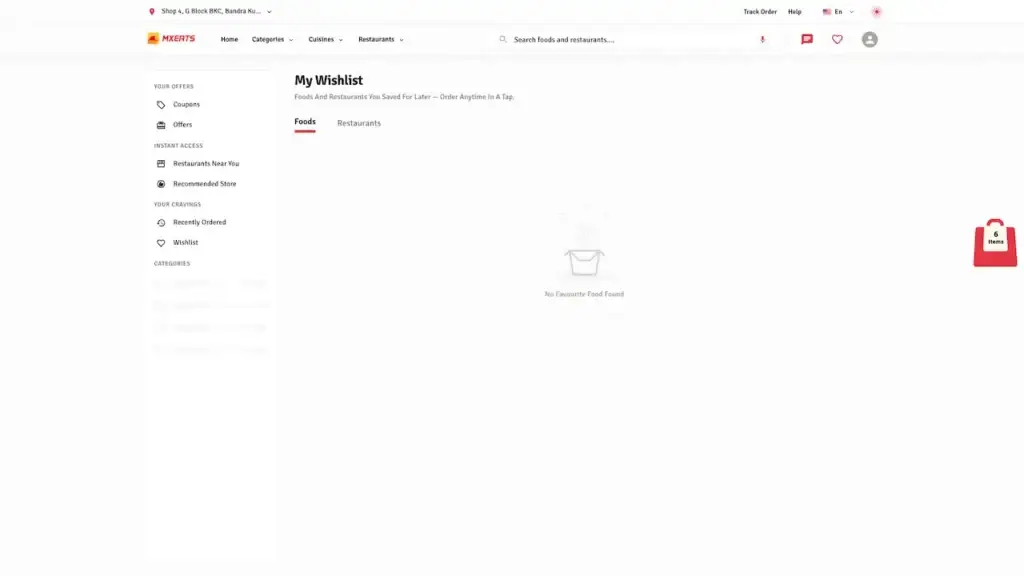
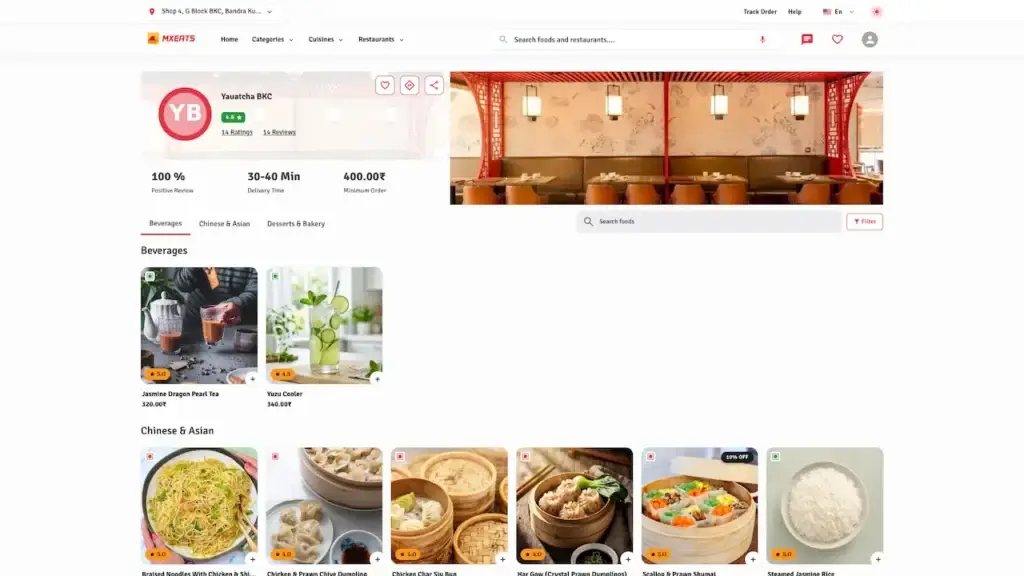
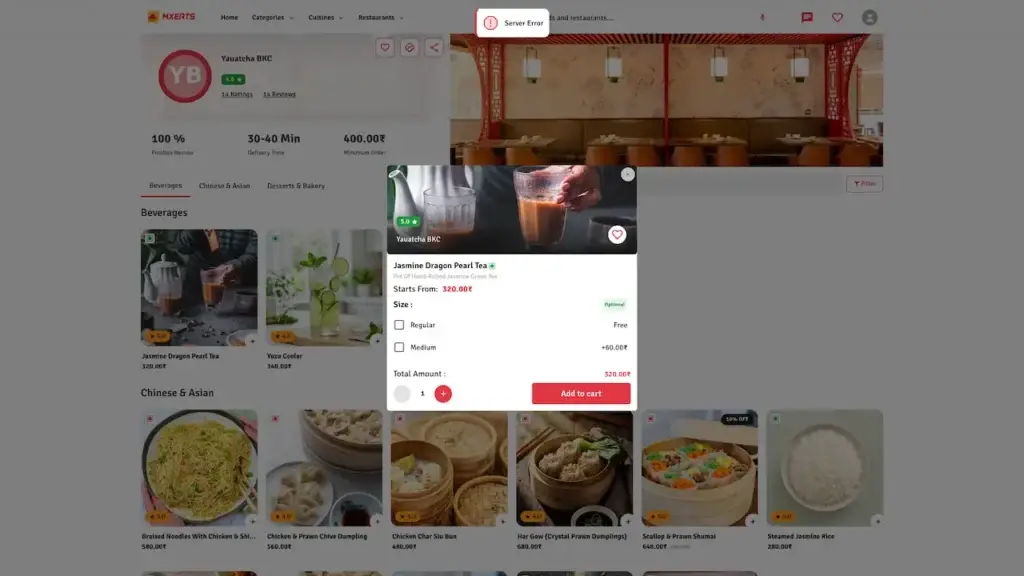
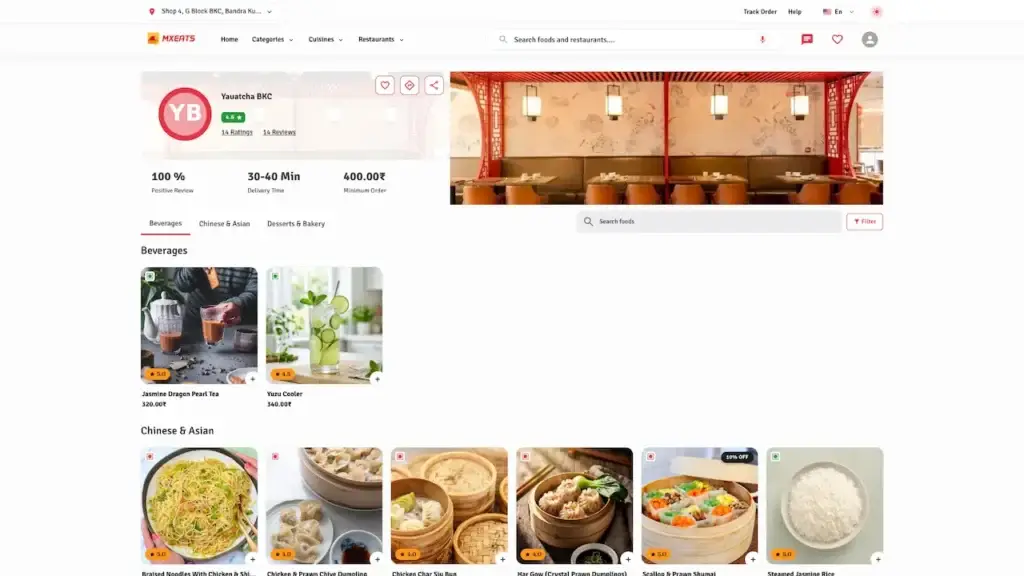
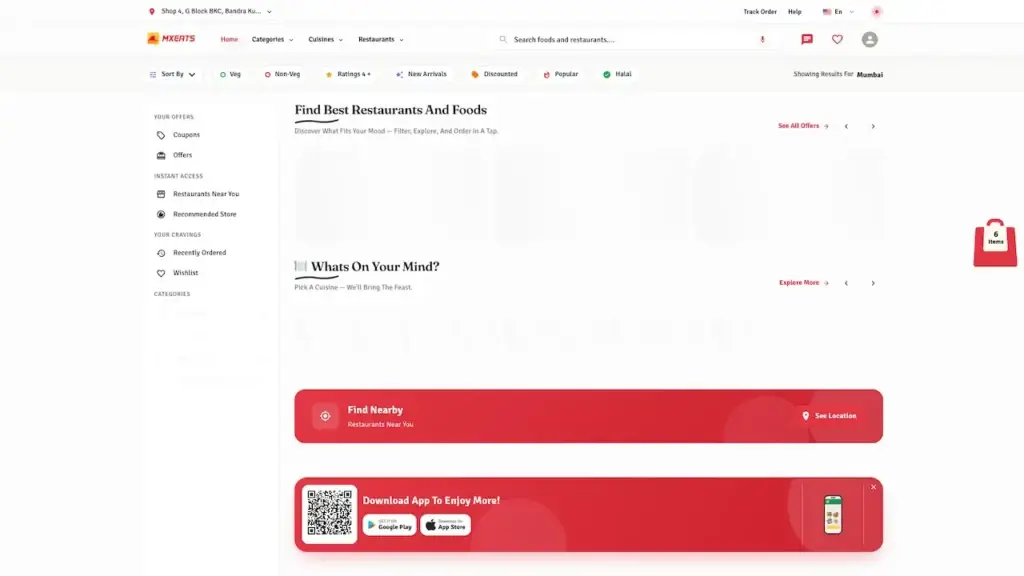
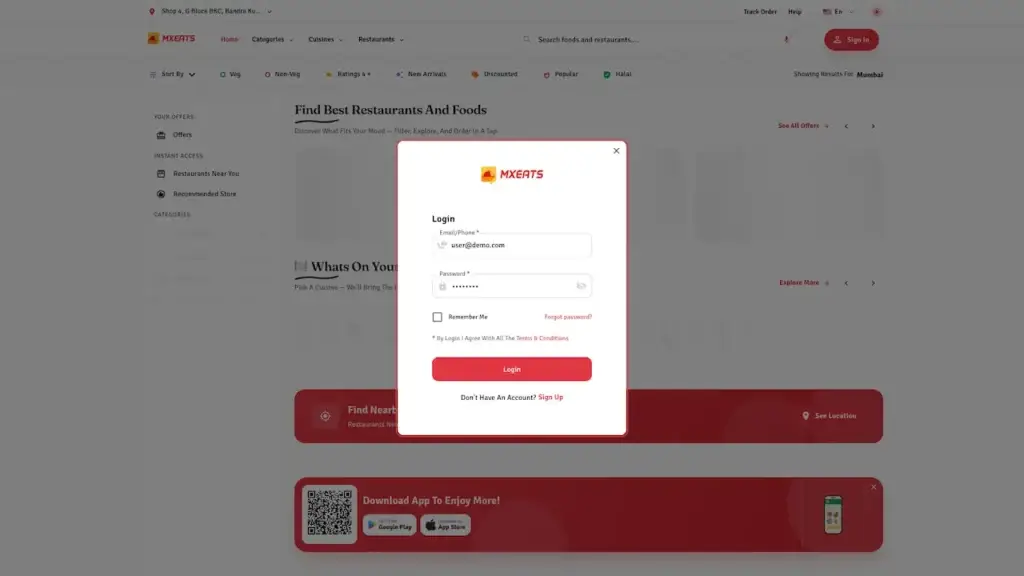
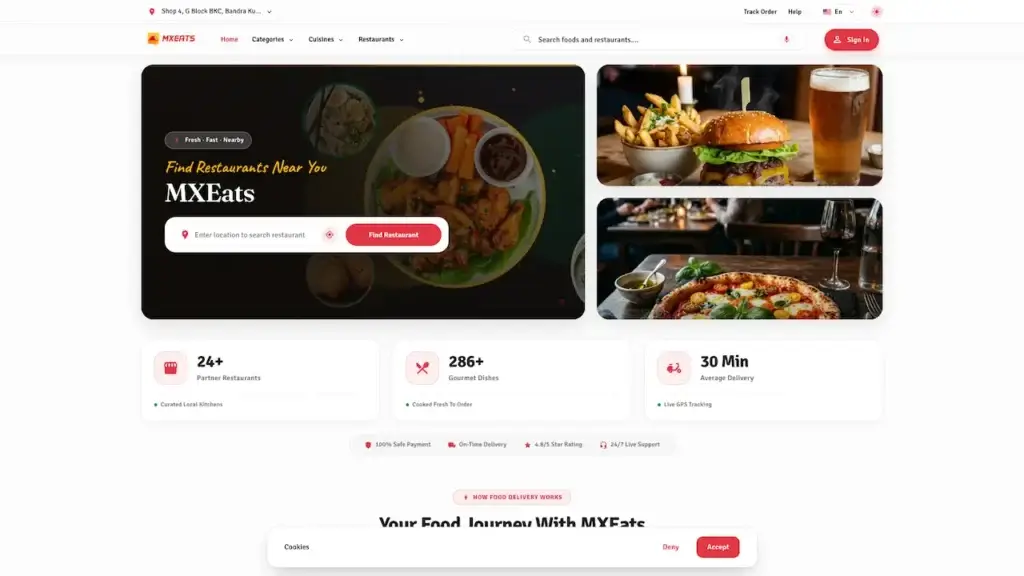
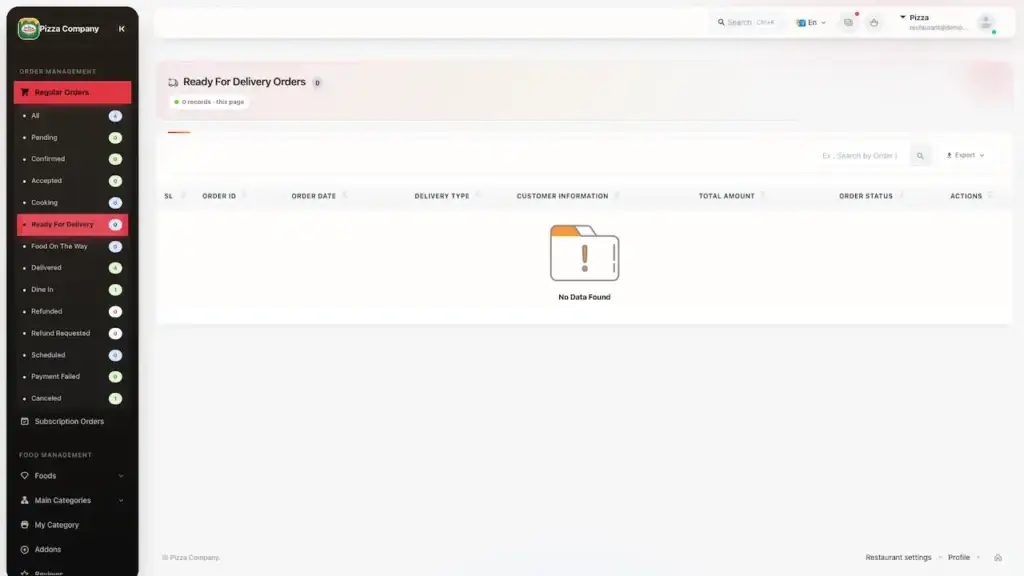
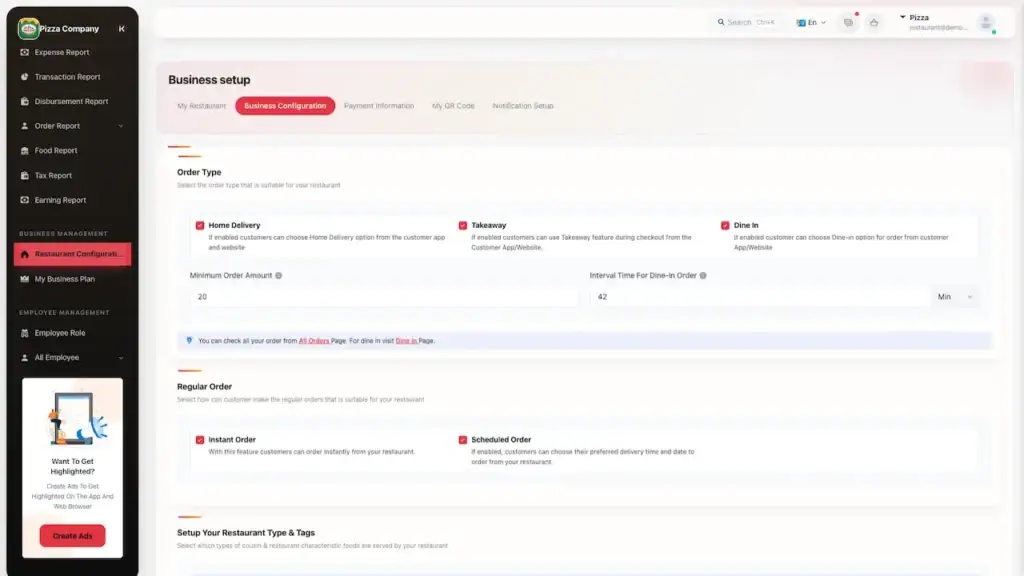
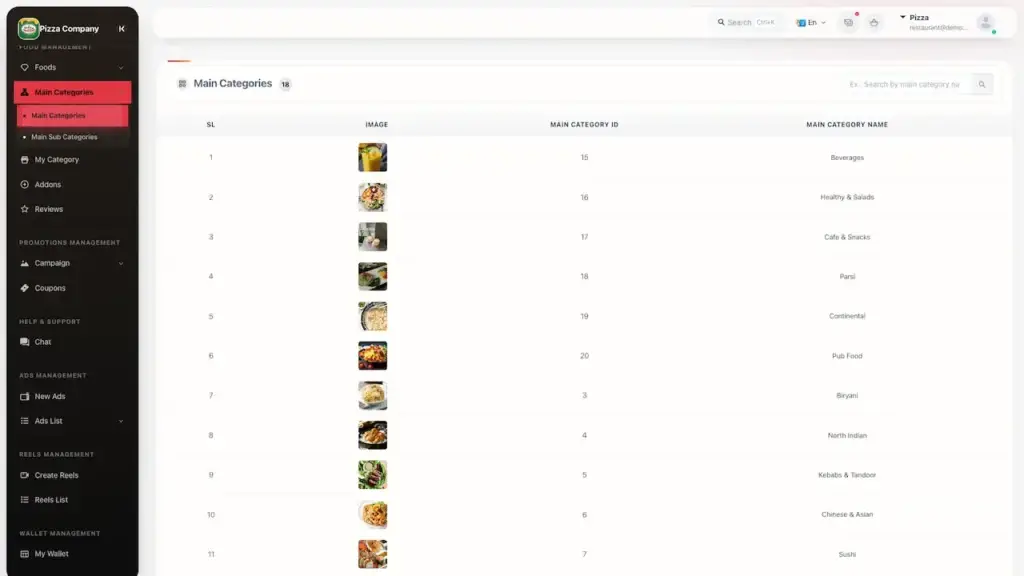
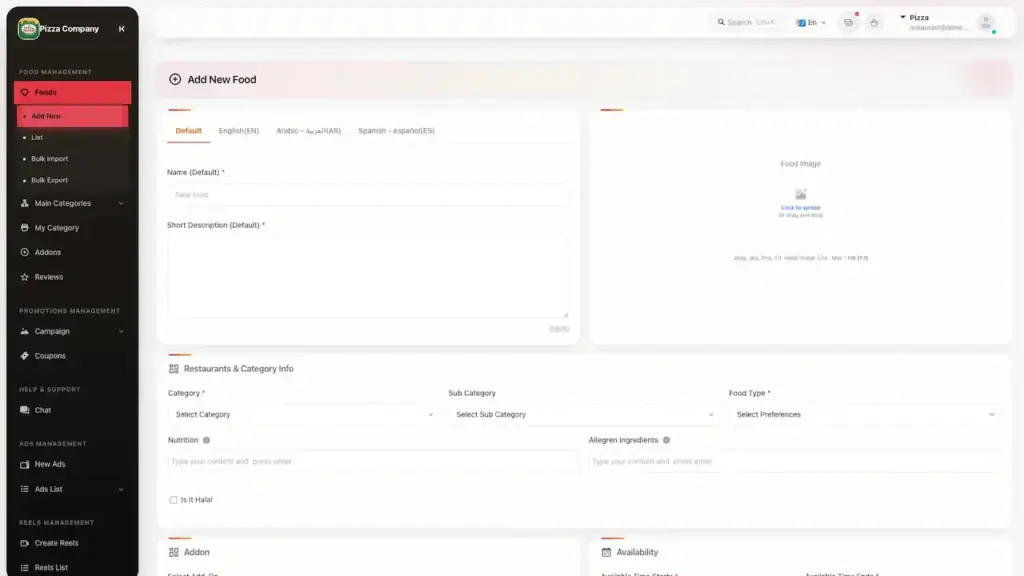
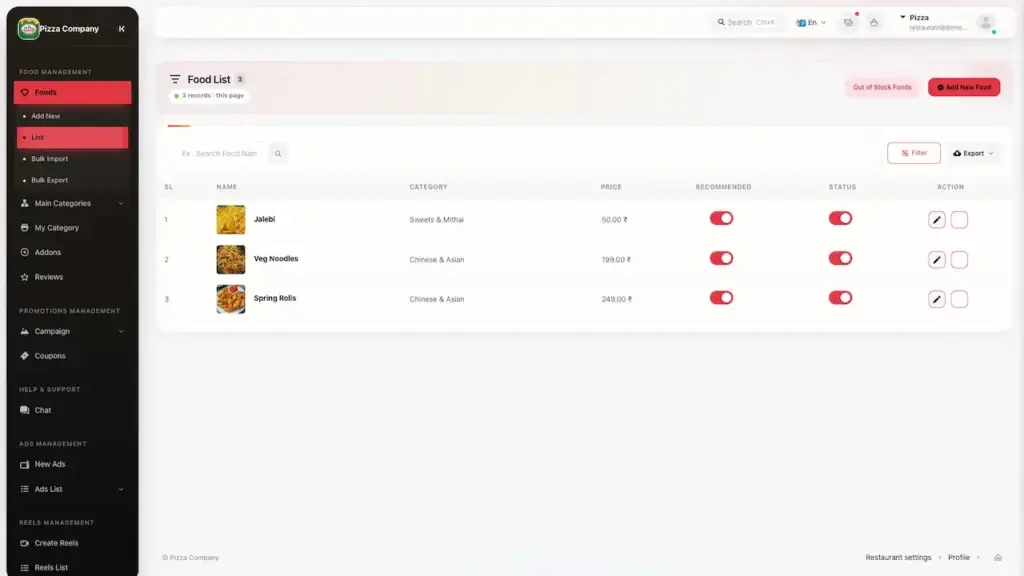
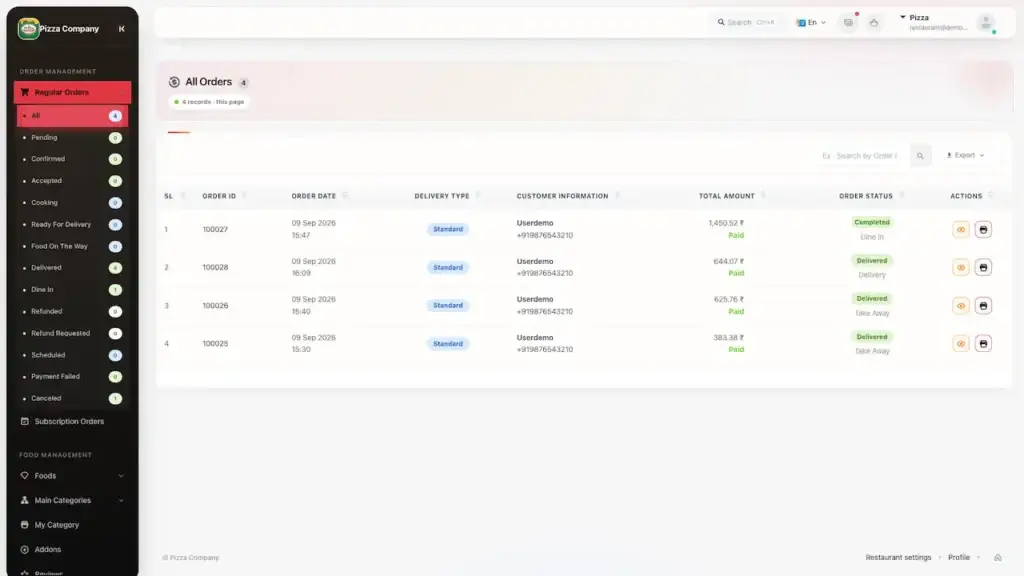
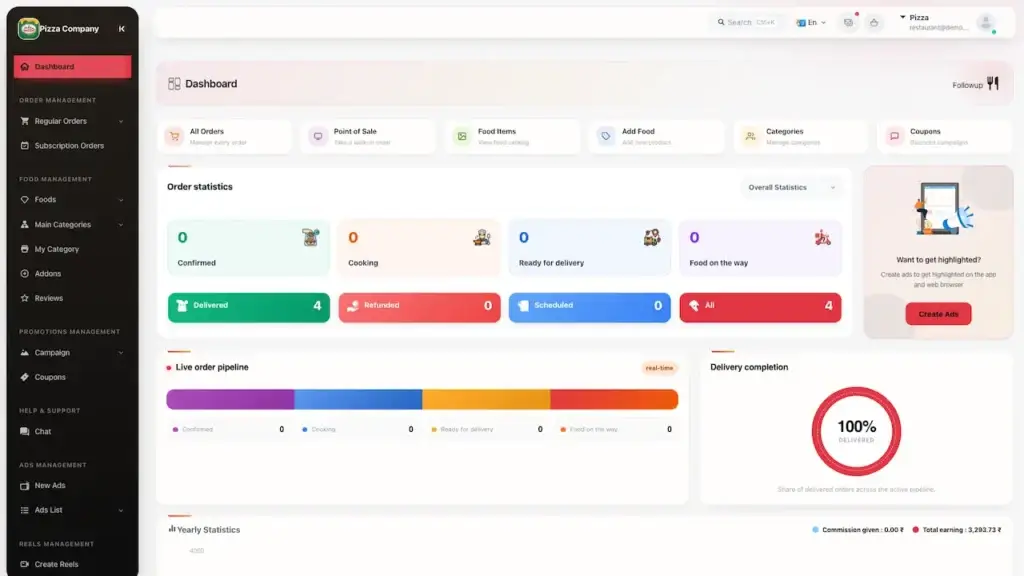
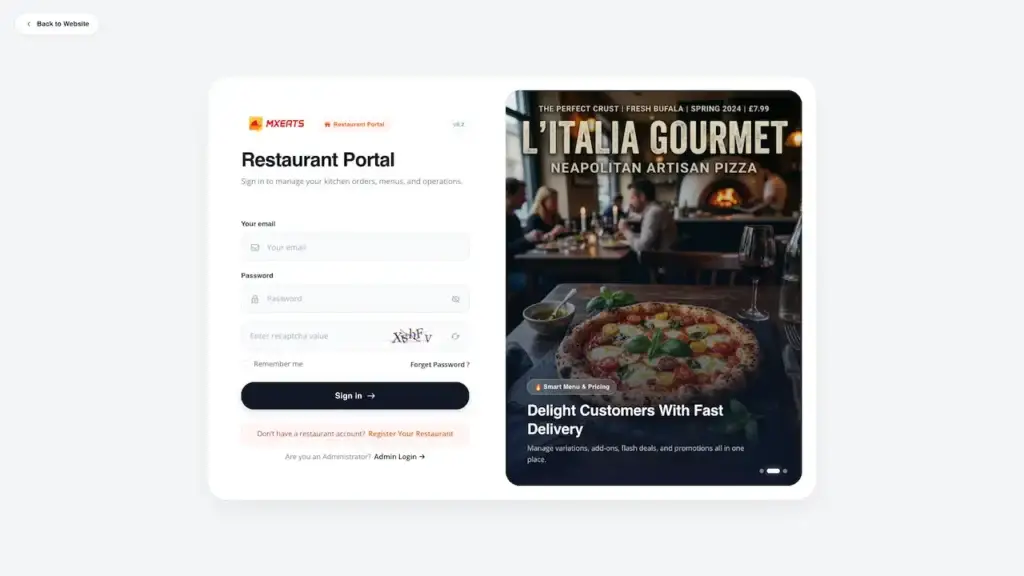
Follow a diner from a restaurant own ordering page through to a delivered order and the reward it earned. Follow a restaurant owner from accepting an order to changing a price themselves to the payout it lands in, without calling you once. Follow yourself from building a plan to billing it to reading what it earned. The restaurant panel is not a cut-down view of your console: it is its own application at 503 Dart files across 29 modules with its own permissions, which is what lets an owner run their shop without you standing behind them, and it is the surface that decides whether a partner on a monthly plan renews. Every one of these is a real, separate application rather than the same screens reskinned four times, and all of them are in the live demo right now.
Client Voices
ChowNow Clone Client Reviews - Real Platforms, Real Results
Operators who launched their own ordering and delivery platforms, in their own markets, on their own infrastructure. These are real engagements from the Miracuves client list rather than composed quotes.
A Real Engagement
Flyereats - A Multi-Vendor Food Ordering Platform We Delivered
A real client build rather than a modelled scenario. Flyereats came to us with a platform the business had outgrown, and the engagement replaced it without a rebuild pause. The figures below are what the engagement delivered.
Flyereats
Multi-Vendor Food Ordering Platform
A multi-vendor food ordering platform built to Flyereats specification after a free feasibility review.
- Order confirmation lagging behind what customers expected to see
- Vendors onboarded and managed by hand as the platform outgrew itself
- Customers with no way to see where their order actually was
- Replace a platform the business had outgrown, without a rebuild pause
- Put vendor management on rails instead of on somebody desk
- Give customers order visibility from confirmation through to arrival
- Three applications shipped, each with its own permissions and release path
- Six integrations, each isolated so one failure cannot take the rest down
- Three environments: development, staging and production
- Seventeen platform modules reused unchanged, four decisions built for Flyereats
- Source code transferred in full to the client own account at handover
Every figure here is what the engagement delivered. Flyereats was a custom build rather than a template deployment.
The Basics
What Is a ChowNow Clone App?
A ChowNow clone app is ordering software a restaurant uses under its own name, sold to that restaurant by an operator who charges for the software rather than for each transaction. The diner orders from a site and an app that carry the restaurant brand. The operator runs the platform, signs the restaurants and bills them on a plan.
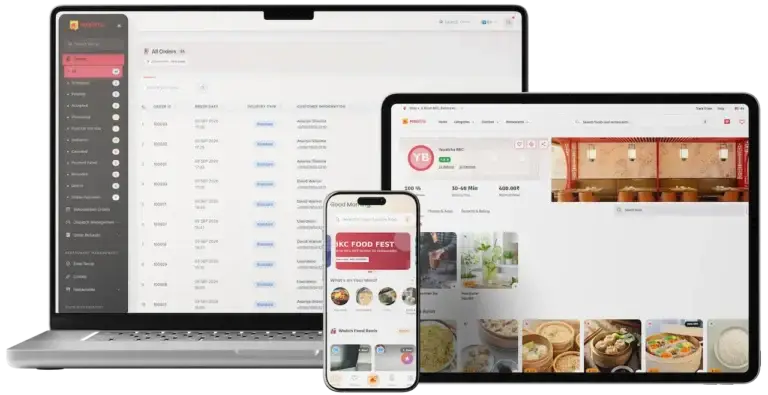
Built for Android, iOS & Web
One platform covers a diner app, a restaurant app, a delivery partner app, a search-indexable ordering website and your operator console, so every side of the business runs on the same system from launch day.
The Plan Is the Product
Subscription packages are objects you build: name them, price them, decide what each one unlocks, and let billing run on a schedule. A restaurant on a plan is a predictable line of revenue rather than a share of somebody else volume.
Commission Stays Available
Some restaurants genuinely prefer a percentage, especially new ones with no volume to justify a fixed fee. Both models run at once, with per-restaurant overrides, and a guard refuses to disable both so store economics can never become undefined.
Restaurant-Owned Ordering
Where the Money Actually Goes
That is a different business from a public marketplace, and the difference is where the customer relationship sits. On a marketplace the platform owns the diner and rents access back to the restaurant, which is why commission rises with a restaurant success. Here the restaurant is the front of house, and the software is a cost it can forecast.
-
Branded ordering site and apps per restaurant
-
Monthly plans, per-order commission, or both
-
Built-in till for counter and phone orders
-
Rewards, coupons and repeat weekly orders
-
Full source code, no revenue share back to us
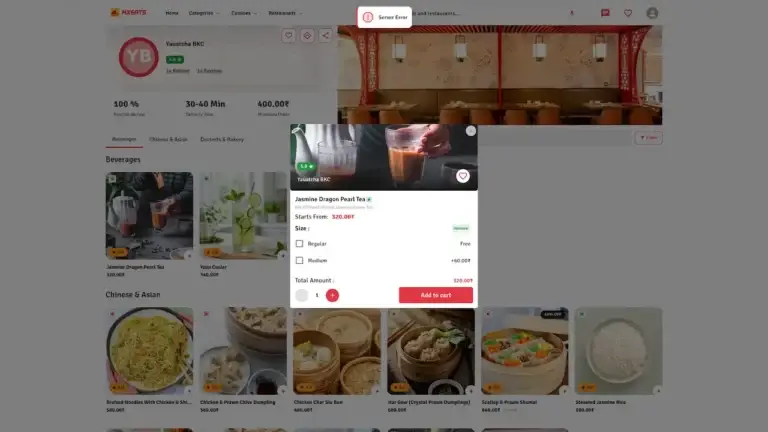
The same build does both, because the economics are a setting rather than an architecture. Commission per order, a monthly package, or the two running side by side across different restaurants, all switchable from the console without a developer and without a fork.
Everything Included
ChowNow Clone Features - Plans, Branded Ordering, POS & Payouts
Every feature listed below is already built and working in the live demo, so what you see is what you launch with. The emphasis here is the restaurant side, because on a commission-free platform that is the side deciding whether the partners you sign stay signed.
Branded Ordering Site
Each restaurant gets an ordering surface that carries its own name and look, so the diner experience reads as the restaurant rather than as a marketplace it happens to sit inside.
- Ordering site carrying the restaurant brand
- Sizes, crusts, toppings and extras
- Allergen notes and item scheduling
- Order now, schedule a slot, or repeat weekly
Menu, Variations & Add-Ons
Sizes, crusts, toppings, extras and allergen notes modelled properly, edited by the restaurant itself, with availability and scheduling per item.
- Menus edited by the restaurant, not by you
- Own hours, holidays and closure notices
- Item availability toggled in seconds
- Category structure the owner controls
Subscription Plans You Build
Create monthly packages, price them, and decide what each one unlocks. Billing runs on a schedule and the statements explain themselves.
- Build subscription packages and price them
- Decide what each plan unlocks
- Recurring billing on a schedule
- Statements that explain what was charged
Commission With Overrides
Take a percentage where it suits, set platform-wide or negotiated per restaurant, with the rate frozen onto each transaction so history stays true.
- Commission available with per-store overrides
- Both models running side by side
- A guard that refuses to disable both
- Rates frozen onto each transaction
Built-In Till for Counter Orders
Walk-in and phone orders captured in the same system, so nothing the restaurant sells happens outside your reporting.
- Built-in till for walk-in and phone orders
- Printed tickets for the kitchen
- Counter sales in the same reports
- Cash drawer reconciliation
Rewards & Loyalty
Points, rewards and wallet balances at the diner level, which is the machinery that makes a second order from the same person likely rather than lucky.
- Rewards and loyalty points for diners
- Wallet top-ups and instant refunds
- Coupons funded by you or the restaurant
- The funding split recorded on the statement
Coupons & Campaigns
Discounts funded by you or by the restaurant, with the split recorded, so the payout statement never becomes an argument.
- 13 payment gateways included
- Cash on delivery with limits you set
- Wallet credit and offline methods
- Split tender reconciled on the order
Scheduled & Repeat Orders
Order now, pick a slot for later, or set a standing weekly order. Repeat business appears in the reports rather than being invisible.
- Your riders, their staff, or collection only
- Assignment, navigation and proof of delivery
- Cash reconciled against a per-partner ceiling
- Delivery is a choice per restaurant
Optional Delivery
Run your own riders, let the restaurant deliver with its own staff, or offer collection only. Delivery is a choice per restaurant rather than an assumption.
- Automatic disbursement on your schedule
- Plan charges and commission both settled
- Statements showing what was charged and when
- Exports that feed your accounting
Payouts & Statements
Automatic disbursement with statements showing what was charged and when, exportable, and computed from snapshot columns rather than current settings.
- One account, many outlets, one brand
- Per-outlet menus, hours and availability
- Per-outlet reporting for head office
- Estate-wide view across the group
Multi-Outlet Groups
A brand with several outlets runs under one account with per-outlet menus, hours and reporting, which is what a franchise or a cloud-kitchen group actually asks for.
- 33 routed pages built to be indexed
- Policies, registration funnels and tracking
- Restaurants found in search, not only linked to
- Home feed, offers and placement you control
Indexable Ordering Website
Thirty-three routed pages including policies, registration funnels and tracking, so a restaurant can be found in search rather than only reached through a link you sent.
- Roughly 120 settings keys across eleven tabs
- Staff roles scoped to what each person needs
- Onboarding recorded with operator and timestamp
- Reports reading snapshot columns, never live rates
Every message the platform sends, from order confirmations to plan renewal notices, is text you can edit yourself in any language you support, so the platform sounds like your brand rather than ours.
How Operators Earn
ChowNow Clone Revenue Models - Plans, Commission, Setup & Add-Ons
The commercial argument for a commission-free platform is not that nobody pays you. It is that what a restaurant pays is predictable, which changes who will sign and how long they stay. Every line below ships switched on and configurable.
Monthly Subscription Plans
The headline model. Charge a restaurant a flat monthly fee, build the packages yourself, and decide what each unlocks. Revenue you can forecast against a partner who can forecast their cost.
Commission Where It Fits
A percentage per order for the partners who prefer it, usually the new ones with no volume yet. Platform-wide or negotiated per restaurant, running alongside plans rather than instead of them.
Setup and Onboarding Fees
A one-off charge for bringing a restaurant on: menu build, branding of its ordering surface, and training. Charged outside the recurring line and reported separately.
Delivery Fee Margin
Where you run riders, the difference between what the diner pays for delivery and what the run costs you is yours to set per zone rather than dictated by anybody upstream.
Paid Placement and Campaigns
Featured positions and promoted campaigns on the surfaces you control, sold to the restaurants that want more visibility, with the rate set by you.
Diner Membership
A customer-side membership carrying free or reduced delivery and member pricing, which adds a demand-side recurring line rather than betting everything on the supply side.
The switch itself is stored as a setting with a guard that refuses to disable both models at once, so a restaurant economics can never end up undefined. That guard is the difference between a flexible platform and a broken one.
Run It Without a Dev Team
ChowNow Clone Admin Console - Plans, Billing, Onboarding & Settings
The console is where a commission-free platform is really run, because the work is signing restaurants, putting them on the right package, and making sure billing and payouts agree with what everybody was promised. All of it is admin data rather than code.
What You Actually Operate
The Settings Surface
Roughly 120 named keys across eleven tabs. Business rules, order behaviour, payment methods, mail content and third-party credentials are all operator data rather than a deployment.
Plan Builder and Billing
Create packages, set prices and billing cycles, decide what each unlocks, and let recurring billing run on a schedule with overlap locks so a slow run never repeats itself.
Restaurant Onboarding
Applications, document checks, approval and plan assignment as a recorded workflow, so who approved what and when is a query rather than a memory.
The Business Model Switch
Commission, subscription, or both, stored as a setting with a guard that refuses to disable both at once so store economics can never become undefined.
Disbursement Runs
Scheduled payouts computed from what was actually charged at the time, with statements, exports and locks that stop a slow run paying the same cycle twice.
Menu Oversight
Restaurants own their menus, but you keep visibility: category structure, item availability and pricing changes are all readable from the console when a partner needs help.
Delivery Areas
Draw each area you deliver to on a map and give it its own charges, cash ceiling and rules, for the restaurants where you carry rather than they do.
Reports and Exports
Sales, plan revenue, commission, payout and tax reports you can export, each showing what was charged at the time so a later rate change never rewrites your old numbers.
Notification Content
Push, mail and SMS wording lives in editable templates keyed by message and user type, so tone and language are admin data rather than code.
- Build plans and set their billing cycles
- Assign a restaurant to a plan or a rate
- Per-restaurant commission overrides
- A guard that refuses to disable both models
Staff Access
Console and panel roles scoped so a support user can help a restaurant without reaching billing, and a restaurant can reach its own data and nobody else.
- Approve restaurants and check documents
- Step into a live order and reassign it
- Approve or reject refund requests
- Run disbursement and export the statements
Got a team? Create staff accounts with exactly the access each person needs, so support sees orders, finance sees billing, and nobody sees more than they should.
Transparent Pricing
How Much Does It Cost to Build an App Like ChowNow in 2026?
One fixed figure for the whole platform: every application, the ordering website, the operator console, the full source code and deployment on your infrastructure. Not a licence, not a per-restaurant fee, and not a percentage of anything you go on to earn.
Not sure which option
is right for you?
Talk to us - we'll understand your goals, timeline, and budget, and point you to exactly what you need. No upselling, just honest advice.
The Full Package
What's Included - ChowNow Clone Source Code, Apps & Deployment
One fixed price, everything below included, and no conditions on what you do with it afterwards. Nothing here is a licence, a per-restaurant fee, or a percentage of what you go on to earn.
Full Source Code
The Laravel backend, the Next.js ordering site, three Flutter applications and the console, transferred outright with no encrypted modules and no revenue share.
- The complete source code, yours to keep
- Rebrand, change or resell it freely
- No encrypted modules, no revenue share
- A different dev team could take it over
Four Applications
Diner, restaurant and delivery partner apps in Flutter source, plus your operator console, all reading one versioned API.
- Diner app, 727 Dart files across 36 modules
- Store app, 503 files across 29 modules
- Delivery app, 234 files across 17 modules
- Your operator console over 764 admin routes
The Ordering Website
Thirty-three routed pages on Next.js 15 and React 18, indexable, with policies, registration funnels and tracking already in place.
- An ordering website customers can buy from
- 33 routed pages, built to be found on Google
- Policies, sign-up funnels and tracking
- Branded per restaurant rather than per marketplace
Database and Migrations
Roughly 300 tables under 378 migrations in strict date order, with 136 Eloquent models, so the schema history is legible rather than mysterious.
- Monthly plans billed and invoiced for you
- Commission taken automatically where used
- Disbursement runs with statements and exports
- Tax computed per order and reportable
Payments and Payouts
Thirteen gateways plus wallet, cash and offline methods, with commission and plan billing frozen at settlement and disbursement runs that cannot double-pay.
- Roughly 300 tables under 378 migrations
- 136 Eloquent models in strict date order
- Schema history legible rather than mysterious
- The database is yours, on your infrastructure
Branding Pass
Your name, palette, typography and assets applied across every surface before launch, so the platform reads as yours from the first order.
- 13 payment gateways ready to connect
- Cash on delivery and wallet credit
- Offline methods for markets that need them
- Split tender reconciled on the order
Deployment
Installed on your infrastructure under your domains, with your app store accounts, your payment credentials and your own Firebase project.
- Installed and configured with you
- Your branding applied everywhere
- Your domains, your app store accounts
- Your payment credentials, never ours
Handover and Documentation
Source, schema and the operational runbook, handed over in full, so a different development team could pick it up without calling us.
- Documentation your developers can use
- An honest security report, gaps included
- The operational runbook at handover
- Six working days to a branded platform
If anything above matters enough that you want to see it working before you commit, open the live demo and try it as a diner, as a restaurant and as the operator. The credentials are on this page.
Explore Every Angle of the ChowNow Clone
Four deeper guides covering features, cost, choosing a builder, and how a commission-free platform earns from restaurants that want a predictable bill.
Features
The restaurant keeps the customer: two ways to charge, or both, one account across many outlets, 503 store app source files and 29 store feature modules.
See the full breakdown →Development Cost
No cut of your plan revenue: $2,199 covers 258 panel routes, plan-gated, while advanced billing behaviour and POS hardware and printers are scoped on top.
See exact pricing →Development Company
Agency, freelancer and Miracuves compared on what turns partners into recurring revenue: plans that gate something real, and a charging cycle that cannot repeat.
Compare options →Business Model
Predictability is the product: monthly subscription plans lead, commission where it fits comes second, and setup and onboarding fees, paid placement and campaigns, and diner membership follow.
See the playbook →Know Your Buyer
Who Is Our ChowNow Clone App Built For?
This build suits operators whose commercial argument is that the restaurant keeps what it earns. That is a different sale from a marketplace pitch, and it attracts a different partner: one that already has customers and objects to paying a percentage for access to them.
Regional Delivery Operators
Restaurant Groups Going Direct
Grocery and Pharmacy Operators
Multi-City Expansion Plays
Franchise and Cloud Kitchens
Enterprises Buying an Asset
It also suits restaurant groups that have decided to stop renting their ordering channel and would rather own the software outright, which is the cleanest version of the same argument.
Where It Fits
ChowNow Clone Use Cases - Ordering, Groups, Rewards & Multi-Outlet
The core business the platform is pitched at here. An operator signs restaurants onto monthly packages, each gets a branded ordering surface, and the operator earns from software rather than from a cut of every transaction.
Commission-Free Ordering
Recurring billing is the spine of that model. Packages are objects you build and price, billing runs on a schedule with overlap locks, and statements explain what was charged so a renewal conversation starts from agreement rather than from a dispute.
Subscription Billing
A brand with several outlets runs under one account with per-outlet menus, hours, availability and reporting. Head office sees the whole estate; each outlet sees itself. This is the requirement franchise groups lead with.
Multi-Outlet Brands
The built-in till puts walk-in and phone orders into the same system as online ones. Counter business stops being invisible, and the restaurant reporting finally describes the whole shop rather than the part that came through an app.
Counter and Phone Orders
Rewards, wallet balances and coupons run at the diner level, and scheduled or standing weekly orders make repeat business a feature rather than a hope. On a restaurant own channel, retention is the entire economic case.
Rewards and Repeat Orders
Delivery is a choice per restaurant. Run your own riders where it pays, let the restaurant use its own staff where it prefers, or offer collection only. The platform does not assume a fleet you may not want to own.
Optional Delivery
Because the ordering website is genuinely indexable rather than an app shell, a restaurant can be found through search rather than only reached through a link, which is the difference between a channel and a menu PDF.
And because the economics are a setting, an operator can start on commission to win a restaurant with no volume, then move it onto a plan once a flat fee suits both sides better, without a migration or a fork.
Market Timing
Why Launch a Commission-Free Ordering Platform in 2026?
Restaurant margins are thin enough that a percentage of every order is the single largest software cost most of them carry, and they know it. That is the opening an operator selling flat-fee ordering walks through, and it is a far easier first conversation than asking a restaurant to join another marketplace.
A Cost a Restaurant Can Forecast
A flat monthly fee is the same in a busy month as a quiet one. That predictability is why a restaurant will sign a longer agreement for a plan than for a percentage that scales with its own success.
The Customer Record Stays Put
Orders, addresses and repeat behaviour live in the platform you own rather than in an aggregator that rents the relationship back. That asset is what makes retention marketing possible at all.
Both Models, One Deployment
Commission wins the restaurant with no volume; a plan keeps the one with plenty. Running both is a settings decision here rather than two products or a migration.
Billing Is the Hard Part, and It Ships
Recurring billing, proration, statements, disbursement and tax computation arrive built. Elsewhere these appear as a change request after launch, usually once the first invoice has gone out wrong.
Multi-Outlet Is Native
Per-outlet menus, hours and reporting under one brand account is what franchise groups ask for first, and retrofitting it into a single-store model is expensive.
You Set Every Rate
Plan pricing, commission where used, delivery margin and placement rates are numbers you choose. None of them route a share back to us, so the economics you model before launch are the ones you keep.
The Commercial Case
The counter-argument a restaurant will raise is reach: a marketplace brings demand, and a branded ordering site does not. The honest answer is that this platform gives you both models, so you can sell reach where it helps and economics where it wins, from one deployment.
Under the Hood
ChowNow Clone Tech Stack - Laravel, MySQL, Next.js & Flutter
Conventional and easy to hire for. Laravel 12 on MySQL with a Passport-guarded JSON API, a server-rendered Next.js ordering site, and three Flutter applications over the same contract. One monolith owns every business rule, which is what stops the store panel and the diner app disagreeing about what a plan includes.
Application Core
Laravel 12 · PHP 8.2+ · MySQL · Passport
- ~300 tables under 378 migrations, in strict date order
- 136 Eloquent models across eleven business domains
- Plan billing and commission sharing one settlement seam
- Central pricing and fee helpers in a single place
- Laravel Modules for AI, Reels and Tax, each owning its tables
Surfaces and Routing
API v1 · Admin · Store panel
- 764 admin routes behind the full web middleware group
- Store panel as its own session-guarded application
- Diners on a Passport token API, isolated per surface
- One versioned contract, five presentation layers
Client Applications
Flutter · GetX · Next.js 15 · React 18
- Diner app, 727 Dart files across 36 feature modules
- Store app, 503 files across 29 modules
- Delivery app, 234 files across 17 modules
- Storefront on MUI and Redux Toolkit with i18n and RTL
Money and Settlement
13 gateways · wallet · cash · offline
- Plan price and commission frozen at settlement
- Recurring billing on cron gates reading live settings
- Disbursement idempotent, with overlap locks
- Split tender reconciled against the order
Realtime and Messaging
FCM HTTP v1 · websockets · Echo
- Per-project service-account auth, not a legacy server key
- Pusher-compatible websocket server with Laravel Echo
- In-order chat between diner, store and rider
- Topic scoping so a send reaches the audience it should
Configuration and Storage
~120 settings keys · local / S3
- Settings read at request time, not at deploy time
- Local disk or S3-compatible storage, selectable at runtime
- Editable mail, push and SMS templates per user type
- Theme and policy content as admin data
Why this stack: Laravel and MySQL are the least exotic choices available for a platform of this shape, which matters most on the day you need to hire someone who is not us.
End to End
How the ChowNow Clone Works - Sign, Plan, Order & Settle
Six steps from signing a restaurant to money in the right account.
The Operator Loop

Discover Within a Zone
A restaurant applies or you add it. Documents are checked, the application is approved, and the record carries who approved it and when. Onboarding is a recorded workflow rather than a row appearing in a table.
- Application, documents and approval
- Menu built and branding applied
- Approval recorded with an operator and a timestamp

Build a Cart
Assign a monthly package, or set a commission rate with a per-restaurant override, or both. The switch is a setting with a guard that refuses to leave a restaurant on neither, so economics are always defined.
- Packages you built and priced yourself
- Per-restaurant commission overrides
- A guard that refuses to disable both models

Check Out and Pay
A customer lands on the restaurant own ordering surface, builds an order with sizes and extras, applies a reward or a coupon, and pays by card, wallet or cash. They order now, schedule a slot, or set a standing weekly order.
- Branded ordering site and app
- Variations, add-ons and allergen notes
- Now, scheduled, or repeating weekly

Store Accepts and Prepares
The order lands in the restaurant panel and on its ticket printer. The owner accepts, prepares and marks it ready, and can ring a counter sale through the same till so walk-in business lands in the same reports.
- Accept, prepare and mark ready
- Printed tickets for the kitchen
- Built-in till for counter and phone orders

Dispatch and Handover
Where you carry, the order enters dispatch and a rider is assigned from the zone, navigates, and captures proof of delivery. Where the restaurant carries or the diner collects, this step simply does not apply.
- Zone-scoped assignment and navigation
- Proof of delivery and cash reconciliation
- Self-delivery and collection both supported

Settle and Disburse
Plan charges bill on their cycle and order-level amounts settle on the disbursement run, both computed from what was actually charged at the time. Statements explain themselves and exports feed your accounting.
- Recurring plan billing with overlap locks
- Disbursement runs that cannot double-pay
- Snapshot columns, so history never rewrites
Each step below maps to routes that exist and records that are written, which is what makes the demo above worth opening rather than a rendering of an idea.
How It's Built
ChowNow Clone Platform Architecture & Backend Flow
One Backend, Five Clients
A single Laravel monolith owns every business rule, and the five surfaces are presentation layers over one versioned API. One deploy, one schema, one set of rules, which is what keeps the restaurant panel and the diner app from drifting apart.
Plans and Commission in One Model
Both economics live in the same billing spine rather than as two subsystems bolted together. That is why a restaurant can move from a percentage to a package without a migration, and why the guard against disabling both is enforceable at all.
Snapshot Columns at Settlement
Commission percentage, plan price and discount split are frozen onto the transaction row, and item revenue reads the order line rather than the current menu price, so a rate change never rewrites last quarter.
Surface-Isolated Credentials
Diner tokens cannot reach restaurant routes, restaurant and delivery tokens resolve against their own guards, and the console authenticates on a path of its own with the full web middleware group behind it.
Configuration as Architecture
Roughly 120 named settings keys are read at request time, so behaviour changes are operator data rather than deployments. It is the closest thing to a tenant boundary in the data model.
Queues for What Must Not Block
Billing runs, disbursement, notification fan-out and export pipelines all run off the request path, with a scheduler for recurring work and overlap locks so a slow run never repeats itself.
Performance Targets
Built to Scale - Recurring Billing, Queue Workers & Object Storage
The load shape on a restaurant-first platform is different from a marketplace one, and it matters for what you provision. Ordering still peaks in two narrow windows a day, but the job that decides whether the month goes smoothly is the billing run.
Recurring billing is the run that must never double-charge. It executes on a cron-expression gate reading live settings, with overlap locks so a slow cycle cannot start a second copy of itself. The distinction from an ordering peak is that a billing run is predictable, which means it is also schedulable. You can place it away from trading hours entirely, and because the gate reads live settings rather than a compiled schedule, moving it is a console change rather than a deployment.
Disbursement is the mirror of it. A repeat of a payout run is worse than a late one, so the run is idempotent by design and computes from snapshot columns rather than from current settings. Disbursement and plan billing are separate jobs with the same hazard, and they touch overlapping records. Running both from snapshot columns is what stops a restaurant seeing one number on its statement and a different one in its payout, which is the kind of discrepancy that costs a renewal.
The order tables outgrow everything else, as they do on any ordering platform, which is why reporting reads named timestamps and snapshot columns instead of recomputing history on demand. On a commission-free platform the reporting question is also different: partners ask what they paid and what it bought them, not what percentage was taken. Answering that from stored columns rather than recomputing keeps the answer stable no matter how often you reprice your packages.
Discovery is read-heavy: most traffic browses a menu without ordering, so the storefront is shaped for reads and the write path stays narrow. Because each restaurant is running its own branded ordering surface, the browsing load is spread across many small audiences rather than concentrated on one marketplace front page. That is easier to serve, but it also means caching strategies built for a single high-traffic homepage do not apply.
Billing Runs Must Not Double-Charge
Recurring billing runs on cron-expression gates reading live settings, with overlap locks so a slow cycle never starts a second copy. Charging a restaurant twice costs more trust than a late invoice ever will.
Payout Runs Must Never Double-Pay
Disbursement is idempotent by design and computes from what was charged at the time, so a retried run settles the same cycle to the same number rather than paying it again.
Order Tables Outgrow Everything
The fastest growing tables are orders and their lines, so reporting reads snapshot columns and named timestamps rather than recomputing history across the whole set on every request.
Reads Are the Common Case
Most traffic browses a menu and never orders, so the storefront is shaped for reads while the write path stays narrow and guarded.
Storage Selectable at Runtime
Local disk or S3-compatible object storage chosen by setting, with primary and fallback, so growth in media does not become a migration project.
Health and Recovery
Failed job capture, export pipelines and health checks ship in code, so the operational surface an enterprise review asks about already exists rather than being promised.
Media sits on local disk or S3-compatible object storage, selectable at runtime, so moving to object storage later is a settings change rather than a migration project. Media growth on this shape of platform tracks the number of restaurants rather than the number of orders, since every partner arrives with a menu to photograph. Selecting object storage at runtime keeps onboarding your hundredth restaurant no more expensive than your tenth.
Notification fan-out runs on FCM HTTP v1 with zone-scoped topics, so a send reaches the audience it should and no more.
Built to Be Audited
ChowNow Clone Security - OWASP-Mapped and Candidly Documented
The platform ships with its control map written down, including the parts that are not finished. A vendor that lists nothing has usually not looked, and an assessment that starts from an honest inventory is cheaper and shorter than one that starts from a claim.
Test-Mode OTP Ships in the Code
CORS Ships Wide Open
No Browser Hardening Headers
Session Cookie Flags
No Operator Two-Factor
The Global Limiter Is Not Attached
Separated Trust Domains
The operator console and restaurant panel are session-guarded applications under their own route prefixes behind the full web middleware group, while diners authenticate against a Passport token API.
Server-Side Policy at Placement
The client cart is the first gate only. The server re-runs cart, stock, discount, tax and payment policy at placement, which is why a client cannot price its own order.
Rate Limiting Where It Counts
A route-aware limiter plus targeted throttles on panel password resets, with an enforced interval on OTP resend, so the endpoints worth attacking are the ones actually protected.
Billing Integrity
Plan price and commission percentage are frozen onto the transaction, and disbursement reads those snapshots, so neither a settings change nor a retry can alter what a restaurant was charged.
Scoped Credentials per Surface
Diner, restaurant and delivery tokens resolve against their own guards, so a token from one surface cannot reach another one routes even if it leaks.
Documented Control Map
The security posture is published rather than asserted, mapped to OWASP categories, which is what makes an external assessment a review rather than an investigation.
What follows is the same documentation we hand to a client procurement review, including the four items in the second list that are named gaps rather than features.
Go Further
ChowNow Clone Add-Ons - Hardening, Integrations & Enterprise
Everything above ships in the base package. The work below is scoped and quoted separately, and it is listed plainly rather than implied, because the difference between what is included and what is extra is the thing buyers most often discover too late.
The Pre-Launch Hardening Pass
Production mode confirmation, CORS narrowing, security headers, session flags, secret rotation and attaching the global limiter. Scoped work we complete with you before the platform faces the public.
Advanced Billing Behaviour
Proration rules, trial periods, dunning and retry ladders on failed plan charges. The base ships recurring billing; the collections behaviour around it is scoped to how you sell.
POS Hardware and Printers
Receipt printers, cash drawers and terminal integrations beyond the built-in till, which vary enough by market and by restaurant that they are quoted rather than assumed.
Outside Courier Integration
Connecting a third-party courier company for operators who do not run their own riders. The platform ships its own delivery partner app; connecting somebody else fleet is an integration.
iOS Builds and Store Releases
The Flutter source builds for both platforms, but signing, store listings and release management are handled as their own piece of work.
Data Warehouse Feeds
The reports and exports ship; shaping them into a warehouse feed for your own reporting stack is scoped separately.
Enterprise SSO and Two-Factor
Single sign-on for your staff and a second factor on console and panel sign-in, which the platform does not ship and which most enterprise reviews will ask about.
Assessment Support
Accompanying your penetration test or compliance review, working from the same documented control map the platform already publishes.
Building in Food Ordering? We Have the Whole Market Covered.
Ordering is one shape a food platform takes. If your roadmap runs wider than commission-free ordering, these connect naturally and run on the same operational spine.

UberEats Clone
Food delivery marketplace with multi-vendor ordering, zone-based dispatch and automatic payouts.

Zomato Clone
Discovery-led ordering with search by dish and cuisine, rating filters and a home feed you control.

Grubhub Clone
Dispatch-led food delivery with a dedicated rider app, proof of delivery and zone-based assignment.

Talabat Clone
Multi-country food delivery with per-market pricing, payment gateways and cash-on-delivery rules.
The Commercial Case
Marketability, Revenue Potential & Business Prospects
The commercial question here is not whether restaurants want lower fees. It is whether the software is good enough to be a restaurant own ordering channel, because on plan economics the second year of a partner is worth more than the first and churn decides the business.
Predictability Is the Product
A restaurant paying a flat fee can forecast its software cost, and an operator billing flat fees can forecast revenue. Both sides of that trade are easier to plan than a percentage that moves with volume.
Retention Beats Acquisition Here
On plan economics the second year of a restaurant is worth more than the first, so the metric that decides the business is churn. That is a software-quality problem rather than a marketing one.
Both Models Widen the Funnel
Commission wins the restaurant with no volume to justify a fee; a plan keeps the one with plenty. Being able to sell either from one deployment means fewer conversations end at the price.
Expansion Without Replatforming
A new outlet is a record under an existing brand and a new vertical is a settings pass. The expensive kind of growth, the kind that needs a fork, is what this model is shaped to avoid.
Most operators sign a handful of restaurants onto a low introductory plan, or onto commission if the restaurant has no volume yet, and run a single gateway live alongside cash. The first month is about proving the ordering surface works well enough that the restaurant stops sending customers to an aggregator. Plan revenue is small at that stage by design; what you are testing is whether the software holds a partner.
They are the same billing spine rather than two subsystems, and every charge is frozen onto its transaction at settlement. A restaurant on a plan and a restaurant on commission produce different lines in the same reports, each showing what was actually charged at the time. Moving one from commission to a plan changes what it is billed going forward and rewrites nothing behind it.
Example Revenue Scenarios
The three configurations below are illustrative shapes rather than promises or client figures. Each names the levers so you can substitute your own numbers, and every rate in them is one you set rather than one deducted before you see it.
First Restaurants
Plan Tier Live
A single introductory package, sold to partners who already have customers.
An operator signing its first handful of restaurants onto one low monthly package, or onto commission where a restaurant has no volume yet, with a single gateway wired live alongside cash. Plan revenue is deliberately small at this stage: what is being tested is whether the ordering surface is good enough that the restaurant stops sending its regulars to an aggregator.
Tiered Portfolio
Packages Sold
Good, better and best, with commission kept for the partners who prefer it.
A platform with enough restaurants to segment them. Three packages priced against what each unlocks, per-restaurant commission overrides for the ones that will not commit to a fee, setup charges on onboarding, and paid placement sold on the surfaces the operator controls. Revenue becomes forecastable because most of it renews rather than depending on this month order volume.
Multi-Outlet Groups
Per-Order Cut
Franchise and cloud-kitchen estates billed per outlet, with no commission at all.
The end state of the commission-free argument. Groups running many outlets under shared brands, each outlet with its own menu, hours and reporting line, billed as a plan per outlet with head office seeing the estate. Nothing is taken per order, the operator revenue is entirely recurring, and the relationship is a software contract rather than a share of somebody else takings.
Why Miracuves
Miracuves vs Other ChowNow Clone Developers
Why Operators Choose Us
The Difference
Recurring Billing Ships, It Is Not Quoted
Plan billing, disbursement, refunds and tax handling all arrive built. Elsewhere these turn up as a change request after launch, usually once the first invoice has already gone out wrong.
The Restaurant Panel Is a Real Application
Five hundred and three files across 29 modules, not a read-only view of your console. A partner that cannot change its own prices without calling you will not stay on a plan for long.
Both Economics, One Setting
Commission and subscription are a switch with a guard, not a fork in the codebase. Vendors that hardcode one model make the other a rebuild.
History That Does Not Rewrite Itself
Charges are frozen at settlement, so raising a plan price next month leaves last month reports exactly as they were. This is the part that fails quietly and is expensive to retrofit.
The Gaps Are Written Down
Test-mode OTP, permissive CORS, absent security headers and no operator two-factor are all named in the documentation. A vendor who lists nothing has usually not looked.
Full Source, No Revenue Share
Everything transfers at handover and nothing routes a percentage back to us. The platform is an asset you own rather than software you rent, which is the same argument you make to your restaurants.
Compare & Discover Why Clients Choose Us as
#1 Ready-Made Clone Solution Partner
| Criteria | Miracuves ChowNow Clone | Generic Clone Script | Custom Dev Agency |
|---|---|---|---|
| Time to Launch | 6 days (Production) | Unknown / DIY | 6-9+ months |
| Source-Code Ownership | ✔ Full | Often limited / encrypted | Usually yes |
| Feature Depth (ChowNow-like) | High (plans, billing & store payouts) | Basic (ordering & feed only) | Depends on budget |
| Security & Compliance | Strong (ISO mindset, GDPR-ready) | Minimal | Varies widely |
| Scalability & Performance | Cloud & CDN-optimized | Rarely considered | Depends on architecture |
| Monetization Options | Multiple (ads, gifts, subs) | Limited / needs custom work | Custom (more time & cost) |
| Admin & Analytics | Full-fledged dashboard | Very basic or missing | Custom build (extra cost) |
| Cost vs Speed vs Quality | Balanced | Cheap but risky | High cost, slow |
| Ongoing Support & Updates | Available with clear plans | Usually none | Depends on contract |
What separates a platform you can run a subscription business on from a demo that takes an order.
Industries
Industries We Serve
The ChowNow Clone suits anyone selling ordering software to independent businesses rather than taking a cut of what those businesses sell. Established restaurant brands go direct and stop paying a percentage on customers they already own. Franchise networks and cloud kitchens run many outlets under shared brands, where per-outlet menus and reporting matter far more than a public marketplace. Hospitality resellers package the platform for restaurants in their region and price it themselves. Grocery and convenience businesses use the same catalogue, variation and stock tools with a different setup around units and collection windows. Pharmacies rely on the order notes and the delivery code for the proof a regulated category needs. Corporate catering and gifting operations use the scheduled and recurring order machinery that already ships.
- 🍔 Restaurant Ordering
- 🏪 Franchise Networks
- 🍱 Cloud Kitchens
- 🥡 Takeaway & Dine-In
- 🛒 Grocery & Quick Commerce
- 💊 Pharmacy & Essentials
- 🏬 Retail & Convenience
- 🏢 Corporate Catering
- 🌸 Flowers & Gifting
- 🍷 Beverages & Liquor
- 🐾 Pet Supplies
- 🚚 Courier & Parcel
The Miracuves ChowNow Clone is built as an ordering platform that adapts to any catalogue business, earning through monthly plans, commission or both as your model requires, and branded entirely as your own.
Changelog
ChowNow Clone Release Log - Version History & Updates
| Version | Date | <span style="color: rgb(6, 6, 8); font-family: Montserrat, sans-serif; font-size: 13px; font-style: normal; font-variant-ligatures: normal; font-variant-caps: normal; font-weight: 700; text-align: left; white-space-collapse: collapse; background-color: rgb(255, 255, 255);">What's New</span> |
|---|---|---|
| v2026.1 | Sep 2026 | Rebuilt on the current design. Plans and commission side by side, branded ordering surfaces, 13 gateways, built-in till and multi-outlet reporting. |
Blog & Resources
ChowNow Clone App - Latest Insights & Guides
Research, build notes and commercial analysis on running a commission-free ordering platform, written for operators rather than for search engines. The material below covers how to price a monthly package against the commission a restaurant is already paying, what onboarding throughput actually costs in staff time, why churn rather than acquisition decides a plan-based business, and the operational detail of recurring billing, statements and payout runs. Where a piece takes a position we disagree with elsewhere on this page, it is left as written rather than quietly aligned.
ChowNow Marketing Strategy: Powering Local Restaurant Growth
Last Updated on July 2, 2026 by sakshi Key Takeaways ChowNow focuses on helping restaurants…

Best Chownow Clone Script in 2026: Features & Pricing Compared
Last Updated on April 21, 2026 by Anusha Neerukattu Key Takeaways What You’ll Learn ChowNow…

Reasons startup choose our Chownow clone over custom development
Last Updated on April 27, 2026 by sakshi Key Takeaways What You’ll Learn ChowNow clone…

FAQ
ChowNow Clone FAQ - Plans, Commission, Apps & Deployment
The questions restaurant-platform buyers actually ask, answered without hedging.
It is ordering software a restaurant runs under its own name, sold by an operator who charges for the software rather than taking a cut of each order. The diner orders from a site and apps carrying the restaurant brand; the operator signs restaurants, bills them on a plan, and keeps the platform. The Miracuves build ships as a Laravel backend, a 33-page Next.js ordering website, three Flutter applications and an operator console covering 764 admin routes. That is a different business from a public marketplace, and the difference is where the customer relationship sits. On a marketplace the platform owns the diner and rents access back to the restaurant, which is why commission rises with a restaurant success. Here the restaurant is the front of house and the software is a cost it can forecast.
It is the same platform at the same price, and we would rather say that plainly than invent a distinction. The two pages are written for different buyers. The UberEats Clone page is for an operator building a public marketplace where commission is the model and reach is the pitch. This page is for an operator selling restaurants a flat monthly fee and a branded ordering channel of their own. Both economics are a setting in the same build, so the choice is a business decision rather than a purchase decision. If you are choosing between the two pages, choose on what you intend to sell. A marketplace sells reach to restaurants and convenience to diners. A commission-free platform sells ownership to restaurants and asks them to bring their own customers. The second is an easier first conversation and a harder second one, and the software supports both.
Yes, and it is a supported mode rather than a workaround. Store economics are stored as a setting: per-order commission, flat subscription packages, or both running side by side across different restaurants. Setting every restaurant onto a plan and taking no percentage is a configuration. The only constraint is a deliberate guard that refuses to disable both models at once, because a restaurant with neither would have undefined economics. The one thing to plan for is that commission-free changes what you must be good at. With no percentage rising alongside a restaurant volume, your revenue grows by signing partners and keeping them rather than by their success, so onboarding throughput and churn become the numbers deciding the business.
You build them. A plan is an object with a name, a price, a billing cycle and a decision about what it unlocks, and you create as many as you want to sell. Billing runs on a scheduler with cron-expression gates reading live settings and overlap locks so a slow cycle never charges twice. Statements show what was charged and when. Proration, trials and dunning ladders are scoped separately, because how you handle a failed charge depends on how you sell. Plan design is worth more thought than it usually gets. What a package unlocks, how many tiers you sell and where the jumps sit will do more for your revenue per restaurant than the headline price does, and because plans are objects you build rather than code, you can restructure them as you learn without a release.
Each restaurant gets an ordering surface that carries its own name, look and menu, and the website is a genuinely indexable storefront of 33 routed pages rather than an app shell behind a login. Whether you ship a separate app per restaurant in the stores, or one platform app that carries each restaurant branding inside it, is a decision we make with you at kickoff: separate store listings per restaurant is additional release management rather than a toggle. The trade-off between one platform app and an app per restaurant is worth thinking through early. Separate listings feel more like the restaurant own brand and cost real release management; a single branded platform app is far cheaper to maintain and still carries each restaurant identity inside it. Most operators start with the second and add the first for flagship partners.
Yes, and this is usually the first requirement a franchise or cloud-kitchen group raises. A brand runs as one account with per-outlet menus, hours, availability and reporting, so head office sees the estate and each outlet sees itself. Monthly plans and per-outlet reporting are exactly the shape groups like this ask for, and retrofitting them into a single-store model afterwards is expensive. Where multi-outlet groups tend to catch platforms out is reporting rather than ordering. Head office wants the estate in one view while each outlet wants only itself, and both want the same numbers to agree. That is a data-model property rather than a dashboard feature, which is why retrofitting it into a single-store design is expensive.
Two ways, and it is worth being precise because it is the honest weakness of the commission-free model against a marketplace. The ordering website ships as real, indexable pages with policies, registration funnels and tracking, so organic search is a first-class channel. Inside the platform you control the home feed, offers and any paid placement you sell. What this does not do is hand a new restaurant an existing audience the way an aggregator does; that is the trade the restaurant is making in exchange for keeping its margin. It is worth stating the trade honestly to any restaurant you pitch: they are exchanging an aggregator existing audience for their own margin. That is a good trade for a restaurant with regulars and a poor one for a new restaurant with none, which is exactly why keeping commission available for the second group widens who you can sign.
Rewards, wallet balances and coupons run at the diner level across the platform, and campaigns can be funded by you or by an individual restaurant with the split recorded so the payout statement never becomes an argument. On a restaurant own ordering channel this machinery is the whole retention case, because there is no marketplace feed bringing the customer back for you. On a restaurant own channel this machinery is the whole retention case, because there is no marketplace feed bringing the customer back on your behalf. A platform shipping ordering without rewards is asking every restaurant to solve repeat business themselves, which most of them cannot.
No. Delivery is a choice per restaurant: your own riders using the delivery partner application, the restaurant own staff, or collection only. The delivery app ships as 234 Dart files across 17 modules with assignment, navigation, proof of delivery and cash reconciliation against a per-partner ceiling. Connecting an outside courier company instead is an integration we scope rather than something included in the base package. Because delivery is a per-restaurant choice rather than a platform mode, you can sign partners who would never join a marketplace: established brands with their own drivers, collection-only operations, and restaurants in areas your fleet does not reach. That flexibility is often what makes the roster possible at all.
No, and this matters more here than on any other page in this family, because it is the same argument you will make to your restaurants. The source code transfers to you outright at handover and runs on your infrastructure. Plan pricing, commission where you use it, delivery margin and placement rates are all numbers you set, and none of them route a share back to us. This matters more here than on any other page in this family, because it is the same argument you will make to your own restaurants. A platform taking a percentage while selling commission-free software is a difficult position to hold, and it is not one we put you in.
Six working days to a branded platform running on your infrastructure, covering branding, configuration, your domains, payment credentials and the Android builds. It excludes anything scoped as an integration, so POS hardware, outside courier connections, iOS store release and enterprise SSO sit outside it. Larger custom work runs two to eight weeks and is quoted in writing before it starts. What sits outside those six days is anything changing how billing behaves rather than how it is configured, which is why proration, trial periods and dunning ladders are quoted separately. Plan design, pricing, restaurant onboarding and the branding pass are all inside it.
Named plainly rather than implied: publishing to the Apple App Store on your behalf, connecting an outside courier company if you do not run your own riders, two-step login for your admin staff, a dedicated search engine for very large catalogues, POS hardware and printer integrations beyond the built-in till, advanced billing behaviour such as proration and dunning ladders, and warehouse feeds for your own reporting stack. The platform also ships with a test-mode OTP, permissive CORS and no security headers by default, all of which the pre-launch hardening pass closes before you face the public. One inclusion worth naming because it is often assumed to be extra: the built-in till for counter and phone orders is in the base package. For a restaurant deciding whether to run your platform as their only system, having walk-in trade land in the same reports is frequently the deciding factor.
Let's turn your idea into
a live platform.
Get a free consultation, a clear timeline, and honest answers. We'd rather earn your trust than rush a sale.
Miracuves is an independent software development company. We are not affiliated with, connected to, sponsored by, or endorsed by ChowNow.
“ChowNow Clone” is used descriptively. It is how the software industry refers to building a platform with functionality similar to ChowNow, and how clients search for it.
The entire design and codebase is built by our own team. The product contains no code, design, graphics, or content originating from the ChowNow website or applications.
ChowNow and all other third-party names and marks are the property of their respective owners, referenced here solely to describe the category of software offered.
