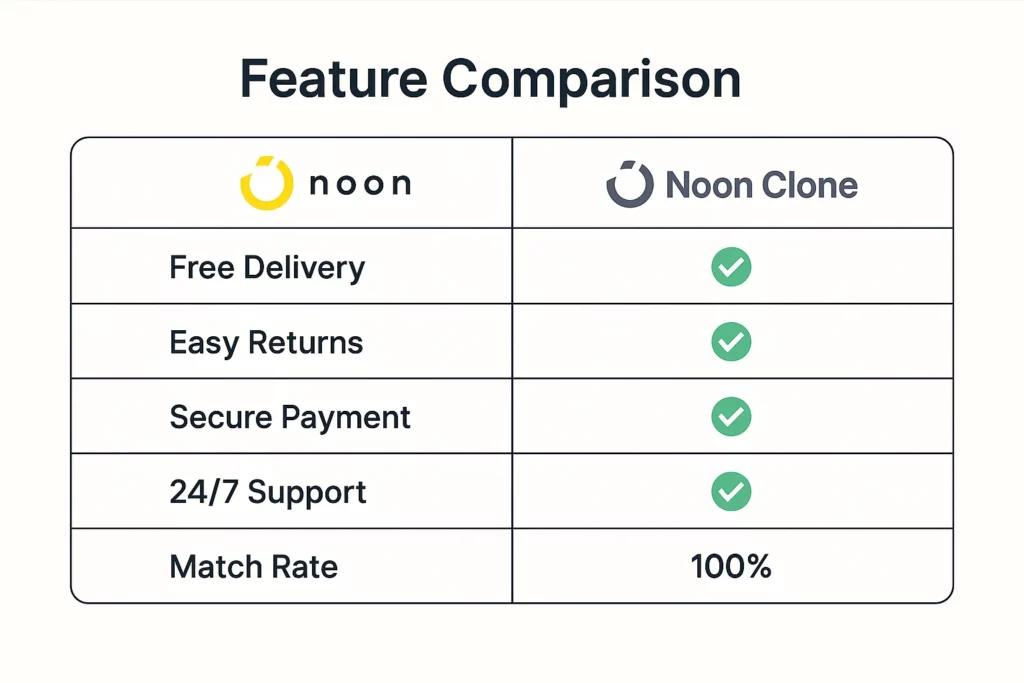




A regional ecommerce marketplace is an online shopping platform built around the needs of a specific country, region, city cluster, or local market. Instead of serving every buyer with the same catalog, payment logic, delivery promise, and seller structure, it adapts commerce operations to local expectations.
That is why regional marketplaces are different from ordinary ecommerce stores.
A normal ecommerce website usually sells products from one business. A regional marketplace connects multiple sellers, buyers, delivery partners, payment providers, and platform operators inside one controlled ecosystem. Buyers get local product availability. Sellers get a digital storefront. The platform owner earns from commissions, seller plans, delivery margins, promotions, and other marketplace revenue streams.
For founders, this model is attractive because it can start with one focused market and expand gradually. A marketplace can begin with one city, one category, or one seller segment before adding more regions, currencies, delivery rules, and vendor types.
Miracuves helps founders build ready-made and white-label ecommerce marketplace platforms that can be customized for regional commerce models, seller operations, payments, delivery workflows, and admin control. For businesses that want to move faster, a launch-ready marketplace foundation can reduce the time spent building every module from zero.
Key Takeaways
- A regional ecommerce marketplace connects local buyers, sellers, payments, delivery, and marketplace operations in one digital platform.
- The main business value comes from controlling seller supply, regional catalog availability, local payment preferences, and delivery reliability.
- Marketplace operators usually earn through commissions, seller subscriptions, delivery fees, featured listings, ads, and value-added services.
- The most important operational layers are seller onboarding, catalog governance, payment settlement, delivery assignment, refunds, and dispute handling.
- Miracuves helps founders move from idea to launch faster with ready-made and white-label marketplace app solutions.
What Does a Regional Ecommerce Marketplace Actually Mean?

A regional ecommerce marketplace is a digital commerce platform designed around local market behaviour. It may operate across a country, a group of cities, or several nearby markets where buyers have different delivery expectations, payment habits, product preferences, and seller networks.
For example, one region may prefer digital wallet payments, while another may still rely heavily on cash collection. One city may support same-day delivery, while another may require scheduled delivery. A premium metro audience may search for branded electronics, while smaller towns may respond better to household essentials, fashion, grocery, beauty, or local merchant catalogs.
The platform must support these differences without forcing the founder to create a separate system for every location.
A strong regional marketplace usually includes:
- A buyer-facing web or mobile storefront
- Seller registration and seller dashboards
- Product catalog and inventory management
- Local pricing, currency, tax, and serviceability rules
- Payment gateway and wallet integrations
- Order management and refund workflows
- Delivery partner or logistics management
- Admin dashboard for platform operators
- Offers, coupons, banners, and marketing controls
- Ratings, reviews, support, and dispute management
The real value is not just listing products online. The real value is creating a controlled local commerce network where supply, demand, payments, delivery, and trust operate together.
How a Regional Marketplace Differs From a Single-Vendor Ecommerce Store
A single-vendor ecommerce store is simpler because one business controls the products, pricing, inventory, shipping, and customer service. A marketplace is more complex because many sellers operate inside the same platform.
That complexity also creates the opportunity.
When multiple sellers join, the platform can offer more product variety without owning every product itself. The operator can focus on acquisition, technology, trust, monetization, and marketplace governance while sellers handle supply.
| Layer | Single-Vendor Ecommerce Store | Regional Ecommerce Marketplace |
|---|---|---|
| Product supply | Owned by one brand or retailer | Supplied by multiple sellers |
| Revenue model | Product margin | Commission, seller fees, ads, delivery fees, subscriptions |
| Operations | Centralized | Distributed across sellers, buyers, delivery, and admin teams |
| Catalog growth | Limited by company inventory | Expands as seller network grows |
| Payment flows | Buyer pays one seller | Buyer payments may split into seller payout, commission, delivery fee, and platform margin |
| Delivery | Usually one shipping workflow | May include seller delivery, platform fleet, third-party logistics, or hybrid delivery |
| Admin control | Product and order management | Seller approval, catalog rules, finance, disputes, commissions, delivery settings, and reporting |
For founders, the marketplace model becomes powerful when the supply side is fragmented. If local sellers already exist but lack strong digital reach, a regional marketplace can become the platform that organizes their demand, discovery, payments, and fulfilment.
How Sellers Work Inside a Regional Ecommerce Marketplace
Sellers are the supply engine of a regional marketplace. Without enough trusted sellers, buyers do not get variety. Without clear seller controls, the platform becomes difficult to manage.
A seller workflow usually starts with onboarding. The seller creates an account, submits business information, adds required documents where needed, and waits for approval from the platform operator. Once approved, the seller can upload products, manage inventory, track orders, respond to customer issues, and monitor earnings.
The seller side of a regional ecommerce marketplace usually includes:
- Seller registration and verification
- Store profile setup
- Product listing and catalog upload
- Inventory and variant management
- Price and discount controls
- Order acceptance and fulfilment updates
- Seller wallet or payout history
- Return and refund visibility
- Ratings and review management
- Support and dispute communication
The admin team must be able to approve, reject, pause, or review sellers when required. This matters because seller quality directly affects buyer trust.
A weak seller onboarding system creates fake listings, poor fulfilment, inconsistent product data, delayed orders, and refund pressure. A strong seller management layer helps the platform maintain quality while still allowing the seller base to grow.
How Product Catalogs and Local Inventory Work
Catalog quality decides whether buyers trust the marketplace. Regional ecommerce platforms usually deal with multiple sellers selling similar products, different variants, different stock levels, and different delivery areas.
This creates three major challenges.
First, product information must be clean. Titles, images, descriptions, prices, categories, stock levels, and variants should follow consistent rules. If every seller uploads products differently, the marketplace becomes hard to browse.
Second, inventory must reflect local availability. A buyer should not see products that cannot be delivered to their location. Regional commerce depends heavily on serviceability logic because delivery feasibility can change by city, pin code, zone, or store location.
Third, catalog ranking should support conversion. The platform may prioritize products based on availability, seller rating, delivery speed, price, promotions, or relevance.
For founders, catalog logic is not just a technical feature. It affects search results, repeat purchases, seller competition, buyer trust, and operational cost.
How Payments Work in a Multi-Vendor Ecommerce Marketplace
Payments in a regional ecommerce marketplace are more complex than payments in a normal online store because money may need to move between several parties.
A single order can involve:
- Buyer payment
- Platform commission
- Seller payout
- Delivery fee
- Payment gateway charge
- Refund reserve
- Wallet adjustment
- Promotional discount
- Cash reconciliation where applicable
This is why a marketplace needs a finance and settlement layer, not just a checkout page.
When a buyer places an order, the system records the payment method and order value. If the order is prepaid, the payment gateway processes the transaction. If the platform supports wallet payments, the wallet ledger must update correctly. If the platform allows cash collection, the delivery workflow must record collection status and reconcile it later.
After the order is completed, the system calculates the seller’s earning based on the commission structure. The platform may deduct commission, delivery charges, penalties, promotional contributions, or service fees before releasing the payout.
A strong marketplace payment system should support:
- Multiple payment methods
- Secure payment gateway integration
- Wallet or store credit logic
- Commission calculation
- Seller payout reports
- Refund and cancellation workflows
- Cash collection tracking where relevant
- Invoice and transaction records
- Admin finance dashboard
- Audit logs for dispute resolution
Payment accuracy is critical because sellers will not trust the marketplace if earnings are unclear. Buyers will not trust the platform if refunds are slow or confusing. Platform owners need transparent finance controls to avoid manual reconciliation problems as order volume grows.
Why Local Payment Preferences Matter
Regional ecommerce is shaped by local payment behaviour. Some buyers prefer cards. Some prefer wallets. Some prefer bank transfers. Some markets still need cash-based order support. Some regions may require local payment gateways that buyers already trust.
A marketplace that ignores local payment preferences may lose conversions even if the product catalog is strong.
Founders should evaluate payment strategy before launch by asking:
- Which payment methods are trusted in the target region?
- Does the marketplace need cash collection support?
- Will sellers require scheduled payouts?
- Should the platform support wallets, credits, or refunds to balance?
- Are there local tax, invoice, or reporting requirements?
- How will failed payments, chargebacks, and refunds be handled?
The payment layer should be designed for operational clarity from the start. It is easier to scale a clean settlement system than to fix broken seller payouts after launch.
How Delivery and Last-Mile Fulfilment Work
Delivery is one of the biggest differences between a basic ecommerce website and a regional marketplace. A local marketplace may need to coordinate sellers, warehouses, stores, delivery partners, courier providers, and customer expectations across different zones.
Common delivery models include:
- Seller-managed delivery
Sellers handle their own shipping or local delivery. This is simpler for the platform but gives the operator less control over delivery quality. - Platform-managed delivery
The marketplace controls delivery partners, assignment, tracking, handover, and delivery confirmation. This improves brand control but requires stronger operational systems. - Third-party logistics integration
External courier or logistics providers handle shipment movement. This works well for wider coverage but depends on integration quality and partner reliability. - Hybrid fulfilment
The platform uses different delivery methods depending on category, location, seller type, or order value.
A strong delivery workflow usually includes order assignment, pickup status, delivery status, proof of delivery, failed delivery handling, return pickup, customer notifications, and delivery partner earnings.
For regional marketplaces, delivery promises should be realistic. Same-day delivery may work in dense cities but not across every service area. The admin panel should allow the operator to configure delivery zones, distance rules, shipping fees, estimated delivery times, and service restrictions.
Core Marketplace Modules and Their Business Value
| Module | Business Value | Founder Impact |
|---|---|---|
| Buyer Storefront | Helps customers browse, search, compare, and purchase products. | Improves discovery, conversion, and repeat purchase behaviour. |
| Seller Dashboard | Allows sellers to manage products, inventory, orders, and earnings. | Makes seller acquisition easier because vendors get self-service tools. |
| Admin Console | Controls sellers, catalog, commissions, orders, finance, disputes, and marketing. | Gives the platform operator control without depending on developers for every change. |
| Payment and Settlement Layer | Tracks buyer payments, seller payouts, refunds, wallet entries, and platform commission. | Reduces manual finance errors and builds seller trust. |
| Delivery Management | Handles delivery zones, order assignment, tracking, handover, and failed delivery cases. | Improves fulfilment reliability and protects the customer experience. |
| Marketing Controls | Supports banners, coupons, featured listings, promotions, and campaign rules. | Helps founders drive demand without changing core platform code. |
How Local Markets Shape Marketplace Strategy
A regional ecommerce marketplace succeeds when it understands local demand better than a generic commerce platform.
Local market strategy affects:
- Product categories
- Seller acquisition
- Payment options
- Delivery speed
- Pricing sensitivity
- Promotions
- Language and content
- Customer support expectations
- Return and refund behaviour
- Trust-building signals
For example, a founder entering a regional market may start with categories where local sellers already have supply but weak online reach. Fashion, grocery, electronics, home essentials, beauty, pharmacy, handmade goods, and local retail can all work depending on the region.
The better question is not “Which category is popular everywhere?” The better question is “Where does this local market already have seller supply and buyer demand, but poor digital organization?”
That is where a marketplace can create value.
Marketplace Revenue Models Founders Can Use
A regional ecommerce marketplace can monetize in several ways. The right model depends on seller maturity, buyer frequency, category margins, and delivery complexity.
| Revenue Stream | How It Works | Best For |
|---|---|---|
| Commission per order | Platform earns a percentage or fixed fee from each successful order. | Most multi-vendor marketplaces |
| Seller subscription | Sellers pay monthly or yearly for access to the platform. | Mature seller networks with recurring value |
| Featured listings | Sellers pay to promote products or stores. | Competitive categories with many sellers |
| Delivery margin | Platform earns from delivery fees after covering fulfilment cost. | Markets with platform-managed logistics |
| Advertising | Brands or sellers pay for banners, sponsored products, or campaign placements. | High-traffic marketplaces |
| Service fees | Buyers or sellers pay small platform fees for convenience or operations. | High-frequency order models |
| Value-added services | Platform offers catalog support, photography, packaging, warehousing, or seller onboarding help. | Fragmented local seller markets |
The strongest marketplaces often combine multiple revenue streams, but founders should avoid launching with too much complexity. Start with the cleanest monetization model, prove order flow, and then add advanced revenue layers.
Why the Admin Dashboard Is the Control Center
The admin dashboard is where the platform operator manages the marketplace. For a regional ecommerce business, the admin panel is not a back-office extra. It is the command center.
A practical admin dashboard should help manage:
- Buyer accounts
- Seller approvals
- Product categories
- Product moderation
- Orders and cancellations
- Commission rules
- Payment settlements
- Delivery zones
- Delivery partners
- Coupons and promotions
- Refunds and disputes
- Reports and analytics
- Support workflows
- Role-based access
This matters because marketplace growth creates operational pressure. More sellers create more product data. More orders create more delivery exceptions. More payments create more settlement questions. More buyers create more support cases.
Without admin control, the founder becomes dependent on manual spreadsheets, developer requests, and disconnected tools. With proper admin control, the operator can adjust marketplace rules faster and respond to local conditions.
Trust, Security, and Compliance-Ready Workflows

Regional marketplaces handle sensitive data: customer details, seller records, delivery addresses, payment information, invoices, refunds, and transaction histories. Security should be part of the platform foundation from the beginning.
Important trust and security layers include:
- Encrypted data transfer
- Secure payment gateway integration
- Tokenized payment support where available
- Role-based access control
- Seller verification
- Delivery partner verification
- Audit logs
- Refund and dispute records
- Admin access controls
- Fraud monitoring signals
- Review moderation
- Activity logs
- Privacy-conscious data handling
A marketplace can be designed with compliance-ready workflows, but final compliance depends on the target jurisdiction, legal review, payment integrations, tax requirements, and operating model. Founders should treat compliance as an operational responsibility, not only a software feature.
Ready-Made vs Custom Development for a Regional Marketplace
Founders usually have two paths when building a regional ecommerce marketplace: build everything from scratch or start with a ready-made foundation.
A custom build gives full flexibility, but it requires more planning, more development time, more QA, and higher execution risk. A ready-made foundation gives the business a faster starting point because core marketplace workflows are already built.
| Build Option | What It Means | Best For | Tradeoff |
|---|---|---|---|
| Ready-made marketplace foundation | Core buyer, seller, admin, payment, and delivery workflows already exist and are customized for launch. | Founders who want faster validation and lower build risk. | Deeply unique workflows may need scoped customization. |
| Fully custom marketplace build | The platform is designed and developed from zero around a custom specification. | Enterprises or businesses with unusual workflows. | Longer timeline and higher planning dependency. |
| Hybrid approach | Start with a launch-ready foundation, then customize modules after market validation. | Founders who want speed first and flexibility later. | Requires clear prioritization of launch vs later roadmap. |
For founders planning a faster launch, Miracuves offers a ready-made regional marketplace solution that can be branded, configured, and deployed in 6 days for applicable launch-ready requirements. This gives businesses a practical way to test seller supply, buyer demand, payment flows, and delivery operations without waiting months for the first usable version.
To explore the launch-ready marketplace foundation, visit Miracuves’ regional ecommerce marketplace solution.
Founder Decision Signals
Speed
If the goal is to validate seller demand and buyer transactions quickly, a launch-ready foundation can reduce the time spent building standard marketplace modules.
Cost
Marketplace cost depends on seller workflows, payment integrations, delivery logic, admin depth, branding, and customization scope.
Scalability
A regional marketplace should support more sellers, more locations, more categories, and more order volume without forcing separate systems for every market.
Market Fit
The strongest signal is not app downloads alone. It is whether sellers list products, buyers complete orders, and delivery operations hold up in the target region.
Common Mistakes Founders Should Avoid
Launching Without a Clear Seller Strategy
A marketplace cannot grow only from buyer marketing. Sellers need onboarding support, catalog rules, payout clarity, and reasons to keep inventory updated.
Ignoring Local Payment Behaviour
If buyers do not trust the available payment methods, checkout conversion suffers. Regional platforms should support payment options that match local habits.
Treating Delivery as an Afterthought
Delivery problems create refunds, complaints, and repeat purchase issues. Delivery zones, fees, assignment, handover, and failed delivery handling should be planned early.
Using a Weak Admin Control Layer
As sellers and orders grow, the operator needs control over commissions, catalog quality, disputes, settlements, and promotions. Without admin depth, operations become manual and slow.
What Features Should a Regional Ecommerce Marketplace Include?
A founder does not need every advanced feature on day one. But the core marketplace foundation should be strong enough to handle real users, real sellers, real orders, and real payments.
Essential features include:
- Customer registration and login
- Product search and category browsing
- Product details, variants, and images
- Cart and checkout
- Multiple payment options
- Order tracking
- Seller registration and approval
- Seller product management
- Seller order dashboard
- Commission and payout logic
- Delivery partner management
- Delivery status updates
- Coupons and promotional banners
- Ratings and reviews
- Refund and return workflows
- Admin dashboard
- Reports and analytics
- Role-based access controls
- Support and dispute workflows
Advanced features may include AI-assisted catalog writing, seller performance scoring, loyalty programs, smart recommendations, multilingual support, regional pricing rules, warehouse logic, and advanced analytics.
The right feature roadmap should come from the business model. A grocery-first marketplace needs inventory freshness and delivery speed. A fashion marketplace needs variants, returns, and product discovery. A B2B seller marketplace may need quotation workflows, bulk pricing, and account-based ordering.
How to Validate a Regional Marketplace Before Scaling
A regional ecommerce marketplace should not scale blindly. Founders should validate demand in a controlled market first.
A practical validation path may include:
- Start with one region, category, or seller group.
- Onboard a small but reliable seller base.
- Confirm product availability and catalog quality.
- Test buyer acquisition channels.
- Track checkout completion and payment success.
- Monitor delivery reliability.
- Measure repeat purchases and seller retention.
- Improve admin workflows before expanding.
The goal is to learn where the marketplace creates real value. Sometimes the strongest early signal is not a huge product catalog. It may be a smaller category where buyers purchase repeatedly and sellers fulfil reliably.
Once the platform proves supply, demand, and fulfilment in one market, expansion becomes more structured.
How Miracuves Helps Founders Launch Regional Ecommerce Marketplaces Faster
Building a marketplace from zero can take significant planning because the platform needs buyer apps, seller tools, payment logic, delivery operations, admin controls, and reporting workflows. The risk is not only development time. The bigger risk is spending months before testing whether the market actually responds.
Miracuves helps founders launch faster with ready-made and white-label marketplace solutions that can be customized for branding, seller management, payment workflows, delivery logic, admin control, and source-code ownership.
For suitable ready-made marketplace requirements, Miracuves can support a 6-day deployment approach, helping founders move quickly from idea to market validation. Custom features, deeper integrations, and unique workflows can be scoped separately based on business requirements.
If your goal is to build a regional ecommerce marketplace for local sellers, city-level commerce, multi-category retail, or cross-region online shopping, a launch-ready foundation can help you avoid unnecessary delays while keeping room for future customization.
Final Thoughts: Regional Marketplace Success Depends on Local Execution
A regional ecommerce marketplace is not just an online store with multiple sellers. It is a business system where local demand, seller supply, payments, delivery, trust, and admin control must work together.
Founders should focus on the real operating questions before launch. Which sellers will join first? Which categories create repeat demand? Which payment methods do buyers trust? Which delivery model can the business control? Which monetization model makes sense without hurting seller adoption?
The stronger the foundation, the easier it becomes to test the market, improve operations, and expand into new locations.
Miracuves helps founders move faster with white-label, source-code-owned marketplace solutions designed for practical execution, admin control, monetization, and faster market validation.
FAQs
What is a regional ecommerce marketplace?
A regional ecommerce marketplace is an online platform that connects local or regional buyers with multiple sellers. It usually includes product listings, seller dashboards, payments, delivery workflows, order tracking, admin controls, and regional settings such as delivery zones, local payment methods, and market-specific catalog rules.
How does a multi-vendor ecommerce marketplace work?
A multi-vendor ecommerce marketplace allows many sellers to list products on one platform. Buyers place orders through the marketplace, sellers fulfil those orders, and the platform operator manages commissions, payments, delivery rules, refunds, disputes, and overall marketplace quality through an admin dashboard.
How do sellers earn money on a regional marketplace?
Sellers earn money when buyers purchase their products. The platform may deduct commission, service fees, delivery charges, promotional contributions, or penalties before settling the seller payout. Clear payout reports are important because sellers need transparency to trust the marketplace.
What payment methods should a regional ecommerce platform support?
The right payment methods depend on the target market. A regional ecommerce platform may support cards, wallets, bank transfers, local gateways, store credits, and cash collection where relevant. Founders should choose payment methods based on buyer trust, seller payout needs, refund handling, and local operating requirements.
Why is delivery management important in regional ecommerce?
Delivery management affects customer satisfaction, refund rates, repeat purchases, and platform reputation. Regional marketplaces need delivery zones, shipping fees, estimated delivery times, order assignment, tracking, failed delivery handling, and return workflows to operate reliably.
What is the role of the admin dashboard in a marketplace?
The admin dashboard helps the platform operator manage buyers, sellers, products, orders, payments, delivery, commissions, promotions, reports, refunds, disputes, and access permissions. It gives the business control over marketplace operations without relying on manual processes for every change.
Can a regional ecommerce marketplace start with one city?
Yes. Starting with one city or region is often a practical approach because it allows the founder to validate seller supply, buyer demand, payment success, delivery reliability, and support workflows before expanding into more locations.
How fast can Miracuves help launch a regional marketplace?
For suitable ready-made marketplace requirements, Miracuves can support a 6-day deployment approach. Custom modules, advanced integrations, unique workflows, and deeper compliance requirements should be scoped separately based on the final business model.
Miracuves is an independent software development company. We are not affiliated with, connected to, sponsored by, or endorsed by any company or product named in this article.
Terms such as “X Clone” are used descriptively. It is how the software industry refers to building a platform with functionality comparable to a known service, and how clients search for it.
The entire design and codebase of our products is built by our own team. Our products contain no code, design, graphics, or content originating from any third-party website or applications.
All third-party names and marks referenced in this article are the property of their respective owners, referenced solely to identify the services discussed.