

























Groww Clone Development Company: What to Check Before You Hire
On an investing platform the questions that matter are not about features. They are about what the schema decided before anyone wrote a screen, and about which controls a compliance reviewer will find missing. Below is how we work, the security items we name rather than bury, and the nine questions we would want answered if we were the ones buying.
Talk to Our Team →See PricingAgency vs Freelancer vs Miracuves
Three routes to the same platform, and where each tends to fail once the second asset class arrives.
| What matters | Freelance team | Miracuves ready-made |
|---|---|---|
| Time to live | Six to twelve months, if the scope holds | Six working days |
| The second asset class | A parallel stack, reconciled by hand | A new entity and a seeder behind a feature flag |
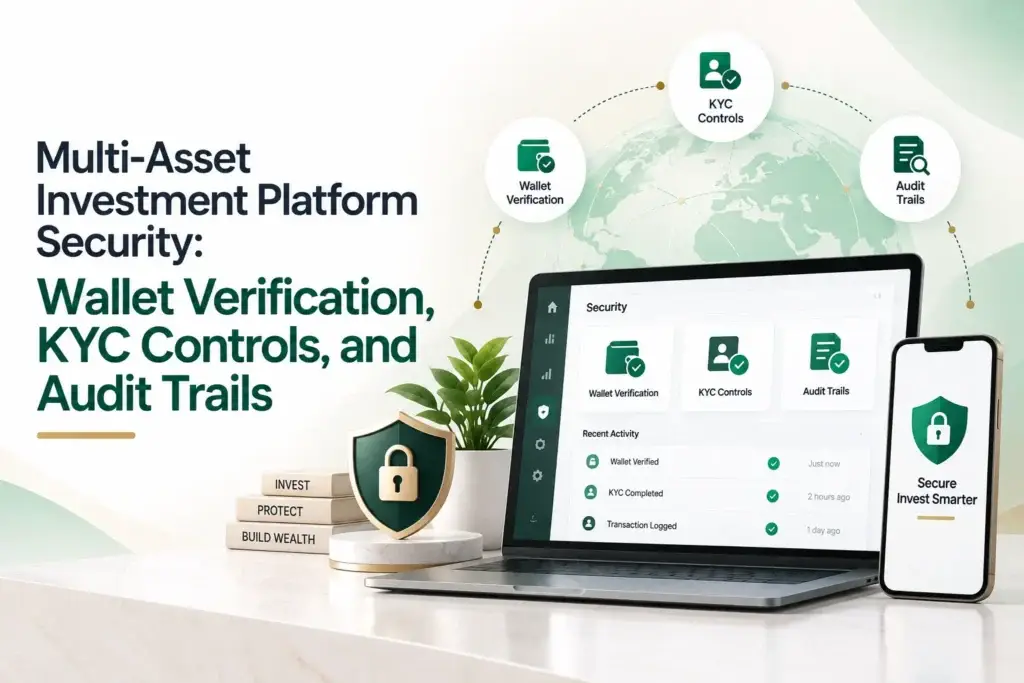
| KYC and audit | Scripts, and no reviewable trail of who approved what | Seven states, checksummed documents, audit on every mutation |
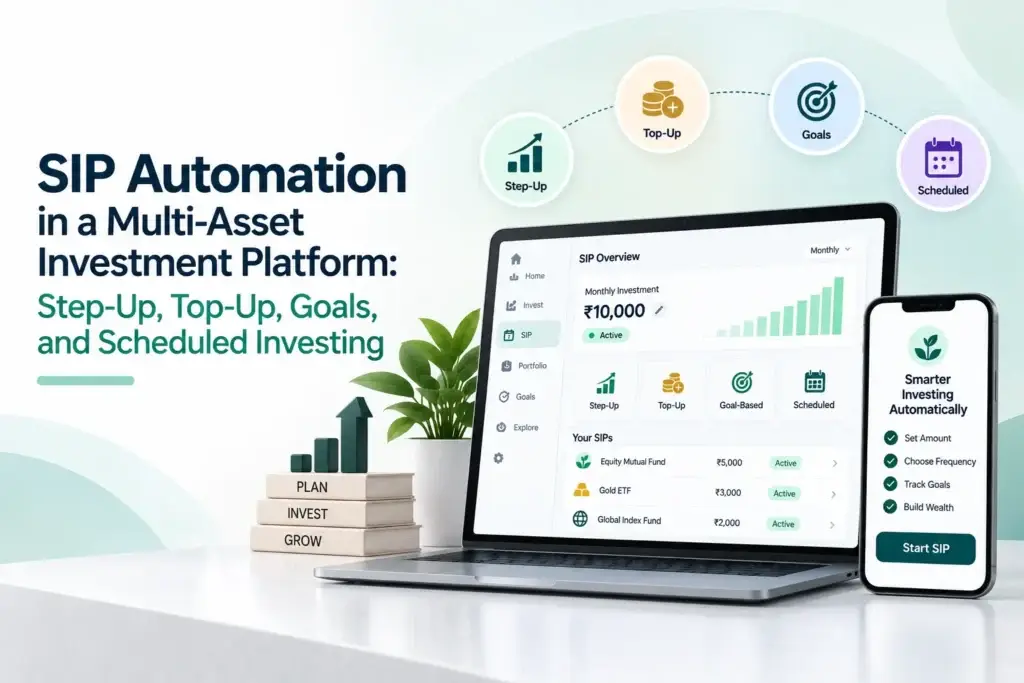
| The wealth layer | Quoted as phase two, and rarely reached | SIP, STP and SWP as first-class entities at launch |
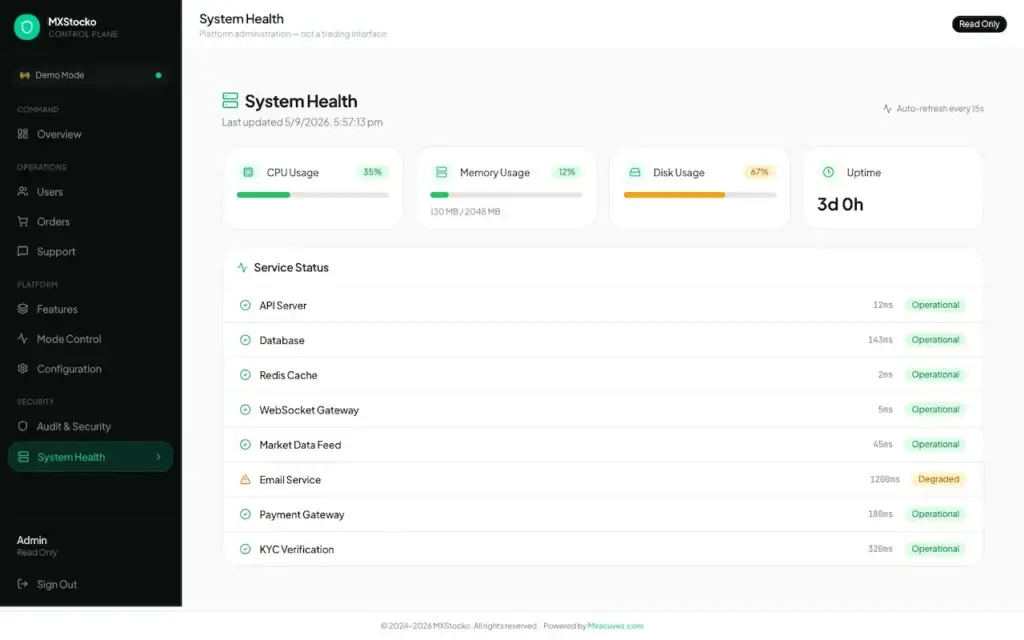
| Operator tooling | Descoped first, so operations queues behind engineering | Ten console pages with runtime feature flags |
| Admin access model | The same JWT as customers, with a role field | A separate admin authentication path entirely |
| Stated limitations | Rarely offered at all | Published before purchase, security gaps included |
| Price behaviour | Hourly, and it moves | $7,299 fixed, quoted before work starts |
Good agencies exist and will build you a competent platform. What the table measures is elapsed months, price certainty, and whether the compliance and wealth layers are in the schema from the start or promised for a phase that usually gets cut.
Questions Worth Asking Any Provider
Put all nine to us and to whoever else is bidding. What a provider says about the order model tells you more than any portfolio.
How does one order reach twelve instrument types?
If the answer is a table per product, adding an asset class means a parallel stack. Ask to see the discriminator and the keys, because that single decision determines what widening costs later.
Where are brokerage and taxes calculated?
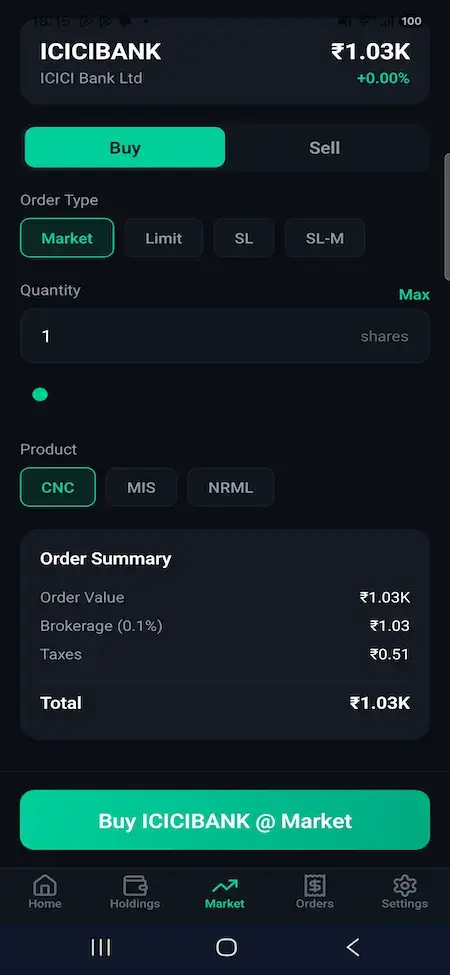
Charges computed on the client can be tampered with and cannot be defended in an audit. Ask them to show the server-side computation, then ask what happens if the client sends a different number.
Is SIP one entity with a mode flag?
SIP, STP and SWP have genuinely different lifecycles. Collapsing them into one entity is the shortcut that makes the wealth layer impossible to extend, and it is invisible in a demo.
What does an operator approval leave behind?
A log line saying an approval happened is not the artifact a compliance review examines. Ask whether the audit row carries before and after values, and ask to read one.
Is admin authentication separate from customer auth?
If an operator signs in with the same token type as a customer and a role claim, a compromised customer credential is closer to operator access than anyone wants to admit.
Can it trade live today, or does it expect a connector?
Ask this directly and expect a direct answer. A complete order engine and a live venue connection are different things, and conflating them is the most common overstatement in this category.
What exactly do the price alerts evaluate?
"Price alerts" covers everything from two comparisons to a technical-indicator engine. Ask which conditions are evaluated in code rather than merely present in the schema.
How long is data retained, and can you produce it?
Orders and payments held seven years is a design decision, not a setting. Ask what the retention model separates and whether restore has ever actually been tested.
What is on your pre-launch security list?
Any provider whose list is empty either has not looked or is not telling you. Ours names the unimplemented two-factor endpoint first, and it sits further down this page.
All nine get answered on the first call, the uncomfortable ones included. The Platform Trust section below puts the same answers in writing.
The Six-Step Development Process
What we do, in the order we do it.
Catalog, licences and plan tiers
We confirm which of the fifteen asset classes go live on day one and which stay behind feature flags until licensing allows them, then the subscription tiers with their features and limits JSON. On a breadth product those two decisions are the product rather than configuration around it.
Branding and locales
Name, logo, colour scheme and theme tokens across the web application, the operator console and the React Native build, with your locales configured and both light and dark themes verified, since a financial product is used in both far more than a content product is.
Deploy and connect your accounts
The stack goes onto infrastructure you control through Docker Compose behind nginx, or PM2 if you prefer a process manager. Payment keys, SMTP, market data credentials and your Firebase project are connected, and the queue workers are enabled so systematic plans settle rather than sit.
Seed catalogs and stand the desk up
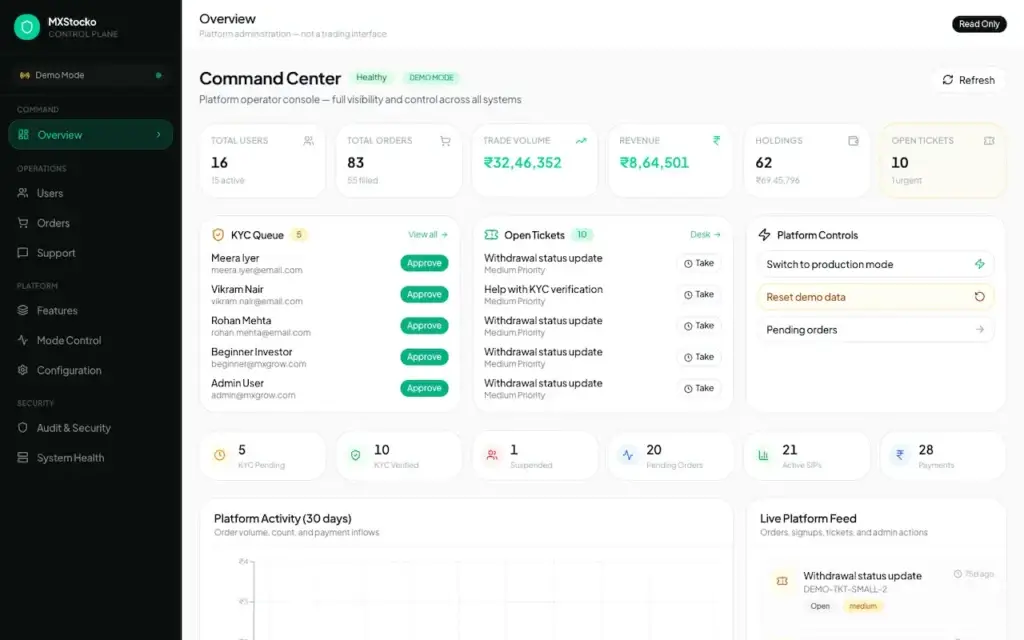
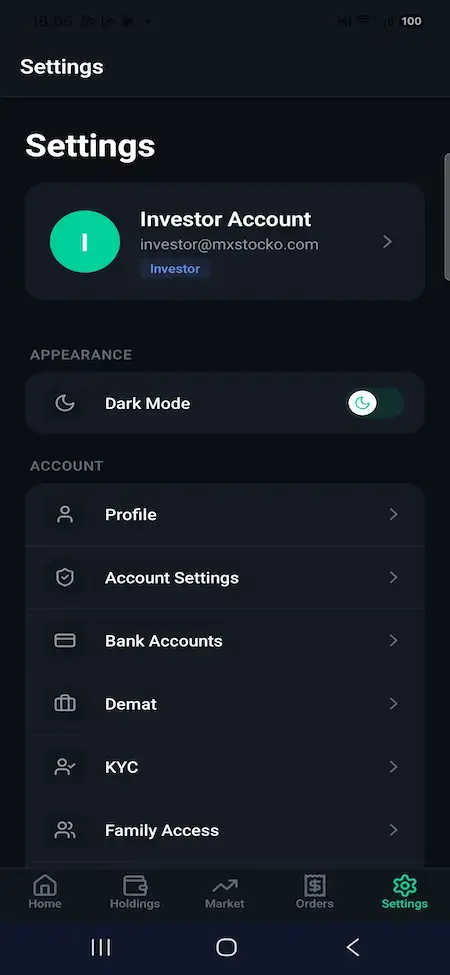
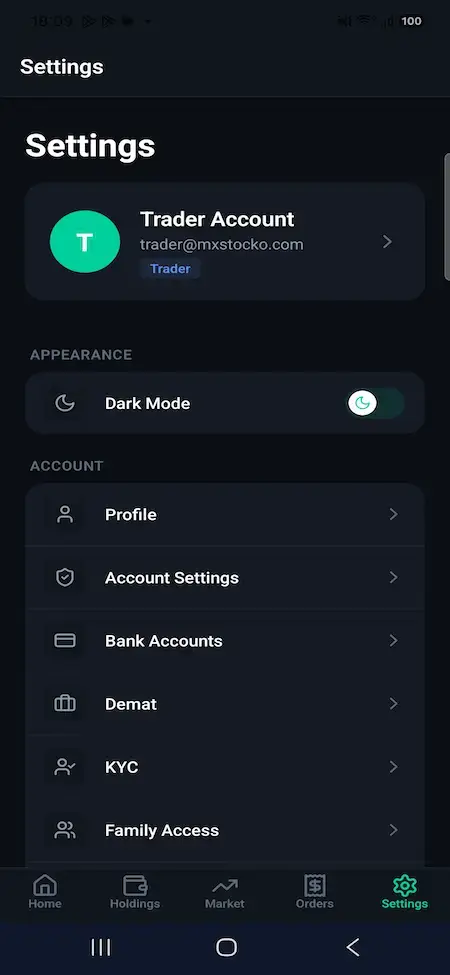
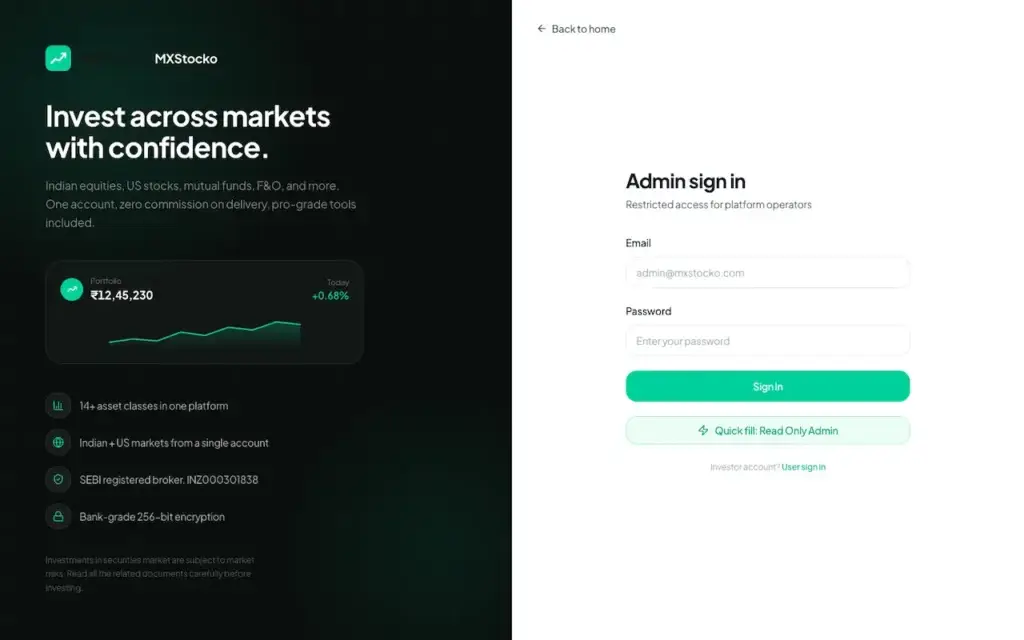
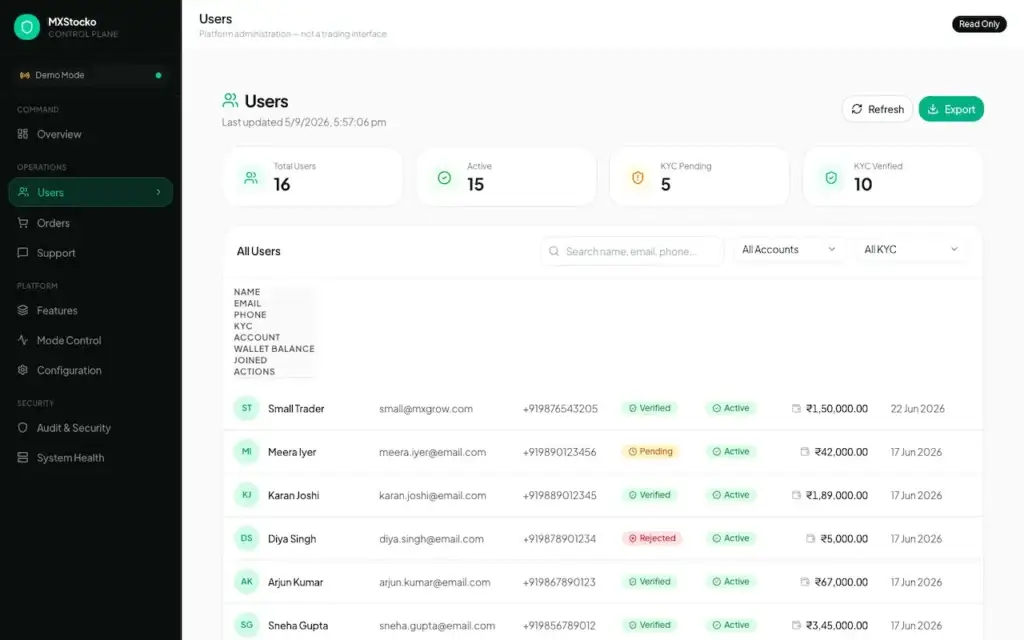
The 15 seeders populate the instrument catalogs for the classes you are launching, operator accounts are created against the RBAC roles, the KYC review desk is configured with its reject reasons, and the platform mode subsystem separates demo from production before the first incident rather than after it.
Walkthrough and handover
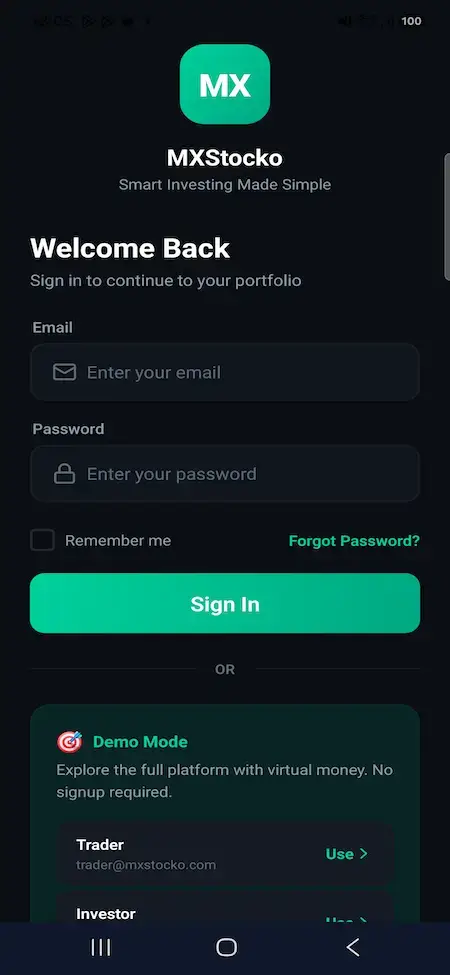
We run one investor end to end in front of your team: register, submit KYC, approve it in the console and read the audit row back, fund a wallet, place an order with the charge breakdown visible, watch the position land in the portfolio, create a SIP with a step-up and link a goal to it. Source, schema and documentation transfer.
The support window
Sixty days of launch guidance, six months of priority bug fixes and twelve months of updates. Broker venue connectors, the security hardening list and store publishing usually run inside this window on their own scoped schedule.
Day zero carries more weight here than on most products. Which asset classes you commit to and how the plan tiers are drawn are the two decisions that are awkward to revisit once real users are subscribed against them.
Red Flags That Mean Walk Away
Five answers that should end the conversation
"Yes, it trades live." Asked without qualification, this is the answer to check hardest. A complete order engine still needs a venue connector, and a provider who does not volunteer that distinction is either not being careful or not being straight.
"We can add the other asset classes later." Later means a parallel stack unless the order model was polymorphic from the start. Ask what a second asset class costs, and treat a vague answer as the real answer.
"The admin panel uses the same login." A role claim on a customer token is not an access boundary. On a platform holding wallets and KYC documents, that is the shortcut with the largest downside.
"Charges are calculated in the app." It is faster to build and impossible to defend. Every charge a user is shown must be computed on the server or the number means nothing in a dispute.
An estimate with no named exclusions. Software has edges, and financial software has licences on top of them. A number presented without either was never costed properly.
We are on the uncomfortable side of our own first flag in one respect and we would rather say it twice than once: the order engine here is complete, and it does not ship connected to a live venue.
What a Multi-Asset Platform Has to Get Right
The decisions that are cheap at the schema stage and expensive at every stage after it.
All six ship in the base build. Ask on the call and we will open each one in the demo with data behind it, including reading back an audit row from a KYC approval we make while you watch.
What We Have Not Done Yet
Six items, stated before a purchase rather than after one.
Two-factor is not enabled
The TOTP libraries ship but the enable endpoint is not implemented, so two-factor authentication is not available to users as delivered. On a platform holding wallets and KYC documents this is the item we would schedule first, which is why it leads the list rather than sitting at the bottom of a handbook.
No connection to a live venue
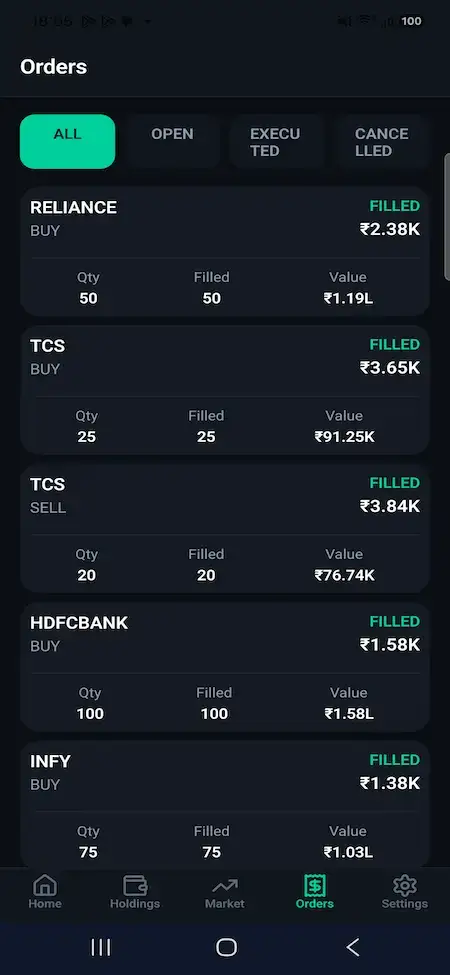
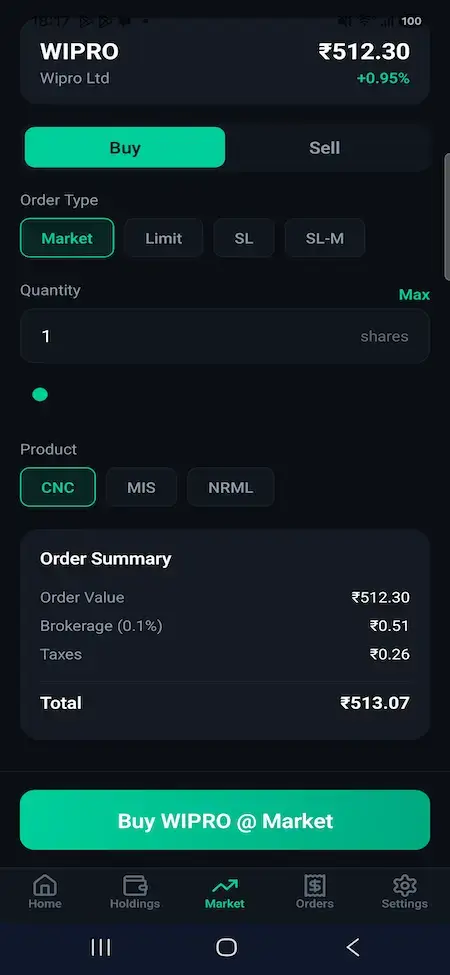
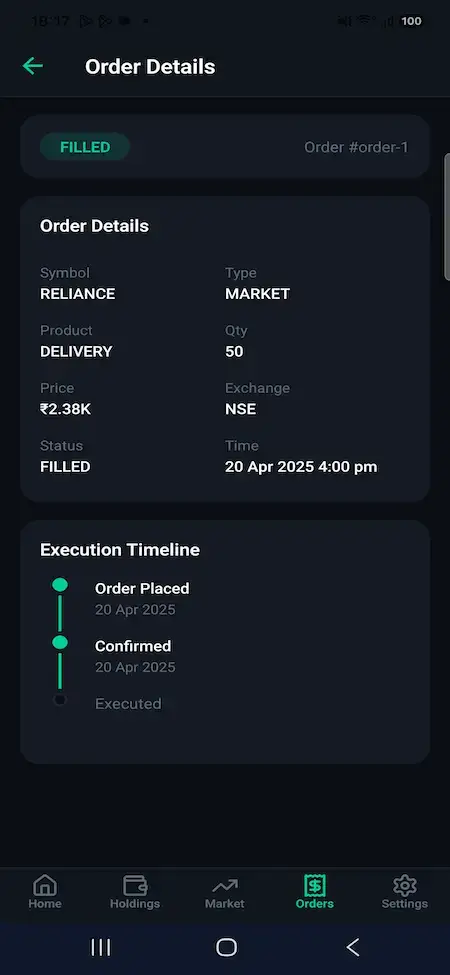
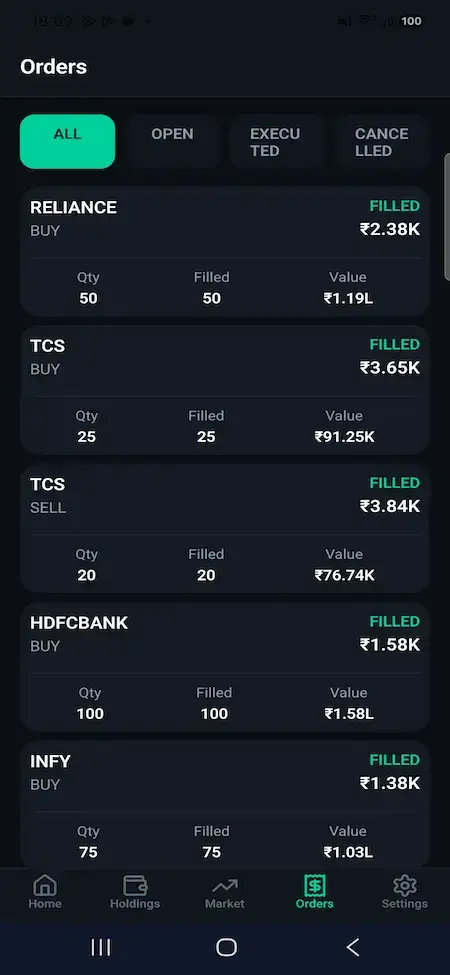
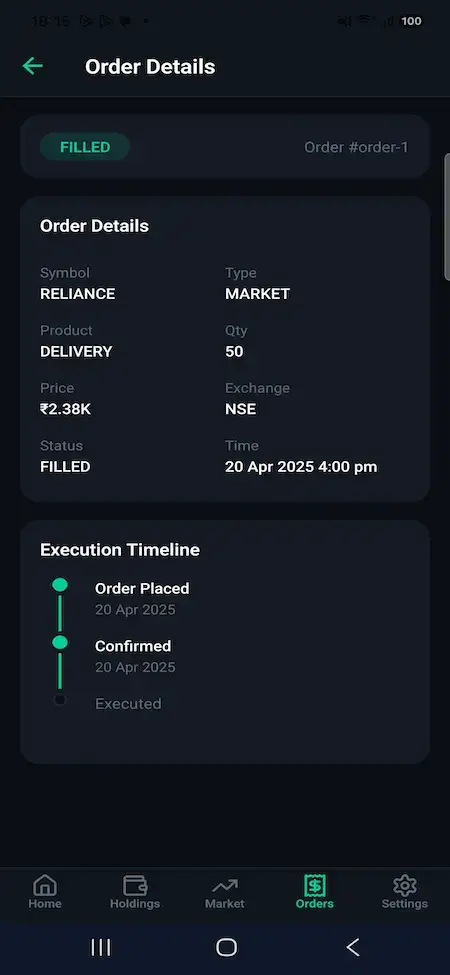
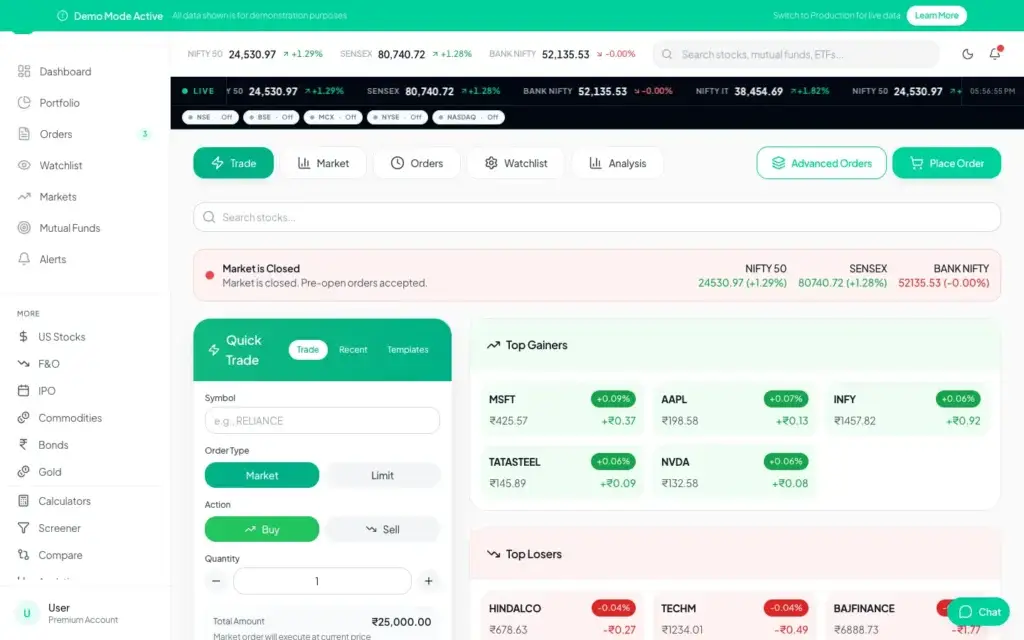
The order engine is complete, with four order types across five product types, a seven state lifecycle carrying partial fills and server-side charge computation. It expects fills from a connector it does not ship with, so live execution is an integration per venue. Paper trading works through the demo flag.
Three controls are scoped, not shipped
Enforced multi-factor authentication for admin roles, SIEM integration and hard row-level multi-tenancy are named in the handbook as scoped work rather than delivered controls. If your review process asks for any of them, tell us on the first call and we will quote them before you buy rather than after.
Alerts evaluate two conditions
Above and below, and only those. Volume spikes, RSI, moving-average crossovers and news keywords exist in the schema as a capability rather than as a shipped evaluator. We name it because "price alerts" is a phrase that routinely carries more than the code behind it does.
Licensing is yours, not ours
Miracuves supplies platform software, not broker registration. Exchange membership, broker licensing, market data agreements and your KYC and AML obligations remain yours as the operator. What ships is the control fabric those licences are examined against, so a review has artifacts rather than assurances.
What is built is real
Bcrypt hashing on a column that is not selectable, access and refresh tokens on separate secrets with rotation, RBAC with row-level user scoping, admin authentication held apart from the retail path, server-side payment verification before any wallet credit, SHA-256 checksums on KYC documents, validation rejecting unknown properties outright, parameterized queries throughout, and an audit row on every operator mutation.
A VAPT reference maps the platform against the OWASP Top 10 and is willing to mark its own gaps. No certification and no vulnerability-free claim is made anywhere in the documentation, and we would rather hand you that document than have a tester hand it to you.
Modelled Reference Deployment
An authored scenario showing how the shipped platform is configured for an operator launching equities and mutual funds first, then widening. It is not a client engagement, and every figure in it is a property of the platform rather than a reported outcome.
Multi-Asset Retail Investing Launch
How the shipped platform is configured for an operator launching equities and mutual funds first, then switching on US equities, alternatives and the systematic plan stack as licensing allows.
What the situation makes hard: running equities, mutual funds and US stocks as three separate stacks nobody can reconcile; a KYC desk improvised in scripts with no reviewable trail of who approved what; and systematic plans treated as a later phase, so the highest-value segment never activates.
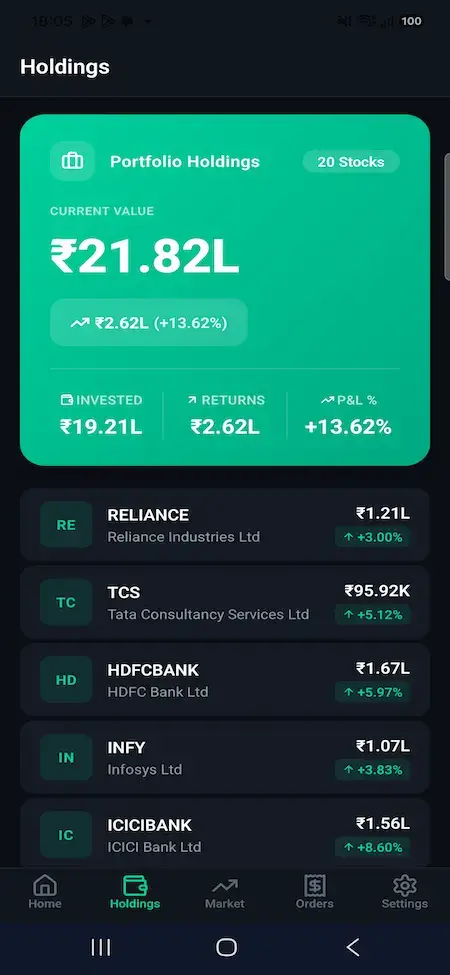
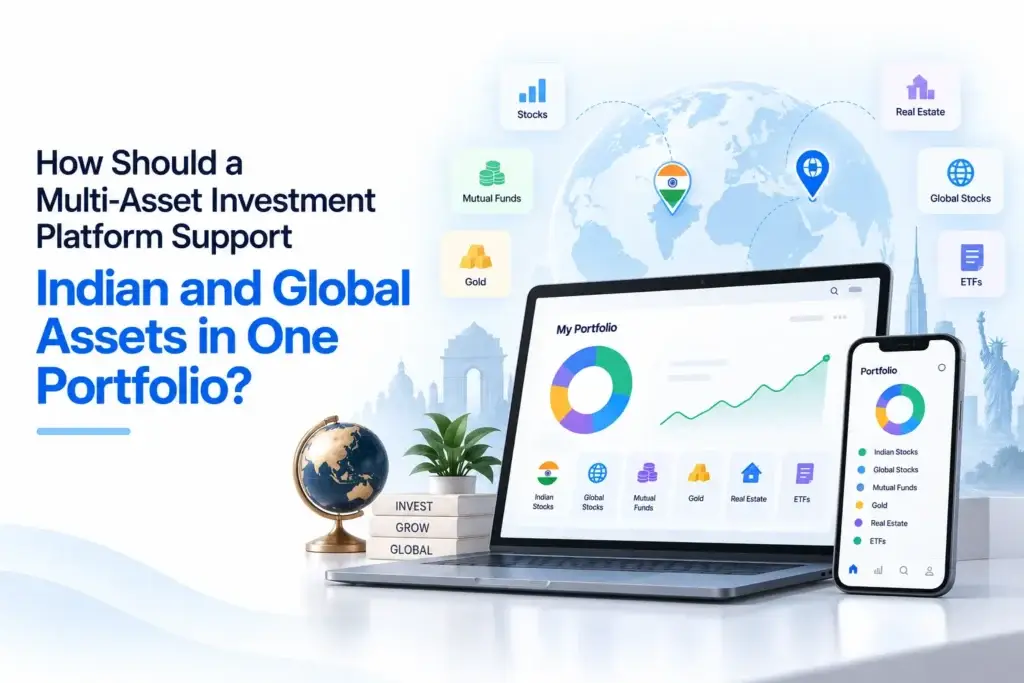
What the configuration addresses: putting every asset class into one portfolio, one wallet and one KYC record; giving operations a review desk rather than a database client; and shipping the wealth layer at launch instead of quoting it as phase two.
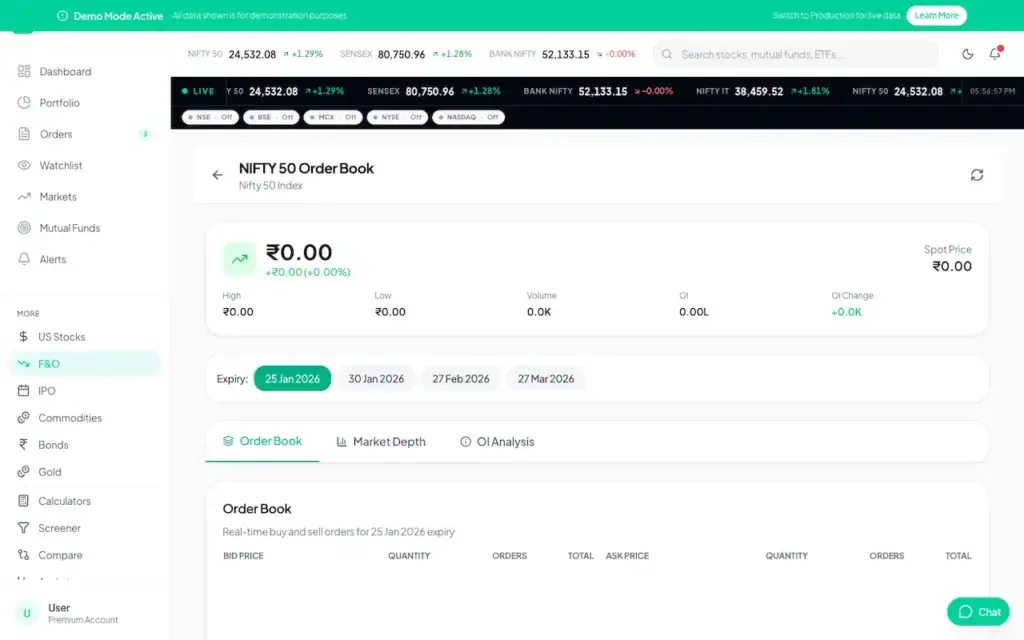
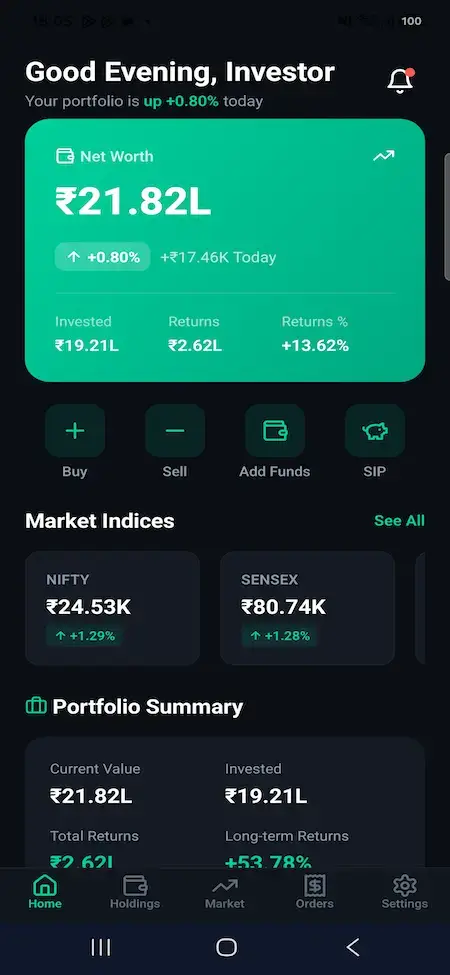
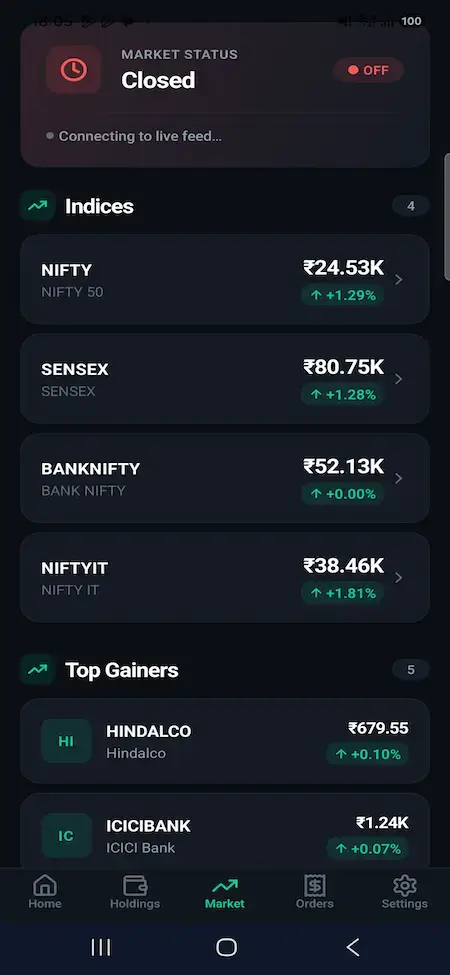
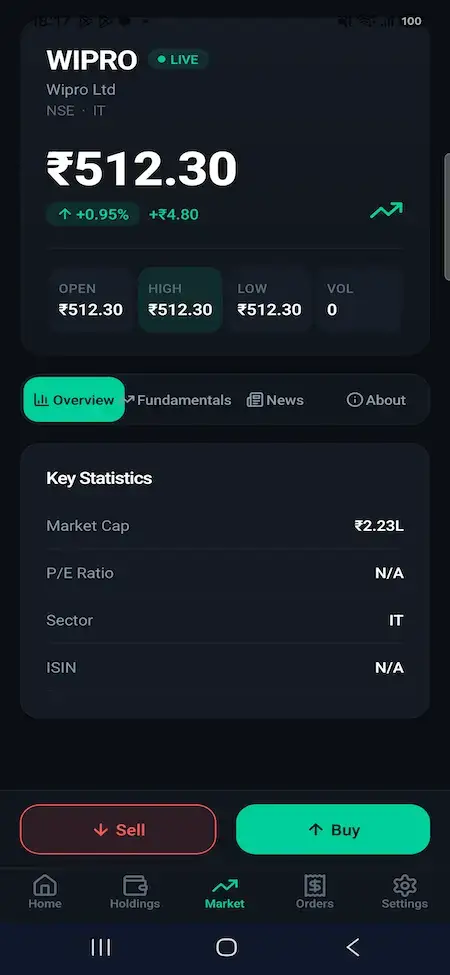
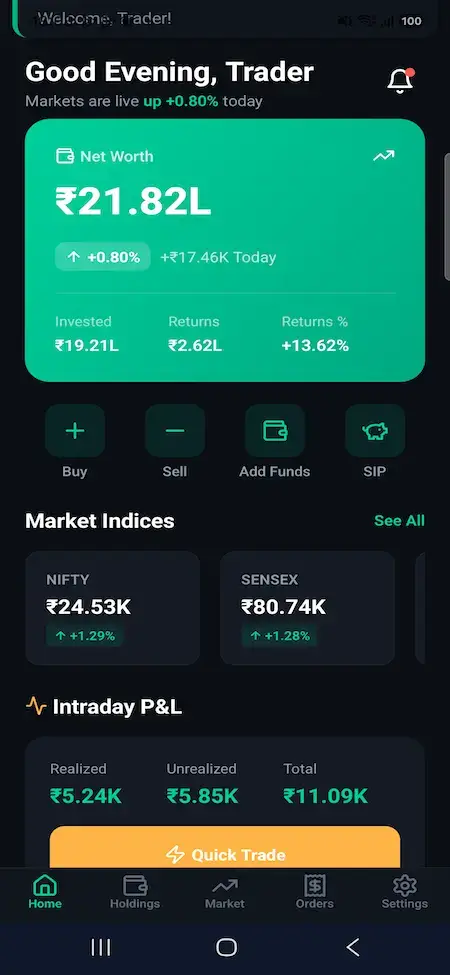
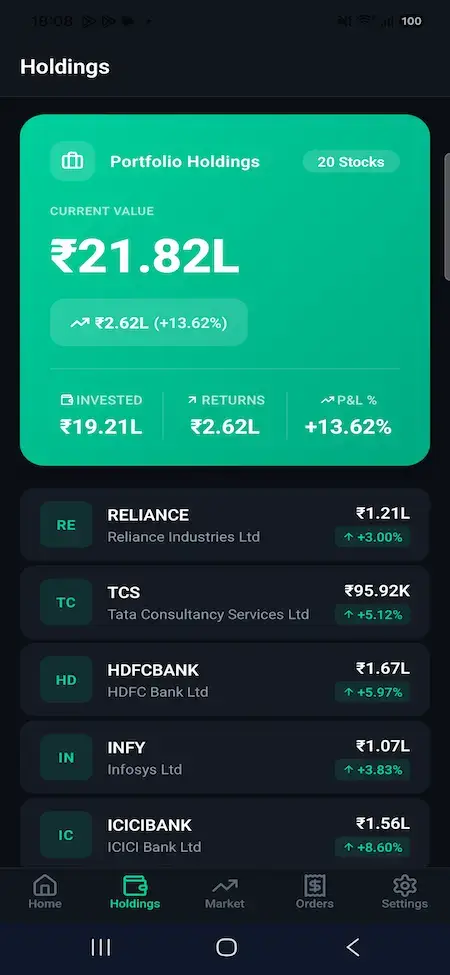
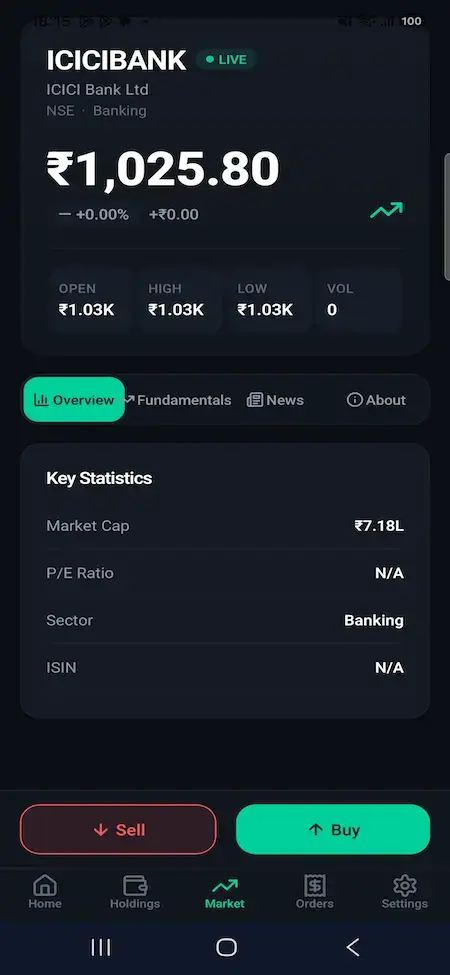
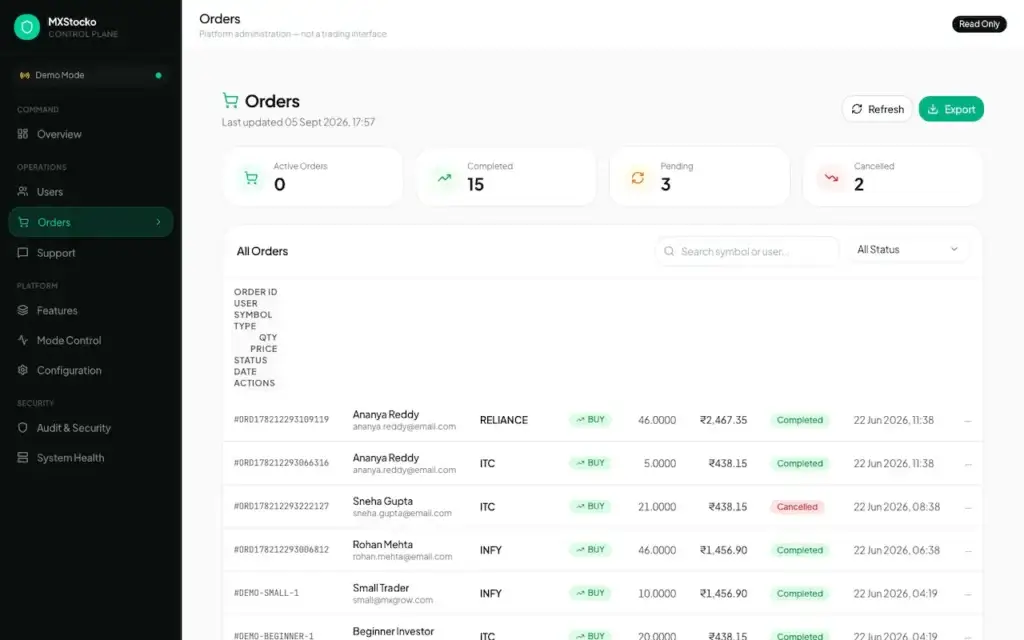
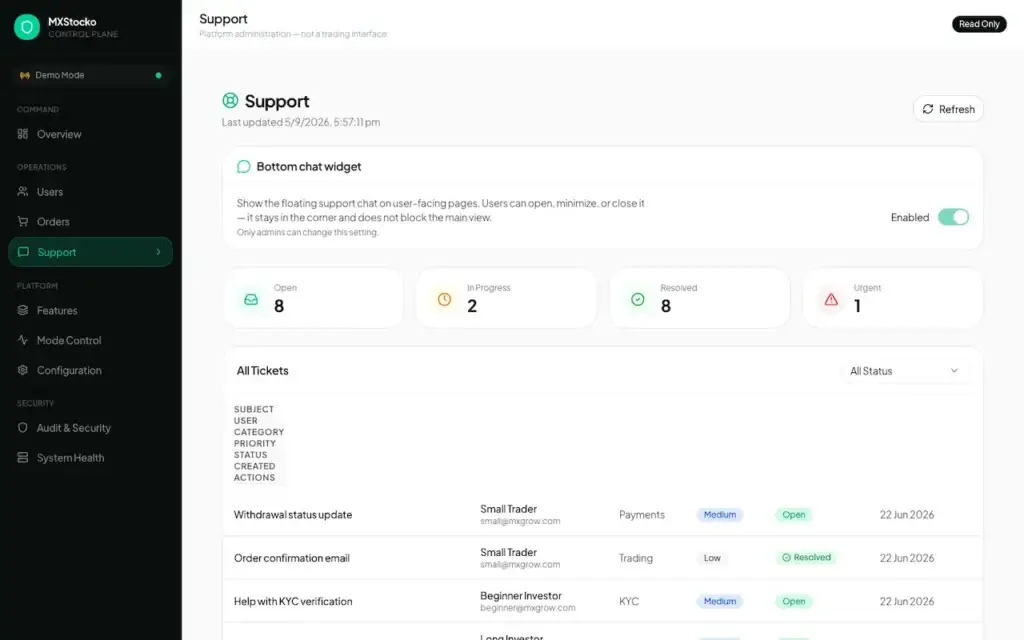
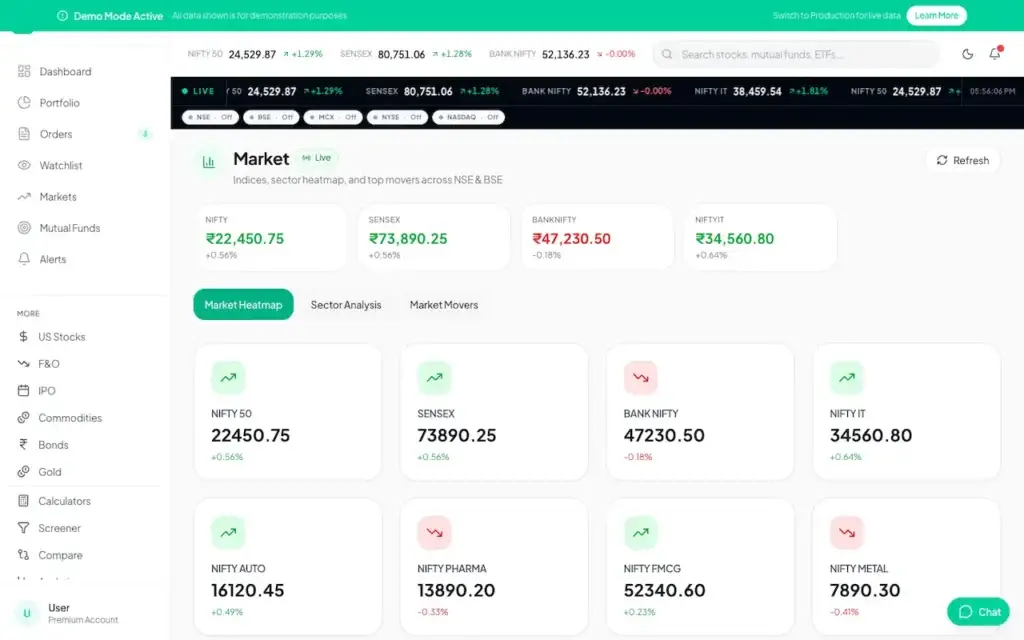
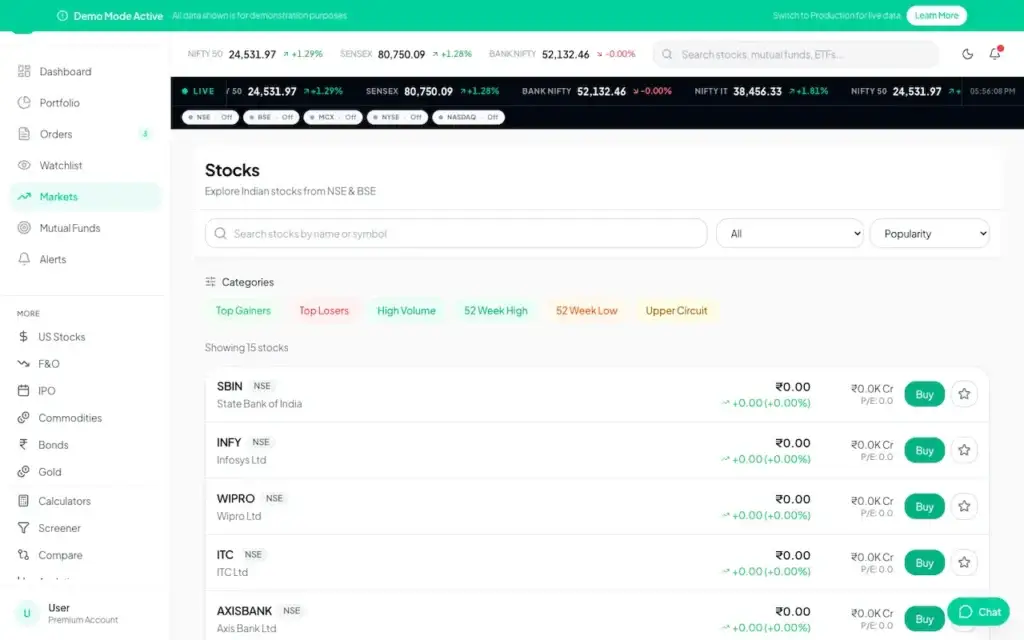
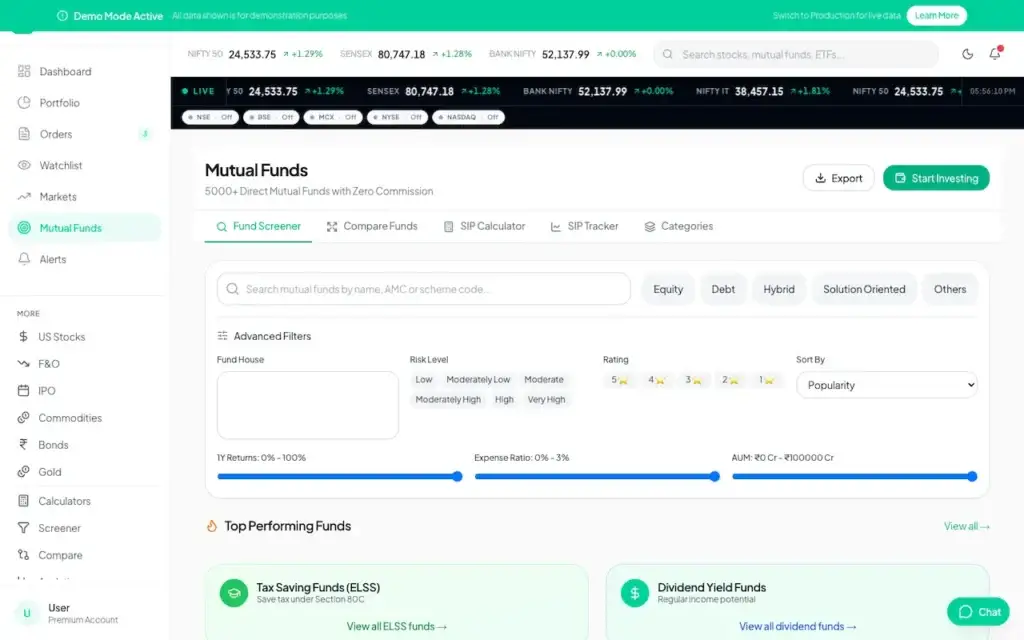
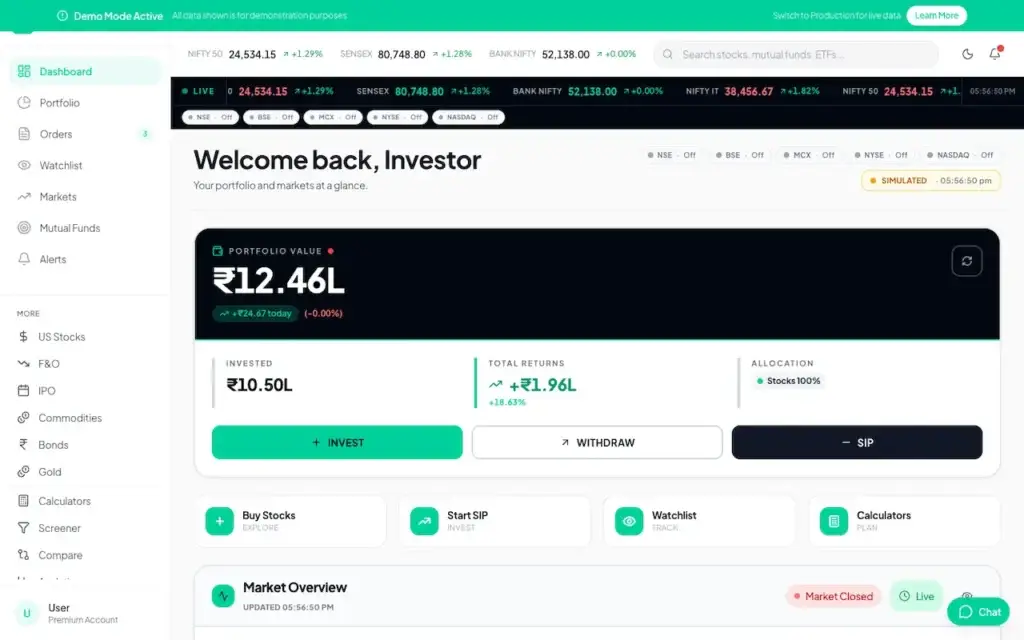
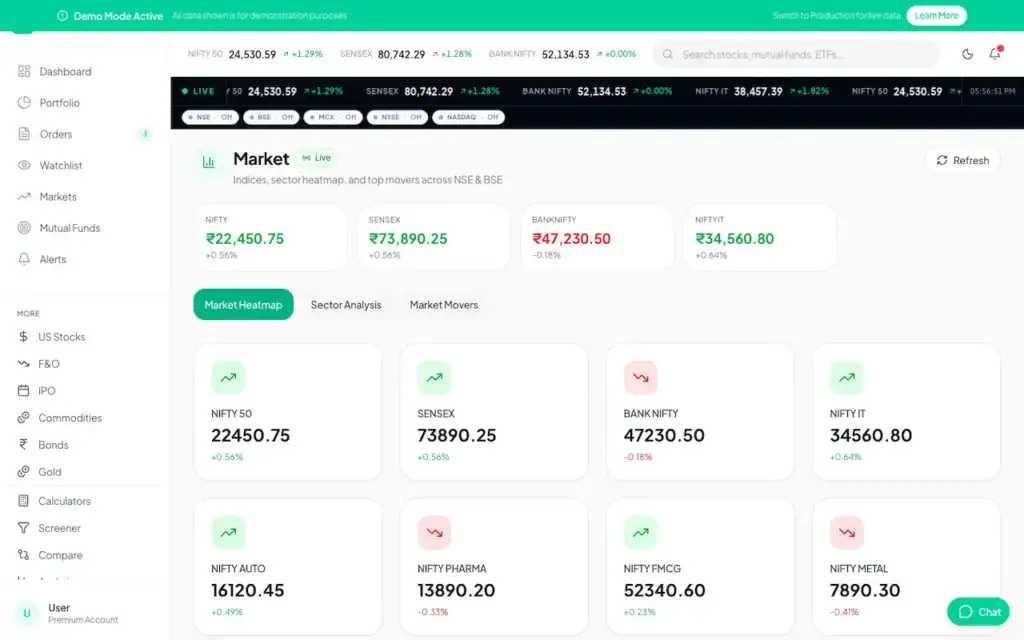
What ships in the base build: one order model covering twelve instrument types through polymorphic keys; SIP, STP and SWP as first-class entities with step-up and top-up; a seven state KYC lifecycle with checksummed documents and an audit trail; a ten page operator console with demo and production mode switching; and portfolio analytics carrying CAGR, XIRR, a risk score and sector allocation.
Named client deployments are published separately. See the Miracuves portfolio for real engagements with their own reported figures, and hold this page to what it says it is.
Frequently Asked Questions
Why publish your own security gaps?
Should we buy this or your Zerodha Clone?
What exactly do I own at the end?
Will you close the security items for us?
Have you deployed this for a licensed broker?
Can the operator work without a developer on call?
Ask us the hard questions first
Come with the nine questions above. You will get straight answers, the unimplemented two-factor endpoint included, well before a contract enters the conversation.
Explore the Groww Clone
Hire on the answers, not the deck
Six working days to a branded multi-asset investing platform on your own infrastructure, the monorepo in your repository, and a security gap list you read before signing rather than after.
Talk to Us →Miracuves is an independent software development company. We are not affiliated with, connected to, sponsored by, or endorsed by Groww.
“Groww Clone” is used descriptively. It is how the software industry refers to building a platform with functionality similar to Groww, and how clients search for it.
The entire design and codebase is built by our own team. The product contains no code, design, graphics, or content originating from the Groww website or applications.
Groww and all other third-party names and marks are the property of their respective owners, referenced here solely to describe the category of software offered.