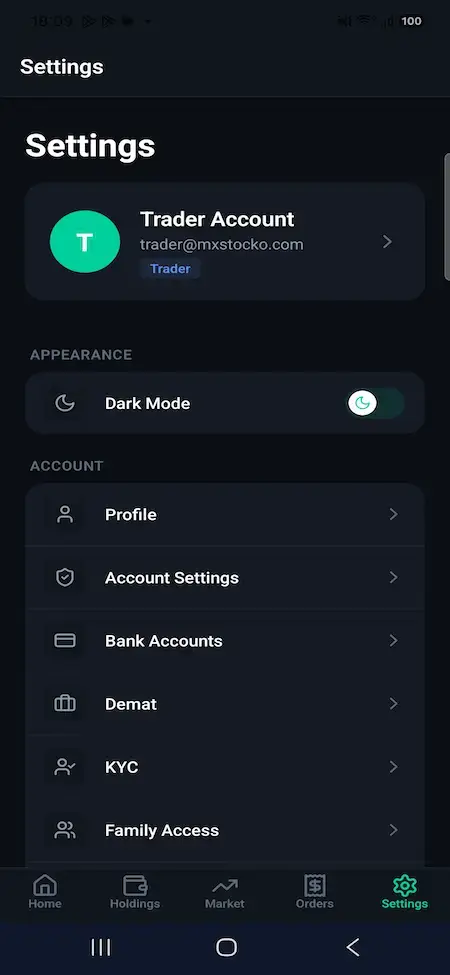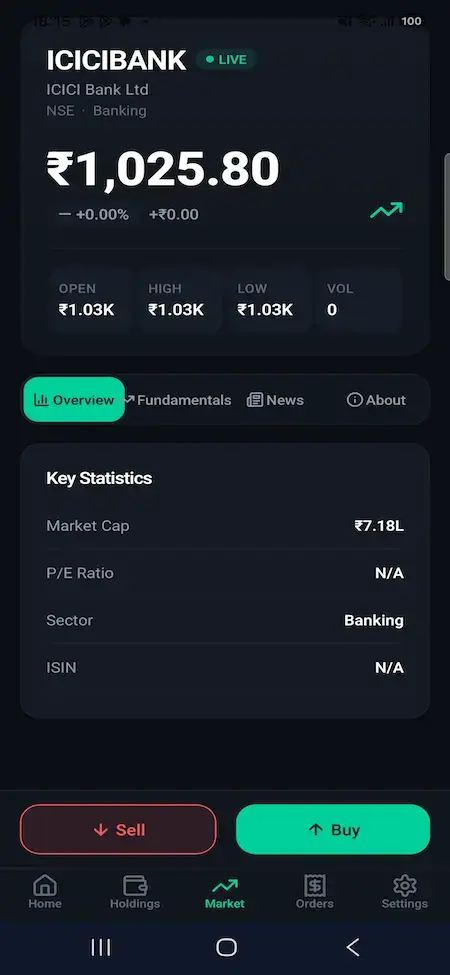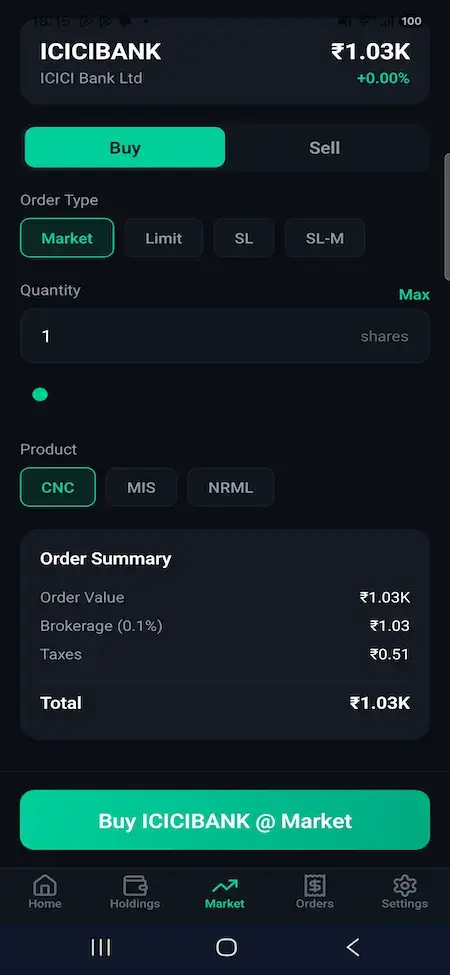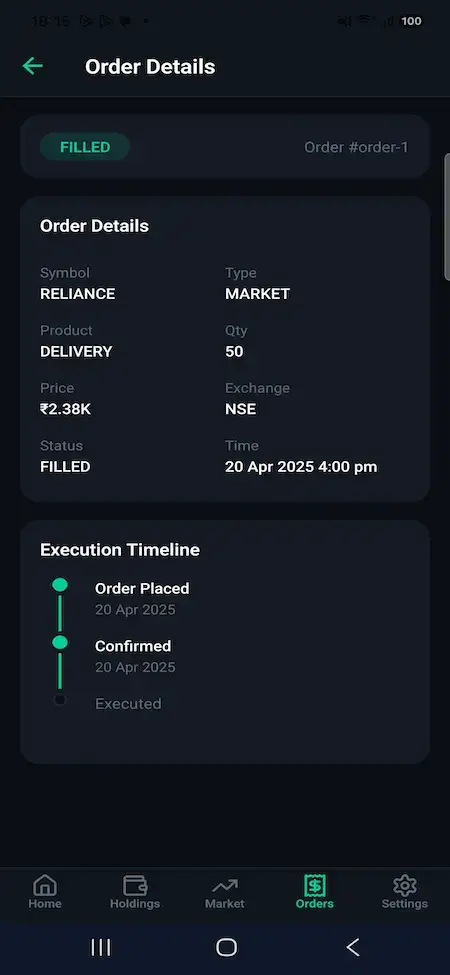























Groww Clone Features: Breadth Is the Product
Most investing platforms ship equities and quote everything else as a later phase, which is exactly when the highest-value users go elsewhere. Here one identity carries one KYC record, one set of wallets and one portfolio across fifteen asset classes. Below is everything that ships, grouped by who touches it, with every licence and third-party account named against the feature rather than implied away.
Request a Live Demo →See PricingFeature Set by Role
Six people use this platform differently. All six read the same 82 entity schema.
The New Investor
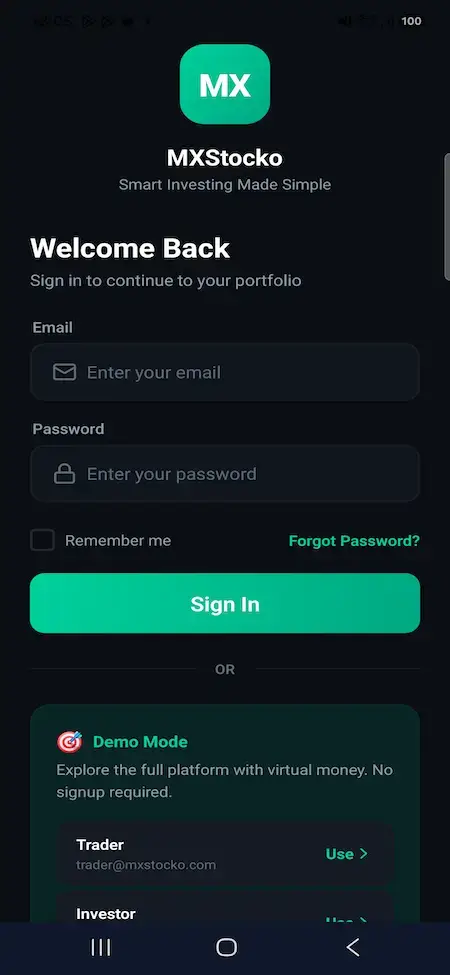
Registration, a KYC wizard with document upload, and a funded wallet before the first order. Then an academy with course progress tracking and thirteen calculators on both web and mobile, so the education sits inside the product rather than on a separate blog nobody reads.
The Long-Term Investor
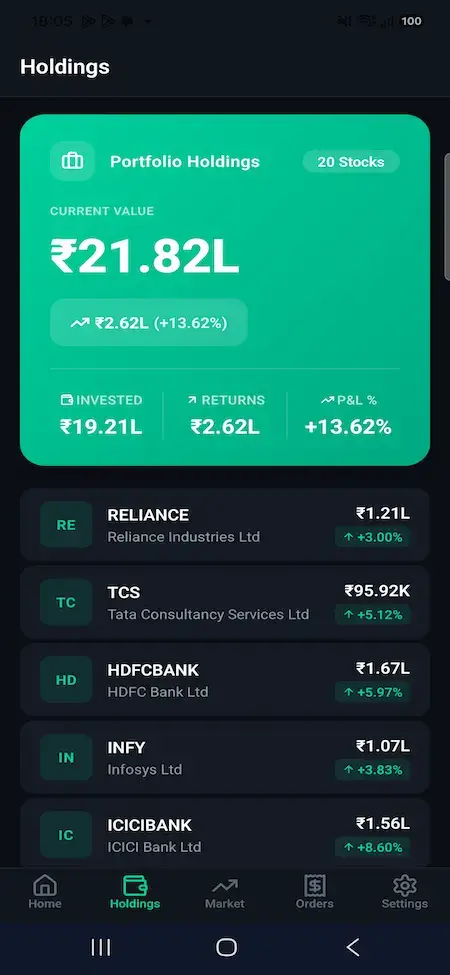
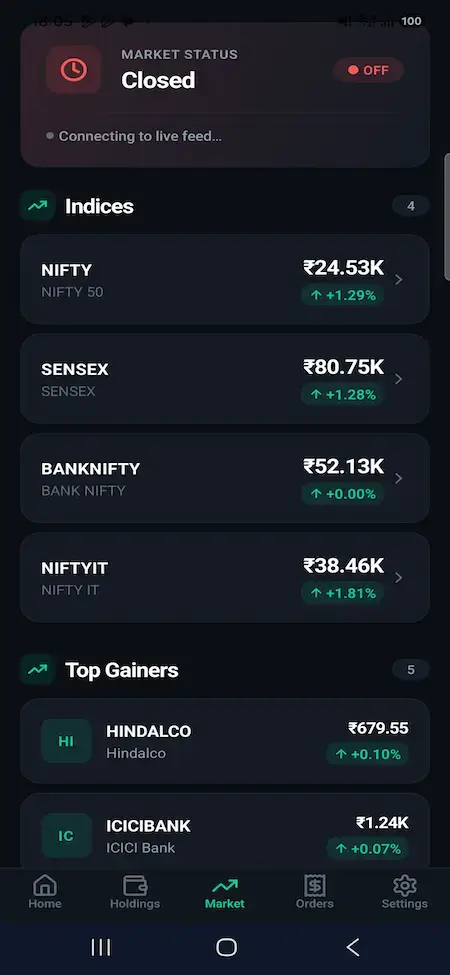
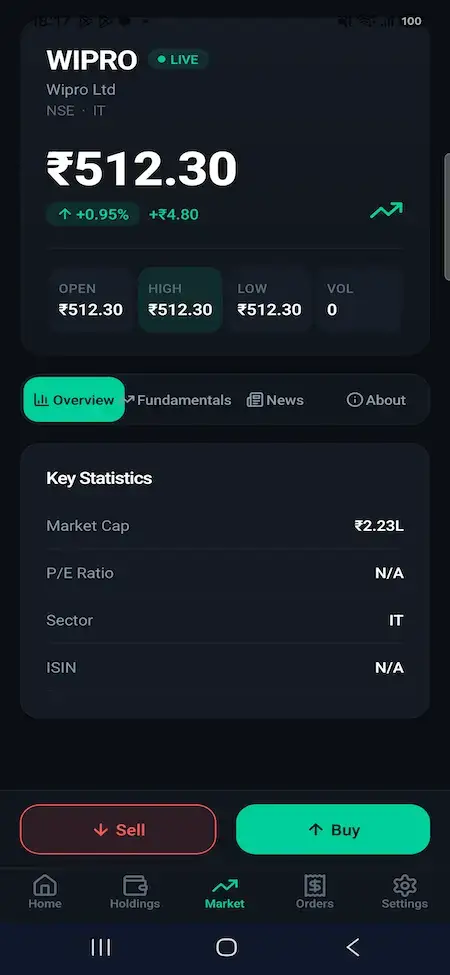
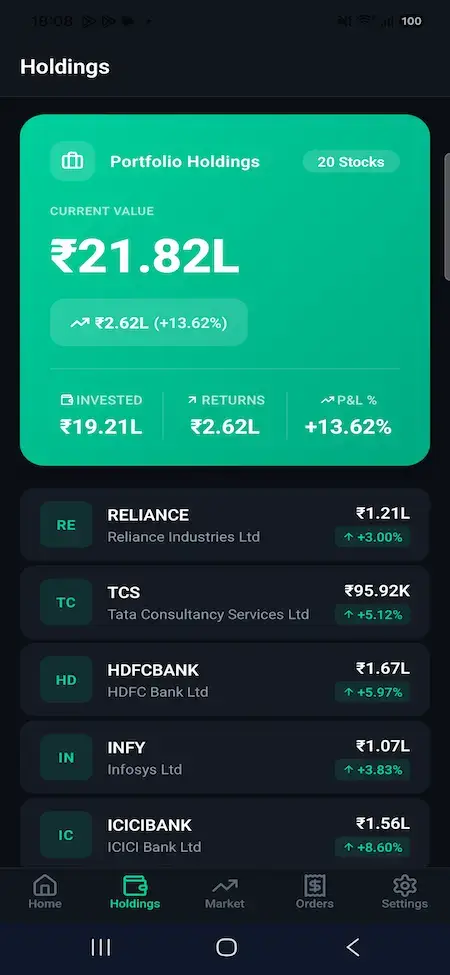
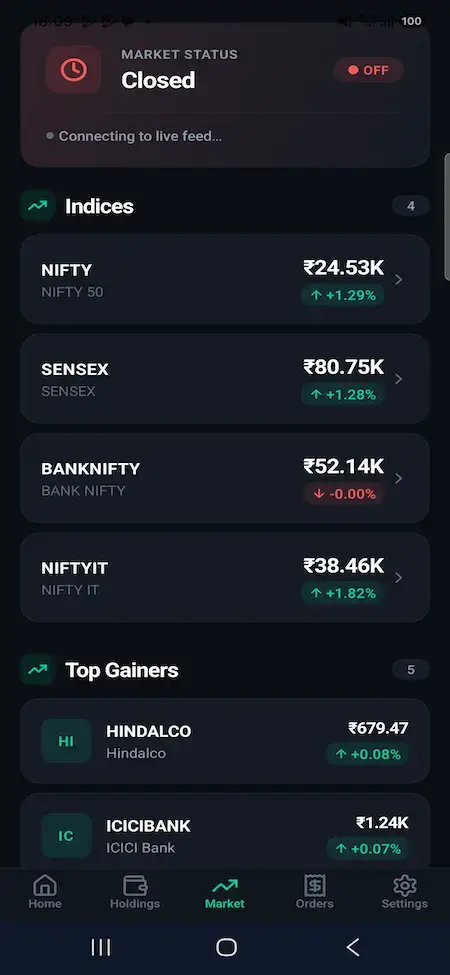
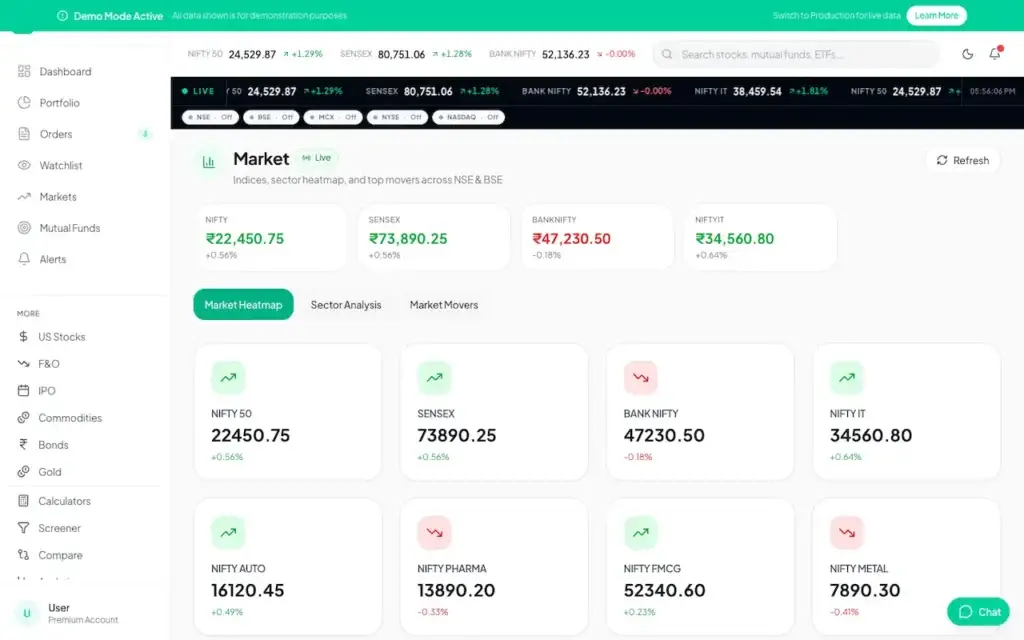
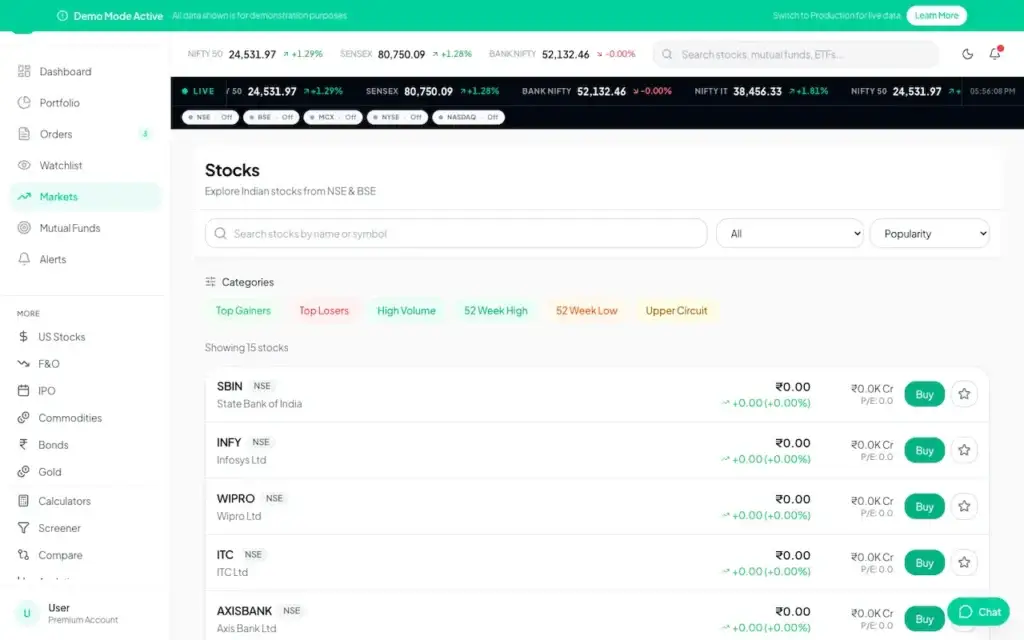
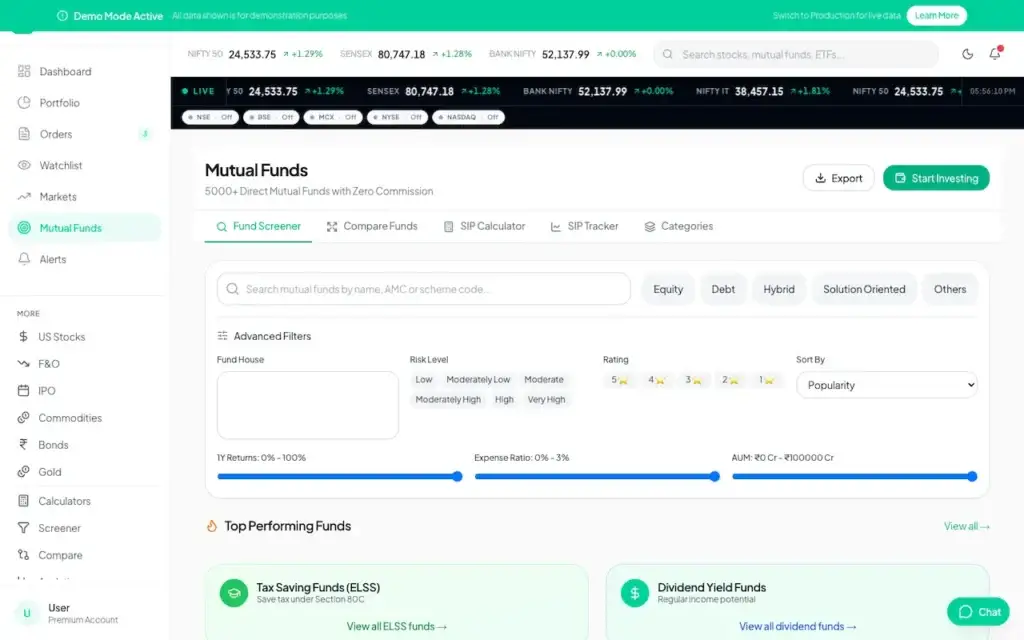
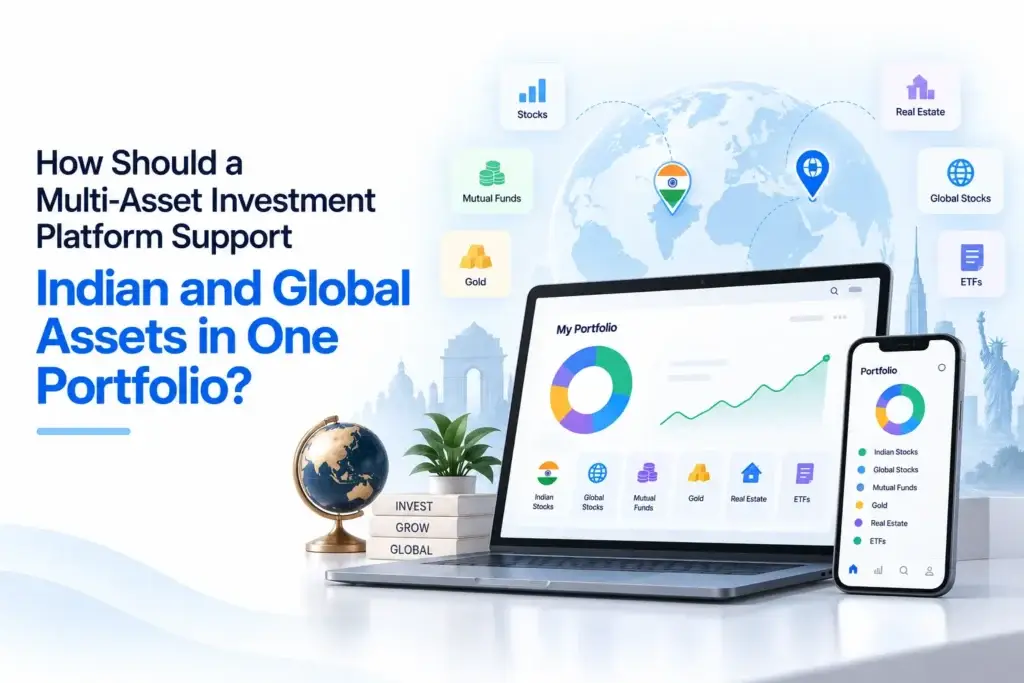
Instrument search spanning Indian equities, US symbols and funds, detail pages carrying NAV, expense ratio, exit load and benchmark, then holdings and a portfolio analytics view with CAGR, XIRR, a risk score and asset and sector allocation held as structured data rather than a rendered chart.
The Active Trader
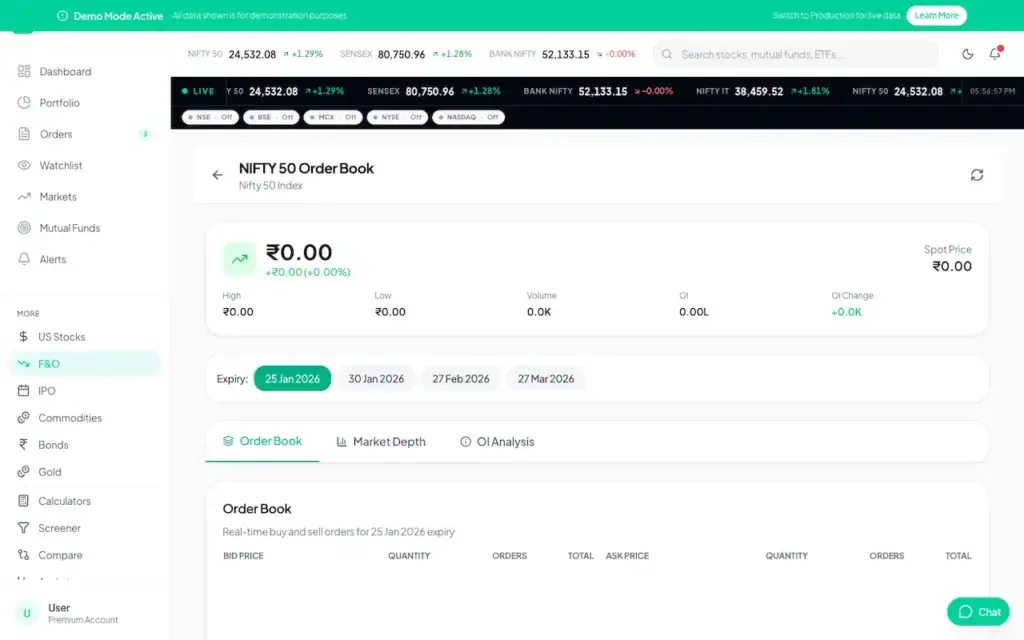
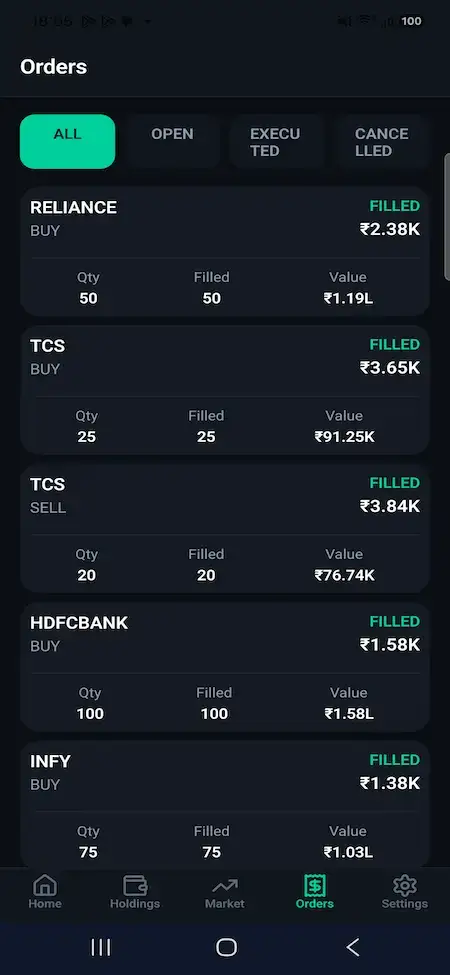
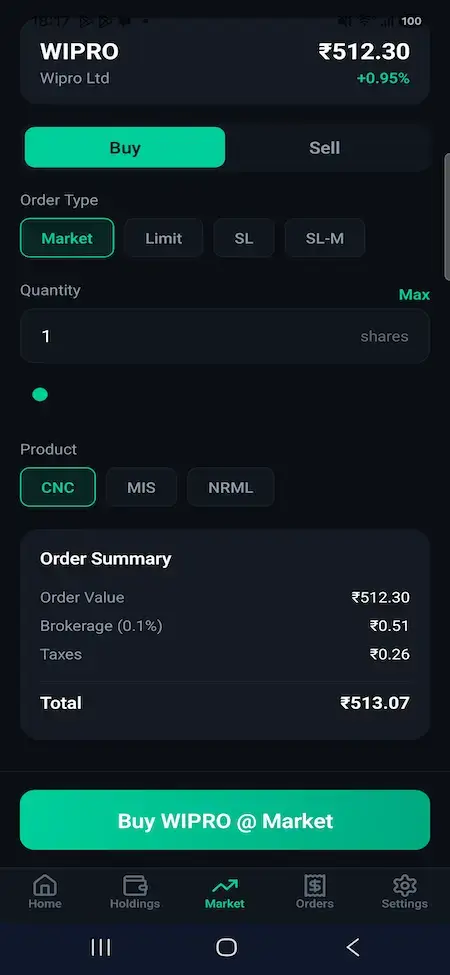
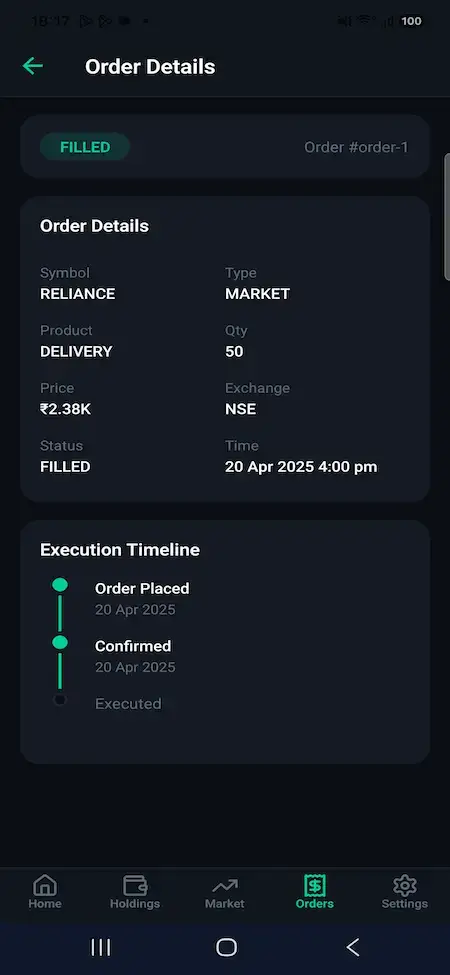
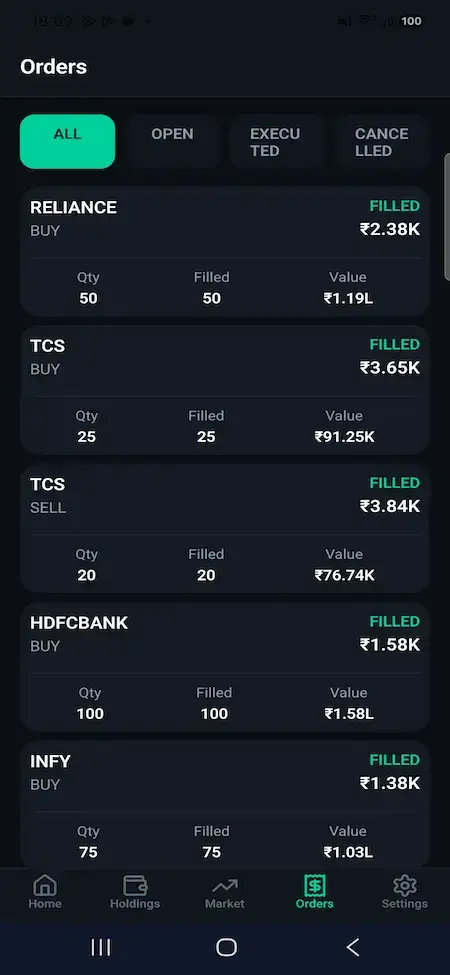
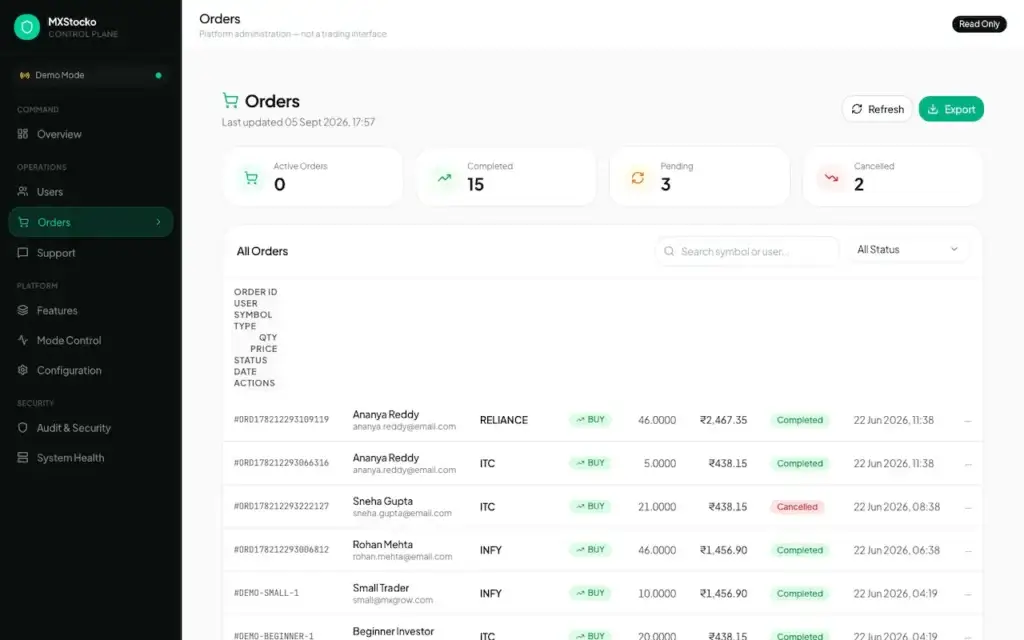
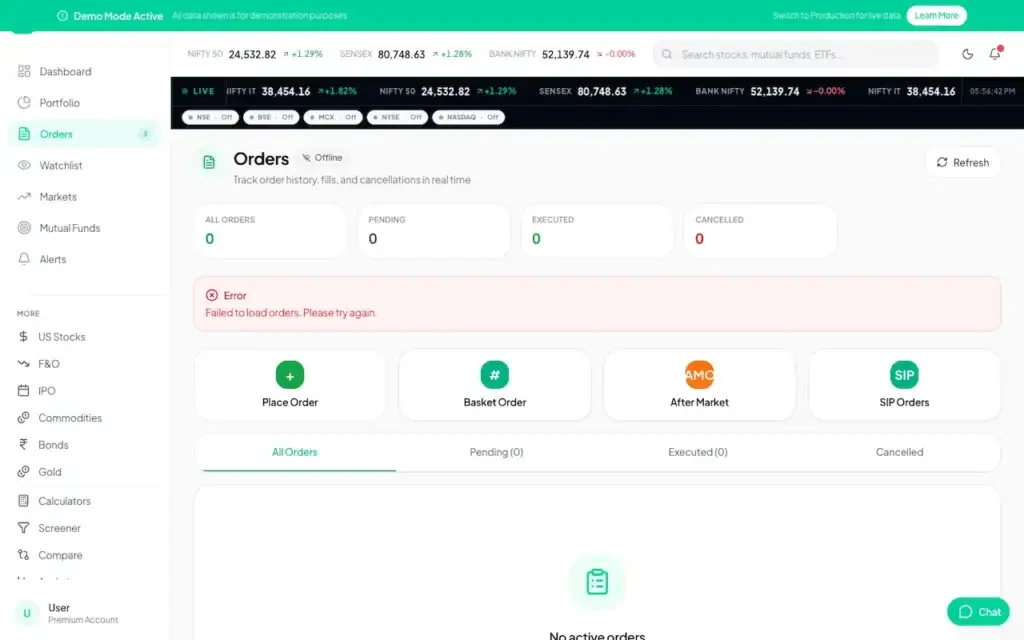
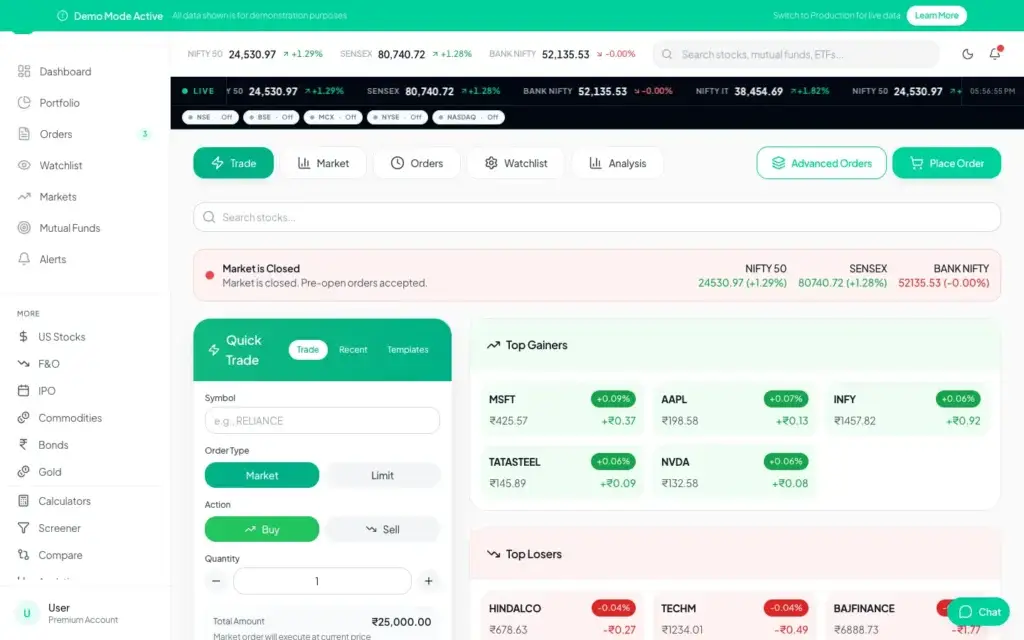
Four order types across five product types and four validity modes on five exchanges, with a seven state lifecycle carrying partial fills and preserved rejection reasons. Charges for brokerage, STT, GST and transaction fees are computed server-side and shown before confirmation, never taken from the client.
The Systematic Investor
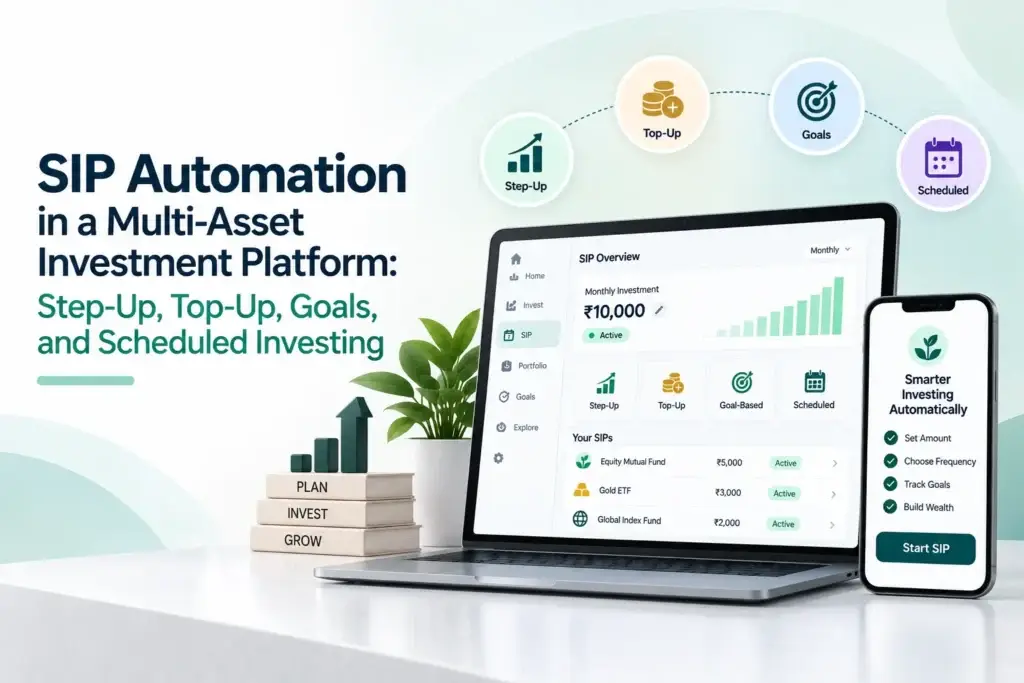
SIP, STP and SWP as three separate entities rather than variants of one, with daily through quarterly cadence, a step-up percentage, a top-up amount and auto-invest on dividend. Goals track a target amount and date and link to the plans funding them, and tax P&L splits realized gains short and long term with harvesting suggestions.
The KYC Desk
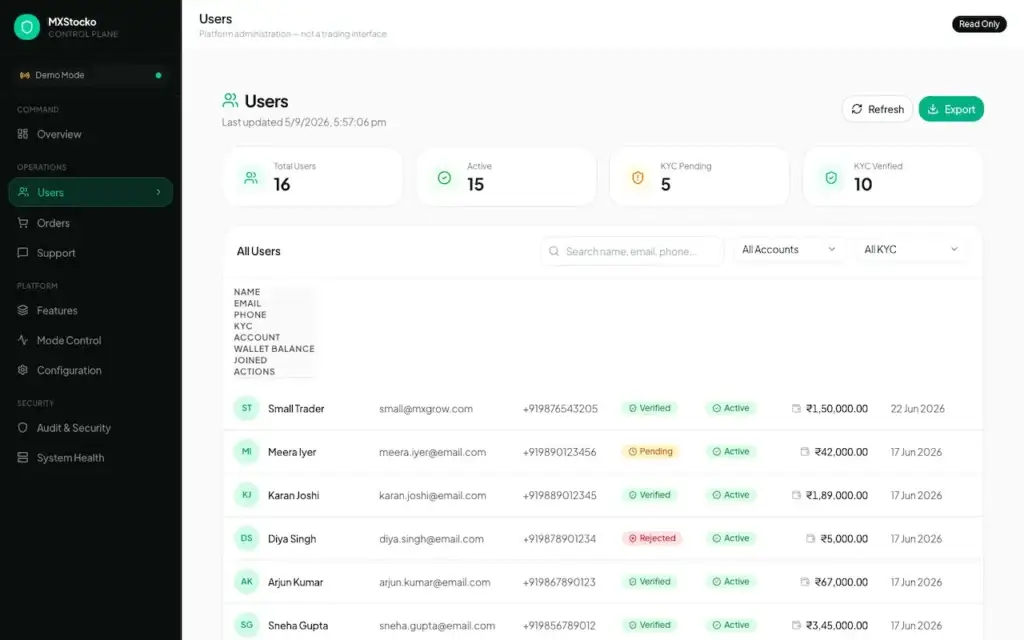
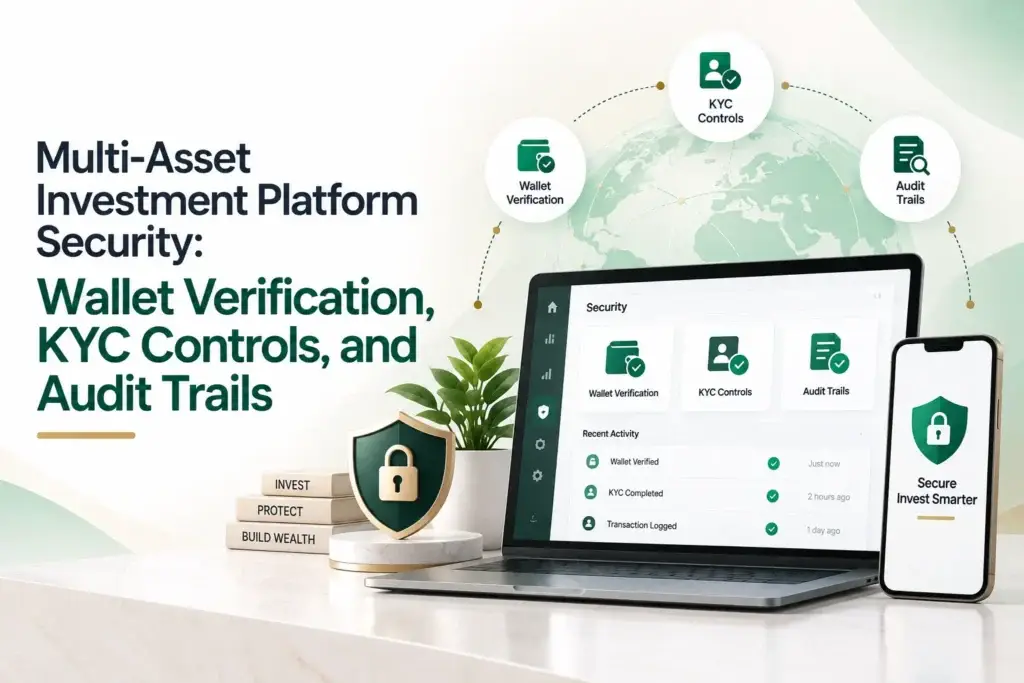
A seven state lifecycle across individual, corporate and NRI records, six document types each carrying a SHA-256 checksum, a PEP flag, a risk category and a verification level. Operators approve or reject with a stored reason, and every decision writes an audit row with before and after values.
The Operator
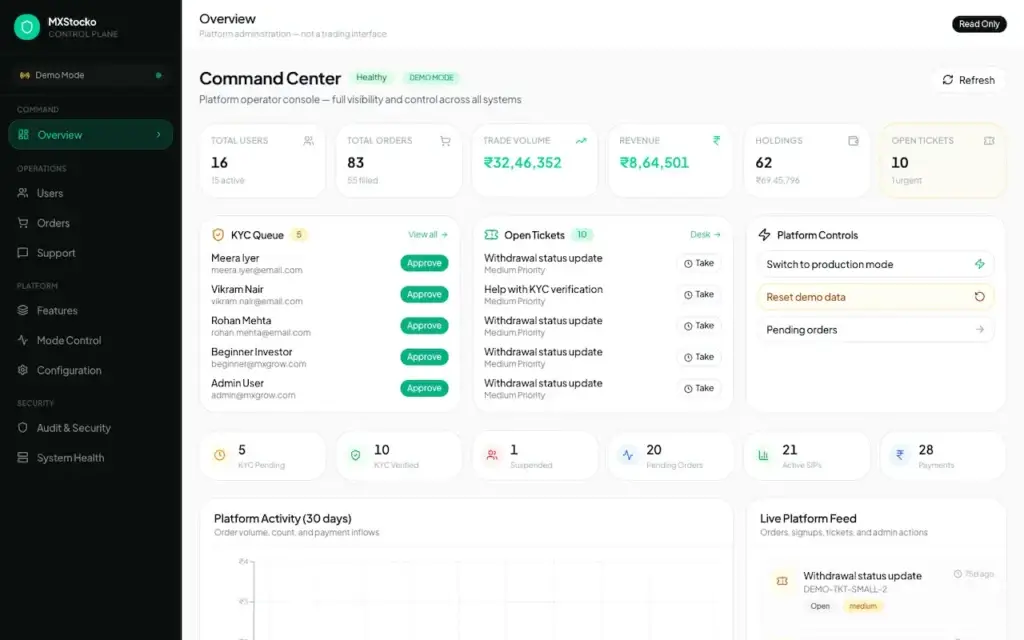
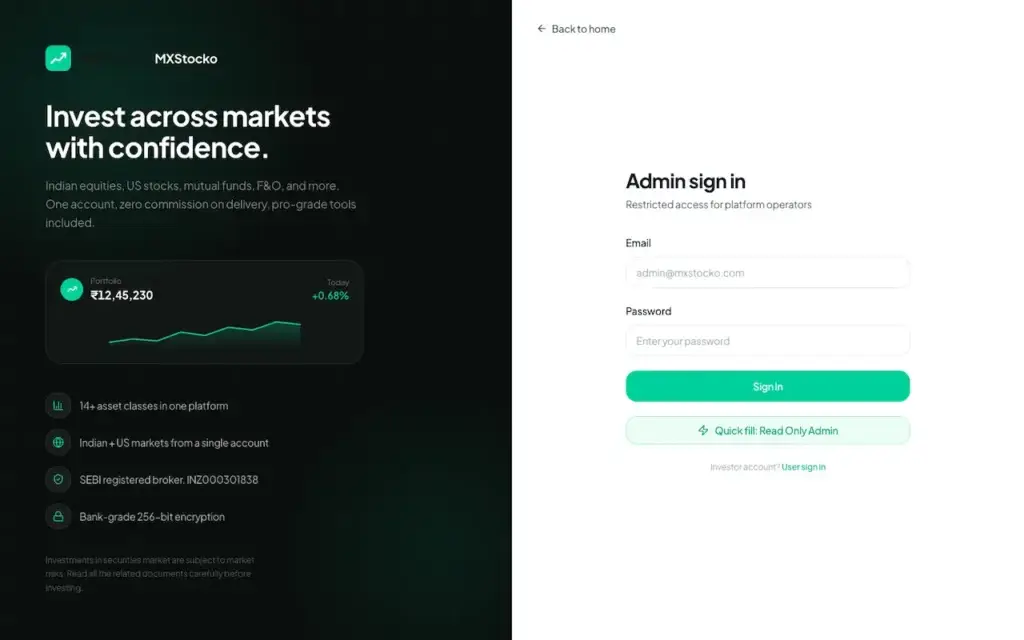
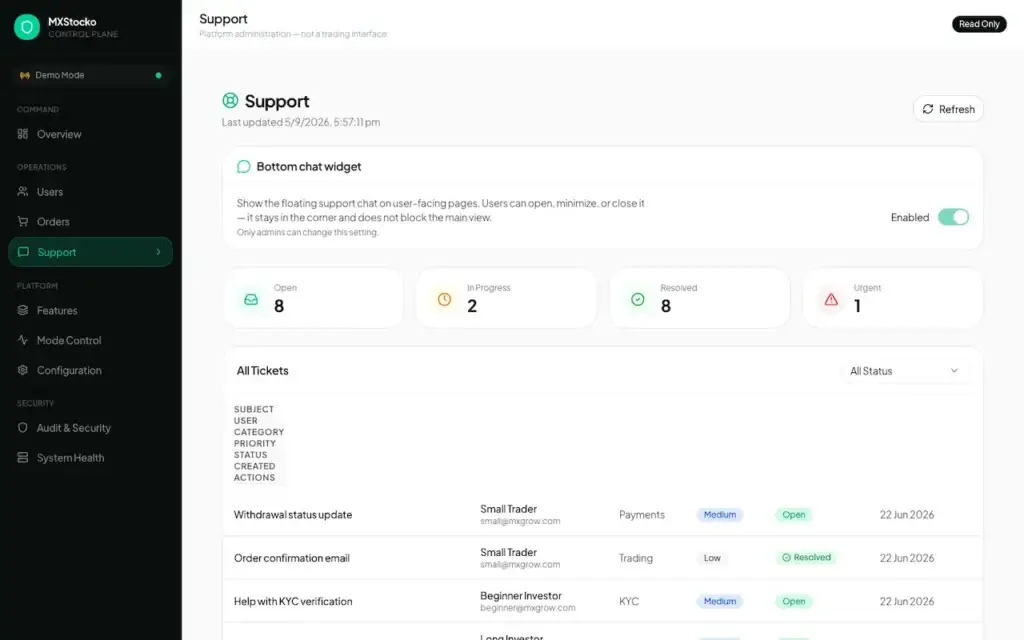
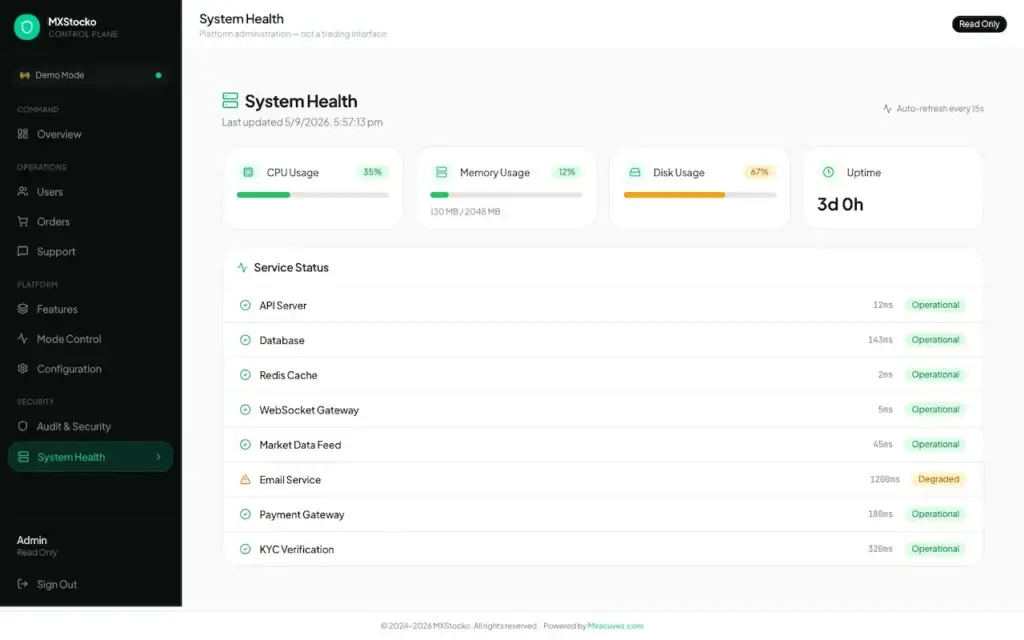
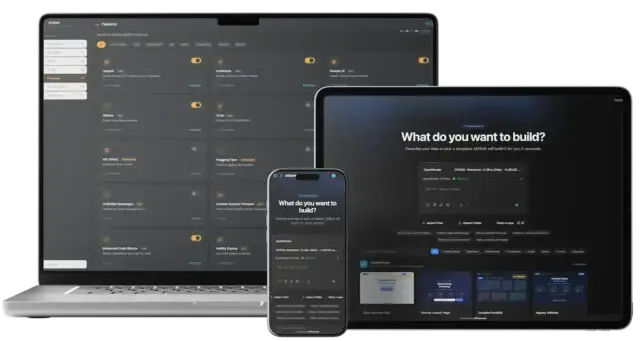
Ten console pages covering platform stats, an activity feed, user management, the KYC desk, order inspection with status override, the support ticket queue, analytics, the audit log viewer, runtime feature flags, security policies and system health, plus a mode subsystem that switches the whole deployment between demo and production.
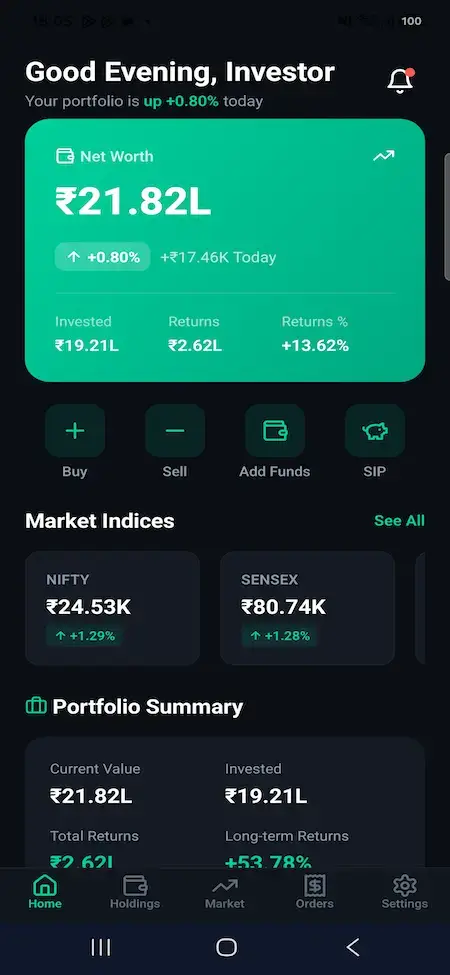
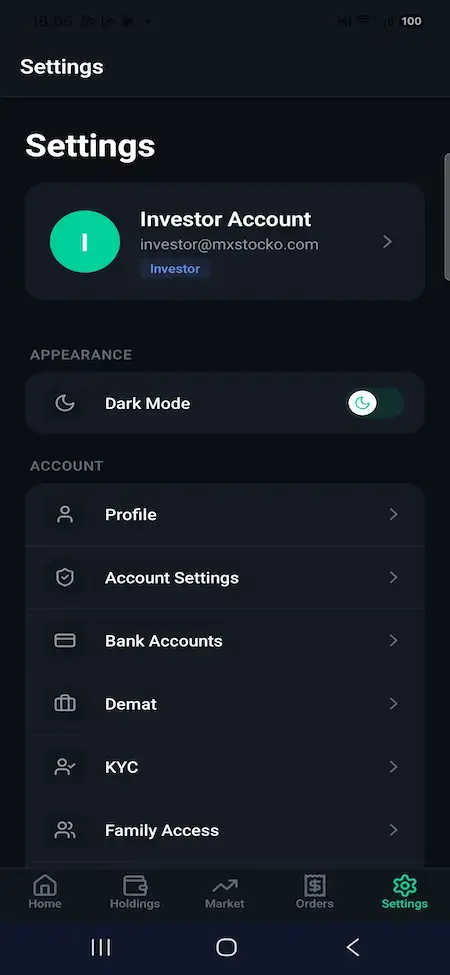
Admin authentication is held apart from the retail JWT, so a compromised customer credential grants no operator access. The F&O terminal and the operator console are deliberately web-first; the mobile app carries 119 screens of everything else.
Clone vs Generic Script vs Building From Scratch
Most routes to an investing platform hold up until the second asset class.
| What decides it | Miracuves Groww Clone | Generic investing script |
|---|---|---|
| Time to a working platform | Six working days | Unknown, and largely do it yourself |
| Asset classes in the schema | Fifteen, each with its own typed entity | Equities, and a roadmap for the rest |
| Adding the second asset class | A new entity and a seeder, behind a feature flag | A parallel stack nobody can reconcile |
| Orders across instruments | One model, polymorphic keys, twelve instrument types | One table per product, joined by hand |
| The wealth layer | SIP, STP and SWP as first-class entities at launch | Quoted as phase two, and usually never built |
| KYC and audit | Seven states, checksummed documents, audit on every mutation | Scripts, and no reviewable trail |
| Operator console | Ten pages, separate auth, runtime feature flags | A database client and a developer on call |
| Source code | Full ownership, no runtime licence, no per-seat fee | Often limited, sometimes encrypted |
Groww itself is the reference for what this category looks like; it is not a product you can buy or self-host. The commercially useful comparison is the second column against the third, and against a custom build, which is covered on the Development Cost page.
How It Works, End to End
Every step below is enforced in the service layer rather than in the client, which is what makes the sequence auditable afterwards.
Register and verify
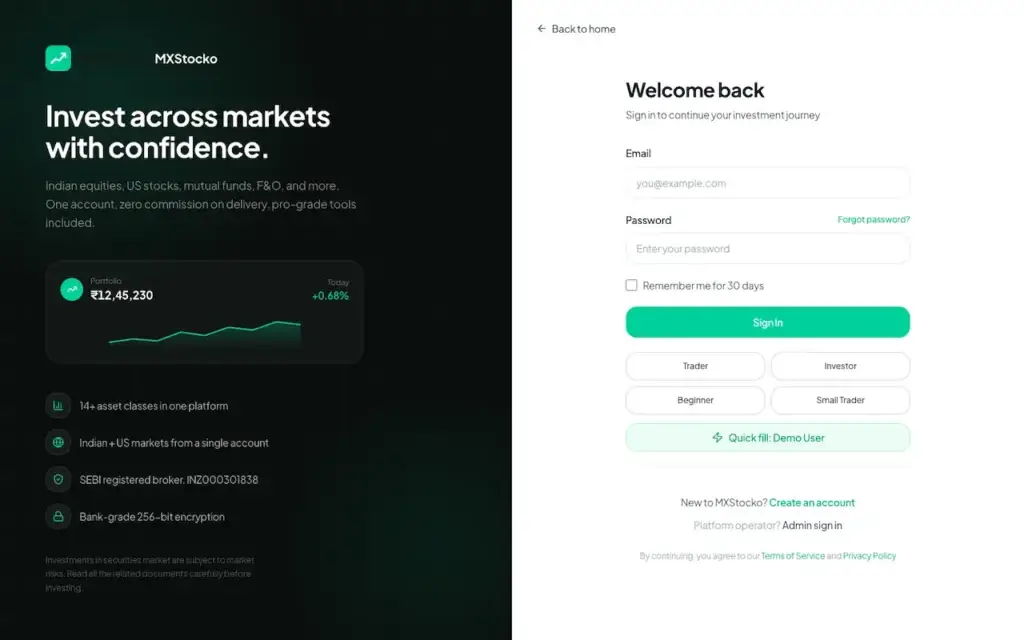
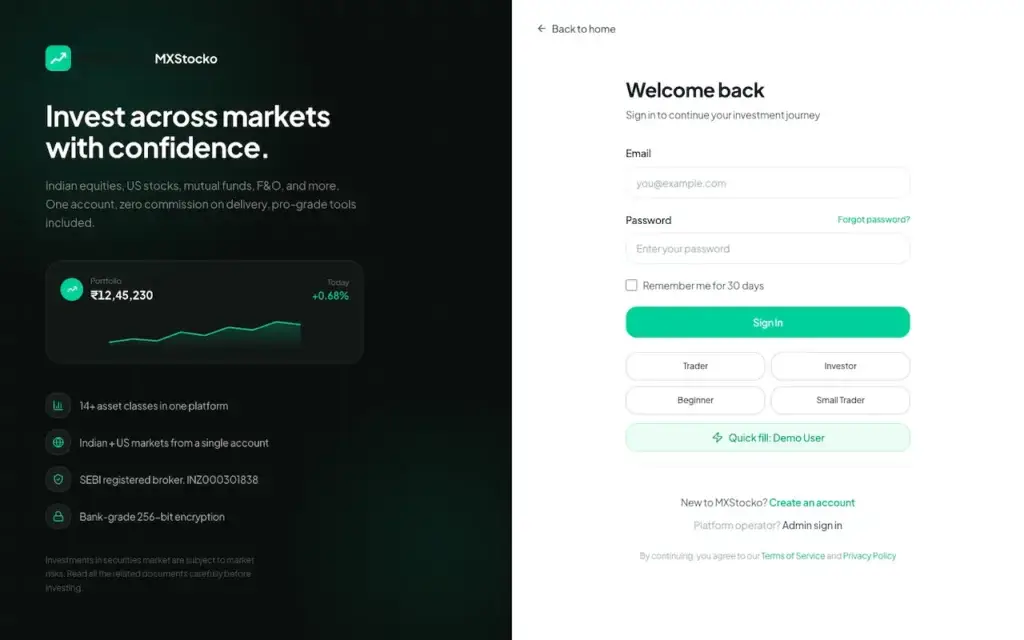
Signup creates one user record that everything else hangs from. Passwords are hashed with bcrypt on a column that is not selectable, and access and refresh tokens are issued on separate secrets with rotation, so a leaked access token does not extend into a session.
KYC submitted, then reviewed
The applicant uploads six document types, each stored with a SHA-256 checksum, and the record enters a seven state lifecycle typed for individual, corporate or NRI. An operator approves or rejects it with a reason in the console, and that decision writes an audit row a compliance officer can read back later.
Wallet funded
Four wallet types carry blocked and available balances alongside margin used and margin available. Payment is verified server-side before any wallet is credited, and refunds store the gateway response rather than a status flag, so a disputed transaction has evidence behind it.
The first order
One order model reaches twelve instrument types through polymorphic keys plus a type discriminator. Brokerage, STT, GST and transaction charges are computed on the server and shown in the ticket before confirmation, and the order moves through seven states carrying partial fills and any rejection reason.
The portfolio forms
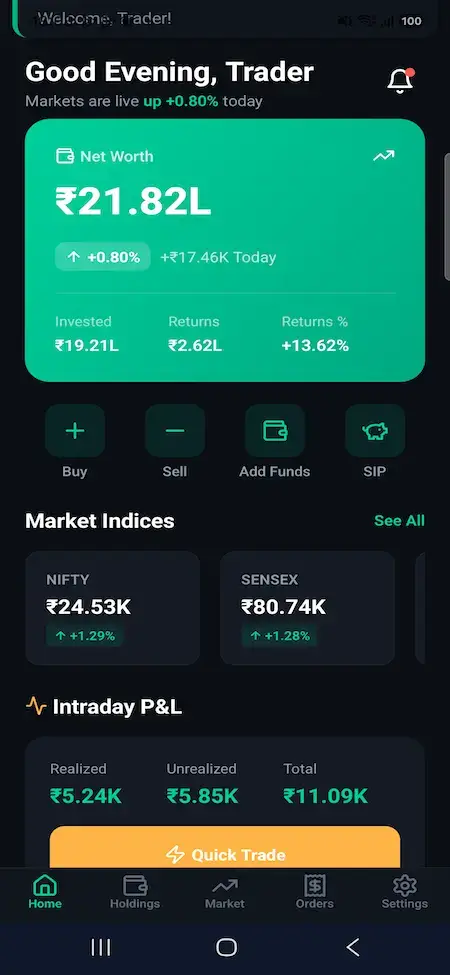
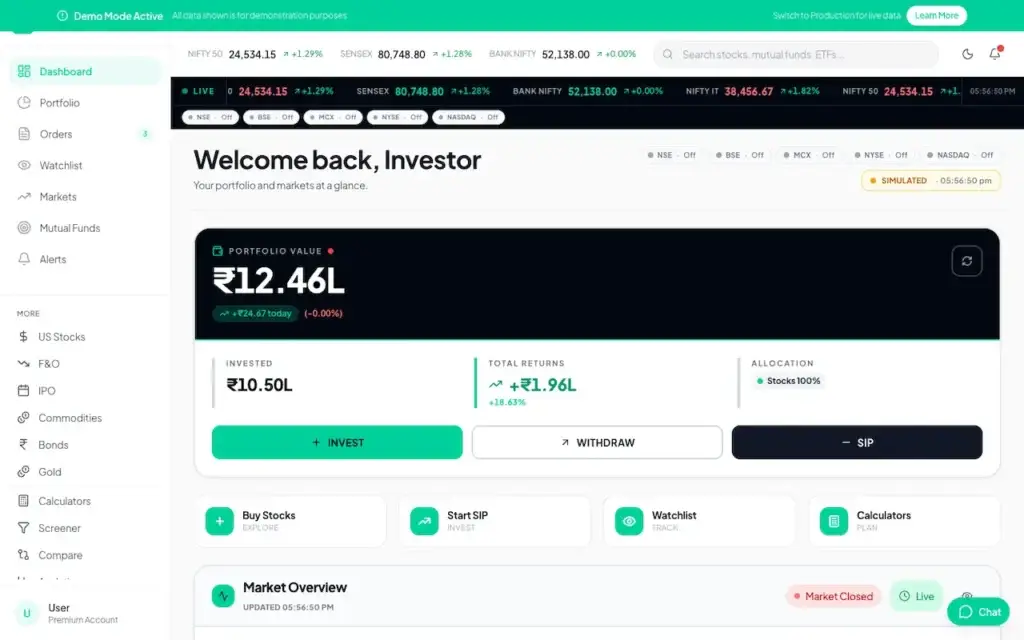
The filled order becomes a holding, and the holding appears in the same allocation view as every other asset class the user owns. Multiple portfolios per user are supported, each carrying CAGR, XIRR, a risk score, day change, holdings count and asset and sector allocation as structured JSON.
Systematic plans compound
A SIP is created with a cadence, a step-up percentage and a top-up amount, and a goal is linked to the plan funding it. Installments settle through the Bull queue path rather than in the request cycle, which is why enabling the queue workers is part of deployment rather than an optional extra.
Tax at the other end
Realized profit and loss splits short and long term, a harvesting suggestion engine runs against it, and dividends and corporate actions are tracked so holdings reconciliation stays correct across the year. This is the surface most platforms leave until an accountant asks for it.
The same sequence runs on web and on the React Native app against one API, and the platform mode subsystem lets an operator run the whole flow in demo mode without touching production data.
Every Feature Earns Its Place
Each row is here because a multi-asset platform stops working without it, not because a competitor lists it.
| Module | Why it is in the base build |
|---|---|
| Polymorphic instrument keys | Orders, holdings and watchlists carry nullable per-asset foreign keys plus a type discriminator, so a new asset class is an entity and a seeder rather than a second stack to reconcile. |
| Server-side charge computation | Brokerage, STT and GST calculated on the client can be tampered with and cannot be defended in an audit. Computing them server-side is the difference between a demo and a product. |
| SIP, STP and SWP as separate entities | They have genuinely different lifecycles. Modelling them as one entity with a mode flag is the shortcut that makes the wealth layer impossible to extend later. |
| Seven state KYC with checksums | Identity proofing and record retention are asked about first now, not last, and they are expensive to retrofit into a schema that was not designed for them. |
| Audit row on every mutation | Before and after values on operator actions are what a compliance review actually examines. A log line saying an approval happened is not the same artifact. |
| Runtime feature flags | Launching with two asset classes and widening as licensing allows only works if switching one on is a toggle rather than a release. |
| Per-plan features JSON | Five plans across four billing cycles gated by JSON means moving a feature between tiers is configuration, so packaging can be tested without engineering time. |
| Queue-backed settlement | Systematic plan installments and news ingestion are write bursts. Running them through Bull producers keeps them from contending with interactive traffic at market open. |
Underneath sit 15 database seeders for catalogs and demo data, 11 queue producer services and 5 scheduled jobs including the market data provider refresh.
The Technology Behind the Features
One language end to end, on frameworks any team can hire for, with nothing proprietary to unwind.
Every integration sits behind a service interface rather than inside a domain module. Razorpay and Stripe gateways, two market data providers and an FCM push provider all ship against those interfaces, which is what makes adding a broker venue an adapter rather than a rewrite.
What Is Not Included in the Base Package
Named here rather than discovered after the invoice.
No connection to a live venue
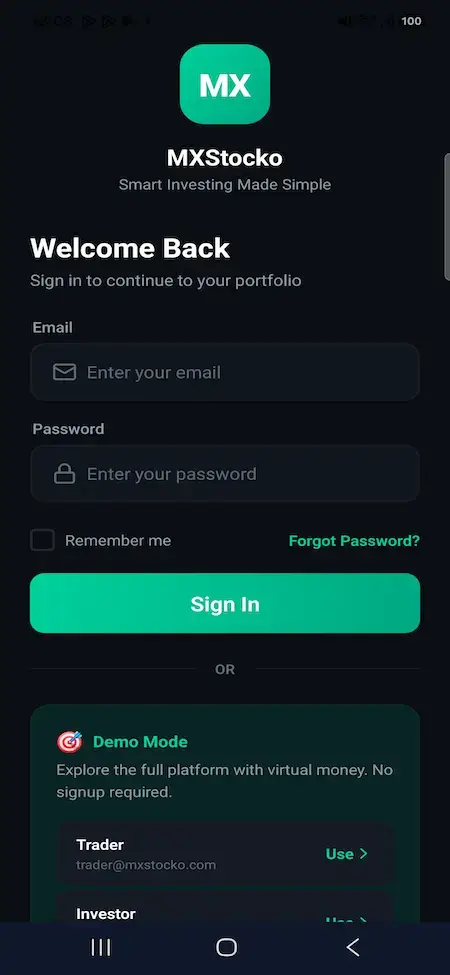
The order engine is complete and the lifecycle carries a broker reference and an exchange order id, expecting fills from a connector. What is not included is the connector itself, so wiring an actual broker is an integration per venue. Paper trading works out of the box through the demo flag, which is also what makes the sales demo safe to hand a prospect.
Market data licensing is yours
Provider adapters ship against a service interface, but exchange and vendor data licensing is a commercial arrangement between you and the vendor. The same applies to US equities: the catalog, quotes, charts and a dedicated portfolio type are built, and live US execution is an integration rather than a shipped connection.
Price alerts evaluate two conditions
Above and below, and only those. The richer condition set in the schema covering volume spikes, RSI, moving-average crossovers and news keywords is a schema capability rather than a shipped evaluator, and building it is scoped work. We call this out because the words "price alerts" usually carry more than they should.
Two-factor is not enabled
The TOTP libraries ship but the enable endpoint is not implemented, so two-factor authentication is not available to users as delivered. Enforced multi-factor for admin roles, SIEM integration and hard row-level multi-tenancy are likewise scoped rather than shipped. All four are named in the security handbook.
Licensing is not software
Miracuves supplies platform software, not broker registration. Exchange membership, broker licensing and your KYC and AML obligations remain yours as the operator. What the platform provides is the control fabric those licences are examined against, so a review has artifacts to look at rather than a promise.
What is built is real
82 entities, 55 backend modules, 167 route handlers, 119 mobile screens, fifteen asset classes with their own typed entities, four order types across five product types, a seven state KYC lifecycle, four wallet types, thirteen calculators, five subscription plans across four billing cycles, and a ten page operator console with an audit row on every mutation.
Production payment keys, SMTP, a Firebase project for push and the queue workers all need your own accounts or configuration before launch day. The full list sits on the Development Company page.
See how Miracuves compares to agencies and freelancers
The deployment process, a modelled reference deployment for a multi-asset launch, the security items to close before go-live, and the nine questions worth asking before you hire anyone - on the Development Company page.
Frequently Asked Questions
How is this different from your Zerodha Clone?
Which asset classes are actually included?
Can it trade live, or is it a demo?
Does it handle SIPs, goals and tax properly?
What does the mobile app actually cover?
What can the operator do without a developer?
Run the breadth demo, not the feature reel
Search an instrument, add it to a watchlist, place an order with the charges visible, then open the portfolio and watch the same position land in the allocation view alongside every other asset class.
Explore the Groww Clone
One identity. Fifteen asset classes. One portfolio.
A Next.js web application, a 119 screen React Native app and a ten page operator console on one 82 entity PostgreSQL core, with the full source on infrastructure you own.
Talk to Us →Miracuves is an independent software development company. We are not affiliated with, connected to, sponsored by, or endorsed by Groww.
“Groww Clone” is used descriptively. It is how the software industry refers to building a platform with functionality similar to Groww, and how clients search for it.
The entire design and codebase is built by our own team. The product contains no code, design, graphics, or content originating from the Groww website or applications.
Groww and all other third-party names and marks are the property of their respective owners, referenced here solely to describe the category of software offered.