
White Label Load Board Software - Freight Marketplace, Carrier TMS & Broker Intelligence

One platform carrying the lane end to end. Brokers and shippers post freight with multi-stop pickups and deliveries, carriers search and bid, counter-offers run across several rounds, and whichever load is won then moves through dispatch, GPS tracking, proof of delivery and invoicing without ever leaving the record it started on. Beneath that sits a complete carrier TMS covering fleet, drivers, hours of service, DOT compliance, fuel, maintenance and geofencing, with broker-side carrier intelligence and an operator console alongside it.

One API feeding three surfaces. Members work in a React client or a 126-screen Flutter application, while operators govern from an admin control plane, all of it over more than 280 REST endpoints and 74 PostgreSQL tables.

Go Live in 6 Days with Load BoardCarrier TMSBroker ToolsAI-AssistedWhite-LabelAPI-Complete

⚡ Platform at a Glance

The Board Is Just The Front Door

Posting, searching, bidding, countering and assigning are table stakes. What separates a platform from a listing site is what follows: the won load dispatches to a named vehicle and driver, tracks on GPS, collects a proof of delivery and raises its invoice against that same record.

A Genuine TMS, Not A Bolt-On

Vehicles and drivers, dispatch and routing, hours-of-service logs, DOT compliance records, fuel purchases feeding IFTA, maintenance scheduling, geofence alerts and speed violations. What a carrier gets is an operational backbone, not merely somewhere to go looking for freight.

Intelligence Where Tendering Happens

Fleet visibility, verified companies, ratings and reviews, broker credit scores, rate history and hot lane signals. Everything a broker needs to decide where freight goes sits beside the load itself rather than inside a subscription they have to remember to open.

Negotiation That Leaves Evidence

Straight bids alongside multi-round counter-offers, with statistics, bookmarks and lost reasons. What was offered, who offered it and why it was turned down stays fixed to the load rather than disappearing into somebody call log.

Multi-Stop Modelled Properly

Every load carries PickupLocation and DeliveryLocation child tables ordered by sequence, holding dates, times, contacts and instructions. Multi-stop lanes are a first-class shape in the schema, not a line somebody typed into a comments field.

Adapters Instead Of Lock-In

Payments, calls and SMS, voice transcription, inbound and outbound mail, market rates and regional compliance each sit behind an adapter interface carrying a mock fallback. Changing provider means changing an environment variable, never touching domain code.

🚀 Ready to launch your own freight marketplace and carrier TMS?

More than 6,000+ Companies Trust us Worldwide


Live in Action

Live Demo - Live Board, TMS & Admin Console

Don’t just take our word for it. Open the Miracuves white label load board platform yourself. All four roles have a working login and no setup is required. Post a load as a shipper, bid on it as a carrier, negotiate it as a broker, then open the same activity in the operator console.
CARRIER WORKSPACE

white label load board platform - Carrier & Dispatch

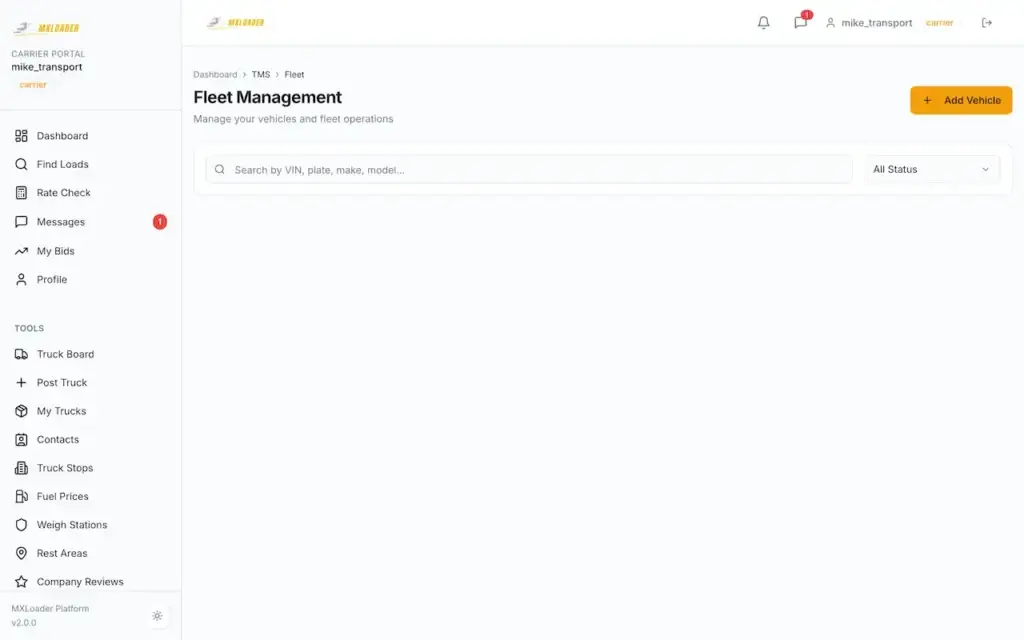
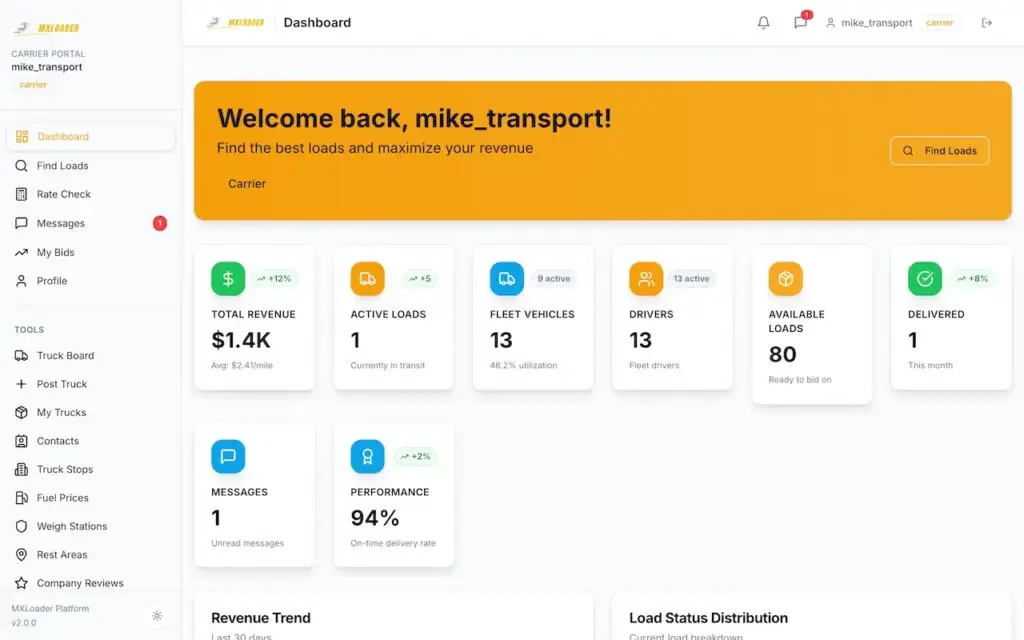
The carrier surface. Search and filter the board, submit bids and counter-offers, post available trucks, then dispatch the won load to a vehicle and driver with routes, GPS tracking, HOS logs, DOT records, fuel purchases, maintenance and geofence alerts.

  • Open the web app in your browser
  • Login with the carrier credentials below
  • Explore: Board, Bids, Dispatch, Fleet, Compliance
  • Try: mike@miketransport.com | password123

SHIPPER WORKSPACE

Post Freight, Compare Bids, Track to Delivery

The demand side. Create postings with locations, dates, equipment, weight, commodity, distance and target rate, add multi-stop legs, compare incoming bids against carrier trust signals, then follow arrival, departure and delivery milestones and pull the BOL, rate confirmation and POD.

  • Open the web app in your browser
  • Login with the shipper credentials below
  • Explore: Post Load, Bids, Tracking, Documents
  • Try: logistics@walmart.com | password123

BROKER WORKSPACE

Coverage, Negotiation & Carrier Intelligence

The margin side. Work uncovered and at-risk loads, search by lane, date, equipment and distance, check hot lanes and rate history, review carrier verification, fleet, ratings and credit, then negotiate through counter-offers and hold the conversation record against the load.

  • Open the web app in your browser
  • Login with the broker credentials below
  • Explore: Coverage, Counter-offers, Carrier Intel, Rates
  • Try: broker@chrobinson.com | password123

ADMIN CONSOLE

Governance, KYC, Compliance & Revenue

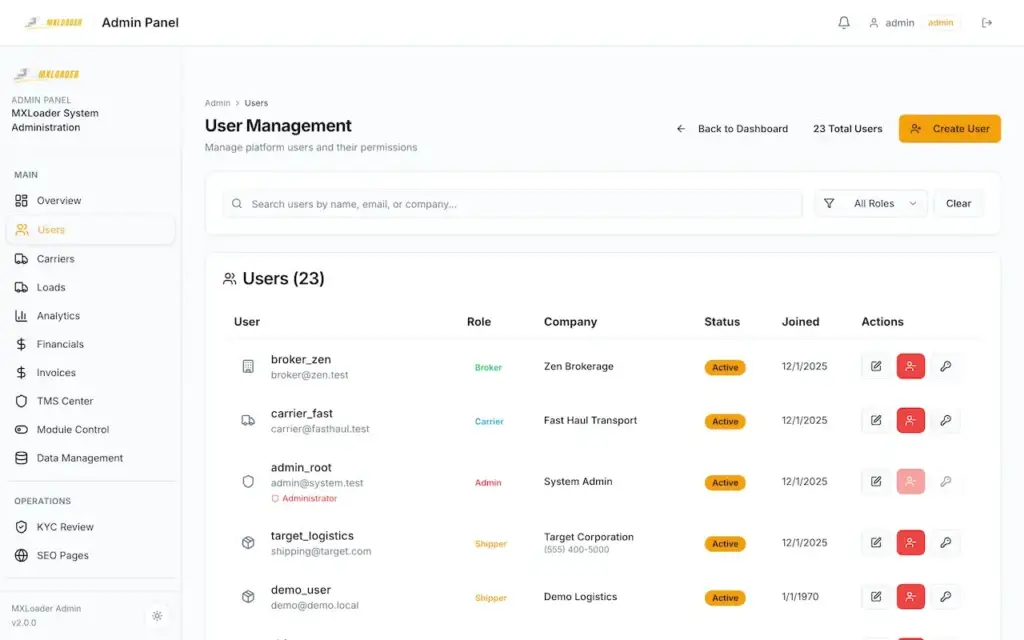
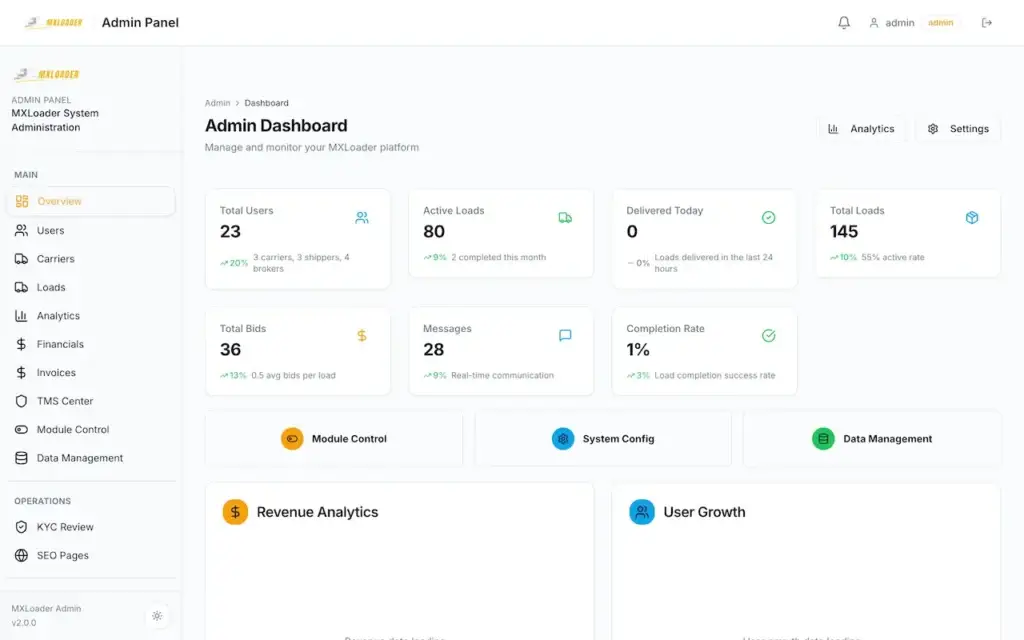
Operator governance. User lifecycle and role management, load intervention, KYC review queues, compliance records, financial overview and invoice ageing, platform analytics, module toggles, pricing plans, SEO surfaces and the audit and activity logs behind every admin action.

  • Open the admin console in your browser
  • Login with the admin credentials below
  • Explore: Users, KYC, Compliance, Financials, Analytics
  • Try: admin@mxloader.com | password123

Watch It Work

Platform Walkthrough: Board, Negotiation, Dispatch & Admin

A walkthrough of the platform as an operator sees it, rather than a feature reel. It opens on the load board with lane, equipment and date filters applied, posts a multi-stop load from the shipper side, and follows the bid arriving on the carrier side. A counter-offer runs a round and is accepted, and the load moves from posted to assigned. Dispatch assigns a vehicle and a driver, a route is created, and GPS positions are followed on the map with a geofence alert firing on arrival. A public tracking link is generated and opened as an outside party would see it. Proof of delivery is uploaded, the document passes MIME and magic-byte validation, and an invoice is raised against the load. The same activity is then opened in the admin console: the KYC review queue, compliance records, the financial overview with invoice ageing, and the audit log showing who changed what. It closes on module toggles and pricing plans. If a specific flow matters more than the tour, ask and we will open it live with data in it.

Every Screen Mapped

Platform Flows - Board, TMS, Broker Tools & Operator Screens

The interface across the surfaces that matter: board search and load detail with multi-stop legs, the bid and counter-offer thread, truck posting, dispatch with vehicle and driver assignment, the live GPS map with geofences, HOS and DOT compliance records, fuel and maintenance logs, the market intelligence views with rate history and hot lanes, carrier verification and credit, document upload and secure download, invoices and subscription plans, and the operator console with its KYC, compliance, analytics and audit queues.
Plus custom device
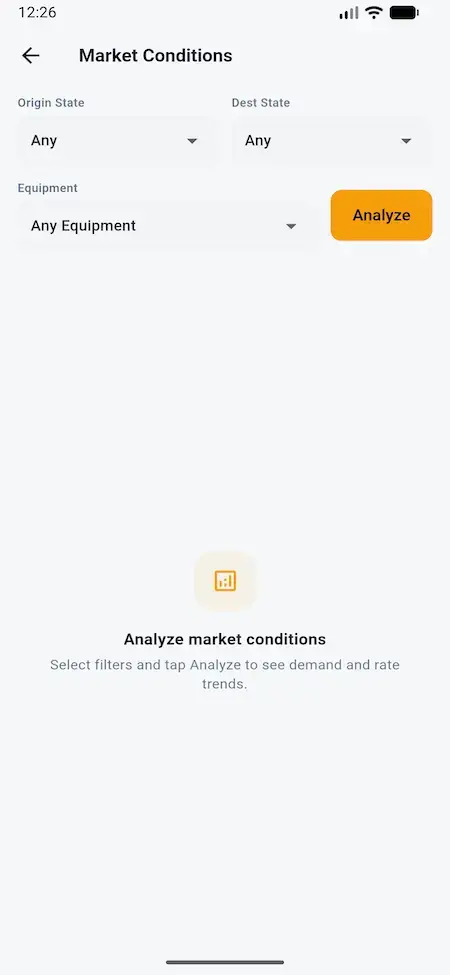
DAT load board shipper mobile market analysis form for lane and equipment selection
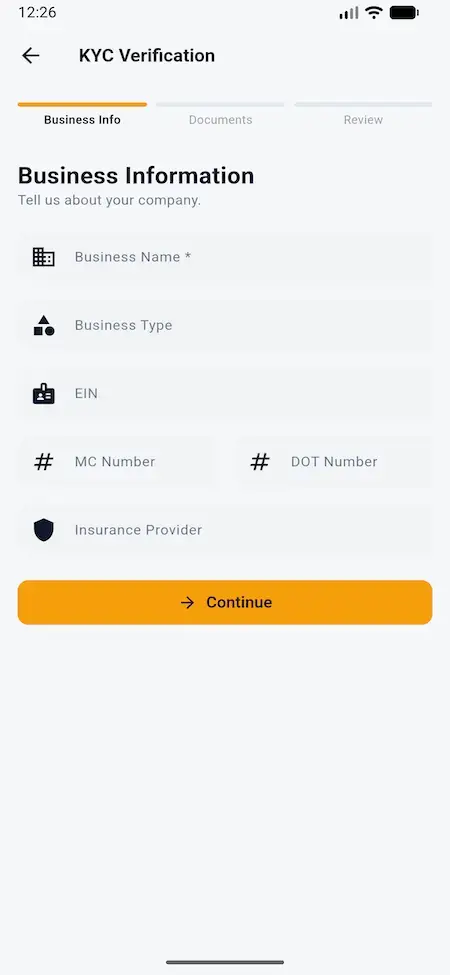
DAT load board shipper mobile KYC form for business, tax, address, and identity documents
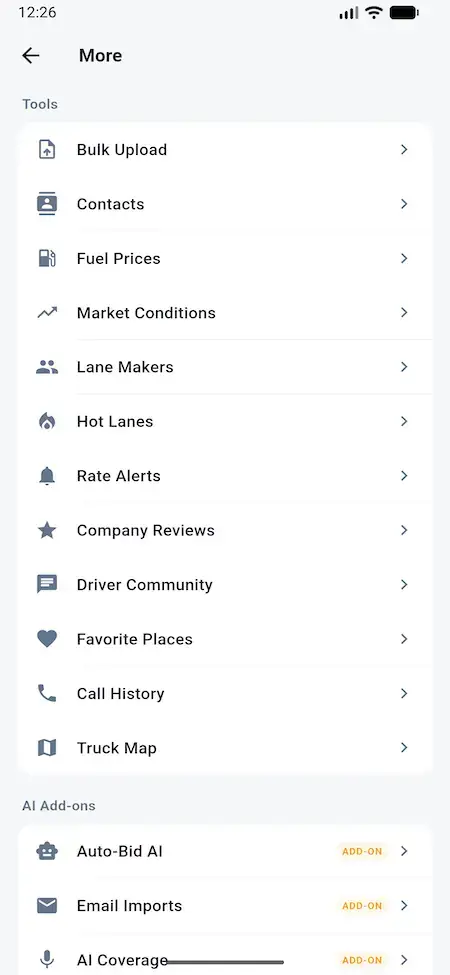
DAT load board shipper mobile tools menu with bulk upload, contacts, market conditions, lanes, rates, and reviews
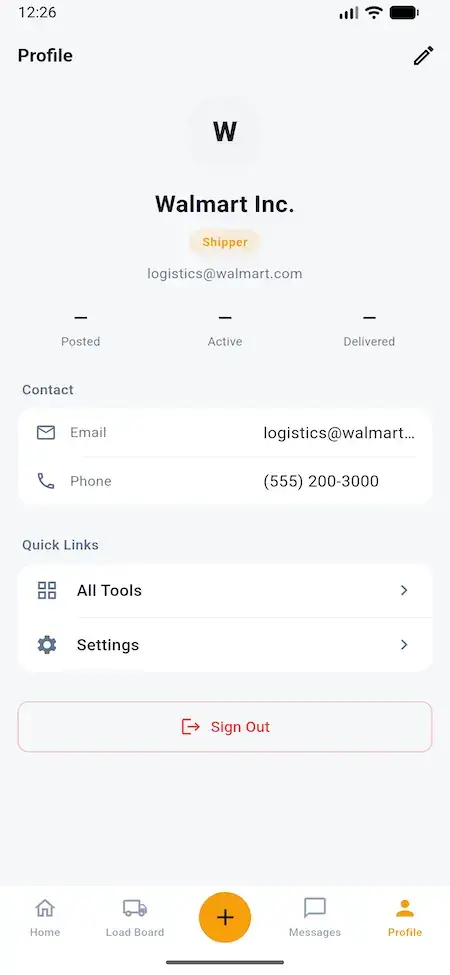
DAT load board shipper mobile company profile with contact and load information
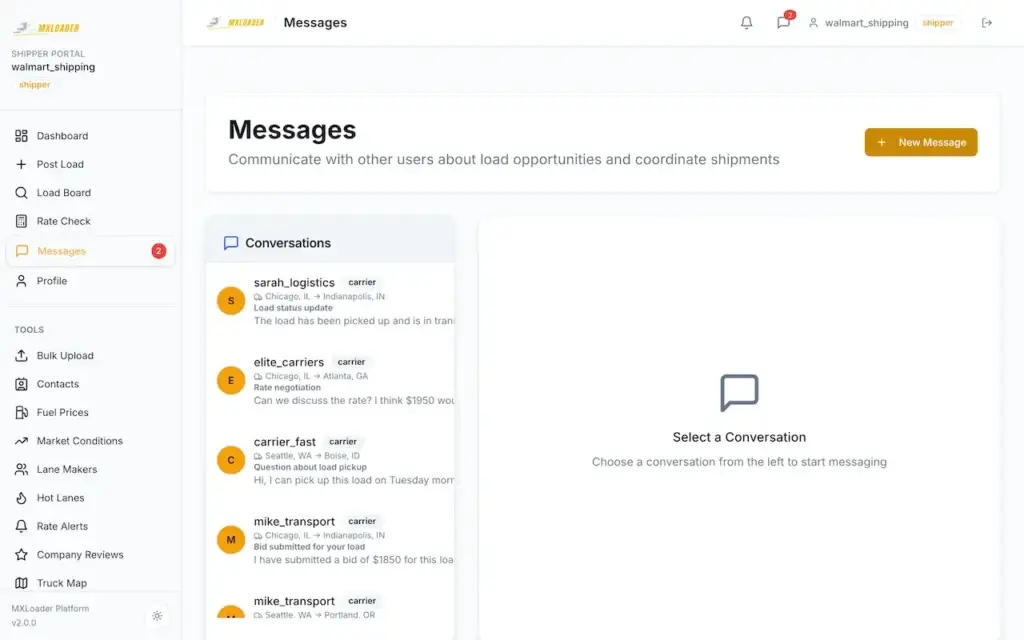
DAT load board shipper mobile inbox with empty-conversation state
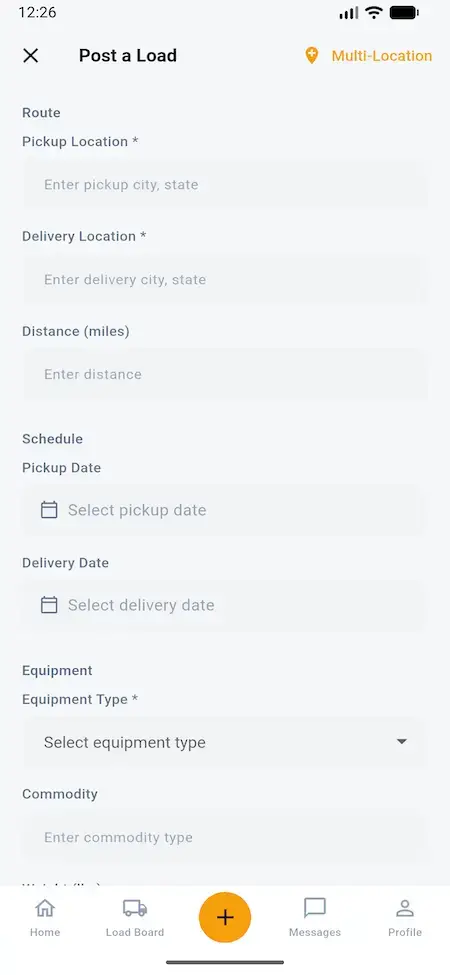
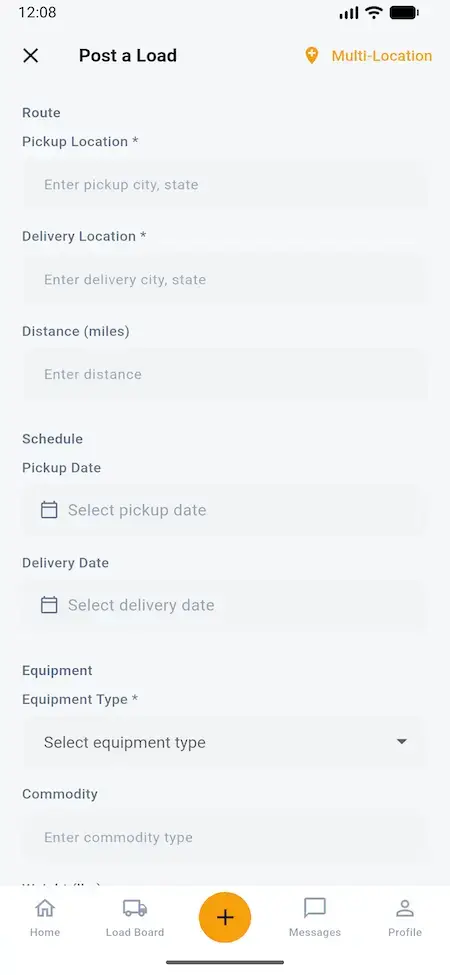
DAT load board shipper mobile form for route, dates, equipment, weight, and rate
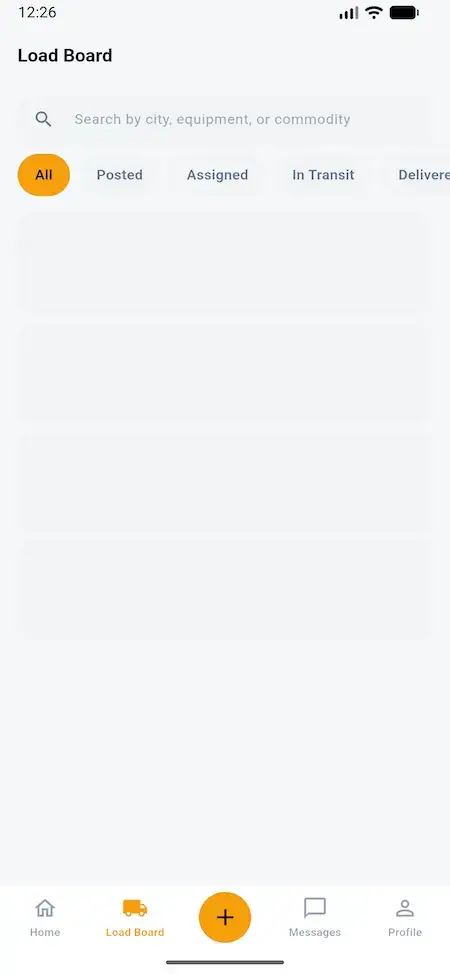
DAT load board shipper mobile load screen with posted, assigned, in-transit, and delivered tabs
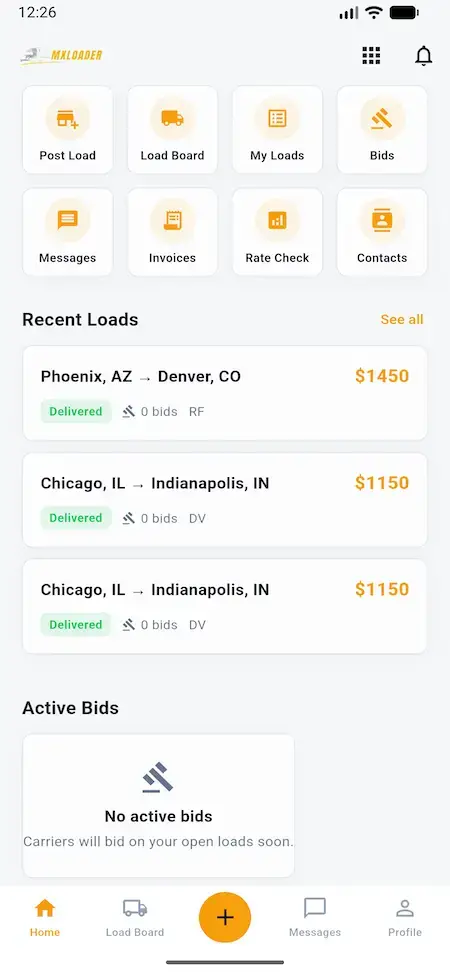
DAT load board shipper mobile insights with quick actions, recent loads, and active bids
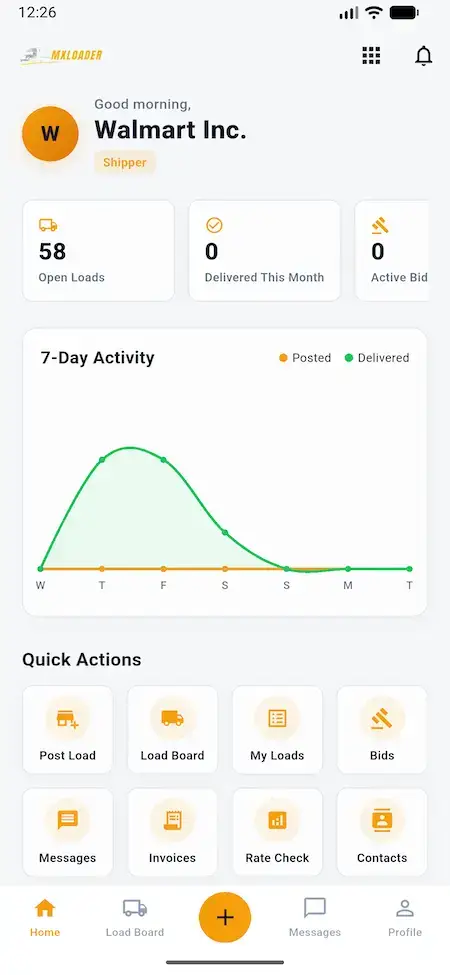
DAT load board shipper mobile dashboard with open loads, delivered loads, active carriers, and activity
Plus custom device
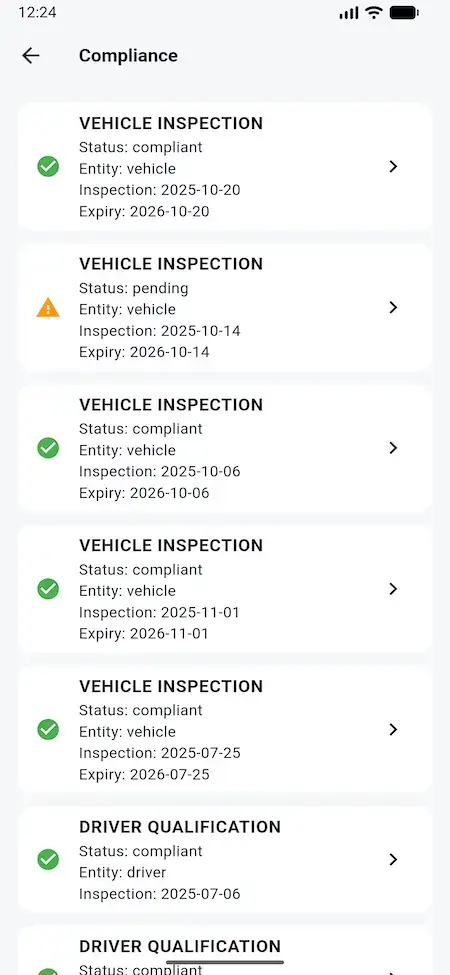
DAT load board carrier mobile compliance list with vehicle inspections and qualification records
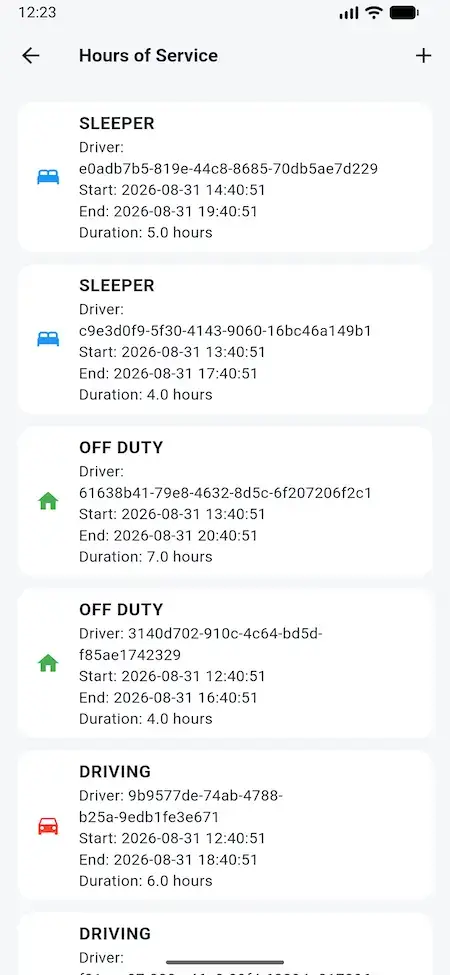
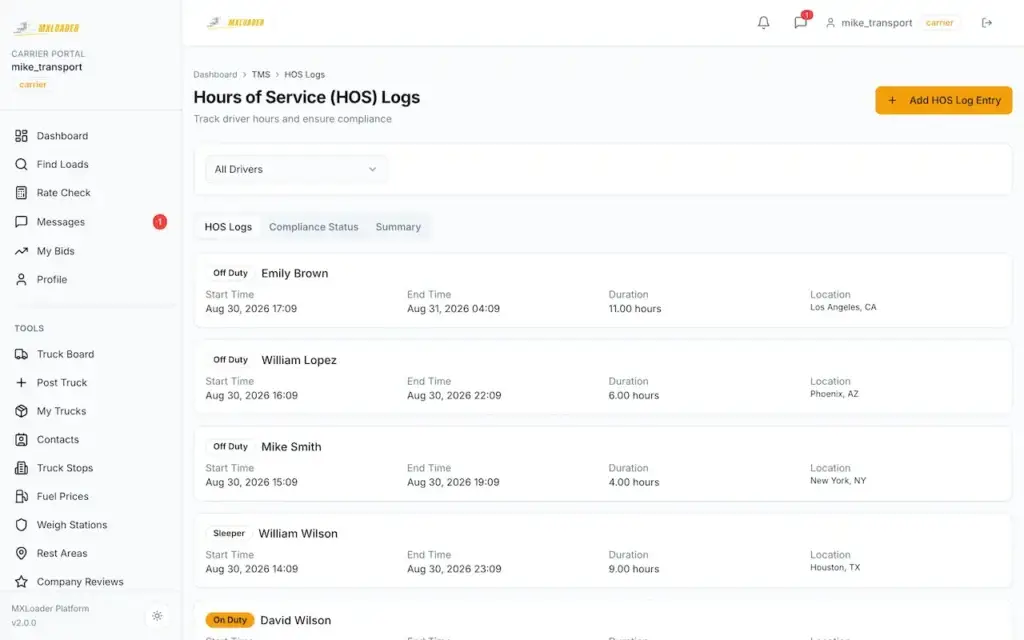
DAT load board carrier mobile HOS log with sleeper, off-duty, and driving records
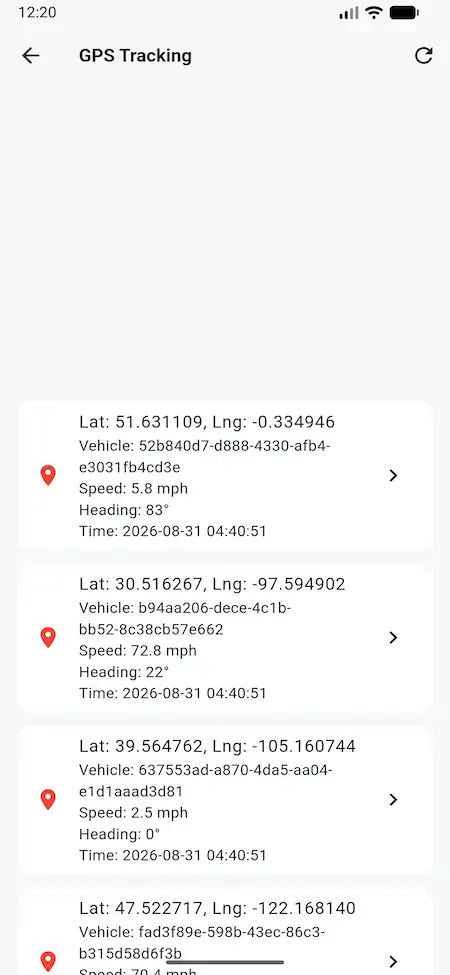
DAT load board carrier mobile GPS tracking list with coordinates, speed, heading, and timestamps
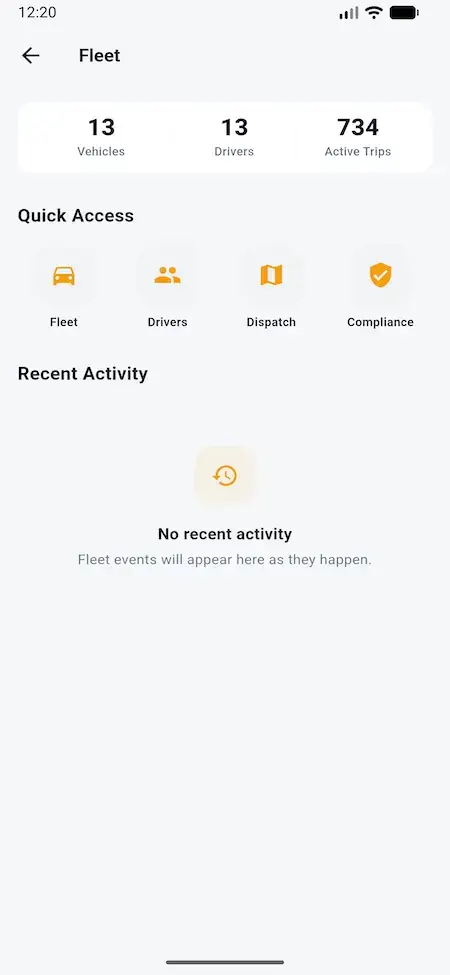
DAT load board carrier mobile fleet overview with vehicles, drivers, active units, and quick actions
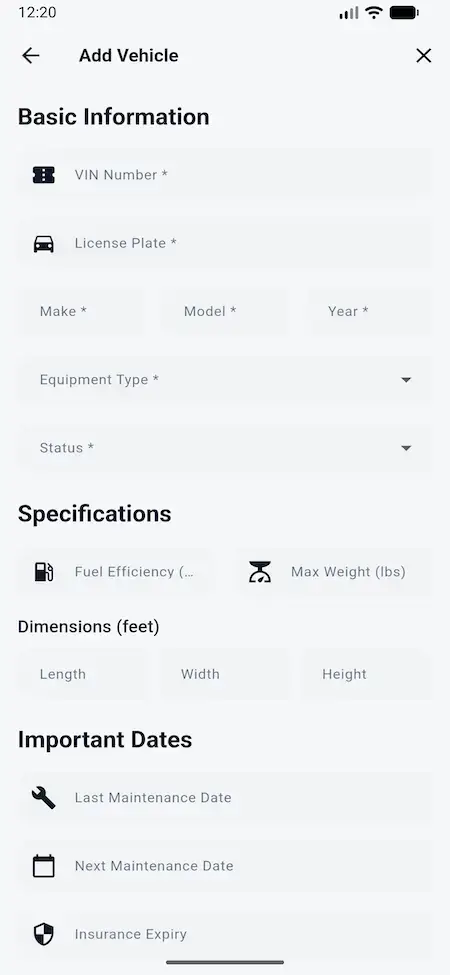
DAT load board carrier mobile vehicle form with specifications and compliance dates
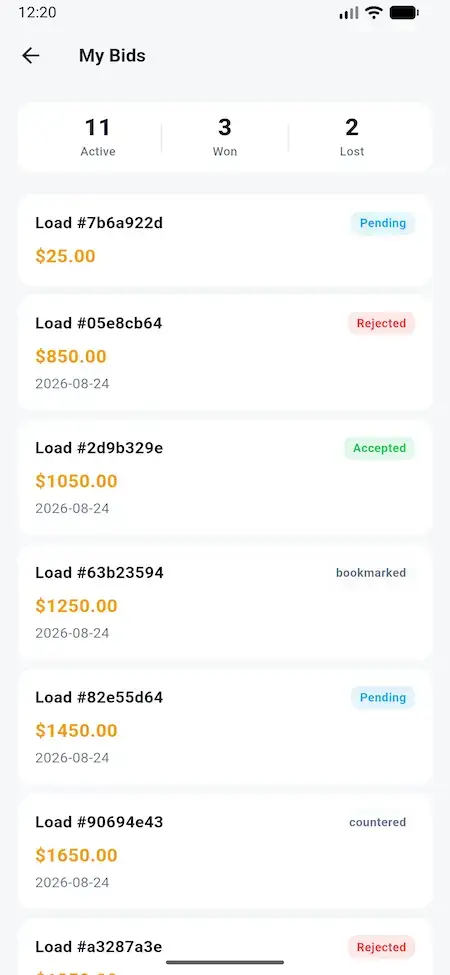
DAT load board carrier mobile bid list with pending, accepted, rejected, and countered statuses
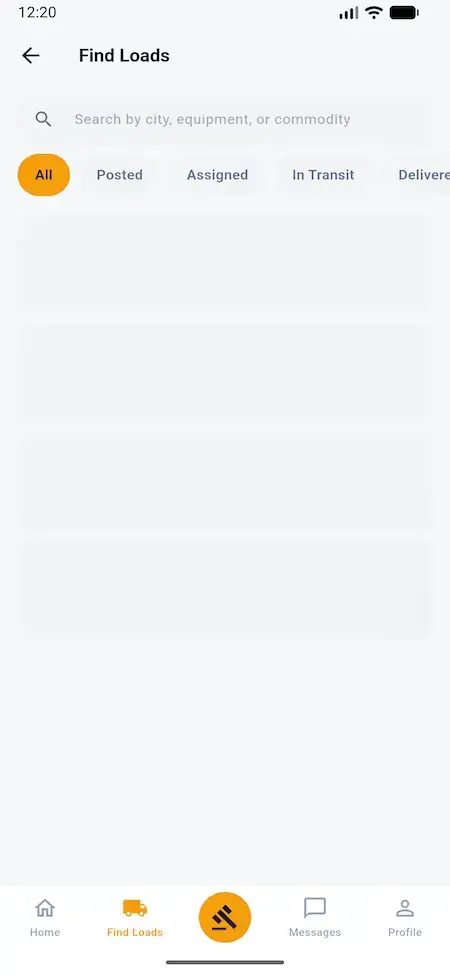
DAT load board carrier mobile freight screen with available, posted, assigned, and in-transit tabs
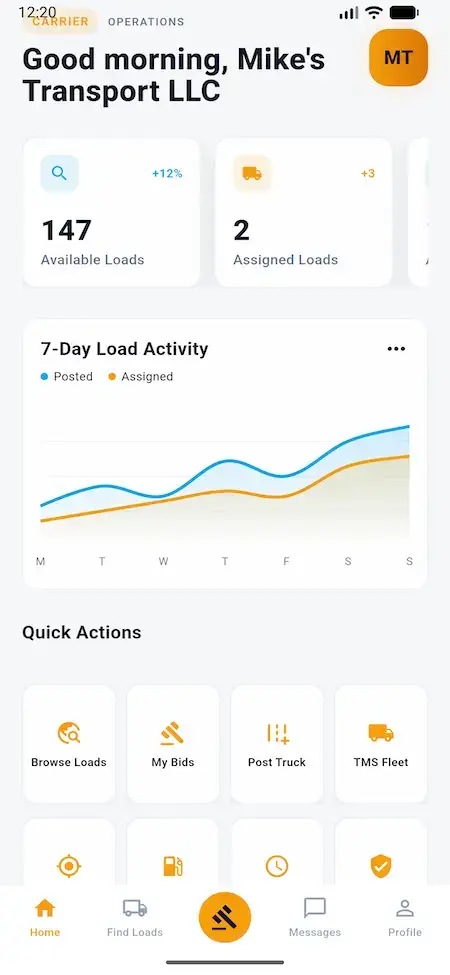
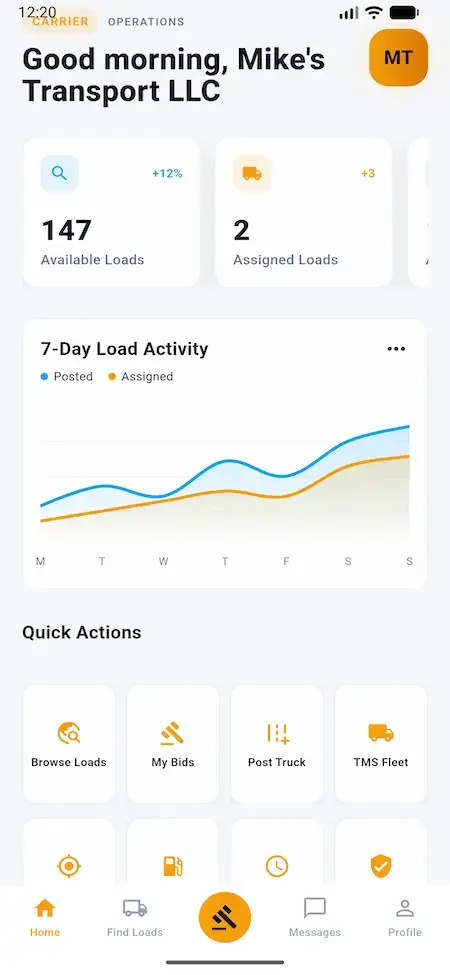
DAT load board carrier mobile home with seven-day load activity and fleet shortcuts
DAT load board carrier mobile dashboard with available loads, assigned loads, activity chart, and quick actions
Plus custom device
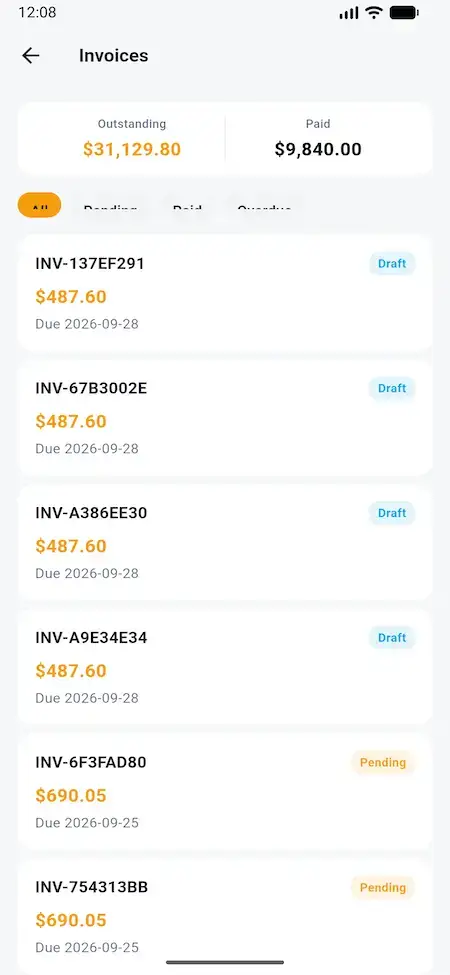
DAT load board broker mobile invoices list with amounts, dates, and payment status
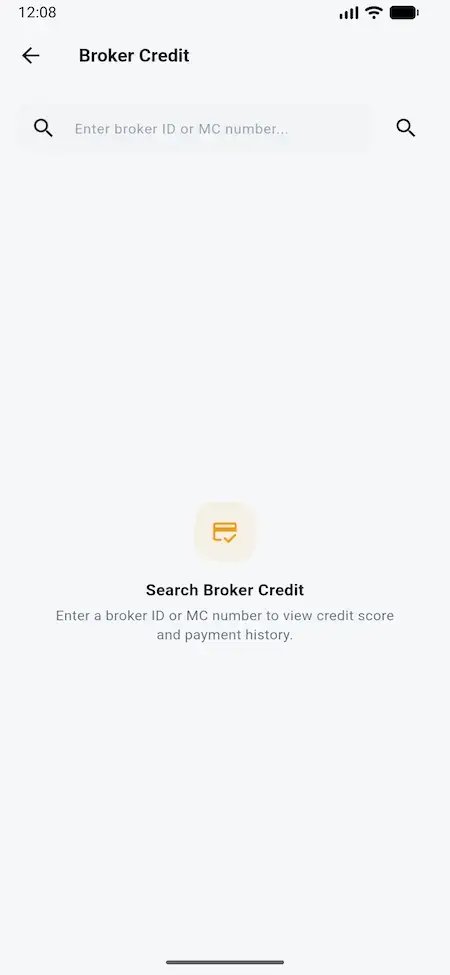
DAT load board broker mobile credit-check screen for searching broker credit
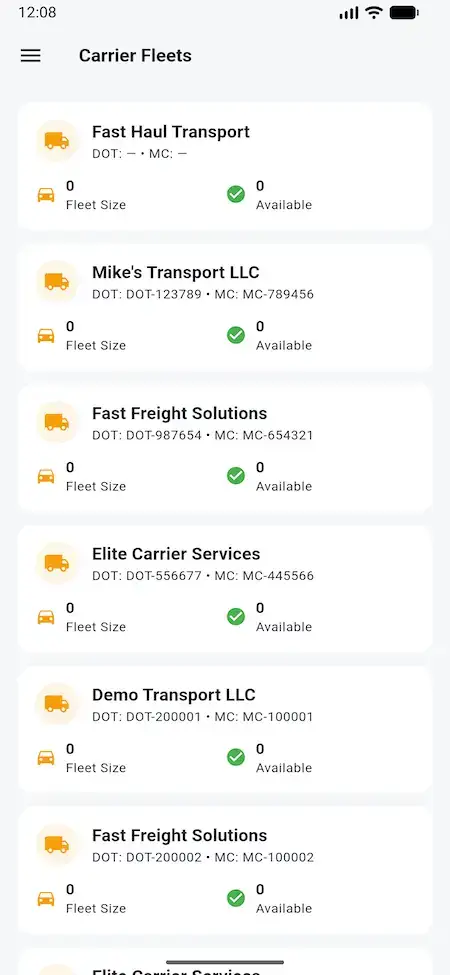
DAT load board broker mobile carrier-fleet directory with ratings, equipment, and availability
DAT load board broker profile with company, contact, load, and settings information
DAT load board broker mobile messages screen with empty-conversation state
DAT load board broker mobile form for route, dates, equipment, weight, and rate
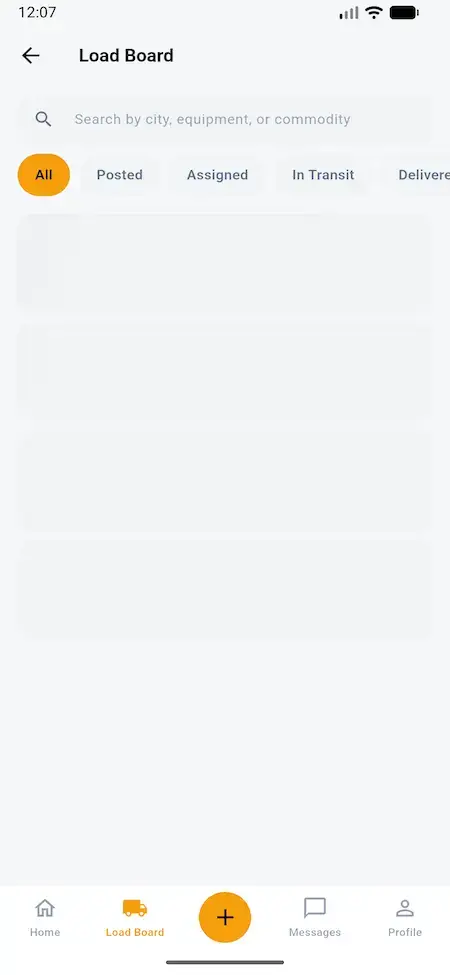
DAT load board broker mobile freight screen with posted, assigned, in-transit, and delivered tabs
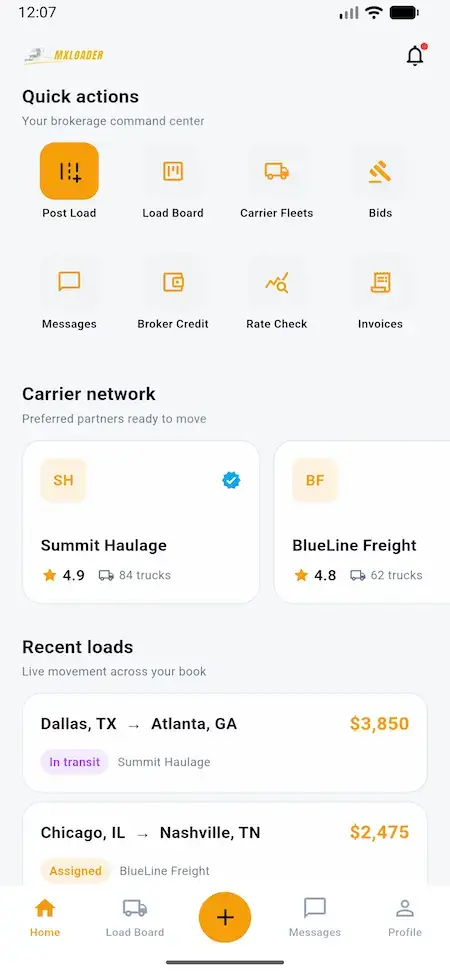
DAT load board broker mobile insights with quick actions, carrier network, and recent loads
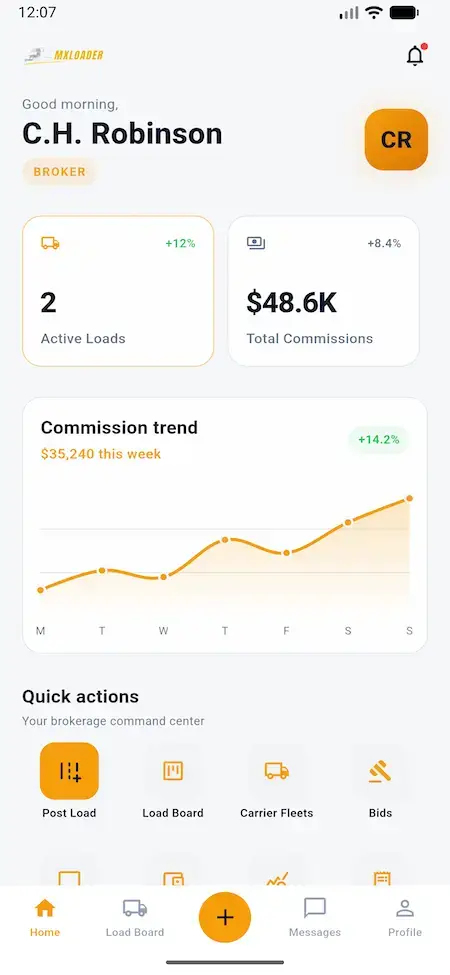
DAT load board broker mobile dashboard with active loads, commission trend, and quick actions
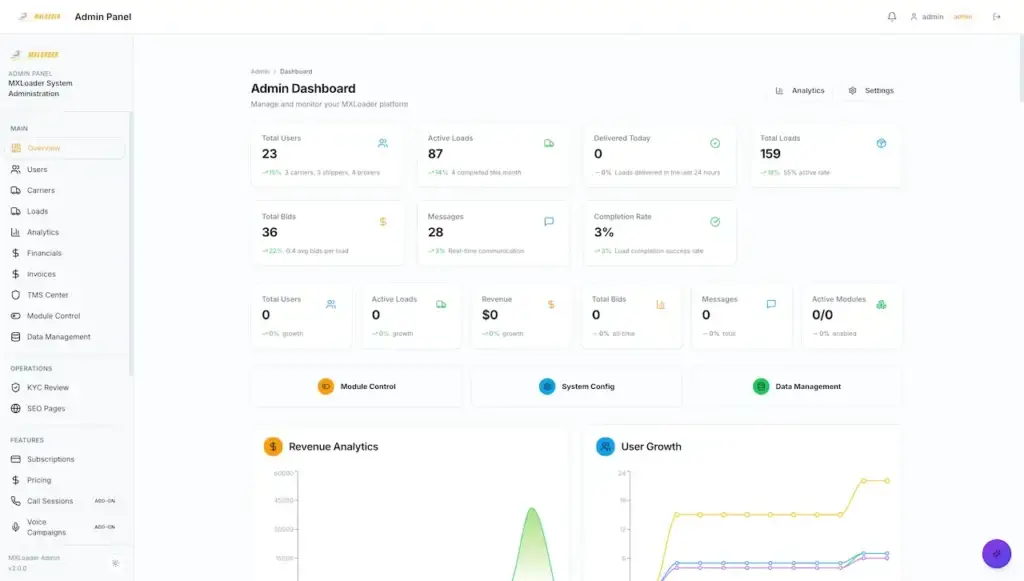
DAT load board full admin dashboard with marketplace KPIs, revenue analytics, and user growth
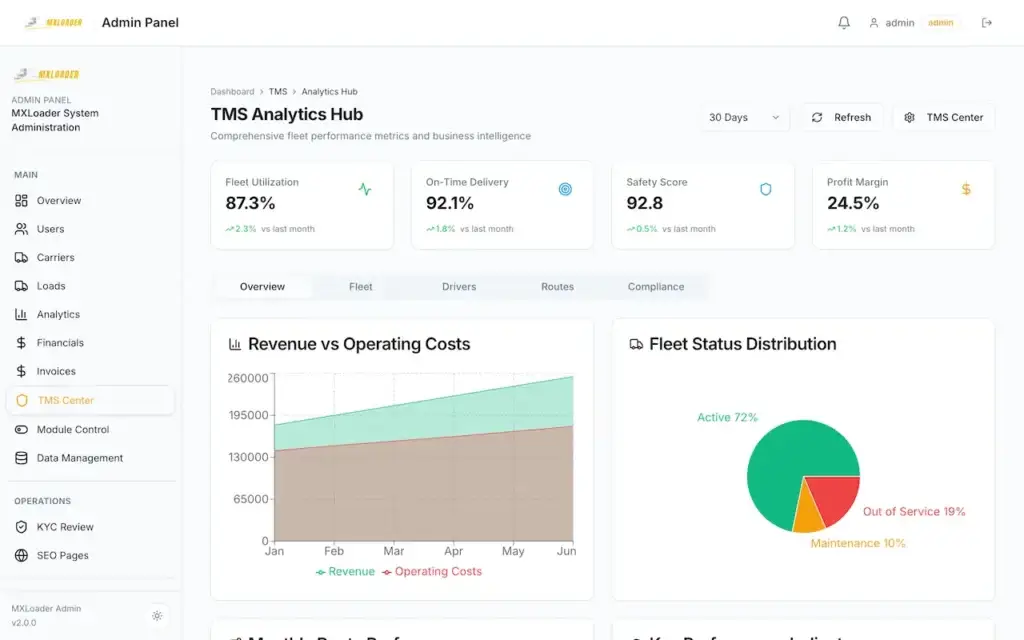
DAT load board TMS analytics with revenue, operating costs, fleet status, and performance metrics
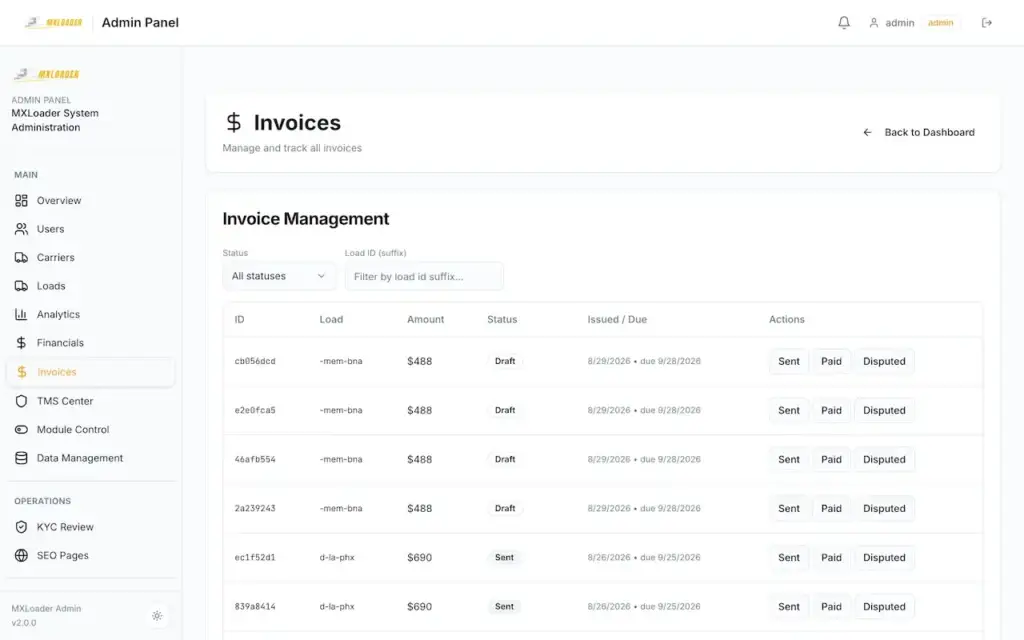
DAT load board admin invoices table with invoice numbers, amounts, dates, status, and disputes
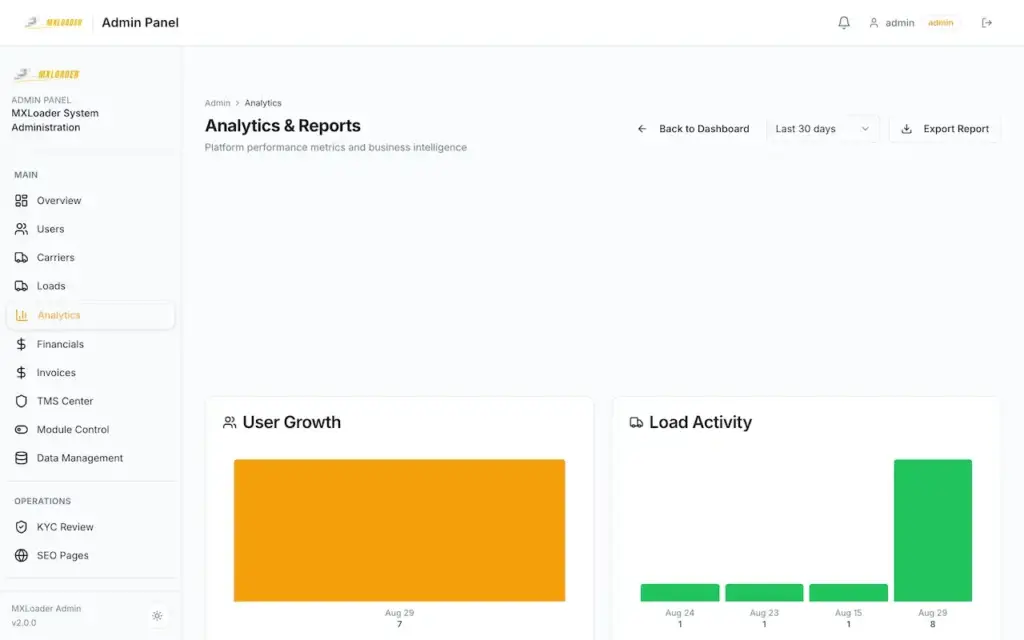
DAT load board admin analytics with user growth and load activity charts
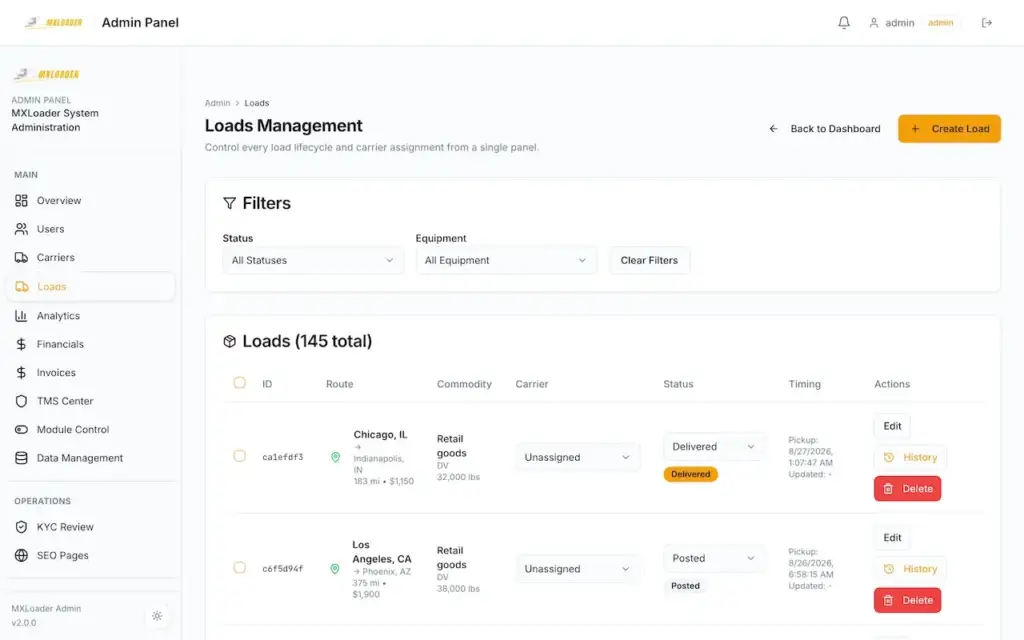
DAT load board admin loads table with origin, destination, equipment, carrier, status, and rate
DAT load board admin user table with roles, companies, status, join dates, and actions
DAT load board admin dashboard with users, loads, carriers, brokers, revenue, and growth analytics
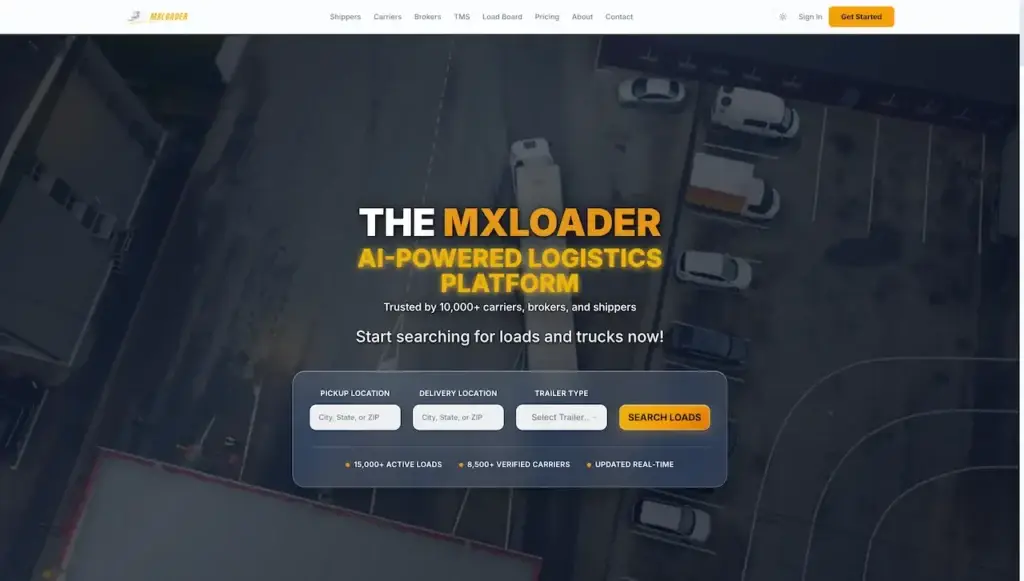
MXLoader AI-powered logistics platform landing page with freight search form
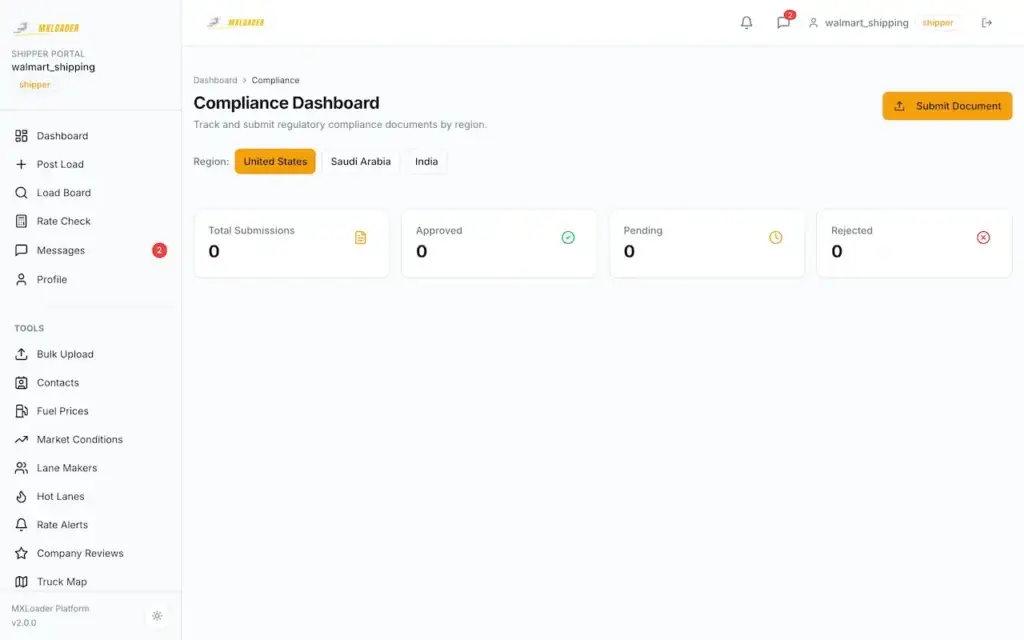
DAT load board shipper compliance dashboard with insurance, safety, approval, and rejection metrics
DAT load board shipper messaging interface with carrier conversations
DAT load board shipper bulk-upload page for importing multiple freight loads
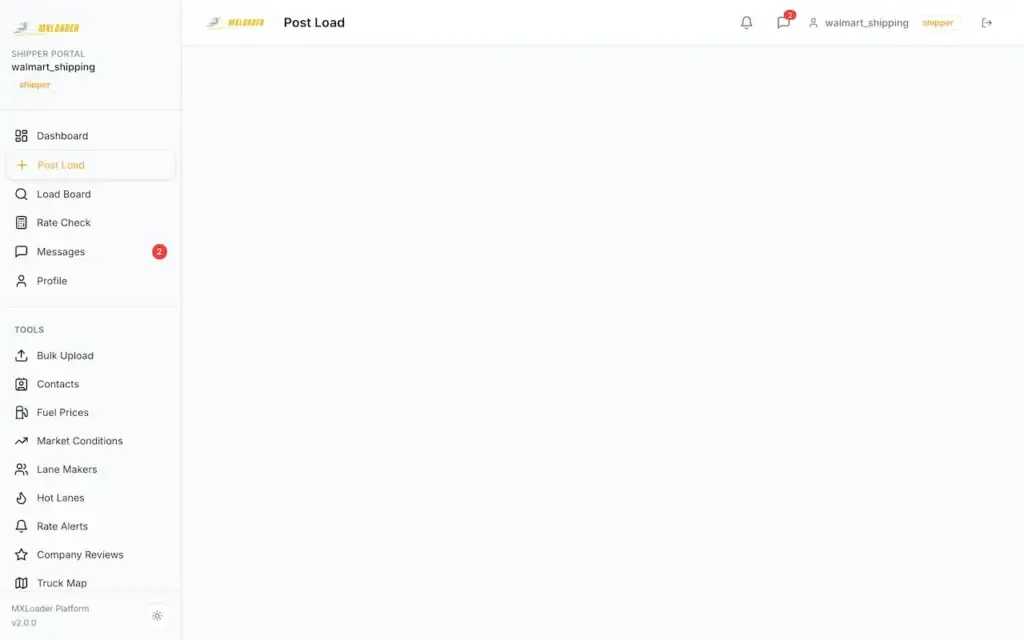
DAT load board shipper freight-management page for posted and active loads
DAT load board shipper post-load page for creating a freight listing
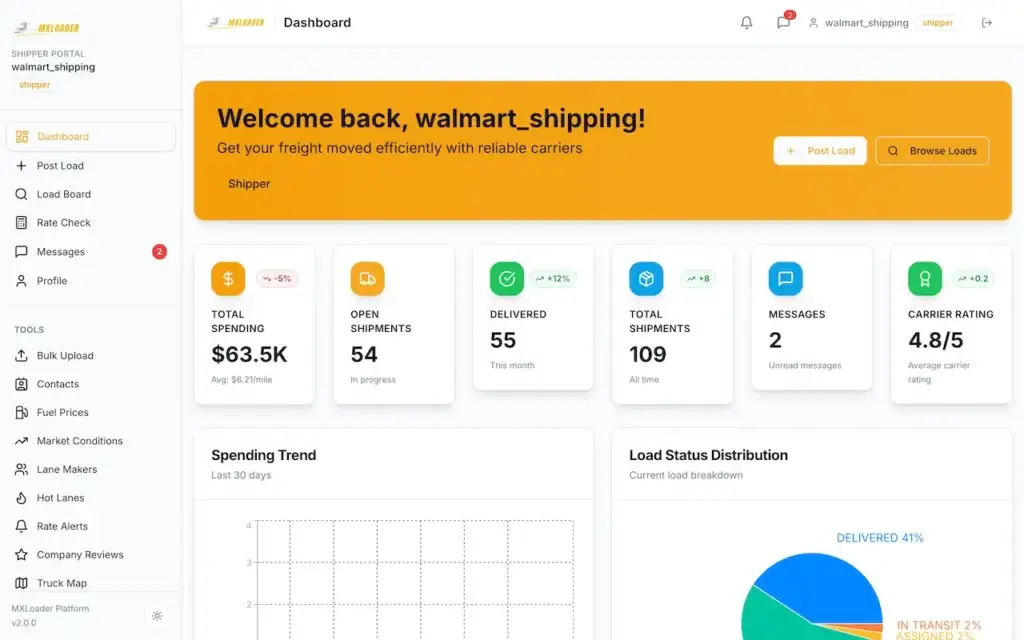
DAT load board shipper dashboard with spending, shipments, delivery status, messages, and carrier matches
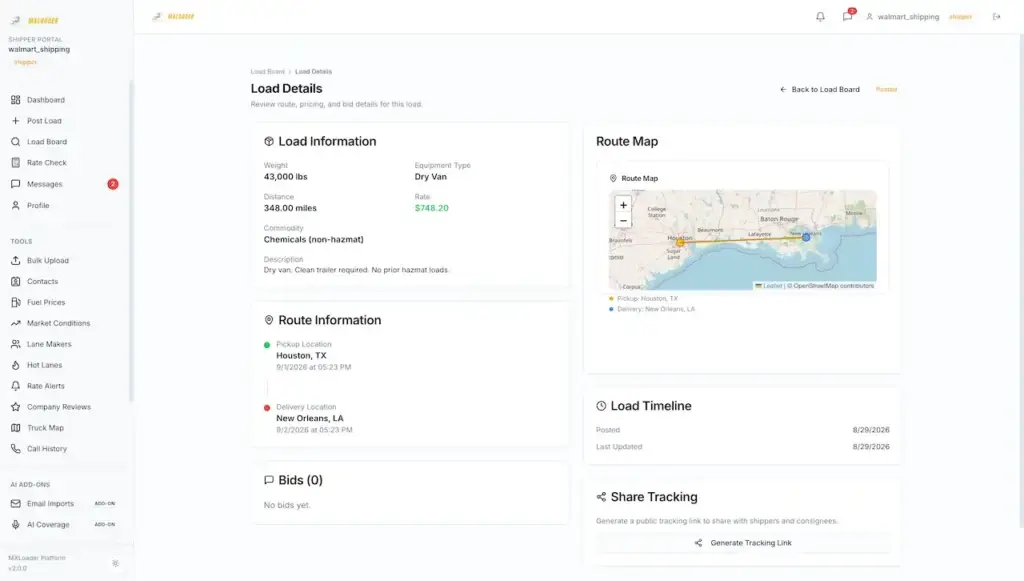
DAT load board carrier load details with route map, timeline, bid, and sharing controls
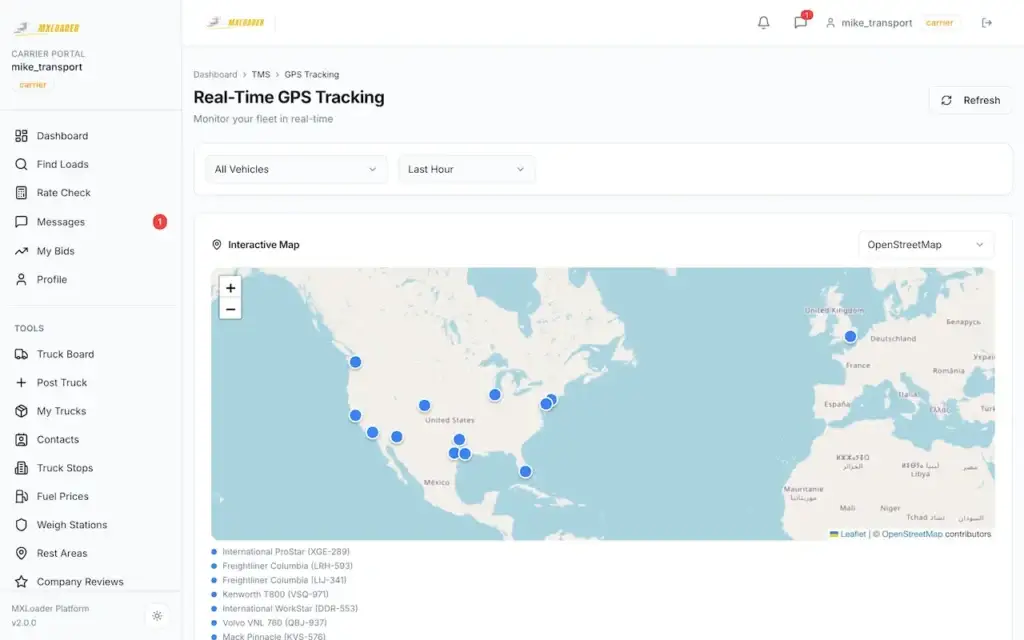
DAT load board real-time GPS map with vehicle locations and route markers
DAT load board carrier HOS logs with driver duty status, time, duration, and location
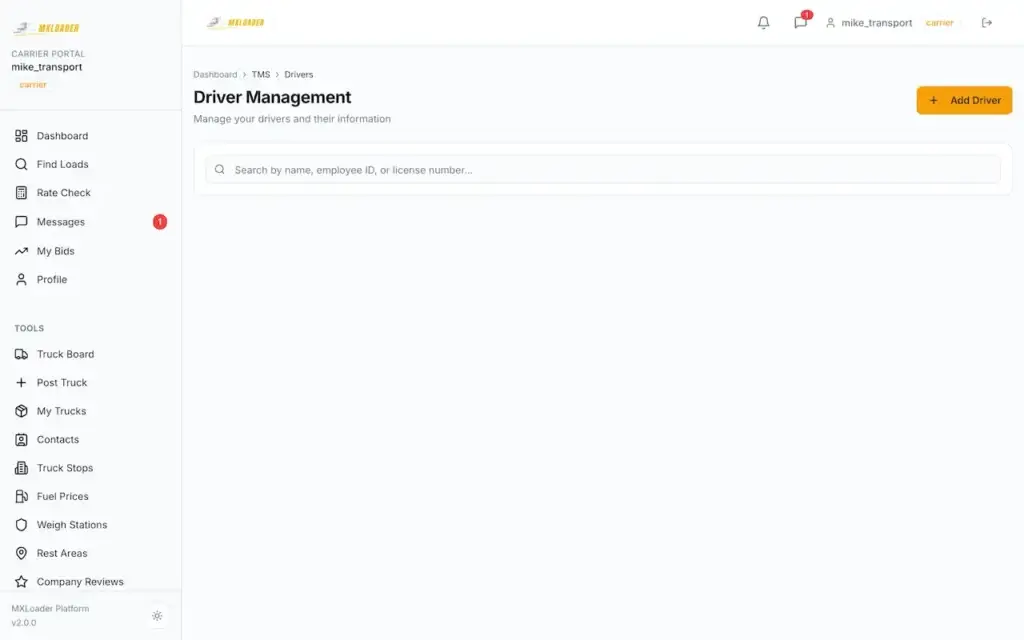
DAT load board driver-management page with driver search and add-driver controls
DAT load board carrier fleet-management page with vehicle search and add-vehicle controls
DAT load board carrier freight-search page for finding available loads
DAT load board carrier dashboard with revenue, vehicles, drivers, loads, messages, and performance
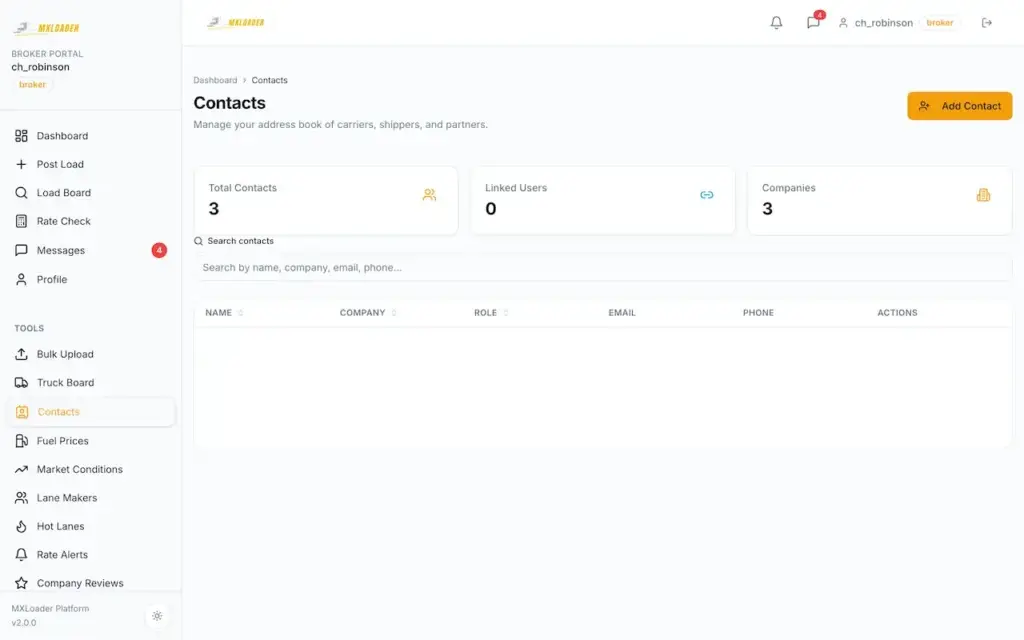
DAT load board broker contacts page with carrier and partner directory controls
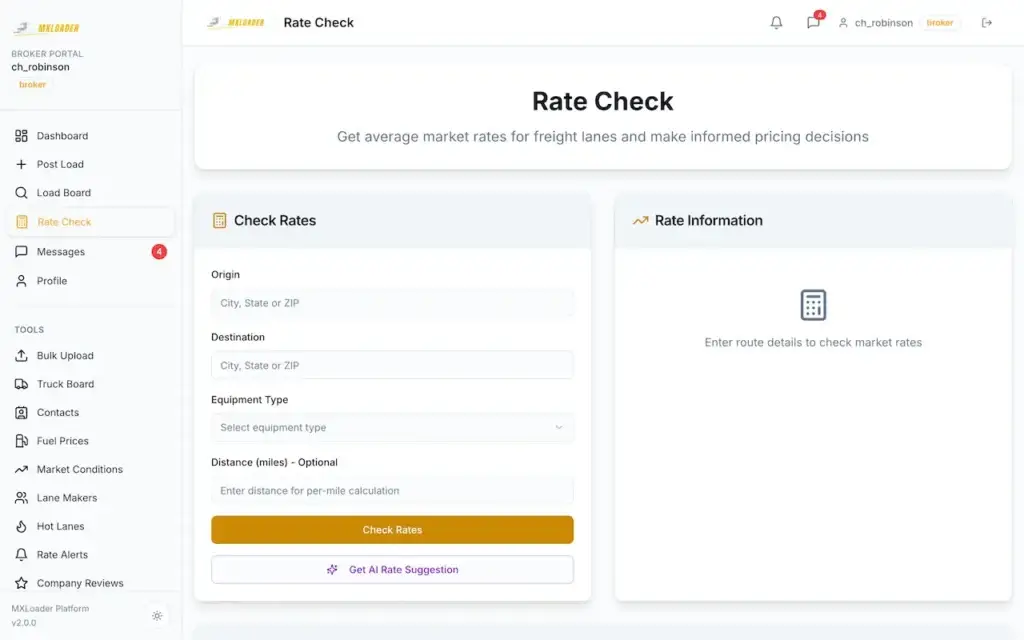
DAT load board rate-check form for origin, destination, equipment, and market-rate analysis
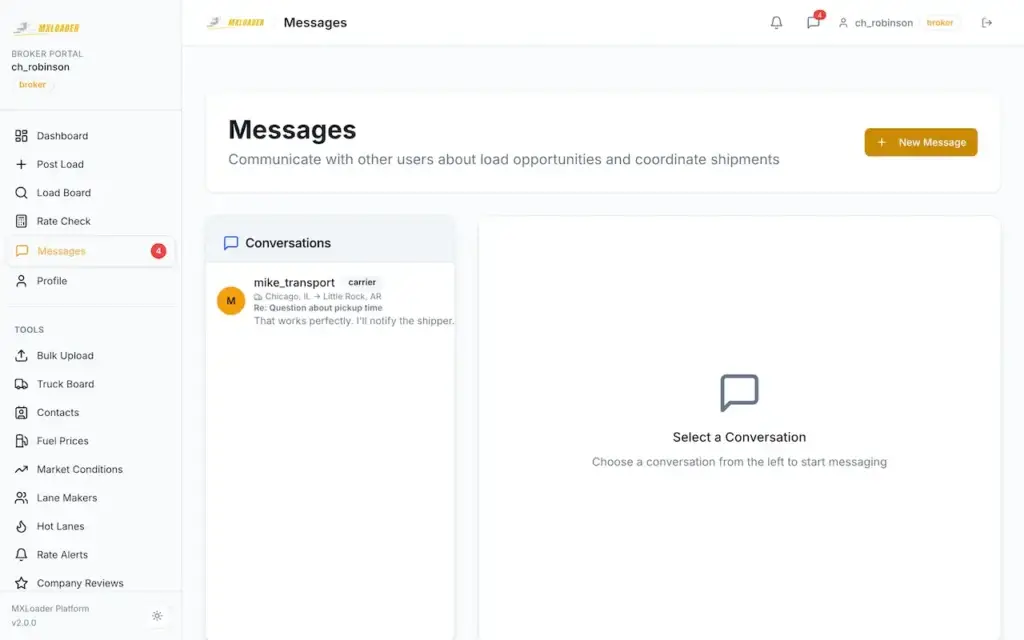
DAT load board broker messaging screen with conversations and new-message control
DAT load board broker post-load form for route, equipment, weight, rate, and delivery details
DAT load board broker freight-search screen with posting and assignment status tabs
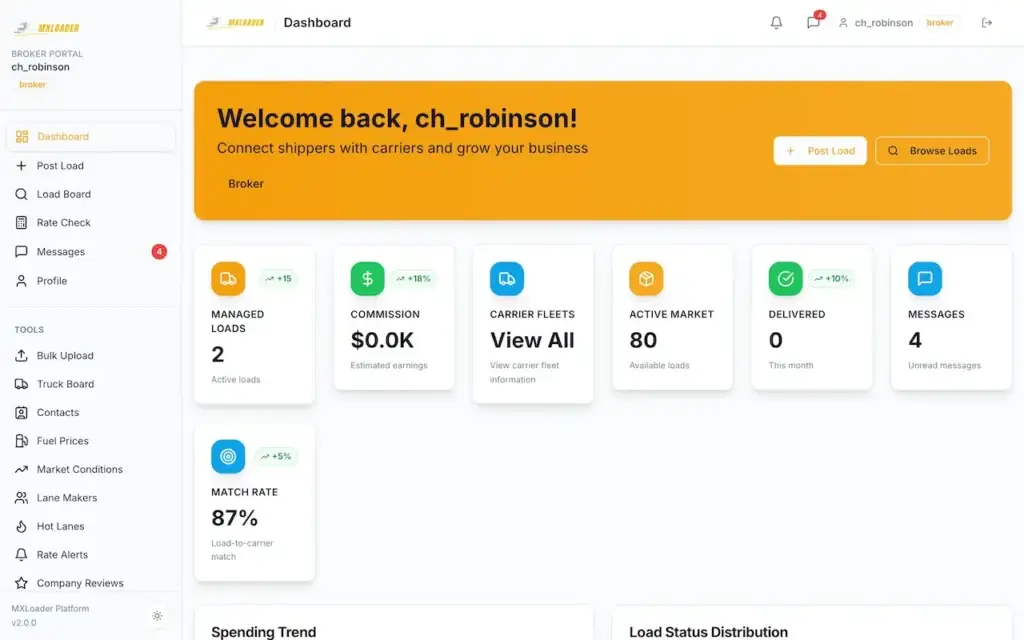
DAT load board broker dashboard with managed loads, commissions, carrier fleet, activity, and performance

Follow a load from posting through bid, counter-offer, assignment, dispatch, transit, proof of delivery and invoice. Web and mobile run the same flows against the same API, so a driver milestone checked in on the phone shows in the dispatcher browser without a second integration. Want a guided walkthrough of a specific flow? Book a call and we will open the surface you care about with live data in it.

Straight Answers

Deployment References - What the Platform Actually Does

Miracuves has shipped marketplace, logistics and on-demand platforms, and those engagements are published in the portfolio with their own figures. There is no freight platform of this class among them yet, so rather than dress this build in borrowed proof, the statements below are properties of the platform, each demonstrable in the live demo above.
Illustrative Scenario

Modelled Reference - Freight Marketplace and Carrier TMS Deployment

An illustrative configuration showing how this platform would be set up for a mid-market brokerage. It describes no client engagement, and every figure is a property of the software rather than a result any customer has reported.

Modelled Reference Deployment

Freight Sector
Load Board and Carrier TMS Platform

How this platform is configured for a brokerage that is covering freight on the phone, tracking it in spreadsheets, and invoicing from a third system.

Illustrative scenario Not a client engagement
Freight and logistics Market modelled
Load Board, Carrier TMS and Broker Intelligence Industry
74
Database tables in the base build
126
Mobile screens shipped
6 days
Deployment window
Challenges
  • Coverage negotiated by phone, with no record of what was offered or refused
  • Load status living in a spreadsheet that is already wrong by the time it is read
  • Carrier vetting done from memory, with no verification, credit or performance history
🎯 Goal
  • One system holding the board, the negotiation, the dispatch and the invoice
  • Bids and counter-offers recorded against the load instead of lost in a call log
  • GPS tracking and public tracking links that stop the "where is my freight" calls
🛠 Solution by Miracuves
  • Carrier KYC, DOT compliance and document validation gating who can haul
  • Subscription tiers and invoice lifecycle running on the same user model
  • A Flutter app across 126 screens so dispatch and drivers work off the same data
  • Fleet, driver, HOS, DOT, fuel, maintenance and geofence records in one TMS
  • Adapter interfaces for payments, calls, email, compliance and market rates

This is a modelled reference deployment, not a client engagement. Every capability listed above ships in the base build and is demonstrable in the live demo. The figures are properties of the platform, not results reported by a customer.

OY
Named client deployments are published separately See the Miracuves portfolio for real engagements with their own reported figures.
Model this against your own freight operation We will map the board, the TMS, carrier intelligence and the admin plane against how your freight actually moves today.
Book a consultation

The Basics

What Is White Label Load Board Software?

It is a finished freight marketplace with a carrier TMS sitting underneath it. Shippers and brokers post freight, carriers find it and bid, and whichever load is won then gets dispatched, tracked, proven and invoiced without ever leaving the system. What it takes off your hands are the genuinely hard parts: a load record that survives multi-stop lanes, a negotiation trail that still holds up months later, and compliance gating that decides who is allowed to haul at all.
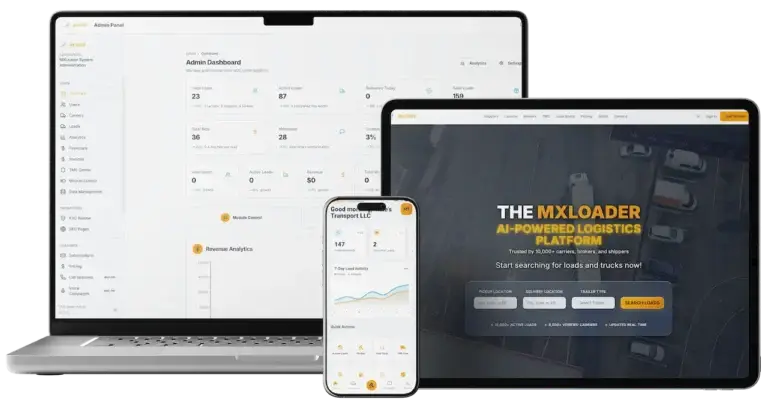
DAT load board logistics platform with load search, carrier management, bidding, analytics, invoices, and mobile access.

More Than A Listings Board

The value lives in everything after the match: dispatch, GPS, compliance, documents and invoicing, all against one load record. A listings script hands you search and leaves execution entirely to you.

Not a Rental Platform

Full source, the Drizzle schema and the migration path all transfer. No per-seat charge, no waiting on a vendor roadmap, and ordinary PostgreSQL beneath it.

Three First-Class Surfaces

The React client, the Flutter application and the operator console are each first-class, all speaking to one Express API, rather than a web app with a wrapper bolted on and called a mobile strategy.

Built for Web, Mobile & API

What a Load Board Script Has to Solve

Nobody struggles with the search filter. What is hard is a status machine keeping posted, assigned, in transit and delivered honest across four roles simultaneously, a document pipeline that validates what it accepts before anyone leans on a proof of delivery, and an ownership model preventing one carrier from reading another freight. Those are precisely the parts already built.

  • Load posting with multi-stop pickup and delivery legs
  • Bids, multi-round counter-offers and auto-bid rules
  • Carrier TMS with fleet, drivers, HOS, DOT and fuel
  • GPS tracking, geofencing and public tracking links
  • KYC, regional compliance and secure document handling
MXLoader AI-powered logistics platform landing page with freight search form

Shipped: seventy-four PostgreSQL tables through Drizzle ORM, more than 280 REST endpoints spanning web, admin, mobile and adapter surfaces, a React 18 client, a 126-screen Flutter application, and an operator control plane with audit logging behind every action taken.

Everything Included

Platform Features - Marketplace, TMS, Intelligence, Compliance & AI

Everything below exists in the running demo and can be shown on request. Where a capability depends on a third-party account or a deployment decision before it works in production, that is written against the item rather than quietly assumed.

Posting And Multi-Stop Legs

Equipment, weight, commodity, distance and target rate on the load itself, with PickupLocation and DeliveryLocation child tables holding sequence, dates, times, contacts and instructions beneath it.

  • Passport and bcrypt behind session-cookie auth on web and admin
  • Bearer JWTs for the Flutter client and any external consumer
  • Role middleware at route level across admin, carrier and broker
  • Ownership verified per object on loads, bids, messages and documents

Searching The Board

Filter the live board by lane, date, equipment and distance, with rate history and hot lane context sitting right where the decision gets made.

  • Equipment, weight, commodity, distance and target rate captured on post
  • Sequenced pickup and delivery legs carrying dates and contacts
  • File upload in bulk for desks running real volume
  • An explicit status machine from posted through to delivered or cancelled

Bidding And Counter-Offers

Straight bids alongside multi-round counter-offers, with bid statistics, bookmarking and lost reasons recorded against the load itself rather than in somebody call log.

  • Lane, date, equipment and distance filters across the board
  • Bids submitted and managed, with statistics and bookmarks
  • Counter-offers over several rounds, lost reasons captured
  • Auto-bid governed by lane, equipment, ceiling, margin and threshold

Auto-Bid Rules

Rules fire on lane, equipment, bid ceiling, margin and acceptance threshold, and an automation log keeps both the action taken and the reasoning behind it for later review.

  • Available capacity posted by truck and equipment
  • Carrier assigned and the load status moved on
  • Routes dispatched to a named vehicle and driver
  • Milestones checked in from the phone

Posting Capacity

Capacity is posted by equipment type and location, which means a broker holding freight finds a truck as readily as a carrier finds a load.

  • Live maps drawn from the gps_tracking store
  • Geofences configured to alert on arrival and departure
  • Tracking links shareable with parties outside the platform
  • Speed violations recorded against the assigned vehicle

Dispatch And Routing

Winning a load assigns it to a named vehicle and driver through a route record, and that task appears on the driver phone.

  • Fleet records carrying status and current assignment
  • Drivers managed with performance history attached
  • Hours-of-service monitoring beside DOT compliance records
  • Expiry tracked on insurance, licences, medicals and inspections

Tracking And Geofences

Position tracked live against the assigned vehicle, geofences configured to fire on arrival and departure, and public links so parties outside the platform can follow a load.

  • Fuel purchases tracked and reported through IFTA
  • Maintenance scheduled against full service history
  • Cost visible per vehicle and per route
  • Trips planned with hours-of-service and fuel optimisers

Carrier TMS

One operational backbone covering vehicles, drivers, hours-of-service logs, DOT compliance records, fuel purchases feeding IFTA, maintenance scheduling and speed violations.

  • Benchmarks and history for every lane
  • Alerts on the lanes you choose to watch
  • Hot lane signals and market context
  • Trihaul evaluation across multi-leg routes

Market Intelligence

Lane benchmarks and rate history, alerts you configure per lane, hot lane signals, contract rates, and trihaul evaluation for positioning across multiple legs.

  • Verification status gating who can transact
  • Ratings and reviews held against companies
  • Credit scores on brokers for counterparty risk
  • Lists for preferred and blocked companies

Carrier Intelligence

Verification status and fleet visibility, reviews and ratings on companies, broker credit scores, and preferred or blocked lists for managing counterparty risk.

  • KYC submitted with documents and reviewed by an operator
  • Regional adapters for US DOT, Saudi Bayan and India eGST
  • Temperature logged against the load for cold chain
  • Transacting gated on verification status

KYC And Compliance

KYC submitted and reviewed, verification gating who may transact, regional adapters covering US DOT, Saudi Bayan and India eGST, and cold chain temperature logged against the load.

  • Uploads for bills of lading, rate confirmations, PODs and compliance
  • Extension, MIME type and magic bytes all checked before acceptance
  • Filenames stored as UUIDs with safe path resolution on download
  • Downloads scoped by role, ownership checked, virus-scan status carried

Documents And Invoicing

Bills of lading, rate confirmations and proofs of delivery upload through validation and download under role scope, feeding an invoice lifecycle followed all the way to paid.

  • Rate suggestions derived from lane, equipment, weight and distance
  • Loads posted by voice through speech transcription
  • Inbound freight email converted into load drafts
  • Message drafting assisted, with the user still deciding

Want to see it running first? Use any of the four role logins above, or book a walkthrough and we will take you from a posted load through an accepted counter-offer to a created dispatch, then show that same activity waiting in the operator console, run against your own commercial model.

How Operators Earn

Revenue Models - Subscriptions, Fees, Services & Licensing

Income arrives from several directions at once here, and each is modelled separately so that adjusting one lever leaves the others where they were.

Subscription Tiers

Recurring seat or tier plans billed through Stripe. The documentation models Basic between $49 and $99 per user, Professional between $149 and $299, and Enterprise priced individually, every one of them held in the pricing_plans table as configuration rather than code.

Transaction Fees

A placement fee per load, or commission on the bid that wins. Since bid and assignment both settle onto the same load record, there is never any ambiguity about what the fee attaches to.

Payment Processing Margin

Margin taken on processing once Stripe is live. Because the payment adapter ships with a mock, the entire flow can be demonstrated before a single real key exists.

Managed Dispatch Services

Brokerage or dispatch run by you, through the admin control plane. The same console that governs the platform can also work the desk on a customer behalf.

Add-On Modules

AI coverage, cold chain monitoring, compliance submissions, deeper analytics and additional storage all sold as modules. Because toggles govern them, an add-on is switched on rather than deployed.

White-Label Licensing

License the whole platform to partners under their own branding. System configuration, module toggles, brand tokens, pricing plans and SEO surfaces are exactly what make that possible without forking anything.

Two of these move the numbers more than the rest: subscription tiers and transaction fees. The first is predictable and recurring, the second grows with whatever volume the board genuinely clears.

Run It Without a Dev Team

Admin Console - Governance, KYC, Compliance & Revenue

This is where the platform is governed rather than simply watched, and it is the surface most freight builds postpone and then never come back to finish.

Admin Console Sections

User Lifecycle

Accounts created, edited, suspended and restored across all four roles, with every role change and ban written into the admin activity log.

Load Intervention

Inspect any load, correct a bad posting, reassign it or cancel it, and move its status along when the parties cannot settle a lane between themselves.

KYC Review Queue

Work through submitted identity and company documents, approve or reject each with a recorded reason, and gate the ability to transact on verification status.

Compliance Records

Review DOT records, hours-of-service exceptions, cold chain logs and regional submissions, and see at a glance which carriers are approaching an expiry.

Financial Overview

Revenue, average rate, delivered load counts and invoice ageing across both paid and outstanding, with the underlying invoices reachable without leaving the view.

Platform Analytics

Growth in users, activity on loads and bids, message volume and revenue trends, all drawn from the same tables the operational screens read.

Module Toggles

Switch capability areas on and off per deployment, which is what makes add-on pricing and white-label configuration workable without branching the codebase.

Pricing Plans

Tiers created and edited with their feature lists and active status, so changing something commercial is a console action rather than a release.

SEO Surfaces

Public pages and metadata managed in-console for operators running this as a branded marketplace with organic acquisition.

  • User lifecycle across shipper, broker, carrier and admin roles
  • Role changes, suspension and restoration
  • Load intervention including reassignment and cancellation
  • KYC review queue with approve and reject reasons

Audit & Activity Logs

Two distinct trails: audit_logs holding data mutations with before and after values, admin_activity_log holding administrative actions, each attributable to an actor and an IP address.

  • Compliance records across DOT, HOS and cold chain
  • Financial overview with revenue, average rate and invoice ageing
  • Platform analytics on user growth, load and bid activity
  • Module toggles, pricing plans and SEO surfaces

Need deeper governance? Immutable audit shipped to write-once storage, IP allowlisting across admin endpoints and SSO against an enterprise identity provider are all scoped as pre-launch hardening rather than shipped defaults. Tell us the requirement and we will price it.

Transparent Pricing

How Much Does White Label Load Board Software Cost in 2026?

Building a freight marketplace with a carrier TMS underneath it typically starts from around $4,899 for a launch-ready white-label white label load board platform, and increases based on regional compliance requirements, payment rails, market-rate provider contracts, mobile scope and infrastructure complexity.

Most Popular
Professional
ReadyMade Turnkey Solution
$4,899/- one-time
⚡ Go-live: 6 days
Best for: Freight brokerages, asset-based carriers & digital freight networks
You get the solution as you see our demo with your own branding and self-hosted on your end.
Get Started →
Enterprise
Custom, Compliance & High-Scale
Custom quote
⚡ Go-live: Based on final scope
Best for: 3PLs, carrier networks, cold chain operators & white-label logistics platforms
Get it built as you situation demand and business need , as per custom needs.
Request a Quote →
Still deciding?

Not sure which option
is right for you?

Talk to us - we'll understand your goals, timeline, and budget, and point you to exactly what you need. No upselling, just honest advice.

Free 30-min call
Reply within 24 hrs
No pressure, no commitment

The Full Package

What's Included - Full Source Code, Apps & Deployment

What transfers is a complete, deployable platform: application source, the schema beneath it, and the documentation any technical buyer will ask to see. Ownership is outright, with no runtime licence, no per-seat charge and no dependency on what we build next.

Web Application

React 18 in TypeScript on Vite, routed by wouter, server state through TanStack Query, shadcn/ui over Radix primitives, with Tailwind, Framer Motion and Recharts.

  • TypeScript React 18 client built on Vite
  • Routing via wouter, server state via TanStack Query
  • Radix primitives under shadcn/ui, styled with Tailwind
  • Free to modify, extend and redeploy

Express API

TypeScript on Node.js 20 exposing over 280 REST endpoints, each passing role middleware, ownership checks and request logging.

  • TypeScript Express API running on Node.js 20
  • Over 280 endpoints serving web, admin and mobile
  • Role middleware plus ownership checks per object
  • Method, path, status and duration logged on every call

Schema And Migrations

Seventy-four PostgreSQL tables modelled in Drizzle ORM, co-validated by drizzle-zod, with the migration metadata required to move the schema forward without breaking it.

  • Drizzle ORM across seventy-four PostgreSQL tables
  • Inserts and updates co-validated by drizzle-zod
  • Metadata supporting safe forward migration
  • better-sqlite3 for local and lightweight runs

Mobile Application

A 126-screen Flutter build for iOS and Android on Riverpod, Dio and go_router, speaking to the same API and honouring the same role model as the web client.

  • Flutter across 126 screens on iOS and Android
  • State on Riverpod, networking on Dio, routing on go_router
  • Bearer JWTs against the identical REST API
  • Every module at role parity with web

The Operator Console

Account lifecycle, load intervention, the KYC queue, compliance records, financial overview, analytics, module toggles, pricing tiers and both audit trails.

  • A control plane covering accounts and KYC
  • Compliance records, finance and analytics together
  • Toggles for modules, pricing tiers and SEO surfaces
  • Separate trails for data and administrative change

The Adapter Layer

Payments, calls, voice, email, market rates and regional compliance each sit behind a swappable interface, and each carries a mock so the surface works offline.

  • Every adapter shipped with a real and a mock path
  • Payments on Stripe, calls and SMS on Twilio, voice on Whisper
  • Inbound mail over IMAP, outbound through Nodemailer
  • Rate and compliance providers chosen by environment variable

Deployment Stack

Vite and esbuild produce one artifact packaged for cPanel, aaPanel or PM2, deployed onto your infrastructure with the environment configuration walked through with you.

  • Helmet headers with CSP alongside a CORS allowlist
  • API rate limited, with tighter ceilings on auth
  • Zod schemas refusing any unknown field
  • Uploads checked on extension, MIME and magic bytes

Technical Documentation

A PRD and ERD, the schema guide, feature catalogue, API collection, technical dossier, the developer and security handbook, and the VAPT compliance document.

  • Client bundled by Vite, server bundled by esbuild
  • One artifact packaged for cPanel, aaPanel or PM2
  • Configuration by environment variable, no secrets committed
  • Coverage through Vitest, Testing Library and flutter_test

Want to see it running first? Use any of the four role logins above, or book a walkthrough and we will move you from a posted load through a countered bid to a created dispatch, then show the same activity sitting in the operator console, run against your own commercial model.

Know Your Buyer

Who Is This White Label Load Board Platform Built For?

Four roles plus an operator plane mean this fits several quite different freight businesses without anybody maintaining a fork.

If your business depends on covering freight quickly, on knowing which carrier is safe to give it to, and on being able to prove afterwards what happened, an owned freight platform becomes a long-term asset rather than a subscription you keep renewing.

Where It Fits

Use Cases - Brokerage, Fleet, Regional & White-Label

Which side of the market leads determines what this becomes. A brokerage leans on coverage and carrier intelligence; a carrier leans on dispatch and compliance; a network leans on governance. All three are configuration, not a fork somebody has to maintain.

Brokerage Digitization

Take a brokerage off the phone and out of the spreadsheet, so the board, the counter-offer thread and the assignment record stand in for the call log, and the evidence behind a margin outlives the conversation that set it.

Carrier Fleet Operations

Run a fleet that has outgrown its workbook, with hours of service, DOT expiries, maintenance, fuel and IFTA reporting all attached to the freight those trucks are genuinely carrying.

Regional Board Launch

Open a regional board where the large incumbents pay little attention, with the compliance adapter pointed at the right jurisdiction and pricing tiers set to what that market will actually bear.

Cold Chain Compliance

Work a cold chain lane where the temperature log and the document trail are the product itself, because the customer will ask for both once the freight has landed.

3PL Tool Consolidation

Collapse a 3PL toolchain, folding a marketplace subscription, a TMS, a telematics feed and a document store down into a single user directory with one audit trail behind it.

White-Label Networks

Give an association or carrier network its own branded board, with module toggles deciding exactly what each membership tier is entitled to.

One platform, many configurations. Every scenario above runs on one schema and the same three surfaces. What varies is the compliance region, the pricing tiers, which modules are switched on and the integration mix. None of it needs a branch of its own.

Market Timing

Why Launch a Freight Marketplace in 2026?

Much of freight still moves on a phone call, a spreadsheet and four subscriptions that never speak to one another. That reconciliation tax is exactly what one platform removes, and the operators pulling ahead are simply the ones who can say where a load is without making three calls first.

One Schema, Four Roles

Shipper, broker, carrier and operator share a single users model and a single loads table. The alternative is four tools, four user directories, and somebody reconciling between them.

The Execution Half Is Included

Board scripts almost always stop at the match. Dispatch, GPS, geofencing, compliance, documents and invoicing are where freight actually comes apart, and all of it ships in the base build.

Evidence Where Decisions Happen

Verification, ratings, credit and rate history sit beside the load itself, not inside a separate subscription somebody has to remember to open.

Mobile Was Not An Afterthought

All 126 Flutter screens run at role parity against the same API and session model, so a driver milestone and a dispatcher view cannot disagree.

Auditable By Design

Two independent trails, one recording data mutations with before and after values, one recording administrative actions, each attributable to an actor and an address.

Buy-Versus-Build Is Settled

Building the equivalent yourself spans identity, marketplace, negotiation, dispatch, telematics, compliance, documents, billing and mobile across several years. This deploys inside six days.

Platform by the Numbers

74
Database Tables
280
REST Endpoints
126
Mobile Screens
6
Days to Deploy

It is this layer that eats the years. A status machine staying honest across four roles at once, ownership checks that survive a penetration test, an upload pipeline validating before anyone leans on a proof of delivery, and parity across 126 mobile screens are each unglamorous, non-negotiable and slow to get right.

Under the Hood

Tech Stack - React, Express, PostgreSQL & Flutter

A modular monolith, deliberately, rather than microservices adopted too early. Domain boundaries stay clear and extension happens through adapters, without paying the operational cost of a distributed system before any traffic justifies one.

Web Frontend

React 18 · TypeScript · Vite

  • Hook-based routing kept light by wouter
  • Caching and optimistic updates through TanStack Query
  • Radix primitives under shadcn/ui, Tailwind for styling
  • Transitions in Framer Motion, dashboards in Recharts

API and Transport

Node.js 20 · Express 4.21.2

  • Routes, middleware, sessions and uploads in one place
  • WebSocket upgrades served by the same process
  • Headers, CORS, rate limits and logging on every request
  • Vite middleware in development, static serving in production

Data Layer

Drizzle ORM · Zod · PostgreSQL

  • One shared schema spanning seventy-four tables
  • Inserts and updates co-validated by drizzle-zod
  • Drivers for pg and @neondatabase/serverless
  • better-sqlite3 covering local and lightweight runs

Auth and Security

Passport · bcrypt · JWT · Helmet

  • Cookies on web and admin, bearer JWTs on mobile
  • A content security policy, DENY on framing, nosniff, CORS allowlist
  • A thousand API requests and five logins per fifteen minutes
  • Uploads validated on extension, MIME and magic bytes

Mobile

Flutter · Riverpod · Dio · go_router

  • Role parity with web across all 126 screens
  • Networking via Dio against the identical REST API
  • Bearer JWTs guarding mobile-protected routes
  • flutter_test on the client, Vitest on the server

Build and Deploy

Vite · esbuild · PM2

  • Client through Vite, server through esbuild
  • One artifact targeting cPanel, aaPanel or PM2
  • Configuration by environment, nothing secret committed
  • Server coverage via Vitest and Testing Library

Note for Tech Buyers: Nothing here is chosen for novelty. React, Express, PostgreSQL and Flutter are stacks your own engineers already know, and familiarity matters far more than fashion the day you take the codebase in-house. Every external service sits behind an adapter with a mock beside it, so no piece of domain logic is tied to a particular vendor.

End to End

How the Platform Works - Post, Bid, Dispatch, Track & Invoice

A load board looks like a search screen from the outside and runs on a tightly sequenced identity, negotiation, dispatch, compliance and settlement pipeline underneath. Here is the path a load takes from posting to payment.

Load Journey - From Posting to Payment

DAT load board shipper mobile form for route, dates, equipment, weight, and rate
Posting & Publication

A shipper or broker creates the posting, and the load becomes discoverable the moment it publishes.

  • Equipment, weight, commodity, distance and target rate captured on the load
  • Multi-stop pickup and delivery legs with sequence, dates, times and contacts
  • Bulk upload from file for high-volume desks
  • Status enters posted and the load becomes discoverable on the board
1
DAT load board shipper mobile form for route, dates, equipment, weight, and rate
DAT load board carrier mobile bid list with pending, accepted, rejected, and countered statuses
Discovery & Bidding

Carriers find the load on the board and price it against real lane context rather than instinct.

  • Board search and filters across lane, date, equipment and distance
  • Rate history, lane benchmarks and hot lane context at the point of decision
  • Bids submitted with statistics and bookmarking
  • Auto-bid rules can act within a configured ceiling and margin threshold
2
DAT load board carrier mobile bid list with pending, accepted, rejected, and countered statuses
DAT load board carrier mobile GPS tracking list with coordinates, speed, heading, and timestamps
Negotiation & Vetting

Price moves in rounds, and every round stays attached to the load instead of ending in a call log.

  • Multi-round counter-offers recorded on the same load record
  • Lost reasons captured when a bid is refused
  • Carrier verification status, fleet visibility, ratings and reviews
  • Broker credit score consulted for payment risk before acceptance
3
DAT load board carrier mobile GPS tracking list with coordinates, speed, heading, and timestamps
DAT load board carrier mobile dashboard with available loads, assigned loads, activity chart, and quick actions
Assignment & Dispatch

Acceptance turns a listing into an operation, with equipment, a driver and a compliance check behind it.

  • Acceptance moves the status from posted to assigned
  • A vehicle and a driver are allocated from the fleet
  • A route record joins the driver, the vehicle and the load
  • Licence, medical, insurance, inspection and HOS availability checked before movement
4
DAT load board carrier mobile dashboard with available loads, assigned loads, activity chart, and quick actions
DAT load board broker mobile carrier-fleet directory with ratings, equipment, and availability
Transit & Tracking

The load moves, and the platform keeps every party honest about where it actually is.

  • Status enters in transit and GPS positions record against the vehicle
  • Geofences fire arrival and departure alerts
  • Public tracking links share progress without an account
  • Speed violations and cold chain readings logged where the lane requires it
5
DAT load board broker mobile carrier-fleet directory with ratings, equipment, and availability
DAT load board broker mobile insights with quick actions, carrier network, and recent loads
Delivery & Settlement

Delivery is proven, documented and invoiced on the same record the load started on.

  • Status enters delivered and the POD is uploaded from web or mobile
  • Extension, MIME and magic-byte validation before the file is accepted
  • Invoice raised against the load and tracked through to paid
  • Stripe handles subscription and payment events, with a mock path before a live key exists
6
DAT load board broker mobile insights with quick actions, carrier network, and recent loads

Visual Flow Diagram

Post Bid Negotiate Assign Dispatch Track Deliver Invoice

How It's Built

Platform Architecture & Backend Flow

One Load Aggregate

Pickup legs, delivery legs, bids, counter-offers, routes, GPS positions, documents and invoices all hang off a single load record, which is what lets a status question be answered without joining external systems.

Modular Monolith

Domain services grouped by marketplace, TMS, payments, compliance, AI, admin and notifications. Boundaries are drawn where a service would later be extracted, without paying distributed-system cost on day one.

One API, Three Surfaces

React web, Flutter mobile and the admin console consume the same Express API and the same role model. Nothing in the mobile client talks to a parallel backend.

Ownership Checks Before Logic

Route-level role middleware and object-level ownership checks run in auth middleware before any handler executes, which is what closes the IDOR surface on loads, bids, messages and documents.

Validation at the Boundary

Strict Zod schemas reject unknown fields outright rather than silently dropping them into a service, which closes the mass-assignment path on every mutation.

Adapters at the Edge

Payments, calls, voice, email, market rates and compliance each sit behind an interface with a real and a mock implementation, selected by environment variable at boot.

Performance Targets

Built to Scale - Single Artifact, Indexed Reads & Growth Headroom

At the edges the architecture stays ordinary; where freight demands something specific it specialises. One deployable artifact that runs on hosting you already have, a relational model indexed around the queries a board genuinely makes, and an adapter layer that contains a slow third party instead of letting it stall a request someone is waiting on.

Deployment That Fits Real Hosting

Vite bundles the client, esbuild bundles the server, and the result is one artifact packaged for cPanel, aaPanel or PM2. The commercial consequence matters: you can run this on hosting you already pay for instead of standing up a container platform before a single load has been posted.

  • Single artifact rather than a multi-service deployment
  • Environment-variable configuration with no secrets in source
  • Health and request logging on every API call
  • Vertical headroom well beyond what most regional boards reach

Indexed for the Queries That Actually Run

Rather than indexing everything uniformly and hoping, the schema guide marks temporal and composite indexes on the paths that take the heaviest traffic: GPS positions, hours-of-service logs, violations, fuel purchases, predictions and nearby-place lookups.

  • Temporal indexes on append-oriented operational histories
  • Composite indexes on the board search paths
  • Drizzle typed queries rather than an opaque ORM layer
  • JSONB used for genuinely variable shapes, not as a schema escape hatch

Adapter Isolation Under Load

Every external service sits behind an interface that also has a mock. A payment provider running slow, a rate API throttling you, or a compliance endpoint timing out is absorbed at the adapter rather than blocking the request a dispatcher is sitting in front of.

  • Real and mock implementations behind one interface
  • Provider selected by environment variable at boot
  • Regional provider swaps without touching domain logic
  • Offline development and testing without live credentials

Integrity Under Concurrency

Freight brings real concurrency problems: two carriers bidding the same load, a status change racing a dispatch, a webhook delivered twice. Validation happens at the boundary, ownership is confirmed before any logic runs, and the status machine is written down rather than implied.

  • Explicit status machine across posted, assigned, in transit, delivered and cancelled
  • Strict Zod schemas rejecting unknown fields on every mutation
  • Object-level ownership checks before any state change
  • Audit trail capturing before and after values on data mutations

Single Deployable Artifact

One bundle out of Vite and esbuild, packaged for cPanel, aaPanel or PM2, which is precisely what makes ordinary hosting workable instead of demanding a container platform on day one.

Indexed for the Hot Paths

Temporal and composite indexes aimed at GPS positions, hours-of-service logs, violations, fuel purchases and nearby-place lookups, being the queries that grow fastest.

Adapter Isolation

A failing or slow third party stays behind its interface, and the mock keeps the whole surface testable without a single live credential.

Explicit Status Machine

Posted, assigned, in transit, delivered and cancelled are each modelled explicitly, so no load drifts into a state nobody defined when concurrency bites.

Validated at the Boundary

Unknown fields are rejected by strict Zod schemas before any value reaches a service, closing off mass assignment across every mutation.

Observable by Default

Method, path, status and duration logged on every API call, sitting alongside two audit trails covering data change and administrative change separately.

Built for Customization and Long-Term Growth

Services are grouped by concern with an adapter interface at every external boundary. Adding a capability means working inside a bounded area rather than editing a shared file half the codebase also depends on, and that distinction is what decides whether a platform is still extensible two years after launch.

  • Domain boundaries drawn where a service would later split out
  • Module toggles so capability areas are configuration
  • REST API and adapter interfaces documented for extension
  • Full source and migration path handed over on standard PostgreSQL

Note for Founders and CTOs: Starting lean does not cost you readiness. The same codebase runs on one cPanel host for a regional launch and on a larger provisioned instance once volume arrives. Configuration and capacity change; the architecture does not.

Built to Be Audited

Platform Security & Platform Trust

Because a freight platform holds company identities, commercial terms and proof documents, the security posture here is documented rather than asserted. The build ships with a developer and security handbook plus a VAPT compliance document spanning the web app, admin console, mobile API, AI assistant, voice and every third-party adapter.

ISO 27001 / SOC 2 Aligned

Controls and evidence trails arranged so that an operator pursuing certification already holds the audit logging, access control and change records the assessment will ask to see.

GDPR Ready

A written PII inventory, personal data reachable only within role scope, and audit trails that turn a subject access or erasure request into a query rather than an excavation.

Encrypted Data

HSTS over HTTPS in production, session cookies marked httpOnly with same-site and secure flags set by environment, and passwords hashed with bcrypt.

Secure Auth

Passport local sessions with server-side revocation on web and admin, short-lived JWTs for mobile and API consumers, and both paths extensible to MFA or SSO at the middleware layer.

DDoS and Abuse Protection

A thousand requests per fifteen minutes across the API, five login attempts per fifteen minutes on auth routes, with Helmet headers and a CORS origin allowlist behind both.

File and Content Validation

Every upload checked on extension, MIME type and magic-byte signature, filenames stored as UUIDs, size limits enforced, paths resolved safely on download, and virus-scan status fields waiting for a scanner.

Note for Serious Operators: The VAPT document carries an authorization summary endpoint by endpoint, an inventory of Zod schema coverage and a PII inventory. It is deliberately drier than any marketing checklist, and it is precisely the document your own security reviewer will ask for. Better we hand it over before purchase than have it appear midway through a procurement review.

Go Further

Add-Ons - Telematics, Compliance, Enterprise & Regional

As delivered the platform is complete and demonstrable. What follows is what freight operators most often add on top, either because a third-party contract is involved, or because their scale, security review or procurement process requires it.

ELD and Telematics Integration

GPS tracking and hours-of-service logging are already built. Wiring in a certified ELD provider, so hours arrive automatically instead of being typed, is the integration a regulated fleet will want.

Market Rate Contracts

The market rate adapter exists with DAT and Greenscreens.ai modelled as providers. What you bring is your own commercial agreement and API credentials with whichever provider you settle on.

Immutable Audit Logging

Two audit trails are already visible in the console. Shipping an append-only copy to write-once storage for a compliance review is scoped as pre-launch hardening.

Enterprise Single Sign-On

Role middleware is in place and built to extend. Connecting an enterprise identity provider is the step a regulated or internal deployment will need.

Analytics Warehouse

Analytics ship inside the admin plane. Streaming operational events into a warehouse becomes the next step once the commercial team wants lane-level analysis.

Regional Payment Rails

Stripe is what is modelled. Adding a market-specific rail plugs into that same payment adapter without touching domain code.

Factoring Workflow

Factoring invoices are modelled in both the schema and the admin surface. The full carrier-facing workflow is marked future in the documentation and is scoped as a module.

EDI and Partner Integration

Both the REST API and the adapter interfaces are documented. EDI translation for enterprise shipper partners is a scoped integration sitting on the same load model.

Building in Logistics & Delivery? We Have the Whole Market Covered.

The white label load board platform is one platform in a complete logistics suite. If your roadmap extends beyond freight brokerage and carrier TMS, these connect naturally.

Gojek Clone
AgriMove Clone

Digital freight matching with instant pricing and app-first carrier onboarding.

Explore Solution
Infographic showing how Lalamove makes money through delivery fees, driver commissions, value-added services, surge pricing, and subscription programs.
Lalamove Clone

On-demand intracity delivery with live dispatch and courier tracking.

Explore Solution
Fedex Clone
FedEx Clone

Parcel and courier operations with label generation and network routing.

Explore Solution
Uber Delivery Clone.
Uber Delivery Clone

Last-mile delivery orchestration across a distributed courier fleet.

Explore Solution

The Commercial Case

Marketability, Revenue Potential & Business Prospects

What makes freight economics unusual is that the data compounds. Every load clearing the board leaves behind lane-level rate history, carrier performance and an on-time figure. That accumulated evidence is exactly why a board is worth more in its second year than its first, and it belongs to whoever runs the infrastructure.

Six Revenue Levers

Six levers you tune independently: subscription tiers, transaction fees, margin on payment processing, managed dispatch services, add-on modules and white-label licensing.

The Data Compounds Over Time

Rate history by lane, carrier performance, on-time percentage and broker credit all accumulate against one shared schema, and it is that density which makes the board defensible.

Carriers Are The Moat

A carrier running dispatch, compliance, fuel and maintenance inside your TMS is not going anywhere quickly. That operational dependency holds far better than a board listing ever will.

Exit Optionality

Source and schema are yours, on ordinary PostgreSQL. In diligence, seventy-four documented tables read as an asset rather than something someone has to explain away.

What actually drives revenue here?

Subscription tiers are the predictable line and transaction fees are the line that scales with volume. Everything else in the product exists to increase the number of loads that clear the board rather than falling back to a phone call.

A board is easy to leave, because a carrier can search somewhere else tomorrow. A carrier who runs dispatch, HOS, DOT records, fuel and maintenance inside your platform has an operational dependency, and that is what turns a listing subscription into retained revenue.

Pricing plans and tiers, module toggles per deployment, KYC approval and verification gating, load intervention where parties cannot resolve a lane, compliance configuration by region, and SEO surfaces, all from the admin console without a deployment.

Example Revenue Scenarios

The case for owning rather than subscribing is that the network and the data density are the asset. A subscription buys access. It does not hand you the history, and it leaves you nothing to sell should you later want to license the platform to a partner.

Regional Launch

250

Active Members

Subscription tiers carry the revenue while liquidity is still forming.

A launch in which the board and the TMS do the heavy lifting, and transaction fees exist to prove the model rather than to fund it.

Growth Stage

2K

Active Members

Subscriptions alongside transaction fees, with the TMS holding churn down.

An operation at scale where carriers stay because dispatch and compliance already live here, and the fee on cleared loads becomes a genuine second revenue line.

Network Scale

10K+

Active Members

Transaction fees start to rival subscriptions, and white-label licensing opens a second business entirely.

A multi-region platform where that same deployment is licensed out to partners, turning an operating product into a licensing business running beside it.

Why Miracuves

Miracuves vs Other White Label Load Board Vendors

Several routes lead to a freight platform: off-the-shelf board scripts, freelancers, agencies, or owning the infrastructure outright.

Why Founders Choose Miracuves

The Execution Half Is Included

A board gives you posting and bidding and stops. Dispatch, native GPS with geofencing, DOT and hours-of-service compliance, validated document handling and invoicing are where freight actually comes apart, and every one of them is in the base build.

Genuine Mobile Parity

A 126-screen Flutter build across iOS and Android on the same API and role model, rather than a responsive web wrapper presented as a mobile strategy.

The Operator Console Comes With It

Account lifecycle, KYC, compliance, financials, analytics, module toggles and two audit trails. Operator tooling is the part usually deferred and then quietly abandoned.

You Own The Source

The entire monorepo across React, Express and Flutter, on ordinary PostgreSQL, yours to change and deploy. No per-seat charge and nobody positioned to alter the terms later.

Written For Procurement

A PRD and ERD, schema guide, feature catalogue, API collection, technical dossier, security handbook and VAPT posture. Enough to survive procurement, not merely a demo.

Providers Stay Swappable

Payments, calls, voice, email, rates and compliance each sit behind an adapter carrying a mock fallback, which makes swapping in a regional provider a configuration change rather than a refactor.

Compare & Discover Why Clients Choose Us as
#1 Ready-Made Clone Solution Partner

Criteria Miracuves white label load board platform Generic Clone Script Custom Dev Agency
Time to Launch 6 days (Production) Unknown / DIY 6-9+ months
Source-Code Ownership ✔ Full Often limited / encrypted Usually yes
Feature Depth (Category Leader Parity) High (feed, live, monetization) Basic (upload & feed only) Depends on budget
Security & Compliance Strong (ISO mindset, GDPR-ready) Minimal Varies widely
Scalability & Performance Cloud & CDN-optimized Rarely considered Depends on architecture
Monetization Options Multiple (ads, gifts, subs) Limited / needs custom work Custom (more time & cost)
Admin & Analytics Full-fledged dashboard Very basic or missing Custom build (extra cost)
Cost vs Speed vs Quality Balanced Cheap but risky High cost, slow
Ongoing Support & Updates Available with clear plans Usually none Depends on contract

Not every route to a load board survives contact with real freight. This is where ours diverges.

Industries

Industries We Serve

The white label load board platform suits any operator moving freight between parties who need to agree on price, capacity and proof. Freight brokerages use the full stack from board through settlement. Asset-based carriers lean on the TMS, compliance and fuel reporting. Digital freight networks use the multi-role model and admin governance. 3PLs consolidate a marketplace subscription, a TMS and a document store into one platform. Cold chain operators use temperature logging and the document trail. Carrier networks use KYC, verification gating and performance history across members. Shippers and manufacturers cover freight directly. Dispatch service providers run the TMS on behalf of owner-operators. Regional marketplaces launch with the compliance adapter set to their jurisdiction. Systems integrators deliver client builds on a documented REST API.

Miracuves’ white label load board platform is built as an execution-first freight platform adaptable to any logistics business, multi-region where your footprint requires it, and white-labelled entirely under your brand.

Changelog

Platform Release Log - Version History & Updates

Version Date What's New
v2026.1 Sep 2026 Initial release. Marketplace with multi-stop loads and counter-offers, carrier TMS, GPS and geofencing, KYC and compliance, invoicing and admin plane.

Blog & Resources

Load Board Software - Latest Insights & Guides

Stay updated with the latest trends, guides and case studies on freight marketplaces, carrier TMS, dispatch automation and logistics compliance.
FAQ

White Label Load Board FAQ - Pricing, Compliance, TMS & Deployment

Everything you need to know about the Miracuves white label load board platform.

Is this affiliated with any existing load board?

No. Miracuves is an independent software development company, and this product is not affiliated with, connected to, sponsored by or endorsed by DAT Freight & Analytics or any other board operator. The phrase “white label load board software” is descriptive: it is how the software industry refers to building a platform with comparable functionality, and how buyers search for one. The full position sits in the disclaimer at the foot of this page.

No, and it could not. A market rate adapter is included with DAT and Greenscreens.ai modelled as providers, but each one is gated behind API credentials you hold under your own commercial agreement with that provider. No third-party rate data ships inside the source.

A freight marketplace with a carrier TMS underneath it. Brokers and shippers post loads carrying multi-stop legs, carriers search and bid, counter-offers run over multiple rounds, and the won load dispatches to a named vehicle and driver, tracks on GPS, collects a validated proof of delivery and raises its invoice against the same record. Around that sit an operator control plane, a 126-screen Flutter application and more than 280 documented REST endpoints.

Pricing opens at $4,899 for a branded, launch-ready deployment. What moves that figure is which regional compliance regimes you need, the payment rails involved, any market-rate provider contracts, how far the mobile scope extends, and the infrastructure you run it on.

Six working days on our side. The platform already exists, so our work is rebranding it and deploying onto your server. The calendar stretches on your side rather than ours: brand assets, hosting access, your pricing tiers, and merchant or provider accounts for payments and any rate or compliance integration all have to land first.

The complete monorepo. A React 18 web client, an Express API spanning more than 280 endpoints, a shared Drizzle schema across 74 PostgreSQL tables, and the 126-screen Flutter application. The admin control plane, the adapter layer, deployment onto your infrastructure and the full documentation set come with it.

It is not. The application is native Flutter across 126 screens, built on Riverpod, Dio and go_router, talking to the same REST API and the same role model as the web client. Nothing about it is a wrapped browser.

Each load carries PickupLocation and DeliveryLocation child tables, ordered by sequence and holding dates, times, contacts and instructions. Multi-stop is a first-class shape in the schema rather than free text someone typed into a notes field.

What prevents one carrier seeing another carrier freight?

Ownership is checked at the object level on loads, bids, messages and documents, inside auth middleware that runs before the handler does. Route-level role gating and UI route guards sit on top of that. This is the IDOR surface, and it is enforced server-side rather than concealed in the interface.

Fleet records for vehicles, driver management with performance history, dispatch and route assignment, GPS tracking with geofence alerts, hours-of-service monitoring, DOT compliance records, expiry tracking across licences, medicals, insurance and inspections, fuel purchases feeding IFTA reporting, maintenance scheduling, and speed violation tracking.

US DOT, Saudi Bayan and India eGST all sit behind a single compliance adapter chosen by region and provider key. KYC review with verification gating, and cold chain temperature logging, are both in the base build.

Stripe is modelled for checkout sessions, subscription lifecycle and payment events. Because payments sit behind an adapter carrying a mock implementation, the whole flow is demonstrable before any live key exists, and a regional provider can be substituted without touching domain logic.

Helmet with a content security policy, X-Frame-Options set to DENY and nosniff enabled. A CORS origin allowlist. Rate limiting at 1,000 requests per fifteen minutes on the API and five login attempts per fifteen minutes on auth. Strict Zod schemas that reject unknown fields outright. Bcrypt hashing. Session cookies marked httpOnly with environment-driven secure flags. Every upload validated on extension, MIME type and magic bytes.

Two separate trails. audit_logs captures data mutations with before and after values, the actor, entity type, entity id, IP address and user agent. admin_activity_log records administrative actions independently: module toggles, configuration updates, user bans, load deletions and KYC decisions.

Yes. Full ownership, no per-seat fee, no revenue share and no dependency on a vendor roadmap. It runs on standard PostgreSQL, so there is no proprietary datastore holding you in place either.

Effectively all of it. System configuration, module toggles, branding through TypeScript design tokens and CSS custom properties, pricing plans and the SEO surfaces are what let an operator deployment look entirely like yours without anyone maintaining a fork.

Let's build together

Let's turn your idea into
a live platform.

Get a free consultation, a clear timeline, and honest answers. We'd rather earn your trust than rush a sale.

Reply in 24 hrs
Free consultation
No lock-in contracts
Full source code ownership
Disclaimer

Miracuves is an independent software development company. We are not affiliated with, connected to, sponsored by, or endorsed by DAT, Truckstop, or any other load board or freight technology provider.

About this category

“White label load board software” describes a category of product, not any one company. Brand names appear elsewhere on this site only to describe the kind of platform being built and the terms buyers search for.

Who built this

The entire design and codebase is built by our own team. The product contains no code, design, graphics, or content originating from any third-party load board website or application.

Authority and compliance are yours

No freight, carrier data or rate feeds are supplied with the platform. Holding your own broker authority, surety bond and insurance, verifying carrier operating authority, and meeting the transport regulations of every market you operate in are your responsibility. We supply software, not authority to broker loads. All third-party names and marks are the property of their respective owners.