
Key Takeaways
What You’ll Learn
- DoorDash uses a layered pricing model that combines delivery fees, service fees, merchant commissions, subscription plans, and dynamic pricing based on order conditions.
- Its pricing strategy is designed to balance convenience and profitability while serving customers, restaurants, and delivery partners through one marketplace.
- DoorDash does not rely on one revenue stream alone, because platform earnings are distributed across consumer charges, merchant-side fees, and partner programs.
- Dynamic pricing plays a major role, especially during high-demand periods, longer delivery distances, and lower driver availability.
- The model works best when pricing stays competitive while still supporting delivery efficiency, partner incentives, and customer retention.
Stats That Matter
- DoorDash’s pricing model is marketplace-driven, meaning prices are influenced by customer demand, merchant economics, and delivery network availability.
- Subscription plans like DashPass help reduce order friction by offering lower delivery costs for frequent users.
- Merchant commissions are a major part of platform monetization, especially for restaurants using the marketplace for customer acquisition and delivery reach.
- Fee visibility affects user behavior, because customers often compare total checkout cost rather than menu price alone.
- A strong delivery pricing strategy needs cost recovery, demand flexibility, and retention-focused incentives to stay sustainable in a competitive market.
Real Insights
- DoorDash’s pricing strategy works because it spreads monetization across the ecosystem instead of depending only on delivery fees paid by customers.
- Convenience is the real product, so users accept pricing more easily when delivery is fast, reliable, and predictable.
- Merchant participation depends on value perception, which means commissions must feel justified through order volume, visibility, and operational support.
- Dynamic pricing improves marketplace efficiency, but it has to be managed carefully so higher fees do not weaken customer trust.
- For most startups, the key lesson is to build a pricing model that balances affordability, platform margins, and long-term user retention rather than chasing one-sided revenue.
DoorDash has grown into one of the leading forces in the food delivery market, revolutionizing the way people order food. With a presence in thousands of cities across the U.S., Canada, and beyond, DoorDash’s ability to innovate in a competitive landscape has fueled its success. A key driver of this success is its dynamic pricing model, which is central to balancing customer satisfaction, operational costs, and business profitability.
As the demand for on-demand services continues to rise, particularly in the food delivery space , DoorDash has become a key player in driving growth. The ability to set competitive yet sustainable prices can make or break businesses in this space. DoorDash’s pricing model has been fine-tuned to manage demand spikes, distance, restaurant partnerships, and consumer behavior, making it a fascinating case study for entrepreneurs and business leaders alike.
In this blog, we’ll dive into DoorDash’s pricing model and strategy for 2026, exploring how it works, how it compares to competitors, and what future developments might hold. By understanding these aspects, you can glean insights on how to build and optimize similar models in the food delivery industry—whether you’re an aspiring entrepreneur or a business owner seeking to expand your services or starting doordash like app.
What is DoorDash?
Founded in 2013 by four Stanford students, DoorDash began as a small delivery service known as Palo Alto Delivery, aimed at solving a real-world problem for local businesses without delivery infrastructure. What started with a few orders in the Bay Area has now grown into one of the largest food delivery platforms in the U.S., boasting over 60% market share.
By partnering with more than 500,000 restaurants and employing a vast network of Dashers (delivery personnel), DoorDash has transformed the food delivery industry. It offers convenience to consumers, providing a wide range of food options delivered directly to their doorsteps, while simultaneously helping restaurants—especially small, local ones—expand their reach without developing their own delivery systems.
DoorDash’s evolution is a testament to how effectively a company can scale through technology, logistics, and a strong pricing strategy. By integrating real-time tracking, AI-powered recommendations, and partnerships with grocery stores and alcohol retailers, DoorDash has become more than just a food delivery service—it’s a vital part of local economies and a model for entrepreneurs looking to enter the on-demand services market.
This continued market dominance makes understanding DoorDash’s pricing model essential for anyone in the food delivery space. Let’s explore how they structure this to drive profitability and customer satisfaction in 2026.
DoorDash Business Model Explained
DoorDash’s business model revolves around three key segments: Users, Restaurants, and Dashers. Each plays a crucial role in maintaining the efficiency and profitability of the platform.
- Users: Customers use the app to order food from local restaurants and enjoy the convenience of delivery. DoorDash provides a seamless experience with options like real-time order tracking, scheduled deliveries, and personalized suggestions.
- Restaurants: DoorDash partners with small and large food establishments, offering them access to a broader customer base without requiring their own delivery system. This helps restaurants tap into the growing on-demand economy and increase sales.
- Dashers: Delivery personnel, or Dashers, are independent contractors responsible for picking up and delivering orders. DoorDash provides flexible work opportunities, allowing Dashers to choose their hours and earn through deliveries, tips, and bonuses.
DoorDash integrates these segments through a sophisticated app interface that ensures a smooth flow—from customer orders to restaurant preparation to the final delivery. The logistics are powered by real-time tracking and optimized routes, enabling quick deliveries while maintaining customer satisfaction. This model has been key to DoorDash’s dominance in the competitive food delivery market.
DoorDash Pricing Model
DoorDash’s pricing model is a balanced strategy designed to ensure profitability while keeping the service accessible to customers. Here’s a breakdown:
- Delivery Charges: Typically range from $5 to $8, influenced by factors such as order size, delivery distance, and peak demand.
- Service Fees: Cover a variety of operational costs including technology development, customer support, and payment processing. These are usually a percentage of the order subtotal.
- Restaurant Commissions: DoorDash takes about 20% commission per order from its partner restaurants. While this may seem high, it allows restaurants to tap into a massive customer base without the burden of managing their own delivery infrastructure.
- DashPass Subscription: For $9.99 per month, frequent users can avoid delivery fees on orders over $12, along with reduced service fees. This subscription offers a great value for frequent customers.
- Advertising Services: Restaurants can also pay to boost their visibility on DoorDash’s platform through promoted listings, which help attract more customers and increase sales. This advertising revenue adds another stream to DoorDash’s growing income channels.
DoorDash’s pricing model is designed to balance value for customers with profitability for the company, making it sustainable and scalable.
Key Factors That Influence DoorDash Pricing
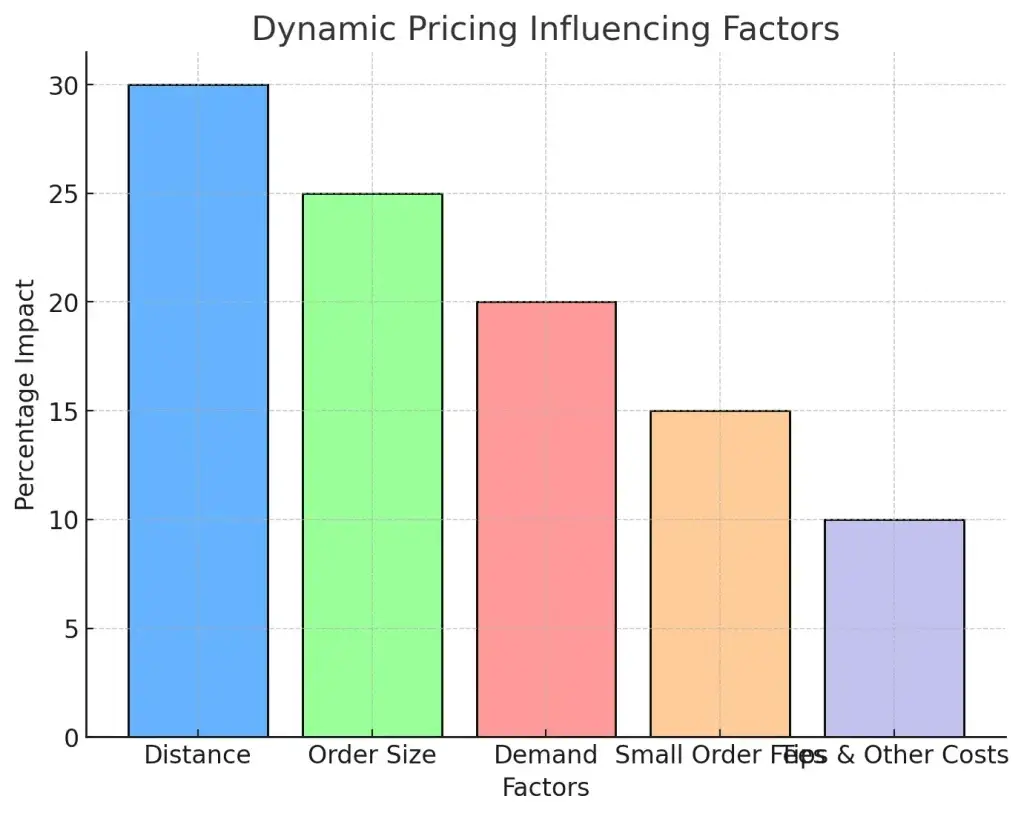
DoorDash’s pricing is influenced by several dynamic factors that affect the total cost for users:
- Distance: The delivery fee can vary based on how far the customer is from the restaurant.
- Restaurant Pricing: Each restaurant sets its own menu prices, which are reflected in the final bill.
- Demand-Based Pricing: During peak times or high demand periods, delivery fees may increase, similar to surge pricing models.
- Additional Costs: DoorDash applies extra charges like small order fees (typically for orders under $10) and optional tips for Dashers, which are encouraged for quality service.
These factors allow DoorDash to adjust its pricing dynamically, ensuring operational efficiency while maintaining a flexible service for customers.
Competitive Comparison: DoorDash vs. UberEats vs. Grubhub
When comparing DoorDash’s pricing model to competitors like UberEats and Grubhub, some notable differences emerge:
- Delivery Charges: While DoorDash’s delivery fees typically range from $5–$8, UberEats often has a wider range depending on distance and demand, whereas Grubhub tends to offer lower base fees but can apply extra charges during peak times.
- Service Fees: DoorDash’s service fees are tied to the order subtotal and cover technology and operational costs. UberEats and Grubhub also have service fees, but UberEats tends to charge slightly higher percentages.
- Commission Rates: DoorDash charges restaurants around 20% per order, similar to Grubhub, but UberEats’ commission rates can go as high as 30%, making DoorDash a more cost-effective option for many restaurants.
Comparison Table for Pricing Between DoorDash, UberEats, and Grubhub
| Feature | DoorDash | UberEats | Grubhub |
|---|---|---|---|
| Delivery Charges | $5–$8 | Varies widely | Lower base, surge applies |
| Service Fees | Varies, % of order subtotal | Typically higher | Moderate |
| Restaurant Commission | ~20% | Up to 30% | ~20% |
| Subscription Service | DashPass ($9.99/month) | Eats Pass ($9.99/month) | Grubhub+ ($9.99/month) |
| Surge/Demand-Based Pricing | Yes | Yes | Yes |
Leveraging Its Pricing Model
DoorDash leverages its DashPass subscription (offering free deliveries and lower service fees) and demand-based pricing to outperform competitors. Its commission structure is also attractive to restaurants, ensuring a broader restaurant network that feeds into its growing customer base. These factors make DoorDash more appealing both for businesses and frequent customers, giving it a competitive edge in the market.
For a more detailed comparison of the top food delivery services, check out this competitive review that covers UberEats, Postmates, Grubhub, and more.
Technology and Pricing
DoorDash uses advanced AI and data analytics to optimize its pricing structure, ensuring both efficiency and customer satisfaction.
- Dynamic Pricing: AI algorithms analyze real-time data, including order volume, time of day, and delivery location, to adjust delivery fees and service charges accordingly. This helps manage high-demand periods with surge pricing while maintaining cost-effectiveness during off-peak hours.
- Real-Time Adjustments: Pricing is dynamically adjusted based on factors such as distance, traffic, and restaurant capacity, allowing DoorDash to fine-tune fees for maximum profitability and customer retention without overcharging.
This integration of technology ensures that DoorDash’s pricing remains competitive and adaptable to market conditions.
Long-term Sustainability of DoorDash’s Pricing Strategy
DoorDash’s current pricing model, which relies on delivery fees, service charges, and commissions, has proven effective in maintaining profitability and customer loyalty. However, as the market evolves, particularly with the expansion into grocery and alcohol delivery, DoorDash will likely adjust its pricing to meet new logistical challenges.
Future pricing strategies may include more dynamic pricing models, discounts for repeat customers, or incentives for larger orders. These changes will help DoorDash remain competitive while meeting diverse customer needs in new delivery segments.
How DoorDash Generates Revenue
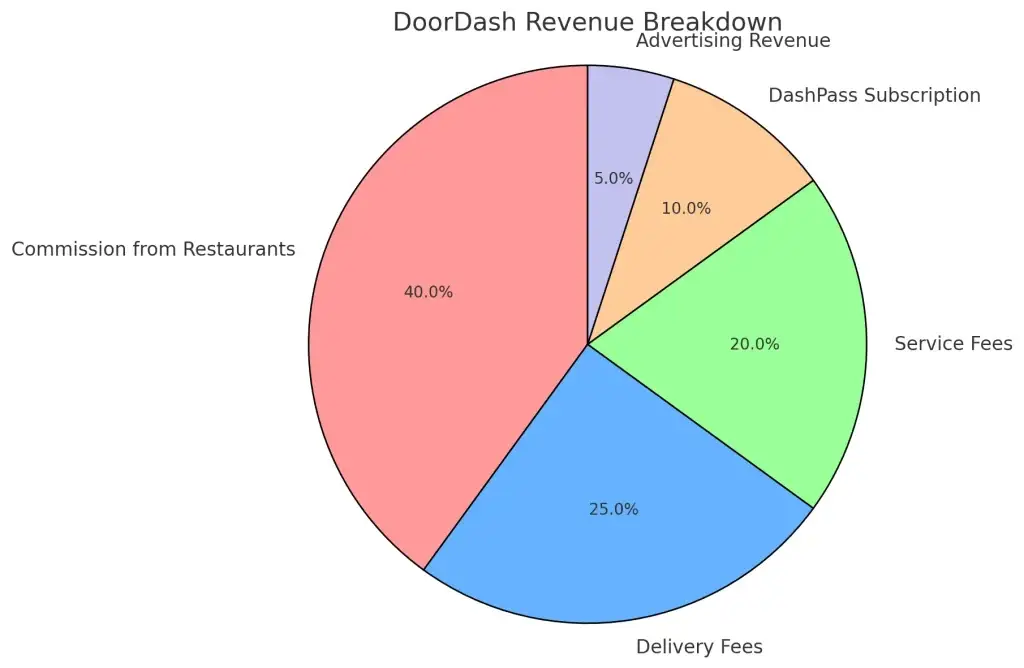
DoorDash has built a multi-stream revenue model that taps into various sources:
- Commission on Orders: Restaurants pay a ~20% commission on each order for access to DoorDash’s platform and delivery service.
- Delivery and Service Fees: Customers pay a delivery fee (typically $5–$8) and a service fee, which covers operational costs like marketing and technology.
- DashPass Subscription: For $9.99/month, customers enjoy free deliveries on orders over $12 and reduced service fees.
- Advertising Revenue: Restaurants can pay for promoted listings and ads, increasing their visibility and DoorDash’s revenue.
This diverse structure ensures consistent income from multiple channels.
| Revenue Stream | Details |
|---|---|
| Delivery Fees | $5–$8 per order |
| Service Fees | Varies based on subtotal |
| Restaurant Commissions | ~20% per order |
| DashPass Subscription | $9.99 per month for free delivery |
| Advertising Revenue | Paid promotions by restaurants |
DoorDash’s Pricing Strategy for the Future
As DoorDash expands into new delivery segments like grocery and alcohol, its pricing model will likely adapt to manage higher logistics costs and operational complexities. We can expect more dynamic pricing innovations, which adjust fees in real-time based on demand, distance, and order size. These changes will help maintain cost-efficiency while ensuring competitive pricing in new markets. By optimizing costs and leveraging new pricing strategies, DoorDash aims to stay profitable while offering value across different delivery verticals.
How DoorDash Can Inspire Entrepreneurs
DoorDash’s pricing and business model offer valuable lessons for entrepreneurs aiming to break into the on-demand delivery industry. Their use of dynamic pricing, a scalable platform, and diverse revenue streams demonstrates how to balance customer satisfaction with profitability.
For aspiring entrepreneurs, Miracuves’ turnkey food delivery solutions provide a powerful way to build scalable, customizable apps similar to DoorDash. With features like real-time tracking, seamless payment systems, and flexible pricing models, Miracuves enables businesses to launch their own delivery apps quickly and efficiently, leveraging proven industry strategies.
Global Cost Factors & Pricing Breakdown for a DoorDash-Like App
The technology stack behind your platform plays a major role in determining development cost, launch speed, and long-term scalability. Some businesses aim for a faster and more affordable launch, while others require a more advanced setup to manage real-time order tracking, high traffic, and multi-location delivery operations.
Here is a simple comparison of common global development approaches for a DoorDash-like food delivery and on-demand logistics platform:
PHP / Laravel is best for quick and affordable launches, Node.js / Python for real-time delivery operations, and Go microservices for large-scale platforms.
DoorDash Clone App Development Cost & Miracuves Pricing Breakdown
Miracuves Pricing for a DoorDash-Like Food Delivery App developed in PHP/Laravel with Flutter Apps for $3,399 USD (One-Time Price) in just 6 days
Get a fully developed, deployment-ready platform modeled after DoorDash. Built on a stable PHP/MySQL backend with Flutter mobile apps, this complete package gives you everything needed to launch and scale a modern food delivery business with efficiency, flexibility, and real-time operational control.
- Core Delivery Flow: Customer ordering, restaurant onboarding, order management, and driver delivery workflows.
- Built-in Operations: Dynamic pricing logic, service fee structure, commission handling, and payout management.
- Management Hub: Centralized admin backend for restaurants, drivers, users, orders, pricing rules, and platform operations.
- Launch-Ready Setup: Fully prepared for branding, deployment, API setup, and app store launch support.
Why is it so affordable?
Most food delivery platforms like DoorDash rely on complex logistics systems, real-time tracking, and multi-layer pricing models across restaurants, customers, and delivery partners. Building this from scratch requires larger engineering teams, more development time, and significantly higher technical investment. Miracuves removes that burden by offering a ready-made DoorDash-style platform that already includes the essential delivery workflows, business logic, and admin controls required to launch faster.
We took a smarter, more practical approach:
- You Aren’t Paying for Ground-Up Development: Our DoorDash-style engine is already developed, tested, and structured for real business operations, helping you avoid months of product planning and backend setup.
- The Strength of PHP / MySQL with Flutter Apps: This stack is reliable, scalable, and cost-effective, making it easier to maintain your platform and manage future customizations without inflating your budget.
- Fast Launch Advantage: Instead of waiting months to enter the market, you can launch a fully branded food delivery solution in just 6 days with the core order, delivery, and management workflows already in place.
You get a complete, business-ready food delivery platform without the inflated cost of full custom development.
Note: This cost includes the solution, re-branding, deployment support, source code, backend/API setup, admin panel configuration, and publishing support for Google Play Store and Apple App Store.
Conclusion
DoorDash’s strategic pricing model, combining dynamic pricing, flexible fees, and diverse revenue streams, has driven its incredible success in the competitive food delivery market. By adapting its pricing strategies to meet demand and logistical challenges, DoorDash continues to innovate and expand.
For entrepreneurs looking to build similar on-demand platforms, Miracuves’ turnkey solutions offer the perfect launching pad. With custom app development and scalable features tailored for food delivery businesses, Miracuves enables you to create and grow your own DoorDash-like platform quickly and efficiently. Contact Us with Miracuves today!
FAQs :-
How does DoorDash make money?
DoorDash generates revenue through delivery and service fees, restaurant commissions, DashPass subscriptions, and advertising services.
What is DashPass?
DashPass is a subscription service that offers free delivery and reduced service fees on orders over $12 for $9.99 per month.
How does dynamic pricing work for DoorDash?
DoorDash adjusts delivery fees based on factors like demand, distance, and order size using AI-powered dynamic pricing.
What commission does DoorDash charge restaurants?
DoorDash charges approximately 20% commission on each order placed through its platform.
Can small businesses benefit from DoorDash?
Yes, DoorDash provides small businesses with access to a larger customer base, flexible delivery options, and marketing support.
Miracuves is an independent software development company. We are not affiliated with, connected to, sponsored by, or endorsed by any company or product named in this article.
Terms such as “X Clone” are used descriptively. It is how the software industry refers to building a platform with functionality comparable to a known service, and how clients search for it.
The entire design and codebase of our products is built by our own team. Our products contain no code, design, graphics, or content originating from any third-party website or applications.
All third-party names and marks referenced in this article are the property of their respective owners, referenced solely to identify the services discussed.