
Remember the first time you hailed a cab and it actually arrived on time? Yeah, me neither. But then came Uber, and boom — the entire taxi game changed overnight. Suddenly, your phone became the steering wheel to convenience. Fast forward a decade, ride-hailing isn’t just a convenience anymore; it’s a lifestyle. One that billions of people rely on daily.
If you’re reading this, you probably see the opportunity beyond just ordering a ride. You’ve noticed how regional players like Careem, Bolt, and Ola are owning local markets. Maybe you’ve even thought: “Why not my city? Why not my version?” Whether you’re a serial founder or someone just tired of app ideas collecting digital dust, this is for you.
This blog is your crash course in launching a ride-hailing platform — from ideation to ignition. We’ll decode what makes Uber tick, explore clones, and show you how to build smart, scale fast, and keep things monetization-friendly. Oh, and if you’re serious about launching? Miracuves has your back.
Ride-Hailing Isn’t Just Uber — Meet the Global Giants
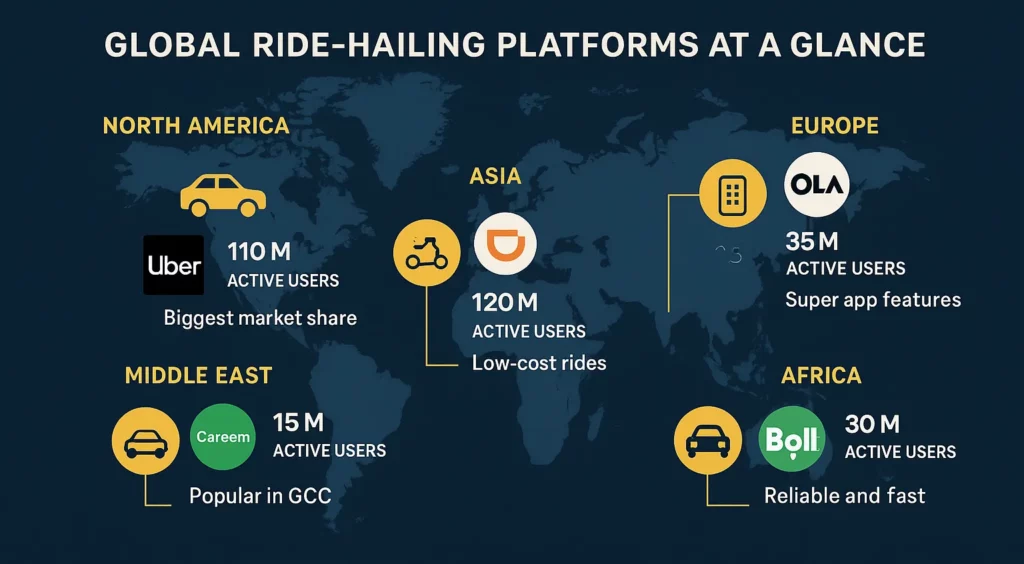
Before we jump into the how, let’s zoom out and see who’s already cruising in this lane. Each of these companies cracked something specific — region, user behavior, or product model. Here’s the snapshot:
- Uber (US, Global): The OG, known for multi-mode options (car, bike, boat, helicopter, you name it).
- Lyft (US): Uber’s fun cousin, more focused on North America and driver-friendly incentives.
- Ola (India): Dominates Indian metros, and even branched into electric vehicles.
- Careem (Middle East): Acquired by Uber but still operates independently; deeply localized.
- Bolt (Europe, Africa): Quick, cheap, and focused on underserved urban areas.
- DiDi (China): Uber’s rival in Asia — rides, food, bikes, and even EV manufacturing.
- Grab (SEA): From rides to food to banking — Southeast Asia’s do-it-all super app.
Each platform started small, catered to a real pain point, and scaled with a laser focus. Your idea can too — especially if it adapts to your region’s vibe.
Step-by-Step: How to Start a Ride-Hailing Platform
1. Find Your Niche or Region
Going global is cool, but going local makes you bank. Ask:
- Is there a city or region underserved by Uber or Bolt?
- Are drivers happy with current platforms?
- Can you target a language group or ride type (like tuk-tuks, bikes, EVs)?
A niche helps you spend less, market smarter, and get loyal users.
2. Know Your Ride Types (and Drivers)
What kind of rides will you offer?
- Sedans? Scooters? Electric tuk-tuks?
- Will drivers be freelancers or fleet owners?
- Will you integrate women-only drivers (like SheCab in Pakistan)?
Understanding your offering early affects your tech stack, regulation, and cost.
3. Tech Stack Time — Buy, Clone, or Build?
Let’s be real — building an Uber from scratch can burn years and dollars. That’s where ride-hailing clone apps come in.
A high-quality clone (like Uber Clone, Careem Clone, etc.) gives you:
- Real-time tracking
- Driver-rider chat
- In-app payments
- Admin panel with analytics
4. Handle Legal, Insurance & Compliance Early
You don’t want your app trending on Twitter for the wrong reasons. Depending on your region:
- Secure transport licenses
- Partner with insurance firms
- Create a basic safety and background-check protocol
5. App UX — Think Less Taps, More Trust
User experience is king. If your riders have to tap 8 times to book a cab, they’re bouncing.
Tips:
- Use one-tap ride request
- Instant fare breakdown
- Panic button, ride tracking
- Driver ratings + feedback
6. Monetization Models You Can Use
Money talk time. How will you earn?
- Commission on rides: Standard cut from driver earnings
- Surge pricing: Boost rates during high demand
- In-app ads: Promote local businesses to riders
- Subscriptions: For riders or drivers (priority booking, fewer fees)
- Driver onboarding fees
The beauty? You can layer these. Start with commission, expand as your base grows.
7. Marketing It Like a Movement
Your brand should feel like a cause. Not just “cheaper rides,” but:
- Empowering local drivers
- Offering safer rides for women
- Fighting traffic with smarter routing
Launch ideas:
- Partner with colleges for free ride credits
- Referral bonuses for early adopters
- Instagram reels with funny cab stories
8. Scale Features As You Grow
Start lean, then go wild:
- Add ride scheduling
- Launch multi-language support
- Expand to deliveries (food, grocery)
- Integrate wallets or BNPL (Buy Now Pay Later)
You’re not just building a taxi app — you’re building a mobility ecosystem.
Conclusion: The Road Ahead
Launching your own ride-hailing app isn’t some wild dream—it’s a real, profitable path if you play your cards right. Tap into your city’s unmet needs, combine it with smart tech choices, and ride the wave of hyper-local innovation.
Because let’s face it: the next big ride-hailing success won’t come from Silicon Valley—it’ll come from someone like you who dares to build for their community.Miracuves is here to supercharge that vision—fast, functional, and totally future-proof. If you’re ready to hit “go” on your ride-hailing startup, let’s build something incredible together.
FAQs
Q1. What’s the minimum budget to start a ride-hailing app?
With Miracuves, you can kickstart your ride-hailing business for around $2K–$5K using a ready-made clone script. It’s a fast, cost-efficient launch — your app can be fully set up and running within 6 days.
Q2. How do I make my ride-hailing app stand out?
Focus on region-specific problems — like language, pricing, or safety features that Uber might overlook.
Q3. Can I launch with just 1 city?
Absolutely. In fact, it’s better! Start small, test everything, then scale smart.
Q4. Do I need both Android and iOS apps at launch?
Yes — or use a hybrid app that works on both. Most clone scripts offer this option.
Q5. How do I attract drivers to my platform?
Better payouts, flexible hours, bonuses, and local marketing work wonders. Treat them like partners, not resources.
Q6. Is it legal to launch a ride-hailing service without owning cars?
Yes. Most platforms operate with driver-owned vehicles. Just ensure you’re compliant with local transport laws.
Miracuves is an independent software development company. We are not affiliated with, connected to, sponsored by, or endorsed by any company or product named in this article.
Terms such as “X Clone” are used descriptively. It is how the software industry refers to building a platform with functionality comparable to a known service, and how clients search for it.
The entire design and codebase of our products is built by our own team. Our products contain no code, design, graphics, or content originating from any third-party website or applications.
All third-party names and marks referenced in this article are the property of their respective owners, referenced solely to identify the services discussed.