
Key Takeaways
What You’ll Learn
- Dunzo clone startups often fail when they underestimate delivery operations and local execution complexity.
- Blind feature copying can hurt product-market fit when real user needs are different.
- Backend reliability matters more than launching too many features too early.
- Merchant and delivery workflows are essential for speed, trust, and smooth order completion.
- Startup success depends on operational clarity, not rushed execution.
Stats That Matter
- The article is built around 5 core startup mistakes founders commonly make in delivery app execution.
- It also highlights a practical UX benchmark where users should be able to complete key actions in around 3 taps.
Real Insights
- Hyperlocal delivery apps grow better when logistics, ordering, and user experience are solved together.
- Strong execution balances backend stability, merchant trust, and customer simplicity.
- The best products adapt features, payments, and delivery behavior to local market needs.
- Simple checkout and smooth ordering matter more than adding too many extras early.
- Growth comes from avoiding preventable mistakes, not moving blindly fast.
Ever had that moment when you thought, “Hey, Dunzo is killing it! Let’s build our own delivery app and ride the wave”? Yeah, that’s the dream, isn’t it? You envision millions of hyperlocal orders, riders zipping through traffic, and a shiny new app that could rival the likes of Instacart, Rappi, or even the OG itself—Dunzo. But somewhere between idea and execution, reality kicks in: the app’s buggy, users complain about delays, and that hockey-stick growth curve? Nowhere in sight.
I’ve spoken to countless founders who thought building a Dunzo clone was all about copy, paste, and profit. But here’s the thing: cloning an app isn’t about mimicking the features—it’s about understanding the DNA of the business model, user behaviors, and market dynamics. Without that, you’re just building a house of cards in a storm.
So, before you dive headfirst into the world of 10-minute deliveries and instant gratification, let’s hit pause. Here are the top five mistakes that startups make when building a Dunzo clone—and how to avoid them like a pro. At Miracuves, we’ve helped dozens of clients avoid these pitfalls. Let’s dig in.
Read more: How to Build a Dunzo Clone in 2025
Focusing Only on Features, Not the Business Model
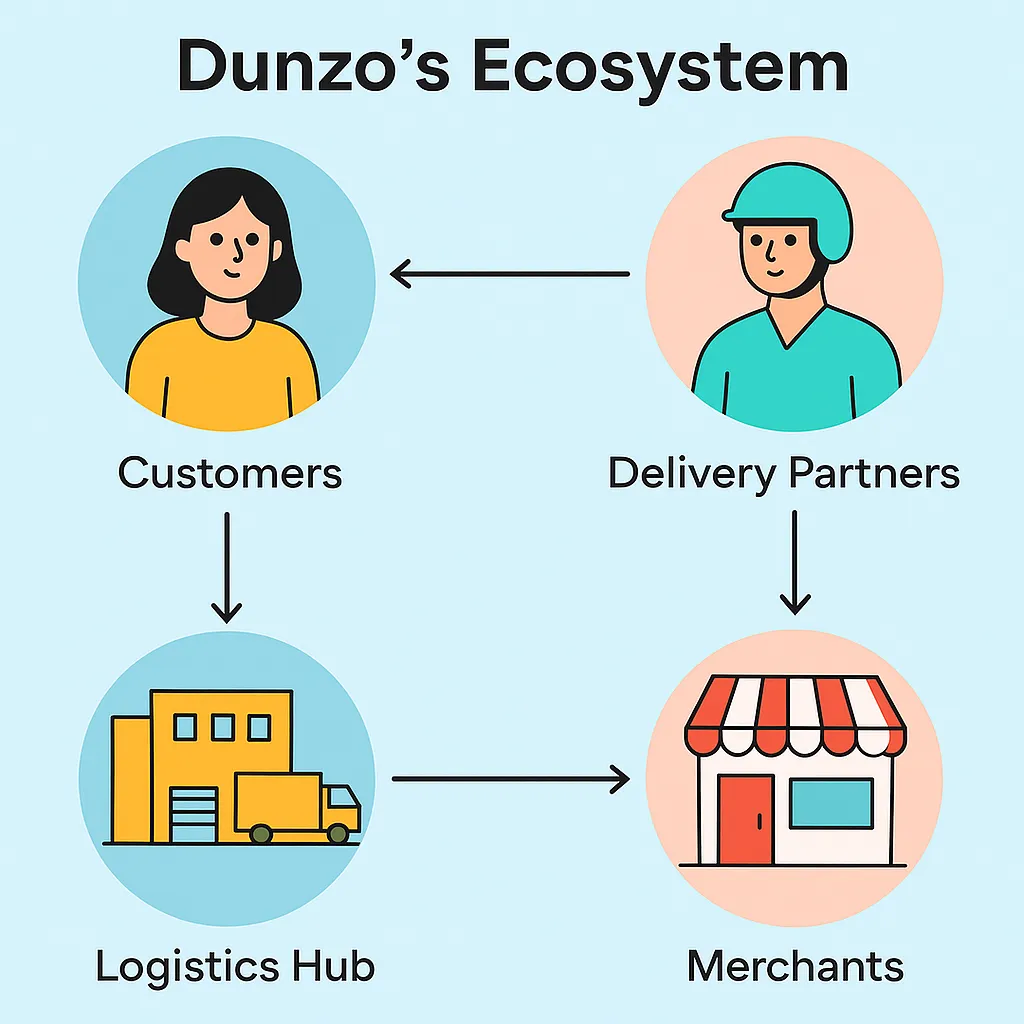
Too many founders get obsessed with replicating what they see: the app design, the tracking feature, maybe even the loyalty points system. But the Dunzo model isn’t just a collection of features—it’s an ecosystem powered by logistics, partnerships, and hyperlocal fulfillment.
For example, Dunzo thrives because it partners with local stores, maintains tight delivery networks, and optimizes last-mile logistics. If you just build an app without nurturing that ecosystem, you’ll end up with a skeleton that looks like Dunzo but can’t move like it.
Ignoring the Importance of Hyperlocal Dynamics
Think every city is the same? Think again. What works in Bangalore may not fly in Jaipur or Indore. Dunzo’s success hinges on understanding hyperlocal user behavior—from delivery times to popular categories like groceries, meds, or even quirky local items.
Many startups make the mistake of rolling out a “one-size-fits-all” approach. They underestimate the cultural and logistical nuances of different cities—things like rider availability, traffic patterns, and customer expectations. This lack of market fit leads to churn, bad reviews, and an uphill battle to retain users.
Overlooking the Tech Stack’s Scalability
Let’s be real: building an MVP is exciting. You launch a basic app, get a few orders, and it feels like you’re on your way to unicorn status. But when those orders scale from 100 a day to 10,000, that’s when cracks start showing.
Your backend might lag, APIs timeout, and riders start dropping off because they can’t handle the load. Dunzo isn’t just an app—it’s a highly optimized, scalable platform designed for real-time tracking, multi-order processing, and complex logistics. If you’re not thinking about scalability from day one, you’ll end up patching things later (and trust me, that’s expensive).
Underestimating User Experience (UX) and Micro-Moments
Let’s talk UX—because it’s not just about pretty screens. Dunzo nails those micro-moments: the instant the user opens the app, the frictionless order flow, the real-time tracking that doesn’t lag. Many startups get this wrong by focusing on flashy features instead of core user needs: speed, reliability, and transparency.
For example, if your app takes 5 extra seconds to load, users are already bouncing. If your live tracking doesn’t update every few seconds, they’re frustrated. And if your payment flow is clunky? That’s a dealbreaker.
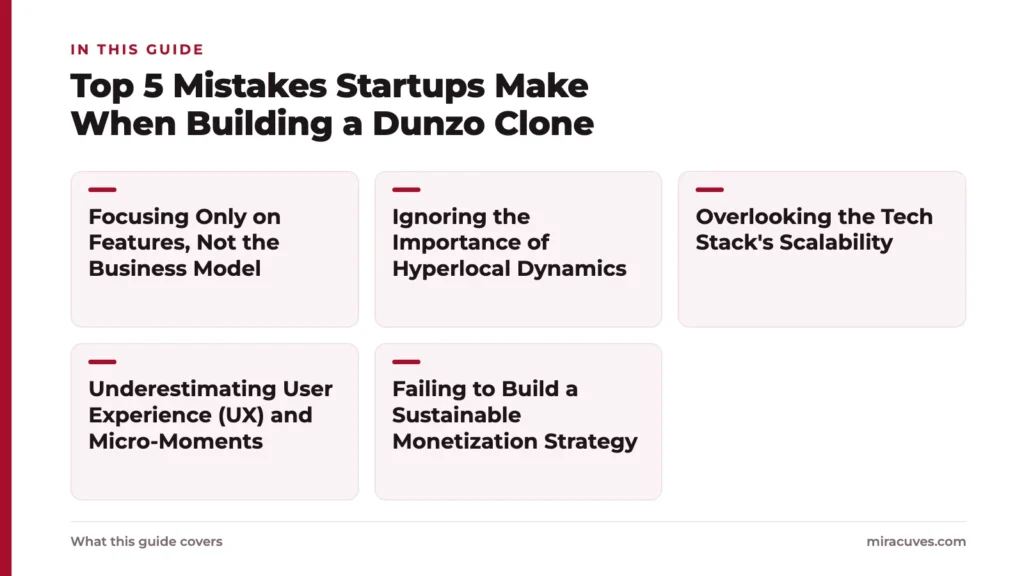
Failing to Build a Sustainable Monetization Strategy
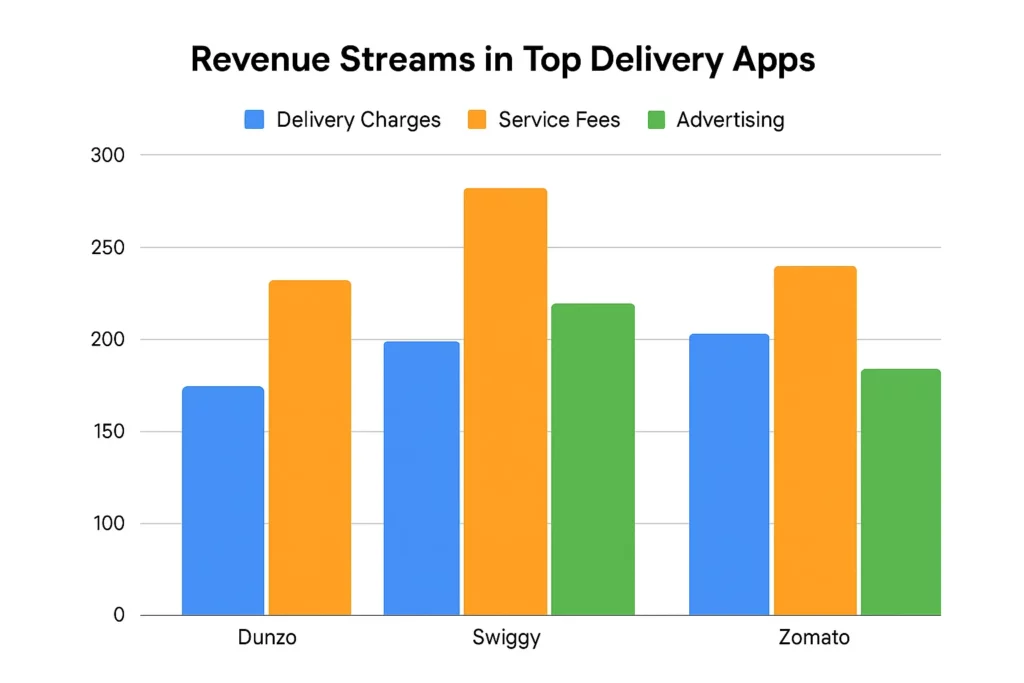
Let’s get real about money. Most startups dream of making it big like Dunzo but don’t have a clear plan for monetization. Dunzo’s revenue model isn’t just delivery charges—it’s merchant partnerships, premium services, advertising, and strategic collaborations.
If you’re relying solely on delivery fees, you’re setting yourself up for a burn-out runway. Think beyond the obvious: sponsored listings for local stores, exclusive deals, subscription models for power users. That’s where real, sustainable growth lies.
Read more: Business Model of Dunzo : Revenue and Strategy
Conclusion
Building a Dunzo clone isn’t a weekend project—it’s a marathon that requires deep understanding of the hyperlocal market, scalable tech, UX design, and monetization models. By avoiding these common pitfalls, you’ll save yourself time, money, and a lot of headaches down the line.
At Miracuves, we help innovators launch high-performance app clones that are fast, scalable, and monetization-ready. Ready to turn your idea into reality? Let’s build together.
FAQs
Q1: What is the best tech stack for a Dunzo clone app?
A robust stack like Node.js + React Native, backed by MongoDB or PostgreSQL, with a scalable backend using AWS or GCP, is a solid choice.
Q2: How much does it cost to build a Dunzo clone?
The cost of building a Dunzo clone depends on the feature set, platform scope, integrations, customization level, and overall business requirements. With Miracuves, a ready-made Dunzo Clone solution is available at $2,499 and can be launched in 6 days.
Q3: Do I need to partner with local stores to succeed?
Absolutely. Hyperlocal partnerships are the heart of the Dunzo model—without them, you lose the competitive edge.
Q4: How can I monetize beyond delivery fees?
Consider merchant partnerships, featured listings, advertising, and premium memberships for power users.
Q5: What are the biggest challenges with scaling a delivery app?
Handling real-time logistics, ensuring app stability under load, and maintaining high rider availability.
Q6: Can Miracuves help me build a custom Dunzo clone?
Yes! Miracuves specializes in creating fast, scalable, and feature-rich app clones tailored to your business needs.
Related Articles:
Miracuves is an independent software development company. We are not affiliated with, connected to, sponsored by, or endorsed by any company or product named in this article.
Terms such as “X Clone” are used descriptively. It is how the software industry refers to building a platform with functionality comparable to a known service, and how clients search for it.
The entire design and codebase of our products is built by our own team. Our products contain no code, design, graphics, or content originating from any third-party website or applications.
All third-party names and marks referenced in this article are the property of their respective owners, referenced solely to identify the services discussed.