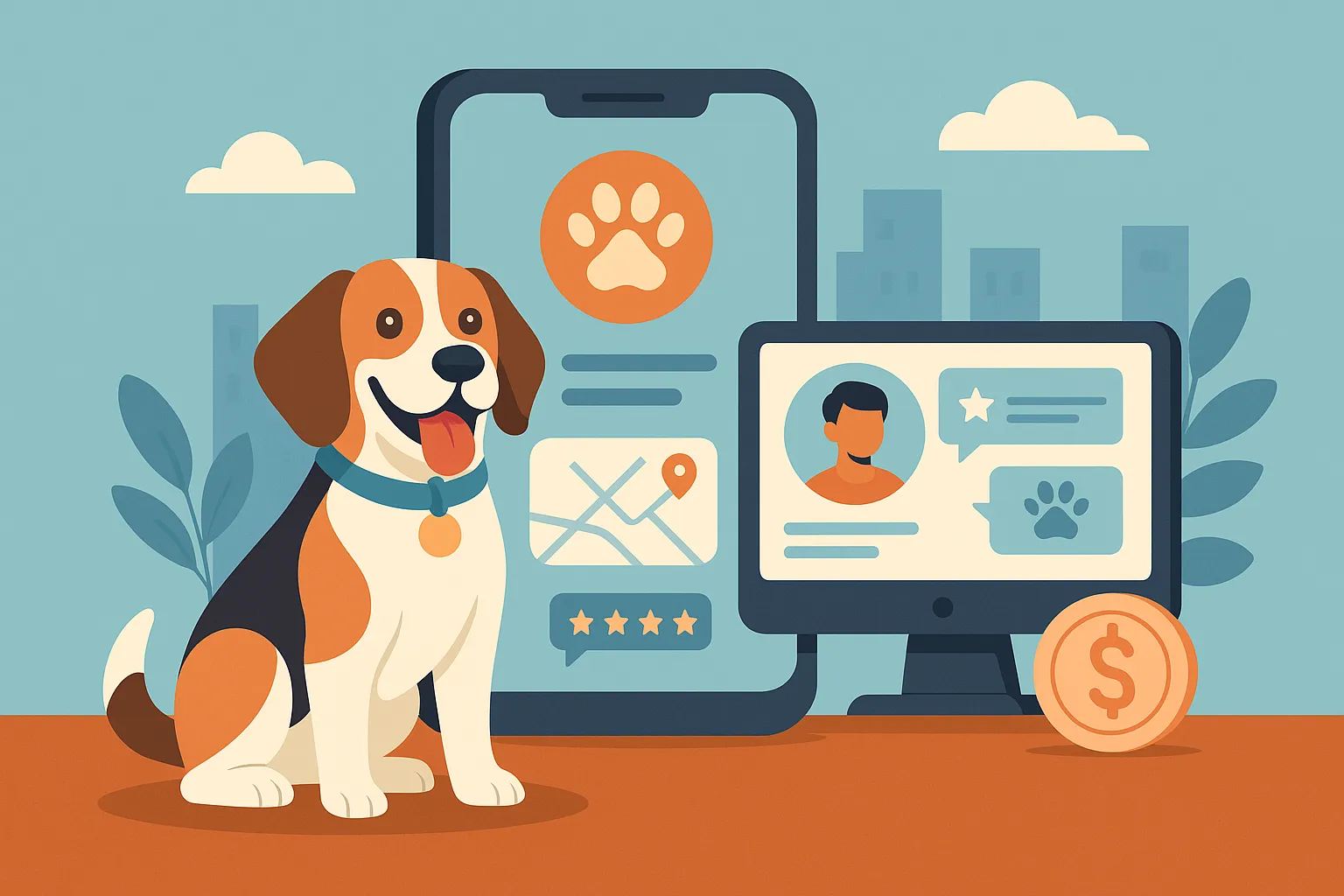
You’re chilling on your couch, scrolling through apps, and suddenly realize—there’s an app for everything… except a solid, reliable place for pet care services. We’re talking about grooming, walking, training, boarding—the full shebang. You’ve got the idea, the passion, and maybe even a dog named Bruno, but now you’re wondering: what’s it going to cost me to bring this app to life?
Let’s be honest, building a pet care services marketplace isn’t a walk in the dog park. It’s not just about having a slick-looking app with a paw print logo. It’s about nailing down real-time bookings, secure payments, GPS tracking, ratings, reviews, user-friendly onboarding… the list goes on like a Golden Retriever’s energy levels.
The good news? You’re not barking up the wrong tree. With the right strategy—and the right development partner—building your own pet care marketplace can be both doable and profitable. And hey, that’s where folks like Miracuves come in, making clone app development smoother than a shaved Pomeranian.
Why Pet Care Marketplaces Are Booming Right Now
Let’s put some context around the cost talk. The global pet care market was valued at over $200 billion in 2024 and is expected to surge past $250 billion by 2027 [source: Statista]. People are spending more on their furry friends than on gym memberships, and apps that make pet parenting easier are cashing in—big time.
But it’s not just about luxury. The shift towards on-demand everything—from rides to ramen—has reached the pet world. Today’s pet owners want instant bookings, GPS-tracked dog walks, and cashless checkouts. If you’re building a marketplace that connects pet owners with vetted service providers, you’re not just riding a trend—you’re solving a real, ongoing need.
Read more: How to Build an App Like Rover: Developer’s Guide from Scratch
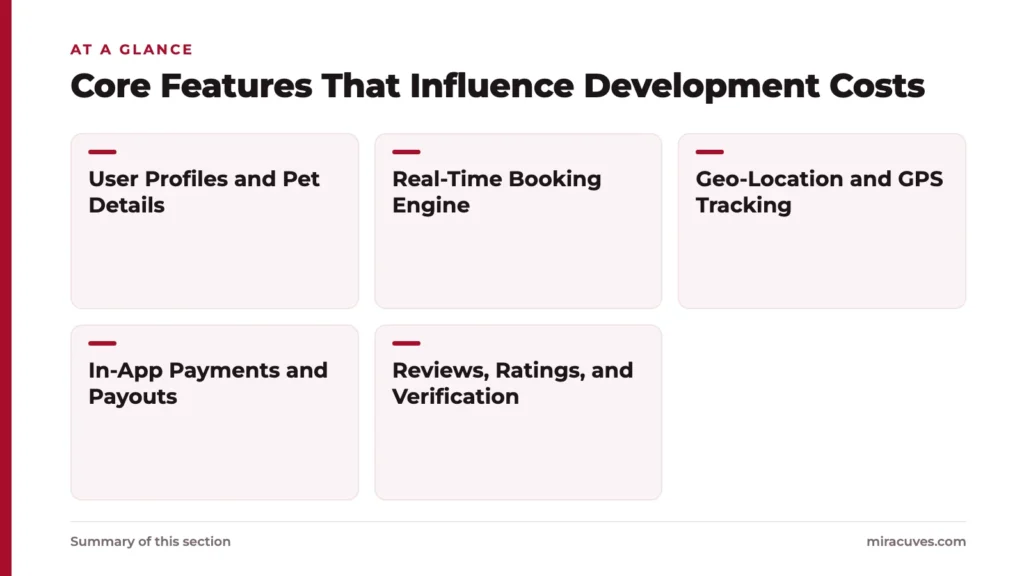
Core Features That Influence Development Costs
1. User Profiles and Pet Details
Your app will need to support two types of users—pet owners and service providers. Profiles, preferences, availability, and even pet medical histories might be needed.
Media suggestion: UI Screenshot mockup of dual sign-up flow (Owner vs Provider)
2. Real-Time Booking Engine
This is where things get complex (and costlier). A booking engine that handles availability, conflict management, and instant confirmations can significantly impact both backend architecture and frontend UX.
3. Geo-Location and GPS Tracking
Think live tracking during walks or showing nearby groomers. Integrating accurate geo-location APIs isn’t cheap but is non-negotiable for trust and functionality.
4. In-App Payments and Payouts
Stripe, Razorpay, PayPal—whatever you choose, the integration must be seamless and secure. You’ll also need a wallet or payout system for service providers.
5. Reviews, Ratings, and Verification
User-generated content like reviews and ratings not only requires frontend UI work but backend moderation tools too. Don’t forget ID verification modules to keep things legit.
Development Cost Breakdown: Numbers You Can Actually Use
Let’s talk dollars and sense. These ranges are approximate but based on real-world projects similar to what we build at Miracuves.
| Component | Estimated Cost (USD) |
| UI/UX Design | $3,000 – $7,000 |
| Backend & API Development | $8,000 – $15,000 |
| Geo & Payment Integrations | $4,000 – $10,000 |
| Booking & Scheduling Module | $5,000 – $12,000 |
| Admin Dashboard | $2,500 – $6,000 |
| Testing & QA | $2,000 – $5,000 |
| Total MVP Build | $25,000 – $55,000 |
These costs can vary depending on feature complexity, tech stack (Flutter vs React Native vs native), and whether you’re starting from scratch or opting for a white-label clone solution.
Clone vs Custom: What’s the Smarter Bet?
If you’re working with limited capital or testing the waters, a white-label clone of a pet service app can save you 40–60% of initial dev costs. You get a working MVP, faster time-to-market, and lower risk. Need it tailored? Customizations are always possible once you’ve validated product-market fit.
At Miracuves, we specialize in clone app development that doesn’t feel “cloned.” Think of it as your blueprint—fully editable, scalable, and built to impress.
Hidden Costs Entrepreneurs Forget to Budget For
➤ Ongoing Maintenance
Post-launch bug fixes, performance improvements, and OS updates will typically cost 15–20% of your development budget annually.
➤ Third-Party API Fees
Google Maps, payment gateways, SMS gateways—all come with monthly charges. These can snowball if not planned in advance.
➤ Marketing & User Acquisition
You can have the prettiest app in the store, but without users, it’s just digital wallpaper. Budget for influencer marketing, paid ads, and partnerships.
Read more: Best Rover Clone Scripts in 2025: Features & Pricing Compared
Final Thought
Building a pet care services marketplace is like training a puppy—it takes patience, planning, and persistence. You’ll make mistakes, pivot ideas, maybe even chase a few squirrels along the way. But get it right, and you’ll be the go-to name in your niche.
At Miracuves, we help innovators launch high-performance app clones that are fast, scalable, and monetization-ready. Ready to turn your idea into reality? Let’s build together.
FAQs
Q:1 What’s the cheapest way to launch a pet care app?
Using a clone-based app solution is your best bet. It trims development time and cost while letting you customize features down the road.
Q:2 Can I start with just dog walking and expand later?
Absolutely. Many successful apps (like Rover) started niche and scaled later. Start small, validate, then grow.
Q:3 How long does development take?
Development time depends on complexity. Clone solutions enable faster launches, while custom apps may take longer to build and refine.
Q:4 Do I need a mobile app and a web app?
Not initially. Start with mobile—where most bookings happen—and consider adding a web dashboard later for providers.
Q:5 What tech stack is best for this kind of platform?
Flutter or React Native for cross-platform speed, Node.js or Laravel for backend, and Firebase for push notifications and real-time sync.
Q:6 Can I monetize beyond service fees?
Yes! You can offer premium listings for providers, pet product ads, or even subscription perks for loyal users.
Related Articles:
Miracuves is an independent software development company. We are not affiliated with, connected to, sponsored by, or endorsed by any company or product named in this article.
Terms such as “X Clone” are used descriptively. It is how the software industry refers to building a platform with functionality comparable to a known service, and how clients search for it.
The entire design and codebase of our products is built by our own team. Our products contain no code, design, graphics, or content originating from any third-party website or applications.
All third-party names and marks referenced in this article are the property of their respective owners, referenced solely to identify the services discussed.