

Back in 2016, ride-hailing felt like the next gold rush. Every founder with an idea, a pitch deck, and a few lines of code was dreaming of becoming “the Uber of X.” Fast forward to 2025, and the headlines scream a different story—regulatory brawls, driver strikes, profit droughts. So why are ambitious founders still betting big on ride-hailing?
Here’s the twist: while the titans of the past struggle under their own weight, a new generation of ride-hailing startups is rising—not by copying, but by correcting. They’re leaner, more localized, often built for emerging markets where the problems are real and the stakes are personal. These aren’t vanity ventures; they’re solving hyperlocal problems, sometimes with little more than grit and a good dev team.
And that’s where we at Miracuves come in—helping visionaries build smarter, faster, more tailored ride-hailing platforms that are ready for tomorrow, not yesterday.
Why the Ride-Hailing Industry Isn’t Dead—Just Evolving
The Numbers Don’t Lie
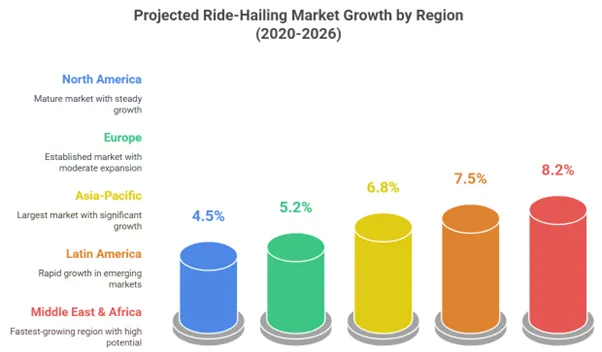
Despite recent challenges, the global ride-hailing market is projected to hit over $185 billion by 2026 (Statista). While big players are bleeding in the West, regions like Southeast Asia, Africa, and Latin America are witnessing double-digit growth. Why? Because public transport gaps are massive, infrastructure is improving, and smartphones are ubiquitous.
Setbacks ≠ Saturation
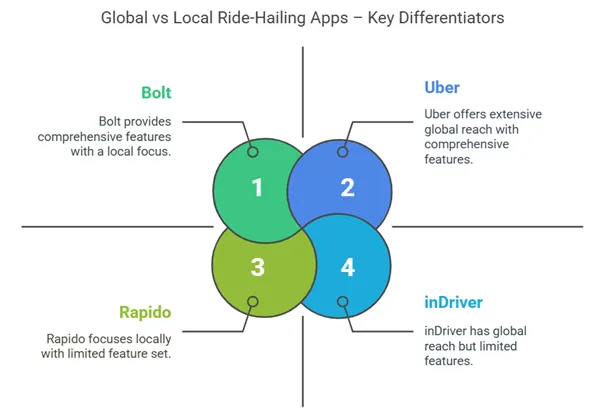
When Uber pulls out of a market, it’s not a signal to give up—it’s an open door for smarter local players. From India’s Rapido to Nigeria’s Bolt, regional apps are thriving by addressing what the giants couldn’t—fair driver pay, flexible pricing, local language UI, and cash payments.
The Rise of Niche & Negotiation-Based Models
Fare Freedom > Surge Pricing
Riders are tired of algorithmic pricing voodoo. That’s why negotiation-based models like InDriver are exploding in popularity. They let riders suggest a fare, drivers respond, and everyone feels in control.
UX Illustration Suggestion:
User flow: “Rider Sets Fare → Driver Negotiates → Ride Confirmed”
Niche Beats Mass
Trying to be everything for everyone? That’s yesterday’s playbook. Today’s winners are laser-focused:
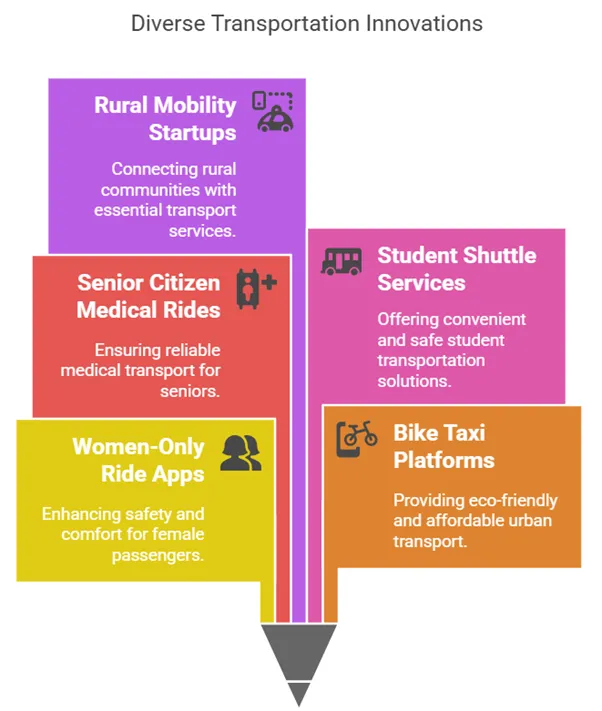
- Female-only ride apps for safety (e.g., See Jane Go)
- Medical transport platforms for seniors and patients
- Bike taxis for congested cities
By solving specific problems, these apps earn loyalty—and revenue—fast.
Tech-Driven, Not VC-Driven: The New Founder Mentality
Lean, Mean, and Monetization-Ready
Today’s founders aren’t just throwing VC money at scale. They’re building bootstrapped MVPs, launching in 21 days (yes, it’s possible with Miracuves), and iterating based on feedback—not vibes.
They care less about vanity metrics and more about:
- Driver retention
- Daily active rides
- Organic user acquisition
- Local partnerships
No-Code/Low-Code Tools: A Founder’s Secret Weapon
With platforms like ours at Miracuves, you don’t need to burn a year or your savings. Our ride-hailing clone scripts come preloaded with core features—GPS, negotiation, wallet, reviews, OTP, and more—saving months of dev time.
Localization Is King (and Queen)
One App, Many Markets
Launching in Nairobi? Riders might want to pay with M-Pesa. Going live in Indonesia? Bahasa support is essential. Each market has its quirks—and local knowledge beats global templates.
Miracuves’ ride-hailing solutions are modular—so you can add features like:
- Multi-currency wallets
- Offline ride scheduling
- Custom driver commissions
- Regional payment gateways
Learning from the Big Boys’ Mistakes
Uber’s Burnout ≠ Your Blueprint
Big tech tried to dominate before understanding. They overpromised, underdelivered, and forgot who their user was. You don’t have to repeat that.
Instead:
- Start with one problem (e.g., airport transfers, night safety).
- Serve one city like your life depends on it.
- Build one loyal community—then scale.
What’s Fueling the Resilient Bet?
- Smartphones keep getting cheaper.
- Urbanization is speeding up globally.
- Car ownership is declining.
- Gen Z prefers convenience over keys.
- Cities are investing in smart mobility.
Conclusion
Ride-hailing isn’t dead. It’s just shedding its excess and revealing a leaner, smarter version of itself. Founders who stay close to their users, localize relentlessly, and focus on actual value—not VC theater—are thriving. Whether it’s a fair-fare model in a rural town or a bike-taxi app for last-mile delivery, the ride-hailing space is wide open for those who are willing to rethink, retool, and relaunch.
At Miracuves, we help innovators launch high-performance app clones that are fast, scalable, and monetization-ready. Ready to turn your idea into reality? Let’s build together.
FAQs
1. What makes ride-hailing still profitable?
Emerging markets, niche models, and lower entry barriers allow founders to tap into specific user needs profitably without competing head-on with global giants.
2. How long does it take to build a ride-hailing app?
With Miracuves’ prebuilt solutions, MVPs can go live in 3–4 weeks, including customization, branding, and launch support.
3. Is negotiation-based pricing better than algorithmic pricing?
It depends on the market. In developing regions, users appreciate the control and transparency of negotiation. It builds trust and boosts retention.
4. Can I launch a ride-hailing app in a tier-2 or rural market?
Absolutely. In fact, these markets are often underserved, giving you a competitive edge. Just make sure your platform supports offline or hybrid access.
5. How do I retain drivers?
Offer transparent commissions, fast payouts, rating-based incentives, and even community perks like fuel discounts or microloans.
Miracuves is an independent software development company. We are not affiliated with, connected to, sponsored by, or endorsed by any company or product named in this article.
Terms such as “X Clone” are used descriptively. It is how the software industry refers to building a platform with functionality comparable to a known service, and how clients search for it.
The entire design and codebase of our products is built by our own team. Our products contain no code, design, graphics, or content originating from any third-party website or applications.
All third-party names and marks referenced in this article are the property of their respective owners, referenced solely to identify the services discussed.