
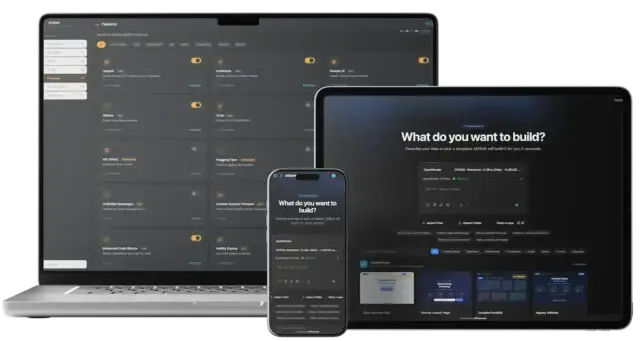
Yatra Clone Features: The Back Office a Travel Trade Business Runs On
A consumer booking app answers one question: can a traveler find and pay for a trip. A trade platform has to answer harder ones. Is this supplier who they say they are? Has this agent gone past the credit you gave them? What commission is owed on last Tuesday's tickets, and does the GST document match the payout? This build answers those in the software instead of in a spreadsheet.
Request a Live Demo →Full OverviewFeature Set by Role
Every login on the demo corresponds to somebody in a travel trade business, and most of them are not travelers.
The Trade Partner
An independent agent registers, passes approval, keeps a client list and reserves flights, hotels, buses and holidays on each client's behalf. They pay from a prepaid balance capped by the credit you grant, watch commission post against every ticket, and download a monthly statement they can reconcile against their own books.
The Company Travel Desk
A company account holds employees with roles, sub-roles and a reporting hierarchy. Policies decide what may be booked, bookings route to the right manager for approval before payment, and expense claims are filed against the trip. The company sits on a Starter, Business or Enterprise plan you price.
The Supplier
Hotels, bus operators and activity providers upload PAN, GST certificate, bank statement, property deed and trade licence documents for review. Once approved they manage inventory, rates and blackout dates, answer reviews, and see payouts with the GST tax document raised for each one.
The Partner Operations Team
Agent and supplier applications reviewed against their documents, approved, rejected or sent back for more information. Any booking found whether an agent, a company or a direct traveler made it, refunds processed, tickets answered with the booking attached, and every partner kept current in the CRM.
The Owner
The commission percentage agents receive, the share suppliers pay, the margin on each travel category as a percentage or flat amount with a minimum, a display markup on price comparisons, which staff roles may grant credit or release money, and which business lines are switched on.
The Settlements Desk
Monthly agent statements and supplier payouts prepared with refunds and adjustments included, an agent balance corrected after a dispute with the reason recorded, and commission and margin reports reconciled against the audit trail, with no reach into inventory, pricing or partner approvals.
Direct travelers book through an Android app, an iPhone app and the website from the same catalogue, so every supplier contract earns through the trade channel and the consumer channel at once.
Clone vs Consumer Script vs Running the Trade on Spreadsheets
Most travel businesses that sell through agents already have a booking tool. What they lack is the part behind it.
| What decides it | Miracuves Yatra Clone | Consumer script plus spreadsheets |
|---|---|---|
| How an agent pays for a ticket | From a prepaid balance, no card each time | A card, or an IOU somebody writes down |
| An agent over their limit | The booking is stopped before confirmation | Discovered at month end |
| Commission | Calculated on the server with each booking | Calculated by hand, and disputed |
| Month end | Statements and payouts generated | A week of reconciliation calls |
| A new hotel supplier | Five documents checked before it sells | Listed first, verified later, if ever |
| Vendor tax paperwork | GST documents raised with each payout | Invoices prepared manually |
| Company bookings | Policy, approval and expense claim | Email, reimbursement and a folder of receipts |
| Source code | Yours outright, no share of trade bookings | A licence, and your credit book in someone else's tool |
Yatra, TBO and Riya are the comparable trade businesses buyers have in mind; none is a product you can buy and none is a supplier or partner to this platform. The comparison that matters is the second column against the third, and against a custom build, on the Development Cost page.
From Partner Application to Monthly Statement
Seven stages, identical whether the partner is a one-person agency or a company booking for hundreds of staff.
A partner applies and is verified
Agents register through the partner portal and suppliers through the extranet, uploading their documents. Nobody trades before your team has reviewed them, and the approval or rejection is recorded in the back office and the partner added to the CRM with contacts and notes.
Terms are set by the system, not by memory
The commission percentage applies from the owner console, a prepaid balance opens for the agent, and a credit ceiling is granted by a role that holds that permission. Corporate accounts receive their plan, employees and policies at the same point.
The partner books from the shared catalogue
The agent picks a saved client and searches any category, or an employee searches under their company's policy. Fares and rooms come from connected suppliers and from vendors you have approved, the same inventory your direct travelers see.
The balance is checked before anything confirms
The amount is reserved against the prepaid balance and credit ceiling, the supplier confirms, and only then is the debit finalised. If the supplier cannot confirm, the amount returns to the balance automatically. Top-ups arrive through Razorpay or Stripe.
Commission is written with the booking
Agent commission, the vendor share and the category margin are calculated on the server and stored on the booking record itself, visible to the agent in real time and adjusted immediately when a ticket is cancelled or refunded.
Corporate bookings pass policy first
A company booking is checked against its travel rules and routed through its approval chain before payment is taken or a ticket issued, so finance at the client company never has to unwind a booking that should not have happened.
The month closes without a reconciliation week
A statement is produced for every agent and payout records for every supplier, with refunds and adjustments included and the GST documents attached. Finance adjustments carry an audit record, and partner performance reports inform the next credit review.
Statements and GST documents are produced in background jobs, and settlement reporting reads from replicas, so month end never slows down agents booking on the same day.
Every Feature Earns Its Place
Each row is here because a trade channel loses money or partners without it, not because a competitor lists it.
| Module | Why it is in the base build |
|---|---|
| Prepaid balances | Agents issue tickets all day and will not enter a card for each one. A balance they top up in advance also brings cash in before suppliers are paid, which is working capital a consumer app never sees. |
| Credit ceilings | Credit is how you win agents and how you lose money. A ceiling granted per agent, checked before every confirmation and changed only by an authorized role, keeps that exposure a decision rather than an accident. |
| Commission on the booking record | Commission worked out later from a report is commission that gets disputed. Writing it onto the booking when it is made means the agent and your accounts team read the same number. |
| Generated monthly statements | In trade travel, agents move volume to whoever settles correctly and on time. Statements that include refunds and adjustments make that reliability visible every month. |
| Supplier KYC before selling | A supplier listed before verification is a fraud risk and a tax problem waiting to happen. PAN, GST certificate, bank statement, property deed and trade licence checked first keeps both out of your platform. |
| Automatic GST documents | Preparing vendor tax paperwork by hand is one of the slowest jobs in supplier relations. Raising it with each payout removes the task and gives suppliers a document that matches the money they received. |
| Policies and approvals before payment | A corporate client's finance team will not accept bookings that break their own rules. Checking policy and routing approval before payment is what makes a company trust your travel desk with its staff. |
| Finance-only money actions | Credit changes, balance adjustments, refunds and payouts each need a specific permission and leave an audit entry, so a sales executive keen to please an agent cannot quietly extend their credit. |
The owner can also set a display markup on price comparisons, and ancillary visa, insurance and forex products are available to trade and direct bookings alike.
The Technology Behind the Features
B2B travel software is judged on the accuracy of its money records, so the stack is chosen for relational integrity and audit history.
It is TypeScript end to end, so one team can extend the portals, the apps and the settlement services together.
What Is Not Included in the Base Package
For a trade business, the commercial model has to match the software, so these are stated before you sign rather than discovered after.
Agents cannot set their own markup
Agents earn the commission percentage you configure. They cannot add a margin of their own above your trade price. If your agreements let agents price their own retail fares, agent-set markup is scoped and quoted as an add-on before launch.
No sub-agent tier
There is no master-distributor or sub-agent hierarchy with commission split across tiers. Every agent is a direct partner of yours. Distribution networks that recruit their own sub-agents need the hierarchy added as custom work.
No white-label agent sites
Agents book through your branded partner portal. Separate booking websites under each agency's own brand and domain, drawing on your inventory and back office, are not in the base build and are quoted separately.
Corporate SSO beyond Google is custom
Company employees sign in with email, one-time codes or Google accounts. SAML or a corporate identity provider, which larger clients' IT teams often require, is scoped against that client's identity system.
More add-ons for larger networks
Separate isolated platforms per reseller, two-way channel manager sync for listed hotels, scheduled exports in your accounting or ERP format, and commission that changes automatically by partner tier, volume or season. Each is quoted before it starts.
What is built is real
Agent portal with balances, credit ceilings, commission and statements, corporate accounts with roles, policies, approvals and expense claims, supplier KYC, GST documents, CRM, finance-only permissions, two-factor sign-in for operators and a VAPT reference mapped to the OWASP Top 10.
Security is built to the controls ISO 27001 and SOC 2 reviewers examine, which is not the same as holding either certificate. If your lenders or auditors expect specific controls around partner money, raise them before launch.
See how Miracuves compares to agencies and freelancers
The deployment process, the nine questions worth asking anyone bidding on a B2B travel build, the red flags, and a modelled consolidator in Pune - on the Development Company page.
Frequently Asked Questions
What B2B features does the Yatra clone include?
Is the Yatra clone the same platform as the MakeMyTrip clone?
Can agents set their own prices?
How does agent credit work?
How are suppliers verified?
Does the platform still sell to ordinary travelers?
Book as an agent, then close the month
On the live demo, reserve a flight and hotel for a client from the agent balance, then open the settlements desk and watch the commission land on the statement.
Explore the Yatra Clone
Five pages on this product. You are on Features.
Features
What is included, by role.
Credit, commission and settlement, in software you own.
A partner portal, a corporate travel desk, a verified supplier network and the back office that keeps them honest, beside a consumer app selling the same inventory directly.
Talk to Us →Miracuves is an independent software development company. We are not affiliated with, connected to, sponsored by, or endorsed by Yatra.
“Yatra Clone” is used descriptively. It is how the software industry refers to building a platform with functionality similar to Yatra, and how clients search for it.
The entire design and codebase is built by our own team. The product contains no code, design, graphics, or content originating from the Yatra website or applications.
Yatra and all other third-party names and marks are the property of their respective owners, referenced here solely to describe the category of software offered.
