
Think back to when job hunting meant polishing your résumé, printing out ten copies, and knocking on office doors. Those days? Gone. Today, candidates swipe through roles on their phones like they’re browsing dating apps, while employers scout global talent before their morning coffee. The job hunt has gone mobile, real-time, and algorithm-powered—and the platforms leading this shift are anything but traditional.
Now, if you’re an entrepreneur or startup founder looking to build your own Job and Career Platform App, you’re not alone—but you’re up against some serious players. Competing with platforms like LinkedIn, Glassdoor, and Indeed is no small feat. These giants have deep pockets and established user bases. So, how do you stand out?
The answer? Go lean, go smart, and go niche. Whether you’re eyeing a LinkedIn clone for a specific industry or building something region-specific with a community-first approach, there’s a golden opportunity for platforms that genuinely serve their users. And with Miracuves by your side—a partner experienced in developing scalable, feature-rich job platforms—you can turn that vision into a high-impact reality without burning through months of trial and error.
Why Now Is the Right Time to Launch a Career Platform
The Remote Revolution Has Shattered Boundaries
Remote work isn’t a trend—it’s the new standard. From full-time roles to project-based gigs, the hiring landscape has gone borderless. This opens up massive opportunities for niche job apps that cater to remote workers, freelancers, and digital nomads.
Traditional Platforms Are Losing Relevance
Big job boards often overwhelm users with irrelevant listings and spammy outreach. Candidates want smarter filtering, real-time communication, and authentic employer branding. Employers want access to qualified applicants—not just more résumés. There’s room for platforms that fix these pain points.
Hyper-Niche Is the New Normal
Vertical job platforms are thriving—whether it’s for software developers, healthcare workers, creatives, or remote-only jobs. A focused platform builds trust and relevance, leading to higher engagement and better matches.
Read More : How to Develop a Job Board Platform App
Core Features Your Job Platform App Needs
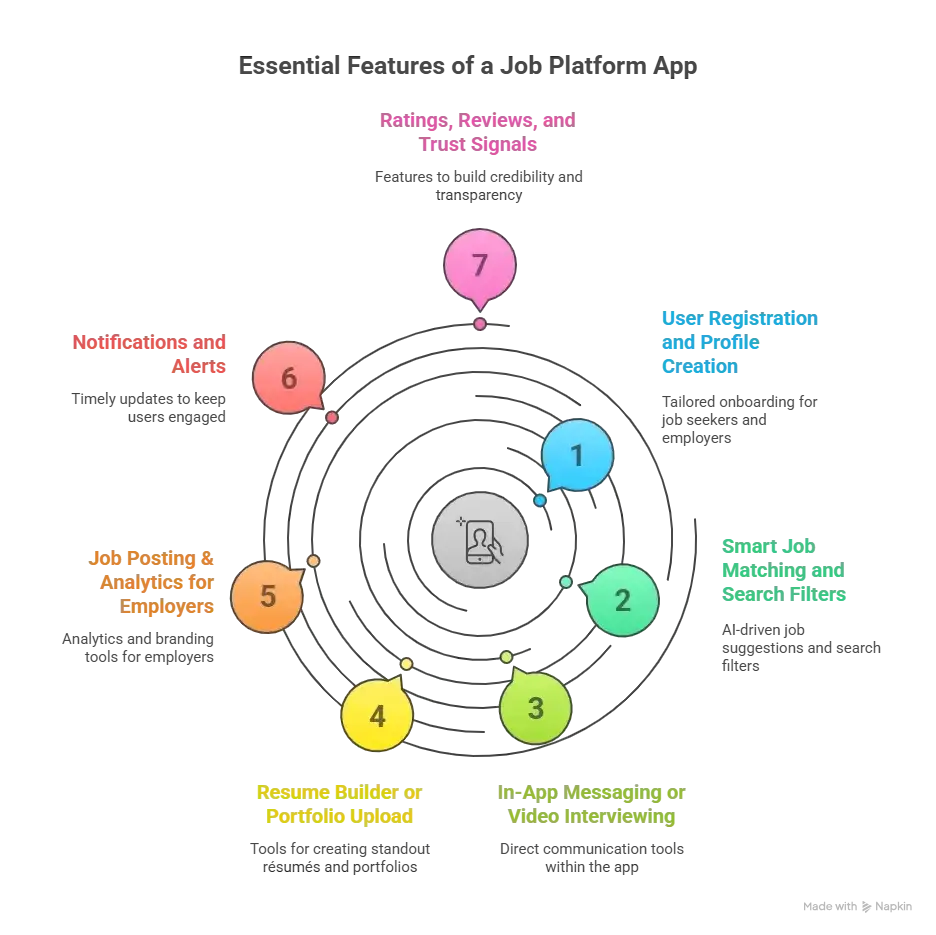
User Registration and Profile Creation
Both job seekers and employers need tailored onboarding experiences. Candidates should be able to upload résumés, build interactive profiles, and showcase skills. Employers need company pages, job posting tools, and applicant tracking.
Smart Job Matching and Search Filters
No one wants to scroll endlessly. Add filters like:
- Job type (full-time, part-time, contract, freelance)
- Remote vs on-site
- Salary range
- Skill tags and experience level
For better matches, integrate AI to suggest listings based on user behavior and profile data.
In-App Messaging or Video Interviewing
Enable communication right within the platform—whether it’s via chat, scheduled interviews, or integrated video calls. Eliminating email back-and-forth makes the process faster and more intuitive.
Resume Builder or Portfolio Upload
Many users—especially early-career job seekers—need tools to craft standout résumés or upload their work samples. This feature alone can set your platform apart.
Job Posting & Analytics for Employers
Employers need more than a “Post Job” button. Provide analytics on impressions, application rates, source tracking, and applicant quality scores. Bonus if you allow employer branding elements like videos, testimonials, and company culture highlights.
Notifications and Alerts
Timely updates keep users engaged. Push notifications for new matches, messages, or interview invites are must-haves.
Ratings, Reviews, and Trust Signals
To build credibility and transparency, consider adding reviews for employers and employees, verified badges, or mutual endorsements.
Read more : How Much Does It Cost to Build a Job Board Marketplace Platform from Scratch?
User Journey: From Signup to Hired
Here’s what a smooth user flow might look like:
- Sign-up with email, Google, or LinkedIn
- Role selection: job seeker or employer
- Profile setup with resume import or guided builder
- Job search or post a listing
- Apply or receive applications
- Chat or schedule interview
- Rate the experience
What Powers It All: Tech Stack Recommendations
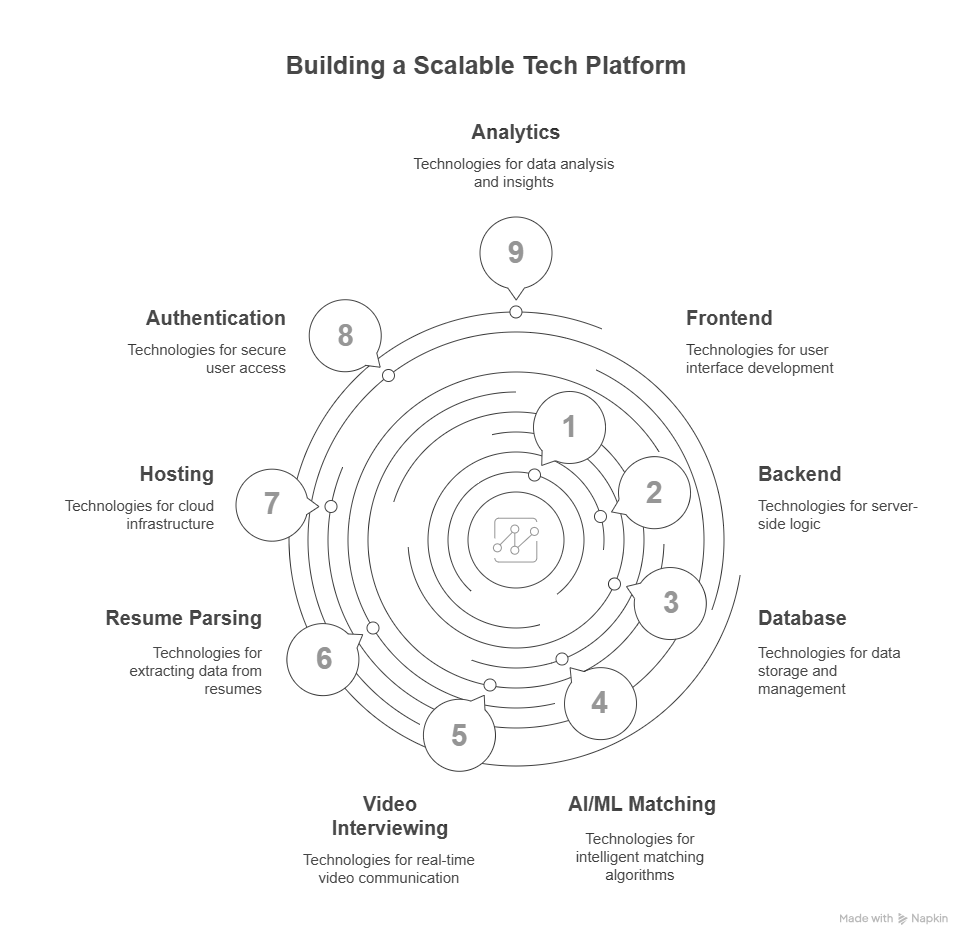
| Feature | Technology Options |
| Frontend | Flutter, React Native |
| Backend | Node.js, Laravel |
| Database | PostgreSQL, Firebase |
| AI/ML Matching | TensorFlow, Python (Scikit-Learn) |
| Video Interviewing | WebRTC, Agora.io |
| Resume Parsing | Sovren API, Affinda |
| Hosting | AWS, DigitalOcean |
| Authentication | Firebase Auth, Auth0 |
| Analytics | Google Analytics, Mixpanel |
Choosing scalable cloud infrastructure and modular tools ensures your platform can grow without falling apart.
Clone or Custom: Which Path Should You Take?
Let’s be honest—building everything from scratch may sound tempting, but it’s a heavy lift. You’ll spend months debugging, hiring developers, and reinventing common features.
That’s why clone-based development is gaining traction. At Miracuves, we help founders launch job and career apps by leveraging proven templates tailored for your niche. Whether it’s a LinkedIn-style platform, a freelance gig marketplace, or a remote job board, we’ll help you get to market faster—without sacrificing custom features.
Common Pitfalls to Avoid
Poor Search Experience
If users can’t find the right job in under two minutes, they’re gone. Fast, intuitive, filter-heavy search is essential.
Ignoring Mobile Optimization
Most users browse and apply via mobile. If your platform lags, loads poorly, or feels clunky on phones, you’ll lose half your audience.
No Trust-Building Elements
In a world of scams and ghosted interviews, credibility is key. Verified accounts, user reviews, and support responsiveness make all the difference.
Read More: Top 5 Mistakes Startups Make When Building a LinkedIn Clone
Future-Ready Features to Consider
- AI-Powered Career Coaching: Help users discover new roles based on skillsets and goals.
- Gamified Learning Modules: Offer micro-certifications or skill tests to boost candidate profiles.
- Automated Interview Scheduling: Sync calendars and reduce the back-and-forth.
- Voice and Video Resumes: Especially useful for creative or people-facing roles.
Source: Statista – Online Job Market Trends 2025
Conclusion
Building a job and career platform isn’t just about listings—it’s about empowering people. Done right, your app becomes a space where users change their lives, grow their careers, and make real-world moves.
At Miracuves, we help innovators launch high-performance app clones that are fast, scalable, and monetization-ready. Ready to turn your idea into reality? Let’s build together.
FAQs
Still have questions about launching your career platform app? Let’s clear them up.
How much does it cost to develop a job platform app?
Clone-based apps can start from $10,000–$30,000 depending on features. Custom builds often range between $50,000 and $100,000.
Can my platform support freelance and full-time listings?
Yes. You can allow employers to categorize job types and tailor the application process accordingly.
How do I make money from a career app?
Revenue can come from employer subscriptions, premium job postings, in-app promotions, or even résumé review services.
Is video interviewing hard to integrate?
Not at all. Tools like WebRTC or Agora can be embedded to offer real-time video directly within your app.
Should I focus on one industry or be general?
Start with a niche—healthcare, tech, remote jobs—and expand later. Niches build faster trust and traction.
Related Articles
Miracuves is an independent software development company. We are not affiliated with, connected to, sponsored by, or endorsed by any company or product named in this article.
Terms such as “X Clone” are used descriptively. It is how the software industry refers to building a platform with functionality comparable to a known service, and how clients search for it.
The entire design and codebase of our products is built by our own team. Our products contain no code, design, graphics, or content originating from any third-party website or applications.
All third-party names and marks referenced in this article are the property of their respective owners, referenced solely to identify the services discussed.