Key Takeaways
What You’ll Learn
- Foodpanda’s marketing strategy grows through localization, branding, and emotionally relevant user engagement.
- Hyper-local campaigns help the brand feel more relatable in different markets and cultures.
- Influencer content and loyalty mechanics support repeat usage and stronger brand recall.
- Push notifications and UX-led promotion improve conversions when timing and context feel natural.
- Growth success comes from relevance, not generic promotion.
Stats That Matter
- The global food delivery market is estimated to hit $505 billion in 2025.
- Foodpanda’s strategy includes 7 major marketing pillars, from branding and influencer outreach to loyalty and partner promotions.
Real Insights
- Food delivery apps grow better when offers, content, and timing feel locally relevant.
- Strong brands combine acquisition, retention, and emotional relevance in one strategy.
- The best campaigns turn discounts into habits and users into repeat customers.
- Localization and human-style messaging matter as much as ad spend.
- Growth comes from market fit in communication, not promotion overload.
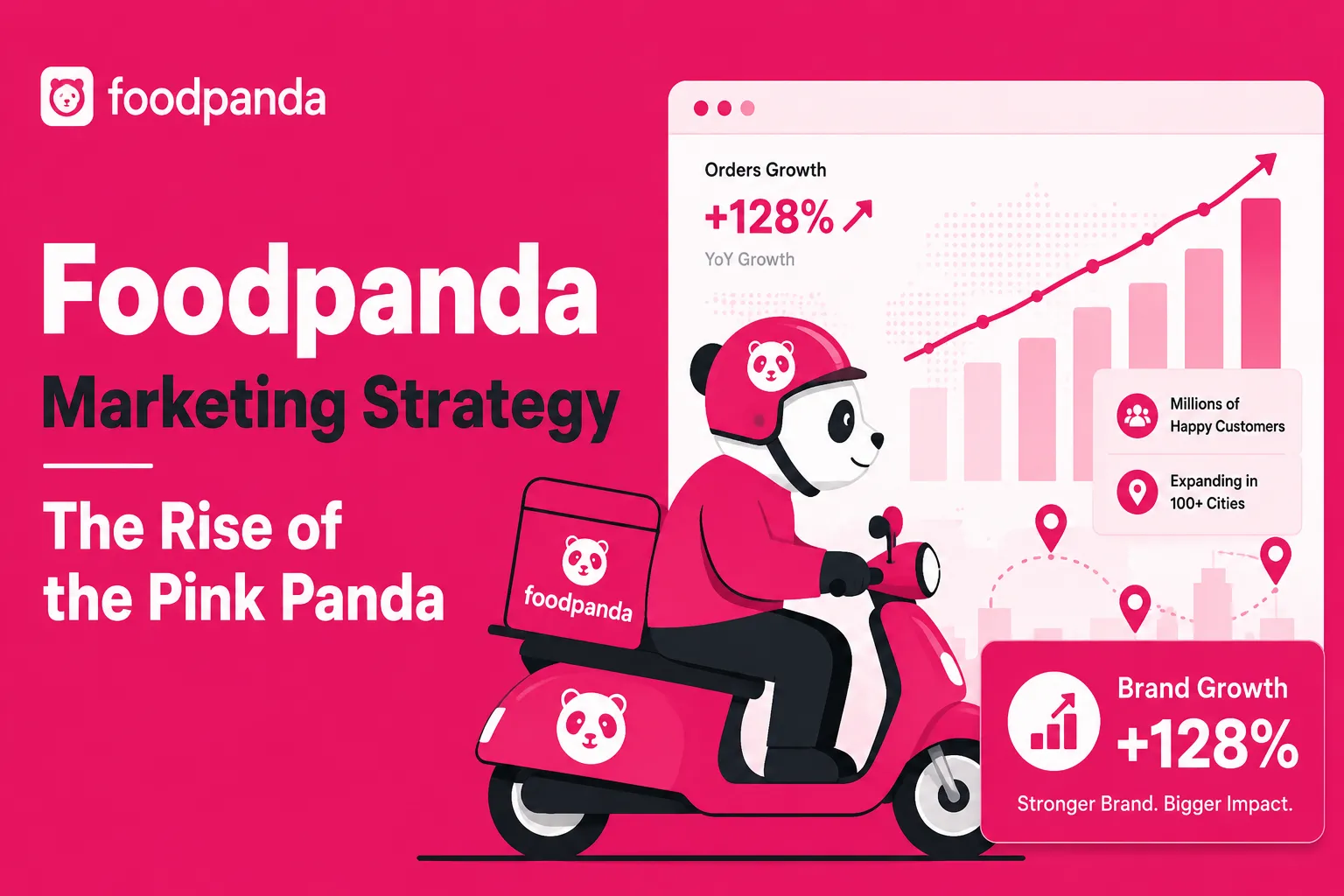
Ever scrolled through your phone at midnight, stomach growling, and spotted that unmistakable pink panda logo? Yep, that’s Foodpanda—the food delivery superhero that’s saved more dinners than we can count.
But have you ever stopped to think: How did Foodpanda go from startup to street legend in the food delivery game? Like Statista It’s not just the late-night cravings or the 1+1 offers. Behind that cute pink interface lies a fierce marketing beast—armed with hyper-local strategies, influencer partnerships, and data-fueled campaigns that actually make you hungry.
If you’re a startup founder or digital creator planning to build a scalable Foodpanda clone, grab your coffee (or biryani) and keep reading. We’re diving fork-first into the marketing strategy that made Foodpanda a household name—and how Miracuves can help you build the next big thing.
Craving Convenience: Why Food Delivery Apps Dominate in 2026
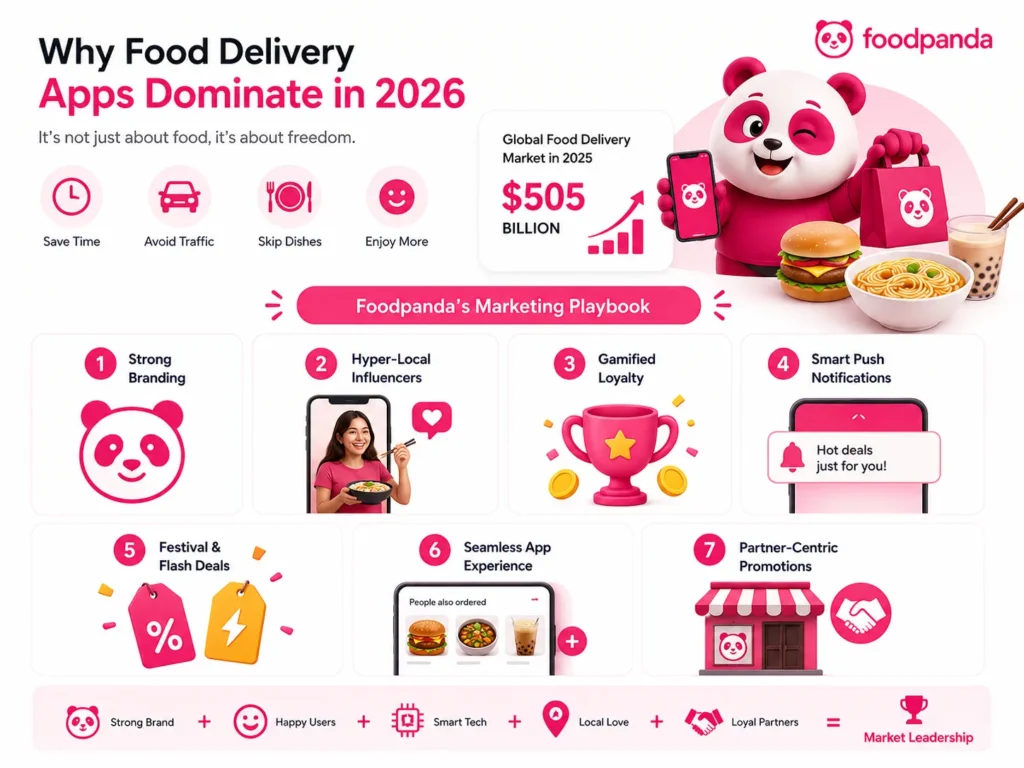
Food delivery apps like Foodpanda, Zomato, and DoorDash aren’t just about food—they’re about freedom. Think about it: you’re saving time, avoiding traffic, dodging dishes, and still enjoying gourmet-style comfort. It’s luxury without the snobbery.
In 2025, the global food delivery market is estimated to hit $505 billion. From quick bites to five-star feasts, consumers want everything in a tap. Foodpanda realized early on that winning hearts meant mastering hyper-local logistics, and their marketing reflects that street-smart savvy.
The Secret Sauce of Foodpanda’s Marketing Strategy
Let’s break down the Panda’s playbook—from guerrilla ads to algorithm love.
1. Branding That Bites
Foodpanda’s color palette screams fun. That pink hue? It’s not just cute—it’s psychological. Studies show pink is associated with impulse buying and joy. Mix that with a panda mascot, and you’ve got a memorable, emotionally charged brand.
But they didn’t stop there. Foodpanda tweaked its messaging depending on the market—using cheeky, casual copy in Southeast Asia, and more direct value-driven CTAs in Europe. Smart localization = global domination.
“Order happiness in a click” — more than a tagline, it’s a dopamine trigger.
2. Hyper-Local Influencer Marketing
Instead of dropping millions on celebrity endorsements, Foodpanda leaned into micro-influencers—local foodies, TikTok reviewers, and lifestyle bloggers. Why? Because a grandma recommending momo delivery hits different than a Hollywood actor pushing noodles.
Their strategy is simple: Let the community tell the story. And when done right, it doesn’t even feel like marketing.
3. Gamified Customer Loyalty Programs
Points. Rewards. Limited-time badges. Foodpanda turned ordering into a game. Their loyalty program incentivizes repeat behavior—not just with discounts, but emotional satisfaction. Humans love collecting, and pandas know that.
Even push notifications are gamified:
“Order again in 2 days for a free delivery badge!”
Who knew dopamine could taste like dumplings?
4. Push Notification Mastery
Let’s be honest—most apps are annoying with notifications. But Foodpanda? They send contextual, cheeky, and well-timed pings.
Examples:
- “Rainy day + hot soup = match made in heaven”
- “Late lunch? Grab something spicy before the next Zoom call”
They know your mood. They read the weather. They’re probably inside your fridge.
5. Festival & Flash Deals: Seasonal Swag
Foodpanda doesn’t just rely on static coupons. Their marketing calendar is alive with events. Think Holi-themed biryani combos, Black Friday 1+1s, and even local cricket match meal kits.
These aren’t gimmicks—they’re cultural touchpoints. Flash sales ride the wave of FOMO, while seasonal menus create urgency and emotional appeal.
6. App UX: Marketing Disguised as Design
Marketing isn’t just ads—it’s also in the app experience. Foodpanda’s UI makes upselling feel like a suggestion from a friend.
- “People also ordered…” feels helpful, not pushy.
- Sticky banners promote limited-time offers subtly.
- Location-based suggestions hit at lunchtime, not 3 AM.
That’s conversion optimization with a dash of empathy.
7. Partner-Centric Promotions
Foodpanda turns restaurants into marketers too. By offering exclusive placement, co-branded campaigns, and discount-sharing models, they expand their reach without spending more.
In startup terms: let your partners market you.
What Startups Can Learn from Foodpanda
- Don’t just sell food—sell convenience, mood, and experience.
- Talk like a human, not a brochure.
- Local > Global when it comes to trust and traction.
- Gamify everything from loyalty to click rates.
- Use design as a silent salesman.
If you’re an entrepreneur looking to carve your space in the delivery market, studying Foodpanda is a masterclass in psychological marketing, lean branding, and app UX synergy.
And the best part? You don’t have to build everything from scratch.
Learn More: Why Startup prefer Foodpanda Clone Over Custom Development
Conclusion
Foodpanda’s success wasn’t overnight. But with the right tech stack, marketing moves, and creator mindset, your app could be the next icon in the food delivery ecosystem.
At Miracuves, we help innovators launch high-performance app clones that are fast, scalable, and monetization-ready. Ready to turn your idea into reality? Let’s build together.
Build your own Foodpanda App with Miracuves — fast, scalable, and influencer-ready.
FAQs
How does Foodpanda differ from other food delivery apps?
Foodpanda focuses heavily on hyper-local marketing, gamified user engagement, and emotional branding—unlike others that often rely on generic promotions.
What are Foodpanda’s key marketing channels?
They use push notifications, influencer campaigns, email marketing, and seasonal promotions—plus strong app UX.
Is influencer marketing really that effective for food apps?
Absolutely. Food is emotional and visual, and influencer content builds authentic trust faster than traditional ads.
Can I launch a Foodpanda-like app on a startup budget?
Yes, especially if you use clone app solutions like those from Miracuves. It drastically reduces dev time and cost.
How important is localization in food delivery marketing?
It’s critical. People eat with culture, not just calories. Hyper-local campaigns win hearts (and stomachs).
What tech should I prioritize for my delivery app?
Focus on real-time tracking, dynamic pricing, loyalty integrations, and a clean, snappy UI optimized for smartphones.
Related Articles:
Miracuves is an independent software development company. We are not affiliated with, connected to, sponsored by, or endorsed by any company or product named in this article.
Terms such as “X Clone” are used descriptively. It is how the software industry refers to building a platform with functionality comparable to a known service, and how clients search for it.
The entire design and codebase of our products is built by our own team. Our products contain no code, design, graphics, or content originating from any third-party website or applications.
All third-party names and marks referenced in this article are the property of their respective owners, referenced solely to identify the services discussed.