
Let’s be honest—who hasn’t imagined creating the next big video sharing and streaming platform? Maybe a slicker, smarter YouTube clone, maybe something more niche like a TikTok for pet lovers or a fitness-focused creator hub. You scroll through your feed, see creators racking up millions of views, and think, “Why not me?” Or better yet—“Why not my platform?”
And hey, you’re not wrong to dream big. But here’s the catch—views don’t pay the rent. Not unless you’ve nailed your revenue strategy. From community-built platforms to global content giants, what separates fleeting hype from lasting success is this: monetization that feels invisible but works overtime.
At Miracuves, we’ve partnered with founders and creators to develop YouTube clone apps that aren’t just sleek—they’re scalable, profitable, and built for longevity. If you’re ready to turn watch-time into wealth, let’s explore what a winning revenue model really looks like.
Prefer to start from the platform itself? See our white label video streaming platform.
Why Monetization Matters from Day One
Many founders fall into the trap of thinking they’ll “figure out the business model later.” Here’s the problem with that: platforms like YouTube, Vimeo, and Twitch didn’t stumble into profitability—they engineered it. In a space where bandwidth costs are high and competition is fierce, monetization can’t be an afterthought.
A well-planned revenue model also affects your UX decisions, feature prioritization, and pitch to investors. Investors want to see sustainability. Users want value. You? You need a way to make it all work.
Read More : Personalized Video Platforms: A Cost Guide for Entrepreneurs and Startups
Top Revenue Streams for video sharing platform
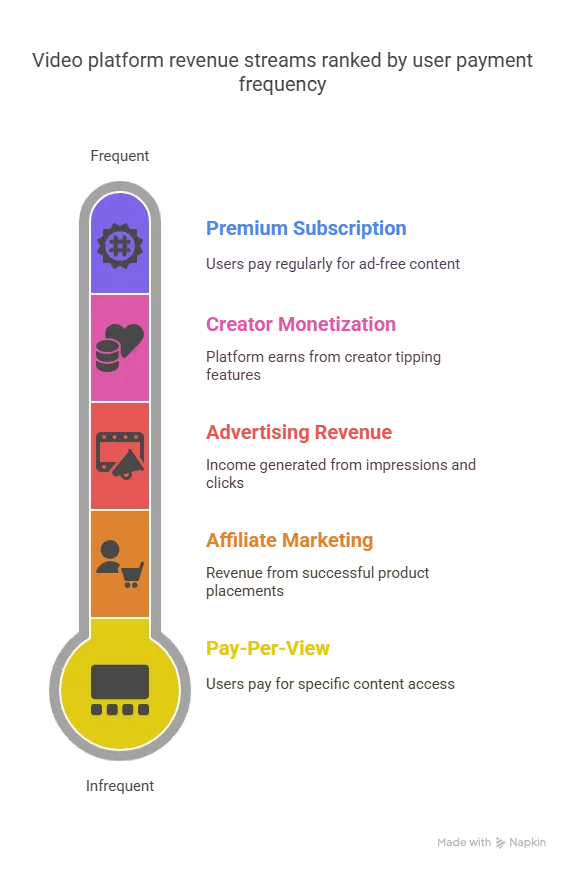
1. Advertising Revenue (CPM, CPC, Sponsorships)
This one’s the OG of video monetization. From pre-roll ads on YouTube to mid-roll sponsor slots on Twitch, advertising is a major money-maker. Here’s how it breaks down:
- CPM (Cost per Mille): You earn for every thousand impressions. Great for viral content.
- CPC (Cost per Click): You get paid when someone clicks on an ad.
- Sponsored content: Brands pay creators or platforms for custom shout-outs or integrations.
2. Freemium Model with Premium Subscription Tiers
Think YouTube Premium or Twitch Turbo. These services offer:
- Ad-free viewing
- Exclusive content
- Offline downloads
- Better streaming quality
It’s perfect for users who binge content or just hate interruptions. Bonus? Subscriptions bring predictable recurring revenue.
3. Creator Monetization and Platform Cuts
Empowering creators to earn is a win-win. Your platform earns a cut of:
- Tipping features (like “Super Thanks” on YouTube)
- Paid subscriptions to creators (Patreon-style)
- Pay-per-view content or courses
The trick is balancing user value with platform profits. If creators thrive, so does your app.
4. Pay-Per-View and Rentals
This works especially well for niche or premium content. Think of:
- Online film festivals
- Webinar replays
- Exclusive sports events
You set a price, and users pay to view. It’s transactional, clear, and scalable.
5. Affiliate Marketing and Product Placement
Video is powerful for showcasing products. Influencers or platforms can embed:
- Affiliate links in descriptions
- Shoppable videos
- Native product placement in content
Platforms often take a commission on each sale—without annoying the user.
Behind the Scenes: Hidden Monetization Levers
Data Licensing
User behavior data—what they watch, when they drop off, who they follow—is gold. Platforms can:
- License insights to ad networks or agencies
- Use it to build AI-driven recommendation engines
- Offer advanced analytics to creators or brands
Just make sure your privacy game is airtight.
White-Label Features
Offer branded video channels to other businesses, schools, or creators. This B2B revenue stream is perfect for:
- Corporate training content
- Fitness instructors with custom platforms
- Online educators
You can build this capability right into your app from the start.
Common Pitfalls to Avoid
- Ignoring content moderation costs: As the platform scales, so does the risk of inappropriate content. Manual and AI moderation isn’t cheap but is critical.
- Overloading with ads: There’s a fine line between monetization and user frustration.
- Failing to localize pricing models: What users will pay in Germany vs. India is vastly different.
Emerging Trends in Video Platform Monetization
- Micro-monetization: Users pay pennies for clips, stickers, filters.
- Token-based economies: Blockchain platforms like Theta use tokens for tipping and bandwidth sharing.
- Live commerce: Streaming meets shopping in real-time, especially hot in Asia.
Stay ahead of the curve by integrating these into your roadmap early.
External Source: Statista – Video Streaming Industry Revenue Forecast
Read More : How to Market a Video Sharing and Streaming Platform Successfully After Launch
Conclusion
Video platforms aren’t just about views—they’re about value. Whether you’re targeting Gen Z with 30-second skits or professionals with long-form explainers, your revenue model needs to be as dynamic as your content strategy.
At Miracuves, we help innovators launch high-performance app clones that are fast, scalable, and monetization-ready. Ready to turn your idea into reality? Let’s build together.
FAQs
How do video apps make money without ads?
By offering premium subscriptions, pay-per-view content, or affiliate marketing integration. Many users are willing to pay for uninterrupted, exclusive content.
Is YouTube’s model the only successful one?
Not at all. Twitch thrives on subscriptions and tipping. TikTok leans into creator funds and product placement. Each platform adapts to its audience.
What’s the best revenue model for a niche video app?
Start with freemium or pay-per-view. Niche audiences often pay more for exclusive or specialized content.
How long before a video app becomes profitable?
It depends on scale and strategy. Some niche platforms become sustainable within a year. Broad platforms need more time, funding, and traction.
Can I combine multiple revenue models?
Absolutely. The most successful apps diversify income—ads, subscriptions, tips, and licensing all work together.
Related Articles
Miracuves is an independent software development company. We are not affiliated with, connected to, sponsored by, or endorsed by any company or product named in this article.
Terms such as “X Clone” are used descriptively. It is how the software industry refers to building a platform with functionality comparable to a known service, and how clients search for it.
The entire design and codebase of our products is built by our own team. Our products contain no code, design, graphics, or content originating from any third-party website or applications.
All third-party names and marks referenced in this article are the property of their respective owners, referenced solely to identify the services discussed.