


Key Takeaways
What You’ll Learn
- JustEat is a food delivery aggregator platform that connects users with local restaurants, cloud kitchens, and takeaway businesses through one app.
- The app works through a simple marketplace flow where users sign up, browse restaurants, place orders, track delivery, and rate the experience after fulfillment.
- Its core value comes from convenience and choice, offering restaurant discovery, smart filters, digital payments, and real-time order tracking in one place.
- JustEat is more than a food ordering app because it also supports restaurant operations, courier workflows, admin controls, and marketplace monetization.
- The platform succeeds by simplifying local food delivery through strong restaurant supply, easy ordering, and a dependable digital customer experience.
Stats That Matter
- Food delivery apps grow by reducing friction in meal ordering, helping users find nearby restaurants, compare options, and complete checkout in just a few taps.
- The JustEat model supports restaurant discovery and easy ordering through search, cuisine filters, ratings, menu browsing, and delivery or pickup options.
- Real-time order tracking and digital payments improve customer confidence and make the full ordering experience feel more transparent.
- Restaurant dashboards, courier tools, and admin controls are essential because the platform depends on smooth coordination across every role.
- A strong food ordering marketplace performs better when customer demand, restaurant supply, and delivery operations stay balanced across each local market.
Real Insights
- JustEat became valuable because it made food delivery easier to access, turning restaurant ordering into a more structured and predictable digital experience.
- The platform works best when restaurant quality and delivery consistency stay strong, because user trust depends heavily on convenience and reliability.
- Convenience alone is not enough, since menu quality, payment flexibility, local relevance, and order visibility also shape long-term retention.
- For startups, this model is attractive because it is scalable and adaptable, allowing expansion across cities, cuisines, and delivery strategies over time.
- Long-term success depends on combining strong technology, localized execution, restaurant partnerships, and smooth delivery coordination into one seamless marketplace.
Let’s be honest. We’ve all had those days — the fridge is empty, motivation is lower than your phone battery, and cooking feels like an extreme sport. Enter: JustEat. It’s not just an app. It’s a lifeline for millions who want food delivered without drama.
Whether you’re a busy founder coding your next app clone or a content creator chasing deadlines with one hand and fries in the other — JustEat knows how to feed the hustle. With just a few taps, your favorite dishes land at your doorstep faster than your brain can say “extra cheese.”
But what really makes JustEat tick? Why has it become a go-to across Europe and beyond? And more importantly, how can you build your own JustEat-style app with monetization baked in? That’s where Miracuves comes into the picture — your launch partner in building JustEat clones that deliver more than just dinner.
What is the JustEat App?
JustEat is a food delivery aggregator platform that connects hungry users with local restaurants, cloud kitchens, and takeaway joints. Think of it as the Uber of food — except instead of rides, it delivers biryani, burgers, and everything in between.
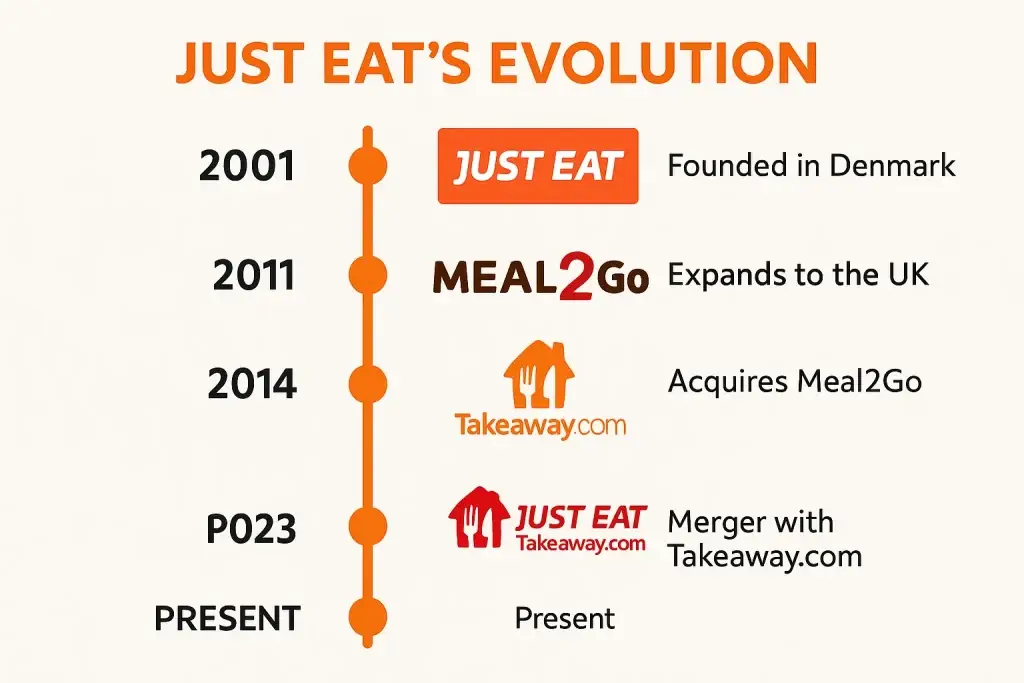
Founded in Denmark in 2001 (yep, it’s that old), it later merged with UK-based Takeaway.com and now operates under the name JustEat Takeaway. It’s active in over 20 countries and processes millions of orders every single day.
How JustEat Works – Step by Step
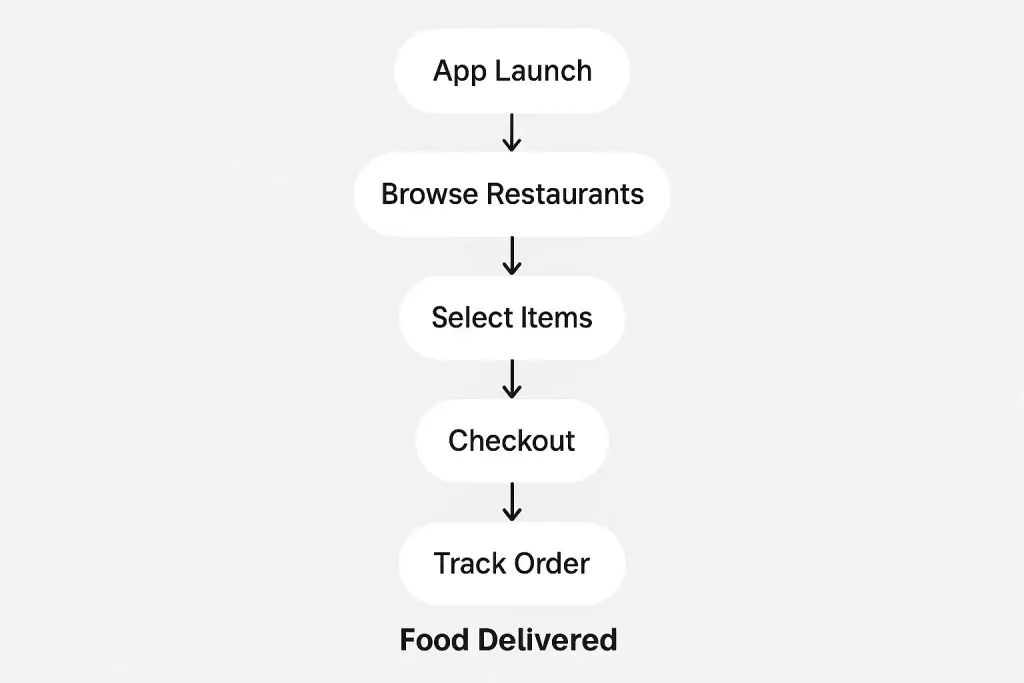
1. User Onboarding
Users create an account using their phone number, email, or social login. GPS auto-detects their location, showing restaurants nearby.
2. Browse Restaurants & Menus
Users can scroll, search, filter (cuisine, rating, delivery time), and even peek at star ratings and photos. It’s like dating apps — swipe until you find “the one.”
3. Order Placement
Once a dish is selected, it goes into the cart. Users can customize orders (extra spice, no onions), choose delivery or pickup, and pay via card, PayPal, Apple Pay, or cash.
4. Real-Time Order Tracking
This is where it gets juicy. Users watch their food’s journey — from the restaurant’s kitchen to the courier’s motorbike, right to their doorstep.
5. Delivery & Ratings
Food arrives. Happiness ensues. Users rate the experience, which helps the app fine-tune its restaurant algorithm.
Read Also :-Best JustEat Clone Scripts in 2025: Features & Pricing Compared
What’s Under the Hood? Core Features of JustEat
Restaurant Dashboard
- Menu management
- Order handling
- Sales analytics
- Promo tools
Courier App
- Navigation tools
- Order updates
- Shift & earnings tracker
Admin Panel
- Multi-city management
- Commission settings
- Dispute resolutions
- Marketing campaigns
Customer App
- Smart filters
- Loyalty programs
- Live order tracking
- Multilingual UI
How Does JustEat Make Money?
1. Commissions from Restaurants
Restaurants pay a cut (10–30%) on each order — the digital version of “rent” on the JustEat marketplace.
2. Delivery Charges
Customers pay a small fee based on distance, time, and order size. Some opt for subscription-based free delivery (hello, JustEat Plus!).
3. Sponsored Listings & Promotions
Restaurants can boost visibility by paying for top placements or banner ads in the app.
4. White-Label Software
Yes, JustEat also offers tech to other businesses — a model Miracuves clones with precision.
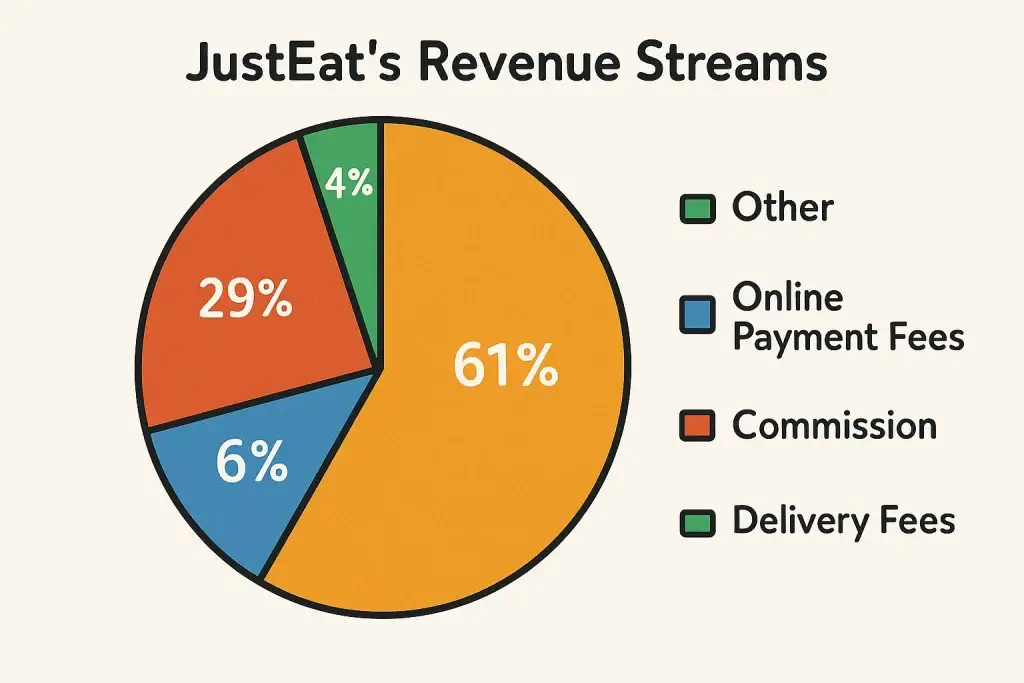
Unpack Just Eat’s monetization strategy and must-have features to guide your food delivery app development.
Why JustEat Is Still Winning in a Crowded Market
- Localized strategy: JustEat knows that pizza in Paris is different from pizza in Perth. It localizes UX, language, cuisine filters, and delivery norms.
- Flexible monetization: From restaurant SaaS to B2C delivery, it earns from all sides.
- Strong branding: It’s not just food delivery — it’s a movement with TV ads, gamified offers, and cheeky slogans like “Did somebody say JustEat?”
This is proof that the food delivery space isn’t “too crowded.” It’s ripe for better apps in niche regions, categories (vegan-only? home chefs?), and business models.
Want to Build a JustEat Clone? Here’s What You’ll Need
At Miracuves, we help founders build robust food delivery platforms — from user-facing apps to courier dashboards and admin panels. Want real-time tracking? Built-in promo engines? Cross-platform apps? We’ve got you covered.
- Custom branding
- Android/iOS apps
- Geo-fencing
- Stripe, Razorpay, PayPal integrations
- AI-driven recommendation engines
Leverage our expertise as a food delivery app development company to build a platform backed by proven marketing strategies.
Global Cost Factors & Pricing Breakdown for a Just Eat-Like App
The technology stack behind your platform plays a major role in determining development cost, launch speed, and how well your platform can scale over time. Some businesses prefer a faster and more affordable launch, while others require a more advanced setup to handle high order volumes, multiple restaurant integrations, and real-time delivery operations.
Here is a simple comparison of common global development approaches for a Just Eat-like food delivery and online ordering platform:
PHP / Laravel is best for quick and affordable launches, Node.js / Python for real-time operations, and Go microservices for large-scale multi-vendor platforms.
JustEat Clone App Development Cost & Miracuves Pricing Breakdown
Miracuves Pricing for a JustEat-Like Food Delivery App developed in PHP/Laravel with Flutter Apps for $3,399 USD (One-Time Price) in just 6 days
Get a fully developed, deployment-ready platform modeled after JustEat. Built on a stable PHP/MySQL backend with Flutter mobile apps, this complete package gives you everything needed to launch and scale a modern online food ordering and delivery business with efficiency, flexibility, and real-time operational control.
- Core Delivery Flow: Customer ordering, restaurant onboarding, menu management, order tracking, and delivery workflows.
- Built-in Operations: Pricing logic, commission handling, discount systems, order management, and payout workflows.
- Management Hub: Centralized admin backend for restaurants, users, delivery partners, orders, and complete platform control.
- Launch-Ready Setup: Fully prepared for branding, deployment, API setup, and app store publishing support.
Why is it so affordable?
Most food delivery platforms like JustEat require strong backend systems for handling orders, restaurant integrations, delivery coordination, and payment processing. Building this from scratch involves long development timelines, multiple integrations, and higher engineering costs. Miracuves removes that complexity by offering a ready-made JustEat-style platform that already includes these essential business components.
We took a smarter, more practical approach:
- You Aren’t Paying for Ground-Up Development: Our JustEat-style engine is already developed and tested, helping you skip months of backend setup and product development.
- The Strength of PHP / MySQL with Flutter Apps: This stack is reliable, scalable, and cost-effective, making it easier to manage operations and future upgrades without high technical costs.
- Fast Launch Advantage: Instead of spending months building a delivery system, you can launch a fully branded food ordering platform in just 6 days with all core workflows ready.
You get a complete, revenue-ready food delivery platform without the inflated cost of custom development.
Note: This cost includes the solution, re-branding, deployment support, source code, backend/API setup, admin panel configuration, and publishing support for Google Play Store and Apple App Store.
Conclusion
JustEat didn’t invent food delivery — it made it irresistibly easy. The app’s success lies in simplifying decision-making, mastering local logistics, and monetizing from every angle.
If you’re planning your own food delivery startup, now’s the time to ride this delicious wave.
At Miracuves, we help innovators launch high-performance app clones that are fast, scalable, and monetization-ready. Ready to turn your idea into reality? Let’s build together.
FAQs
Is JustEat available worldwide?
Not exactly. It operates in around 20+ countries, mostly in Europe, Canada, and Australia.
What makes JustEat different from UberEats?
JustEat focuses more on restaurant partnerships and scheduled deliveries, while UberEats leans into real-time logistics.
Can I build my own JustEat-like app?
Absolutely! Platforms like Miracuves can help you launch your own branded version with features tailored to your region or niche.
How do restaurants benefit from JustEat?
They get access to a wider audience, delivery infrastructure, marketing tools, and digital ordering without building it all from scratch.
Is JustEat profitable?
Yes, especially after its merger with Takeaway.com. It leverages scale, data, and local logistics to remain competitive.
How much does it cost to build a JustEat clone?
Building a JustEat clone typically costs between $7,000 and $50,000+ depending on the tech stack and features, while a ready-made Miracuves solution is available for $3,399 and can be launched in just 6 days.
Related Articles :-
Miracuves is an independent software development company. We are not affiliated with, connected to, sponsored by, or endorsed by any company or product named in this article.
Terms such as “X Clone” are used descriptively. It is how the software industry refers to building a platform with functionality comparable to a known service, and how clients search for it.
The entire design and codebase of our products is built by our own team. Our products contain no code, design, graphics, or content originating from any third-party website or applications.
All third-party names and marks referenced in this article are the property of their respective owners, referenced solely to identify the services discussed.