Key Takeaways
What You’ll Learn
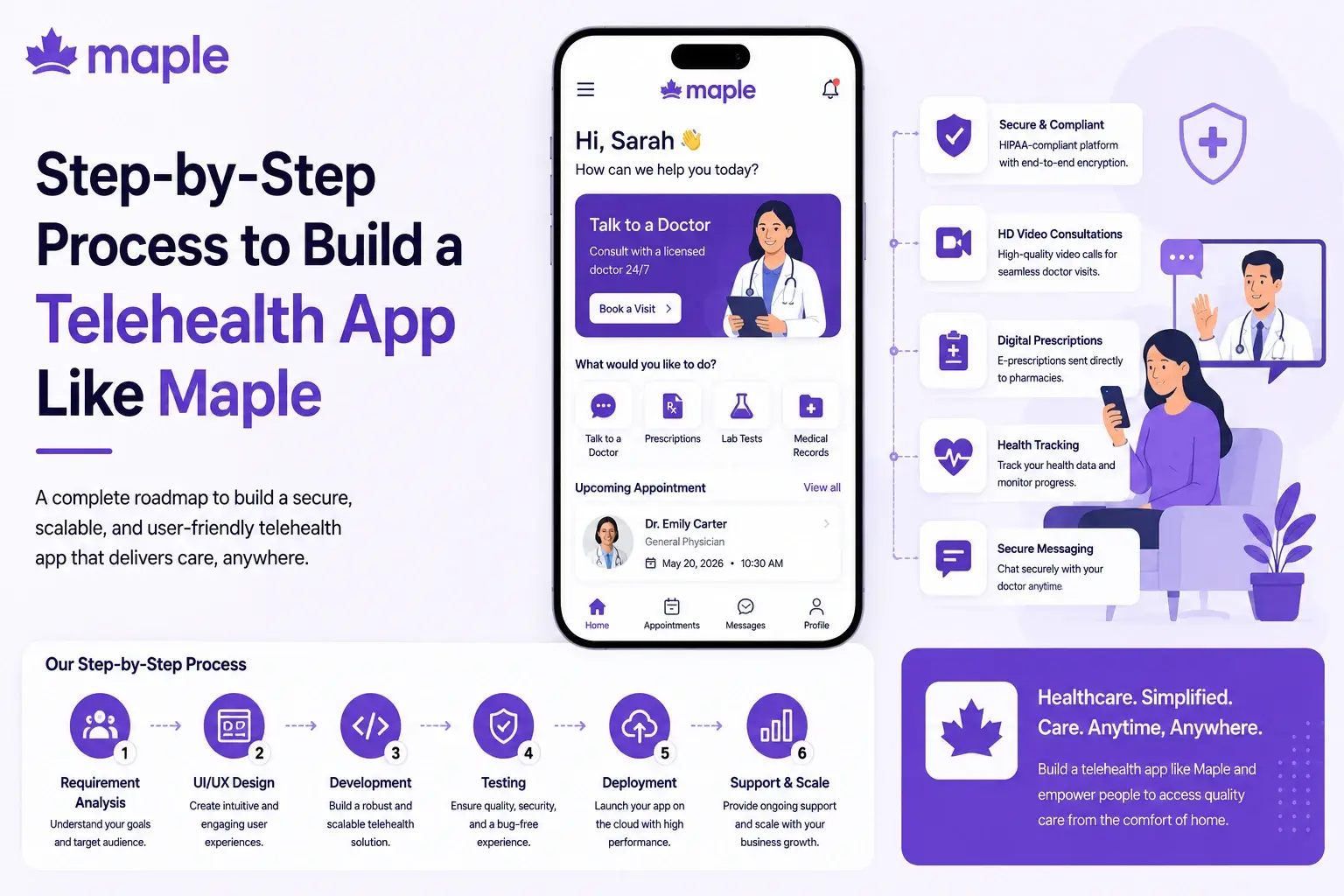
- A Maple-like app should be built around telehealth workflows, not just appointment booking.
- Video consultations, scheduling, and secure data handling are core product layers.
- Prescription flow and patient profiles improve care continuity across the platform.
- HIPAA-ready security and encryption matter early in telehealth products.
- Long-term success depends on trust, accessibility, and reliable healthcare experience.
Stats That Matter
- The article describes Maple as a telehealth platform for 24/7 access, video consultations, prescriptions, and specialist care.
- Video consultations, appointment scheduling, prescription management, accessibility, and personalization are presented as key feature areas.
- HIPAA compliance, strong encryption, secure login, and safeguards for patient data are treated as essential requirements.
- React Native or Flutter are suggested for frontend, with Node.js, Ruby on Rails, or Python with Django for backend.
- A secure payment gateway, patient profiles, and medical history tracking are part of the core telehealth workflow.
Real Insights
- Telehealth users stay where care feels safe and easy, not just where the interface looks modern.
- Compliance should be part of the product foundation because healthcare trust depends on protected patient data.
- Prescription flow and secure consultations improve platform usefulness beyond simple doctor discovery.
- Accessibility and personalization improve retention because telehealth serves a wide range of user needs.
- The strongest telehealth apps are built for continuity of care, privacy, and fast access.
The healthcare landscape has changed dramatically, and telehealth apps like Maple are leading the way in making medical care more accessible, especially in times of need. Whether it’s virtual doctor consultations, mental health support, or specialist care, Maple has set a high standard for seamless and efficient healthcare services. With more patients and healthcare providers moving toward digital solutions, creating a telehealth app has become not just a business opportunity but a necessity.
But how do you go about building an app like Maple without draining your resources? With ready-made solutions from companies like Miracuves Solutions, you can drastically reduce both the time and cost involved in developing your telehealth platform. By leveraging these pre-built solutions, your app could be up and running in as little as 6 days, and at a fraction of the global development cost, making it easier than ever to enter this booming industry.
What is Maple and What Does It Do?
Maple is a telehealth platform that connects patients with licensed healthcare professionals through virtual consultations. The platform allows users to access medical support online without visiting a clinic or hospital physically. Patients can book appointments, consult doctors through video calls or chat, receive prescriptions, and manage healthcare services directly from their mobile devices or computers.
Maple is designed to make healthcare more accessible, faster, and more convenient for people with busy schedules, remote locations, or limited access to nearby healthcare facilities. The platform supports a wide range of healthcare services, including family medicine, mental health consultations, dermatology, pediatrics, and specialist care.
One of the major advantages of apps like Maple is 24/7 healthcare accessibility. Patients can receive medical advice and treatment guidance anytime without long waiting periods. The platform also focuses on secure communication, patient privacy, easy appointment management, and smooth healthcare experiences for both doctors and patients.
Compared to other telehealth platforms like Teladoc Health and Amwell, Maple offers similar core features such as video consultations, in-app prescriptions, specialist consultations, and mental health support. However, Maple is mainly focused on the Canadian healthcare market, while other platforms operate globally or within specific regions like the United States.
As digital healthcare adoption continues to grow, telehealth platforms like Maple are becoming an important part of modern healthcare delivery by improving accessibility, reducing waiting times, and simplifying patient care management.
How to Differentiate Your App from Others
The telehealth market is growing rapidly, but to succeed, your app needs to offer something unique that sets it apart from competitors. While apps like Maple provide essential services such as virtual consultations and prescription management, there are several ways to add value and make your app stand out.
First, consider integrating AI-driven diagnostics or chatbots that can offer basic medical advice before a patient even connects with a doctor. This feature not only saves time for healthcare providers but also enhances the user experience by giving patients immediate feedback.
Another key differentiator could be a mental health focus. The demand for mental health services is rising, and offering access to licensed therapists, counselors, or even wellness coaches through your app can attract a wider user base. Integrating features like virtual support groups or meditation sessions can further boost engagement.
Lastly, offering a specialist consultation feature—where patients can choose experts in specific fields like dermatology, pediatrics, or cardiology—can broaden your app’s appeal. By combining these features with a seamless user experience and integrating secure payment gateways, your app can capture a unique space in the crowded telehealth market.
Market Size, Growth, Revenue, and Business Model
The telehealth industry is experiencing a massive surge in demand, and it’s expected to continue growing at an exponential rate. The global telehealth market was valued at approximately $62.45 billion in 2020 and is projected to grow at a compound annual growth rate (CAGR) of 29.6% from 2021 to 2028. This surge is driven by the need for accessible healthcare solutions, rising healthcare costs, and the convenience offered by remote consultations, especially in rural and underserved areas.
Building an app like Maple taps into this rapidly expanding market, offering immense revenue potential. The business model for such apps often includes various streams of income, including pay-per-consultation, subscription services, and partnerships with healthcare providers. Some apps also generate revenue through insurance reimbursements, particularly in regions where telehealth consultations are covered by insurance.
In terms of future growth, there is still significant untapped potential in emerging markets where access to healthcare is limited. As technology continues to evolve, integrating advanced features such as AI diagnostics and mental health services will further increase user engagement and generate additional revenue streams.
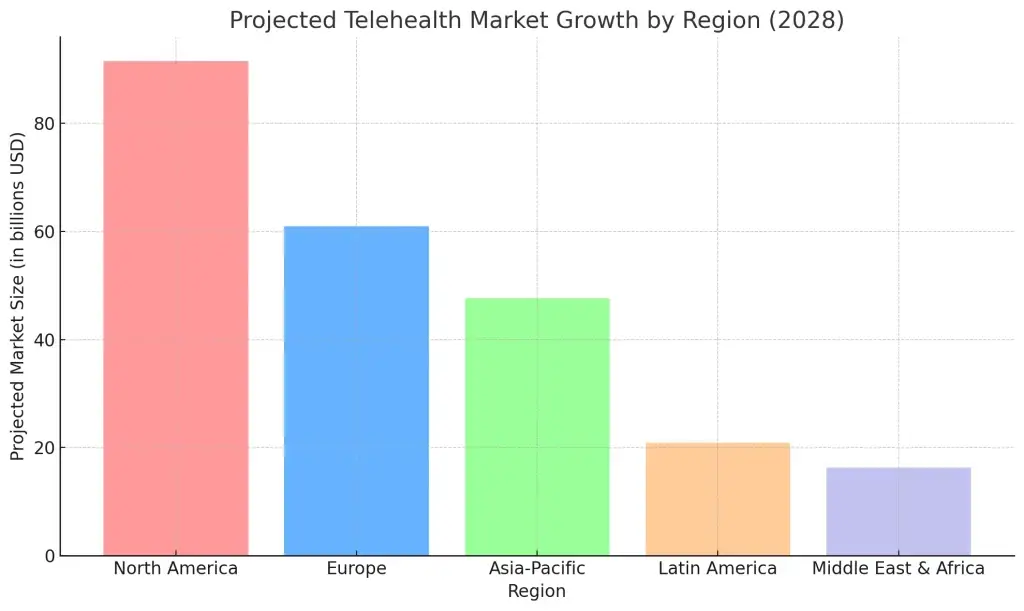
| Region | 2020 Market Size (in billions) | 2028 Projected Market Size (in billions) | CAGR (2021-2028) |
|---|---|---|---|
| North America | $25.88 | $91.45 | 26.3% |
| Europe | $16.70 | $60.92 | 27.5% |
| Asia Pacific | $10.30 | $47.65 | 33.5% |
| Latin America | $5.25 | $20.87 | 27.2% |
| Middle East & Africa | $4.32 | $16.34 | 28.9% |
Features of a Telehealth App Like Maple
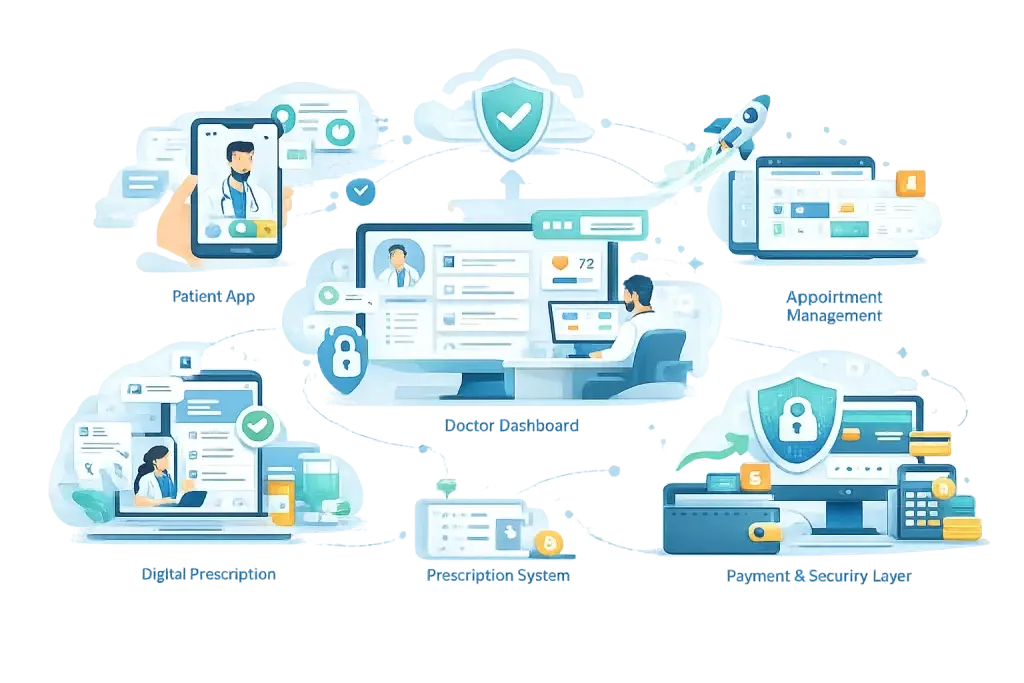
To build a successful telehealth app like Maple, certain key features are essential for both functionality and user experience. These features ensure that patients and healthcare providers can interact seamlessly, providing a comprehensive virtual healthcare solution.
1. Video Consultations
At the heart of any telehealth app is the ability to conduct secure video consultations. This feature allows patients to meet with doctors remotely, replicating the experience of an in-person visit. It’s important that the video calls are encrypted and HIPAA-compliant to maintain privacy and security.
2. Appointment Scheduling
A user-friendly scheduling system is critical. Patients should be able to easily book, reschedule, or cancel appointments through the app, with reminders sent via notifications or email. Doctors should also have the ability to manage their availability.
3. In-App Prescription Management
For many consultations, the ability to prescribe medications digitally is a key feature. The app should allow doctors to send prescriptions directly to pharmacies or to the patient, depending on the user’s location.
4. Patient Profiles and Medical History
Providing doctors access to patient profiles and medical histories improves diagnosis accuracy. This feature ensures that all past consultations, treatments, and prescriptions are recorded in one place for both patient and provider reference.
5. Secure Payment Gateway
Integrating a secure payment system for consultations and other services is essential. Patients should be able to pay directly through the app using various payment methods, and receipts should be easily accessible.
Minimum Viable Product (MVP)
When launching a telehealth app, focusing on a Minimum Viable Product (MVP) can be a smart strategy. This means launching with core features such as video consultations and appointment scheduling while gradually adding more advanced functionalities. This approach helps reduce the initial development time and cost, allowing you to enter the market quickly and test your app with real users.
Technical Requirements
Building a telehealth app like Maple requires the right technical foundation to ensure smooth performance, security, and scalability. To successfully bring your app to life, you’ll need to focus on a robust tech stack that supports essential features, from video consultations to data privacy compliance.
1. Programming Languages and Frameworks
For the frontend development, React Native or Flutter are popular choices, allowing you to build cross-platform apps that work seamlessly on both iOS and Android. On the backend, Node.js, Ruby on Rails, or Python with Django are widely used to handle server-side logic, manage databases, and power features like user authentication.
2. Database Management
A secure and scalable database is vital for storing sensitive patient information, medical records, and consultations. PostgreSQL and MongoDB are commonly used due to their flexibility and reliability. Encryption should be applied to protect sensitive data both in transit and at rest.
3. Cloud Infrastructure
Using cloud services like Amazon Web Services (AWS), Google Cloud, or Microsoft Azure ensures that your app is scalable and secure. These platforms provide the necessary tools to manage large amounts of data, handle user traffic, and ensure uptime reliability. They also support HIPAA compliance, which is crucial for healthcare apps.
4. Video API for Teleconsultations
To implement secure video consultations, you’ll need a reliable video conferencing API such as Twilio, Agora, or Vonage. These APIs are easy to integrate and provide encrypted, high-quality video calls, making the virtual consultation experience seamless for both patients and doctors.
5. Data Security and Compliance
Ensuring HIPAA (Health Insurance Portability and Accountability Act) compliance is critical when dealing with healthcare data. This means implementing strong encryption protocols, secure user authentication (such as two-factor authentication), and regular security audits to protect patient privacy.
Using cloud services like Amazon Web Services (AWS) ensures that your app is scalable and secure.
Design and User Interface (UI/UX)
The success of any telehealth app, including one like Maple, depends heavily on its user interface (UI) and overall user experience (UX). A clean, intuitive design can significantly enhance patient engagement and ensure that healthcare providers can navigate the platform with ease. Designing for both patients and doctors requires balancing functionality with simplicity.
1. User-Friendly Interface
Your app should prioritize simplicity in its design. Patients, especially those who may not be tech-savvy, should be able to easily navigate the app to schedule appointments, view doctors’ profiles, and participate in video consultations. The design should be uncluttered, with clearly labeled buttons, intuitive navigation, and minimal steps to complete key actions.
2. Doctor Dashboard
Healthcare providers should have a separate, more feature-rich dashboard. Doctors need quick access to their appointment schedules, patient medical records, and messaging systems. A well-organized doctor dashboard ensures they can manage multiple patients efficiently and provide high-quality care without any delays.
3. Mobile-First Design
With most users accessing healthcare apps on their smartphones, ensuring your app is optimized for mobile use is critical. A mobile-first design ensures that all elements are responsive, loading quickly and displaying clearly on various screen sizes.
4. Accessibility Features
Incorporating accessibility features such as voice commands, text resizing options, and color contrast adjustments will make your app more inclusive. This is especially important in healthcare, where elderly users or those with disabilities need to access telehealth services easily.
5. Personalization
Adding personalized features, such as suggested doctors based on a patient’s history or personalized health tips, can create a more engaging experience. Personalization helps build trust and keeps users coming back to the platform.
Development Process
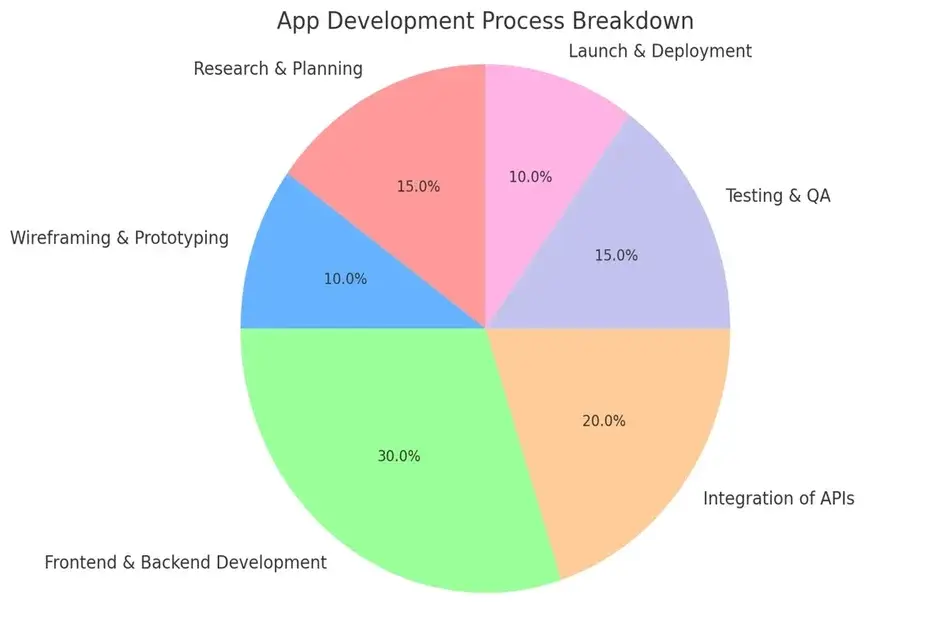
Building a telehealth app like Maple requires a structured development process to ensure all features are seamlessly integrated, secure, and scalable. By following a step-by-step approach, you can reduce development risks, maintain quality, and launch your app faster. Here’s a breakdown of the essential stages in the app development process:
1. Research and Planning
Before writing a single line of code, thorough research is crucial. Start by understanding the telehealth market, user needs, and competitor analysis. This stage also involves mapping out the app’s core features, target audience, and technical requirements. Creating user personas (e.g., patients, doctors) and defining the app’s unique value proposition will guide the overall design and functionality.
2. Wireframing and Prototyping
Once the app’s functionality and flow are outlined, the next step is to create wireframes and prototypes. Wireframes provide a visual representation of the app’s structure, while prototypes allow you to test basic interactions and user experience before full development begins. This step ensures that the design is intuitive and meets the needs of both patients and healthcare providers.
3. Frontend and Backend Development
Development begins by creating the frontend (what users see and interact with) and backend (where data is processed and stored). For telehealth apps, this includes building features like user registration, video consultation functionality, appointment scheduling, and secure data management. Using a robust tech stack ensures that the app is responsive, fast, and secure.
4. Integration of APIs
Telehealth apps require several third-party integrations to function effectively. For example, you’ll need a video conferencing API like Twilio or Agora for secure video consultations, a payment gateway for transactions, and a cloud infrastructure (e.g., AWS or Google Cloud) for scalable data storage. Proper API integration ensures that these features run smoothly and securely.
5. Testing and Quality Assurance (QA)
Before launch, thorough testing is essential. This includes functional testing to ensure that all features work as intended, security testing to guarantee data protection (especially patient records), and performance testing to make sure the app can handle large user volumes without crashing. Fixing bugs and optimizing performance during this stage is critical for a smooth launch.
6. Launch and Deployment
Once the app has been fully tested and any issues have been resolved, it’s ready for deployment. Launching the app on platforms like Apple’s App Store and Google Play Store requires meeting their guidelines and ensuring the app is optimized for discoverability. After deployment, continuous monitoring is necessary to ensure stability and address any post-launch bugs.
Monetization Strategies
Once you’ve built your telehealth app like Maple, the next step is to generate revenue. Monetizing a healthcare app can be approached in several ways, depending on your target market and the services you offer. Here are the most effective monetization strategies for a telehealth app:
1. Pay-Per-Consultation
This is the most straightforward model, where users pay for each consultation they book through the app. This model is commonly used in healthcare apps like Maple, where patients can consult with a doctor on demand, and fees are charged per session. It offers flexibility to patients and ensures that revenue is generated with every use.
2. Subscription Plans
Offering a subscription-based model can provide users with unlimited access to healthcare services for a monthly or yearly fee. This is a great option for patients with chronic conditions or those who require regular consultations. By offering different tiers of subscription (e.g., basic, premium), you can cater to a wider audience with varying healthcare needs.
3. Partnerships with Healthcare Providers
Another way to generate revenue is by partnering with hospitals, clinics, or individual healthcare professionals. In this model, healthcare providers pay a fee to use your platform to reach a broader audience, handle consultations, and manage patient data. This can be a win-win model where providers benefit from increased visibility while you earn revenue from hosting their services.
4. In-App Purchases
Your app can also offer in-app purchases for additional services, such as advanced diagnostic tools, wellness packages, or priority bookings with specialists. This model allows you to generate extra revenue by offering value-added services to users who want more than just basic consultations.
5. Insurance Reimbursements
In markets where telehealth consultations are covered by insurance, you can partner with insurance companies to facilitate direct reimbursement for telehealth services. This not only attracts more users but also offers a seamless experience where patients don’t have to worry about payment after their consultation.
Each of these strategies can be implemented individually or in combination to diversify your revenue streams and cater to different patient segments. Choosing the right model depends on your market, audience, and the services you aim to provide.
Launching and Marketing the App
Launching a telehealth app like Maple successfully requires more than just getting it on the app stores. You need a strategic marketing plan to build awareness, drive downloads, and retain users. Here’s how you can effectively launch and market your app:
1. App Store Optimization (ASO)
Optimizing your app’s presence on both the Apple App Store and Google Play Store is crucial for visibility. This includes selecting the right keywords, crafting a compelling app description, and using high-quality screenshots and videos to showcase your app’s features. Positive user reviews and high ratings can also boost your app’s ranking in search results.
2. Social Media Marketing
Leverage the power of social media platforms like Facebook, Instagram, and LinkedIn to promote your app. Create engaging content that educates your audience on the benefits of telehealth and how your app simplifies access to healthcare services. Running targeted ads on these platforms can help you reach specific demographics, such as families, seniors, or individuals in rural areas who are more likely to benefit from telehealth services.
3. Influencer and Healthcare Professional Partnerships
Partnering with influencers or healthcare professionals can lend credibility to your app and expand your reach. Collaborate with medical experts to promote your app in their networks or have them feature it in their blogs and podcasts. Influencers in the health and wellness space can also spread the word through reviews, testimonials, and social media shoutouts.
4. Email Marketing
Building an email list of potential users or patients can be an effective way to nurture your audience and keep them informed about your app’s updates, special features, or new services. Sending personalized content, such as healthcare tips, special promotions, or app feature highlights, can engage users and encourage them to download and use the app.
5. Partnerships with Healthcare Organizations
Forming partnerships with clinics, hospitals, or insurance companies can help you reach a wider audience. By integrating your app into their services, you can market it directly to patients who are already seeking healthcare solutions. These partnerships can also provide valuable feedback to help you improve your app’s functionality and user experience.
6. Launch Promotions and Incentives
Offer special promotions or incentives, such as free consultations, discounted subscription plans, or referral bonuses, to encourage users to try your app. Early adopters are often willing to spread the word about an app they find valuable, especially when they are incentivized.
By combining these marketing strategies, you can ensure a strong launch that attracts users, generates downloads, and builds a loyal customer base for your telehealth app.
Legal and Regulatory Considerations
When developing a telehealth app like Maple, navigating the legal and regulatory landscape is critical. Healthcare apps handle sensitive personal data, which means you must comply with various privacy laws and regulations to protect user information and ensure the app operates legally. Here’s what you need to consider:
1. HIPAA Compliance (for the U.S.)
If you’re developing a telehealth app that operates in the United States, it must comply with HIPAA (Health Insurance Portability and Accountability Act) regulations. HIPAA ensures the privacy and security of patient health information. This means that your app must use strong encryption for data storage and transmission, provide secure login methods, and have safeguards in place to prevent unauthorized access to sensitive data.
If you’re developing a telehealth app that operates in the United States, it must comply with HIPAA regulations.
2. GDPR Compliance (for Europe)
If your app is available in European countries, you need to comply with the General Data Protection Regulation (GDPR). This regulation governs how companies collect, store, and process personal data. It requires explicit consent from users before collecting their information and allows users to request the deletion of their data. Non-compliance can result in hefty fines, so ensuring GDPR compliance is crucial for apps operating in Europe.
3. Data Encryption and Security
Data security is a fundamental part of any healthcare app. Your app should employ end-to-end encryption for all communications, whether it’s video consultations, chat messages, or the storage of medical records. Additionally, implement two-factor authentication (2FA) to add an extra layer of security for user accounts. Regular security audits and penetration testing should also be part of your development process to identify vulnerabilities and fix them promptly.
4. Medical Licensing and Liability
Telehealth apps must ensure that all doctors and healthcare providers using the platform are properly licensed to practice in the regions where your app operates. Depending on the country or state, medical licensing requirements may vary, and it’s important that your app verifies the credentials of healthcare professionals. Additionally, providing a clear liability disclaimer that explains the limits of your services can protect your business from legal risks.
5. App Store Compliance
To launch your app on the Apple App Store and Google Play Store, you must meet their specific guidelines. For healthcare apps, this includes adhering to guidelines regarding user data privacy, permissions, and functionality. App stores may also require documentation to prove that your app complies with local laws and healthcare regulations.
By addressing these legal and regulatory considerations early in the development process, you can avoid potential legal issues, protect user data, and build a trustworthy platform that adheres to global healthcare standards.
Future Growth of the App
As telehealth continues to expand, the future growth potential for your app is enormous. With increasing adoption by patients, healthcare providers, and insurance companies, your app can scale to meet new demands and explore untapped opportunities. However, to ensure sustainable growth, you must anticipate the trends and needs of the market.
1. Expanding Services
To grow your app, consider expanding the range of services you offer. While starting with general telemedicine or mental health services is a great foundation, there are other specialties you can add as demand increases. For example, offering pediatric care, dermatology, or even virtual physical therapy can attract new user segments. Additionally, including wellness services like nutrition counseling or fitness coaching can diversify your app’s offerings.
2. Artificial Intelligence (AI) Integration
AI has the potential to revolutionize telehealth by improving diagnosis, treatment recommendations, and patient engagement. By integrating AI tools, your app can offer symptom checkers, automated triage, and personalized health recommendations, making it more efficient for both patients and doctors. AI-driven insights can also help providers make data-driven decisions, leading to better outcomes.
3. Global Market Expansion
The telehealth industry is expanding beyond developed countries, with emerging markets seeing significant growth in digital healthcare adoption. Expanding your app to countries in Asia, Africa, and Latin America can open up new revenue streams. However, this also requires adapting to local regulations, language preferences, and payment systems.
4. Improved User Experience
To maintain user engagement, continuous improvement of the user interface (UI) and user experience (UX) is essential. Collecting user feedback and iterating on design can help enhance the overall usability of your app. Features like faster appointment booking, in-app health tracking, and improved video consultation quality can keep users engaged and ensure long-term loyalty.
5. Telehealth Data and Analytics
As the app grows, incorporating robust data analytics can provide valuable insights into user behavior, appointment trends, and overall app performance. Analytics can help identify which services are most popular, where users drop off, and how long consultations last. This data can guide future updates and service expansions.
By staying ahead of industry trends, integrating advanced technologies, and continuously improving your app’s features, you can ensure that it remains competitive and well-positioned for growth in the rapidly evolving telehealth market.
Why Do You Trust Miracuves Solutions for Your Next Project?
Choosing the right partner to bring your telehealth app to life is critical to its success, and Miracuves Solutions offers the expertise, reliability, and value needed to make it happen. Here’s why businesses and entrepreneurs trust Miracuves Solutions for their app development needs:
1. Cost-Effective Solutions
Developing an app from scratch can be expensive. A Miracuves ready-made doctor consultation platform starts at $4,299, a fixed one-time price. It is our own white-label product, not a copy of Maple. By choosing Miracuves, you’re investing in a cost-effective solution that delivers high-quality results without breaking the bank.
2. Fast Turnaround Time
Time is crucial in today’s competitive market. With Miracuves Solutions, you can launch your telehealth app in just 6 days, compared to the industry average of several months. Their streamlined development process accelerates your time-to-market, helping you reach users faster and stay ahead of competitors.
3. Tailored for Healthcare Needs
Miracuves Solutions understands the unique needs of healthcare apps, from secure data handling to patient-friendly interfaces. Their ready-made solutions are built to meet stringent regulatory requirements like HIPAA and GDPR, ensuring that your app is compliant from the start.
4. Customizable and Scalable
Miracuves Solutions offers flexibility, allowing you to customize features, add functionalities, and scale your app as your user base grows. Their solutions are designed with scalability in mind, enabling your app to evolve with the healthcare market’s changing demands.
5. Proven Track Record
With years of experience in app development, Miracuves Solutions has successfully helped numerous clients bring their app ideas to reality. Their reputation for delivering reliable, high-quality solutions is why businesses continue to place their trust in Miracuves.
By choosing Miracuves Solutions, you’re not just building an app—you’re partnering with a team committed to helping you succeed in the competitive telehealth industry. From cost savings and quick delivery to regulatory compliance and scalability, Miracuves Solutions provides everything you need for a successful healthcare app launch.
Conclusion
Building a telehealth app like Maple offers immense potential in today’s healthcare landscape. With rising demand for digital health solutions, your app can provide patients with easy access to quality medical care while empowering healthcare providers to connect with more people efficiently. By choosing Miracuves Solutions, you gain a competitive edge with cost-effective, ready-made solutions that speed up the development process and ensure regulatory compliance.
Because the platform is already built, the price is fixed up front rather than estimated. Investing in the right partner means you’re not only building an app but also a reliable, scalable platform ready to adapt and grow in the evolving telehealth market.
Your journey to creating a powerful telehealth app starts with choosing the right team. With Miracuves Solutions, you can turn your vision into a reality—faster, smarter, and more affordably.
FAQs
How much does it cost to build a telehealth app like Maple?
A Miracuves ready-made doctor consultation platform starts at $4,299, a fixed one-time price.
How quickly can I develop a telehealth app with ready-made solutions?
Using Miracuves Solutions, you can launch your app in just 6 days, compared to the typical timeline of 3-6 months for traditional development.
What essential features should be included in a telehealth app?
Key features include video consultations, appointment scheduling, patient profiles, and secure payment gateways. Adding AI or mental health support can further enhance your app.
How do I ensure my app complies with privacy laws like HIPAA or GDPR?
Miracuves Solutions builds apps with regulatory compliance in mind, incorporating features like data encryption and secure login to protect patient information.
Can I scale my app in the future with Miracuves Solutions?
Absolutely! Miracuves Solutions provides scalable frameworks, allowing you to add features and expand your app as demand grows.
Explore innovative healthcare service solutions by Miracuves – crafted for reliability, accessibility, and care on demand:
Netmeds Like Solution – An online pharmacy app offering doorstep medicine delivery, prescription uploads, and health essentials like solution.
Practo Like Solution – A doctor booking app with appointment scheduling, telemedicine, and health records management like solution.
Customizable PharmEasy Like Solution – A flexible pharmacy delivery app supporting diagnostics, medicine ordering, and healthcare products like solution.
Lybrate Like Solution – A health consultation app connecting users to certified doctors for advice, prescriptions, and follow-ups like solution.
Miracuves is an independent software development company. We are not affiliated with, connected to, sponsored by, or endorsed by any company or product named in this article.
Terms such as “X Clone” are used descriptively. It is how the software industry refers to building a platform with functionality comparable to a known service, and how clients search for it.
The entire design and codebase of our products is built by our own team. Our products contain no code, design, graphics, or content originating from any third-party website or applications.
All third-party names and marks referenced in this article are the property of their respective owners, referenced solely to identify the services discussed.