Key Takeaways
What You’ll Learn
- Marketing a Skype-like app requires clear positioning — users need to understand why your communication platform is better, faster, or more secure.
- Target audience selection matters, whether you focus on students, remote teams, businesses, creators, or global families.
- Trust-based messaging is essential because users choose communication apps based on reliability, privacy, and call quality.
- Referral and freemium strategies can accelerate adoption by encouraging users to invite contacts into the platform.
- A strong marketing strategy connects features with real user needs, not just app promotion.
Stats That Matter
- Communication apps grow faster through network effects, where every new user increases the value for existing users.
- Freemium access reduces adoption friction, helping users try calls, chats, and sharing features before paying.
- Retention depends on consistent call quality, so marketing promises must match real product performance.
- Business communication users value reliability, privacy, screen sharing, and group collaboration features.
Real Insights
- The best marketing angle is not “another calling app”, but a sharper promise around secure, reliable communication.
- User acquisition works better when tied to use cases, such as remote work, online learning, customer support, or international calling.
- Referral loops are powerful for communication apps because users naturally invite the people they want to talk to.
- Content marketing should educate users about privacy, call quality, business collaboration, and communication efficiency.
- A Skype-like app grows when marketing, product quality, and user trust move together as one strategy.
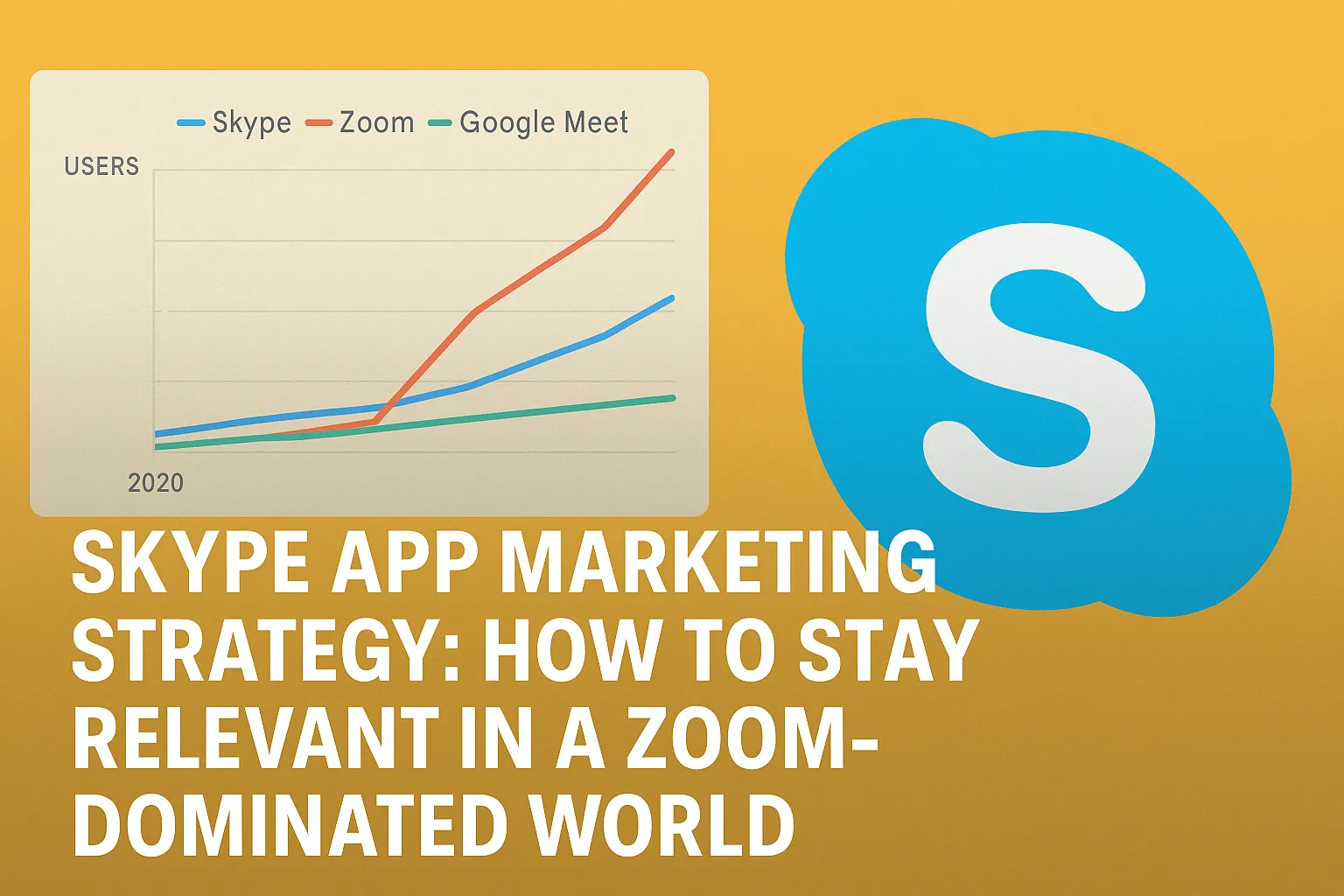
If you were online in the early 2010s, Skype wasn’t just an app — it was the app. People Skyped like they Googled. “Let’s hop on a Skype call” was shorthand for remote meetings, long-distance dates, or checking in with grandma. Then… silence. Zoom, Meet, Teams, and others barged in, and Skype quietly slid to the back row.
But here’s the kicker: the demand for real-time communication apps has never been higher. People want secure video, crisp audio, and seamless chat across devices. So what if you’re building a Skype clone today refer Statista? Is it possible to market it in a way that feels new, useful, and dare we say, cooler than Zoom?
This guide unpacks just that. From storytelling hooks to UX-led growth tactics, we’ll walk you through how to take a Skype-inspired app from forgotten concept to modern necessity. And when you’re ready to build, Miracuves is just a ping away.
Why Skype Still Matters (And What To Learn From It)
The OG of Online Communication
Skype nailed a few things early on:
- VoIP audio calls across the globe
- Reliable video before HD webcams were cool
- Group calling before it became a pandemic necessity
It wasn’t flashy — but it was stable, simple, and surprisingly accessible.
What You Should Steal (and Improve)
- Cross-platform stability: Phone, tablet, desktop — must be consistent.
- Built-in translation: Global user base = multilingual UX.
- Low bandwidth performance: Make your app work without fiber internet.
Learn More: Skype Explained for Creators: What It Is & How It Works
Pre-launch: Creating Buzz for a Modern Communication Tool
1. Hook with the “Not Zoom” Narrative
Zoom fatigue is real. Position your Skype-style app as:
“A quieter, cleaner, more human way to stay in touch.”
Show you’re anti-corporate-meeting-mania.
2. Launch for a Micro-Niche
Don’t target “everyone.” Try:
- Remote therapists
- Language exchange learners
- Online classrooms in rural zones
Build features for them and market like you’re their missing tool.
Post-launch Power Moves: It’s All About Experience
1. Make the First Call Feel Like Magic
- Fast onboarding
- Test call feature
- Personalized “echo” bot like Skype used to have
Let people feel the quality before they start comparing specs.
2. In-App Features That Market Themselves
- Call recording with branded outro
- One-click guest link with custom backgrounds
- On-screen emojis or live reactions (lighthearted > corporate)
Learn More: Pre-launch vs Post-launch Marketing for Skype Clone Startups
Channels That Actually Drive Growth
Twitter/X Threads
Break down features, post stories like:
- “How we rebuilt Skype — but better”
- “Why our app doesn’t crash at 10 users on a call”
Add memes. Keep it real.
TikTok & Reels
People love before-after content:
- “What Zoom fatigue looks like”
- “What it feels like using [YourApp] instead”
Use punchy comparisons. Humor works best.
Substack & Tech Blogs
Reach early adopters by writing:
“Why video calling still sucks — and how we fixed it”
Include behind-the-scenes from your dev team.
Monetization: Keep It Ethical, Simple, and Addictive
Freemium Model
- Free for 1-on-1 and short calls
- Charge for groups, branding, storage
Paid Features to Add
- Meeting transcripts
- Voice filters or transcription (great for podcasting)
- Host scheduling and reminders
Positioning for Trust: The Make-or-Break Element
Trust is the backbone of any communication app. You must:
- Encrypt everything (say it, show it)
- Avoid over-collecting data (lean on minimal tracking)
- Make privacy part of your homepage narrative
Users want secure. They don’t want to read about it in your TOS.
Looking to build a secure, scalable Skype-style app? Explore our Skype Clone App Development services.
Conclusion
In a world full of noisy Zooms, there’s still space for simple, clear, human communication. If you’re building a Skype-style app, your real edge is this: design and market for people who want to talk — not just meet.
Make it smooth. Make it secure. Make it personal.
At Miracuves, we help innovators launch high-performance app clones that are fast, scalable, and monetization-ready. Ready to turn your idea into reality? Let’s build together.
FAQs
Is there still demand for Skype-like apps?
Yes — especially among non-corporate users like freelancers, teachers, and families. There’s a growing need for simpler tools.
How do I compete with Zoom or Google Meet?
Niche down. Build for a specific use case, do it better, and market it with a human-first voice.
Can I market this app as a privacy-first alternative?
Absolutely. Make encryption and data minimalism part of your product story from Day 1.
What features should I prioritize?
Low-latency video, stable call quality, easy onboarding, and customization options for group chats.
Should I offer both mobile and desktop versions at launch?
If possible, yes. But if you must choose, go mobile-first — it has higher viral potential with younger users.
How can Miracuves help?
We specialize in building scalable Skype-style apps with real-time chat, VoIP, video, and deep personalization — fully white-label and launch-ready.
Related Articles:
Miracuves is an independent software development company. We are not affiliated with, connected to, sponsored by, or endorsed by any company or product named in this article.
Terms such as “X Clone” are used descriptively. It is how the software industry refers to building a platform with functionality comparable to a known service, and how clients search for it.
The entire design and codebase of our products is built by our own team. Our products contain no code, design, graphics, or content originating from any third-party website or applications.
All third-party names and marks referenced in this article are the property of their respective owners, referenced solely to identify the services discussed.