
Key Takeaways
- Different short-form video platform models can prioritize creator-led communities, entertainment feeds, social discovery, commerce, branded content, or niche audience experiences.
- Creators typically compare publishing tools, reach, analytics, monetization, audience ownership, collaboration features, and content discovery before choosing where to invest their effort.
- Viewers and brands evaluate different signals, including content relevance, engagement quality, advertising formats, creator partnerships, targeting, measurement, and platform safety.
Platform Model Signals
- Entertainment-first platforms emphasize personalized feeds, trending sounds, challenges, remix tools, rapid discovery, and high-frequency video consumption.
- Creator-focused models may prioritize subscriptions, tipping, virtual gifts, premium content, live interactions, analytics, and deeper creator-to-fan relationships.
- Commerce and brand-focused platforms can combine shoppable videos, sponsored content, creator campaigns, product discovery, affiliate tools, advertising, and conversion tracking.
Creator, Viewer & Brand Insights
- Creators benefit from easy video creation, strong discovery, transparent monetization, audience analytics, collaboration tools, and multiple ways to earn from content.
- Viewers value personalized recommendations, fresh content, smooth playback, social interactions, privacy controls, and enough content diversity to prevent repetitive feeds.
- Miracuves develops customizable short-form video platforms with creator tools, personalized feeds, monetization, brand campaigns, advertising, analytics, moderation, recommendations, and admin controls.
Short-form video platforms are no longer only about entertainment clips. They have become discovery engines, creator business tools, brand storytelling channels, learning spaces, shopping funnels, and niche community platforms.
For founders, this creates a bigger question than “which app is popular?” The better question is: which short-form video platform model fits your target users, creator strategy, monetization plan, and launch goals?
Different models serve different outcomes. Some platforms are built for mass entertainment. Some are creator-first. Some work better for brands and commerce. Some focus on education, regional content, private communities, or live engagement.
This comparison helps founders understand what each model offers creators, viewers, and brands before planning a video-first product. It also shows where Miracuves can help businesses move faster with a ready-made, white-label, source-code-owned platform foundation.
Before comparing platform models, founders can also review this simple guide on how short-form video apps work to understand the core user, creator, feed, and engagement flows.
Why Founders Should Compare Platform Models Before Building Features
Many founders start by listing features: video upload, feed, likes, comments, sharing, notifications, filters, live streaming, and creator profiles.
That is useful, but it is not enough.
A short-form video platform built for entertainment needs different priorities than one built for learning, shopping, local creators, brand campaigns, or paid creator communities. The same feature can have a different business purpose depending on the model.
For example, a trending feed may help an entertainment platform increase session time. In an education-led platform, the same feed should help users discover useful lessons. In a commerce-led platform, it should support product discovery and purchase intent.
So before building, founders should define:
- Who creates the content?
- Why will users watch?
- What makes users return?
- How will creators grow?
- How will the platform earn revenue?
- What role will brands play?
- What moderation controls are needed?
- How fast does the product need to launch?
This is where platform model comparison becomes more valuable than a simple list of alternatives.
Comparison Table: What Different Short-Form Video Models Offer
| Platform Model | Best For Creators | Best For Viewers | Best For Brands | Founder Opportunity |
|---|---|---|---|---|
| Entertainment-led model | Viral reach and trend participation | Fast discovery and endless scrolling | Awareness campaigns and trend-led promotion | High engagement, but needs strong moderation and infrastructure |
| Creator-first model | Audience building, analytics, monetization | Following niche creators and communities | Creator partnerships and sponsored content | Strong creator loyalty and monetization potential |
| Commerce-led model | Product demos, affiliate content, live selling | Product discovery through video | Direct response marketing and social commerce | Clear monetization path through ads, commissions, and sales |
| Education-led model | Teaching, tutorials, expert-led content | Quick learning and skill discovery | Course promotion, expert branding, lead generation | Strong retention when content solves real problems |
| Niche community model | Focused audience and community identity | Relevant content without broad noise | Highly targeted campaigns | Easier positioning for startups and regional businesses |
| Brand-led model | Sponsored creator collaboration | Product stories and useful brand content | Owned audience and campaign control | Useful for agencies, brands, media businesses, and communities |
| Live interaction model | Real-time engagement and fan connection | Live Q&A, events, and creator access | Product launches, events, and interactive campaigns | Strong monetization through gifting, paid access, and commerce |
1. Entertainment-Led Platforms: Built for Reach, Trends, and Fast Discovery
The entertainment-led model focuses on quick consumption. Users open the app to relax, discover trends, watch creators, and move from one video to the next without much friction.
For creators, this model offers visibility. A creator does not always need a large existing audience to get discovered if the feed can identify engaging content early.
For viewers, the value is convenience. They can open the app and instantly receive a stream of videos that match their interests, language, humor, music taste, or viewing behavior.
For brands, this model supports broad awareness. Campaigns can use trends, challenges, short creator collaborations, and sponsored placements to reach users quickly.
Founder note: this model needs strong backend performance, content moderation, recommendation logic, and creator tools. If the platform grows without these layers, the experience can become noisy or unsafe.
2. Creator-First Platforms: Built Around Creator Growth and Monetization
A creator-first platform is designed to help creators build long-term value, not just publish random videos.
This model works well when creators need:
- Better profile control
- Content analytics
- Audience insights
- Monetization tools
- Community interaction
- Live engagement
- Subscription options
- Fan support
- Brand collaboration tools
For viewers, creator-first platforms feel more personal. Users follow creators because of trust, personality, niche expertise, entertainment style, or community connection.
For brands, this model creates partnership opportunities. Instead of only buying ad placements, brands can collaborate with creators who already have audience trust.
Founder note: creator-first platforms need dashboards, payout logic, content ownership controls, reporting systems, and transparent monetization rules. For a deeper module-level view, explore Miracuves’ Short-Form Video Platforms feature breakdown, covering creator tools, viewer flows, admin control, engagement features, and backend modules.
3. Commerce-Led Platforms: Built for Product Discovery and Video Shopping
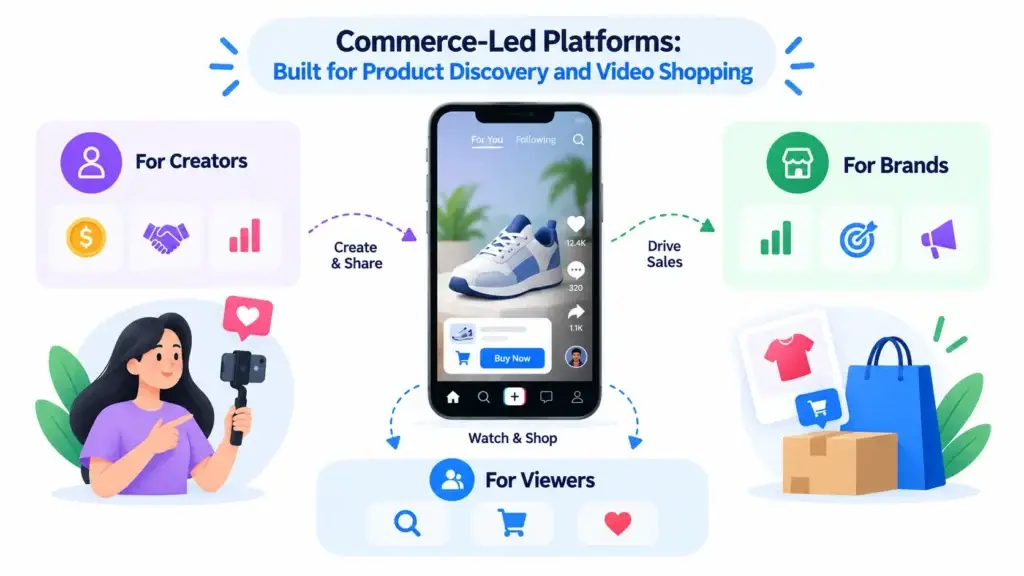
Commerce-led short-form video platforms turn videos into shopping journeys.
Instead of pushing users directly into product pages, this model uses content to build interest first. Creators, sellers, influencers, and brands can use short videos to show product use cases, comparisons, reviews, demos, unboxings, or live selling sessions.
For creators, commerce-led platforms offer earning potential through affiliate campaigns, brand partnerships, commissions, and product-led content.
For viewers, the value is discovery. A short video can explain a product faster than a long product description.
For brands, this model creates measurable intent. Brands can track engagement, clicks, saves, conversions, campaign performance, and creator-led sales.
Founder note: this model needs secure payments, catalog integration, product tagging, order workflows, campaign analytics, and seller/creator controls. It is a strong option when the business goal is not only engagement but also transaction-driven growth.
4. Education-Led Platforms: Built for Fast Learning and Expert Content
Education-led short-form platforms focus on learning through quick, useful video content.
This model can work for:
- Skill tutorials
- Language learning
- Fitness tips
- Finance education
- Career advice
- Exam preparation
- Health awareness
- Cooking lessons
- Professional training
- Micro-courses
For creators, the platform becomes a place to build authority. Teachers, coaches, trainers, consultants, and experts can publish short lessons and guide users toward deeper paid offerings.
For viewers, the value is speed. They can learn something useful in a short time without committing to a long course immediately.
For brands, this model works well for lead generation, expert positioning, and trust-building campaigns.
Founder note: education-led platforms may need playlists, saved collections, creator verification, progress tracking, premium lessons, subscriptions, and category-based discovery. The feed should prioritize usefulness, not only entertainment.
5. Niche Community Platforms: Built for Focused Audiences
A niche community model is often more realistic for startups than trying to build a broad public video platform from day one.
Instead of serving everyone, the platform focuses on one audience segment.
Examples of niche positioning include:
- Regional entertainment
- Fitness creators
- Food creators
- Sports communities
- Student creators
- Music communities
- Local business videos
- Spiritual or wellness communities
- Professional knowledge sharing
- Creator-led fan communities
For creators, niche platforms offer a more relevant audience. They are not fighting against every content category at once.
For viewers, niche platforms feel cleaner because the feed is closer to their interests.
For brands, this model enables better targeting. A niche platform may not have the biggest audience, but it can offer a more focused audience with stronger intent.
Founder note: niche positioning can reduce launch risk. It helps founders validate faster, build community trust, and create a clearer monetization strategy before expanding.
6. Brand-Led Platforms: Built for Owned Media and Campaign Control
A brand-led short-form video platform is not always a public social network. It can be an owned video ecosystem for a business, agency, media company, influencer network, education brand, or community.
This model gives brands more control over:
- Audience experience
- Content categories
- Campaigns
- Creator partnerships
- User data
- Moderation rules
- Brand safety
- Monetization experiments
- Community engagement
For creators, brand-led platforms may offer structured campaigns, sponsored content opportunities, and niche visibility.
For viewers, the experience is more curated than broad public platforms.
For brands, the biggest benefit is ownership. They do not depend entirely on third-party algorithms, policies, or changing ad costs.
Founder note: this model needs admin control, branded UI, user roles, campaign management, analytics, content approval workflows, and flexible monetization modules.
7. Live Interaction Platforms: Built for Real-Time Creator Engagement
Live interaction adds urgency to short-form video products. Users can watch short clips anytime, but live content gives them a reason to join now.
This model works well for:
- Creator Q&A
- Live product demos
- Fan interaction
- Virtual gifting
- Paid live sessions
- Live shopping
- Expert sessions
- Music or talent showcases
- Community events
For creators, live features support deeper relationships with fans.
For viewers, live content feels more direct and interactive.
For brands, live sessions can support launches, demos, influencer campaigns, and real-time product education.
Founder note: live interaction increases technical complexity. It needs real-time streaming, chat moderation, gifts or wallet logic if monetized, reporting tools, and performance monitoring.
Founder Decision Signals: Which Model Should You Build?
Creator Supply
If your market already has active creators, build creator tools, analytics, profiles, and monetization early. If creator supply is weak, start with easier publishing and community prompts.
Viewer Intent
If users want entertainment, prioritize discovery and trends. If they want learning or shopping, prioritize relevance, saves, search, categories, and trust signals.
Brand Demand
If brands are part of the revenue plan, plan campaign formats, creator collaboration tools, analytics, moderation, and brand-safe content controls.
Launch Speed
If speed matters, start with a launch-ready foundation and customize around your model instead of building every module from zero.
Feature Priorities Change Based on the Platform Model
Founders should not copy the same feature roadmap for every video product. The model should decide which modules come first.
Feature Priorities by Short-Form Video Platform Model
| Model | Must-Have Features | Why It Matters |
|---|---|---|
| Entertainment-led | Personalized feed, sounds, hashtags, trending content, reactions, sharing | Supports high engagement, fast discovery, and viral participation |
| Creator-first | Creator profiles, analytics, monetization, live interaction, follower tools | Helps creators grow, earn, and stay active on the platform |
| Commerce-led | Product tagging, seller tools, affiliate tracking, live commerce, payment flow | Connects video engagement with buying intent and transactions |
| Education-led | Categories, playlists, saved collections, expert profiles, premium content | Makes learning easier, organized, and repeatable |
| Niche community | Groups, topic feeds, moderation, creator prompts, local discovery | Builds focused engagement around a specific audience or category |
| Brand-led | Admin approval, campaign tools, branded UI, analytics, access controls | Gives businesses more control over content, audience, and campaigns |
| Live interaction | Live streaming, chat, gifts, paid sessions, moderation, event alerts | Creates urgency, fan interaction, and real-time monetization options |
What Creators Need From Different Platform Models
Creators do not join a platform only because it has upload functionality. They join when the product gives them a real reason to publish consistently.
Across most models, creators need:
- Easy video recording and upload
- Editing tools
- Captions and hashtags
- Profile customization
- Audience growth signals
- Comment and reply tools
- Performance analytics
- Monetization options
- Content ownership clarity
- Safety and reporting controls
But priorities change by model.
Entertainment creators may care more about trends, sounds, and reach. Educators may care about playlists, saved content, and premium lessons. Commerce creators may care about product links, conversion data, and affiliate tracking. Community creators may care about comments, groups, and fan interaction.
Founders should match creator tools with creator motivation. If the platform does not help creators grow, earn, or build authority, content supply becomes weak.
What Viewers Need From Different Platform Models
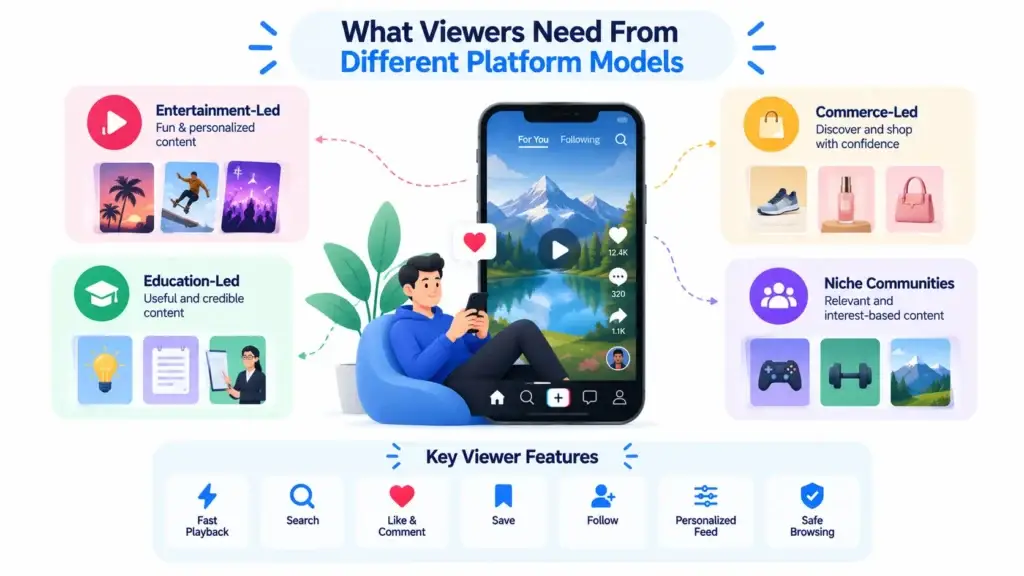
Viewers want a smooth experience, but “smooth” means different things in different models.
In entertainment-led apps, viewers expect fast scrolling, personalized discovery, and shareable clips.
In education-led platforms, they expect useful recommendations, saved collections, topic search, and credible creators.
In commerce-led platforms, they expect trust signals, product details, social proof, and a clear path to purchase.
In niche communities, they expect relevance and identity. They want content that feels made for their interests, region, language, profession, or lifestyle.
Strong viewer-side features include:
- Fast video playback
- Personalized feed
- Search and categories
- Likes, comments, saves, and shares
- Follow options
- Report button
- Content preferences
- Creator discovery
- Watch history
- Push notifications
- Safe browsing controls
A short-form product becomes stronger when viewer experience is aligned with intent, not just attention.
What Brands Need From Different Platform Models
Brands use short-form video platforms for different goals. Some want reach. Some want leads. Some want sales. Some want creator partnerships. Some want owned community engagement.
Brand-friendly features may include:
- Campaign dashboards
- Sponsored content placements
- Creator collaboration tools
- Ad slots
- Product tagging
- Performance analytics
- Audience segmentation
- Brand-safe moderation
- Content approval workflows
- Promo codes or tracking links
- Lead forms where relevant
A brand-led or commerce-led platform should plan these features earlier. An entertainment or niche community platform can introduce brand tools after audience behavior is proven.
Once creator activity grows, monetization becomes important. This creator platform business model guide explains revenue options like ads, subscriptions, virtual gifts, creator commissions, and brand campaigns.
Monetization Models Founders Can Compare
The right monetization model depends on audience size, creator loyalty, brand demand, and product maturity.
| Revenue Stream | Works Best For | Founder Consideration |
|---|---|---|
| Advertising | Entertainment-led and brand-led platforms | Works better after the platform has enough engaged users |
| Virtual gifts | Creator-first and live interaction models | Needs wallet logic, gifting rules, and payout workflows |
| Subscriptions | Creator-first and education-led models | Works when creators have loyal audiences |
| Brand campaigns | Creator-first, niche, and brand-led models | Needs campaign tools and performance reporting |
| Affiliate commissions | Commerce-led platforms | Needs product tracking and clear attribution |
| Premium content | Education-led and creator-led platforms | Needs access control and payment flow |
| Platform commission | Commerce, live, and creator monetization models | Needs transparent creator payout logic |
Founders should not activate every revenue stream at launch. A better path is to validate engagement first, then layer monetization based on real user behavior.
Cost and Build Path Considerations
Different models create different cost drivers.
Entertainment-led products may require stronger feed logic, moderation, and video delivery infrastructure. Commerce-led products need catalog, payment, seller, and tracking features. Creator-first products need analytics, monetization, live tools, and payout workflows. Education-led products may need premium content, playlists, progress logic, and expert verification.
If budget planning is part of your launch decision, this short-video platform cost planning guide explains how features, customization, integrations, and infrastructure affect overall investment.
For founders comparing build approaches, this guide on ready-made vs custom short-video platform development can help clarify whether to begin with a launch-ready foundation or invest in a longer custom build.
Common Mistakes Founders Should Avoid
1. Building a broad platform without a clear audience
A generic platform is harder to position, market, moderate, and monetize. A focused audience gives the product stronger early direction.
2. Copying features without understanding the model
The same feature can serve entertainment, education, commerce, or creator monetization differently. Build based on business logic, not only feature popularity.
3. Adding monetization too early
Ads, subscriptions, gifts, and commissions work better after users and creators already see value in the platform.
4. Ignoring moderation and admin control
User-generated video needs reporting, review queues, takedown controls, creator verification, and role-based admin access from the beginning.
5. Treating infrastructure as a later problem
Video apps need smooth uploads, playback, CDN delivery, processing, caching, and monitoring. Poor performance can damage retention quickly.
How Miracuves Helps Founders Launch the Right Short-Form Video Model
Miracuves helps founders move faster by starting with a ready-made short-video platform foundation that can be customized around audience, branding, creator workflows, monetization, moderation, and admin control.
Instead of building every module from zero, founders can use a white-label, source-code-owned foundation and shape it around the selected model: entertainment-led, creator-first, commerce-led, education-led, niche community, brand-led, or live interaction.
For founders who want to launch faster, Miracuves can support 6-day solution delivery where the ready-made scope fits the business requirement. Customization, integrations, advanced workflows, and scale-specific infrastructure can be planned based on the final product roadmap.
If you are evaluating the launch path, explore Miracuves’ ready-made short-video platform foundation. You can also review the development partner guide before choosing a team for your product.
Final Thoughts: Choose the Model Before Choosing the Features
Short-form video platforms may look similar on the surface, but the business logic behind them can be very different.
An entertainment-led model needs discovery and trends. A creator-first model needs creator growth tools. A commerce-led model needs product and transaction workflows. An education-led model needs structured learning. A niche community model needs relevance and moderation. A brand-led model needs ownership and campaign control. A live interaction model needs real-time engagement and monetization.
The stronger founder decision is not to copy every feature at once. It is to choose the right model, build the right first version, validate demand, and expand based on real creator, viewer, and brand behavior.
You can also explore Miracuves’ broader video content platform solutions if you are planning a creator, streaming, or short-form entertainment product.
Miracuves helps founders turn that decision into a faster launch path with ready-made, white-label, source-code-owned app foundations built for customization, admin control, and long-term growth.
FAQs
What are the main types of short-form video platform models?
The main models include entertainment-led, creator-first, commerce-led, education-led, niche community, brand-led, and live interaction platforms. Each model has different feature, monetization, moderation, and growth priorities.
Which short-form video model is best for startups?
For many startups, a niche community model is a practical starting point because it focuses on a specific audience. This can make positioning, creator acquisition, moderation, and monetization easier during early validation.
What do creators need most from a video platform?
Creators usually need easy publishing tools, profile control, analytics, audience growth, engagement features, monetization options, and clear content policies. Creator-first platforms should prioritize these features early.
What do viewers expect from a short-form video platform?
Viewers expect fast playback, personalized discovery, relevant content, search, comments, sharing, saves, creator follows, and a safe experience. The exact priority depends on whether the platform is built for entertainment, learning, shopping, or community.
How do brands use short-form video platforms?
Brands use short-form video platforms for awareness, creator partnerships, product discovery, social commerce, campaign engagement, lead generation, and community building. Brand-friendly platforms need analytics, campaign tools, and content safety controls.
Should founders build monetization features from day one?
Founders can plan monetization early, but not every revenue stream needs to launch immediately. Ads, subscriptions, gifts, commissions, and brand campaigns work better when the platform has proven engagement and creator activity.
Why is admin control important for short-form video platforms?
Admin control helps platform owners manage users, creators, content, reports, moderation, monetization, payouts, categories, campaigns, and analytics. Without admin control, scaling the platform becomes operationally difficult.
Can Miracuves help launch a short-form video platform quickly?
Yes. Miracuves helps founders launch ready-made and white-label short-form video platforms with source-code ownership, admin dashboards, creator workflows, and monetization-ready modules. Where the ready-made scope fits, 6-day solution delivery can support faster market entry.
Miracuves is an independent software development company. We are not affiliated with, connected to, sponsored by, or endorsed by any company or product named in this article.
Terms such as “X Clone” are used descriptively. It is how the software industry refers to building a platform with functionality comparable to a known service, and how clients search for it.
The entire design and codebase of our products is built by our own team. Our products contain no code, design, graphics, or content originating from any third-party website or applications.
All third-party names and marks referenced in this article are the property of their respective owners, referenced solely to identify the services discussed.