Key Takeaways
What You’ll Learn
- On-demand apps grow because they deliver speed and convenience in everyday services.
- They work across many industries like transportation, food delivery, healthcare, and home services.
- Scalability and automation make them strong business models for startups and growing companies.
- Revenue can come from commissions, subscriptions, ads, and surge pricing.
- Fast launch matters because startups benefit from speed, lower cost, and proven models.
Stats That Matter
- The article defines on-demand apps as platforms that connect users with services or products instantly and in real time.
- Convenience, scalability, automation, multiple revenue streams, and higher customer retention are presented as their main business advantages.
- The blog compares traditional businesses with on-demand models across service speed, customer reach, scalability, cost structure, and user experience.
- Transportation, food delivery, healthcare, and home services are listed among the most popular sectors using this model.
- Startups prefer ready-made solutions because they support faster time to market, lower development cost, proven business models, and easier customization.
Real Insights
- On-demand apps are winning because they match modern customer behavior around speed and instant access.
- Strong business value comes from combining convenience with automation, not just offering another app.
- Niche focus helps overcome competition when entering crowded markets.
- Technical complexity can slow growth, which is why pre-built and scalable solutions are emphasized.
- The biggest opportunity is not only digital convenience but faster business growth through better customer engagement.
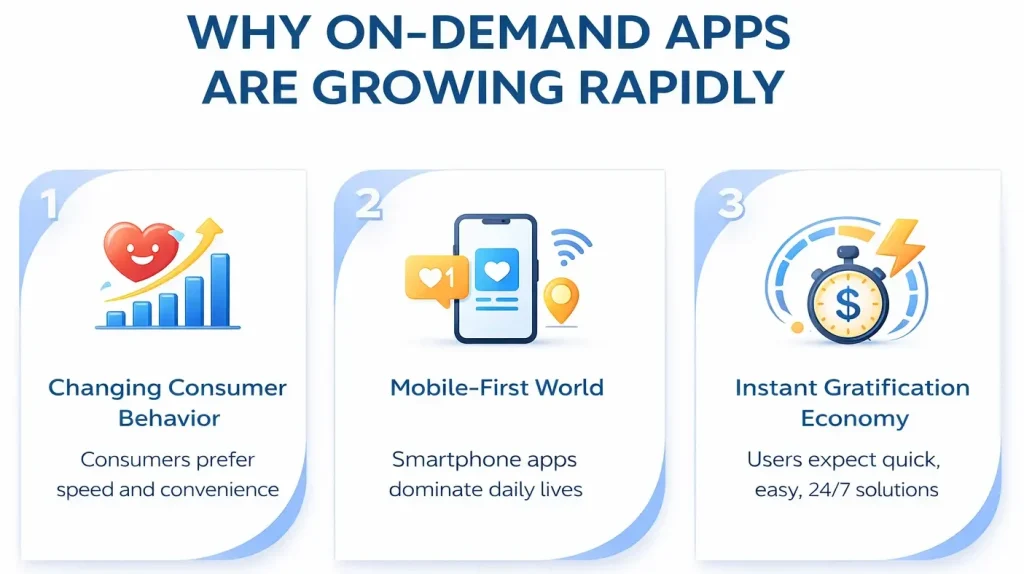
The way people consume services has completely changed. Today, users expect everything instantly—whether it’s booking a ride, ordering food, or hiring a service professional. This shift has given rise to one of the most powerful digital trends: on-demand apps.
For startups and businesses, this is more than just a passing trend—it’s a powerful opportunity to build scalable digital models. Platforms that deliver services instantly are consistently outperforming traditional businesses in both growth and customer satisfaction. If you’re planning to enter this space, exploring how to launch an on-demand app can help you make smarter and faster decisions.
Companies like Miracuves, which specialize in ready-made apps, clone solutions, and scalable platforms, are helping businesses enter this space faster than ever. Instead of building from scratch, entrepreneurs can now launch powerful on-demand platforms with proven frameworks.
In 2026, on-demand apps are no longer optional—they are shaping the future of digital businesses.
What Are On-Demand Apps?
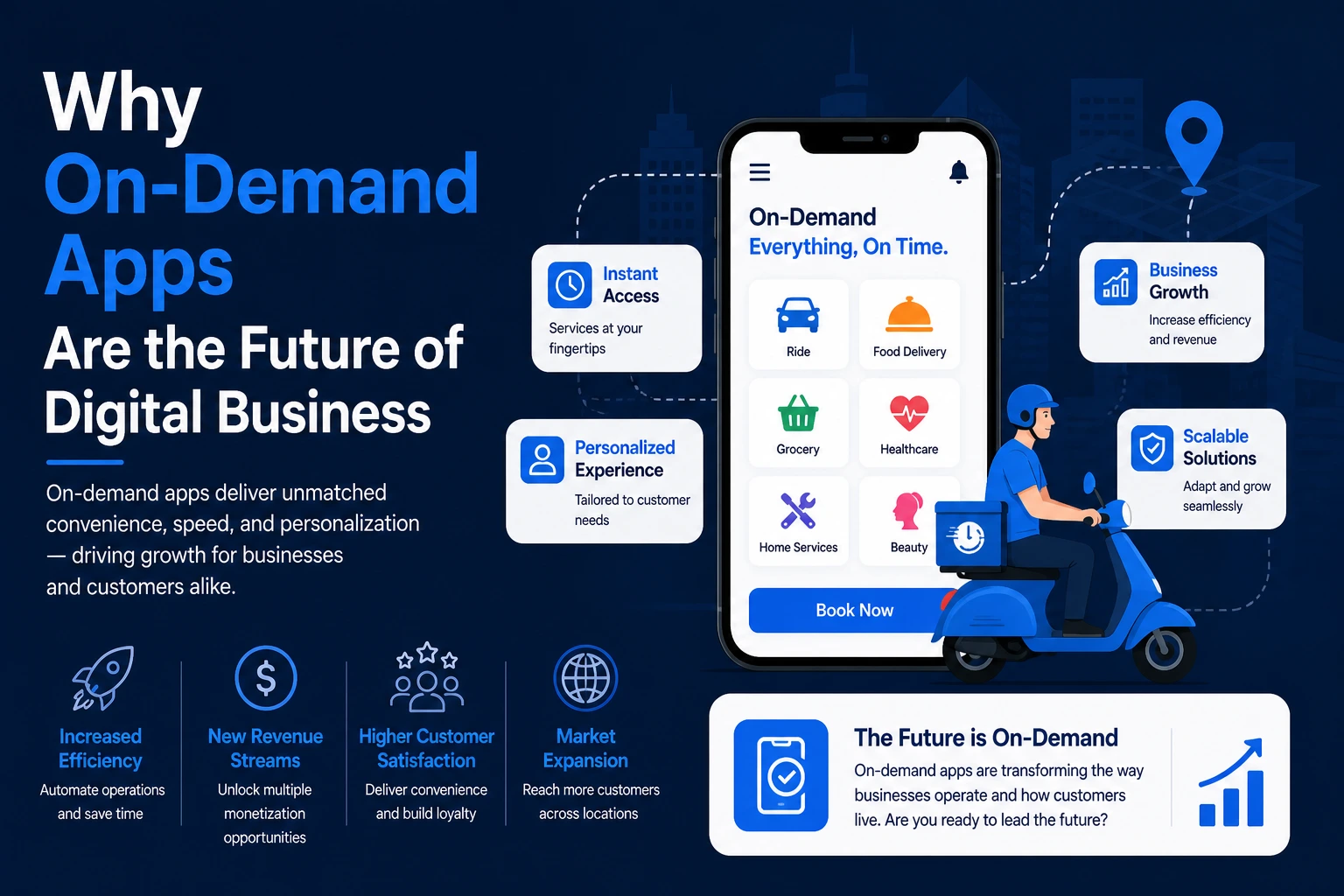
On-demand apps are digital platforms that instantly connect users with services or products whenever they need them. These apps are designed to provide quick access, real-time requests, fast delivery, and seamless user experiences through mobile or web platforms.
Instead of waiting for traditional booking or service processes, users can simply open an app, place a request, track progress in real time, and receive the service within minutes or hours.
Today, on-demand apps have transformed multiple industries by making convenience, speed, and accessibility the core of digital business operations.
Common examples include:
- Ride-hailing apps for booking taxis instantly
- Food delivery apps for ordering meals online
- Grocery delivery apps for quick household shopping
- Home service apps for electricians, plumbers, cleaners, and technicians
- Healthcare and telemedicine apps for online consultations
- Courier and logistics apps for real-time package delivery
Modern consumers prefer instant digital experiences, which is why on-demand business models continue to grow rapidly across industries in 2026.
Key Benefits of On-Demand Apps
On-demand apps are not just convenient—they are powerful business tools.
- Convenience for users – Services available anytime, anywhere
- Scalability – Easy to expand into new locations
- Automation – Reduces manual operations
- Multiple revenue streams – Commission, subscriptions, ads
- Higher customer retention – Better user experience
These benefits make on-demand apps highly attractive for startups and growing businesses.
Traditional Business vs On-Demand Model
| Factor | Traditional Business | On-Demand Apps |
|---|---|---|
| Service Speed | Slow | Instant |
| Customer Reach | Limited | Global |
| Scalability | Difficult | Easy |
| Cost Structure | High | Optimized |
| User Experience | Moderate | High |
This comparison clearly shows why businesses are shifting toward on-demand models.
Industries Dominated by On-Demand Apps
On-demand apps are transforming multiple industries.
Transportation
Ride-booking apps have changed how people travel in cities.
Food Delivery
Customers can order meals anytime without visiting restaurants.
Healthcare
Online doctor consultations and medicine delivery are growing fast.
Home Services
Users can book cleaning, repair, or beauty services instantly.
These industries prove that the on-demand model is adaptable and scalable.
How On-Demand Apps Make Money
Understanding the revenue model is crucial before building an app.
- Commission-based model – Taking a percentage from each transaction
- Subscription plans – Charging users or service providers
- Surge pricing – Higher rates during peak demand
- Advertisements – Promoting services within the app
Most successful apps combine multiple revenue streams.
How to Build an On-Demand App
Building an on-demand app requires strategic planning.
Step 1: Identify a Problem
Focus on a real user need that requires instant solutions.
Step 2: Choose a Business Model
Decide how your platform will generate revenue.
Step 3: Define Features
Include essential features like:
- User app
- Service provider app
- Admin dashboard
Step 4: Select the Right Technology
Choose scalable and secure tech stacks.
Step 5: Launch and Scale
Start with a niche market and expand gradually.
Know in deep : – Complete Guide to Launching an On-Demand App
Why Ready-Made Solutions Are Smarter
Instead of building everything from scratch, many startups now prefer ready-made solutions. These platforms reduce development time, lower costs, and come with tested features.
This approach helps businesses launch faster and focus more on growth rather than development.
Challenges in On-Demand Apps and How to Overcome Them
High Competition
Solution: Focus on niche markets and unique value propositions.
User Acquisition
Solution: Use targeted marketing and referral programs.
Technical Complexity
Solution: Use scalable and pre-built solutions.
Understanding these challenges early helps avoid costly mistakes.
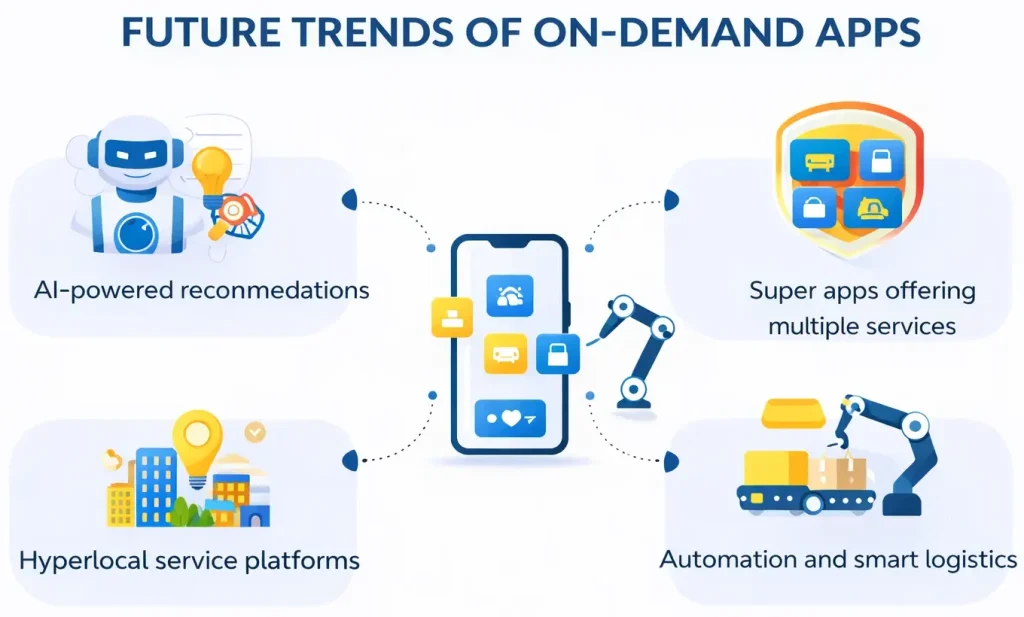
Businesses that adapt to these trends will stay ahead of the competition.
Why Startups Prefer Ready-Made On-Demand Solutions
Startups today are choosing speed over complexity.
- Faster time to market
- Lower development cost
- Proven business models
- Easy customization
Ready-made platforms allow founders to focus on scaling instead of building.
If you are planning to launch your own on-demand app, choosing the right technology partner is crucial. With the right solution, you can save time, reduce costs, and scale faster.
Conclusion
On-demand apps are redefining how digital businesses operate. They offer speed, convenience, and scalability—three factors that modern users demand.
For entrepreneurs, this is a massive opportunity. Instead of building traditional business models, adopting an on-demand approach can lead to faster growth and better customer engagement.
In 2026 and beyond, businesses that embrace on-demand technology will not just survive—they will lead. If you are planning to launch your own on-demand app, choosing the right technology partner is crucial. With the right solution, you can save time, reduce costs, and scale faster.
Contact Miracuves today to discuss your on-demand app idea and get started with a ready-made solution built for growth.
FAQs
1. What is an on-demand app?
An on-demand app allows users to request services or products instantly and receive them in real time.
2. How much does it cost to build an on-demand app?
The cost depends on features and complexity, but ready-made solutions are more affordable than custom development.
3. Which industries benefit most from on-demand apps?
Transportation, food delivery, healthcare, and home services are the most popular sectors.
4. Are on-demand apps profitable?
Yes, they generate revenue through commissions, subscriptions, and multiple monetization strategies.
5. Why should startups choose ready-made solutions?
They save time, reduce costs, and allow faster market entry with proven business models.
Related Articles
Miracuves is an independent software development company. We are not affiliated with, connected to, sponsored by, or endorsed by any company or product named in this article.
Terms such as “X Clone” are used descriptively. It is how the software industry refers to building a platform with functionality comparable to a known service, and how clients search for it.
The entire design and codebase of our products is built by our own team. Our products contain no code, design, graphics, or content originating from any third-party website or applications.
All third-party names and marks referenced in this article are the property of their respective owners, referenced solely to identify the services discussed.