“A battle-tested matching engine, our brand, running inside a month.”“A Web3 family that finally shared one backbone, end to end.”“A battle-tested matching engine, our brand, running inside a month.”
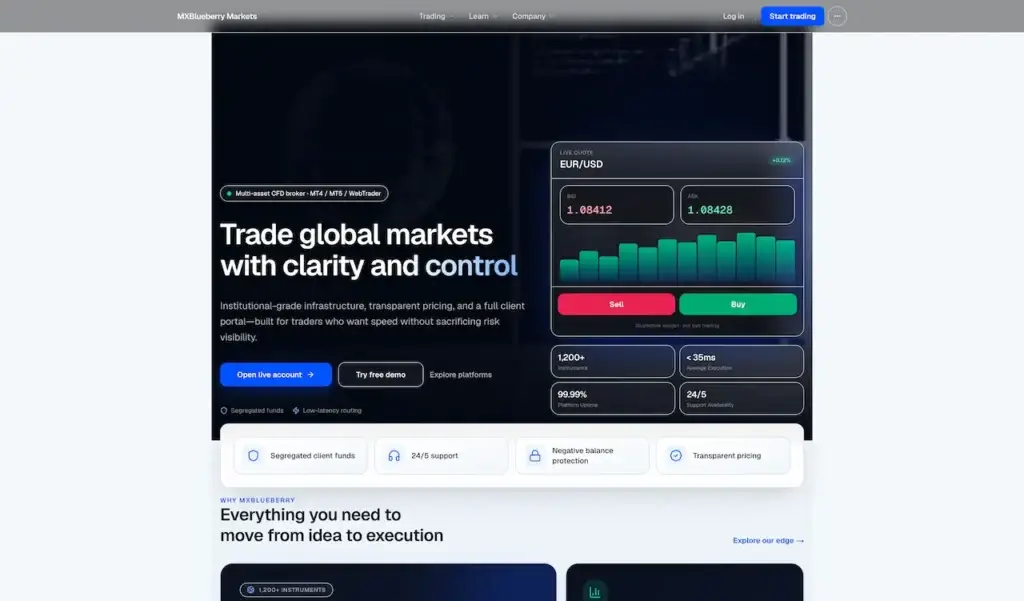
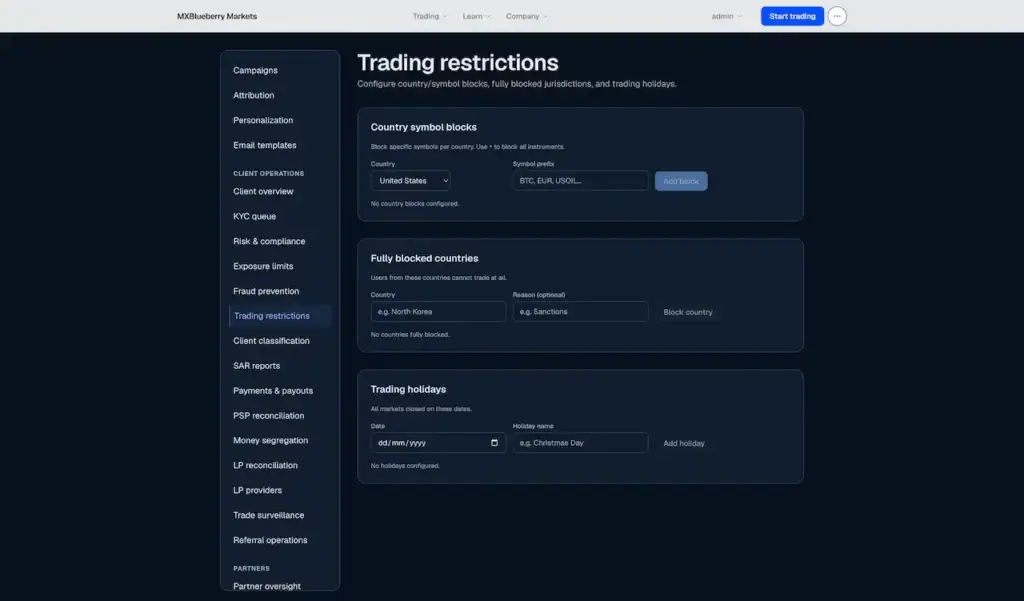
Everything a forex and CFD brokerage runs on except the trading terminal itself – client portal, funding, KYC and AML, an IB and affiliate program, a prop desk, CRM and a fifty-page admin console across six role-scoped logins.
Order execution stays where traders already are, in MT4 and MT5. This platform is the operational layer around it: onboarding, money movement, compliance, partner payouts and the back office your team actually lives in.
demo and live share one codebase, so you rehearse before launch
0
Partner Commission Split
you own the source outright, with no per-client fee
100%
Auditable
KYC, funding and payouts on one logged, reversible trail
A Prop Desk and a Brokerage in One Stack
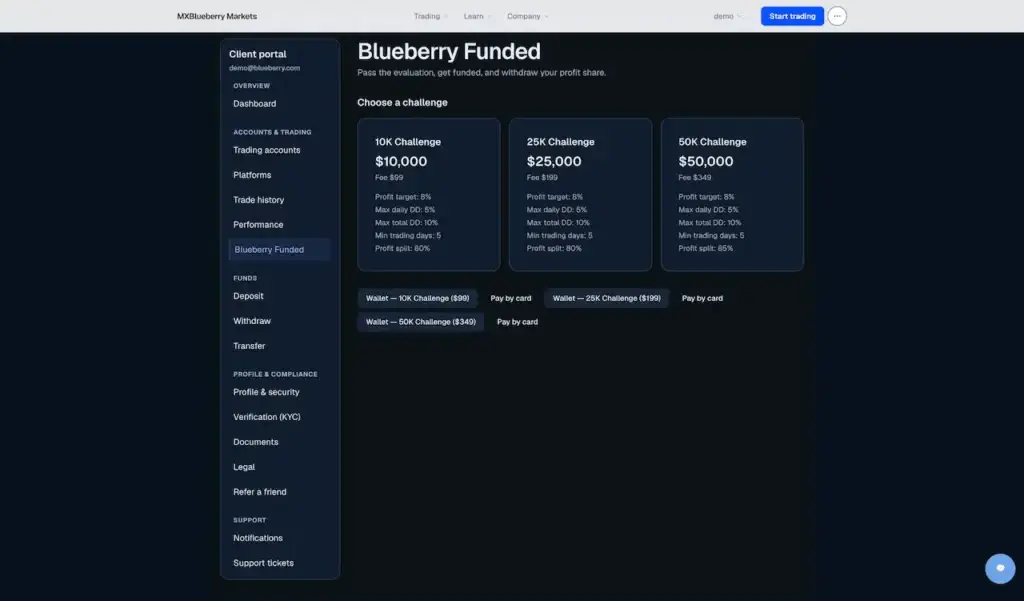
A funded-trader program and a classic brokerage share the same accounts, wallets and payout rails, so challenge fees start earning while spread revenue builds.
Your Partners Do the Selling
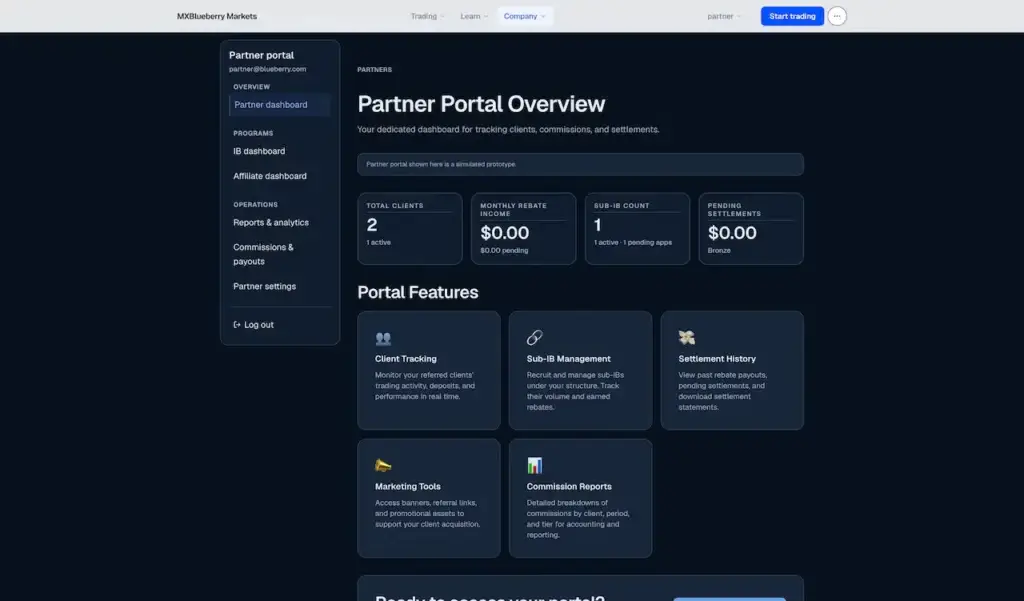
Tiered IB rebates, sub-affiliates, referral links and a self-serve partner portal with live volume reporting - the growth channel most brokerages bolt on a year too late.
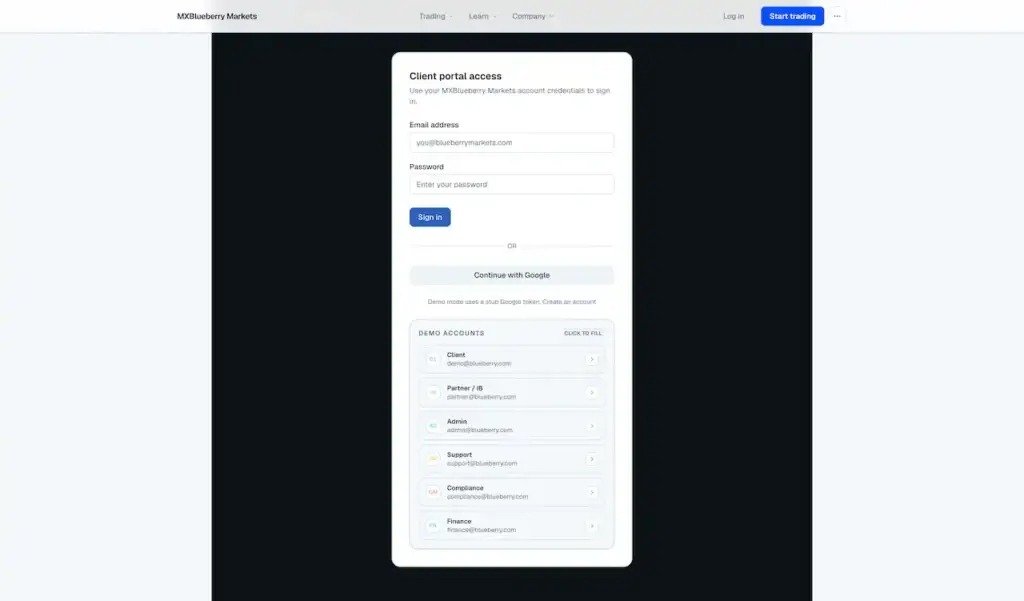
Skip the sales pitch and explore the Miracuves Blueberry Markets Clone for yourself. Six live environments are open, each with real credentials for its role and no setup required. Access control is real as well: every operator login only sees its own scope.
mxbbm.mimeld.com
Live demo
Client Portal
The Trader Surface
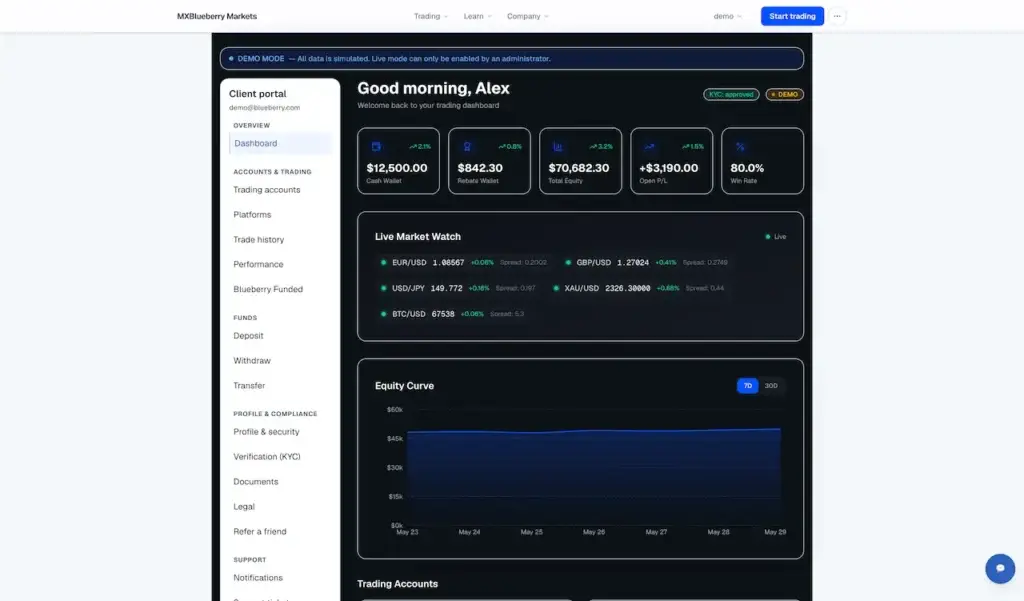
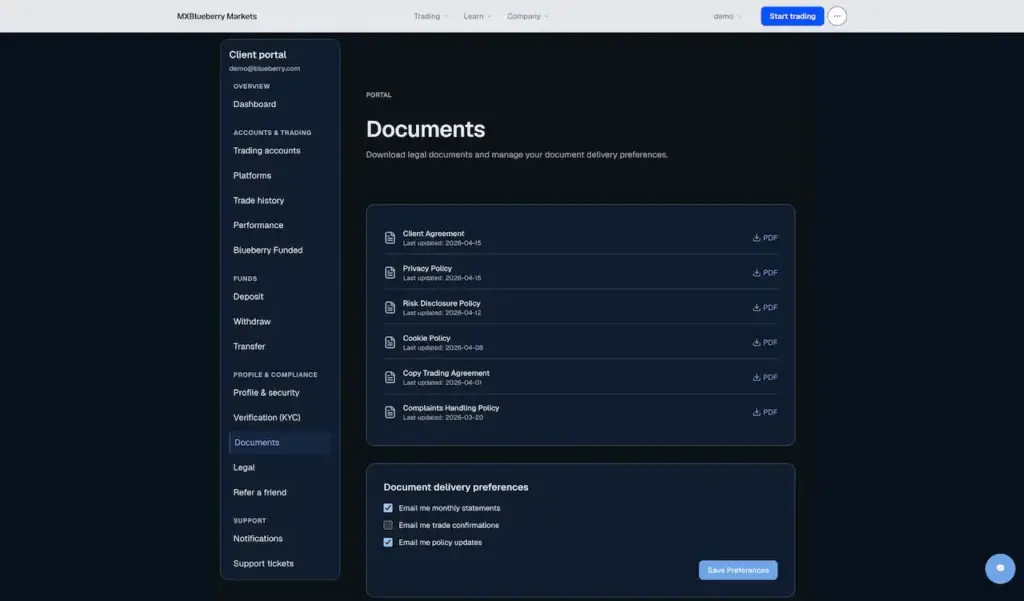
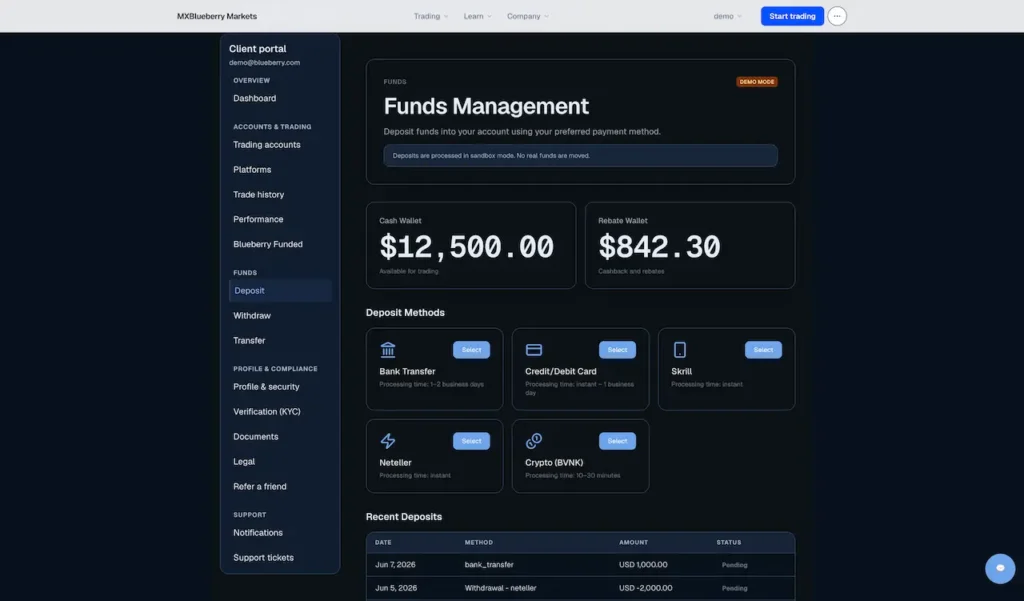
Sign in as a client and move through the dashboard, wallets, funding, KYC and prop enrollment exactly as your traders will.
1Open the client portal in your browser
2Log in with the demo credentials shown further down
Want a guided tour? Reserve a 30-minute call with our team to plan your brokerage launch - jurisdiction setup, funding rails, KYC vendors, partner program design and go-live sequencing.
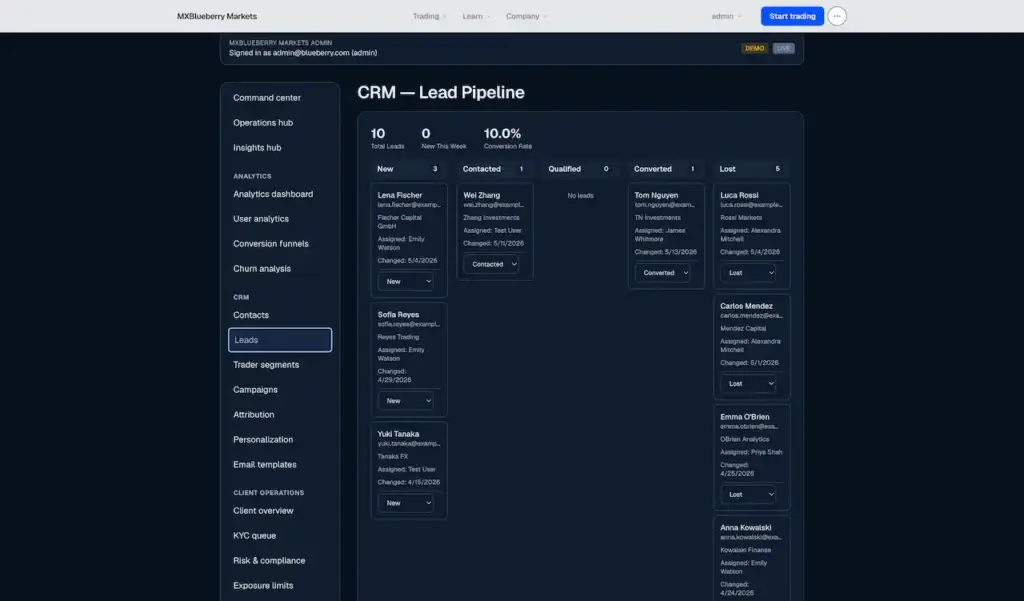
More than two hundred addressable surfaces across four journeys – 132 public pages, 25 client portal routes, 9 partner routes and 50 admin pages, plus 20 mobile paths.
22 screens · scroll →
12 screens · scroll →
6 screens · scroll →
12 screens · scroll →
Follow a trader from first visit through KYC to a funded account, a partner from application to first rebate payout, and an operator from KYC queue through to a reconciled withdrawal.
Client Feedback on the Blueberry Markets Clone - Actual Platforms, Outcomes We Can Show
Feedback from brokerage operators who launched with Miracuves. Client identities withheld under NDA.
HHead of ComplianceMulti-Jurisdiction Broker
“The role scoping is what sold it internally. Compliance genuinely cannot approve a payment, and finance genuinely cannot change a KYC decision. Our auditor tested exactly that.”
CCOOProp Trading Firm
“Running the whole platform in demo mode let us train the operations team and record partner walkthroughs weeks before any vendor contract was signed.”
PPartnerships LeadIB Network
“The partner portal paid correct tiered rebates from month one. That is the part introducers actually judge you on, and it worked.”
MManaging DirectorEmerging Brokerage
“We were quoted the better part of a year to build the client portal, IB programme and compliance queues. Getting all three in one schema is what made our launch window realistic.”
Blueberry Markets Clone Case Study - Multi-Jurisdiction Brokerage Deployment
How an operator launched a regulated forex and CFD brokerage on the Miracuves Blueberry Markets Clone. Client identity withheld under NDA.
Discreet Delivery OptionCase Study
Multi-Jurisdiction Brokerage
A regulated forex and CFD brokerage launched on the Miracuves Blueberry Markets Clone, with a full IB program and prop desk live from day one.
Name withheld under NDAClient
MauritiusRegion
Forex, CFD & Prop TradingIndustry
93Database tables shipped
50Admin pages operational
6 wksFrom scoping to go-live
01Challenges
Running a brokerage back office without a twenty-person operations team
English, Arabic and Chinese configured before the first client signed up
A partner program that paid rebates correctly from the first month
02Goal
Launch a brokerage operations platform without building KYC, funding and IB tooling from zero
Give compliance, finance and support their own scoped consoles
Run a brokerage back office without a twenty-person operations team
03Miracuves handled the full build, start to finish
Six role-scoped consoles across client, partner and operator
IB and affiliate program with tiered rebates and payouts
Fifty-page admin console spanning every operational area
Prop desk with evaluation challenges and funded progression
Demo and live runtime modes for training and rollout
“
“The IB rebate tiers and the prop challenges shipped together, which is why we could open both desks at once. Demo mode is how we trained staff before going live.”Head of Brokerage Operations · Multi-asset brokerage - name withheld under NDA
Book a call with usSee how a multi-jurisdiction brokerage was deployed end to end.
Blueberry Markets Clone App Explained: What Does It Cover?
A Blueberry Markets Clone is a ready-made brokerage operations platform – the client portal, funding rails, KYC and AML workflow, partner program, prop desk, CRM and administrative back office that a forex or CFD broker needs in order to operate.
Not a Trading Terminal
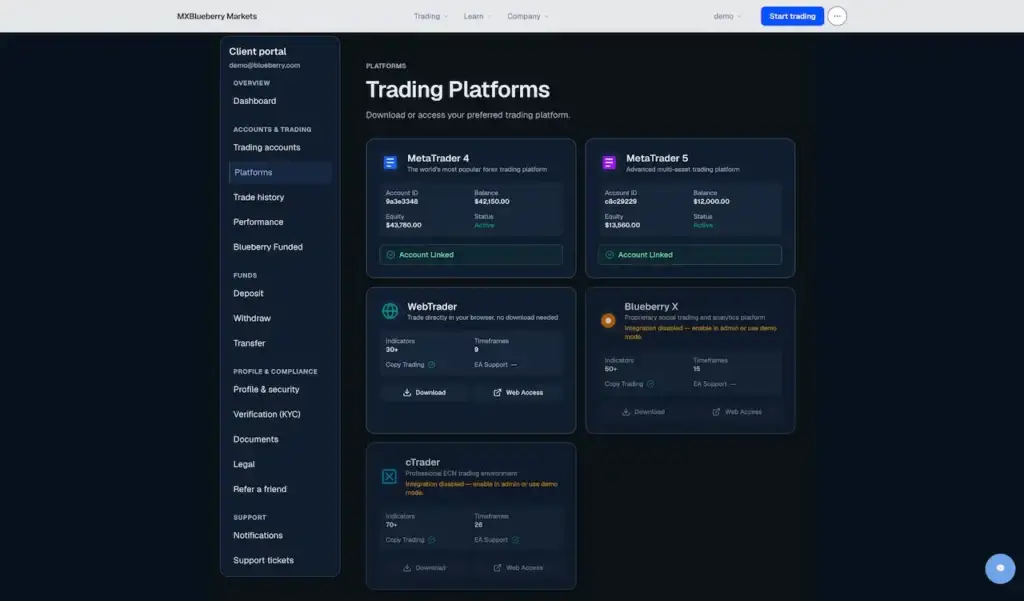
Execution lives in MT4 and MT5. This is the operational layer around it - onboarding, money movement, compliance, partner payouts and back-office control.
Not A Trading Terminal
The source, the schema and the content are handed over to you. There is no per-seat fee and no dependency on a vendor roadmap, and the database is standard PostgreSQL.
Frank About Maturity
Marketing and admin are complete end to end. Everything touching money, market data or identity runs on simulated data until you connect your own vendors - stated per capability, not buried.
Built for Web, Android & API
Defining a Blueberry Markets Clone Script: What Is It?
What it deliberately is not is a trading terminal. Order execution stays in MT4 and MT5 where your traders already work; the platform provisions those accounts and surrounds them with everything else.
01Six role-scoped consoles with real access control
02IB, affiliate and fund-manager partner program
03Prop evaluation challenges and funded accounts
04KYC, AML, risk scoring and fraud rules
05132 public pages and 93 education articles included
The build ships 93 database tables across 12 domains, 213 API handlers, 50 admin pages and 132 public marketing pages, with six access-controlled roles and a demo-to-live runtime switch.
Every capability on this list is built already and can be demonstrated in the live demo. Whenever a feature cannot handle real money or real identity records until a vendor is under contract, the entry says so openly instead of skimming past it.
01
Feature 01 / 12
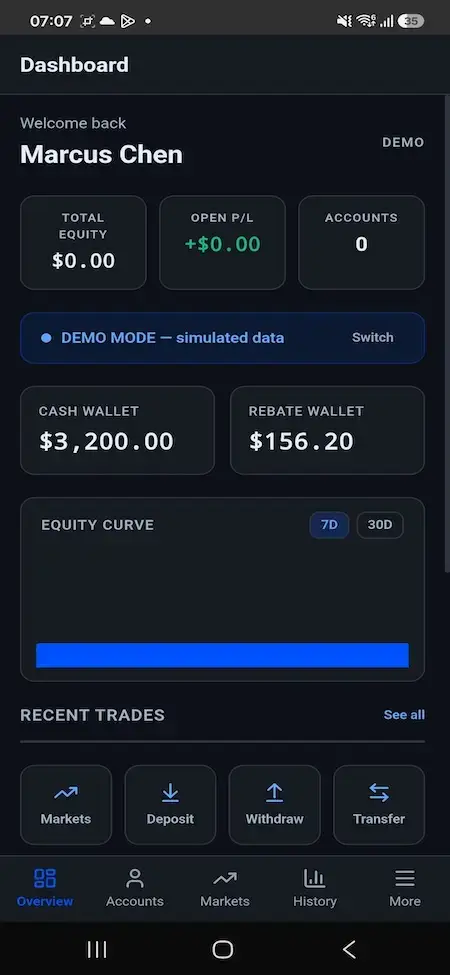
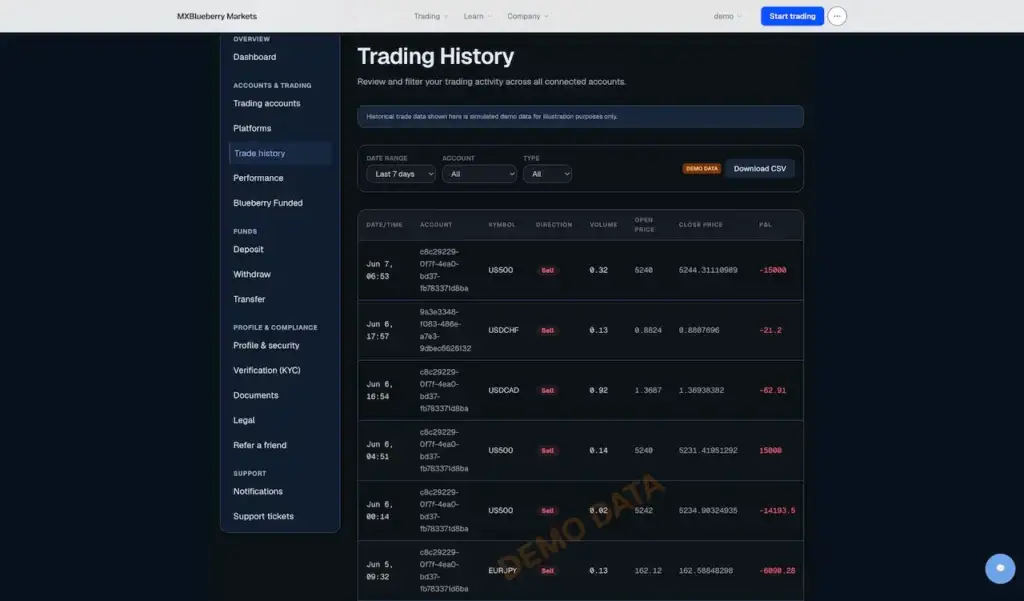
Client Dashboard & Trading Accounts
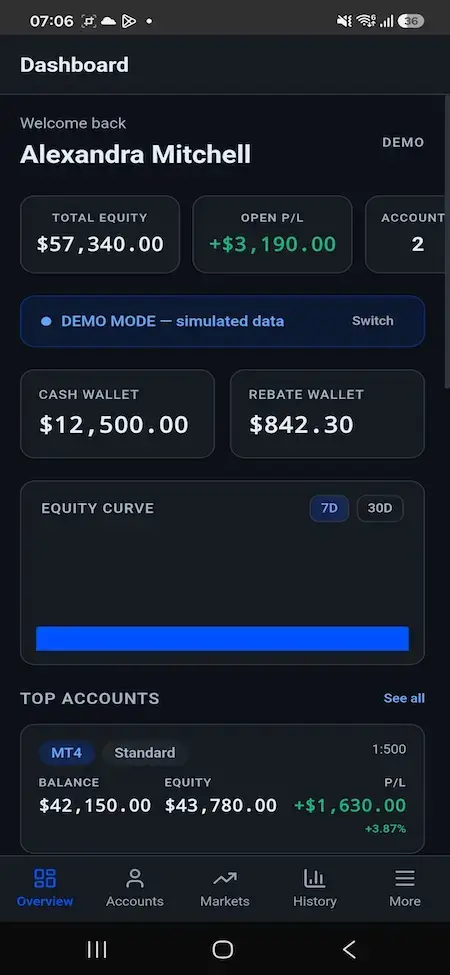
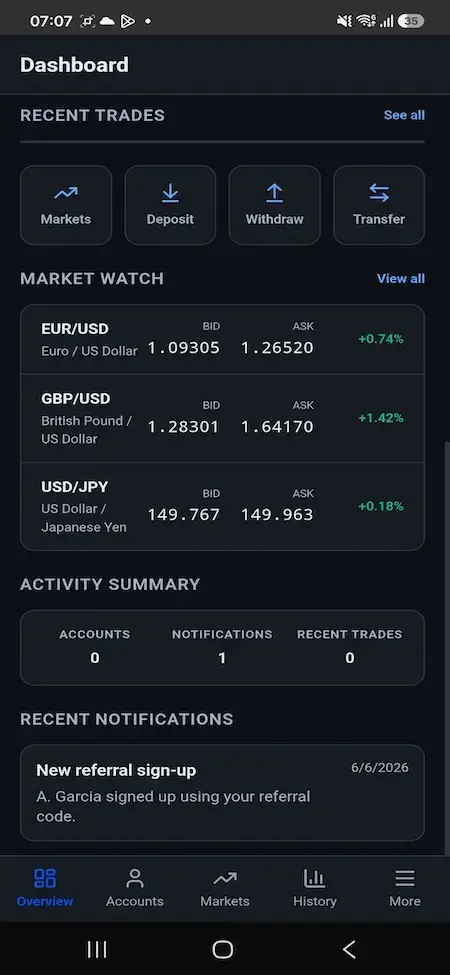
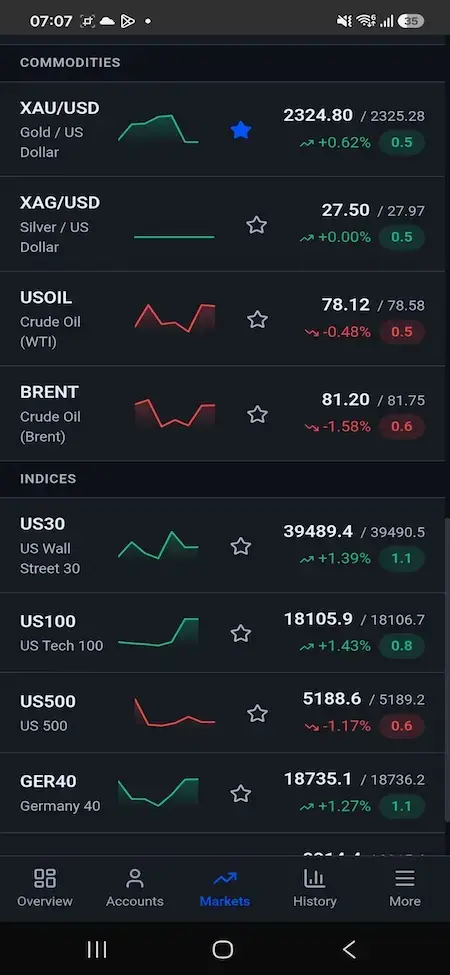
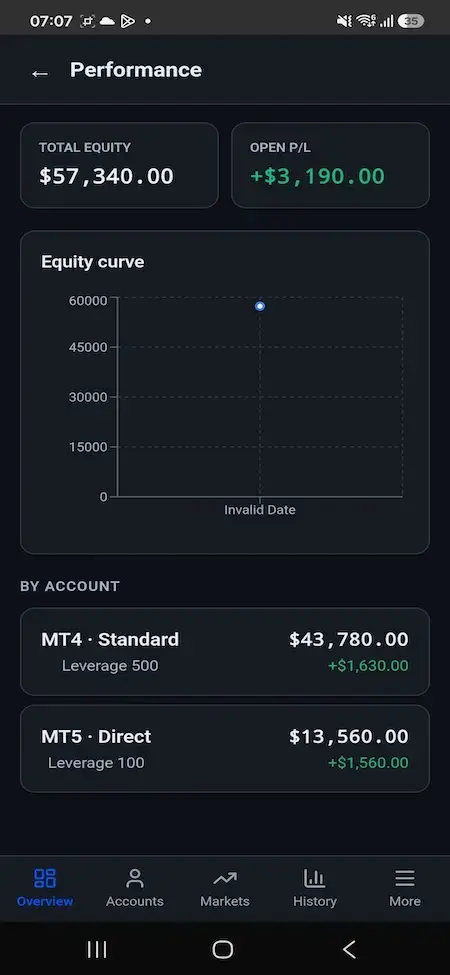
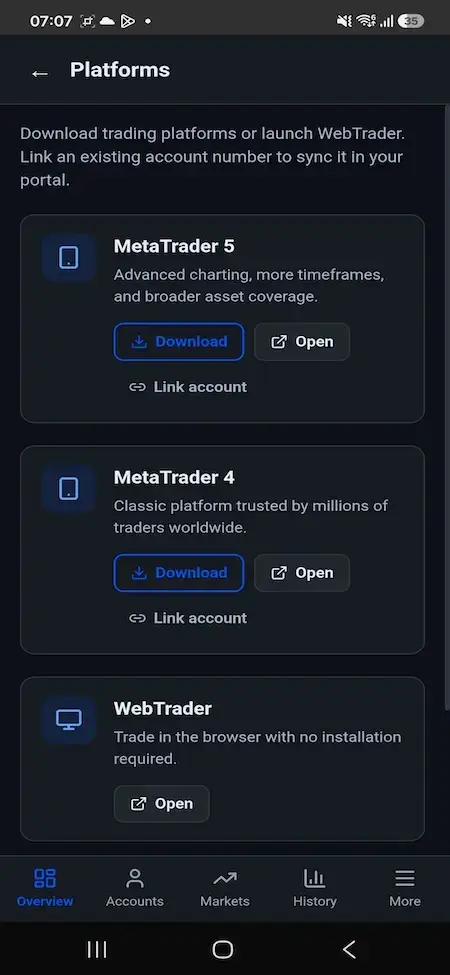
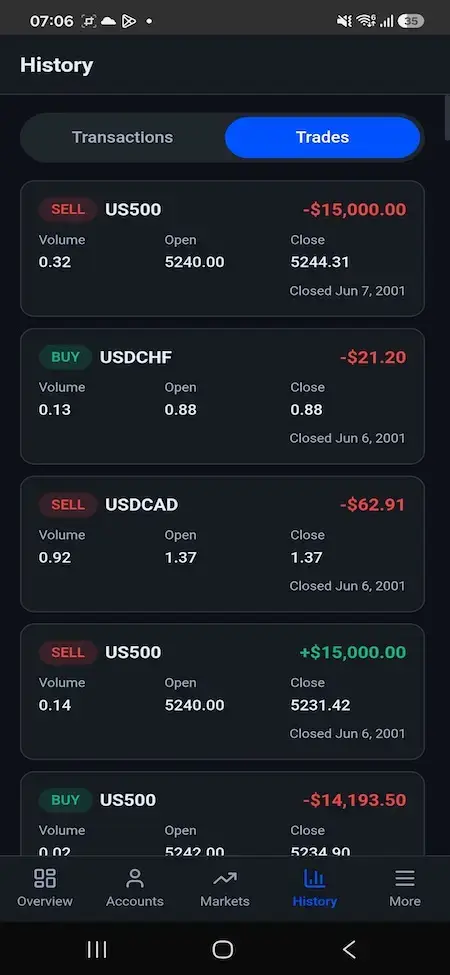
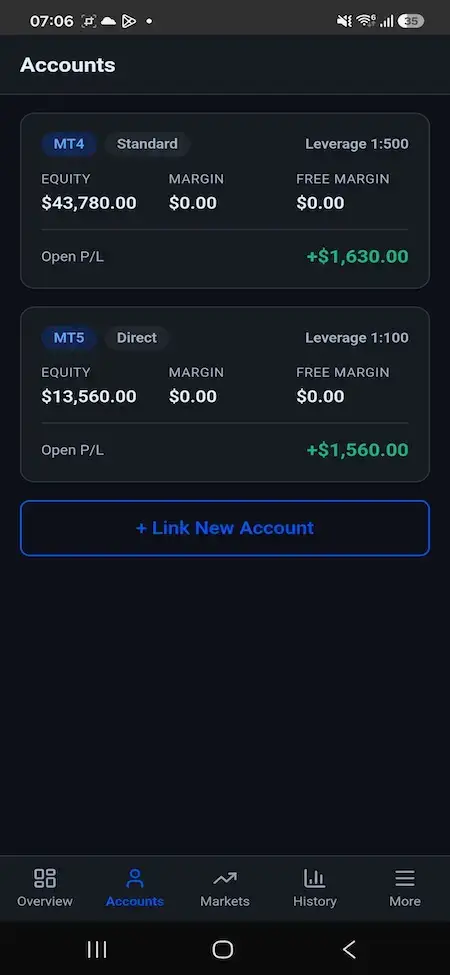
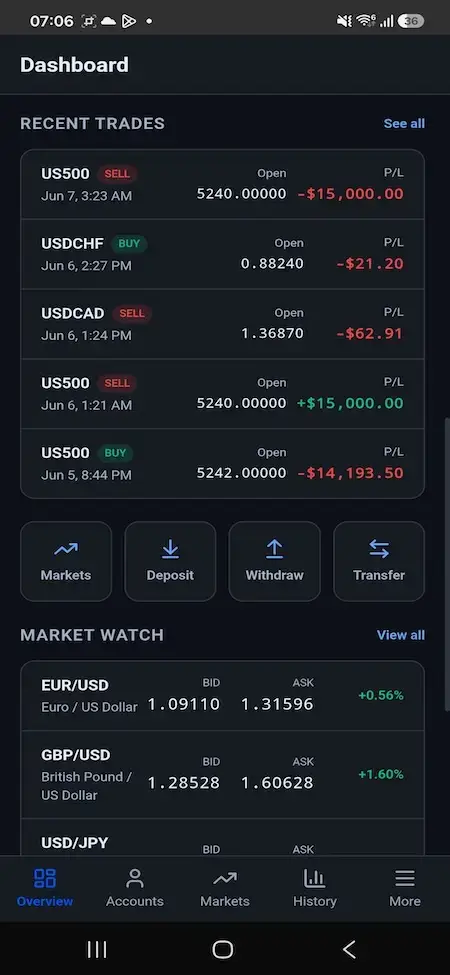
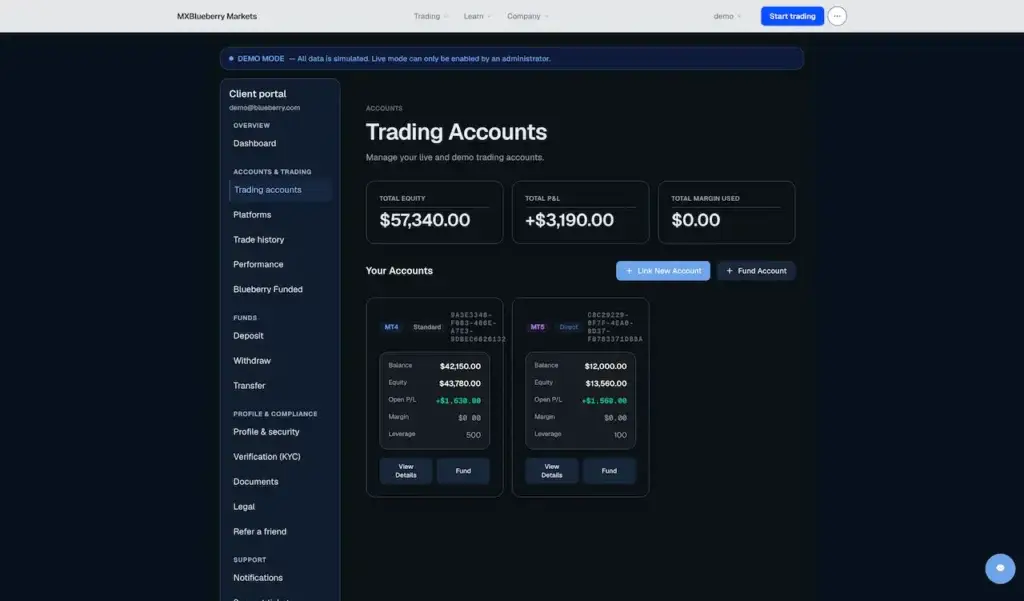
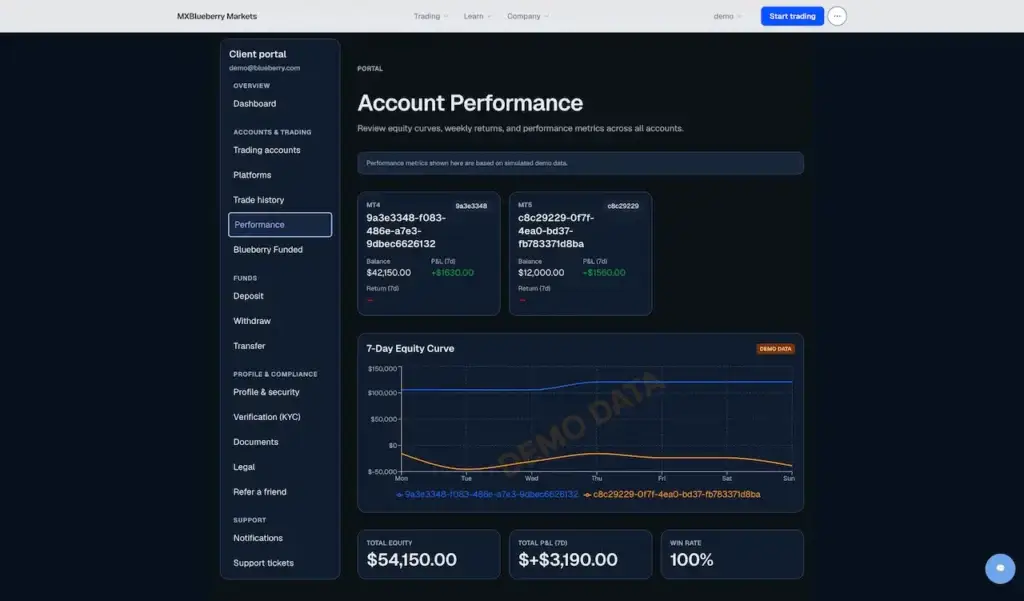
Equity, wallets and watchlists in one view, with MT4 and MT5 accounts opened or linked from the portal and trade history reported back. Execution itself stays in the terminal.
Equity dashboard with wallets and watchlists
MT4 and MT5 account provisioning and linking
Trade history and performance reporting
Order entry stays in the trading terminal
02
Feature 02 / 12
Funding, Wallets & Transfers
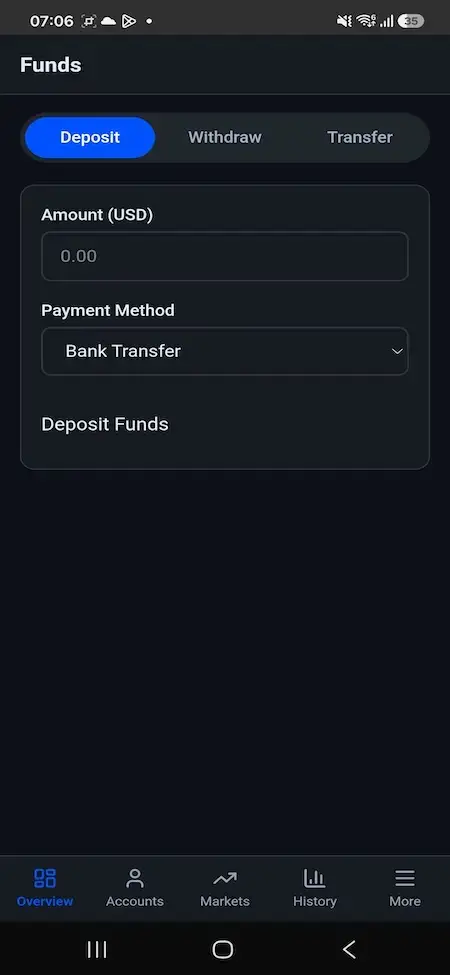
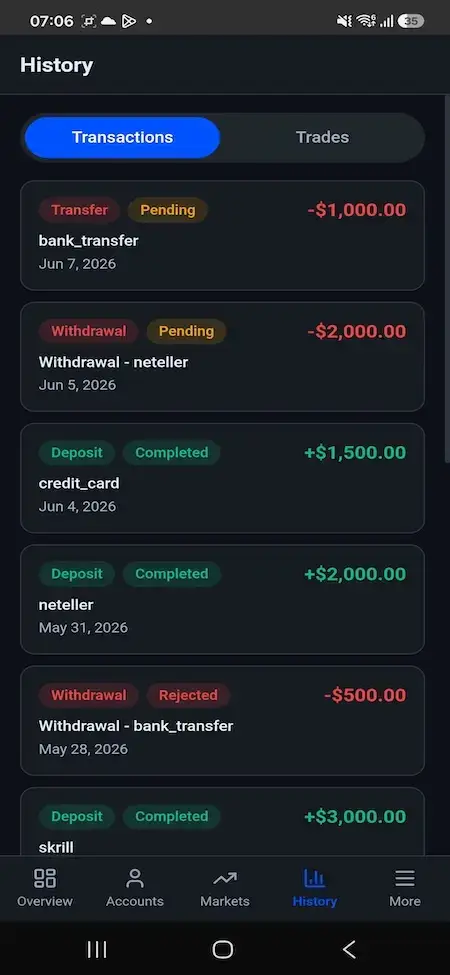
Deposits, withdrawals, internal transfers between wallets and currency conversion, with provider webhooks crediting balances automatically once a gateway is connected.
Deposits, withdrawals and internal transfers
Currency conversion between wallets
Provider webhooks for Stripe, Skrill and Neteller
Live money movement needs your gateway contracts
03
Feature 03 / 12
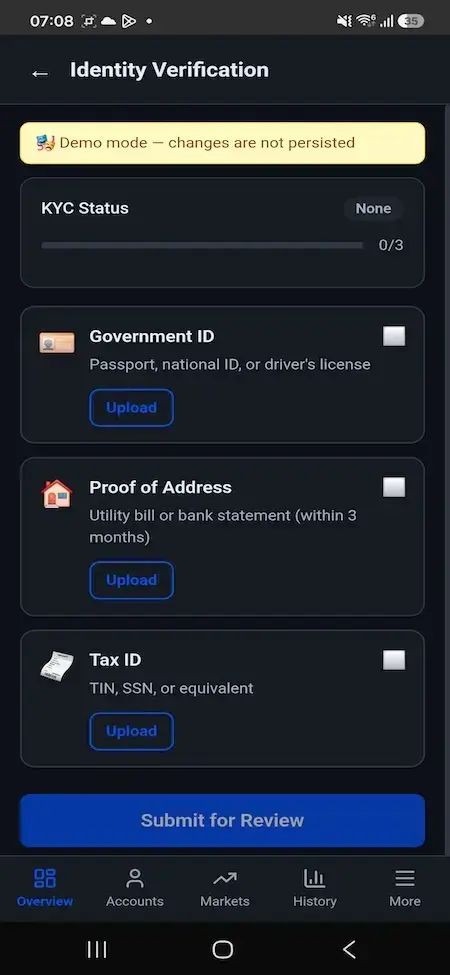
KYC & Verification
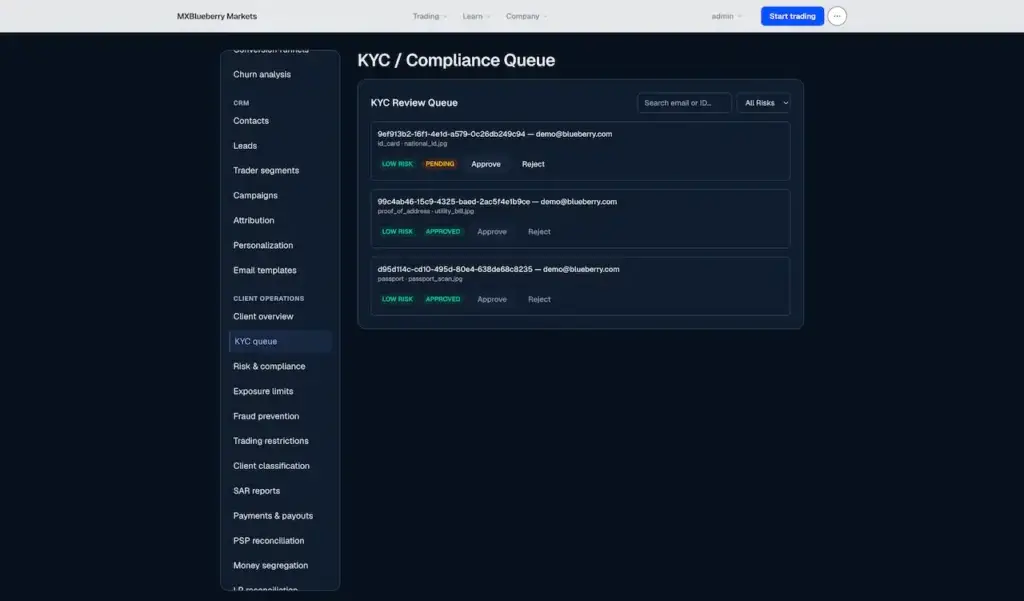
Client document upload with live status tracking, an operator verification queue with recorded decisions, and risk classification applied on approval.
Document upload with status tracking
Operator verification queue and decisions
Risk classification and client scoring
Live identity checks need a KYC vendor
04
Feature 04 / 12
Compliance, AML & Fraud
Withdrawal screening in the approval path, suspicious activity reporting, per-client trading restrictions and a fraud rule engine matching transaction patterns.
AML screening on withdrawal requests
Suspicious activity report handling
Trading restrictions applied per client
Fraud rules matched on transaction patterns
05
Feature 05 / 12
IB & Affiliate Program
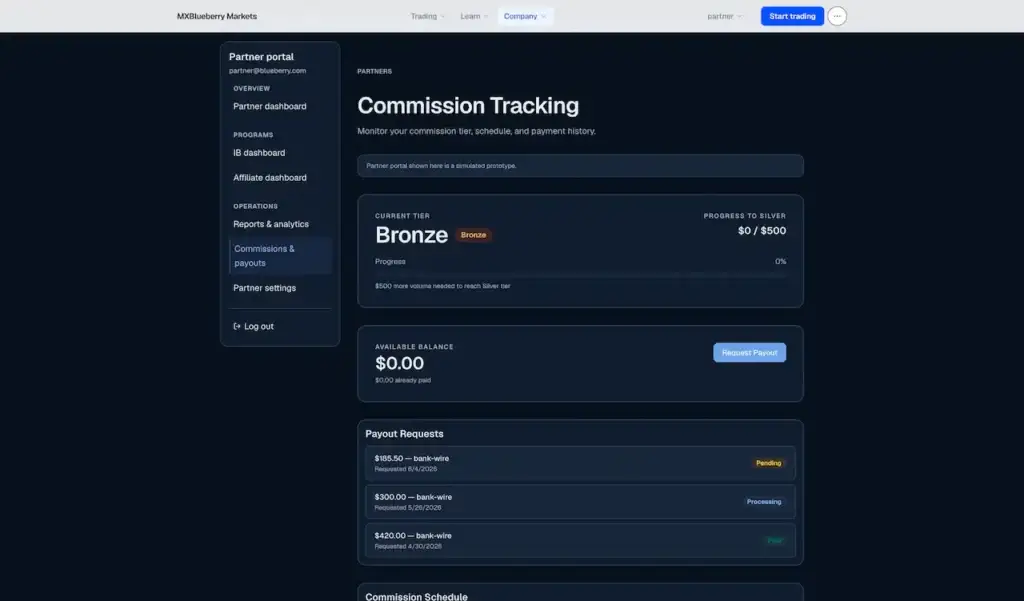
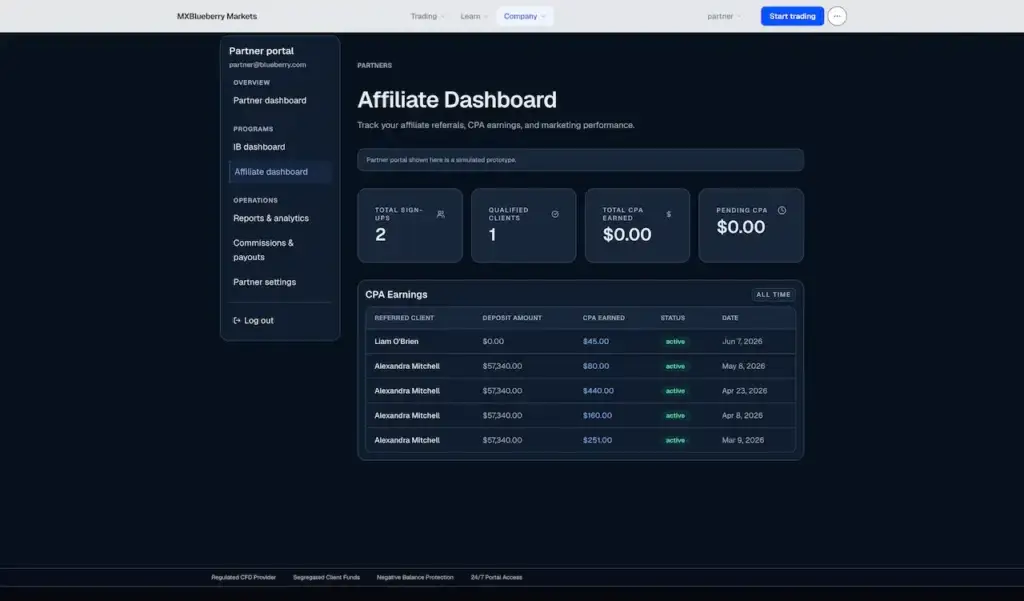
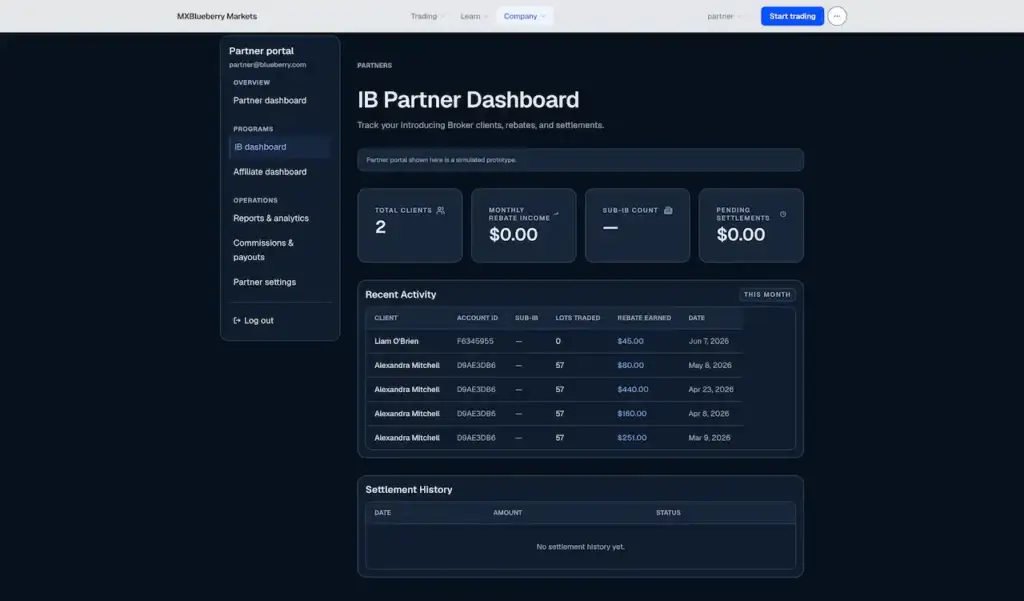
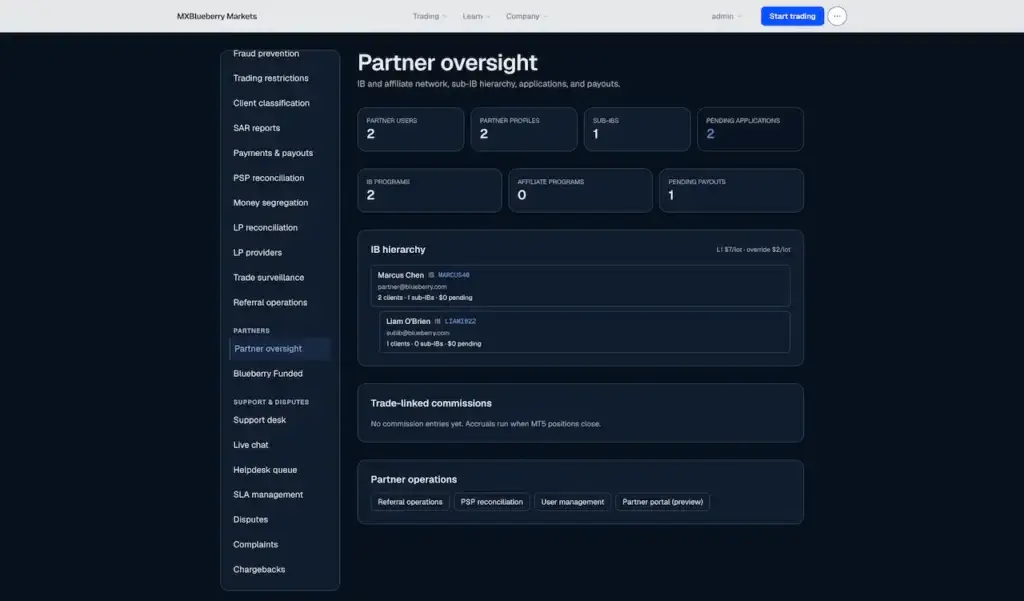
Tiered rebates on client trading volume, sub-IB hierarchies with downline attribution, affiliate CPA tracking and configurable commission schedules with payout requests.
Tiered IB rebates on client volume
Sub-IB hierarchy with downline attribution
Affiliate CPA and conversion tracking
Commission schedules and payout requests
06
Feature 06 / 12
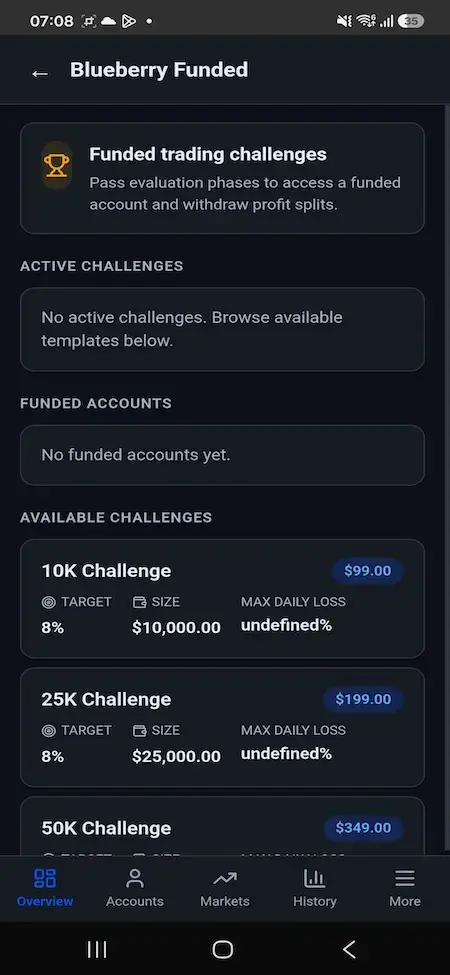
Prop Evaluation Desk
Priced challenges at three account sizes with daily drawdown checks, pass and fail state transitions, funded-account progression and profit-split payout handling.
Priced evaluation challenges at three sizes
Daily drawdown checks with pass and fail states
Funded-account progression tracking
Profit-split payout handling
07
Feature 07 / 12
CRM & Lifecycle Marketing
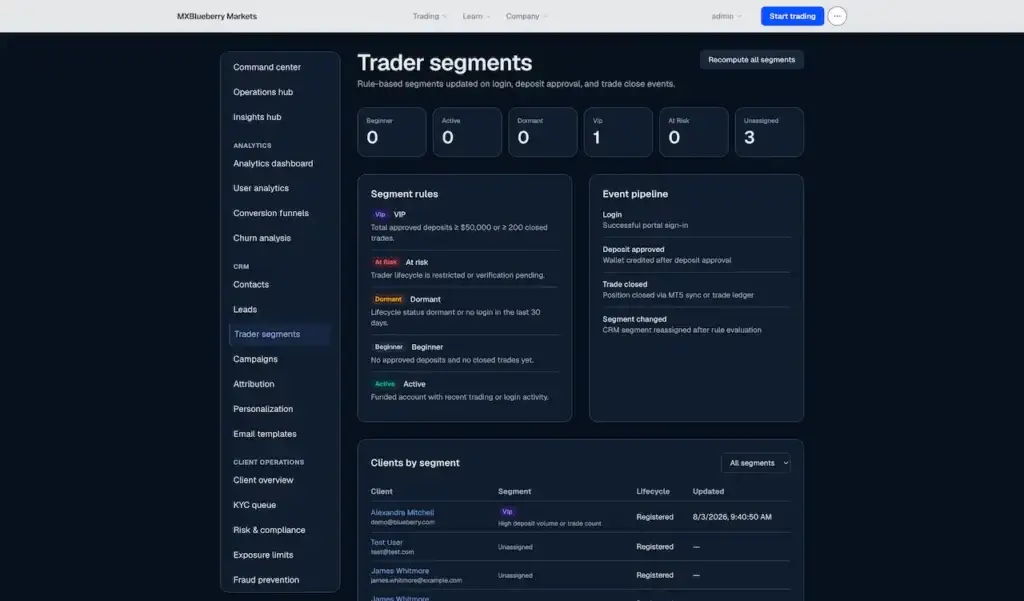
Segments, contacts and a lead pipeline alongside campaign scheduling, a lifecycle journey engine and churn scoring that feeds back into segmentation.
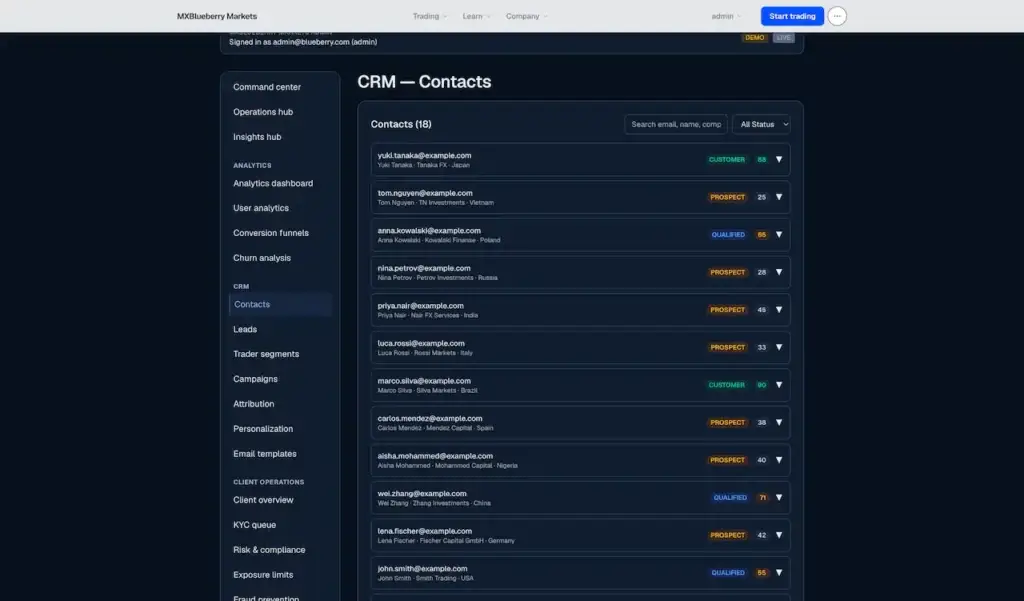
CRM segments, contacts and lead pipeline
Campaign scheduling and batch email
Lifecycle journey engine
Churn scoring feeding CRM segments
08
Feature 08 / 12
Support Desk & SLA
Ticket queues with SLA policy and breach escalation, disputes, complaints, incident logging, a knowledge base and a live chat surface.
Support tickets with SLA tracking
Disputes, complaints and incident logs
Knowledge base and help center
Live chat widget surface
09
Feature 09 / 12
Fifty-Page Admin Console
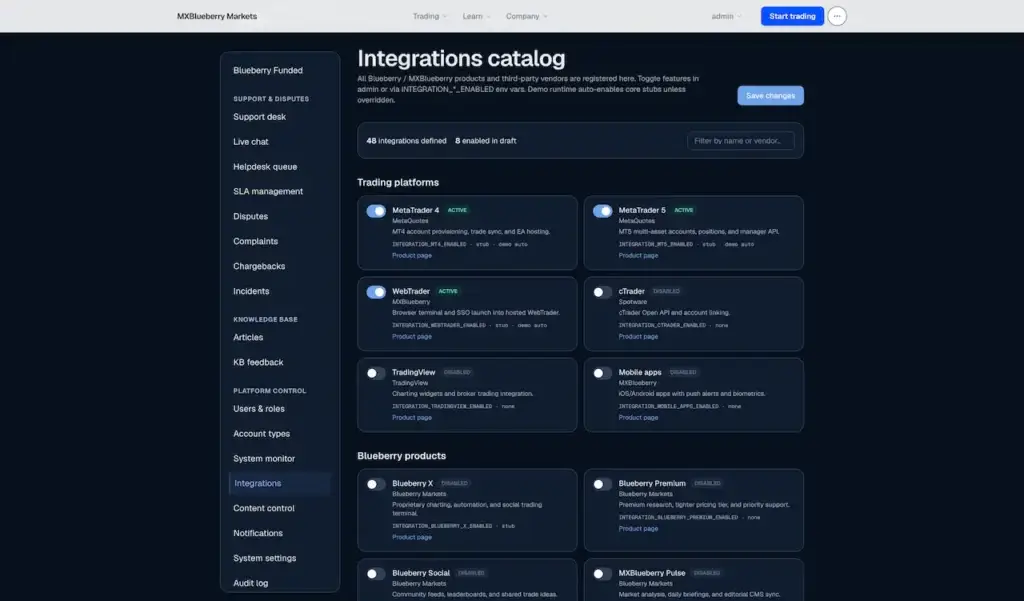
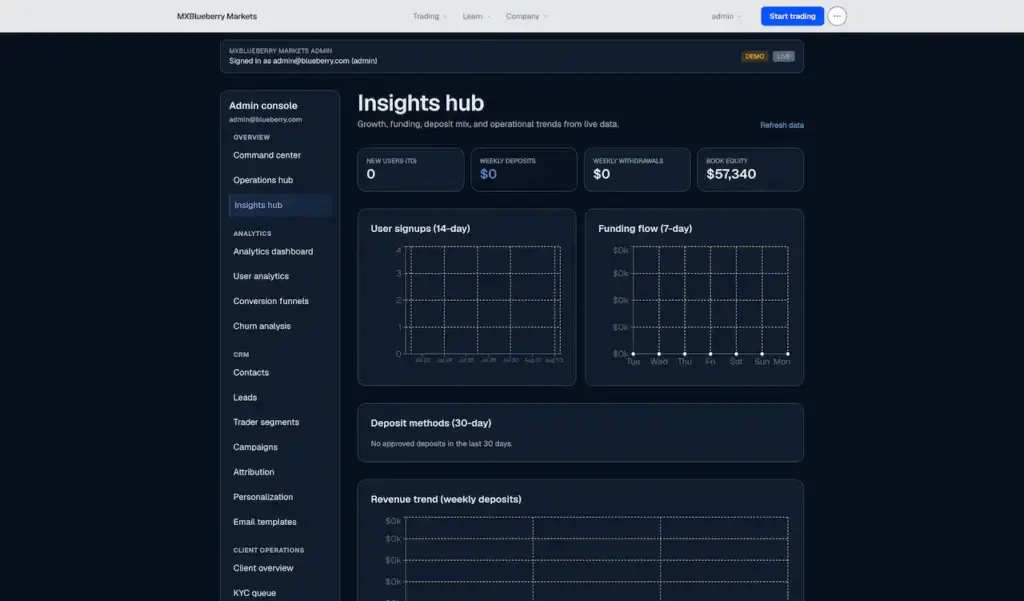
Eight navigation sections across more than thirty-four operational areas, with role assignment, forty-eight integration toggles and a complete operator audit log.
Fifty admin pages across eight nav sections
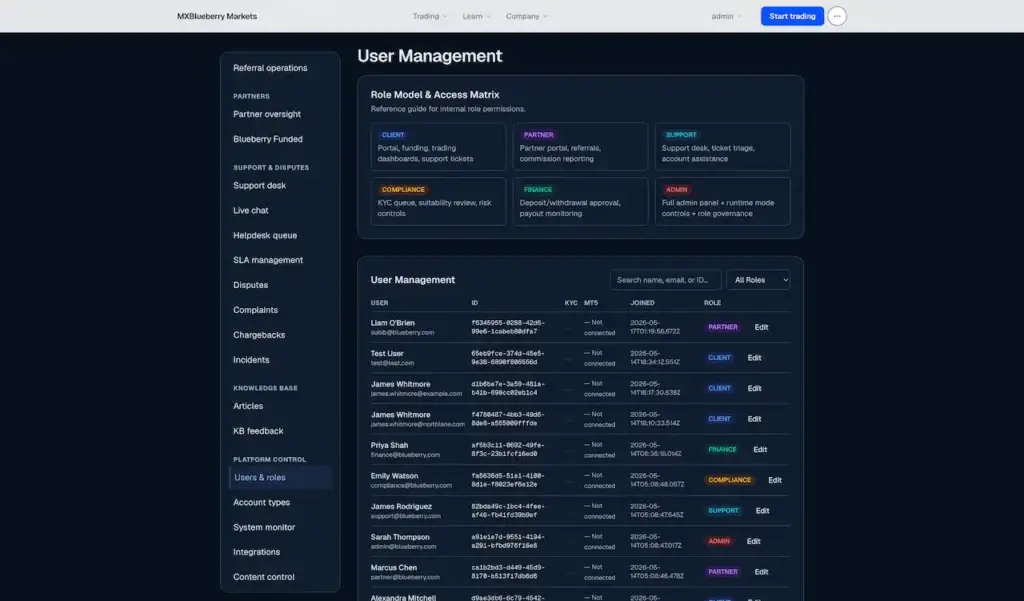
Role assignment and access control
Forty-eight integration toggles
Full audit log of operator actions
10
Feature 10 / 12
Marketing Site & Academy
132 addressable public pages and 93 MDX articles spanning academy, learn, education and market analysis - an organic acquisition asset shipped with the product.
132 addressable public marketing pages
93 MDX articles across academy and education
Market analysis and learning paths
Legal and jurisdiction directory
11
Feature 11 / 12
Multi-Language & Jurisdiction
English, Arabic and Chinese with right-to-left handling, plus jurisdiction configuration carrying per-region entities, restrictions and disclosure surfaces.
English, Arabic and Chinese interface
Right-to-left layout handled for Arabic
Jurisdiction config for multiple entities
Per-region restrictions and disclosures
12
Feature 12 / 12
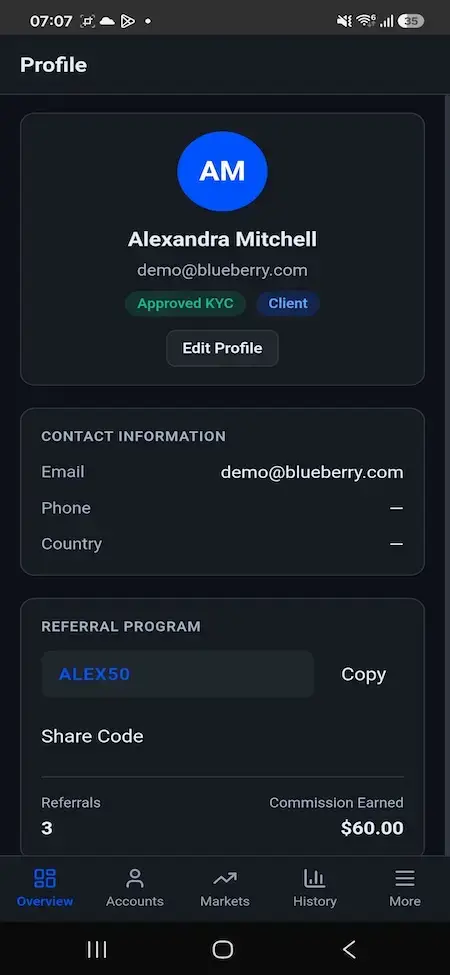
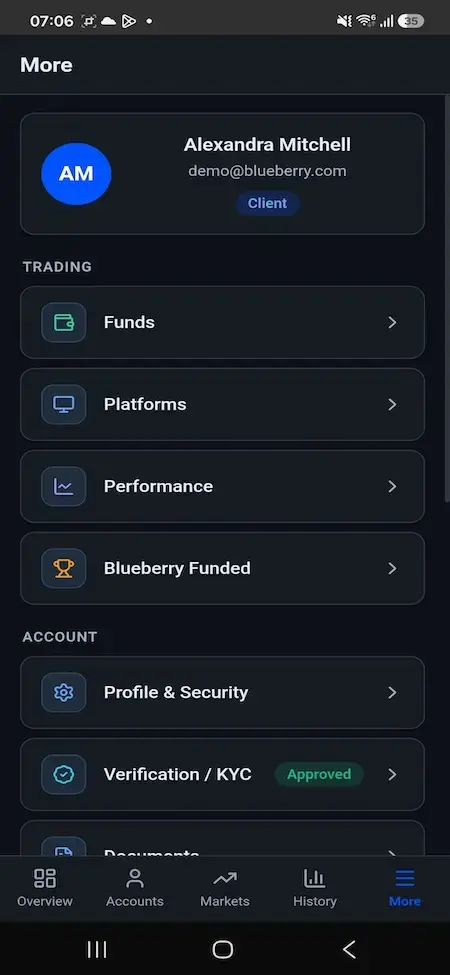
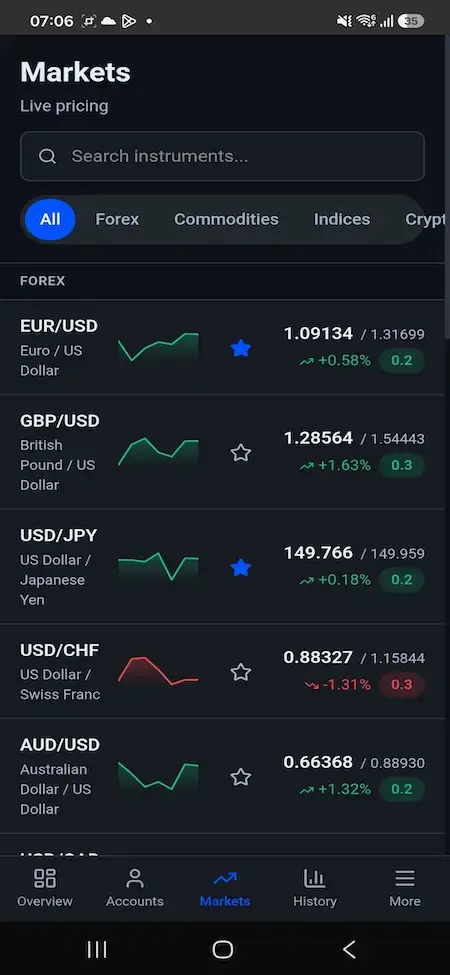
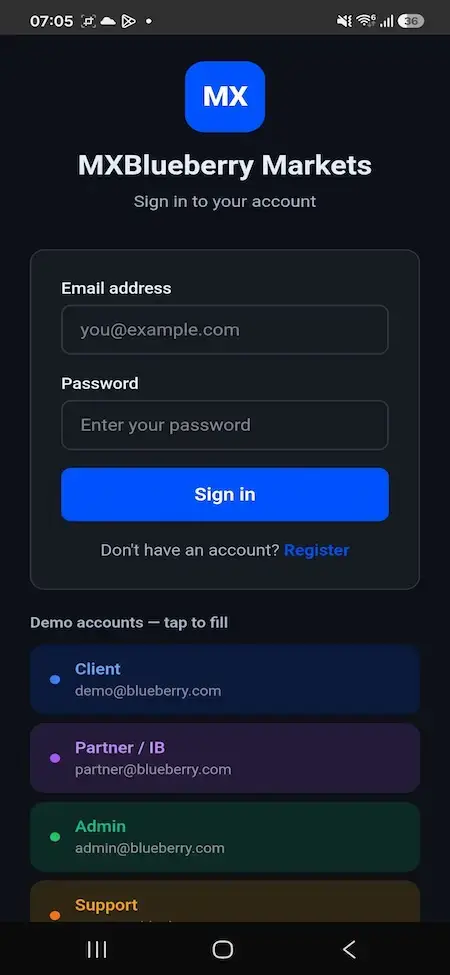
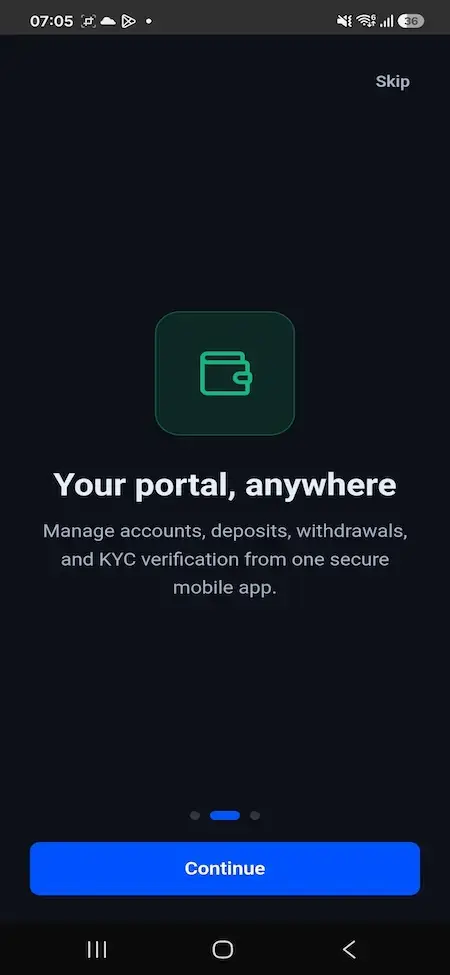
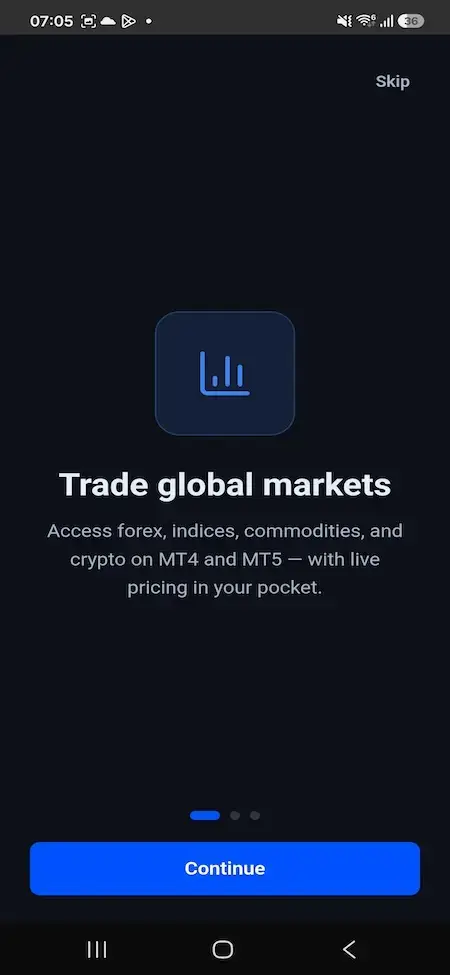
Android App Included
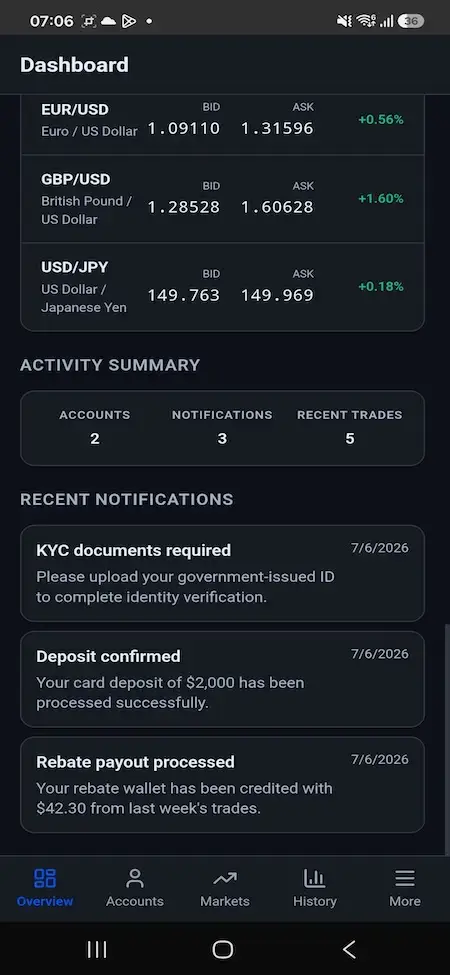
A Capacitor 8 build across twenty router paths and twenty-one screens, sharing the portal API surface exactly, with iOS available from the same artefact.
Capacitor Android build included
Twenty router paths, twenty-one screens
Shares the portal API surface exactly
iOS available from the same build
Buyer caveat:
The documentation is explicit about maturity. Marketing, CMS and the admin console are complete. Client portal, partner portal, mobile, order management, market data, funding, prop and compliance are built end to end but run on simulated data until you connect vendors – of 48 integration registry entries, 5 are external today, 12 are stubs including MT4 and MT5, and 31 are catalog definitions.
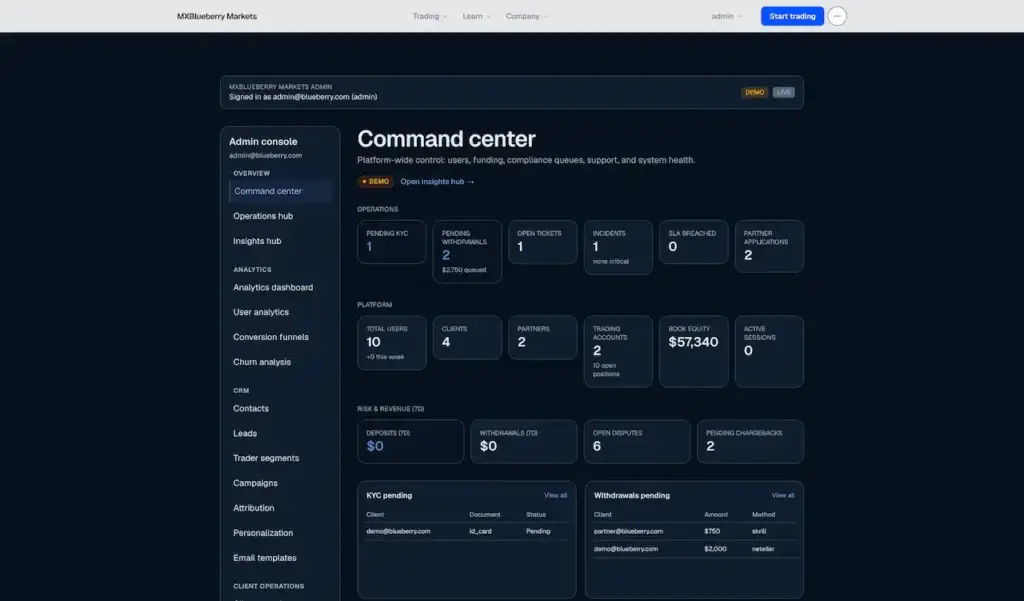
Fifty pages across eight navigation sections, covering more than thirty-four operational areas. Access is scoped by role at the area level, so support, compliance and finance each get a genuinely different console rather than a hidden menu.
Panel Modules Listed
01
Broker Control Room
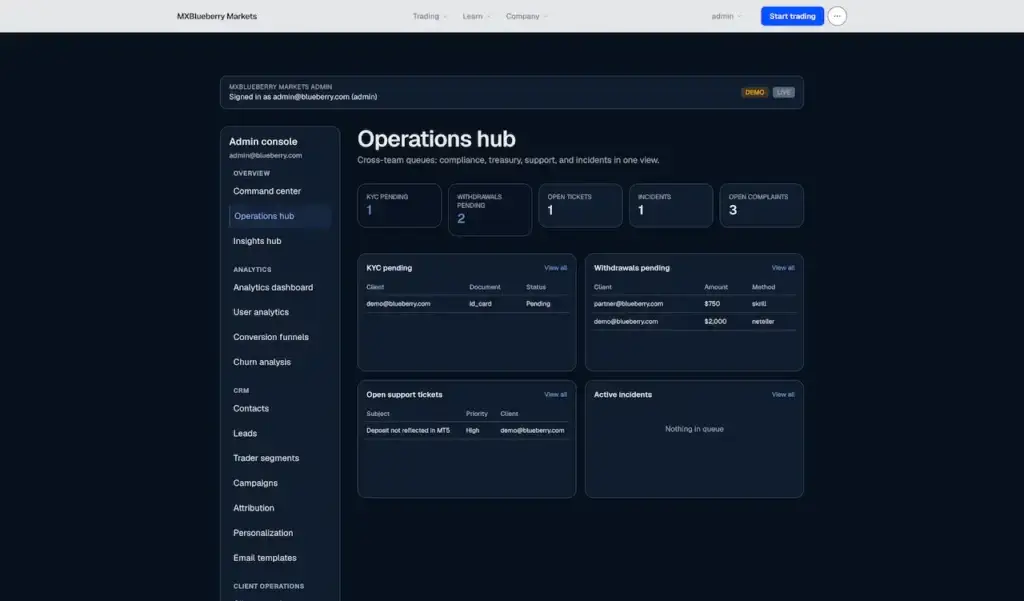
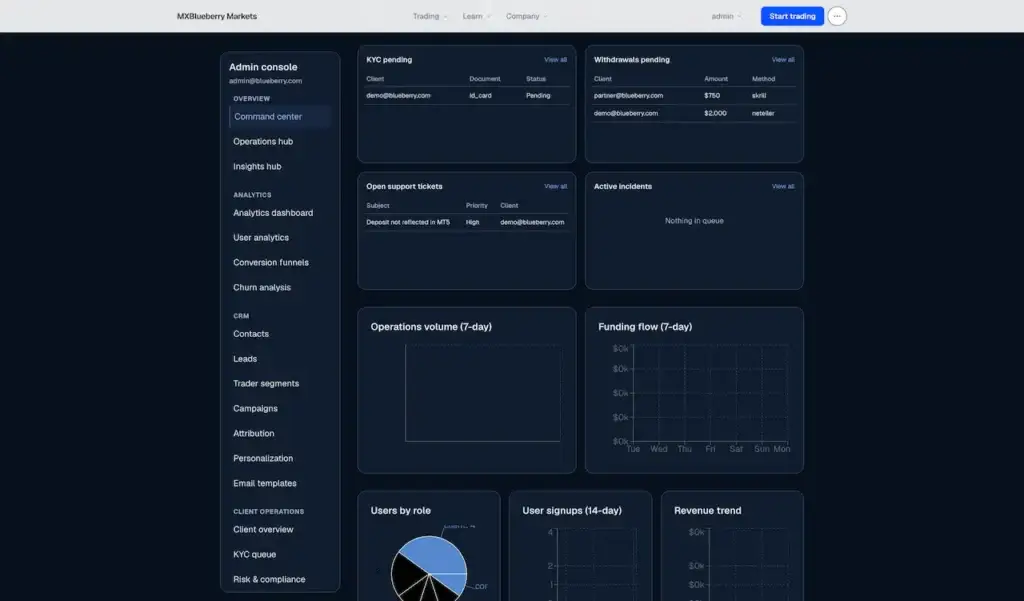
Platform-wide KPIs, recent activity and the queues that need attention today - the landing surface an operations lead opens first each morning.
02
Clients & Accounts
Client overview, trading account provisioning, account-type assignment, linked MT4 and MT5 records and per-client trading restrictions.
03
Payments & Finance
Deposit and withdrawal queues, approvals, provider webhook history, internal transfers, wallet adjustments and reconciliation.
04
KYC & Verification
The document queue with operator decisions, status transitions that unlock trading, and notification back to the client on every change.
05
Risk & Fraud
Client risk scoring, classification, fraud rule matching on transaction patterns, and automatic blocking with alerting.
06
Compliance & AML
Withdrawal screening, suspicious activity reports, trading restriction management and the classification surfaces an auditor will ask about.
07
Partners & Commissions
IB tier oversight, sub-IB hierarchies, affiliate conversions, commission schedules and payout run approval.
08
CRM & Campaigns
Segments, contacts, lead pipeline, lifecycle journey engine, campaign scheduling and churn scoring feeding back into segments.
09
Support Operations
Ticket queues with SLA policy and breach escalation, disputes, complaints, incident logs and the knowledge base.
10
System & Integrations
Role assignment, forty-eight integration toggles, site settings, feature flags, jurisdiction configuration and the audit log.
Forty-eight vendor toggles in one registry
Per-deployment enable and disable
Environment-key pattern for credentials
Stubs auto-enable in demo mode
Brand name, support address and primary calls to action
Feature flags for help search and legal markers
Jurisdiction entities with per-region restrictions
Full audit log of every operator action
Require firmer controls? Additional regulatory reporting, external audit exports, custom role definitions beyond the six shipped, and single sign-on for operator accounts are the modules brokers most often add. Tell us your regulator and we will scope against it.
Apps & Deployment Included - the Blueberry Markets Clone Source Code
You receive a complete, deployable platform – the application source, the schema behind it, the marketing and education content, and the documentation a regulator-facing buyer will ask for. Everything transfers with full ownership.
Next.js 16React 19TypeScriptPortalAdminREST API
01
Entire Source Included
The complete Next.js 16 and React 19 application in strict TypeScript - marketing, client portal, admin console and REST API in one codebase, yours to modify and redeploy.
A full application: React 19 together with Next.js 16
TypeScript throughout in strict mode
Marketing, portal, admin and API in one codebase
Free for you to change, expand and redeploy as you wish
AccountsWalletsKYCPartnersPropCRM
02
Schema Plus Tables Included
Ninety-three tables across twelve business domains in standard PostgreSQL, with JSONB settings surfaces for per-deployment extension and no ORM lock-in.
93 tables across 12 business domains
PostgreSQL schema with relationships and constraints
JSONB settings surfaces for extensibility
Standard SQL, portable to any PostgreSQL 14 instance
03
Client Portal
Twenty-five routes covering the dashboard, wallets, account provisioning, funding, KYC, prop enrollment, referrals, support and the notification center.
25 client portal routes plus legacy slugs
Dashboard, wallets, funding, KYC and prop
Referrals, support and notification center
Two-factor authentication and preferences
04
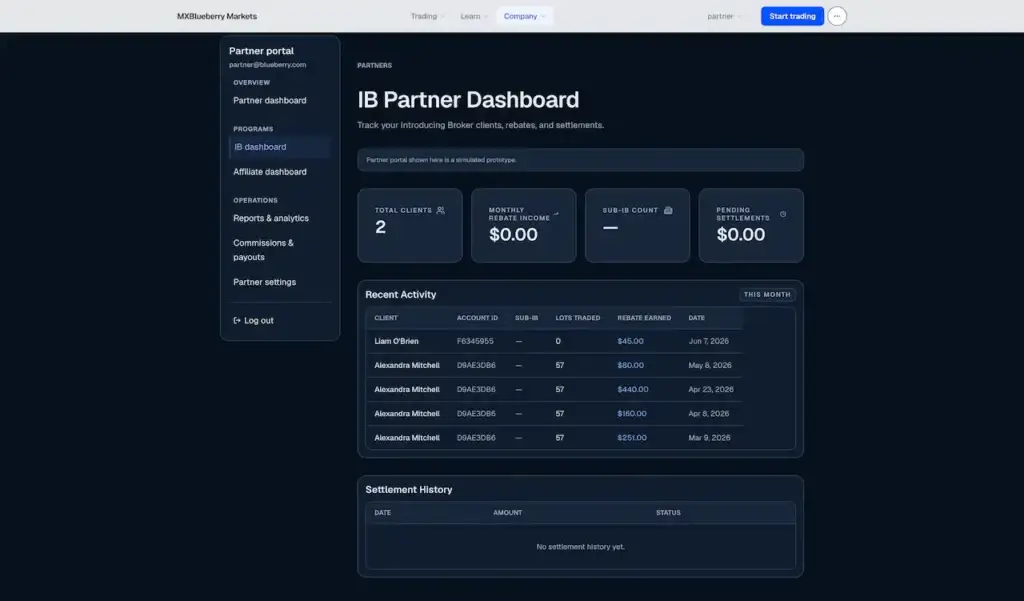
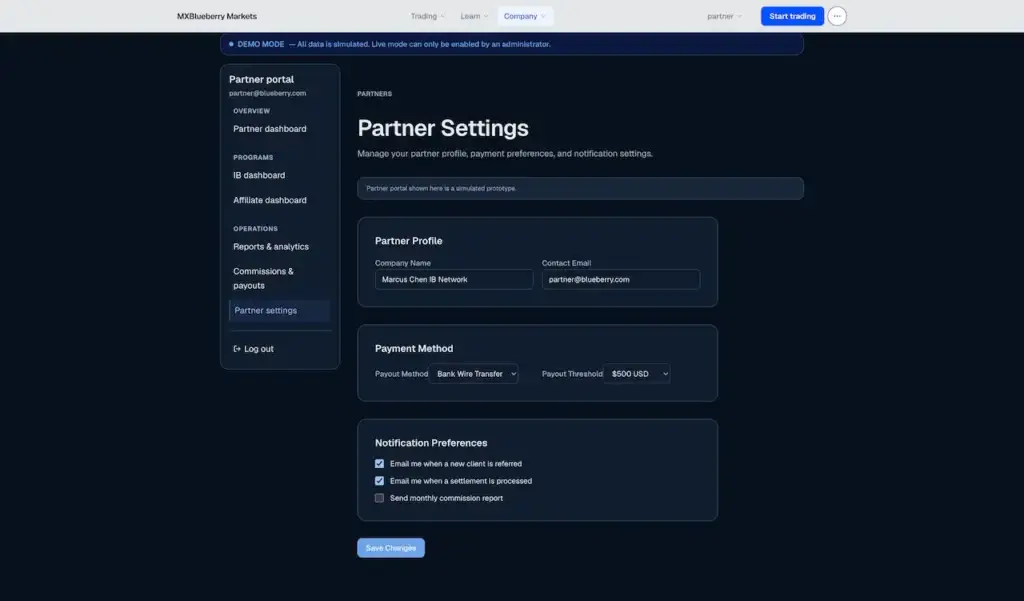
Partner & IB Portal
Nine routes across IB, affiliate and fund-manager surfaces, with rebate attribution, sub-IB hierarchy, commission schedules and a public application form.
Nine partner and IB portal routes
IB, affiliate and fund-manager surfaces
Rebate attribution and sub-IB hierarchy
Public partner application form
05
Broker Admin Panel
Fifty pages across eight sections with six role-scoped logins, area-level access control, forty-eight integration toggles and a complete audit log.
Fifty admin pages across eight sections
Six roles with area-level access control
Forty-eight integration toggles
Complete operator audit log
06
Android Application
A branded Capacitor 8 build across twenty router paths and twenty-one screens, sharing the portal API surface. iOS available from the same build.
Capacitor 8 Android build included
Twenty router paths, twenty-one screens
Shares the portal API surface
iOS available from the same build
AcademyLearnEducationAnalysisLegalRegions
07
Marketing & Education Content
132 addressable public pages and 93 MDX articles across academy, learn, education and market analysis - content that would otherwise take a year to commission.
132 addressable public marketing pages
93 MDX articles across academy and education
Market analysis and learning content
A genuine organic-search asset from day one
$ open docs/gap-matrix
ERDAPI collection
08
Engineer Handbook Included
ERD, schema guide, API collection, developer and deployment handbook, VAPT and compliance posture, and the per-domain gap matrix stating maturity honestly.
An API collection, schema guide and ERD
Developer, integration and deployment handbook
VAPT and compliance posture document
Gap matrix stating maturity per domain
Would you rather watch it work first? Try the demo with any role from the six logins listed above, or schedule a walkthrough in which we demonstrate a compliance decision as it would apply in your own jurisdiction, a partner rebate run and client onboarding.
What Does a Forex Brokerage Platform Cost to Build in 2026?
Building a brokerage operations platform with Miracuves typically starts at about $9,099 for a white-label, launch-ready Blueberry Markets Clone, and the price rises with jurisdiction count, integration scope, partner program complexity and regulatory reporting requirements.
Who Should Choose Our Blueberry Markets Clone App?
The platform suits operators who need brokerage infrastructure with compliance and partner economics already modeled – the parts that take longest to build and are hardest to retrofit.
Audience 01 / 06IB & Affiliate Networks
Introducer networks whose entire economics depend on correct tiered rebates, sub-IB attribution and payouts that reconcile - the thing partners judge you on immediately.
01
MXBlueberryOn a single shared product base
Audience 02 / 06Multi-Jurisdiction Operators
Brokers running separate entities across regions who need jurisdiction configuration, per-region restrictions and localized disclosure surfaces rather than one global site.
02
MXBlueberryA shared core underneath
Audience 03 / 06White-Label Providers
Providers deploying branded brokerage instances per client, where branding, jurisdiction, content and integration set are configuration rather than a fork per customer.
03
MXBlueberryOne shared core throughout
Audience 04 / 06Established Brokerages
Existing brokers replacing an ageing back office, who need the compliance and audit surfaces to satisfy a regulator rather than to satisfy a demo.
04
MXBlueberrySharing a common product base
Audience 05 / 06Emerging Brokers
New brokerages that need a client portal, funding rails and a KYC workflow on day one, without spending most of a year building the back office before taking a first deposit.
05
MXBlueberryRunning on one base product
Audience 06 / 06Prop Trading Firms
Firms running evaluation challenges who need priced challenges, drawdown enforcement, funded-account progression and payout handling as modeled state rather than spreadsheets.
06
MXBlueberryEverything on a single core
If your business depends on funded trading accounts, an introducing-broker and partner network, or multi-asset execution carried under your own brand, a Blueberry Markets-style platform becomes a long-term owned asset rather than a front end leased from another provider.
The same codebase serves quite different businesses depending on which surface an operator leads with. A new broker leans on onboarding and funding; a prop firm leans on the evaluation engine; an IB network leans on rebate attribution. Each is configuration and emphasis rather than a fork.
Swipe · 6
ForexCFDBrokerageForex & CFD Brokerage
Run a full forex and CFD brokerage operation – client onboarding, KYC, funding, account provisioning into MT4 and MT5, and the compliance surfaces that keep the license intact.
01
PropFunded AccountsProprietary Trading Desk
Operate a proprietary trading desk on priced evaluation challenges, with daily drawdown enforcement, pass and fail states, funded-account progression and profit-split payouts already modeled.
02
IBAffiliate NetworksIB & Affiliate Network
Build an introducer network where tiered rebates, sub-IB hierarchies and affiliate CPA are attributed correctly and paid on schedule – the operational detail that retains partners.
03
Multi-EntityJurisdictionsMulti-Entity Operations
Operate several regulated entities from one deployment, with jurisdiction configuration, per-region restrictions and localized legal surfaces rather than a separate build per market.
04
White-LabelProvidersWhite-Label Provision
Deploy branded brokerage instances for client operators, where branding, content, jurisdiction and integration set are all configuration rather than a maintained fork.
05
EducationAcademyEducation-Led Acquisition
Lead with education, using the 93 shipped articles across academy, learn and market analysis as an acquisition surface that earns organic traffic while the brokerage matures.
06
One codebase, many setups here. Every use case above runs on the same 93-table schema and the same six roles. What changes is which surface you lead with, the branding and the jurisdiction set – not a fork you then maintain separately.
The Blueberry Markets Clone suits any operator running regulated trading relationships. Forex and CFD brokers use the full stack from onboarding through to payout. Proprietary trading firms lead with evaluation challenges and funded-account progression. Introducer and affiliate networks depend on the rebate attribution engine. Multi-entity operators use jurisdiction configuration to serve several regulators from one deployment. White-label providers deploy branded instances per client. Wealth and advisory businesses use the client portal and reporting surfaces. Crypto brokerages reuse the same onboarding, funding and compliance spine. Education-led operators lead with the academy content and convert into funded accounts.
12sectors one platformMXBlueberry
01FcForex & CFD Brokers
02PtProp Trading Firms
03IaIB & Affiliate Networks
04MjMulti-Jurisdiction Groups
05WlWhite-Label Providers
06WaWealth & Advisory
07CbCrypto Brokerages
08TeTrader Academies
09IpInvestment Platforms
10FmFund Managers
11RcRegTech & Compliance
12AbProp Firms & Studios
Miracuves’ Blueberry Markets Clone is built as a compliance-first brokerage operations platform adaptable to any regulated trading model - multi-entity where your licenses require it, and fully white-labeled under your own brand.
06Under the hood
Onboarding To Payout
How the Blueberry Markets Clone Works - Onboarding, Funding, Trading & Payouts
A brokerage looks simple from the outside and runs on a long regulated pipeline underneath. Here is the path from first visit to a funded, compliant, monetized client.
Client Journey - From Signup to Funded Account
Swipe · 6
1Acquisition & Education
Most brokerages buy their traffic. This one ships with an organic surface - 132 public pages and 93 education articles across academy, learn and market analysis.
Marketing pages across products and instruments
Academy and learning paths for new traders
Market analysis as a recurring content surface
Jurisdiction directory and legal disclosures
2Registration & Verification
Signup opens a client record and a wallet, then routes documents into the operator verification queue where a decision unlocks trading.
Account creation with two-factor available
Document upload with live status tracking
Operator KYC queue with recorded decisions
Live identity checks require a KYC vendor
3Funding & Wallets
Deposits credit the wallet through provider webhooks, with internal transfers and conversion between currencies handled inside the platform.
Deposits via configured payment providers
Withdrawal requests screened for AML
Internal transfers between wallets and accounts
Live money movement needs gateway contracts
4Trading Accounts
The platform provisions and links MT4 and MT5 accounts, then reports history and performance back into the portal. Execution itself stays in the terminal.
Account opening by type and trading group
Linking existing MT4 and MT5 credentials
Trade history and performance reporting
Bridge connectivity is an integration step
5Prop & Partner Economics
Two revenue engines run alongside the core brokerage - evaluation challenges on one side, introducer rebates on the other.
Priced challenges with daily drawdown checks
Funded-account progression and profit split
Tiered IB rebates attributed by client volume
Affiliate CPA and sub-IB downline tracking
6Compliance & Payout
Every withdrawal passes screening before it reaches finance, and every operator action lands in the audit log a regulator can read.
AML screening on withdrawal requests
Suspicious activity report handling
Finance approval separated from compliance
Complete audit trail of operator decisions
Visual FlowchartRegisterConfirm identityFundTrade on MT4/MT5Partner RebateWithdraw
How It’s Built
Backend Flow & Technical Blueprint Overview of the Blueberry Markets Clone
A Single Application01Access Control by Area02Demo-to-Live Adapter03Typed Integration Registry04Event-Driven Operations05Auditability Throughout06
01
Layer 01
One Application, Four Surfaces
Marketing, client portal, admin console and the REST API all ship from a single Next.js application, so there is no drift between what the site says and what the platform does.
02
Layer 02
Access Control by Area
Six roles map to permitted operational areas rather than to hidden menu items, which is why a compliance login genuinely cannot approve a payment.
03
Layer 03
Demo-to-Live Adapter
A single data adapter switches the whole platform between simulated and live sources, which is what makes full-fidelity demos and operator training possible pre-launch.
04
Layer 04
Typed Integration Registry
Forty-eight vendor definitions with per-deployment toggles and an environment-key pattern, so enabling a provider is configuration rather than a code change.
05
Layer 05
Event-Driven Operations
Deposits, KYC decisions, SLA breaches, fraud matches, referral credits and prop evaluations all fire from platform events rather than manual operator polling.
06
Layer 06
Auditability Throughout
Operator actions write to an audit log, money movement reconciles against provider records, and prop evaluation state is derived rather than hand-set.
Under the hood, a brokerage operations platform needs separation of duties enforced in code, money movement that reconciles, and a demo mode that behaves like production. Here is the stack behind it.
01Frontend
Marketing, Portal & Admin Surfaces
Next.js 16 App Router · React 19 · TypeScript
TypeScriptReact 19Next.js 16 App Router
Strict TypeScript across marketing, portal and admin
Tailwind with CSS Modules for component styling
Zustand stores for portal, admin ops and onboarding
Marketing, portal, admin and API in one application
02Records Tier
Server State & Demo-Live Adapter
TanStack React Query · api-adapter
TanStack React Queryapi-adapter
Server state cached and invalidated per query
A demo-to-live adapter switches the entire data source
react-hook-form with Zod validation on every write
152 REST route files exposing 213 handlers
03Database
Twelve Domains, Ninety-Three Tables
PostgreSQL 14+ · 93 Tables
PostgreSQL 14+93 Tables
Twelve business domains in one relational schema
Connection pooling through the native driver
JSONB settings surfaces for per-deployment extension
Standard SQL, portable to any managed PostgreSQL
04Identity
Six Roles & Area-Level Access
JWT · bcrypt · Six Roles
JWTbcryptSix Roles
Signed tokens with bcrypt password hashing
Client, partner, admin, support, compliance and finance
Area-level access control, not menu hiding
Two-factor authentication on client accounts
05Delivery
Mobile Packaging & Payments
Capacitor 8 · Vite · Stripe
Capacitor 8ViteStripe
Android packaged from a shared React build
Twenty router paths and twenty-one screens
Stripe SDK with Skrill and Neteller webhooks
iOS available from the same build artefact
06Content & i18n
Academy Content & Localization
MDX · next-intl · 93 Articles
MDXnext-intl93 Articles
Academy, learn, education and market analysis content
English, Arabic and Chinese with right-to-left handling
Jurisdiction directory and legal surfaces
Vitest and Playwright coverage across the stack
Engineering buyer note:
liquidity bridges, KYC vendors, payment gateways and market data feeds connect through a typed integration registry with per-deployment toggles, each requiring your own vendor contract and credentials. Every layer above is mainstream and widely hired for, with no proprietary framework and no runtime dependency on Miracuves after handover.
Built to Scale - Indexed Reads, Event Automation & Scaling Room
The platform is built for a growing retail brokerage rather than a tier-one institutional desk, and the architecture is deliberately conventional so that scaling it is ordinary infrastructure work rather than a rewrite.
01
Automation Instead of Headcount
A brokerage back office grows headcount fast unless the recurring work is event-driven from the start. Webhooks, scheduled jobs and rule matches drive the recurring work, so operational load grows more slowly than client count. Automations shipped include:
Deposit webhooks crediting wallets automatically
Withdrawal AML screening into the review queue
SLA breach alerting and escalation
Daily prop drawdown evaluation
02
Partner Economics That Reconcile
Introducer networks leave over incorrect rebates faster than over anything else, so attribution is modeled rather than calculated in a spreadsheet each month. The partner engine covers:
Tiered rebates by client trading volume
Sub-IB hierarchy with downline attribution
Affiliate CPA on referred conversions
Commission schedules and payout runs
03
SupportComplianceFinance
Separation of Operator Duties
Access control is the part auditors actually test, so it is enforced at the area level rather than by hiding navigation. The six roles divide as follows:
Support handles tickets but not payments
Compliance decides KYC but cannot approve payouts
Finance moves money but cannot alter KYC
Admin holds unrestricted access and role assignment
04
KYC queueAML screeningSAR workflow
Compliance & AML as Modeled State
The surfaces a regulator asks about exist as data rather than as process documents, which is what makes an audit answerable by query. The compliance layer covers:
KYC queue with recorded operator decisions
AML screening on every withdrawal request
Suspicious activity reporting workflow
Trading restrictions applied per client
05
Conventional Scaling Path
Managed PostgreSQL, read replicas and standard Next.js hosting - no exotic infrastructure to operate or hire for.
The queues operators live in - KYC, withdrawals, tickets, partner payouts - run against indexed access paths rather than table scans
Wallet balances reconcile against provider records, and every adjustment carries an operator and a reason
Ninety-three tables organized into clear business domains, so extending one area does not require understanding all of them
Demo and live modes are switched at the data layer, so training and sales demos never touch production vendors
06
Built for Tailoring and Long-Term Growth
Every brokerage ends up needing something specific to its jurisdiction or its partner model. The stack is conventional so that extending it is ordinary work.
Adding a capability is a migration, a route and a page
Next.js, React, TypeScript and PostgreSQL are all widely hired for, with no proprietary framework in the way
Founder and operator note: Begin modestly and scale on the same deployment. When volume climbs, you adjust instance sizing, read replicas and capacity at the provider; the architecture underneath does not change.
Security posture is documented against the OWASP Top 10, with a dedicated VAPT and compliance document supplied for review. For a brokerage the sharper question is separation of duties, and that is enforced in code rather than by policy.
01 · Duties
Duty Segregation
Compliance cannot approve payments, finance cannot alter KYC decisions, support can touch neither. Enforced at the area level, which is what an auditor will test.
02 · Audit
Operator Audit Log
Every privileged action is recorded with actor, target and timestamp, giving a queryable answer to who changed what and when.
03 · AML
AML Screening in the Flow
Withdrawals are screened before reaching finance rather than reviewed afterwards, so the control sits in the path rather than beside it.
04 · Auth
Token-Based Authentication
Signed JWTs with bcrypt password hashing, plus two-factor authentication available on client accounts.
05 · Input
Validated Write Paths
Every form and API write passes schema validation before touching the database, closing the malformed-input class of problem.
06 · Region
Jurisdiction Controls
Per-region entity configuration with restrictions and disclosure surfaces, so a single deployment can serve markets with different rules.
OWASP-Oriented Mapping
Controls assessed against the OWASP Top 10 with posture stated per category, and configuration-required items named rather than glossed.
Documented Gap Matrix
A per-domain maturity table covering UI, API, schema and live integration - unusual to publish, and exactly what a technical buyer wants to see.
Fraud Rule Engine
Transaction pattern matching with automatic blocking and alerting, feeding the same risk surfaces compliance already works in.
Data Protection Posture
Client personal data and document handling documented with access paths, retention considerations and operator responsibilities.
Go-Live Lockdown
Production secrets, network policy, provider credential handling and log retention documented as a pre-launch checklist.
Regulatory Reporting Extension
The audit and compliance data model supports regulator-specific reporting; the specific report formats are scoped per jurisdiction.
Where hardening is deployment-governed – vendor credentials, network policy, production secrets, regulatory reporting – the documentation lists it as a checklist rather than implying coverage.
A Blueberry Markets clone delivers software, and it carries no brokerage license. Miracuves builds the operational layer and hands it over: admin consoles scoped by role, audit trails, the prop evaluation desk, the IB and affiliate program, hooks for provisioning MT4 and MT5 accounts, wallet and funding records, KYC and AML workflows, and the client portal with onboarding. Regulated activities include dealing with retail clients in forex and CFDs, holding client money, and setting prices for or hedging client trades. Responsibility for them rests with a licensed entity holding your own dealing license, together with the banks, payment institutions and liquidity providers under contract with you. Our software is neither a broker nor a liquidity provider. It is built against your providers’ APIs and never stands in for them.
The software architecture is ready for PCI-DSS & ISO 27001; to hold live fiat, however, it must be integrated with a licensed BaaS / EMI sponsor bank.
“Ready” means the architecture is built to the controls those frameworks require: payment credentials tokenized at the processor rather than stored as card numbers, encryption in transit and at rest, role-based access with segregated admin roles, immutable audit logging and environment separation. Your certification audit therefore starts from a compliant codebase instead of a rebuild. It is not a certificate. Miracuves holds no PCI-DSS or ISO 27001 certification on your behalf and displays no compliance badge without the certificate behind it. Certification is issued to the operating entity, against its own environment, processes and hosting.
What Code Covers
The package covers a client portal with onboarding, a KYC queue, AML screening applied to withdrawals, workflows for suspicious activity reporting, wallet and funding records, hooks that provision MT4 and MT5 accounts, role-based access, audit logs, the prop evaluation engine and IB rebate attribution. Everything arrives as source code that belongs to you.
Perks Reserved For License Holders
Dealing in forex and CFDs with retail clients, offering leverage, holding client money, taking or passing on market risk, and reporting to a regulator. That authority sits with your licensed brokerage entity. Software cannot substitute for it.
Client Money and Liquidity
Client funds belong in segregated client-money accounts at your bank, and prices and execution come from your liquidity-provider agreements and your MT4 or MT5 bridge. The platform records deposits, withdrawals and wallet balances and reconciles them against provider records; it does not hold the money or make the market.
Your Jurisdiction Sets The Path
Requirements vary by market. Candidates include an Australian Financial Services License from ASIC, Cyprus Investment Firm authorization from CySEC, FCA permissions in the UK, or an offshore license in jurisdictions such as Seychelles (FSA) or Mauritius (FSC). Each brings its own reporting obligations and separate rules on client money, leverage and capital. In several markets, prop-trading evaluation programs draw distinct regulatory scrutiny, so confirm how yours would be classified. Which route suits you is a question for a licensed partner, or for a lawyer who focuses on financial services, since Miracuves gives no legal, licensing or regulatory advice.
08Grow the platform
What the base package coversMXBlueberry
Client portal & funding
KYC & AML workflow
IB program & prop desk
Fifty-page admin console
How add-ons work
1
Select modules separately
Choose modules at launch or attach them later; the core stays as it is.
2
Every module costed alone
Each module has a separately written scope and price.
3
Drops straight into your repo
Like the core, these arrive as source code that you own.
As shipped, the platform is complete as an operational layer and fully demonstrable. The modules below are what turn a demo-mode deployment into a live regulated brokerage, plus the extensions operators most often add afterwards.
Drag to browse · hover to stop the movement
01
Live connectivity
Liquidity & Bridge Connectivity
MT4 and MT5 are registry entries at stub level today. Live account provisioning, position sync and trade reconciliation need a bridge and an LP session configured to your arrangement.
Liquidity · MT4 · MT5
02
Live connectivity
Payment Gateway Integration
Stripe, Skrill and Neteller webhook handlers ship in the codebase. Live money movement requires your own merchant contracts, credentials and settlement configuration.
Payments · PSP · Gateways
03
Compliance & reporting
KYC & AML Vendor Connection
The verification queue, risk scoring and screening workflow are complete. Automated identity and sanctions checking requires connecting a vendor to the existing provider pattern.
KYC · AML · Vendors
04
Live connectivity
Live Market Data Feeds
Watchlists and instrument catalogs run on simulated prices in demo mode. Real-time pricing requires a market data contract wired into the same adapter.
Market Data · Feeds
05
Compliance & reporting
Regulatory Reporting
The audit and compliance data model supports it; the specific formats your regulator expects are built per jurisdiction as a scoped module.
Reporting · Regulator
06
Channels & growth
iOS Application
Android ships with the base product. The same Capacitor build produces iOS, making it an additive step rather than a second codebase.
iOS · Mobile
07
Channels & growth
Advanced CRM & Marketing
Segments, campaigns and a journey engine ship in-product. Connecting an external marketing automation platform or a data warehouse is an integration.
CRM · Marketing
08
Enterprise
Oversight Controls
Single sign-on for operator accounts, custom roles beyond the six shipped, extended retention policy and data residency for deployments where procurement sets the terms.
Enterprise · Single Sign-On Support
Other Trading & Fintech Platforms
Building Something in Trading & Fintech? Our Coverage Spans the Entire Market.
The Blueberry Markets Clone sits in a complete trading and fintech suite as one of its platforms. If your roadmap goes beyond brokerage operations, these connect naturally.
01
Pick it if: Your clients trade stocks and derivatives, not FX and CFDsZerodha Clone
Multi-broker retail trading platform with an algo engine, real-time market data and a seven-language SDK.
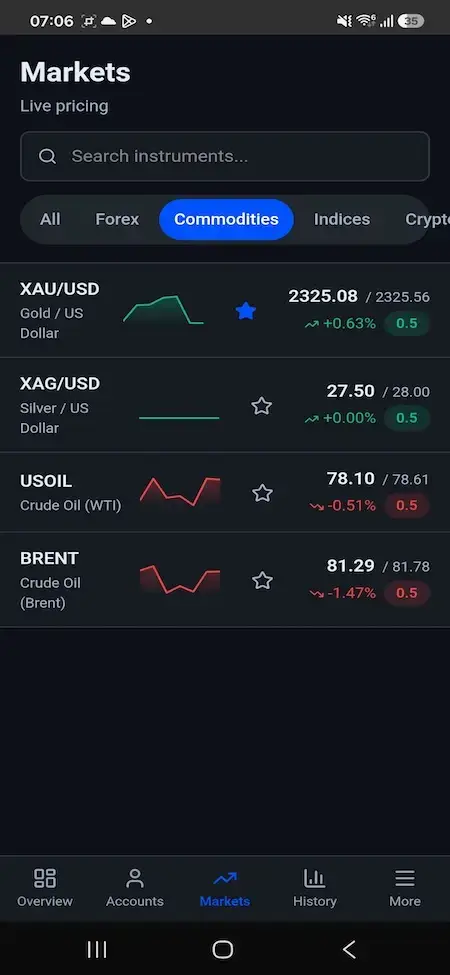
A brokerage earns from several places at once, and the platform models each of them separately so an operator can tune one without disturbing the others.
010203040506
01
Spread & Commission
Account types and trading groups carry the pricing structure. What the spread actually is depends on your liquidity provider and account group configuration, so this is deployment-specific by nature.
02
Prop Challenge Fees
Priced evaluation challenges at three account sizes generate revenue before a trader is ever funded. The pricing, rules and drawdown thresholds are all operator-set.
03
Prop Profit Split
Funded traders keep the majority share, with the split configurable per package. The evaluation and payout state machine is modeled rather than manual.
04
IB & Affiliate Commissions
Tiered rebates on client volume, sub-IB attribution and affiliate CPA. The commission schedule is yours to define per tier and per program.
05
Funding Fees
Deposit pass-through and withdrawal fees are policy per method, set by the operator rather than hard-coded, so you can absorb or pass on provider costs.
06
Premium & Referrals
A premium account upsell alongside client refer-a-friend earnings, both crediting through the same wallet ledger the rest of the platform uses.
Brokerage and prop-firm revenue lines for a Blueberry-style platform, shown against the spreads, challenge prices, profit splits and rebates that firms publish.
Revenue stream
How it is charged
Take rateTypical range
What sets the ceiling
Spread & Commission
Spread built into the quote on a standard account, or a raw spread plus a commission per lot.
Blueberry Markets: Standard from 1.0 pips, $0 commission; Raw from 0.0 pips plus $7 per lot round turn.
Liquidity cost sets the floor; licensing sets the leverage. ASIC limits retail CFDs to between 30:1 and 2:1, while the published account page lists up to 500:1, so entity and jurisdiction decide volume.
Prop Challenge Fees
A one-time purchase fee per evaluation product and account size, with no recurring charge.
Blueberry Funded lists $139 to $490 by product. FTMO refunds only its 2-Step fee, on first reward.
Refund policy. FTMO states a one-time fee, no recurring costs, and no refund on its other products, so whether fees come back to the trader determines the net revenue you keep.
Prop Profit Split
The firm pays the trader a set share of evaluated profit and keeps the remainder.
FTMO: 90% on 1-Step and Instant, 80% default on 2-Step. Blueberry Funded: 80% to 85%.
Competition for traders. Both firms advertise a route to 90% through scaling, so a split below 80% needs another reason for a trader to choose you.
IB & Affiliate Commissions
A rebate per lot traded by referred clients, paid out of the spread or commission you earn.
Blueberry Markets 2022 reply: $4 per lot Standard, $2 Pro; $6 and $3 from 25 clients a month.
Earnings per lot. A rebate must stay below your margin on that lot, and Blueberry's own rebate differed by account type. Treat the 2022 schedule as dated.
How to read this. Spreads and commission are from Blueberry Markets' account page, and challenge prices from Blueberry Funded before any promo code. FTMO terms are in its fee and reward FAQs. The leverage rule is from ASIC. The rebate schedule is a 2022 statement attributed to Blueberry Markets and may be out of date. Published terms are assumptions to test, not an offer or an earnings forecast for your platform, and no affiliation with the firms named is implied.
Some streams are deployment-specific by nature – spread and commission depend on your liquidity arrangement and account groups rather than on software. Those are marked as such rather than presented as shipped revenue.
Independent Data on the Online Investing and Trading Market, 2025-2026 Benchmarks
Our own revenue models sit above this section. The numbers that follow come from others: published data from the Bank for International Settlements, Plus500, Groww’s annual report and India’s National Stock Exchange, reproduced exactly as published. Together they indicate how big the retail investor base is, what a broker operating at scale earns, and the size of the currency market.
NSE01
13.2crdistinct PANs on record, June 2026
NSE’s Registered Investor Base: 13.2 Crore
In its Market Pulse for July 2026, India’s National Stock Exchange reports 13.2 crore PANs that are unique and registered at 30 June 2026, equal to 132 million investors. That publication also lists 1,328 trading members and reach into more than 99 percent of pin codes in India, so a retail broking app has a big pool of potential users, and it keeps widening.
Groww (FY2026)02
16.7musers active at 31 March 2026
Revenue of Rs 46,446m and 16.7m Active Users at Groww
In the annual report for the year ended 31 March 2026, Groww is described as the largest retail broking platform in India by active clients, with more than 16.7 million active users. On a consolidated basis, revenue from operations rose 19 percent to Rs 46,446 million, with profit after tax of Rs 20,830 million. That gives a listed incumbent's reference for revenue and profit when operating at scale.
Plus50003
$3,268FY2025 revenue per user (ARPU) at one listed CFD broker
In 2025, Revenue per Active CFD Customer Reached $3,268
Listed CFD and forex broker Plus500 posted $792.4 million of group revenue for FY 2025 from 242,440 active customers, according to preliminary results released 9 February 2026. Average revenue per user hit a record $3,268, up 8 percent, and the average deposit per active customer came to about $26,900.
BIS04
$9.6tnDaily OTC FX turnover, April 2025
Global FX Trading Reached $9.6tn Per Day in April 2025
In the 2025 Triennial Central Bank Survey run by the Bank for International Settlements, the average daily turnover in over-the-counter foreign exchange reached $9.6 trillion in April 2025, 28 percent more than the $7.5 trillion a day of the 2022 survey. In 89.2 percent of trades overall, one side was the US dollar.
Citations listed as published.
National Stock Exchange of India, Economic Policy and Research, Market Pulse, July 2026 (Vol. 8, Issue 7), August 2026 - nsearchives.nseindia.com
Bank for International Settlements, OTC foreign exchange turnover in April 2025, Triennial Central Bank Survey, 30 September 2025 - bis.org
Every figure is taken from the publishers’ own reporting and shown as published. These numbers cover the market and listed companies; they say nothing about how any platform Miracuves builds performs, and nothing here projects revenue for your business.
Market Timing
Why Launch a Brokerage Platform in 2026?
Retail trading participation keeps widening, and the brokers taking share are the ones whose onboarding, funding and partner economics work smoothly rather than the ones with the tightest spread.
01
Operations Decide Retention
Traders leave over a stuck withdrawal or a slow verification far more often than over pricing. The back office is the retention product.
02
Partners Are the Growth Channel
Introducer networks bring volume, and they judge a broker on whether rebates land correctly and on time. Getting that wrong is unrecoverable.
03
Prop Is a Revenue Line, Not a Feature
Evaluation challenges generate revenue before any funding occurs, and the model is now expected rather than novel among competitive brokers.
04
Compliance Is Not Optional
KYC, AML screening, suspicious activity reporting and audit trails are the license. Starting with them modeled removes a category of regulatory risk.
05
Multi-Jurisdiction Is the Norm
Serious brokers operate several entities. Jurisdiction configuration built in beats a separate deployment and codebase per market.
06
Buying Or Building, Settled
Writing the equivalent from scratch eats most of a year spread over partner tooling, compliance, admin and the portal. In under six days, a white-label deployment is up and running on your own server.
Platform in Figures Here
93
Table Count
213+
API Handlers
50
Back-Office Page Count
132
Public Pages
Building this layer from scratch is the part that consumes the year – compliance queues, rebate attribution and reconciliation are unglamorous, mandatory and slow to get right.
Retail trading participation has widened structurally, and the brokers gaining share are rarely the cheapest. They are the ones whose onboarding completes, whose withdrawals clear predictably and whose introducers get paid correctly – all of which are back-office properties rather than pricing decisions.
01
Multiple Income Streams
Spread, funding fees, prop challenges, profit split, IB rebates and premium tiers - revenue does not depend on a single behavior or a single client type.
02
Partner-Led Distribution
An introducer network scales acquisition without scaling paid spend, provided the rebate engine is trustworthy enough to keep partners.
03
Compliance as an Asset
A modeled compliance layer shortens licensing conversations and survives audits - value that only becomes visible when a regulator asks.
04
Sell-On Options
The codebase, the schema and the content are yours. Standard PostgreSQL and a mainstream stack mean no proprietary format to unwind.
Key Earning Levers
Spread & Commission
Prop Challenge Fees
Prop Profit Split
IB & Affiliate Commissions
Funding Fees
Premium & Referrals
Enduring Equity
Defensibility comes from the introducer network and the client relationships rather than from the software.
01Clients stay where withdrawals clear
02Partners consolidate where rebates are reliable
03The operation is yours rather than rented
04The codebase, the schema and the content are yours
Earnings Projections Walkthrough
The commercial argument for owning the operational layer is that it is the part you cannot outsource and the part that takes longest to build. Spread is a commercial arrangement; compliance queues, rebate attribution and reconciliation are a year of engineering.
Emerging Broker1KActive Clients
Spread and funding fees carry early revenue while the partner network is still forming.
A new brokerage where onboarding completion and withdrawal reliability decide whether the first cohort stays long enough to matter.
Prop-Led Operator10KActive Clients
Challenge fees generate revenue ahead of funding, with profit split following.
A firm leading with evaluation challenges, where the prop engine is the primary product and brokerage is the settlement layer beneath it.
IB-Driven Brokerage50KActive Clients
Partner volume dominates, with rebate accuracy determining network retention.
A broker whose growth is introducer-led, where the partner portal is effectively the product that the sales channel experiences.
Choosing Between Miracuves and Other Blueberry Markets Clone Developers
There are many ways to get a brokerage platform: white-label providers, generic scripts, freelancers, or owning the infrastructure.
What Attracts Founders to Miracuves
01
Separation of Duties in Code
Six roles with area-level access control, so compliance genuinely cannot approve a payment. Generic scripts hide menus; auditors test permissions.
02
Partner Economics Modeled
Tiered rebates, sub-IB attribution and affiliate CPA as real data rather than a monthly spreadsheet reconciliation - the part introducer networks judge immediately.
03
Prop Desk Included
Priced challenges, drawdown enforcement and funded progression ship with the platform rather than arriving as a phase-two project.
04
Own The Full Source
The full codebase, built on Next.js, TypeScript and PostgreSQL, arrives with 93 content articles, all of them yours to change and deploy. There is no per-seat fee and no provider able to change your terms.
05
A Published Gap Matrix
We hand over a per-domain maturity table covering UI, API, schema and live integration. Most vendors will not show you that; it is the first thing a technical buyer should ask for.
06
Plain Readiness Wording
Included, available, configuration required or integration required is stated per capability - including that MT4 and MT5 are stubs until bridged. Nothing surprises you after purchase.
Weigh Your Options and See Why Clients Choose Us as Their #1 Partner for Ready-Made Clone Solutions
Criteria
MiracuvesMiracuves Blueberry Markets Clone
Generic Clone Script
Custom Dev Agency
Time to Launch
6 days (Production)
Unknown / DIY
6-9+ months
Source-Code Ownership
Full
Often limited / encrypted
Usually yes
Feature Depth (Blueberry Markets-like)
High (client portal, partner program & compliance tooling)
01How would you define a Blueberry Markets Clone App?
A Blueberry Markets Clone App is a brokerage operations platform for forex and CFD brokers and prop trading firms, ready-made and white-label, modeled on what a Blueberry Markets-style broker runs behind the trading terminal: client portal, funding, KYC and AML workflow, an IB and affiliate program, a prop evaluation desk, CRM and a fifty-page admin console across six role-scoped logins. The Miracuves Blueberry Markets Clone (MXBlueberry) is rebranded under your own identity instead of being built from zero.
02Does it include the trading terminal?
No, and that is deliberate. Order execution stays in MT4 and MT5 where your traders already work. The Miracuves Blueberry Markets Clone provisions and links those accounts and surrounds them with everything else a brokerage needs: onboarding, money movement, compliance, partner payouts and back-office control.
03Is a mobile app part of the package?
Yes. A branded Android app is included, built with Capacitor 8 across twenty router paths and twenty-one screens and sharing the same portal API surface as the web client. iOS is available as an add-on from the same build artefact, so it is an additive step rather than a second codebase.
04Do I get the source code and the content?
Yes. Miracuves hands over the complete Next.js 16 and React 19 application, the PostgreSQL schema across 93 tables, the Android build configuration, the 93 MDX education articles and the 132 marketing pages, with full ownership to modify and extend. There is no per-seat fee and no runtime dependency on Miracuves after handover.
Cost and timeline5 questions
05What does it cost to build a brokerage platform in 2026?
Pricing for the Miracuves Blueberry Markets Clone begins at $9,099, covering a white-label deployment that is ready to launch. The final scope depends on how many jurisdictions you serve, which integrations you need, how complex the partner program is and what regulatory reporting your license demands. Enterprise-scale builds receive a written quote.
06How long until the brokerage portal is live?
Miracuves’s share is six working days: because the platform is ready-made, we apply your branding and deploy it to your server. The remaining items are yours to supply: vendor contracts for liquidity, KYC and payments, your own licensing timeline, brand assets and hosting access.
07What is actually live versus needing configuration?
The documentation publishes a gap matrix. Marketing, CMS and the admin console are complete end to end. Client portal, partner portal, mobile, order management, market data, funding, prop and compliance are built with full UI, API and schema, and run on simulated data until vendors are connected. Of 48 integration entries, 5 are external today, 12 are stubs including MT4 and MT5, and 31 are catalog definitions.
08Can I demo it before connecting any vendors?
Yes. A runtime switch runs the whole Blueberry Markets Clone on simulated data, so you can train your operations team, record partner walkthroughs and run sales demos weeks before signing a gateway or liquidity contract. The six live demo logins on this page show the same thing.
09What is a realistic path to first revenue?
Most operators start in demo mode to train the team and record partner walkthroughs, then wire the payment gateway and KYC vendor first because those unblock real deposits. Prop challenges often go live before full liquidity connectivity, because challenge fees are collected through the same payment rails and the evaluation engine runs on platform data rather than on a live bridge.
Brokerage operations5 questions
10How does the partner program work?
Tiered rebates are calculated on client trading volume, with sub-IB hierarchies and downline attribution, affiliate CPA on referred conversions, configurable commission schedules and partner-initiated payout requests. Partners see analytics and CSV export in the partner portal, the part introducing brokers judge a broker on first.
11What does the prop desk include?
Priced evaluation challenges at three account sizes, daily drawdown checks driving pass and fail states, funded-account progression and profit-split payout handling. Challenge pricing, rules and thresholds are all operator-set. How a prop evaluation program is classified differs by jurisdiction, so confirm it with your counsel before launch.
12How is separation of duties enforced?
Six roles map to permitted operational areas rather than to hidden menus. A compliance login can decide KYC but cannot approve a payment; finance can move money but cannot alter a KYC decision; support can do neither. You can verify this in the demo with the credentials above.
13Is the platform ready for a regulatory review?
It ships with area-level access control, an operator audit log, AML screening in the withdrawal path, suspicious activity reporting, fraud rules and jurisdiction configuration, documented in a dedicated VAPT and compliance file alongside a published gap matrix. Regulator-specific report formats are scoped per jurisdiction. The software itself holds no license: dealing in forex and CFDs, holding client money and sourcing liquidity sit with your licensed entity and your providers, and Miracuves does not give legal or regulatory advice.
14How defensible is a brokerage built this way?
Defensibility comes from the introducer network and the client relationships rather than from the software. Partners consolidate where rebates are reliable, and clients stay where withdrawals clear. The platform contribution is making sure both of those work from the first month, and that the operation is yours rather than rented from a white-label provider who can change terms.
The Miracuves Difference1 question
15What makes Miracuves the right builder for a Blueberry Markets clone?
Miracuves has delivered 9,000+ projects for 6,000+ clients since 2010 and offers 90+ ready-made clone solutions, including trading and fintech platforms. The Blueberry Markets Clone launches in 6 working days with full source code, six role-scoped consoles and a published gap matrix, and comes with 60 days of platform guidance, 6 months of priority bug fixes and 12 months of product updates.
Continue the tour
Go deeper on this platform
Jump to custom development help, a guide, the fixed cost and its industry.
“Blueberry Markets Clone” is used descriptively. It is how the software industry refers to building a platform with functionality similar to Blueberry Markets, and how clients search for it.
Names behind this build
The entire design and codebase is built by our own team. The product contains no code, design, graphics, or content originating from the Blueberry Markets website or applications.
Trademarks
Blueberry Markets and all other third-party names and marks are the property of their respective owners, referenced here solely to describe the category of software offered.
top
MiracuvesHuman reply in under 2 hrs · Mon-Sat
Got an app in mind? Let's talk on WhatsApp.
Miracuves on WhatsAppFastest
Hi! What are you building? Pick one and a real person replies in under 2 hrs.
Hi Miracuves! I am interested in a ready-made app.
Got a project in mind?Message us on WhatsApp. A human replies in under 2 hrs.
MIRACUVES LAUNCH PASSCLASS · READY-MADE
Leaving already? Take this with you.
Your app. Launch-ready in 6 working days.
Pick any of our 90+ ready-made solutions. We brand it, launch it and hand over 100% of the source code.
DEPARTSDAY 1Kick-off
ARRIVESDAY 6Launch-ready
A WORD FROM FOUNDERS WHO LAUNCHED WITH US
A regulator-ready offering, delivered with room to spare.
"We had a hard regulator date for a cross-border neobank. Accounts ledger, KYC and card issuing came off their shelf; we added the corridor FX engine and our partner bank's settlement layer. We hit the milestone with room to spare, which would not have happened from a standing start."
Peter Lu · Managing Director, Apex Vertex Capital Holdings Ltd
PROJECTS9,000+
CLIENTS6,000+
APPS PUBLISHED3,900+
SINCE2010
ON BOARD BEFORE YOU
PASSENGER
Claim your launch pass
Tell us what you are building. A real person replies in under 2 hrs, Mon-Sat.
A real person replies in under 2 hrs, Mon-Sat, with your launch plan. Want it sooner? Pick a 15-minute slot.
A WORD FROM FOUNDERS WHO LAUNCHED WITH US
A regulator-ready offering, delivered with room to spare.
"We had a hard regulator date for a cross-border neobank. Accounts ledger, KYC and card issuing came off their shelf; we added the corridor FX engine and our partner bank's settlement layer. We hit the milestone with room to spare, which would not have happened from a standing start."
Peter Lu · Managing Director, Apex Vertex Capital Holdings Ltd
PROJECTS9,000+
CLIENTS6,000+
APPS PUBLISHED3,900+
SINCE2010
ON BOARD BEFORE YOU
Launch bundle
Launched,not just delivered.
25%OFFAny ready-made solutionFlat off the published price, till 30 Oct 2026Plus Same price. fourFour extras with every ready-made solution, and the option to pay in three steps.
Included with your order
Launch-ready packWe submit your apps and fix technical rejections until approved$690FREE
Support after launch60 days of support, plus 6 months of bug fixes$450FREE
1 month of SEO6 blogs, 60 backlinks and 150 social signals$499FREE
1 additional languageAny language you choose, across your apps and admin panel$649FREE
Bonus value$2,288FREE
Or pay as it's built
60%20%20%
60%Upfrontto start your build
20%Up for testingwhen your apps are ready to test
20%Final deliveryon handover and store publishing
Optional. Paying in full works too.
6 daysto go liveLive demobefore you paySource codefully yours
25% off the published price of any ready-made solution ordered by 30 October 2026. The extras are included with every ready-made solution order. We submit to your own Google Play and Apple developer accounts and fix any technical rejection until the apps are approved. Rejections over store listing details (descriptions, screenshots, policy links and other metadata) are yours to update; review times are set by Apple and Google. The 6 working days start once your branding, hosting and accounts are ready. We reply in under 2 hours, Mon-Sat.
25% off till 30 Oct 2026, extras includedSame price, nothing extra to pay