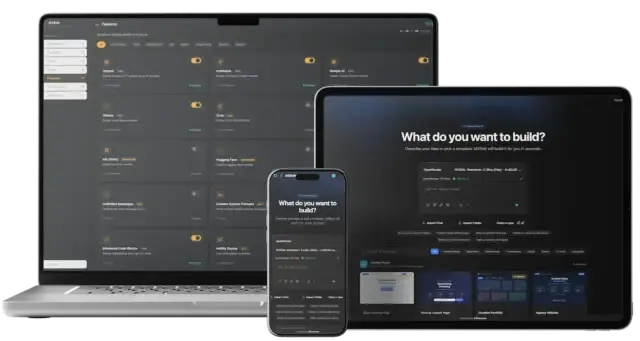
White Label Creator Monetization Platform Features for Every Role
This is the platform underneath the creator monetization clones: one codebase that lets a fan, a creator and an operator each see a different product. Below, the feature set is grouped by the person who touches it, followed by the checks that keep a payments-heavy product operable and the limits of the base package.
Request a Live Demo →See PricingWhat Each Role Gets
Fans and creators sign in to the same app, and what they see follows their permissions and verification status. Operators work in a separate web console. Nobody installs a second product to change roles.
Fan
- Browse creator profiles and public pages
- Take a subscription plan, free or paid
- Unlock single posts, media and reels
- One-to-one and group chat, with paid media messages
- Send tips and virtual gifts from a wallet balance
- Watch public lives, request private ones, comment and like
- Pay for audio and video calls
- Buy products and services from a creator shop
Creator
- Creator tools appear once access is enabled on the account
- Post, publish stories and reels, lock content behind an unlock price
- Offer free, basic, VIP or custom-named subscription tiers
- Keep media in a vault to reuse in posts and paid messages
- Message in bulk with lists, templates and scheduled sends
- Run public or private lives and price audio or video calls
- Sell through a shop, campaigns and shoutout requests
- Read earnings and content statistics, then request a withdrawal
Operator
- One review queue for creator, business and age-related verification
- Moderation queues, content reports and takedown workflows
- Blocked users, restrictions and abuse signals in one place
- Gateway credentials, wallet funding and subscription settings
- Commission rules across every paid action
- Withdrawal requests, payout status and reconciliation
- Feature flags, mandatory or optional app updates and per-market rules
- Logo, colors, domain, CMS pages and analytics as settings
The operator column is what makes the rest of the product sellable. Where a platform stands between creators and their income, the review queues and the payout controls are part of running it, not extras added once the audience arrives.
Rented Platform vs One-Time Script vs Miracuves Platform
Three ways to put a creator product in front of fans. A monthly fee often bundles hosting, delivery and licensing, so weigh a one-time software cost against a recurring one and do not read it as a lower or higher total.
| What you are comparing | Rented or hosted platform | One-time script | Miracuves platform |
|---|---|---|---|
| How you pay | Roughly $49 to $499 a month on published tools, plus per-subscriber fees | Roughly $250 to $1,500 for published scripts; code-marketplace listings start under $10 and top out near $600 | $3,699 once, with hosting and provider accounts as your own costs |
| Apps | Whatever the vendor publishes | Cheaper tiers often ship web-view apps rather than native ones | A unified Android and iOS app, a web app and PWA, and an admin panel |
| Source code | Stays with the vendor | Some vendors withhold it from every published tier | Handed over in full: backend, APIs, apps, web and admin |
| Ways to earn | Set by the vendor's plan | Often subscriptions and tips, with the rest to be added | 30+ paths from subscriptions and unlocks to calls, shop and AI personas |
| Verification and moderation | The vendor's rules and the vendor's tools | Frequently thin, so check before buying | Verification queue, moderation queues, reports, takedowns and appeals as working workflows |
| Live and calls | Depends on the plan | Uncommon in cheaper tiers | Public and private lives plus per-minute calls through one wallet |
| Who holds the relationship | Shared with the vendor's account and terms | You, on your own hosting | You: your domain, merchant accounts, storage and database |
| Change of direction | Limited to the vendor's roadmap | Possible if the code is readable | Any team can extend it, since the code is yours |
Hosted tools fit a creator who wants to start this week and accepts another company's rules. That is a reasonable choice, though it is not the operator this page speaks to. If you want the ledger, the policy and the code in your hands, the last column is the one that matters.
One Creator, Traced From Sign-Up to Payout
Follow a single account through the gates the platform enforces and the records it writes along the way.
An ordinary account turns on creator tools
Sign-up runs through email, social login or phone OTP, with 2FA where you enable it. Creator features switch on through profile setup, verification status and the rules you define, so a fan who wants to publish does not leave the app or start again.
Verification is reviewed before the money starts
Identity and business verification, creator approval and age-related steps arrive in one review queue, alongside the status returned by any provider you connect. Placing this ahead of monetization keeps a later payment review simple to answer.
The creator writes the price list
Plans and tiers, unlock prices, message prices, call rates and shop listings are set by the creator. You set the commission that applies on top, so the number a fan sees is the creator's and the split is yours.
Fans spend from a balance or pay directly
A plan renews, a locked item unlocks, a message opens, a gift lands during a live, a call is booked, a product ships. Wallet funding sits behind these actions so a fan is not asked for card details before every small purchase.
Content meets access rules and moderation
Uploads are validated, stored, checked and tied to their access rules before anyone can view them. Reports, restrictions and takedowns then move through queues your staff work, with the outcome recorded against the item.
Every paid action writes its own record
Subscriptions, unlocks, tips, gifts, products, live access, calls and AI usage each create a transaction record and update the fan's entitlements in the same step. That single rule is what lets you explain any balance later.
The creator asks, the operator settles
Earnings collect in the creator's balance, a withdrawal request is raised, and your team reviews it with payout status and transaction history beside it. How often you release funds, and above what minimum, is your policy to set.
Steps two and six are the ones to test in a demo. They are the parts a payment reviewer or a disputing creator is most likely to probe, and they are hard to graft on after launch.
Why Each Capability Is in the Base
Nothing here is decoration. Each item answers a specific problem operators run into once real creators and real money are involved.
| Capability | The problem it addresses |
|---|---|
| A single app with two roles | Creators tend to emerge from the fan base. A second download between the two is friction you can avoid by design. |
| A verification queue | Someone must decide who may earn. A queue with recorded outcomes gives you an answer when that decision is questioned. |
| Business verification alongside individual | Creators who trade through a company raise different questions from individuals, and keeping the two apart makes payouts easier to defend. |
| Age-related workflows | Rules differ by market and are moving. Having the workflow in place beats retrofitting it onto an audience already inside. |
| Geo-blocking | What one territory permits another may not. Turning a region off protects the rest of your operation when rules change. |
| Moderation queues with takedowns | Reports arrive continuously. A queue leaves a record of each decision, where a lone delete action leaves nothing. |
| Creator-set pricing | Creators know their own audience. Letting them set the number keeps one of the main reasons they choose to build on your platform. |
| Paid messages and paid calls | One-to-one contact is where many fans spend the most, and a product that sells only to crowds leaves that revenue unbuilt. |
| Tipping inside a live room | Impulse spending happens in the moment. A tip that requires leaving the stream is easy to abandon. |
| Withdrawal and payout controls | Balances, requests and statuses have to reconcile. Tracked payouts beat rebuilding them from bank statements. |
A large share of this list is governance rather than product. For a business that handles other people's income and media, that balance is appropriate, and a feature list with no governance in it deserves a question.
The Technology Under the Feature Set
Widely used components, chosen so that whoever maintains the platform after handover already knows most of it.
Why the record-keeping outweighs the feature count
Underneath the social surface, this is a payments product. Money arrives through many small channels, divides between creator and operator, sits in wallets and leaves as withdrawals. Each movement can later need explaining to a gateway, to a creator who disputes a figure, or to a regulator asking about a piece of content. The schema was designed so those questions have answers, and that matters more than the number of screens.
The whole codebase transfers to you at handover, ready to rebrand and to run on your servers.
What Is Not Included in the Base Package
The ready-made package ships everything above. The items below are either add-on modules, custom scope, or responsibilities that stay with you as the operator.
Add-ons, custom scope, and yours to own
- A payment relationship that approves youThe platform connects configurable gateways and produces the verification and moderation records a reviewer asks for. Approval, terms and any reserve are agreed between you and the provider, so open that conversation early.
- Creators, content and mediaNone is supplied. You recruit the creators and every piece of content belongs to them or to you.
- Age verification, consent records and content policyThe workflows exist. Deciding the policy and complying with the law wherever you operate is the operator's responsibility.
- Advanced add-on modulesAdvanced KYC and AML integrations, a creator agency module, an advanced moderation suite, payment routing by region, live commerce, deeper app customization, an advanced analytics dashboard and custom integrations are scoped separately.
- Provider accounts and keysYour gateways, streaming provider, storage, AI providers, SMS and push services are set up in your name and billed to you.
- App store acceptancePublishing support is included, while approval, and any content restrictions, rest with each store and can change.
- Legal workTerms, creator agreements and territory-specific content rules are yours to prepare with your own advisers.
- Hosting, storage and bandwidthThey run on your infrastructure and grow as creators publish.
- CertificationsISO 27001 and SOC 2 are not held and not claimed. The build is VAPT-ready in design, which is a different thing from a certificate.
This is an original codebase written by our own team, with no code, design or content taken from any creator subscription service, and no affiliation with one is implied. If a listed item is central to your plan, raise it on the first call.
Weigh the four kinds of provider before you sign
Nine questions to put to every seller, the delivery steps, the red flags, and the named clients running on this platform.
Frequently Asked Questions
Is the fan app separate from the creator app?
Which ways of earning are included?
What verification and moderation tools come with it?
Which payment gateways can I use?
Can creators earn while they are live?
How much of the platform can I change?
Review a creator, then release a payout
Those two flows in the demo tell you more than any feature list. Ask to see both with data in them.
Explore the White Label Creator Monetization Platform
See every role in the demo
Walk it as a fan, a creator and an operator. $3,699 one time, six days to deploy, and the complete source code handed over.
Talk to Us →Miracuves is an independent software development company. We are not affiliated with, connected to, sponsored by, or endorsed by OnlyFans, Fansly, LoyalFans, IsMyGirl, or any other creator subscription service.
“White label creator monetization platform” describes a category of product, not any one company. Brand names appear elsewhere on this site only to describe the kind of platform being built and the terms buyers search for.
The entire design and codebase is built by our own team. The product contains no code, design, graphics, or content originating from any third-party creator platform website or application.
No creators, content or media are supplied with the platform. Age verification, consent records, content policy, and compliance with the law wherever you operate are your responsibility as the operator. All third-party names and marks belong to their respective owners.