“A battle-tested matching engine, our brand, running inside a month.”“A Web3 family that finally shared one backbone, end to end.”“A battle-tested matching engine, our brand, running inside a month.”
A launch-ready astrology portal built the way the traffic actually arrives. Free kundali, guna milan matching, panchang, muhurta and horoscopes across twelve signs are the front door, generated by the platform rather than written by hand, and every one of them is an entry point into something priced.
Four surfaces share a Laravel and MySQL core: a JSON API behind both mobile apps, an operations back office made of 89 pages, a practitioner portal, and a reader-facing web portal. All of them read one 170 table schema, which is why free tools, content and the paid step behave as a single product, not three.
daily, weekly and yearly horoscopes, each its own page
6
Muhurta Purposes
auspicious timing, with panchang by geolocation
3
Paid PDF Tiers
the first thing a free-tool visitor ever pays for
The Free Half Is the Funnel
Kundali, matching, panchang, muhurta and horoscopes stay genuinely free, because they are the acquisition surface. What is priced sits one step further in, where the intent is already proven.
Eight Ways the Traffic Pays
Paid PDF reports, ten metered AI verticals, remedies, consultations, rituals, courses, gifts and practitioner boosting all draw on the same prepaid balance, so one visitor can pay in more than one way.
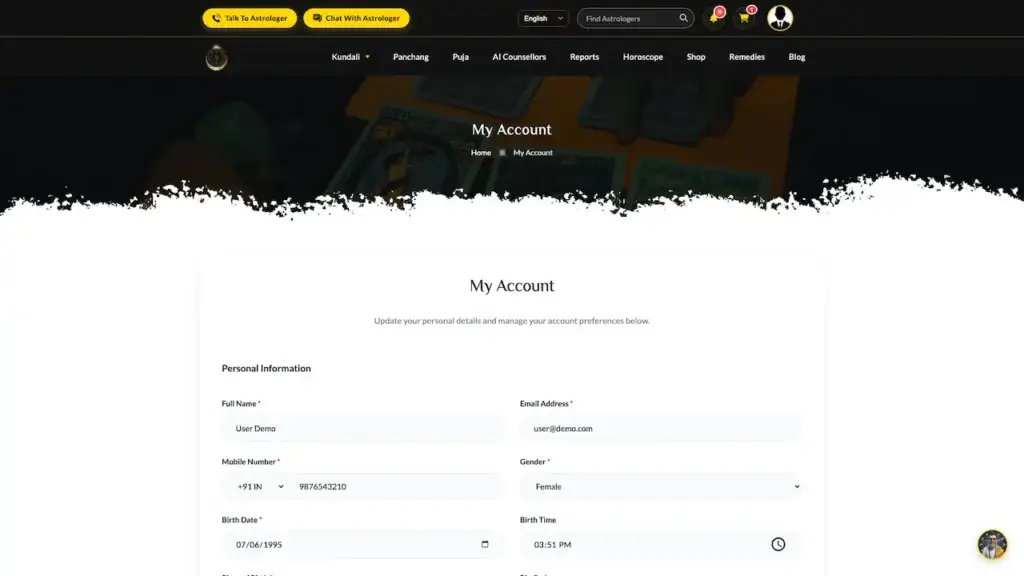
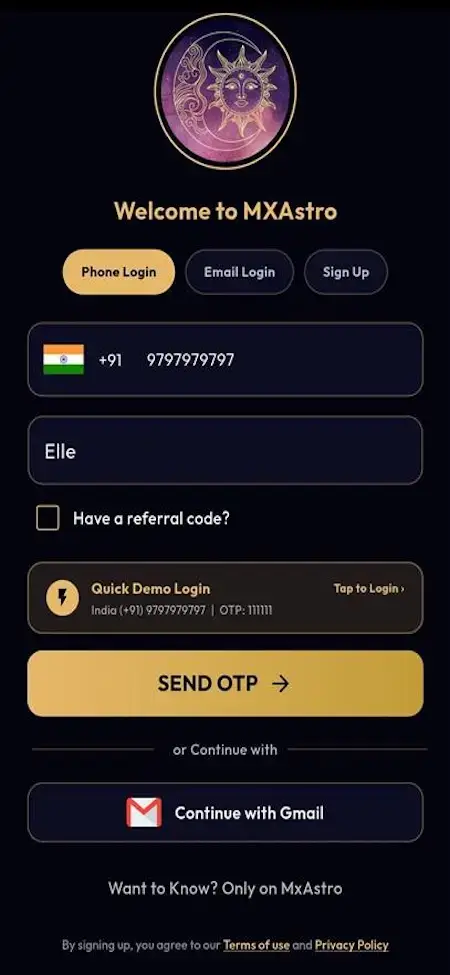
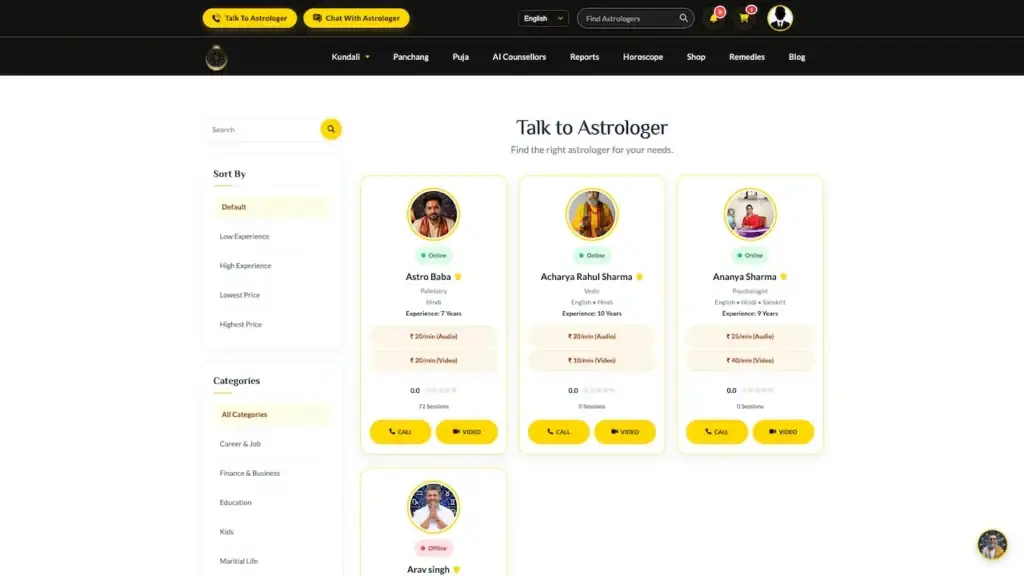
Try the platform hands-on. Each of the three roles has a seeded login, and every one of them is live. The demo that matters most here follows the funnel: create a free kundali at no cost, check what the platform puts in front of you afterward, then locate that same reader inside the operator console, where their chart history is recorded against them.
mxastro.mimeld.com
Live demo
READER EXPERIENCE
AstroSage Clone - Free Tools & Content
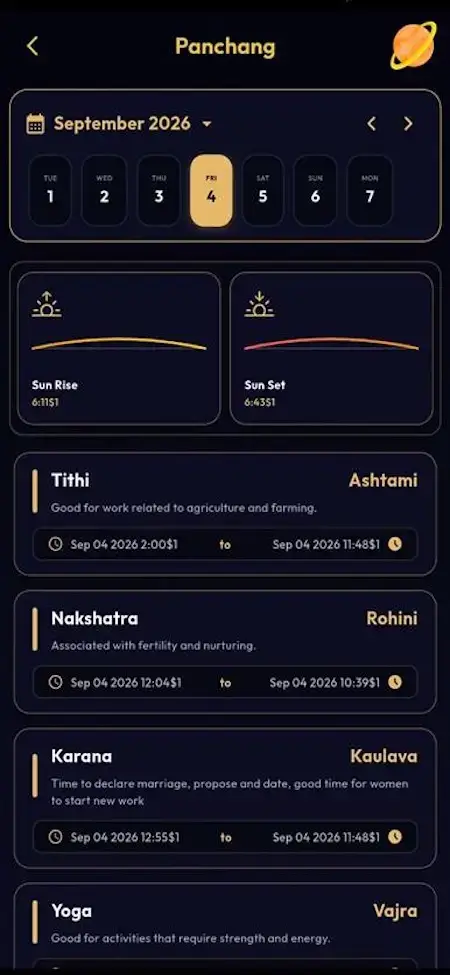
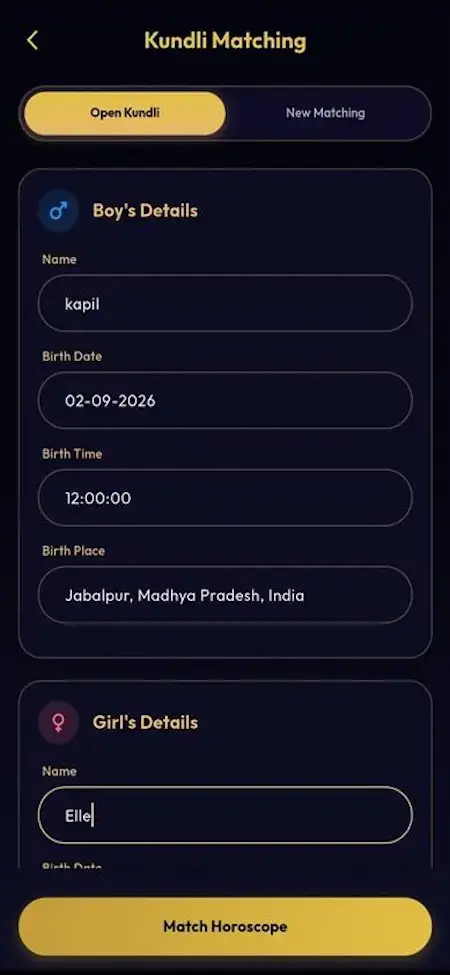
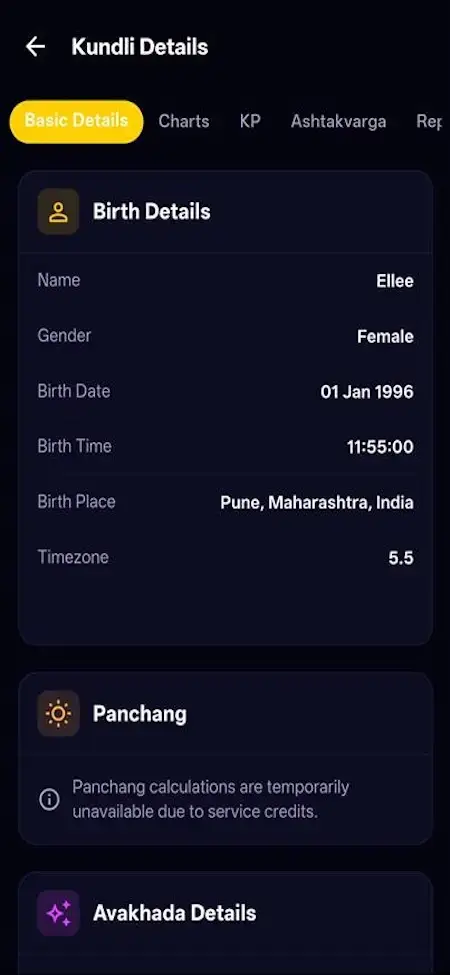
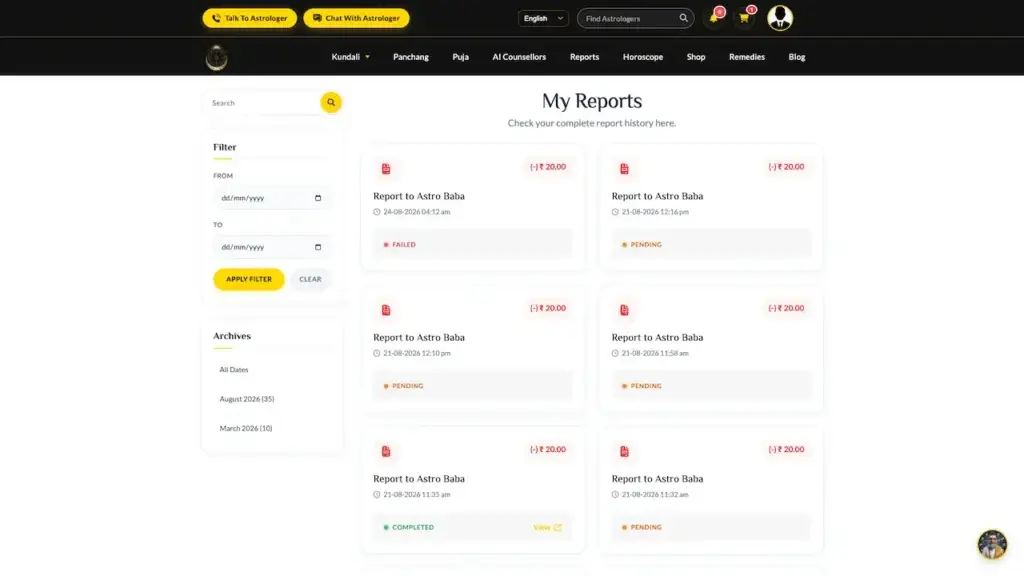
The acquisition surface. Free kundali with seven report sections, guna milan matching with match reports, panchang by geolocation, muhurta across six purposes, horoscopes for all twelve signs, and the blog, news and help-center content around them.
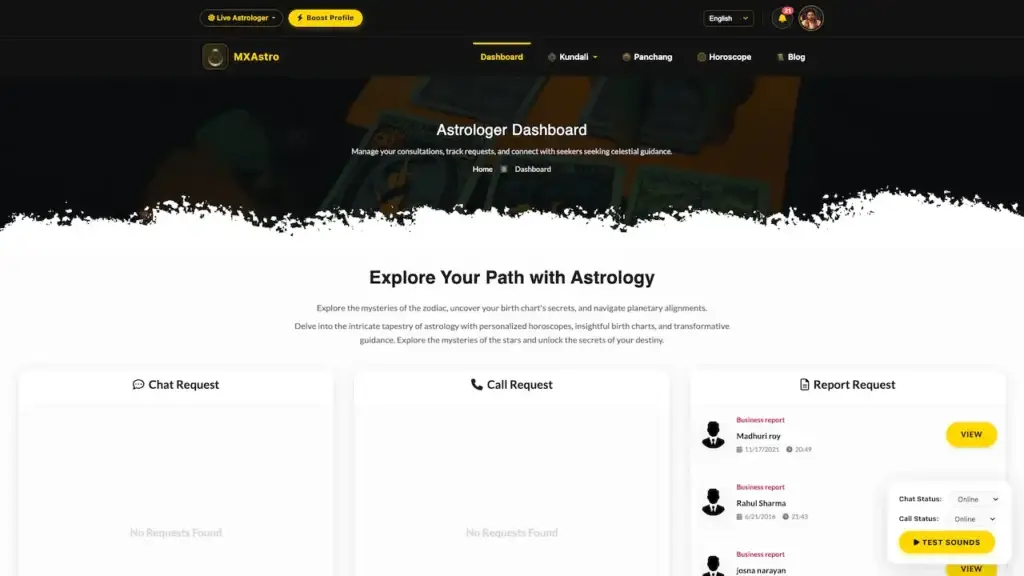
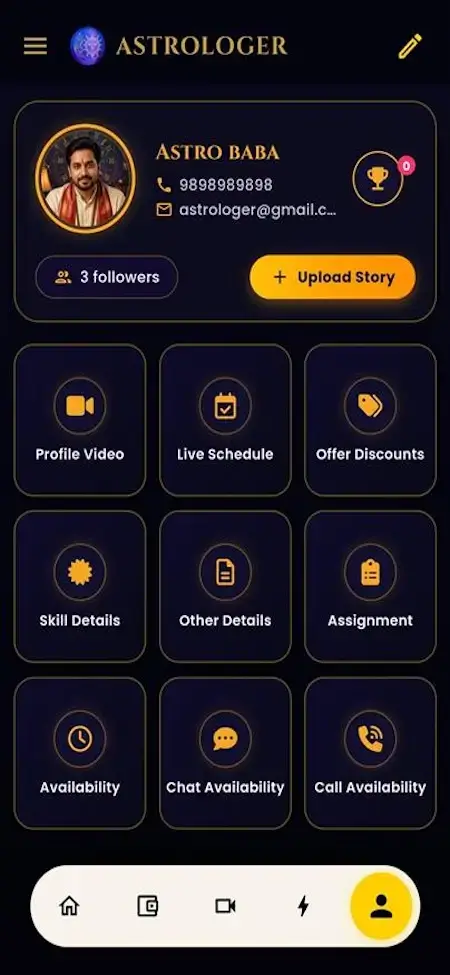
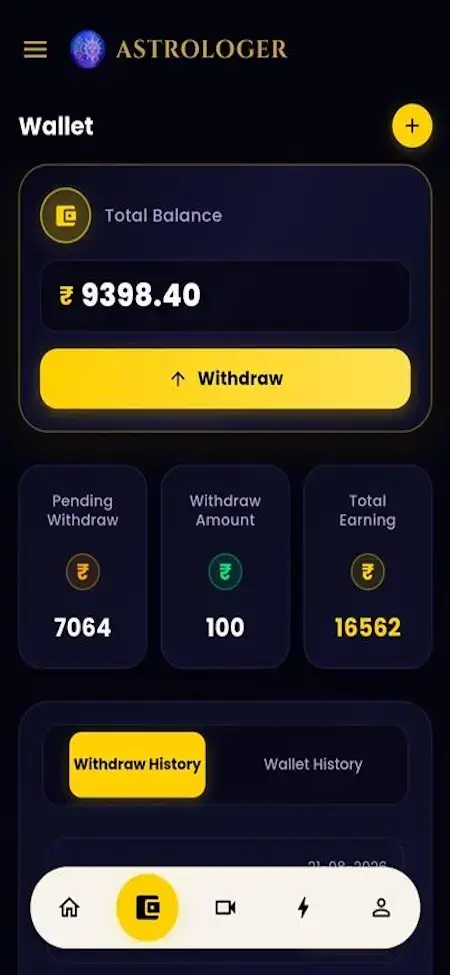
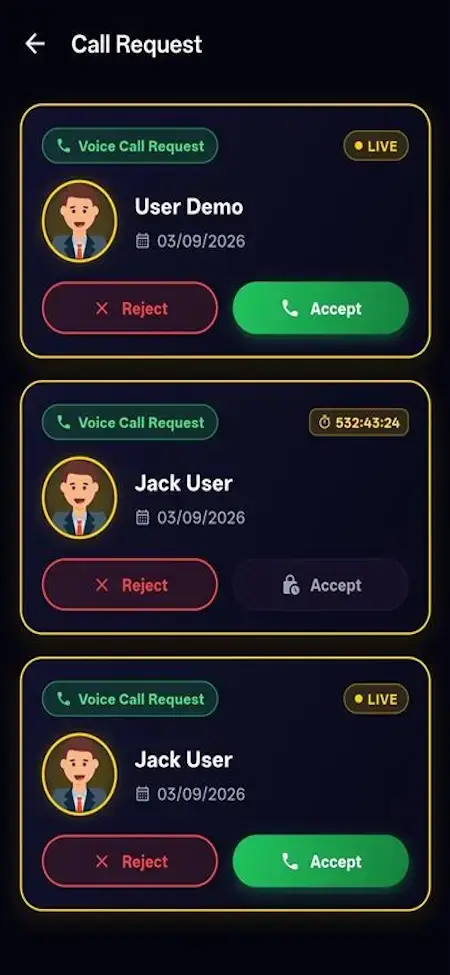
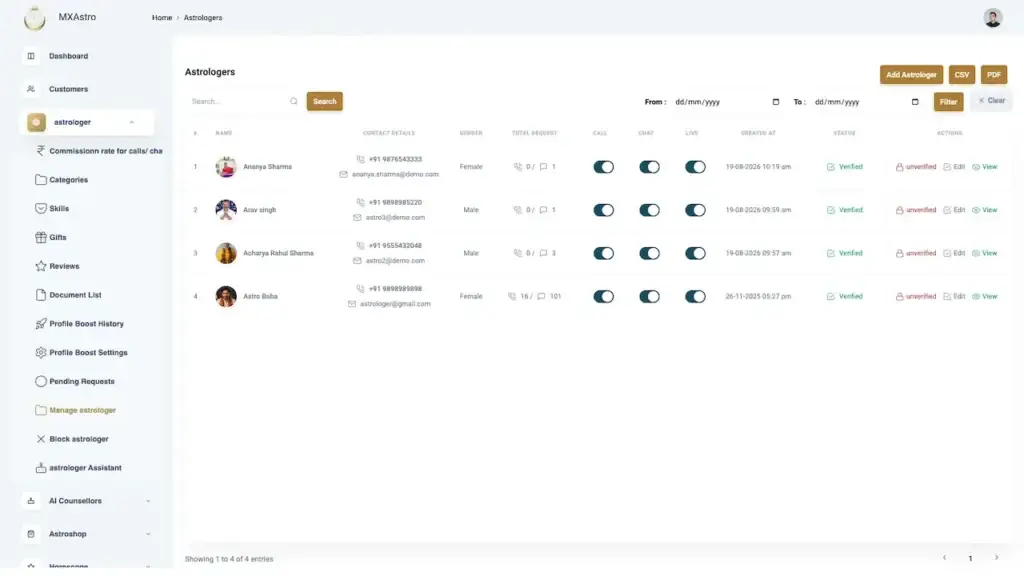
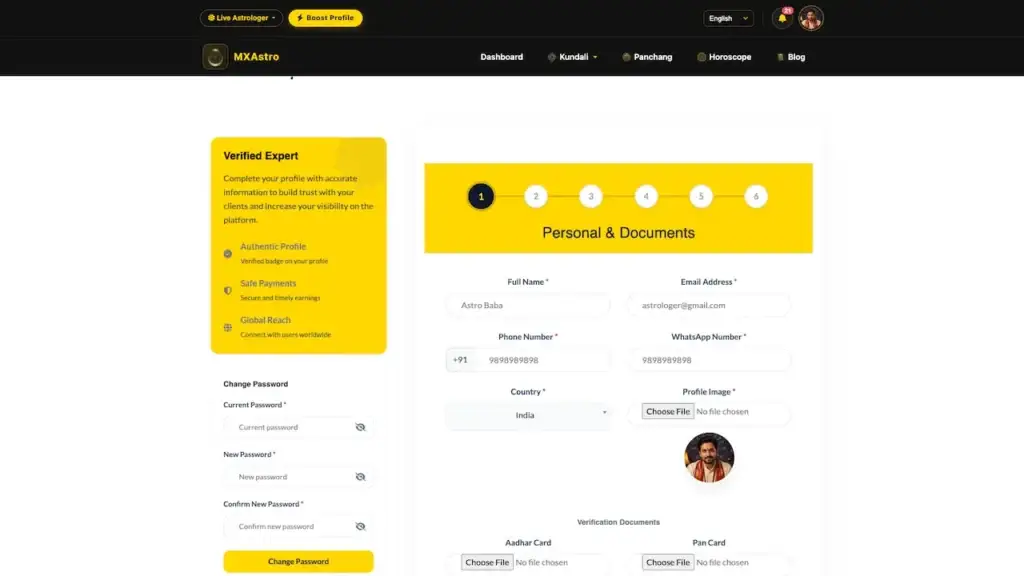
The supply surface, which on a content-led portal doubles as an authorship surface. KYC onboarding, availability and slot management, assistant sub-accounts with a permission matrix, profile boosting, and the stories and blogs practitioners publish under their own name.
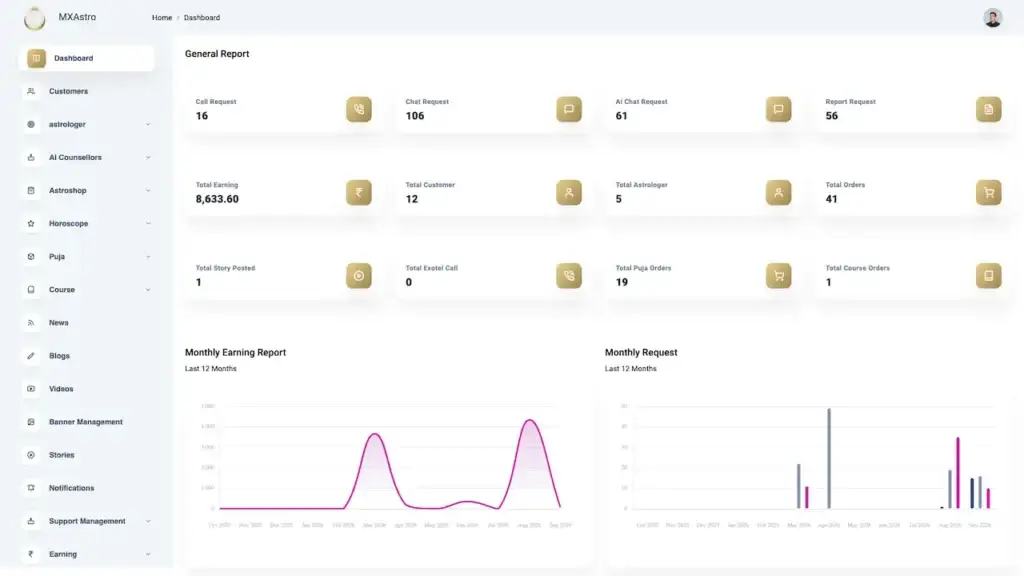
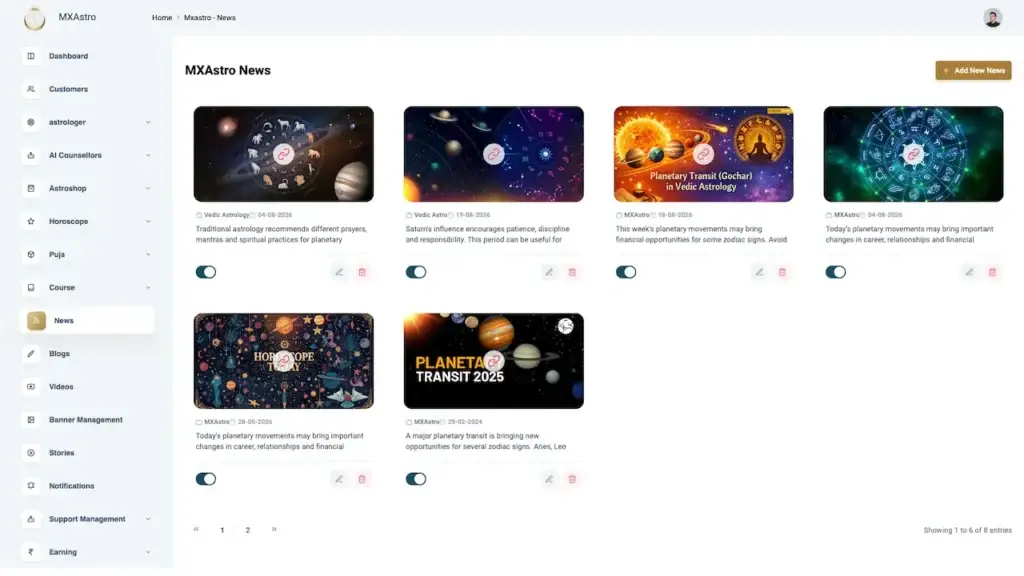
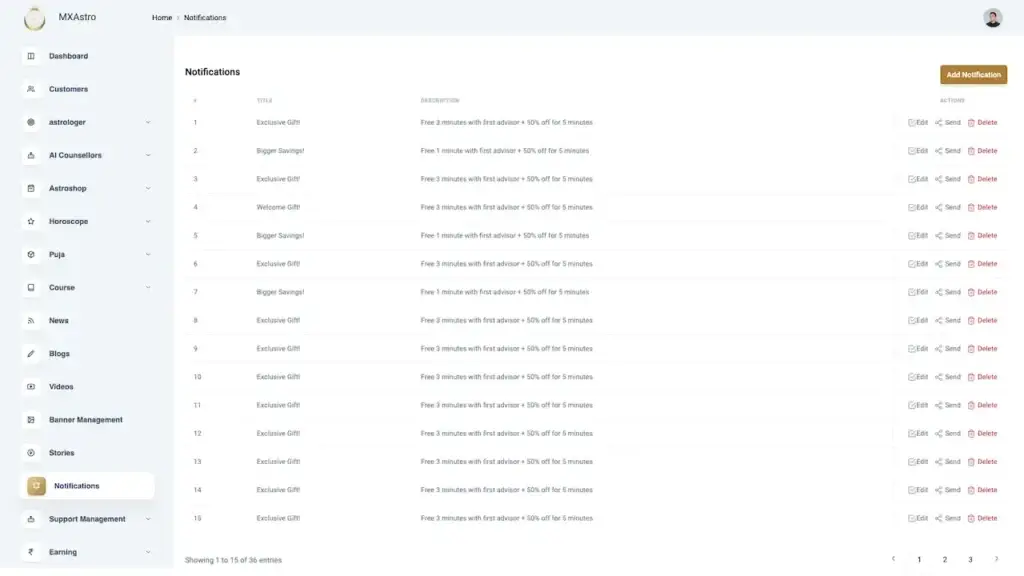
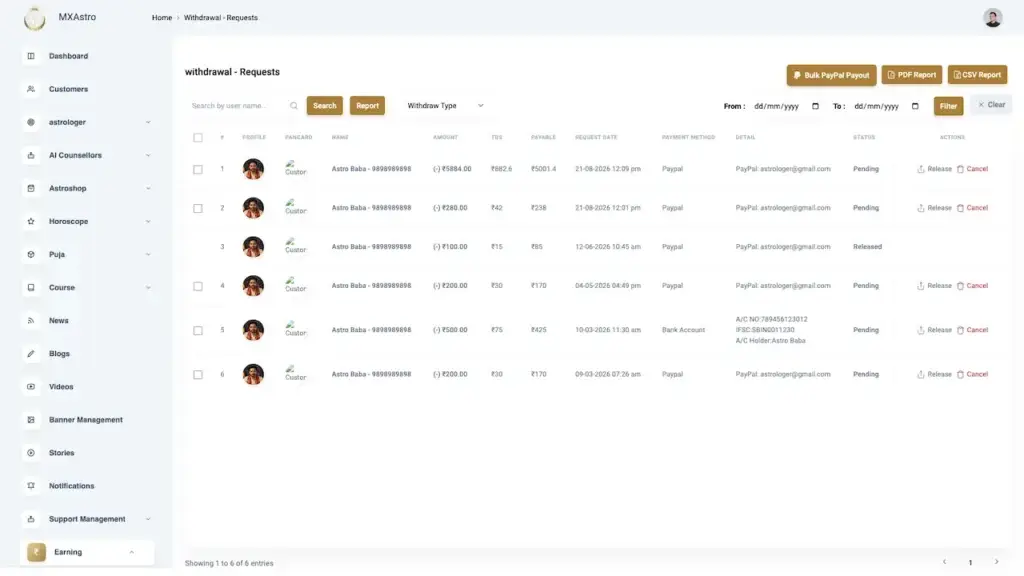
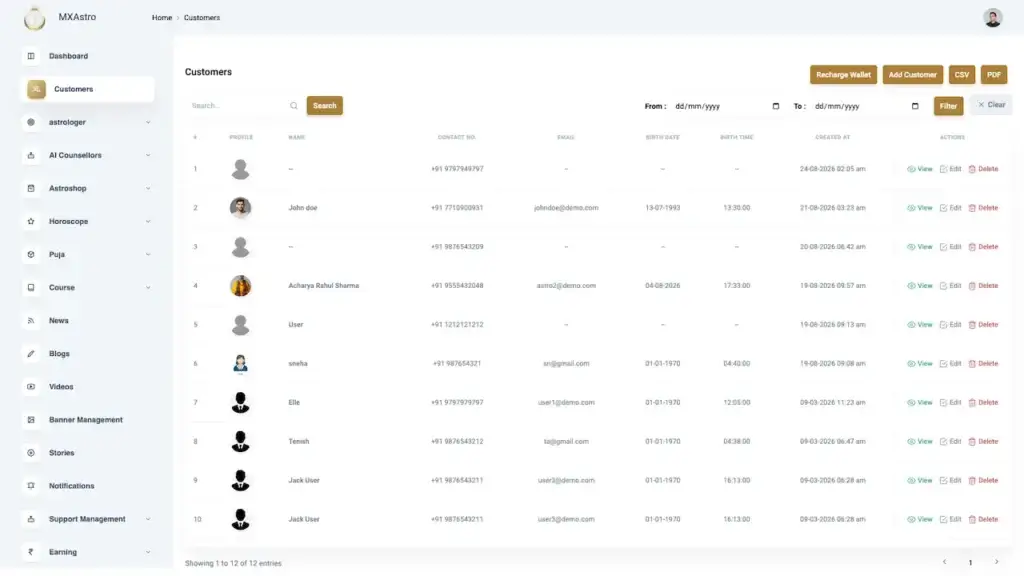
Operators manage the platform through 151 views across 89 admin pages. That covers the help-center tree, CMS pages served by a slug catch-all, website FAQs, reader analytics on the blog and news desks, a control plane of 298 flags, and the pricing screen that sets every paid surface.
1Open the admin console in your browser window
2Enter the operator login details given underneath
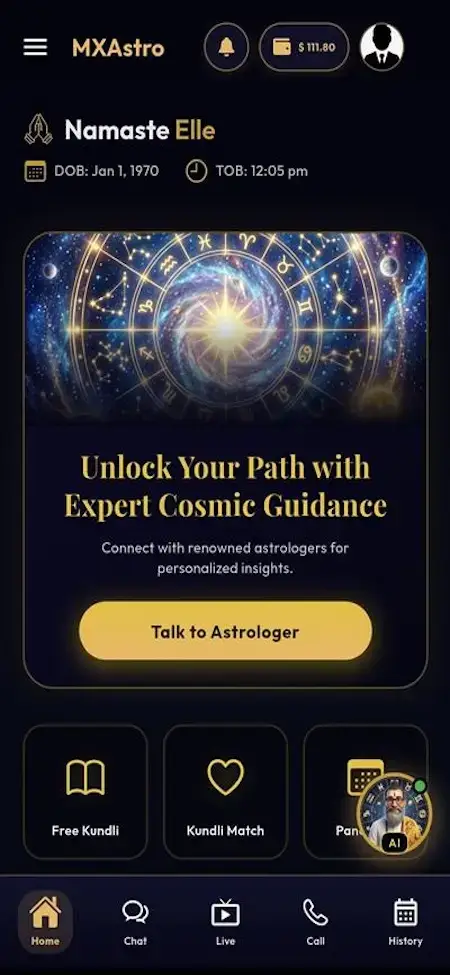
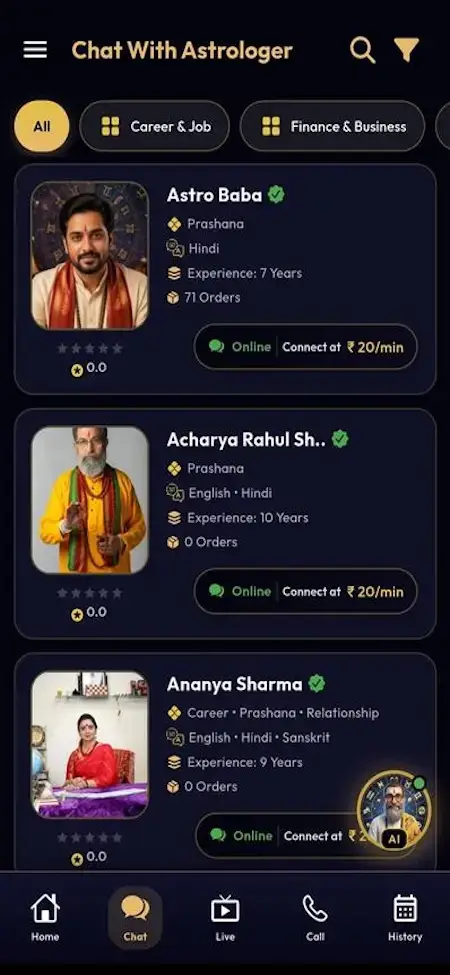
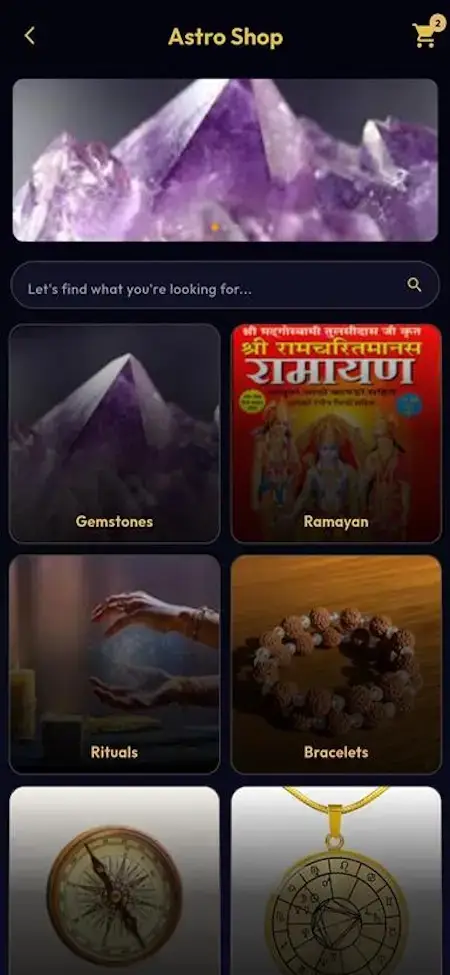
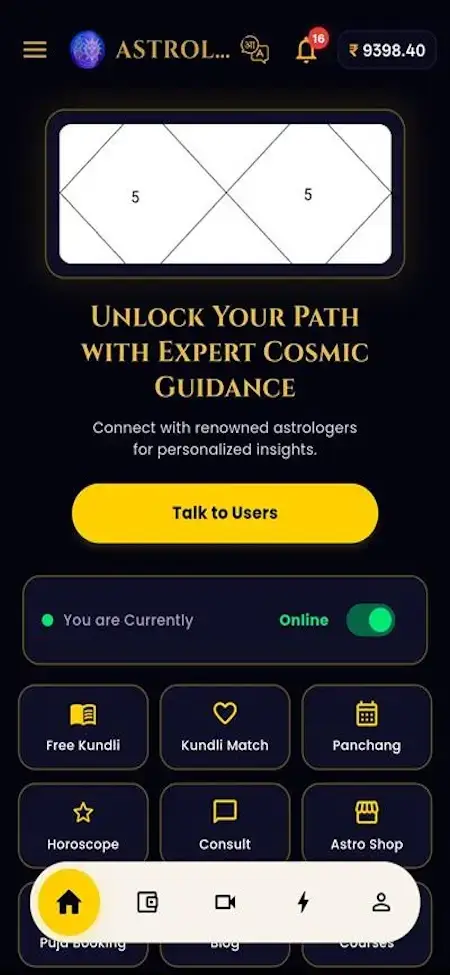
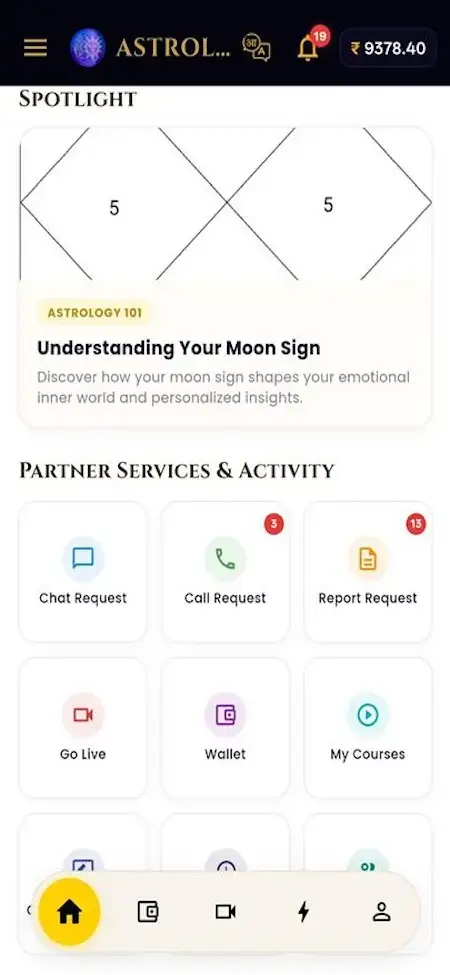
Two Android builds sit on the same JSON API. The reader app holds the free tools, horoscopes and paid reports; the practitioner app handles availability and earnings. Each one is listed separately in the stores under its own package name.
This tour shows the platform from the publisher's side instead of listing features one by one. It starts with a free kundali being generated, seven report sections and all, then hands that chart over to the paid PDF tiers, where money first changes hands. Next comes the content side: the help-center tree, the blog desk along with reader analytics, then a CMS page built on the slug catch-all, and the scheduler that produces daily, weekly and yearly horoscopes for twelve signs with nobody writing them by hand. The tour finishes at the pricing screen of the operator console, which sets each paid surface. Should a single flow interest you more than the tour, just say so, and we will pull it up live, with data loaded.
The interface across the surfaces that matter on a content-led portal: the kundali form and its seven-section report, guna milan matching with north and south chart styles, panchang resolved by geolocation, the muhurta finder across six purposes, the twelve per-sign horoscope pages, the tarot, numerology and vastu entry points, and the blog, news and help-center reading experience around all of it.
9 screens · scroll →
9 screens · scroll →
8 screens · scroll →
9 screens · scroll →
8 screens · scroll →
A reader starts with a free birth chart, moves to a paid PDF tier, and ends up in a metered AI reading. A practitioner submits KYC, publishes a story, and then shows up in the discovery grid. An operator begins with a blog post's reader analytics and finishes at the pricing screen that determines what the next step costs. Prefer a guided walkthrough of one particular flow? Schedule a call, and we will bring up the surface you care about, populated with live data.
What Miracuves Clients Say - Actual Platforms, Actual Outcomes
We have not yet deployed this astrology platform for a named client, so none of the quotes below is presented as an AstroSage Clone reference. They are approved quotes from operators who launched other Miracuves platforms: consultation booking, practitioner onboarding, content and community products.
CCharles EveillardManaging Partner, MyDocPharma
“Appointments, doctor profiles and consultations were all ready. What we needed on top was the pharmacy side: prescriptions flowing to fulfilment, and stock the clinics could actually see. That was the work, and it shipped in weeks.”
“I’m a dermatologist running three clinics. Every HMS I tried was built for general physicians — no lesion mapping, no before/after tracking, no procedure-based billing. I had looked at three different vendors before I spoke with Miracuves. Their MXHealth base gave us the patient app, doctor app, EMR and video consult out of the box — that probably saved 6+ months. They rebuilt the consultation form, lesion mapping, and a custom billing layer for our treatment packages (acne programs, hair restoration cycles) exactly how dermatologists actually work. Front-desk time on scheduling and follow-ups is down ~70%, no-shows are down, and we went fully digital in 9 months — a fully custom job would have been 18.”
EEric J. MorinCEO & Speaker, Tower Leadership
“Tower University is an online learning platform with a Netflix-style UX — courses as ‘shows’, recommended paths, and a polished streaming experience. The shape of the product is well-known, but the combination of LMS and OTT is genuinely hard to build. Miracuves’s MXFlix + MXLearn combination gave us the player, the catalog, the user progress tracking, and the quiz/assignment layer. We added our path-recommender, our cohort-management module, and a custom certificate engine. We launched in 12 weeks. Course completion rates are 2x what we used to see on our old platform, and learners actually come back to finish.”
AAnton Pascella BarbaroFounder, Same Place Wellness Ltd
“A privacy-first community app is a long road from scratch. Feed, events and the circle permission model came ready. They built our journal module with end-to-end encryption, the practitioner booking flow and a wellbeing widget. Retention is well above what we modelled.”
This is a modeled reference deployment: it shows how the shipped platform would be set up for a publisher that already has free-tool traffic that does not pay yet. It is an illustrative scenario, not a client engagement, and each figure describes a property of the platform instead of a reported outcome.
AstroSage CloneModeled Reference Deployment
India Free-Tool Astrology Portal
How the shipped platform is configured for a publisher whose traffic already arrives for free kundali and horoscope, and whose problem is that none of it currently pays.
Sample operator storyNo actual customer featured
IndiaRegion
Astrology Content, Free-Tool LedIndustry
7Kundali report sections
12Zodiac signs published
6 daysRollout calendar
01⚡ Challenges
Enormous free-tool traffic arriving on pages that ask nothing of it
Horoscope and panchang content produced by hand every single day
No priced step between a free birth chart and a paid consultation
02🎯 Goal
Publish the whole free astrology stack from one operator console
Generate horoscopes on a scheduler instead of writing them daily
Put a priced PDF between the free chart and the paid consultation
03🛠 Engineered for you by Miracuves
Free kundali with seven report sections and guna milan matching
Paid kundali PDFs in three tiers as the first thing anyone buys
Daily, weekly and yearly horoscopes generated across twelve signs
Blogs with reader analytics, news, CMS pages and a help-center tree
A prepaid wallet waiting at the end of the funnel, not at the start
The section below is a modeled reference deployment, not a client engagement. It shows how the shipped platform could be configured for this market, based on platform properties rather than reported results.Named client deployments are published separately · Real engagements, along with the figures each reported, are listed in the Miracuves portfolio.
Model this against your own trafficSee how the free tools, the content stack and the paid step are configured end to end.
An AstroSage Clone is a ready-made astrology portal built around the free tools people actually search for. A visitor arrives for a birth chart, a matching report, today's panchang or their sign's horoscope, and the platform generates all of it without asking for money. What sits behind that front door is the priced half: kundali PDFs in three tiers, ten wallet-metered AI verticals, a remedy marketplace, and practitioners available by chat, call or live stream when the reader wants a human answer.
Not a Blog With a Calculator
The tools are not widgets bolted onto a content site. Charts, matching, panchang, muhurta and horoscopes are engines in the same schema as the wallet, so the step from a free report to a paid one needs no integration.
Not a Property Rental Product
Delivery includes the source code, the migrations and the 170 table schema. There is no per-seat fee and no dependence on a vendor roadmap, and the database is plain MySQL, which any Laravel team can staff for.
Plain Talk on Launch Status
Security is handled as a documented gate before production. Five of the twenty-five modules specified for the CRM add-on are built, and server-side verification exists on three of the twenty gateways today. We state all of this up front so none of it surprises you later.
Built for Web, Mobile & API
What Does an AstroSage Clone Script Mean?
The script is the source code underneath: a Laravel 10 application running on MySQL 8. It contains 133 models and 179 controllers over 170 database tables. On top sit a Blade reader portal spanning roughly 191 website routes, its own practitioner portal, a JSON API with roughly 363 routes used by both mobile apps, and a back office for operations with 89 menu pages spread over 151 views. Ownership is complete, and it goes live under your own branding.
01Free kundali with seven report sections
02Guna milan matching with north and south chart styles
03Panchang by geolocation and muhurta across six purposes
04Horoscopes generated on a scheduler for twelve signs
05Blogs with reader analytics, news, CMS and a help-center tree
Put simply, this is a shortcut to launching an astrology destination that does not depend on writing content every morning. The scheduler generates the daily, weekly and yearly horoscopes across twelve signs, the chart engines answer on demand, and the blog, news, CMS and help-center desks give the operator somewhere to build the organic surface that brings the readers in.
Everything Included
AstroSage Clone Features - Free Tools, Content, AI Reports & Staff Oversight
Everything listed below is already built and can be shown in the live demo. If a feature depends on a third-party account or is only partly implemented, we say so next to that feature instead of glossing over it.
01
Feature 01 / 12
The Kundali Is the Front Door
Seven report sections generated free, in north or south chart style, because this is the page organic search actually lands on. Everything priced sits one step beyond it rather than in front of it.
Free kundali report in seven sections
North and south chart styles
02
Feature 02 / 12
Three PDF Tiers Above Free
The same chart sold as a downloadable report at three price points. It is the smallest possible first purchase, which is exactly what a free-tool visitor is willing to make.
Three tiers of paid PDF reports
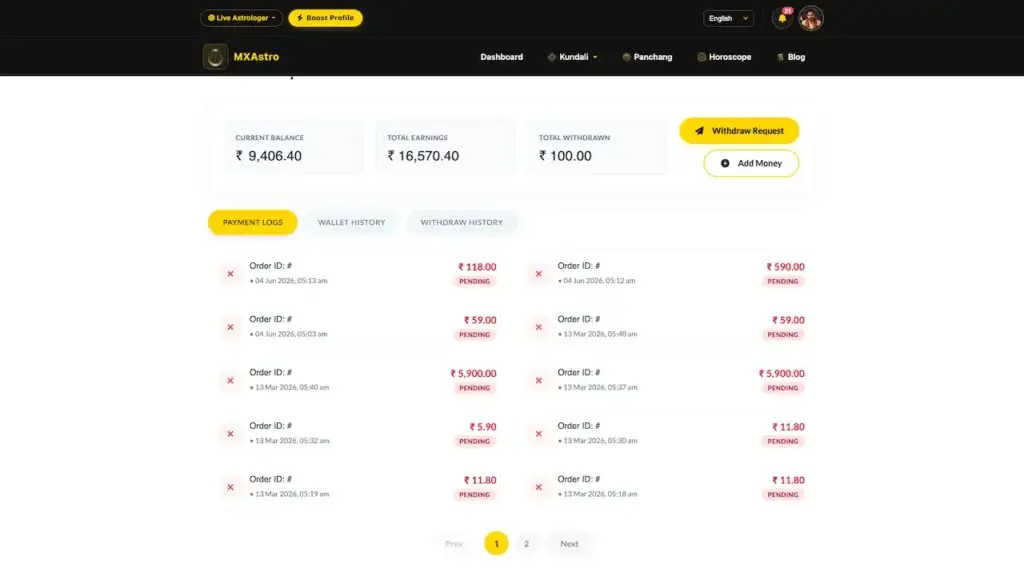
Wallet that runs in amount or coin mode
Twenty payment gateway configurations
03
Feature 03 / 12
Horoscopes Without a Writer
Daily, weekly and yearly horoscopes generated on the scheduler across all twelve signs, each with its own page. The organic surface grows without a content team producing it every morning.
Daily, weekly and yearly horoscopes
Catalog of twelve signs, each with its own page
Generated on the scheduler, not written by hand
04
Feature 04 / 12
Matching as a Second Entry Point
Guna milan with full match reports draws a different search intent than the birth chart does, and it arrives with two people attached to it rather than one.
Guna milan compatibility matching plus match reports
05
Feature 05 / 12
Panchang and Muhurta by Occasion
Panchang resolved against the reader's location and a muhurta finder across six purposes, which is recurring-visit content rather than one-time content.
Panchang resolved by geolocation
Muhurta finder across six purposes
Planetary transit analysis
06
Feature 06 / 12
A Real Content Stack
Blogs with reader analytics, a news desk, CMS pages on a slug catch-all, website FAQs and a help-center tree with chat handoff. The SEO surface is a product area, not an afterthought.
Blogs with reader analytics
News desk and CMS pages on a slug catch-all
Website FAQs and a help-center tree
Email templates and training videos
07
Feature 07 / 12
Practitioners Who Publish
Stories and blogs authored by practitioners under their own name, feeding the discovery grid. Supply becomes a content engine rather than only a listing.
Practitioner stories and blogs
Author profiles feeding the discovery grid
Two-sided reviews with moderation
Paid profile boosting for visibility
08
Feature 08 / 12
Ten AI Modules With Meters
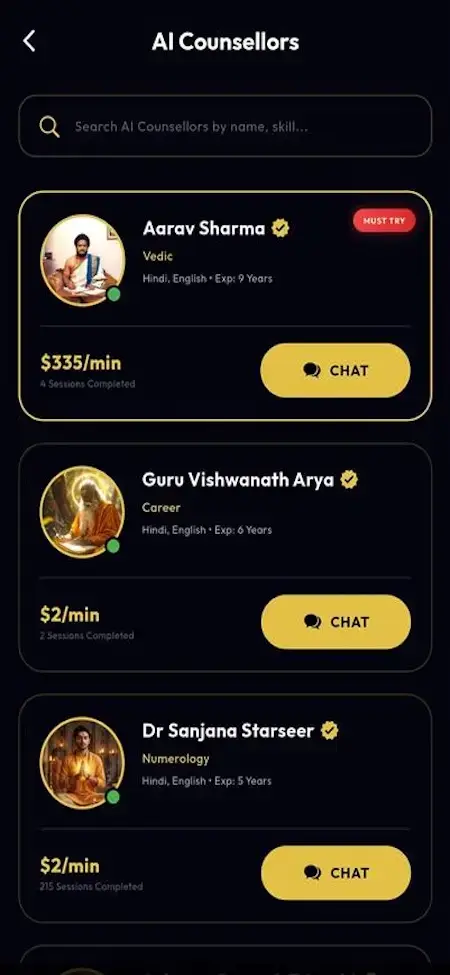
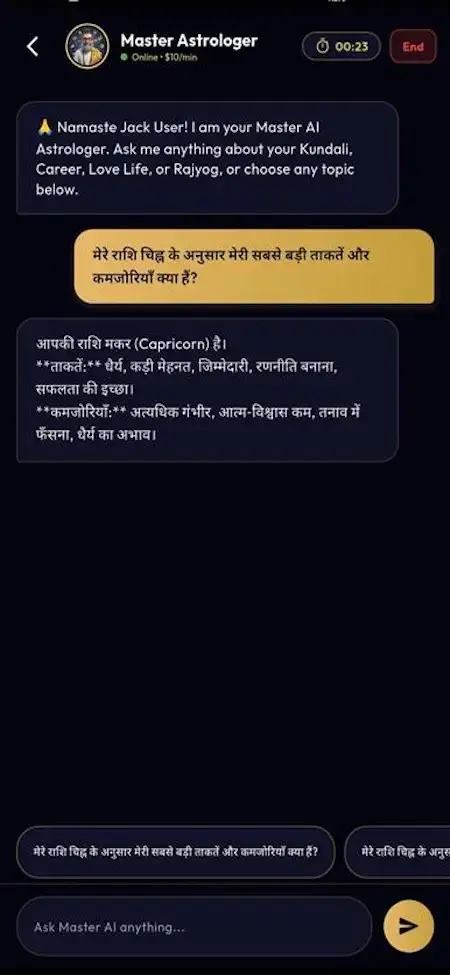
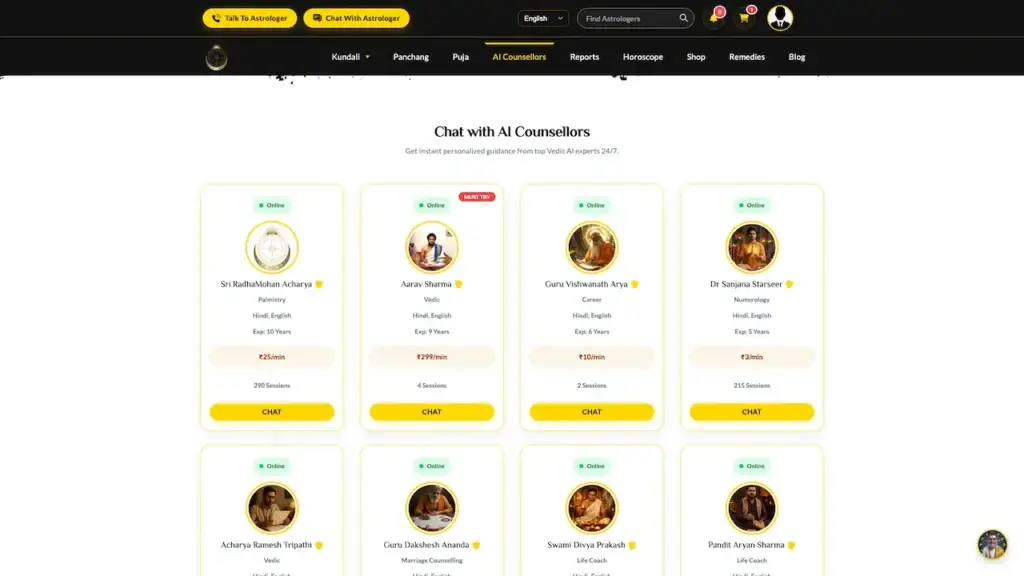
A master bot and counsellor personas, with tarot, numerology, vastu, vision reading, transit readings and paid Q&A, each one priced and switched independently, answering at hours no practitioner is online.
Ten wallet-metered AI verticals
AI counselors plus one master bot across the whole site
Paid question service routed to AI or a human
Saved AI conversation history, exportable as PDF
Tarot spreads drawn from a 78-card deck
Numerology across Chaldean and Pythagorean
Vastu compass across eight directions
Vision reading from an uploaded photo
09
Feature 09 / 12
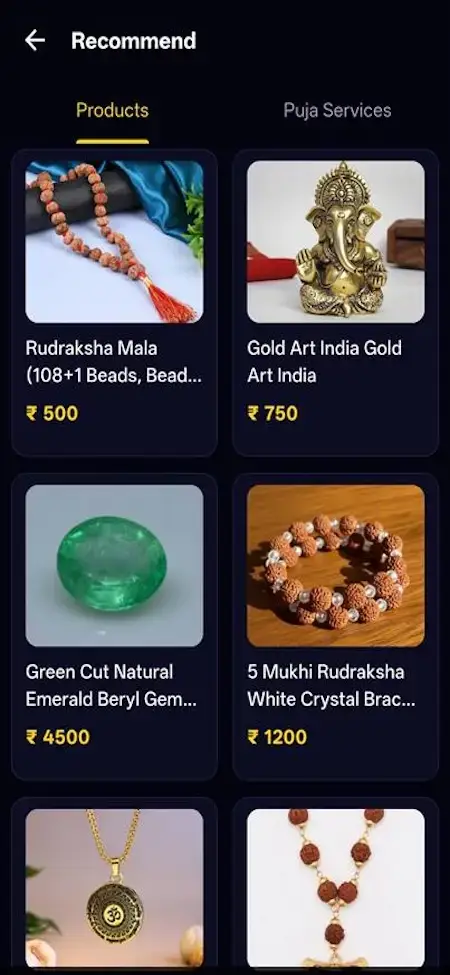
Remedies Close the Loop
The remedy engine maps weak planets and doshas to remedies, and the marketplace sells them with GST-aware checkout, so a diagnosis has somewhere to go.
Remedy engine that links each dosha to its remedies
Paid downloadable AI remedy reports
AstroMall product catalog and checkout that handles GST
Cart, address book and coupons
Order cancellation with wallet refund
Seven day return window
10
Feature 10 / 12
Consultation When Wanted
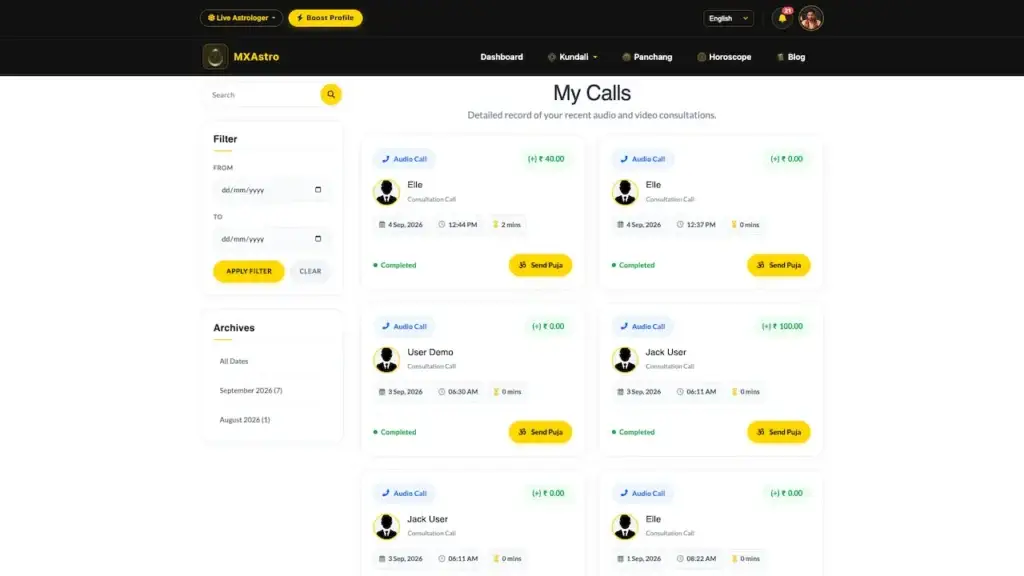
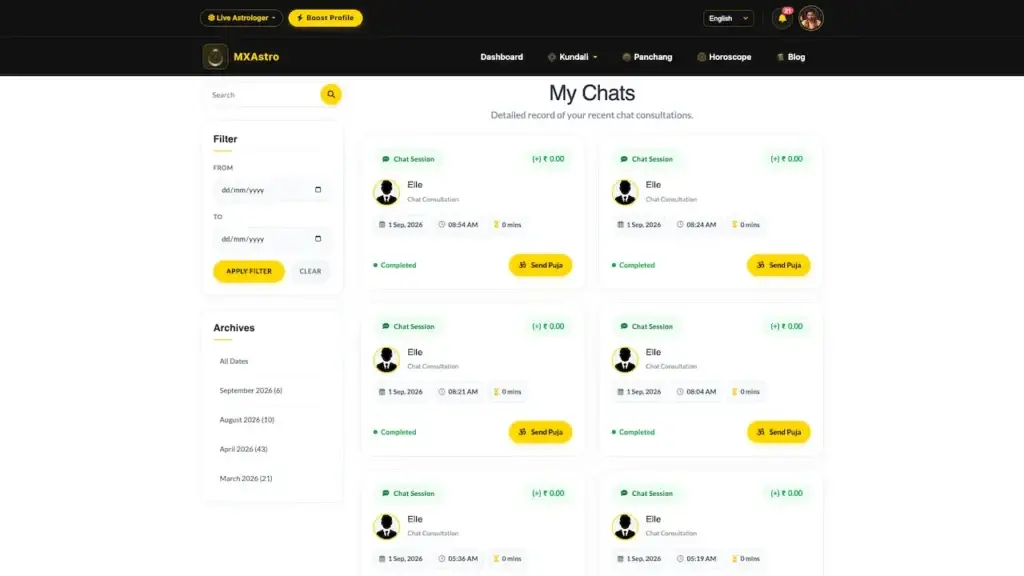
Per-minute chat, call and live streaming are present and can remain disabled behind section flags until the free surface attracts enough traffic to justify supply.
Per-minute chat, call and live when wanted
Top up mid-session and stay in the session
End-to-end encrypted messages
Scheduled appointments with reminders
11
Feature 11 / 12
298 Switches in 47 Sets
Section toggles, feature pricing, promo mechanics and vocabulary are all kept in the flag store, so what is free and what is paid is a decision you revisit weekly rather than a release.
47 groups holding 298 system flags
Feature pricing for every paid surface
Coupon codes, promotions and a first-free-chat offer
Referral rewards whose cap you can configure
Team roles with per-page grants
Data monitoring and block-keyword moderation
12
Feature 12 / 12
Terminology Can Be Swapped
The word astrologer is one replaceable token used in over forty routes and throughout the copy, which lets a single portal ship as a tarot, vastu or numerology destination without a fork.
143 languages seeded, 10 of them active in the apps
Dark mode and five app design sets
Reader and practitioner Android builds
Push through FCM and OneSignal
Buyers, take note:
The platform software arrives complete, but the operator supplies the accounts with outside services: Agora, Zego or 100ms once consultations are enabled; MSG91 for OTP; Google Maps for panchang geocoding; an account with OpenAI or OpenRouter powering the AI features; an astrology chart API driving the engines; push via FCM and OneSignal; and a merchant account for each payment gateway. Two points deserve emphasis. Server-side payment verification is implemented today for just three gateways - Tap, Sadad and PhonePe - and they act as the template for the rest and not as a claim that covers all twenty. Also, the enterprise CRM add-on ships five of its twenty-five specified modules, and the remaining twenty exist only as specification.
On a content-led portal the back office is mostly a publishing desk. Eighty-nine menu pages spread over 151 views, governed by team roles with per-page grants, with the blog, news, CMS and help-center surfaces sitting alongside the flag store that decides what is free and what is not.
Console Areas Covered
01
Pages and Content Tools
Blogs with reader analytics, a news desk, CMS pages on a slug catch-all, website FAQs, a help-center tree with chat handoff, email templates and training videos.
Blogs with reader analytics
News desk and CMS pages on a slug catch-all
Website FAQs and a help-center tree
Email templates and training videos
02
Per-Feature Fees
The kundali PDF tiers, every AI vertical, the paid question and the transit analysis are priced from one screen, so moving the line between free and paid is a form submission.
03
Switchboard for Flags
There are 298 flags in 47 groups, each with a typed input. Toggles for sections, promo mechanics, terminology and default commissions all live here, so launch setup seldom needs a developer.
Feature pricing for every paid surface
System flags: 298 of them, sorted into 47 groups
Section toggles for tools, AI and consultation
Team roles with per-page grants
04
Reader Management
Full reader records with chart, order, report and wallet history, manual wallet credit and debit, and PDF or CSV export of the reader list.
05
Practitioner Governance
KYC document review, a verification toggle gating public listing, blocking, profile boost history, earnings dashboards and the top-ten board.
06
Horoscope Generation
The scheduler produces daily, weekly and yearly horoscopes across the twelve sign catalog, so the largest recurring content job on the site runs without an editor.
07
Who Can Open What
Team roles carry per-page grants across all 89 pages, so an editor sees the blog desk while a finance member sees payouts, and neither can open the flag store.
08
Usage Tracking
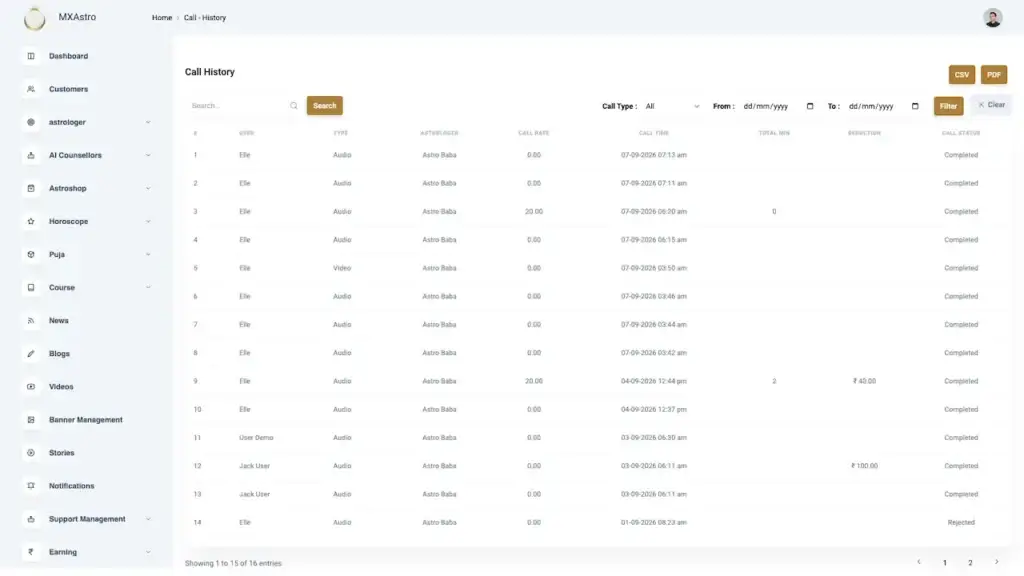
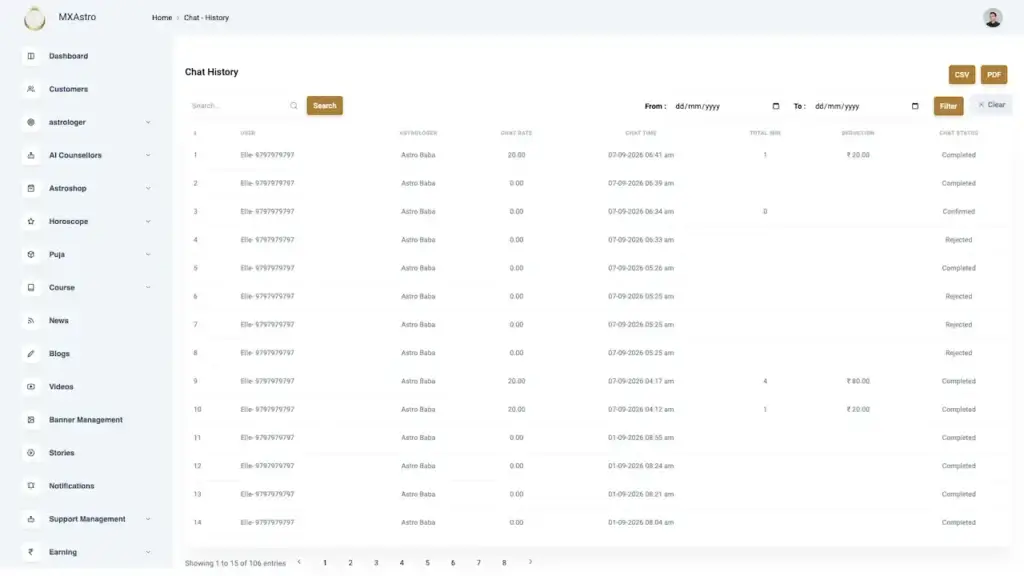
Every chat, call and message can be inspected and moderated by blocked keywords, which matters as soon as readers start talking to practitioners about money.
Commerce and Ritual Ops
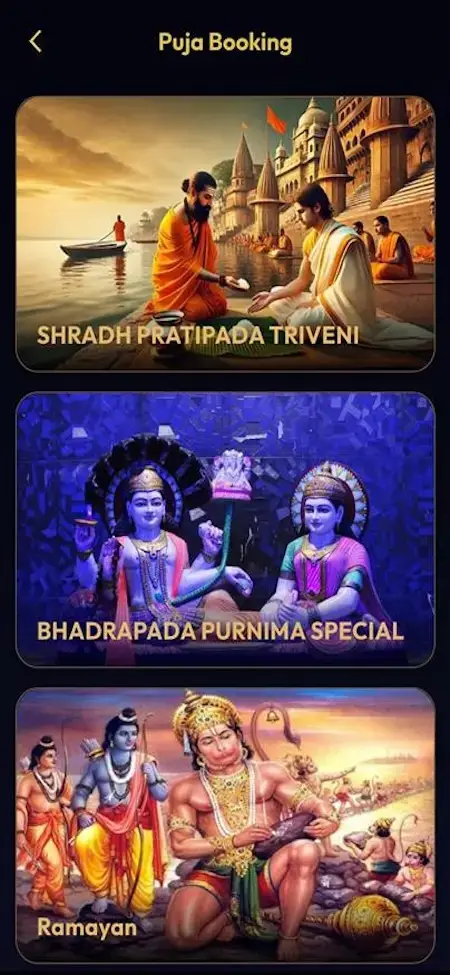
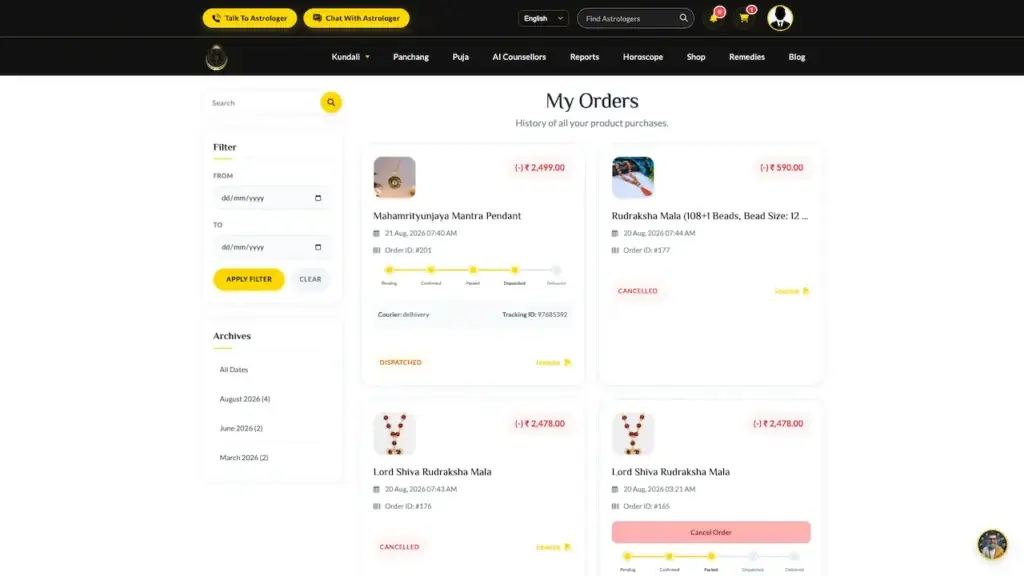
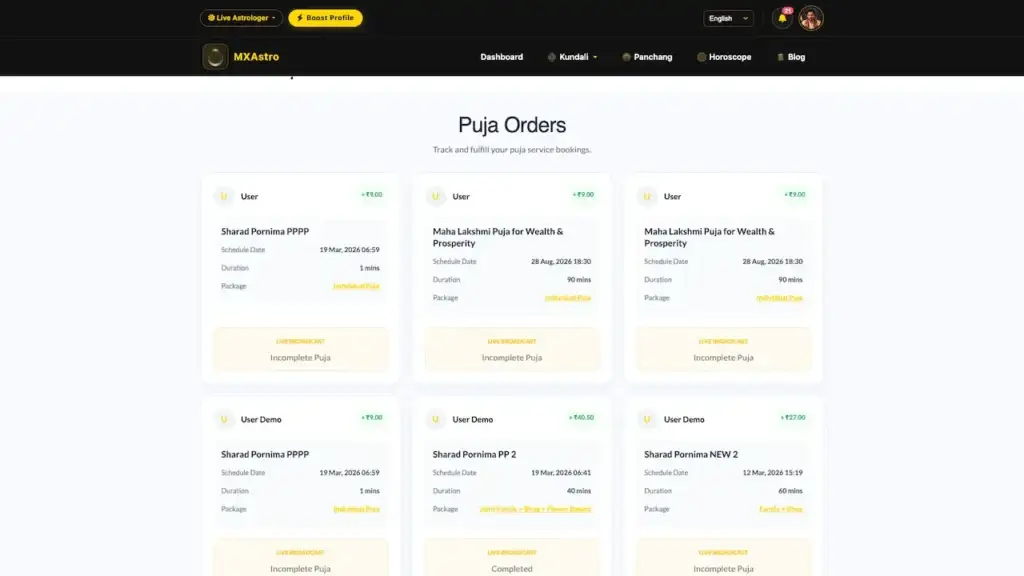
AstroMall categories and orders, puja packages with approval and reminder crons, plus refunds when a ritual has not started, and the commission settlement job.
Theming and App Look
The panel activates five design sets for home, call and chat screens, along with dark mode and color schemes, which means the app's look can change with no store release.
Want tighter permissions?
Every one of the 89 pages sits behind a team role with per-page grants, and the side menu rebuilds its own cache whenever those change, so an editor can be given the blog desk and nothing else. What is scoped rather than shipped is the trail behind those actions: the platform has no log of auth events or admin actions, so who edited a price or opened a reader record cannot be reconstructed later. We name it here rather than let a review find it.
Included in the Package - AstroSage Clone Source Code, Mobile Builds and Launch
Everything transfers outright, and on this configuration one thing in particular is worth owning: the boundary between the free surface and the priced one. That line is your conversion rate, and it should not live inside a product somebody else controls.
01
The Astrology Engine Set
Kundali across seven report sections in either chart style, guna milan with match reports, panchang by location, muhurta across six purposes, transit analysis and the twelve-sign horoscope generator.
Kundali engine returning seven report sections
North and south chart styles on the same data
Guna milan matching with full match reports
Transit analysis and the remedy engine
Panchang resolved against reader location
Muhurta across six distinct purposes
Twelve sign catalog with a page each
Daily, weekly and yearly regeneration
02
Three Paid Report Tiers
The same chart the reader just produced, packaged as a downloadable PDF at three price points. It is the shortest path from free traffic to a first transaction, and it needs nobody on the other side.
Downloadable report PDFs at three price points
Priced from the same screen as every paid surface
Sellable with no practitioner involved
The first transaction most readers ever make
Blog deskReader analyticsNews feedCMS pagesWebsite FAQsHelp center
03
The Content and CMS Stack
A blog desk with per-post reader analytics, a news feed, CMS pages on a slug catch-all, website FAQs and a help-center tree with chat handoff.
The Laravel application, both web portals and the JSON API, plus both Android builds - all yours to modify, rebrand and redeploy, free of license conditions.
IdentityCharts & reportsContentCommerceRitualFlag store
05
The Data Model Underneath
170 tables reached by migration, spanning identity, charts and reports, published content, commerce, ritual, learning, the prepaid balance and the flag store.
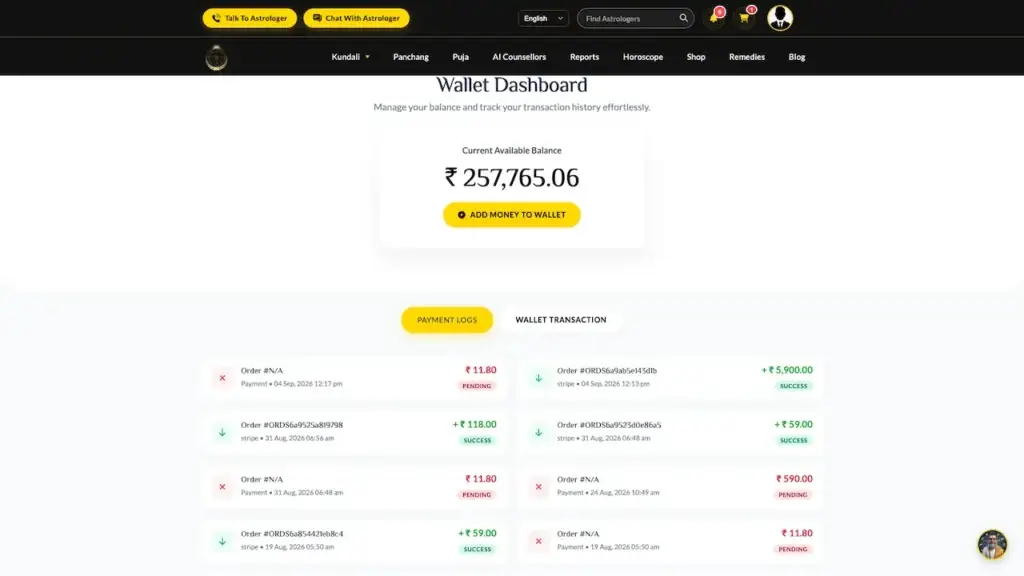
Prepaid balance with a balance-before/after ledger
Twenty gateway configurations across the regions
AstroMall checkout that understands GST
Commission and withholding for when supply arrives
06
Ten AI Modules
Counsellor personas, a master bot, tarot on 78 cards, numerology, vastu, vision reading, transit readings and a paid Q&A service, all behind a provider interface you can repoint.
A reader build carrying the free tools, the horoscopes and the paid reports, and a separate practitioner build, each against the same API with its own listing.
The schema reference and entity relationships, the API collection, handbooks for developers and for security, and a VAPT posture that maps to the OWASP Top 10. Procurement asks for these first.
Laravel 10 over MySQL 8 with Blade and Vite
170 tables, 179 controllers, 133 models
Eight scheduled tasks and six queue classes
Eleven documents including ERD, API and VAPT
Would you rather see it in action before you commit?
Use any of the three demo logins above, or book a walkthrough and we will take one chart the whole way: generate it free with its seven sections, sell the same chart as a paid PDF tier, run a metered AI reading against it, then publish a blog post and show you its reader analytics. All against the prices you are actually considering.
What Does an App Like AstroSage Cost to Build in 2026?
There is a single fixed price for the platform: $3,699. Only the portion of it you activate at launch differs. A portal opening with free tools together with paid report tiers needs one payment gateway plus a chart API, which is the lightest way in. Turning on the AI verticals adds a need for an OpenAI or OpenRouter key, and switching on consultations additionally calls for an RTC provider and MSG91 for OTP. The security hardening pass ahead of launch is scoped work we carry out with you. As part of delivery, both Android apps go live through a developer account on Google Play that you own; only the store review itself lies outside our control.
The platform suits operators who either already have astrology traffic that does not pay, or who intend to build that traffic before they build supply. If your problem is an audience with no priced step in it, this is the missing half.
Audience 01 / 06Astrology Content Publishers
Sites already ranking for kundli, horoscope and panchang queries whose entire monetization is advertising, and who need a priced step that does not damage the free experience.
01
MXAstroSits on a single product base
Audience 02 / 06Regional Media Houses
Publishers with an existing readership and brand trust, adding an astrology vertical that generates its own daily content rather than demanding more from the newsroom.
02
MXAstroOne shared product base underneath
Audience 03 / 06Free-Tool Operators
Teams running calculators and chart generators with real traffic and no product behind them, who need reports, AI readings and remedies sitting one step beyond the free output.
03
MXAstroSame base product as its siblings
Audience 04 / 06SEO-Led Founders
Operators whose plan is organic acquisition first and supply second, who need twelve per-sign pages, a blog desk with reader analytics and a CMS on a slug catch-all from day one.
04
MXAstroShared codebase underneath
Audience 05 / 06Adjacent Divination Verticals
Tarot, numerology and vastu destinations that need the same engine set and content stack under a different profession vocabulary, which in this build is one replaceable token.
05
MXAstroRuns on the shared product base
Audience 06 / 06Reseller Partners
Teams launching several branded portals, where changes to logos, app names, language, currency and section toggles turn every tenant into configuration, not a fork.
06
MXAstroShares its product base
Where it earns its place is that the free surface is generated rather than authored. The chart engines answer on demand and the scheduler writes the horoscopes, so a small team can hold a large organic footprint without a content department behind it.
Astrology search demand is enormous and mostly unmonetized, and the operators capturing it are the ones who put a small priced step next to a genuinely free tool rather than a paywall in front of it.
Swipe · 6
ToolsFree EnginesFree Engine Launch
Launch on the free engine set alone. Kundali, matching, panchang, muhurta and the twelve per-sign horoscope pages are the whole product on day one, with everything priced switched off behind section flags until the traffic justifies it.
01
ContentSEO SurfaceOrganic Content Surface
Build the organic surface deliberately. The blog desk with reader analytics, a news feed, CMS pages on a slug catch-all and a help-center tree are what turn a calculator into a destination people return to.
02
ReportsPaid PDFsPaid Report Tiers
Sell the report before you sell the session. Three paid PDF tiers against a chart the reader has already generated is the shortest distance between free traffic and first revenue, and it needs no practitioner supply at all.
03
AIMetered ReadingsAI Reading Coverage
Cover demand with AI rather than headcount. Ten wallet-metered verticals answer tarot, numerology, vastu, vision and transit questions at any hour, each priced independently, which suits a portal with far more readers than practitioners.
04
CommerceRemediesRemedy Commerce
Let diagnosis lead to purchase. The remedy engine maps weak planets and doshas to remedies and the marketplace sells them with GST-aware checkout, so the reading has a commercial destination.
05
ConsultationOptionalConsultation Later
Add consultation when supply is ready. Per-minute chat, call and live streaming with the wallet and commission engine sit behind flags, so the human layer switches on at the point the audience justifies it rather than at launch.
06
What turns these configurations into settings instead of forks is toggles per section, per-feature pricing and a swappable profession-title vocabulary. An operator can therefore shift from one to another with no migration.
Miracuves' AstroSage Clone is built as a free-tool astrology portal adaptable to any divination or advisory content vertical, monetized wherever you choose to draw the line, and white-labeled entirely under your brand.
12sectors one platformMXAstro
01ApAstrology Portals
02MpPublishers & Media Brands
03FtFree-Tool Operators
04SlSEO-Led Founders
05TnTarot & Numerology Sites
06TrTemple & Faith Groups
07SwWellness & Mindfulness
08MmCross-Region Operators
09RlLocal Lifestyle Apps
10LcCourse & Education Brands
11WlReseller Partners
12AbDev Studios & Agencies
The AstroSage Clone suits any operator whose audience arrives before their revenue does. Astrology content publishers monetize free-tool traffic that currently only sells advertising. Regional media houses add a vertical that generates its own daily content instead of demanding more from the newsroom. Free-tool operators put reports, AI readings and remedies one step beyond their calculators. SEO-led founders build twelve per-sign pages and a blog desk from day one. Tarot, numerology and vastu destinations reuse the same engine set under a different profession vocabulary. Temple and religious organizations publish panchang and muhurta as a service to their community. Wellness and counselling platforms reuse the content and wallet spine and need no astrology at all. White-label resellers operate several branded portals from one codebase.
06Under the hood
Visitor to Paying Client
How the AstroSage Clone Works - Attract, Publish, Convert & Deepen
The loop below is the thing the whole platform is built around. It starts where the search traffic actually lands and only asks for money once the reader has already had something useful for nothing.
The Funnel, From Free Chart to Paid Balance
Swipe · 6
1Draw Visitors With Free Tools
The entry point is a computed answer rather than an article, which is what the organic demand searches for and what costs the operator almost nothing to serve.
Seven report sections inside the free kundali
Match reports from guna milan compatibility
North and south chart styles
Panchang resolved by geolocation
2Publish the Content Surface
A calculator is a single visit. The content stack is what turns it into a destination, and most of it is produced by the platform rather than by an editor.
Daily, weekly and yearly horoscopes across twelve signs
Per-sign catalog pages generated on the scheduler
Blog desk with per-post reader analytics
News, CMS pages and a help-center tree
3Convert With a Paid Report
The first transaction is deliberately small and sits against something the reader has already seen the value of, which is why it converts on traffic a consultation offer would not.
Paid kundali PDFs in three tiers
Priced from the feature pricing screen
No practitioner supply required
Wallet balance created at this moment
4Deepen With an AI Reading
Once a balance exists, the metered verticals are the natural next spend, and they answer at hours no human is available.
Ten wallet-metered AI verticals
Tarot, numerology, vastu, vision and transit
Ask-a-question as a paid service, answered by AI or by a person
Persistent history with PDF export
5Remedy or Session
A diagnosis with nowhere to go is a dead end. The remedy engine gives the reading a commercial destination, and the ritual and course surfaces extend it.
Doshas matched to remedies by the remedy engine
AstroMall checkout with GST awareness
Live-broadcast delivery for puja packages
Courses with chapters and completion
6The Return Visit
Recurring content and a residual balance are what make the second visit cheaper than the first, and the human layer switches on when supply justifies it.
Horoscope and panchang as recurring reasons to return
A configurable cap on referral rewards
Per-minute chat, call and live behind section flags
Commission waterfall with TDS once supply is live
Chart of the JourneyFree Tool SetContent SurfacePaid ReportAI ReadingRemedy or SessionReturn Visit
How It’s Built
Backend Flow and Architecture Overview of the AstroSage Clone
Engines01The Scheduler Carries the Content02Flags Decide What Is Free03One Wallet Under Everything04Swappable Providers Throughout05Single Terminology Token06
01
Layer 01
Engines, Not Widgets
The chart, matching, panchang, muhurta and transit engines live in the same schema as the wallet and the content desk, which is why a free report and a paid one differ by a flag rather than by an integration.
02
Layer 02
The Scheduler Carries the Content
Eight scheduled tasks generate the daily, weekly and yearly horoscopes across twelve signs. The largest recurring publishing job on the site runs without an editor touching it.
03
Layer 03
Flags Decide What Is Free
298 typed flags across 47 groups hold the section toggles and the feature pricing, so the boundary between the free funnel and the paid step is a setting an operator revisits, not a release.
04
Layer 04
One Wallet Under Everything
Reports, AI verticals, remedies, rituals, courses and consultations all debit the same prepaid balance through one ledger, so a reader who pays once is already cleared for the rest.
05
Layer 05
Swappable Providers Throughout
Choose OpenAI or OpenRouter for AI, Agora, Zego or 100ms for RTC, and local, AWS, GCS or DigitalOcean for storage. Every one of these is wrapped in a single interface, which makes swapping a vendor a flag change instead of a refactor.
06
Layer 06
Single Terminology Token
Astrologer is a replaceable word in over forty routes plus all the copy, so the same deployment can ship as a tarot, numerology or vastu portal without forking the codebase.
Conventional and easy to hire for, which matters more than elegance when a small team has to hold a large organic surface. Laravel 10 and MySQL 8 with Blade for templating, a JSON API for both mobile apps that is guarded by JWT, and a scheduler doing the publishing work a portal of this shape would otherwise pay people to do.
01ENGINES
Astrology Engines
Kundali · Matching · Panchang · Muhurta
KundaliMatchingPanchangMuhurta
Seven-section kundali in north and south chart styles
Guna milan matching with full match reports
Panchang resolved against reader geolocation
Muhurta finder across six purposes and transit analysis
02CONTENT
Content and Publishing
Blogs · News · CMS · Help Center
BlogsNewsCMSHelp Center
Blog desk with per-post reader analytics
CMS pages served through a slug catch-all route
Help-center tree with chat handoff and website FAQs
Practitioner-authored stories and blogs
03JOBS
Scheduled Generation
node-free · Laravel scheduler · queues
node-freeLaravel schedulerqueues
Twelve sign catalog regenerated daily, weekly and yearly
Eight scheduled tasks spanning the content and reminder domains
Six queue classes keeping dispatch off the request path
No editor required for the recurring publishing job
04DATA
Server and App Core
Laravel 10 · PHP · MySQL 8 · Blade · Vite
Laravel 10PHPMySQL 8BladeVite
170 tables reached through incremental migrations
179 controllers against 133 models
Roughly 191 reader routes and 552 admin routes
Bound parameters across every raw query fragment
05AI
AI Tier
AiProviderInterface · OpenAI · OpenRouter
AiProviderInterfaceOpenAIOpenRouter
Vendor, model and key all held as system flags
Ten verticals sharing a single provider switch
Balance checked and debited ahead of each call
Reading history retained and exportable as PDF
06CONFIG
Settings and Media Storage
systemflag · local / AWS / GCS / DO
systemflaglocalAWSGCSDO
298 typed flags spread over 47 groups
Profession wording replaced across 40+ routes
143 languages seeded, 10 live app-side and 5 web
Storage backend chosen per deployment
The thinking behind this stack:
The framework is the least interesting decision here, and deliberately so, because the operator has to hire for it. What is worth looking at is the scheduler and the flag store. Eight scheduled tasks mean the twelve-sign horoscope surface renews itself without an editor, and 298 typed flags mean the boundary between what a visitor gets free and what they pay for is a form field you revisit against real behavior rather than a decision frozen at launch.
Built to Scale - Cached Reads, Scheduled Content & Local Payment Routes
The load profile of a content portal is the opposite of a marketplace, and the topology reflects that: a web server in front of a Laravel application, MySQL acting as system of record, plus a queue for anything that must not block a page, and a scheduler carrying the recurring generation this shape of site lives on.
01
sign pages generatedCMS on one routeanalytics off the render
Anonymous Reads Dominate Everything
Almost every request here is an unauthenticated read of a generated page rather than a stateful session, so throughput is a caching question long before it is a database one.
What the read path rests on:
Per-sign horoscope pages produced ahead of the request
CMS pages resolved through one slug catch-all route
Reader analytics recorded away from the render
A CDN in front of storage as a deployment choice
02
The Publishing Job Runs Itself
Regenerating twelve signs across three cadences is the heaviest recurring work on the platform, and none of it belongs anywhere near a web request.
What the scheduler and queues absorb:
Eight scheduled tasks across the content and reminder domains
Six queue classes carrying asynchronous dispatch
Daily, weekly and yearly regeneration per sign
Reminder and notification sends off the request path
03
Chart Work Is Bounded, Not Stored
The free engines compute against a chart API on demand rather than accumulating rows, which is what keeps an unmonetized acquisition surface cheap to run at volume.
What that buys you:
Cost scaling with use rather than with stored history
No unbounded growth from anonymous free-tool visitors
Kundali, matching, panchang and muhurta on the same path
Report generation reused for the paid PDF tiers
04
The Ledger Only Grows Once Money Starts
The free half writes almost nothing. From the first paid report onward the transaction ledger becomes the fastest growing table, and each row records the balance before and after it.
What each row carries:
One ledger row per consumption event
Commission and withholding context once supply is live
A conversion-rate snapshot for multi-currency months
Promo and offer usage against the transaction
05
Generated Ahead of the Request
The recurring horoscope surface is built on the scheduler rather than at page load, so the most-visited pages on the site are among the cheapest to serve.
06
Bound Parameters Throughout
Every raw query fragment uses bound parameters rather than concatenation, and the security review rates injection resistance strong. That is not typical of portals at this age or price.
07
Slow Work Leaves the Request
Six queue classes move notification dispatch, bulk sends and settlement off the page render, so a slow third party never turns into a slow read.
08
Free Traffic Stays Cheap
Chart, matching, panchang and muhurta results are computed on demand rather than accumulated, so an acquisition surface that earns nothing also costs very little to hold.
09
Storage Is Selectable
Storage can be DigitalOcean Spaces, Google Cloud Storage, AWS or local disk, selected for each deployment, and any CDN in front of the bucket is left to you.
10
Additions Named, Not Implied
An audit trail, signature verification for the other gateways, read replicas and a cache layer are each written down as scoped work rather than quietly presented as present.
11
A Second Market Is Configuration
Entering another country means changing the currency, the payment rail and the language pack, not the architecture, which is the entire reason those three live in the flag store. Gateway keys, per-pair conversion settings, one of 143 seeded language packs and a per-market store listing are the whole of it. Laravel, MySQL and Blade stay exactly as they are, and read replicas or a cache layer are ordinary next steps rather than redesigns.
A note for founders and operators:
You can start small and grow on the same deployment. Volume changes how many instances sit behind the proxy, whether the storage bucket gets a CDN in front of it, and the read capacity the database is given. We would sooner state two limits outright than leave them implied: no audit trail exists yet, so building one is work for before launch, and just three out of the twenty gateway configurations have server-side payment verification at present.
Security in the AstroSage Clone: Mapped to OWASP and Plainly Stated Limits
The platform has its own VAPT reference, measured with the OWASP Top 10 as the yardstick, and it readily marks the platform's own weak spots. Its findings are presented as a gate to pass before production, rather than a spotless report - that is the framing we pass on to you, in place of a marketing claim.
01 · Input
Bound Parameters Everywhere
Every raw query fragment in the codebase binds its parameters instead of concatenating them, and the review rates injection resistance strong. For a site whose most-hit pages take free-text birth details from strangers, that is the control that matters most.
Birth Data Is Personal Data: The free tools collect date, time and place of birth from anonymous visitors, which is exactly the kind of collection a privacy review asks about. Retention policy, export and deletion handling are decisions to make before launch rather than after a request arrives.
02 · Chat
Chat With End-to-End Encryption
Participant authorization using an RSA-OAEP-256 and AES envelope, together with key versioning, present for when the consultation layer is switched on. The review calls it the strongest control in the stack.
03 · Ledger
Report Purchases Are Traceable
The wallet ledger records the balance before and after every movement, and each row keeps the conversion rate that applied at the time, so a disputed PDF purchase months later is answered from the record instead of from recollection.
Nothing Records Operator Actions: There is no auth-event or admin-action log, so who changed a price or opened a reader record cannot be reconstructed later. On a portal holding birth data for anonymous visitors, this is the control we would build immediately after the auth gate closes.
04 · Payments
Three Gateways Verify Server-Side
Tap, Sadad and PhonePe check the payment on the server today, Tap with four-way validation. They are the working pattern for the rest, and we do not describe the other seventeen as verified.
Seventeen Rails Still Need It: Signature verification exists on three of the twenty gateway configurations. Extending the same pattern to the rest is quoted inside the hardening pass, and until it is done we would not describe those rails as verified.
05 · Access
Admin Access by Role
Team roles grant access page by page across all 89 admin pages, enforced by one global middleware, so an editor with blog access cannot reach the flag store or the payouts.
Ahead of launch: provider credentials move out of the application data into a secrets store, the keys used during the build are rotated, and administrative and configuration endpoints are restricted to authorized staff. These are standard delivery steps we perform, not optional extras.
Ahead of launch: identity documents from practitioners need to be moved into private storage, with access limited to authorized reviewers. This matters from the day your first practitioner is recruited.
06 · Gaps
Every Gap Is Named
Removing the test-only sign-in paths, moving provider credentials into a secrets store, restricting administrative endpoints, rotating signing secrets and extending payment verification are each written down as scheduled work rather than omitted.
Ahead of launch: the test-only sign-in paths used by the demo are removed, real OTP runs through your own SMS provider, and authentication is hardened for production. It is the first item on the deployment checklist, and it is why only the email logins are published in the demo panel above.
Before launch day. One point matters more on a content-led portal than on a marketplace: the free tools collect birth date, birth time and birth place from anonymous visitors at scale, which is personal data whether or not anyone pays. The hardening pass below is what stands between a public form and a public incident, and each item on it is either a configuration change or a code removal, and is measured in developer-hours.
Trust and Safety Readiness for the AstroSage Clone: What the Software Covers and What Is Yours to Handle
Buying an AstroSage clone gets you software alone, not a license or a certification. The safeguards this page describes are built by Miracuves and handed to you. Running the portal within the law falls to you as operator, including who may give advice, which claims are allowed, how reader data (birth details among it) is safeguarded, and how practitioners receive payment.
Built to support a trust and safety program, without being certified for one.
The build ships the controls this page describes: practitioner KYC document review with a verification toggle that gates public listing, blocking, two-sided reviews with moderation, chat, call and message monitoring with block-keyword moderation, team roles with per-page grants, a wallet ledger with balance-before/after rows, a commission waterfall with TDS withheld at payout, and end-to-end encrypted messages for when consultations are switched on. The gaps are named on this page too: no action trail yet, practitioner identity documents still to be restricted to authorized reviewers, and a birth-data retention policy to decide before launch.
What Ships in the Code
One screen controls pricing for free tools, paid reports and metered AI readings. It is accompanied by practitioner onboarding with KYC review and a verification toggle, moderation of reviews and conversations, role-scoped admin access, and a prepaid wallet with a ledger showing balances prior to and following every entry. The source code is handed over to you as your property.
The Operator’s Own Duties
Deciding who may advise and verifying their documents, your own terms of service and practitioner rules, consent for call and chat recording, how minors are handled, and refunds and complaints under consumer-protection and intermediary rules. Readings, AI answers and remedies are guidance, never a guaranteed health, financial or legal outcome, and how you advertise them is yours to keep within local advertising rules.
Payments and Payouts
The wallet, the commission waterfall and practitioner payouts are complete; real money movement runs through the payment providers you connect, on your own merchant credentials with your own licensed provider. The tax on practitioner payouts, including TDS where it applies, is yours to deduct and file.
Jurisdiction Dictates Rules
Birth details - date, time and place - count as personal data, so data-protection law applies starting with the first free chart. Examples are the Digital Personal Data Protection Act, 2023 in India, as well as the GDPR across the EU, plus consumer-protection and intermediary rules in whichever markets you serve. Ask qualified counsel what applies to you; Miracuves gives no legal advice.
08Grow the platform
Bundled baselineMXAstro
Free engine set & horoscopes
Content and CMS stack
Paid reports, AI & wallet
Operator console & flags
How add-ons work
1
Mix your modules
Pick them now or later; adding one never means rebuilding the core.
2
Each module quoted after scoping
Each module is priced and scoped in writing on its own terms.
3
Delivered as your source code
Like the core, each one arrives as source code that belongs to you.
AstroSage Clone Add-Ons - SEO, CRM, Hardening & Enterprise
The platform as it stands is complete and can be demonstrated. The items below are what content-led operators return asking for, whether because an outside account is needed or because organic acquisition calls for measurement that is not enabled by default.
Pause by hovering · drag to move around
01
Revenue and retention
SEO Structure for the Content Stack
The blog, news and CMS surfaces publish clean pages, but structured data, per-template meta control, XML sitemap segmentation and hreflang across the language packs are scoped additions. On an organic-first portal this is the first thing worth adding.
SEO · Schema & Sitemaps
02
Revenue and retention
Free-to-Paid Funnel Analytics
Reader analytics exist per blog post, but nothing reports how many free charts became paid PDFs, or which content earns. Instrumenting that conversion is the measurement gap that matters most on this configuration.
Analytics · Funnels
03
Scale and operations
Closing the Pre-Launch Gate
Removing the test-only sign-in paths, moving provider credentials into a secrets store, restricting administrative and configuration endpoints to authorized staff, rotating signing secrets and cleaning the repository. Scoped work, completed with you before the domain is public.
Security · Gate Before Go-Live
04
Scale and operations
Birth-Data Privacy Controls
The free tools collect date, time and place of birth from anonymous visitors. Retention windows, subject export and deletion handling are policy and code decisions we scope rather than defaults you inherit.
Privacy · Birth Data
05
Integrations and channels
The CRM Modules That Are Missing
Customer 360, notifications and recommendations are built and working. Leads, pipelines, tasks, campaigns, lifecycle states, notes and automation are specified with no tables, models or routes behind them yet.
CRM · 5 of 25 Built
06
Scale and operations
An Action Trail
Nothing logs auth events or admin actions today, so operator activity cannot be reconstructed afterwards. Building that log - masking PII and keeping a reveal trail on the reader record - is what an enterprise buyer raises first.
Audit · Activity Log
07
Integrations and channels
Verification on the Other Rails
Three gateway configurations verify server-side today and act as the template. Extending that HMAC pattern across the remaining rails is bounded, well-understood work, quoted per gateway.
Payments · Identity Checks
08
Revenue and retention
Win-Back Automation
No trigger, condition and action builder exists, so re-engaging a reader who took a free chart and never came back is manual. That automation engine is the module operators ask for once the funnel is measured.
Automation · Win-Back
Other Advice-Session Platforms
Working in Astrology & Consultation? This Whole Market Is Served.
Within a full on-demand consultation suite, the AstroSage Clone is a single platform. Should your plans reach past astrology, these fit alongside it.
01
Pick it if: Paid consultation, not free tools, is your opening offerAstrotalk Clone
The same platform, presented around per-minute consultation billing, the commission waterfall and practitioner payouts.
People ask two things about a portal like AstroSage: how it makes money, and whether it is free at all.
010203040506
01
Paid Report Tiers
The nearest revenue to the free tool. The same kundali the reader just generated, sold as a downloadable PDF at three price points, which is the smallest first purchase the platform can ask for.
02
Ten AI Modules, Each Priced Separately
Each AI feature has its own price and its own toggle, and its marginal cost beyond inference is near zero, which is what makes a high-traffic, low-supply portal profitable overnight.
03
Remedy and Commerce Margin
The remedy engine produces a recommendation and the marketplace sells against it with GST-aware checkout, so diagnosis and purchase are one journey rather than two.
04
Consultation Commission
When you switch supply on, chat, call and live minutes settle through a commission waterfall: boost override at the top, followed by the per-astrologer rate and finally the system default, with TDS withheld at payout.
05
Ritual, Course and Gift Lines
Puja packages with live broadcast delivery, courses with chapters and completion, and a gift catalog carrying commission, all spending the same prepaid balance.
06
Licensing for Resale
Because section toggles, language, currency, vocabulary, logos and app names are all set at runtime, one deployment can be licensed to a different operator under that operator's own identity.
Astrology portal revenue lines against the store and payment rules that decide what each one keeps: calls, AI modules, goods and live rituals.
Revenue stream
How it is charged
Take rateTypical range
What sets the ceiling
Consultation Commission
A share of each chat, call or live minute, resolved from a boost override, then the astrologer's rate, then the system default.
0% store fee on one-to-one calls paid outside in-app purchase; 15% to 30% if sold in-app.
Apple's rule 3.1.3(d) lets real-time one-to-one services collect payment outside in-app purchase. Fiverr, a services marketplace, keeps 20% of each transaction, which is a general reference point only.
Ten AI Modules, Each Priced Separately
A per-use or bundle price on every module, deducted from the prepaid balance.
Apple takes 30%, or 15% under its Small Business Program, on in-app digital purchases.
Subscriptions fall to 15% after the first year on Apple. Google Play lists 15% for subscriptions outside Australia, the EEA, Japan, the UK and the US, and 10% plus a 5% billing fee in those markets.
Remedy and Commerce Margin
A markup over sourcing cost on gemstones and puja items bought through the remedy marketplace.
No store commission on physical goods, paid for outside in-app purchase under Apple's rules.
Your own spread is squeezed by the gateway instead; Razorpay's standard plan takes 2.15% plus GST per order.
Ritual, Course and Gift Lines
Puja bookings, course enrolment and gifts, each with its own commission, paid from the same balance.
Live-broadcast puja, courses and gifts pay the store 15% to 30%. Offline services pay none.
Apple 3.1.3(d) requires one-to-few and one-to-many real-time services to use in-app purchase, so a broadcast puja is store-fee territory while an offline one is not.
How to read this. Store terms are Apple's own: the App Review Guidelines, its program fee notes and subscription terms, plus Google's published fee schedule. Payment-gateway cost is taken from Razorpay's public pricing page. The 20% marketplace reference is a statement in Fiverr's community blog. No astrology brand's practitioner split is public, so none is quoted. Keep the figures as scenario inputs: none is an offer, and none predicts what an AstroSage-style portal will clear.
The honest answer is that the free tools are the marketing budget, not the product. They cost almost nothing to serve because the engines generate them, and they earn by handing a reader who already trusts the output to something priced one step further in.
Independent Benchmarks for the Online Astrology App Market: 2025-2026 Data
The revenue models earlier on are our work; the statistics that follow are not. The sources are Pew Research Center, YouGov and Sensor Tower, and each number is reproduced as they published it. Three practical questions for an astrology operator can be answered with them: the number of Indian and US adults who consult astrology, audience growth for astrology and faith apps, and the degree of influence people grant to star signs.
Pew Research01
45%of adults in India consult a horoscope
Horoscopes and Fortune Tellers Are Consulted by 45% of Indians
Across the 35 countries Pew Research Center surveyed, India (45%) and South Africa (47%) show the largest shares of adults who turn to a fortune teller or horoscope for a view of the future. Released on 6 May 2025, the result measures how often Indian adults, who consultation apps mainly serve, consult astrology.
Pew Research02
27%of U.S. adults believe in astrology
Astrology Is Believed by 27% of US Adults
Pew Research Center’s report of 21 May 2025 puts the share of American adults who believe in astrology at 27 percent, while 30 percent turn to astrology, horoscopes, a fortune teller or tarot cards one or more times a year. Its sample was 9,593 U.S. adults, surveyed in October 2024; 20 percent say they mostly do this just for fun.
Sensor Tower03
~80Mpeople using faith and astrology apps each month
Faith and Astrology Apps Now Reach Nearly 80M Users
In its India digital market report from October 2026, Sensor Tower states that monthly active users of religion, spirituality and astrology apps are now more than twice their 2023 level and hit nearly 80 million in 2026. That gives a measure of the audience these apps now reach. The source tracks app usage directly.
YouGov04
26%say their sign shapes personality a lot or somewhat
Star Signs Shape Personality, Say 26% of US Adults
On 17 February 2025, YouGov put a question to 36,630 U.S. adults: how far does a person's astrological sign influence their actions or personality? Answers were 8 percent a lot, 18 percent some, 21 percent a little, 11 percent unsure and 41 percent not at all. Our own addition of the "a lot" and "some" answers gives the 26 percent.
Where facts come from.
Pew Research Center, Spells, curses and ways to see the future, 6 May 2025 - pewresearch.org
Pew Research Center, 3 in 10 Americans consult astrology, tarot cards or fortune tellers, 21 May 2025 - pewresearch.org
Sensor Tower, India's New Growth Playbook 2026: AI Partnerships, Faith & Finance, and the Shift to Value, October 2026 - sensortower.com
YouGov, How much, if at all, do you believe a person's astrological sign affects their actions or personality?, daily question, 17 February 2025 - yougov.com
Every figure is a publisher’s own survey result or usage estimate, shown as published, except the 26 percent attributed to YouGov, which we derived by adding the 8 percent and 18 percent answers. The numbers describe the market. They do not describe how any platform Miracuves builds performs, and none of them projects revenue for your business.
Market Timing
Why Launch an Astrology Portal in 2026?
Astrology is one of the largest evergreen search categories there is, and most of the traffic still lands on pages that monetize with advertising or with nothing at all. The gap is not audience, it is the absence of a priced step that a free-tool visitor is actually willing to take.
01
Free Tools Are Cheap to Serve
A chart, a match report, a panchang and a horoscope are computed rather than written, so the acquisition surface costs inference and CPU instead of a content budget that grows with traffic.
02
The Small Purchase Converts
A paid PDF against a chart the reader just generated asks for a fraction of what a consultation asks for, which is why it is the realistic first transaction on a free-tool audience.
03
Content Compounds, Ads Do Not
Twelve per-sign pages regenerated on a schedule, a blog desk with reader analytics and CMS pages on a slug catch-all build an asset. Advertising revenue on the same traffic does not.
04
AI Covers What Supply Cannot
A high-traffic portal rarely has practitioner supply to match. Ten metered AI verticals answer at any hour at near-zero marginal cost and are priced independently of each other.
05
One Wallet Behind Everything
Reports, AI readings, remedies, rituals, courses and consultations all draw on a single prepaid balance, so a reader who pays once has already cleared the barrier for everything else.
06
Why Building From Scratch Loses
Building the same thing from scratch requires a multi-sided back office, payments, AI, chart engines and a content stack - a 12 to 24 month program. Six working days is all a white-label deployment needs to be running on your server.
Stats at a Glance
170
Schema Tables Total
12
Zodiac Sign Pages
298
Config Flags
363
API Routes
The second pressure is production cost. A portal competing on horoscopes has to publish every day forever, and doing that by hand does not scale. Generating the recurring content on a scheduler is what makes a large organic footprint survivable for a small team.
Business Rationale Behind It
Marketability, Revenue Potential & Where Growth Can Come From
Astrology search volume is enormous, evergreen and cheap to reach, and almost all of it currently terminates on pages that either sell advertising or sell nothing. The commercial question for an operator is not how to get the traffic, it is what the first paid step should cost.
01
The Free Line Is a Setting
What is free and what is paid is a section toggle and a price field. You can move that boundary weekly against real behavior rather than committing to it at launch.
02
Revenue Without Supply
Report tiers, AI verticals and remedy commerce all earn with no practitioner on the other side, which means revenue can start before recruitment does.
03
Content Is an Appreciating Asset
Twelve per-sign pages regenerated on a schedule plus a blog and CMS stack build organic equity that keeps working. Paid acquisition stops the day you stop paying.
04
Ways to Sell On
You own both the codebase and the schema, which sit on standard MySQL and are documented in eleven files. Nothing proprietary has to be untangled, and no vendor is waiting to renegotiate at renewal.
Primary Income Channels
Paid Report Tiers
Ten AI Verticals, Priced Individually
Remedy and Commerce Margin
Consultation Commission
Ritual, Course and Gift Lines
White-Label Licensing
Durable Asset Value
What competitors cannot easily copy:
01a large indexed surface that regenerates itself
02a reader who returns for a daily horoscope
03a balance already sitting in a wallet
04a paid report tier earning on the traffic you already have
Earnings Models
This is the case for owning the software instead of renting a portal. Where the free surface ends and the paid one begins is a flag, the report tiers and AI prices are fields on a screen, and both belong to whoever controls the deployment.
Free Tools Only0Paid Surfaces Live
The whole engine set free, monetized by nothing yet.
A publisher launching purely on organic acquisition, running kundali, matching, panchang, muhurta and twelve sign pages to build the audience before anything is priced.
Reports and AI3PDF Tiers Live
Paid reports and metered AI, still no practitioner supply.
A portal converting existing free-tool traffic with paid report tiers and ten metered AI verticals, which needs no human supply at all and is the fastest route to first revenue.
Complete Portal20Live Payment Setups
Consultation, commerce and ritual on the same wallet.
An operator running the complete surface across several markets, where the free tools still acquire, the reports and AI convert, and the practitioner layer serves the readers who want a human.
Miracuves Set Against Rival AstroSage Clone Developers
An astrology portal can come from several sources - generic scripts, freelancers, agencies, or running your own infrastructure.
Founder Case for Miracuves
01
The Engines Ship, Not Embeds
Kundali with seven sections, guna milan, panchang, muhurta and transit arrive as part of the platform and share its schema. A generic script embeds somebody else's widget and leaves you no priced step to sell.
02
The Content Stack Is Real
A blog desk with reader analytics, a news feed, CMS on a slug catch-all and a help-center tree. On most builds the content layer is a WordPress bolted alongside, which is where the funnel breaks.
03
Recurring Content Generates Itself
Twelve per-sign horoscope pages produced by the scheduler daily, weekly and yearly. That is the job that quietly sinks a small team running a portal by hand.
04
You Own the Free-Paid Line
Receiving the source matters especially here, because the point where the free funnel ends and the paid step begins is what your conversion depends on, and it should not live inside another company's product.
05
Put in Writing for Reviewers
On offer: entity relationships, the schema, an API collection, handbooks for developers and for security, and a VAPT posture following the OWASP Top 10. Procurement teams request these well ahead of requesting a demo.
06
Shortfalls Are Listed
A pre-launch hardening gate, no audit logging, payment verification on three of twenty gateways, a CRM covering five of twenty-five modules and SEO structure as a scoped addition. You read that here rather than discovering it later.
Compare and Find Out Why Clients Call Us Their #1 Partner for Ready-Made Clone Solutions
Criteria
MiracuvesMiracuves AstroSage Clone
Generic Clone Script
Custom Dev Agency
Time to Launch
6 days (Production)
Unknown / DIY
6-9+ months
Source-Code Ownership
Full
Often limited / encrypted
Usually yes
Feature Depth (AstroSage-like)
High (free tools, content publishing & the paid step)
Basic (publishing & feed only)
Depends on budget
Security & Compliance
Strong (ISO mindset, GDPR-ready)
Minimal
Varies widely
Scalability & Performance
Cloud & CDN-optimized
Rarely considered
Depends on architecture
Monetization Options
Multiple (reports, AI, remedies, consultations)
Limited / needs custom work
Custom (more time & cost)
Admin & Analytics
Full-fledged dashboard
Very basic or missing
Custom build (extra cost)
Cost vs Speed vs Quality
Balanced
Cheap but risky
High cost, slow
Ongoing Support & Updates
Available with clear plans
Usually none
Depends on contract
Most routes to an astrology portal hold up until the free traffic needs to start paying. Here is where ours differs.Talk to Our Team
Changelog
Version History of the AstroSage Clone: Release Log & Updates
Version
Date
What’s New
v2026.1
Sep 2026
Rebuilt on the current design. Free kundali and matching, panchang and muhurta, 12-sign horoscope generation, 3 PDF tiers and a full content desk.
Let’s build together
Let’s move your concept forward until it becomes a product already running.
A free consultation, candid answers and a clear schedule come standard. Winning your trust ranks above pushing a quick sale.
Writing on the business of astrology portals: what free tools actually cost to serve, where the first paid step belongs in the funnel, and how a small team holds a large organic surface.
An AstroSage Clone App is a ready-made astrology portal following the pattern AstroSage made familiar, where the free tools are the front door rather than a teaser. A visitor generates a kundali with seven report sections in north or south chart style, runs guna milan matching, checks the panchang for their location, finds a muhurta across six purposes or reads the horoscope for their sign, and none of that asks for payment. Behind it sits the priced half of the Miracuves AstroSage Clone: the same chart as a downloadable PDF in three tiers, ten wallet-metered AI verticals, a remedy marketplace, and practitioners available by chat, call or live stream when the reader wants a human. Underneath both is a Laravel and MySQL platform of 170 tables with a control plane of 298 flags spanning 89 admin pages.
02How would you define an AstroSage Clone Script?
The script is the actual codebase, not a hosted service. Technically it is Laravel 10 running against MySQL 8: 133 models, 179 controllers and 170 tables. The reader side is a Blade portal spanning roughly 191 routes, with a separate practitioner portal beside it. Both Android builds are served by a JSON API with roughly 363 routes, and the admin back office has 89 menu pages over 151 views. Ownership passes to you completely, and on an astrology portal that counts, since where the free surface ends and the paid one begins is a setting you control, not a vendor's call. No runtime license applies and nothing is charged per seat.
03How is this different from your Astrotalk Clone?
They are the same software at the same price, and Miracuves would rather say that plainly than pretend otherwise. What differs is the problem each one is configured and written around. The Astrotalk Clone is built for an operator whose question is how to bill a consultation minute: metering, the commission waterfall, TDS and practitioner payouts. The AstroSage Clone is built for an operator whose question is how to make existing free-tool traffic pay: the astrology engine set, the twelve-sign content surface, the paid report tiers and the AI verticals, with consultation switched on later. Tell us which of those describes you and we configure the same deployment accordingly.
04Where does the horoscope content come from?
The platform generates it. In the Miracuves AstroSage Clone, eight scheduler tasks produce the daily, weekly and yearly horoscopes across the twelve sign catalog, each sign with its own page, so the largest recurring publishing job on an astrology portal runs without an editor. Alongside that sit the desks an operator does write in: a blog with per-post reader analytics, a news feed, CMS pages served through a slug catch-all route, website FAQs and a help-center tree with chat handoff. Practitioners can also publish stories and blogs under their own name, which feeds the discovery grid.
05In practice, what are the ten AI features for?
They matter more on a free-tool astrology portal than on a consultation-led one, because they are how a portal with far more readers than practitioners answers anybody at all. The ten in the Miracuves AstroSage Clone are: counsellor personas driven by system prompts the operator writes, a site-wide master chatbot, tarot across a 78 card deck with single and three card spreads, numerology in both Chaldean and Pythagorean systems returning gemstones and mantras, a vastu compass reading eight directions, vision reading from an uploaded palm or face photograph, planetary transit analysis, a paid ask-a-question that routes to either AI or a human, the remedy engine translating weak planets and doshas into remedies, and downloadable AI remedy reports. Each carries its own price and its own on-off switch, and each checks the balance before it runs. Vendor and model sit behind one interface with OpenAI and OpenRouter implementations, so swapping either is a flag change. AI readings are guidance, not a guaranteed outcome. For completeness: the code also contains an AI Pandit persona family, with its web routes disabled in the current build.
Free, paid & revenue4 questions
06Which parts are actually free, and which are paid?
In the Miracuves AstroSage Clone, free by default means: kundali generation with its seven report sections, north and south chart styles, guna milan matching with match reports, panchang resolved by geolocation, the muhurta finder across six purposes, and the daily, weekly and yearly horoscopes across all twelve signs. Paid by default means: downloadable kundali PDF reports in three tiers, each of the ten AI verticals, the paid ask-a-question, transit analysis, remedy reports, the remedy marketplace, puja packages, courses and any per-minute consultation. Every one of those is a section toggle and a price field in the console, so the line above is the shipped default rather than a fixed rule, and moving it is a form submission.
07Do I need astrologers to launch this?
No, and that is the main practical difference between the AstroSage Clone configuration and a consultation marketplace. The free engine set, the twelve-sign content surface, the three paid PDF tiers, the ten AI verticals and the remedy marketplace all operate with no practitioner on the other side, which means the portal can earn before you have recruited anybody. The consultation layer, with per-minute chat, call and live streaming and the commission waterfall behind it, sits behind section flags and is switched on when your audience justifies recruiting supply.
08How soon can an astrology portal earn its first revenue?
On a content-led portal the sequence is unusual, and it is genuinely faster than a marketplace. Launch the free engine set and the twelve per-sign horoscope pages, because those cost nothing to serve and are what the organic demand searches for. Switch on the three paid kundali PDF tiers next: the reader has already generated the chart, the price is small, and no practitioner supply is required for any of it, which means revenue can begin before recruitment does. The ten AI verticals usually follow, since they earn during hours when nobody is working, and changing their price is a form edit and not a release. Remedies and commerce come next because a reading needs somewhere to go. Consultation is typically last, switched on once the audience justifies recruiting practitioners. The constraint is rarely the software, since all of it is already in the schema. What takes time is the outside accounts plus the pre-launch hardening pass.
09How defensible is a free-tool astrology portal?
Defensibility here comes from organic position and from habit rather than from features, because the engines themselves are not scarce. What is hard to copy is a large indexed surface that regenerates itself, a reader who returns for a daily horoscope, and a balance already sitting in a wallet. The platform contribution is making all three cheap to hold: the scheduler produces the recurring content across twelve signs without an editor, the blog and CMS desks give the operator somewhere to build topical depth, and the wallet means a reader who has paid once has already cleared the barrier for everything else. The honest caveat is that organic position takes time to build and can be competed for, which is why the paid report tier matters so much: it is the one line that starts earning on the traffic you already have rather than on traffic you are still waiting for.
Cost & rollout notes4 questions
10What is the price of building an AstroSage-like app in 2026?
The fixed price is $3,699, covering a white-label astrology portal ready for launch, live in six working days. The final scope depends on how much of the platform you turn on. A portal that opens with paid report tiers plus free tools needs a single gateway and a chart API; adding AI verticals, consultations and multiple payment rails means more integration work. Miracuves completes the security hardening pass that precedes launch together with you as scoped work, and delivery includes publishing both Android apps into a Google Play developer account that belongs to you. Only the store review is beyond our control.
11What is the timeline from order to launch?
The six working days cover Miracuves’ share of the work: applying your brand to the AstroSage Clone and installing it on your infrastructure. Whatever stretches an astrology portal launch beyond that is on your side, and it is nearly always external, not technical. That means an account with a chart API for astrology, covering the engines, an AI provider key when verticals are live at launch, a merchant account with the gateway that will take the first report payment, MSG91 for OTP, with a Firebase project set up if push has to work from day one. A security hardening pass before launch is scoped alongside these. Brand assets and hosting access round out the list. A content-led launch does not need any practitioner supply.
12Can the astrology portal serve several countries at once?
Yes, and for a content-led astrology portal the language packs usually matter before the payment rails do, since the free surface has to read naturally in a market long before anyone there buys a report. The Miracuves AstroSage Clone has 143 seeded languages with ten live on the app side and five on the web, and the per-sign horoscope pages and CMS content follow whichever are activated. On the money side, twenty gateway configurations cover several regions. In India that means Razorpay, Paytm, PayUmoney, Instamojo and PhonePe. In the Gulf it is Tap, PayTabs and SADAD, with Iyzico for Turkey, Paystack and Ravepay for Africa, Mollie for Europe, and MercadoPago and PagSeguro for LatAm. Global rails run via Stripe, PayPal, Authorize.net and CoinGate, each with its own currency, symbol and key pair. What nobody can ship for you is the merchant account behind each one.
13Are the source code and both Android apps handed over to me?
All of it transfers from Miracuves to you: the Laravel application, the reader portal, the practitioner portal, the JSON API, the back office, the 170 table schema with its migrations, and both Android builds with their own store listings and package names. The AstroSage Clone runs on your infrastructure, under your brand, against your own third-party accounts. The eleven documentation files come too, and on an astrology portal the ones buyers reach for first are usually the schema reference and the VAPT posture, because a portal collecting birth data from anonymous visitors tends to face a privacy review before a security one.
Security & Miracuves2 questions
14How safe is the portal, and what should be done before going live?
Our answer here is meant to be plain, not comforting. The platform's strengths are genuine: parameterized bindings cover roughly 500 raw query fragments, leaving almost no exposure to classic SQL injection; chat is end-to-end encrypted and carries key versioning plus participant authorization, ready for live consultations; role-based access spans all 89 admin pages; and the wallet keeps a ledger of balance-before/after rows with conversion-rate snapshots. The list of items to finish before launch is just as genuine, and brief. Test-only sign-in paths come out and production authentication gets hardened. Administrative and configuration endpoints are limited to authorized staff. Provider credentials go into a secrets store and get rotated, as do signing secrets. Practitioner identity documents reach only authorized reviewers. Server-side payment verification, which today reaches three out of the twenty gateways, is extended to whichever ones you enable. There is no audit logging yet, and that is the first item we would close. A point that applies to astrology portals in particular: anonymous visitors hand the free tools their birth date, time and place, so policy on retention, export and deletion needs settling before launch, not after the first request lands. For a security review the software is prepared, but it carries no certification. Miracuves also gives no legal advice.
15Why pick Miracuves for an AstroSage clone build?
Since 2010 Miracuves has completed 9,000+ projects for 6,000+ clients, and it offers 90+ ready-made clone solutions, among them astrology and consultation platforms. For the AstroSage Clone itself, the paid step and the content stack, as well as the astrology engine set, all share one schema. The price is fixed at $3,699 rather than a range, and the page openly states its gaps - the pre-launch hardening pass and the CRM add-on modules that are not built - so what you purchase matches what is delivered. Every ready-made solution includes 12 months of product evolution, 60 days of guidance on the platform, with bug fixes handled as priority for 6 months; support runs Monday to Saturday between 10:00-19:00 IST, and the first reply arrives in under 2 hours. Every company figure, together with its scope, is published on the Miracuves facts page.
Browse more pages
Go deeper on this platform
Browse our delivery service, useful reads, a market overview and the one-time price below.
“AstroSage Clone” is used descriptively. It is how the software industry refers to building a platform with functionality similar to AstroSage, and how clients search for it.
Builders of this product
The entire design and codebase is built by our own team. The product contains no code, design, graphics, or content originating from the AstroSage website or applications.
Trademarks
AstroSage and all other third-party names and marks are the property of their respective owners, referenced here solely to describe the category of software offered.
top
MiracuvesHuman reply in under 2 hrs · Mon-Sat
Got an app in mind? Let's talk on WhatsApp.
Miracuves on WhatsAppFastest
Hi! What are you building? Pick one and a real person replies in under 2 hrs.
Hi Miracuves! I am interested in a ready-made app.
Got a project in mind?Message us on WhatsApp. A human replies in under 2 hrs.
MIRACUVES LAUNCH PASSCLASS · READY-MADE
Leaving already? Take this with you.
Your app. Launch-ready in 6 working days.
Pick any of our 90+ ready-made solutions. We brand it, launch it and hand over 100% of the source code.
DEPARTSDAY 1Kick-off
ARRIVESDAY 6Launch-ready
A WORD FROM FOUNDERS WHO LAUNCHED WITH US
A regulator-ready offering, delivered with room to spare.
"We had a hard regulator date for a cross-border neobank. Accounts ledger, KYC and card issuing came off their shelf; we added the corridor FX engine and our partner bank's settlement layer. We hit the milestone with room to spare, which would not have happened from a standing start."
Peter Lu · Managing Director, Apex Vertex Capital Holdings Ltd
PROJECTS9,000+
CLIENTS6,000+
APPS PUBLISHED3,900+
SINCE2010
ON BOARD BEFORE YOU
PASSENGER
Claim your launch pass
Tell us what you are building. A real person replies in under 2 hrs, Mon-Sat.
A real person replies in under 2 hrs, Mon-Sat, with your launch plan. Want it sooner? Pick a 15-minute slot.
A WORD FROM FOUNDERS WHO LAUNCHED WITH US
A regulator-ready offering, delivered with room to spare.
"We had a hard regulator date for a cross-border neobank. Accounts ledger, KYC and card issuing came off their shelf; we added the corridor FX engine and our partner bank's settlement layer. We hit the milestone with room to spare, which would not have happened from a standing start."
Peter Lu · Managing Director, Apex Vertex Capital Holdings Ltd
PROJECTS9,000+
CLIENTS6,000+
APPS PUBLISHED3,900+
SINCE2010
ON BOARD BEFORE YOU
Launch bundle
Launched,not just delivered.
25%OFFAny ready-made solutionFlat off the published price, till 30 Oct 2026Plus Same price. fourFour extras with every ready-made solution, and the option to pay in three steps.
Included with your order
Launch-ready packWe submit your apps and fix technical rejections until approved$690FREE
Support after launch60 days of support, plus 6 months of bug fixes$450FREE
1 month of SEO6 blogs, 60 backlinks and 150 social signals$499FREE
1 additional languageAny language you choose, across your apps and admin panel$649FREE
Bonus value$2,288FREE
Or pay as it's built
60%20%20%
60%Upfrontto start your build
20%Up for testingwhen your apps are ready to test
20%Final deliveryon handover and store publishing
Optional. Paying in full works too.
6 daysto go liveLive demobefore you paySource codefully yours
25% off the published price of any ready-made solution ordered by 30 October 2026. The extras are included with every ready-made solution order. We submit to your own Google Play and Apple developer accounts and fix any technical rejection until the apps are approved. Rejections over store listing details (descriptions, screenshots, policy links and other metadata) are yours to update; review times are set by Apple and Google. The 6 working days start once your branding, hosting and accounts are ready. We reply in under 2 hours, Mon-Sat.
25% off till 30 Oct 2026, extras includedSame price, nothing extra to pay